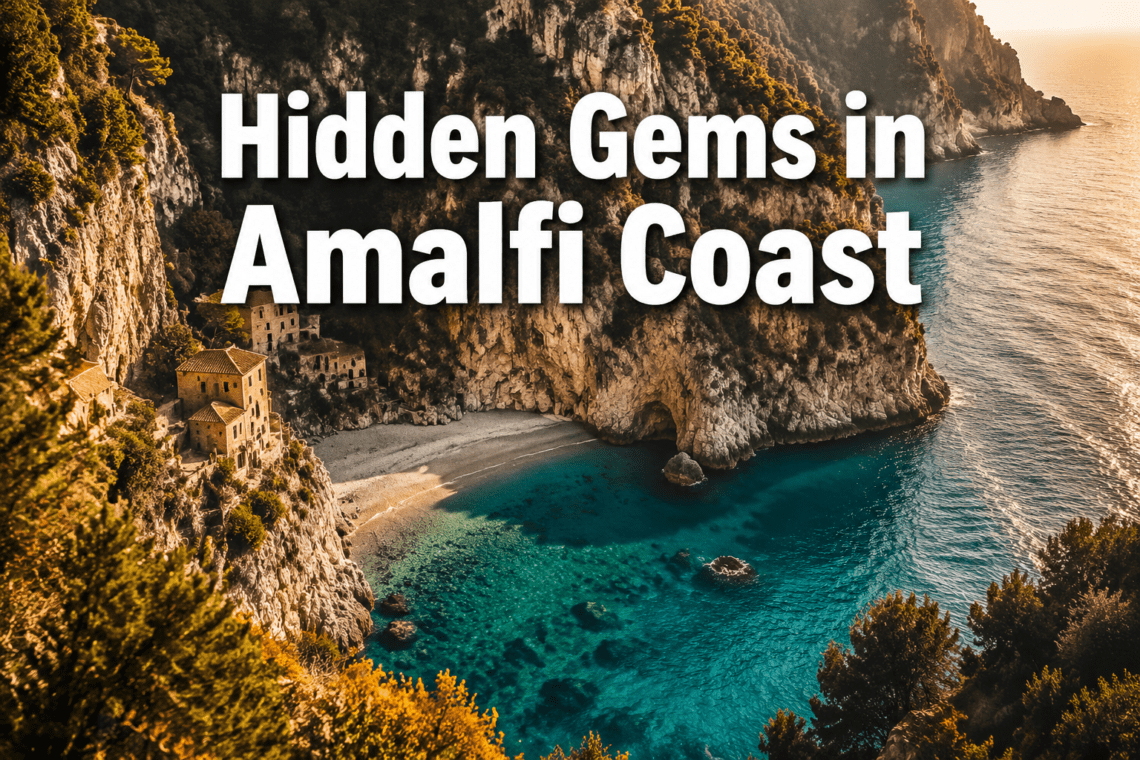
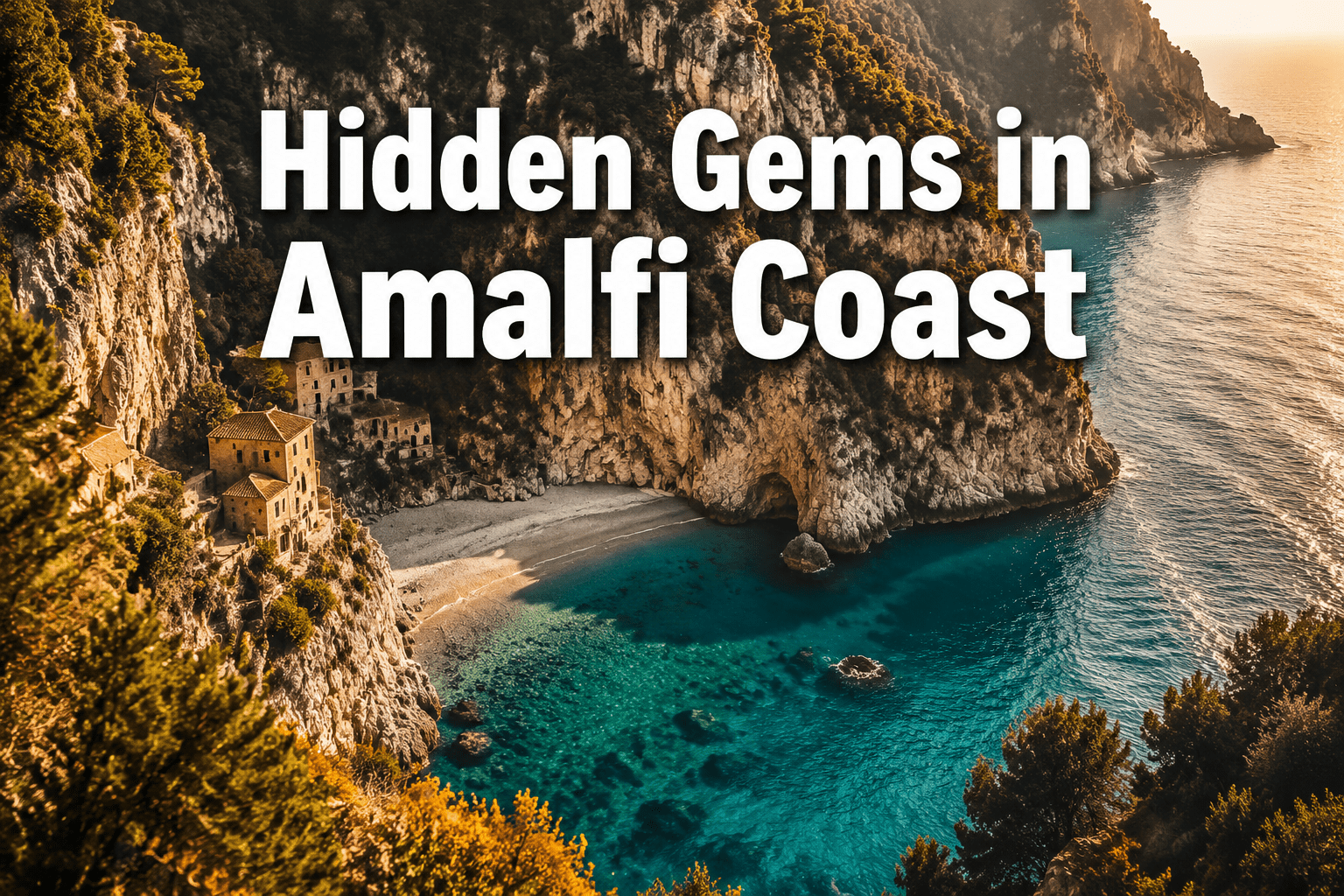
Quick Answer: Most visitors to the Amalfi Coast spend their entire trip in Positano, Amalfi Town, and Ravello — and miss roughly 80% of what makes this coastline genuinely special. The real hidden gems in Amalfi Coast include a rainforest-like nature reserve, Italy’s smallest fishing village, a UNESCO-recognized fjord, and sea caves you can only reach by boat. If you’re willing to walk a bit more, hire a local boat, or simply turn away from the main piazza, you’ll find a version of the Amalfi Coast that feels nothing like the tourist brochures.
Key Takeaways 🗺️
- Valle delle Ferriere is a 35-minute hike from Amalfi Town and feels like a completely different world — waterfalls, ferns, and almost no crowds [1]
- Atrani, right next to Amalfi Town, is one of Italy’s smallest towns and has a beach most tourists walk straight past [4]
- Fiordo di Furore is a UNESCO World Heritage-recognized fjord with an ancient bridge — and most people drive past it without stopping [4]
- Marina di Praia is a tiny cove with restaurants built into sea caves, naturally limited in size so it never gets overcrowded [2]
- Fiordo di Crapolla requires a long stair hike or a boat ride, which is exactly why it stays pristine [3]
- Boat-only coves are the single best strategy for escaping crowds in 2026 — specialized half-day tours are widely available [3]
- Minori and Maiori offer long beaches, lemon groves, and local life at a fraction of Positano’s prices [4]
- An underground Roman villa beneath a church in Positano is now open for guided archaeological tours [2]
Why Most Tourists Miss the Real Hidden Gems in Amalfi Coast
Most visitors follow the same route: ferry to Positano, selfie on the main beach, lunch in Amalfi Town, maybe a day trip to Ravello. That loop is beautiful, but it’s also shared with thousands of other people on any given summer day.
The Amalfi Coast is about 50 kilometers long, and the majority of tourist traffic concentrates in just three or four towns. Everything else — the coves, the hilltop sanctuaries, the fishing villages, the nature reserves — sits largely undisturbed.
The main reasons people miss the secret spots:
- Most tours stick to ferry stops and main piazzas
- Some spots require a short hike or a boat, which filters out casual visitors
- Lesser-known villages aren’t marketed heavily because they don’t have big hotels
- Language barriers make it harder to ask locals for recommendations
The good news: none of these places are actually difficult to reach. They just require a little intention.
“The Amalfi Coast rewards the curious. The best spots aren’t hidden because they’re hard to find — they’re hidden because most people don’t look.”
Valle delle Ferriere: The Rainforest Trail Nobody Talks About
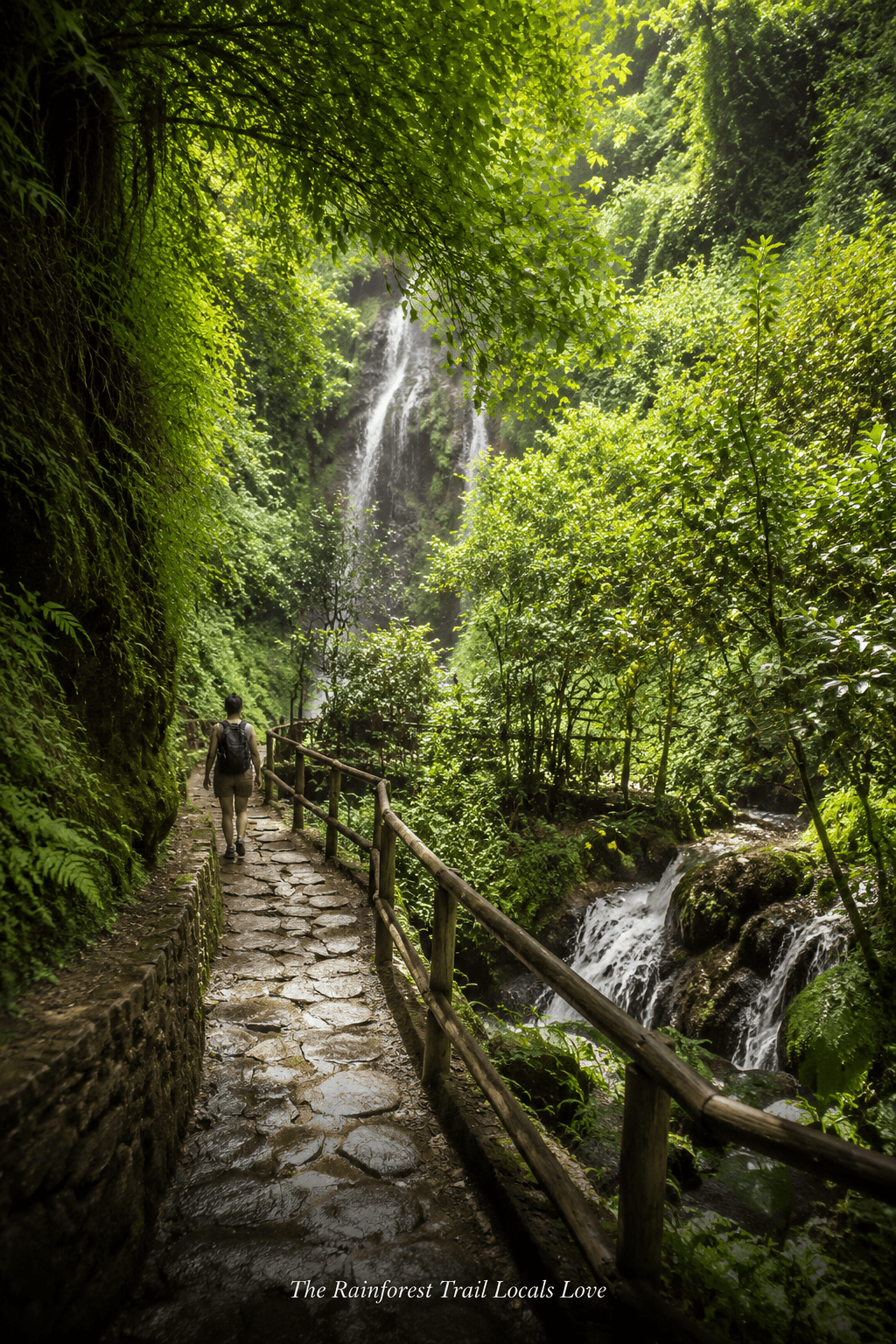
Valle delle Ferriere is the single most undervisited natural attraction on the Amalfi Coast. It’s a nature reserve about 35 minutes on foot from Amalfi Town, and it feels genuinely unlike anything else on this coastline [1].
The trail winds through a microclimate so lush it resembles a rainforest — ferns line ancient stone paths, waterfalls drop into clear pools, and lemon groves cling to the hillsides above. The valley gets its name from old iron mills (ferriere) that once operated here.
What to expect:
- Trail length: roughly 5 km round trip, moderate difficulty
- Best time: morning, before heat builds up (April through October)
- What you’ll see: waterfalls, endemic fern species, abandoned mill ruins, and occasionally kingfishers
- Entry: free, though a guide is worth hiring for context
Who this is for: Anyone who wants to escape the coastal crowds entirely. If you’re traveling in July or August and the beaches feel overwhelming, this trail is your best alternative. Families with older kids (10+) handle it well. It’s not suitable for strollers or anyone with significant mobility limitations.
For more ideas on exploring Italy beyond the obvious, check out our guide to hidden gems in Italy that feel magical.
Atrani and the Santuario Santa Maria del Bando
Atrani sits just around the headland from Amalfi Town — a 10-minute walk — and most tourists never make it there. It’s officially one of Italy’s smallest towns, with colorful houses stacked against the cliff face, a small church, and a narrow pebble beach with genuinely clear water [4].

The beach here is free to use and rarely packed, even in high season. Local families come here in the evenings. There are a handful of small restaurants where you’ll pay about half what you’d pay in Positano for the same pasta.
The Santuario Santa Maria del Bando takes Atrani’s appeal even further. This 12th-century sanctuary sits more than 700 steps above the village, and almost no tourists make the climb [2]. Next to it, a natural heart-shaped cave formation makes for one of the most quietly spectacular viewpoints on the entire coast. On a busy August day, you might share this spot with only a handful of people.
Practical tips for Atrani:
| Detail | Info |
|---|---|
| Getting there | 10-min walk from Amalfi Town along the coast road |
| Best time | Early morning or late afternoon |
| Beach access | Free, small pebble beach |
| Sanctuary hike | ~45 min up, moderate effort, rewarding views |
| Food | Several family-run trattorias, affordable prices |
Fiordo di Furore and Fiordo di Crapolla: The Two Fjords You Should Know
The Amalfi Coast has two dramatic fjords that most visitors drive straight past, and both are worth going out of your way for.
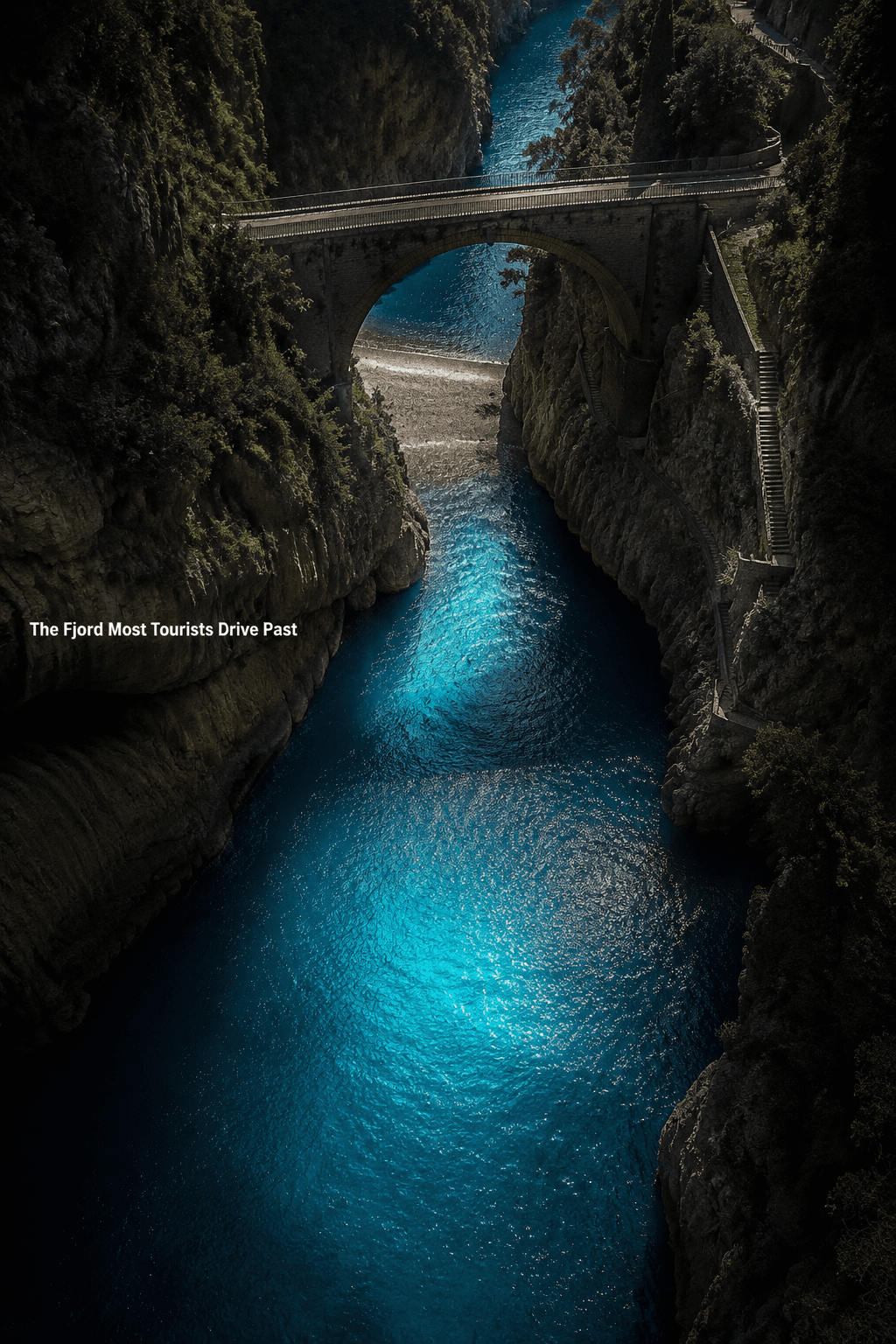
Fiordo di Furore is a narrow gorge carved by the Schiato stream, with a tiny pebble beach at the base and a beautiful 19th-century stone arch bridge spanning the cliffs above [4]. It’s officially recognized as part of the UNESCO World Heritage coastline. The beach is small, the water is an almost unreal shade of blue-green, and because access requires either a steep staircase or a boat, it never gets truly crowded.
Fiordo di Crapolla is even more remote. It sits near Sant’Agata sui Due Golfi and is reachable either by a long staircase descent (around 30 minutes down, harder coming back up) or by boat [3]. At the bottom, you’ll find ancient ruins, deep blue water, and an atmosphere that genuinely feels untouched. Tourism experts in 2026 are calling it one of the most atmospheric spots on the entire coast [3].
Choose Furore if: you want something accessible and visually dramatic without a major commitment.
Choose Crapolla if: you want maximum solitude and don’t mind earning it with a hike.
If you enjoy this kind of dramatic coastal scenery, our Amalfi Coast itinerary covering Positano, Ravello, and hidden gems maps out a logical route for seeing both.
Boat-Only Coves and Sea Caves: The 2026 Strategy for Escaping Crowds
The most effective way to find genuine solitude on the Amalfi Coast in 2026 is to get on a boat. Coves and sea caves that are unreachable by road stay pristine simply because most tourists don’t make the effort [3].
Top boat-accessible spots:
- Conca dei Marini sea caves — beyond the famous Grotta dello Smeraldo (Emerald Grotto), there are lesser-known caves with turquoise-lit water that most organized tours skip entirely [3]
- Pandora’s Cave — a striking natural geological formation accessible only by boat, increasingly recognized as one of the coast’s most fascinating natural features [4]
- Fiordo di Crapolla (also reachable by boat, as mentioned above)
- Unnamed coves between Praiano and Positano — local boat operators know these; just ask
How to book a boat:
- Hire a small private boat from Amalfi, Positano, or Praiano (half-day rates vary; ask at the harbor directly for the best prices)
- Book a small-group boat tour through a local operator (better for solo travelers or couples)
- Rent a self-drive dinghy if you’re comfortable on water (available in some marinas)
Common mistake: booking a large group ferry tour and expecting access to quiet spots. Large ferries stick to scheduled stops. A small private or semi-private boat is the only way to actually reach the secret coves.
Marina di Praia and Torre a Mare: Two Spots Praiano Gets Right
Praiano is one of the Amalfi Coast’s most underrated towns, and it has two specific spots that deserve attention.
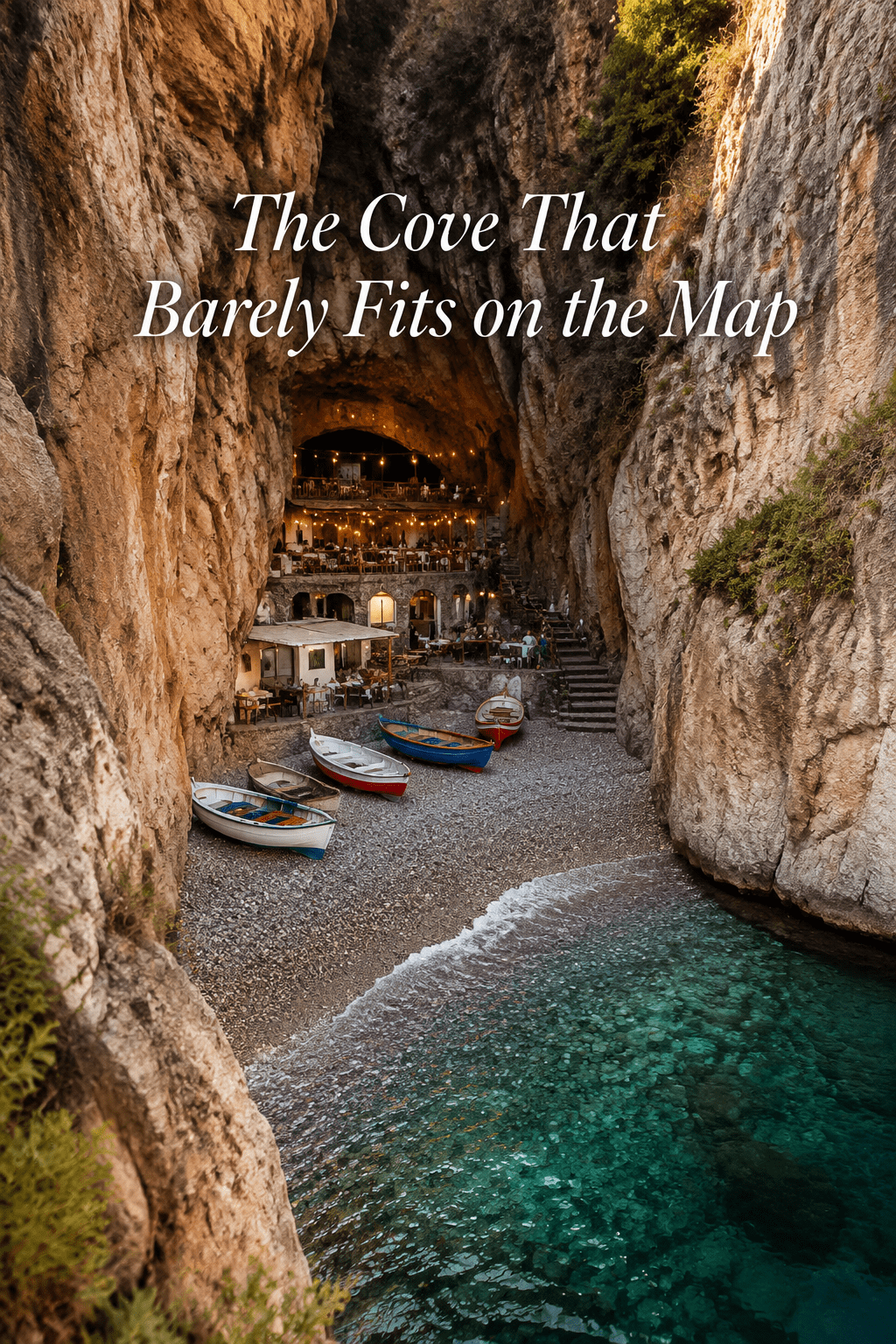
Marina di Praia is a small pebble cove wedged between two dramatic cliffs, with family-run restaurants built directly into the rock caves at the water’s edge [2]. The beach is naturally limited in size, which means it never gets as crowded as Positano’s main beach. String lights inside the cave restaurants make evening dining here genuinely memorable.
Torre a Mare is a 14th-century watchtower at the end of a coastal path from Praiano’s center [2]. Originally built to watch for pirate attacks, it now sits above a stretch of turquoise water with small beach clubs built into the rock formations below. It’s a 15-minute walk from the main road, which is apparently enough to keep most tourists away.
Both spots work well for:
- Couples looking for a quieter beach day
- Travelers who want to eat well without paying Positano prices
- Anyone who finds the main beaches too busy
The Underground Roman Villa Beneath Positano’s Church
Directly beneath the Chiesa di Santa Maria Assunta in central Positano, archaeologists have partially excavated an ancient Roman villa, and guided tours are now available [2].
This is one of the most surprising hidden gems in Amalfi Coast territory because it sits in the middle of Positano — one of the most visited towns on the coast — yet almost nobody knows it’s there. The excavations reveal mosaic floors, frescoed walls, and structural remains from a villa that likely belonged to a wealthy Roman family.
Practical info:
- Tours are guided and must be booked in advance (check with local tourism offices or the church directly)
- Tours run in small groups, so availability is limited
- Duration: approximately 45–60 minutes
- Suitable for history enthusiasts and anyone who’s already “done” the standard Positano experience
This is a good example of a hidden gem that requires zero hiking and no boat — just curiosity and a booking.
Minori and Maiori: The Affordable Alternatives Worth Knowing
Minori and Maiori are two seaside villages on the eastern end of the coast that offer long sandy-ish beaches, historic lemon groves, and genuine local life at prices that feel almost shocking compared to Positano [4].
Minori has a Roman villa of its own (above ground, free to visit) and a strong reputation for local pastry shops. Maiori has the longest beach on the Amalfi Coast and a relaxed promenade lined with cafes that cater to Italian families rather than international tourists.
Why they stay under the radar:
- No major “Instagram landmark” to draw social media traffic
- Less covered in mainstream travel guides
- Served by local buses rather than the main ferry routes
Best for: budget-conscious travelers, families, anyone who wants to experience the coast the way Italians actually use it.
For more ideas on exploring Italy’s lesser-known corners, our Piedmont Italy itinerary and Sardinia travel guide show how rewarding it is to go slightly off-script.
Also worth reading before your trip: 15 mistakes to avoid in Italy — several of them apply directly to the Amalfi Coast.
FAQ: Hidden Gems in Amalfi Coast
Q: What is the least crowded part of the Amalfi Coast?
The stretch between Praiano and Conca dei Marini is consistently quieter than Positano or Amalfi Town. Atrani, immediately east of Amalfi, is also far less crowded despite being within walking distance.
Q: When is the best time to visit for fewer crowds?
May, early June, and late September are the sweet spots — warm enough to swim, but before or after the peak summer rush. Weekday mornings are significantly quieter than weekend afternoons at any time of year.
Q: Do I need a car to reach the hidden spots?
Not necessarily. Many hidden gems (Atrani, Valle delle Ferriere, Torre a Mare) are walkable from ferry stops or bus routes. For boat-only coves, you’ll need to hire a boat. A car helps for Minori and Maiori but isn’t essential.
Q: Is Valle delle Ferriere safe to hike alone?
Yes, it’s a well-marked trail used regularly by locals. Go in the morning, wear proper shoes, and bring water. It’s not a technical hike.
Q: How do I book the underground Roman villa tour in Positano?
Contact the local tourist office in Positano or inquire at the Chiesa di Santa Maria Assunta directly. Tours run in small groups and fill up, so book at least a day or two ahead.
Q: Are the sea caves near Conca dei Marini worth it compared to the Emerald Grotto?
Many travelers find the lesser-known caves more rewarding because they’re less commercialized. The Emerald Grotto is impressive but can feel rushed during peak season. The smaller caves offer a more relaxed experience.
Q: Can I swim at Fiordo di Furore?
Yes. The small beach at the base of the fjord is swimmable, and the water is exceptionally clear. Access is via steep stairs from the road above. Arrive early in the morning for the best experience.
Q: Are Minori and Maiori connected by ferry?
They’re accessible by local SITA bus along the SS163 coastal road, which is actually a great way to see the coastline. Ferry service is more limited on this eastern stretch compared to the western towns.
Q: What’s the best hidden gem for families with young children?
Minori or Maiori — both have calmer water, more beach space, and a relaxed pace. Marina di Praia works too, though the pebble beach requires water shoes.
Q: Is it worth hiring a local guide for these spots?
For Valle delle Ferriere and the Roman villa in Positano, yes — a guide adds significant context. For most beach and village spots, you can explore independently without any issues.
Conclusion: How to Actually Experience These Hidden Gems in Amalfi Coast
The Amalfi Coast is genuinely one of the most beautiful places in the world, but the version most tourists see is a small fraction of what’s actually there. The hidden gems in Amalfi Coast — the rainforest trails, the fjords, the fishing villages, the sea caves — are accessible to anyone willing to look slightly beyond the main ferry stops.
Your actionable next steps:
- Book accommodation in Praiano or Atrani instead of Positano — you’ll save money and be closer to the quieter spots
- Reserve a half-day private boat tour from your base town for access to boat-only coves
- Plan the Valle delle Ferriere hike for your first full morning, before the heat builds
- Walk to Atrani from Amalfi Town on your first afternoon — it takes 10 minutes and feels like a different century
- Book the Roman villa tour in Positano in advance if archaeology interests you
- Use local buses to reach Minori and Maiori for at least one beach day
If you’re building a full itinerary, our detailed Amalfi Coast itinerary shows how to sequence these spots logically. And if the Amalfi Coast is part of a broader Italian trip, our guide to what to see in Florence and what to see in Rome for first-timers will help you plan the rest.
The crowds aren’t going anywhere. But neither are the hidden spots — and now you know where to find them.
References
[1] Best Hidden Gems In The Amalfi Coast – https://thepetitewanderer.com/2024/08/15/best-hidden-gems-in-the-amalfi-coast/
[2] Hidden Gems On The Amalfi Coast – https://exploredbymarta.com/travel/italy/hidden-gems-on-the-amalfi-coast/
[3] Hidden Gems Amalfi Coast 2026 – https://capricebleu.com/blog/hidden-gems-amalfi-coast-2026
[4] Hidden Gems Tc268 – https://www.getyourguide.com/amalfi-l699/hidden-gems-tc268/