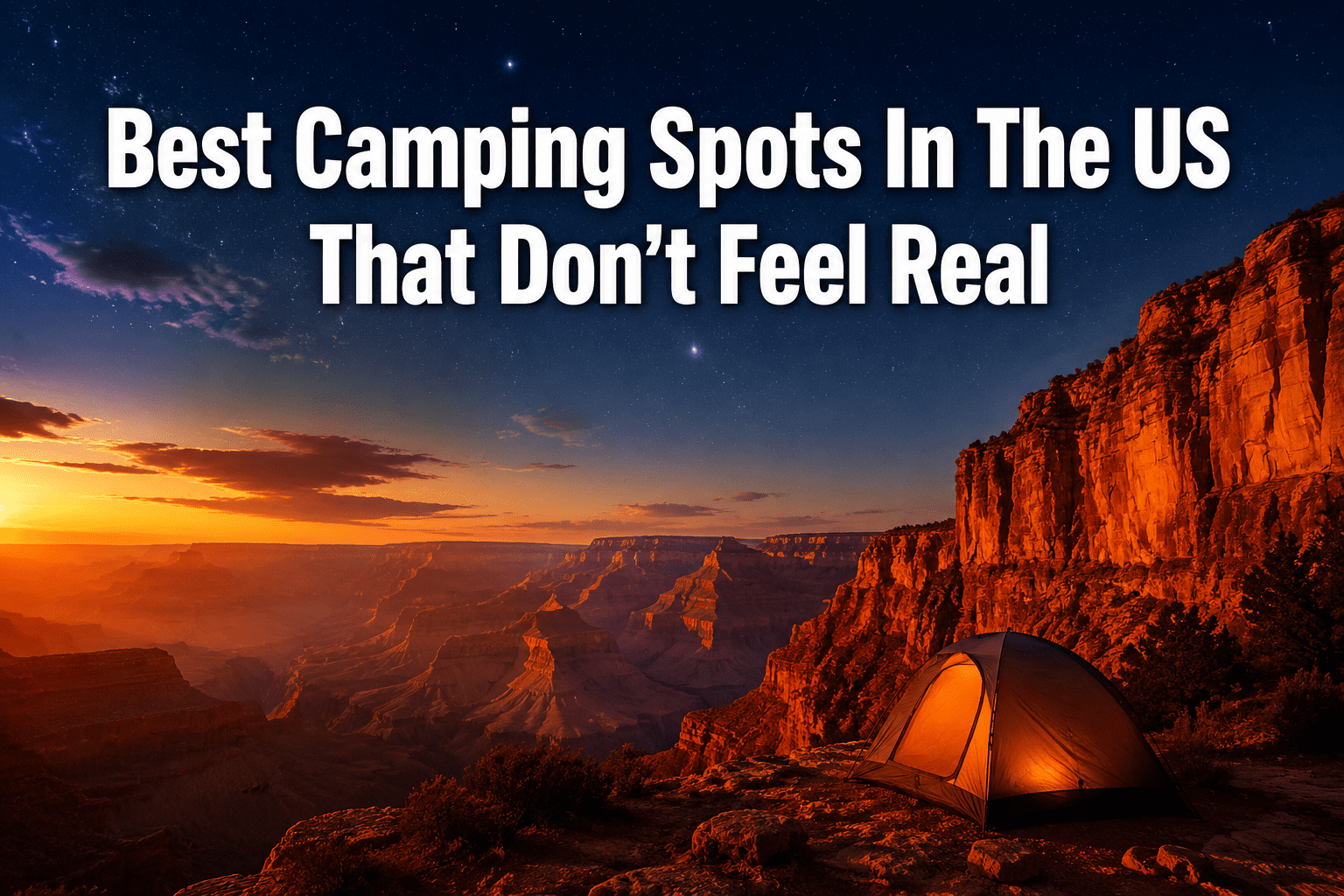
Quick Answer: The best camping spots in the US that feel truly unreal include places like Providence Canyon in Georgia, Kirby Cove in California, Assateague Island in Maryland, and Jumbo Rocks in Joshua Tree. These hidden gems offer dramatic landscapes, wild wildlife encounters, and genuine solitude that most travelers never find because they’re busy booking the same crowded national parks everyone else visits.
Key Takeaways 🏕️
- Providence Canyon State Park (Georgia) is ranked the #1 hidden gem campground in the US for 2026, with canyon walls that look like they belong in Arizona [4]
- Kirby Cove (California) has only four campsites and sits less than 10 miles from the Golden Gate Bridge — one of the most exclusive spots in the country [5]
- Assateague Island (Maryland) lets you camp alongside wild horses roaming freely on Atlantic beaches [5]
- Lost Lake in Gunnison National Forest (Colorado) offers 18 first-come, first-served alpine sites at just $20/night [2]
- Jumbo Rocks in Joshua Tree delivers some of the best stargazing of any campground in the US [4]
- Silver Falls State Park (Oregon) combines waterfall hikes with full RV hookups, just one hour from Portland [1]
- Black Beach (Minnesota) is a genuine north-woods gem that still feels untouched and wide open [4]
- Booking early (or arriving early for first-come sites) is the single biggest factor in securing these spots
- Many of these hidden gems are free or under $25/night — far cheaper than crowded alternatives
- Pair any of these spots with a broader road trip using our 25 beautiful hidden gems in the USA road trip guide
Why the Best Camping Spots In The US Are Often the Ones Nobody Talks About
The most popular campgrounds in America — Yosemite Valley, Zion, Yellowstone — book out months in advance and often feel more like outdoor hotels than wilderness escapes. The real magic is hiding just off the beaten path.
Less-visited spots tend to offer three things the famous ones don’t: genuine solitude, lower costs, and landscapes that genuinely stop you mid-step. The spots below were chosen because they consistently appear on authoritative 2026 camping lists [4] [2] [1] and because they each offer something you genuinely can’t find anywhere else.
“The best campsite is the one where you wake up and forget, just for a moment, that the rest of the world exists.”
If you love discovering places that feel like secrets, you’ll also enjoy browsing hidden gems across the USA — many of which pair perfectly with these camping spots.
The Top Hidden Gem Camping Spots In The US (By Region)
These are the spots worth planning a trip around. Each one has a specific quality that makes it feel surreal — not just “pretty,” but genuinely hard to believe you’re still in the United States.
Southeast: Providence Canyon State Park, Georgia
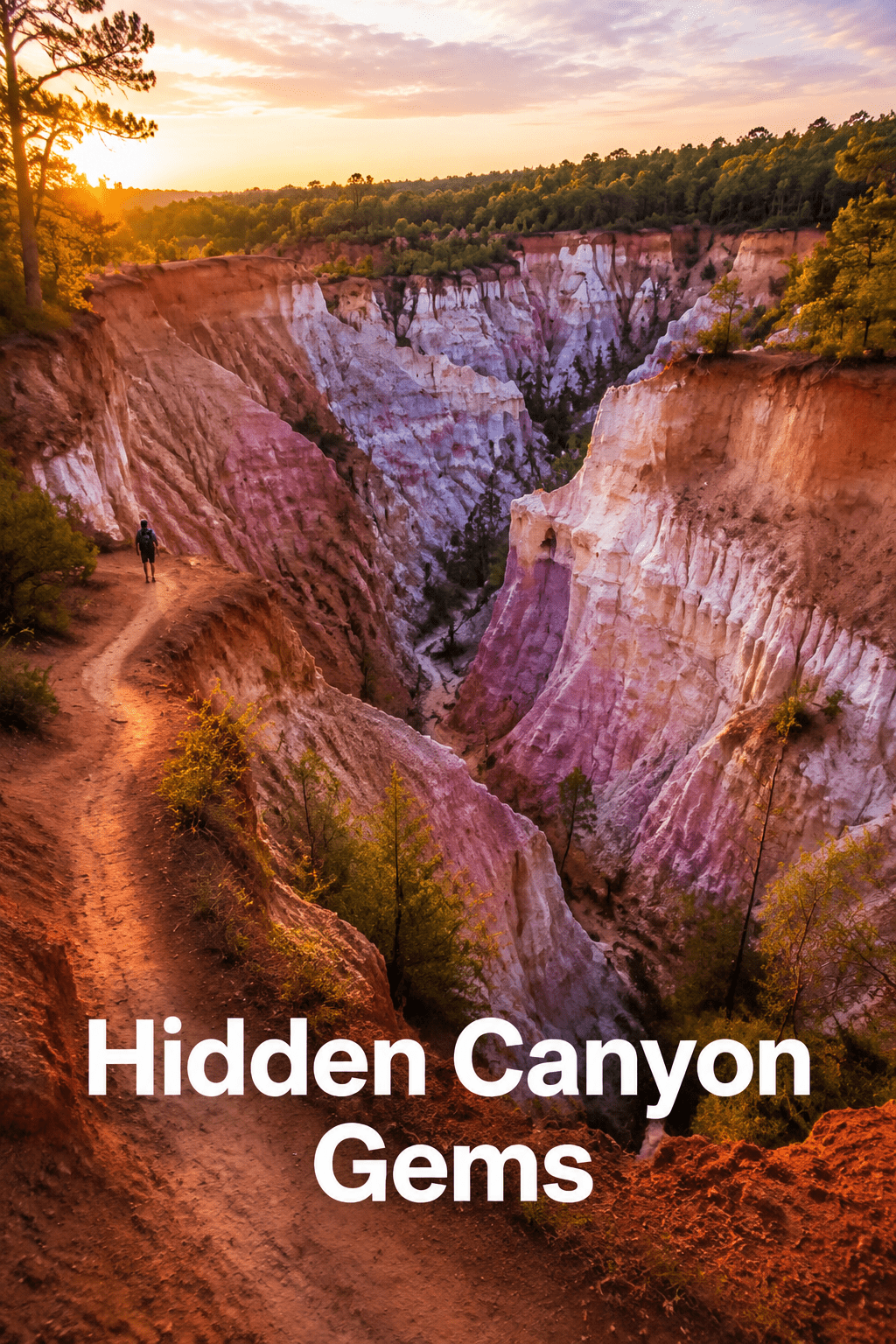
Providence Canyon is ranked the #1 hidden gem campground in the US for 2026 [4]. It’s nicknamed “Georgia’s Little Grand Canyon,” and that nickname earns its keep. The canyon walls glow in shades of pink, red, lavender, and cream — colors created by erosion over the past 150 years, not millions.
- Location: Lumpkin, Georgia (about 2.5 hours south of Atlanta)
- Camping style: Backcountry primitive camping (permit required)
- Best for: Hikers, photographers, geology lovers
- When to go: Spring and fall for the best light and cooler temperatures
The canyon is only accessible on foot, which keeps crowds manageable. You hike in, set up camp, and wake up inside a landscape that looks computer-generated.
Common mistake: People arrive without a backcountry permit and get turned away. Book through the Georgia State Parks system before you go.
Southeast: Dinosaur Valley State Park, Texas
Dinosaur Valley ranks #2 on EcoFlow’s 2026 hidden gem campground list [4], and it earns that spot for one reason: you can walk in actual dinosaur footprints preserved in the riverbed of the Paluxy River.
- Location: Glen Rose, Texas (about 1.5 hours southwest of Dallas/Fort Worth)
- Camping style: Developed sites with water and electric hookups available
- Best for: Families, history buffs, anyone who wants a genuinely unique story to tell
The footprints are most visible when the river runs low, typically late summer. Camp here and you’ll spend your evenings listening to the river and your mornings literally walking where dinosaurs walked.
West Coast: Kirby Cove, California
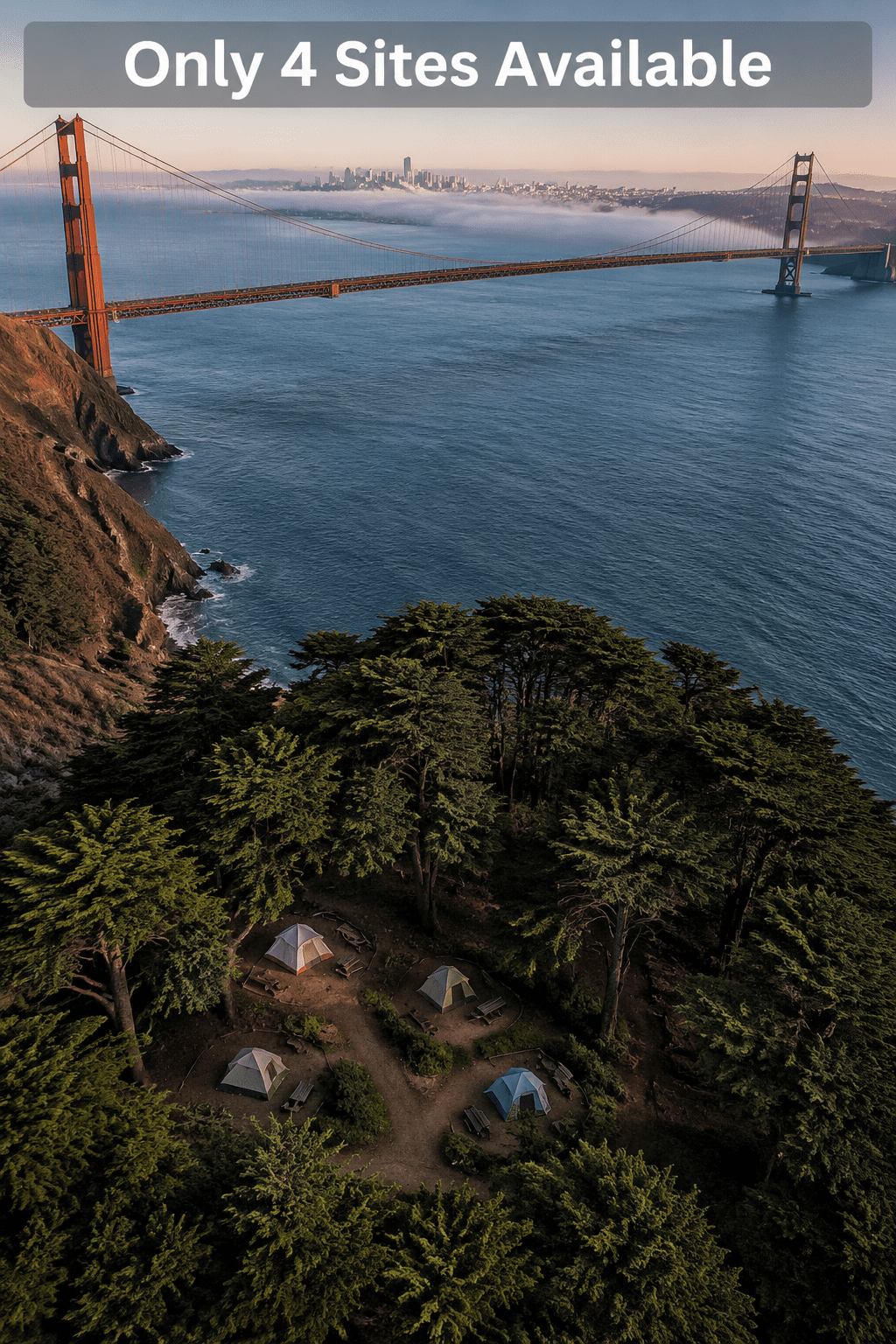
Kirby Cove is one of the most exclusive campsites in America — only four sites exist, and they sit inside a grove of Monterey cypress trees with direct views of the Golden Gate Bridge and San Francisco Bay [5].
- Location: Marin Headlands, less than 10 miles northwest of the Golden Gate Bridge
- Camping style: Walk-in tent camping only
- Cost: Around $25–$35/night (check Recreation.gov for current rates)
- Best for: Couples, photographers, anyone who wants a city skyline view from a tent
Choose Kirby Cove if: You want the most dramatic “I can’t believe I’m here” camping moment on the West Coast. The combination of forest, beach, and city skyline is genuinely unmatched.
Edge case: These four sites book out within minutes of the reservation window opening (typically six months in advance). Set a calendar reminder and be ready at exactly midnight on your booking date.
West Coast: Jumbo Rocks, Joshua Tree National Park, California
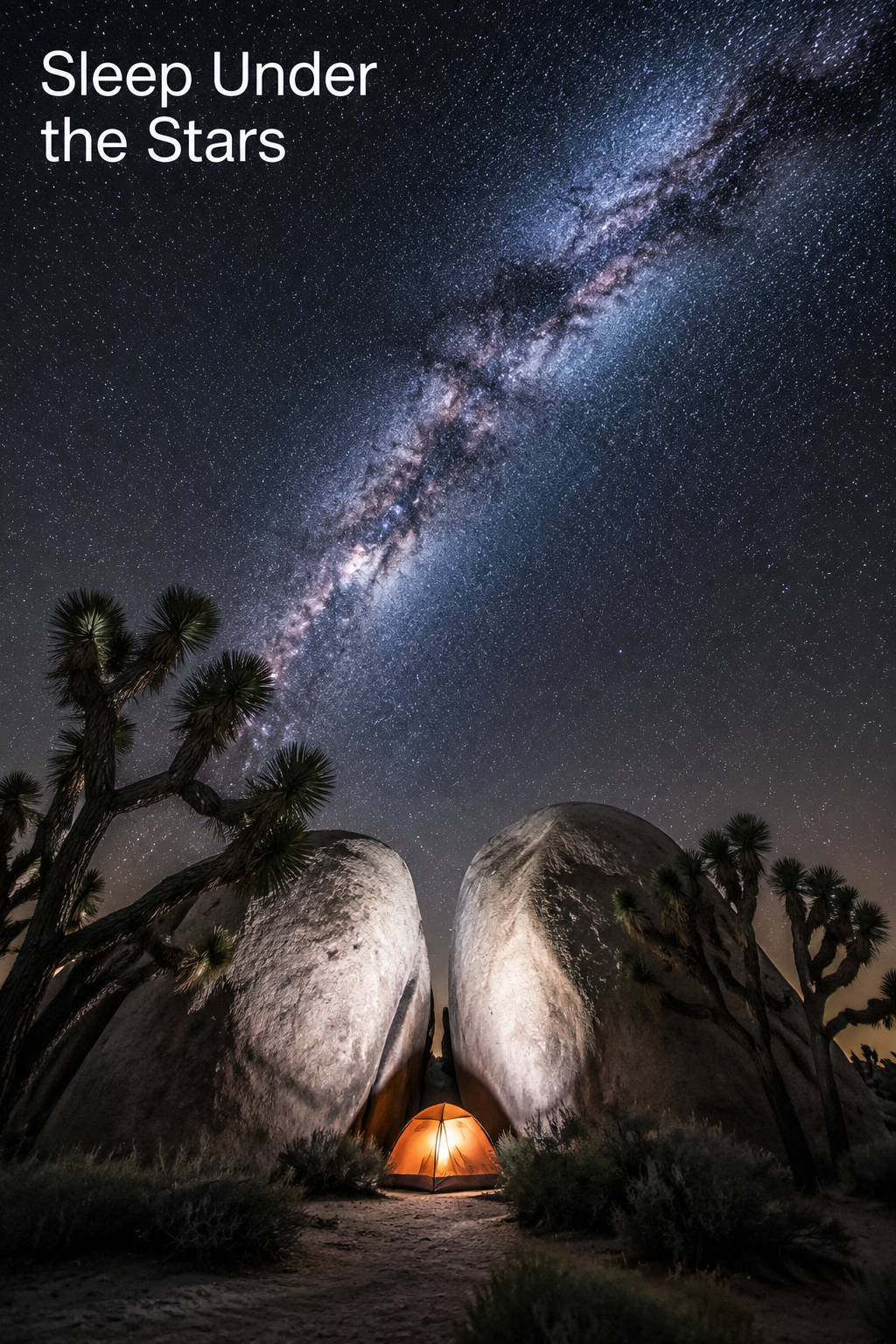
Jumbo Rocks is one of the best stargazing campgrounds in the entire country [4]. The boulders here are massive — some the size of houses — and they create natural wind shelters and climbing playgrounds around your tent.
- Location: Joshua Tree National Park, Southern California
- Camping style: First-come, first-served (125 sites)
- Cost: Around $20/night (National Park pass accepted)
- Best for: Stargazers, rock climbers, desert lovers
Joshua Tree sits in a dark sky zone, which means the Milky Way is visible on clear nights with no special equipment. Bring a reclining camp chair and plan to spend at least two hours just looking up.
Tip: Arrive Thursday afternoon to secure a weekend site. By Friday evening, the campground is often full.
Rocky Mountains: Lost Lake, Gunnison National Forest, Colorado
Lost Lake in Gunnison National Forest offers alpine camping at its most rewarding — 18 sites, first-come, first-served, at $20/night, surrounded by peaks and wildflower meadows [2].
- Location: Near Crested Butte, Colorado
- Camping style: Tent, RV (no hookups), and equestrian sites
- Elevation: Approximately 9,600 feet — acclimatize before arriving
- Best for: Hikers, fly fishers, photographers chasing fall color
The lake itself reflects the surrounding peaks on calm mornings. It’s the kind of spot where you take 200 photos and none of them do it justice.
Moraine Park in Rocky Mountain National Park is another Colorado option worth noting for 2026 [4] — better infrastructure but still genuinely beautiful alpine scenery.
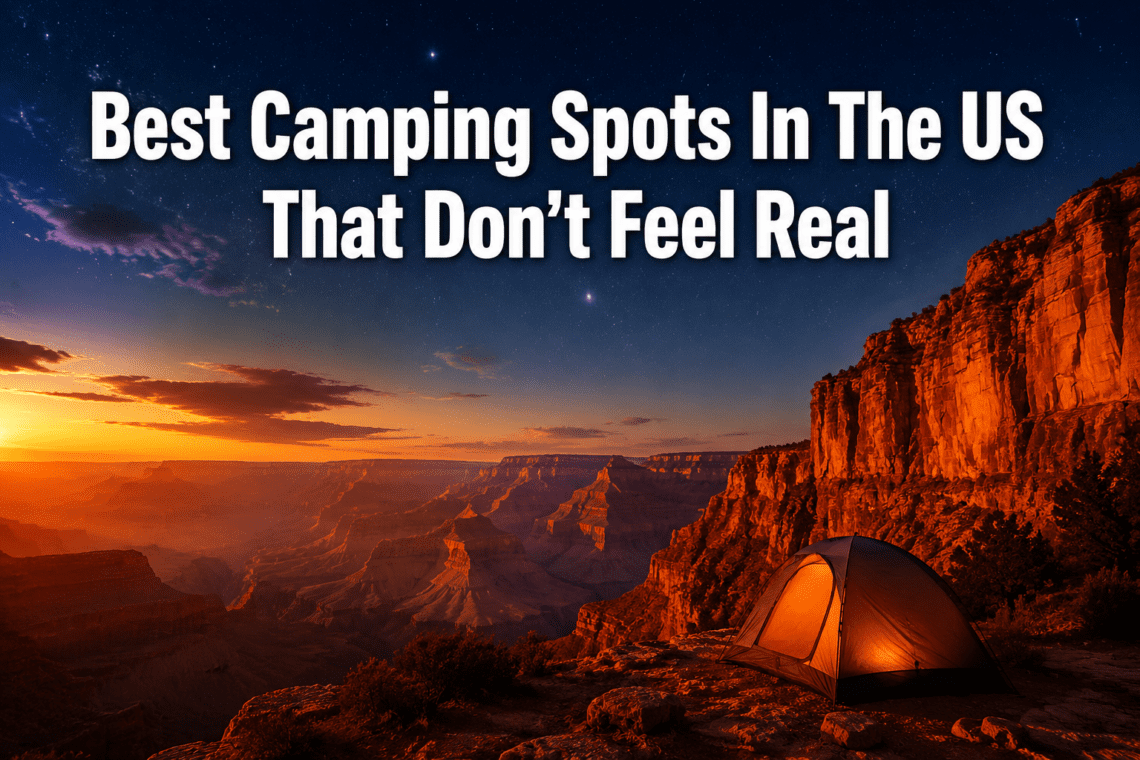
Southwest: Grand Canyon North Rim, Arizona
The North Rim of the Grand Canyon sees a fraction of the visitors that the South Rim does, and the Kaibab Camper Village is the only campground at the North Rim with hookups [4].
- Location: North Rim, Grand Canyon National Park, Arizona
- Camping style: Full hookup RV sites plus tent sites
- Season: Open mid-May through mid-October only
- Best for: RV travelers, anyone who wants the Grand Canyon without the crowds
The North Rim sits about 1,000 feet higher than the South Rim, which means cooler temperatures and a different perspective on the canyon. The drive to get there is itself spectacular.
Mid-Atlantic: Assateague Island State Park, Maryland
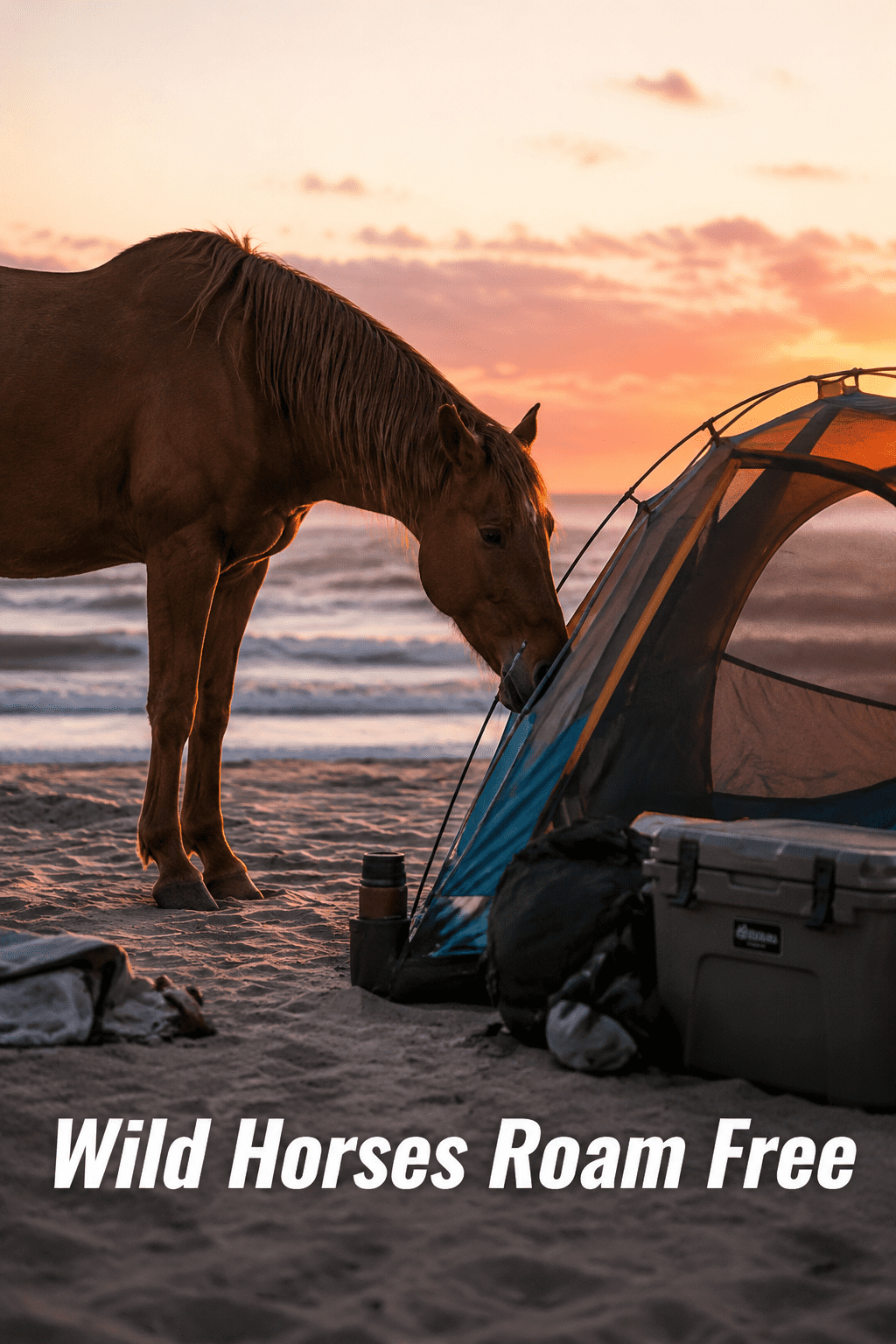
Assateague Island is where wild horses wander through your campsite — literally. These are the famous Chincoteague ponies, and they roam freely across the barrier island [5].
- Location: Berlin, Maryland (near Ocean City)
- Camping style: Oceanside and bayside sites, some with hookups
- Best for: Families, wildlife lovers, beach campers
- Wildlife note: The horses are wild. Don’t feed them or approach them — they bite and kick.
Camping here feels like a different country. You fall asleep to ocean waves, wake up to a horse sniffing your tent, and spend the day on a beach that stretches for miles with almost no development in sight.
Pacific Northwest: Silver Falls State Park, Oregon
Silver Falls is Oregon’s most underrated camping destination — a fully-equipped campground one hour east of Portland, with a trail system that passes ten separate waterfalls [1].
- Location: Near Salem, Oregon
- Camping style: Full RV hookups, tent sites, clean bathrooms with showers, playground
- Best for: Families, waterfall chasers, anyone road-tripping the Pacific Northwest
- Main trail: The Trail of Ten Falls (7.2 miles) passes behind several waterfalls — you walk through the spray
This is a great option if you want a comfortable base camp with genuinely spectacular day hikes. It’s also one of the few spots on this list with full amenities, so it works well for first-time campers.
Midwest & North: Black Beach, Minnesota
Black Beach is a true north Minnesota gem that appears on 2026 authoritative lists as one of the best campgrounds in the US [4]. It sits on the shore of Lake Superior and offers wide-open space that feels genuinely untouched.
- Location: Silver Bay, Minnesota
- Camping style: Developed sites with lake access
- Best for: Kayakers, swimmers, anyone who wants Great Lakes solitude
- Unique feature: The dark volcanic sand beach that gives the campground its name
Lake Superior is enormous — it looks more like an ocean than a lake. Camping on its shore with that much open water in front of you is a surprisingly humbling experience.
Quick Comparison: Best Camping Spots In The US at a Glance
| Campground | State | Cost/Night | Sites | Style | Best For |
|---|---|---|---|---|---|
| Providence Canyon | Georgia | ~$20 | Limited backcountry | Primitive | Hikers, photographers |
| Kirby Cove | California | ~$25–35 | 4 only | Walk-in tent | Couples, views |
| Jumbo Rocks | California | ~$20 | 125 | First-come | Stargazers |
| Lost Lake | Colorado | $20 | 18 | First-come | Alpine hikers |
| Grand Canyon North Rim | Arizona | Varies | Multiple | Full hookup + tent | RV travelers |
| Assateague Island | Maryland | Varies | Multiple | Hookup + tent | Families, wildlife |
| Silver Falls | Oregon | Varies | Multiple | Full hookup | Families, beginners |
| Black Beach | Minnesota | Varies | Multiple | Developed | Lake lovers |
| Dinosaur Valley | Texas | Varies | Multiple | Hookup available | Families |
How to Actually Get a Site at These Hidden Gem Campgrounds
The single biggest mistake campers make is treating hidden gems like they’re still unknown. Word spreads fast online, and even “secret” spots now fill up quickly.
Here’s how to secure your spot:
- Use Recreation.gov for federal and many state park reservations. Set up an account before you need it.
- Know your booking window. Most sites open reservations exactly 6 months in advance. Mark your calendar.
- For first-come, first-served sites (Lost Lake, Jumbo Rocks), arrive Thursday afternoon for a weekend stay.
- Check cancellation windows. Sites often open up 3–7 days before the date when people cancel.
- Have a backup plan. Identify two or three nearby alternatives before you leave home.
- Weekdays are dramatically less competitive than weekends at every single spot on this list.
If you’re planning a longer road trip around these spots, our road trip category has detailed itinerary guides to help you string multiple destinations together efficiently.
What to Pack for These Unique Camping Locations
The right gear changes significantly depending on which type of spot you’re visiting. A desert campground like Jumbo Rocks needs different preparation than a coastal site like Assateague Island.
Universal essentials for all spots:
- Headlamp with extra batteries
- First aid kit
- Water filtration (for backcountry sites especially)
- Bear canister or hang system (required at some sites)
- Layers — temperatures drop significantly at night even in summer
Desert-specific (Jumbo Rocks, Grand Canyon North Rim):
- Extra water (minimum 1 gallon per person per day)
- Sun protection: hat, SPF 50+, UV-blocking shirt
- Sandstorm cover for electronics
Coastal-specific (Assateague, Kirby Cove):
- Wind-resistant tent
- Waterproof bags for electronics
- Insect repellent (Assateague mosquitoes are legendary)
Alpine-specific (Lost Lake, Moraine Park):
- Altitude sickness medication if you’re coming from sea level
- Extra warm layers (temperatures can drop below freezing even in July)
- Trekking poles for trail access
For a complete packing checklist, our travel essential packing guide covers everything you need regardless of destination.
FAQ: Best Camping Spots In The US
What is the most unique camping experience in the US?
Camping at Assateague Island State Park in Maryland, where wild horses roam freely through campsites along the Atlantic coast, is consistently cited as one of the most unique experiences in American camping. Kirby Cove in California — four sites overlooking the Golden Gate Bridge — is a close second for sheer “I can’t believe this exists” impact.
What is the hardest campsite to book in the US?
Kirby Cove in the Marin Headlands (California) is among the hardest to book, with only four sites that typically sell out within minutes of the reservation window opening six months in advance.
Are there free camping spots in the US that are actually good?
Yes. Many Bureau of Land Management (BLM) areas offer free dispersed camping, and some state forests allow it as well. Quality varies widely, but spots in Utah, Nevada, and Colorado BLM land can be genuinely spectacular. Lost Lake in Gunnison National Forest is not free but at $20/night is close to it.
What is the best state for camping in the US?
California, Colorado, and Oregon consistently rank highest for camping variety and quality. California alone has coastal redwood camping, desert boulder fields, alpine lakes, and city-adjacent sites like Kirby Cove. Colorado offers the best high-altitude alpine camping.
When is the best time to camp in the US?
Late May through early October works for most spots. Spring (May–June) is ideal for wildflowers and mild temperatures. Fall (September–October) offers fewer crowds and stunning foliage. Summer works but brings peak crowds and booking competition.
Is camping at the Grand Canyon North Rim worth it?
Yes, especially for RV travelers. The North Rim is significantly less crowded than the South Rim, sits at higher elevation (cooler temperatures), and offers a different perspective on the canyon. The Kaibab Camper Village is the only hookup campground on the North Rim [4].
What is the best campground for families in the US?
Silver Falls State Park in Oregon is an excellent family choice — full hookups, clean bathrooms with showers, a playground, and a world-class waterfall trail system all in one location [1]. Dinosaur Valley State Park in Texas is another strong family pick for its dinosaur footprint experience.
Can you see the Milky Way at Jumbo Rocks?
Yes. Joshua Tree National Park sits in a designated dark sky zone, and Jumbo Rocks is far enough from city light pollution that the Milky Way is clearly visible on clear, moonless nights. No special equipment needed — just your eyes and a reclining chair.
How far in advance should I book camping at popular hidden gems?
For reservation-based sites like Kirby Cove, book exactly six months in advance (the moment the window opens). For first-come, first-served sites like Lost Lake or Jumbo Rocks, plan to arrive 1–2 days before your intended stay, especially for weekends.
Are there camping spots in the US that feel like international destinations?
Several. Providence Canyon in Georgia has a color palette that looks more like the American Southwest or even Cappadocia, Turkey. Assateague Island feels like a remote coastal wilderness. Black Beach on Lake Superior looks more like a Scandinavian coastline than the American Midwest.
Conclusion: Start Planning Your Next Camping Adventure
The best camping spots in the US don’t require a passport, a massive budget, or even a particularly long drive from a major city. What they do require is a little research, some advance planning, and the willingness to look past the obvious choices.
Here’s how to take action right now:
- Pick one spot from this list that genuinely excites you — not the one that seems most practical, the one that makes you want to go.
- Check the reservation window for that site on Recreation.gov or the relevant state park system.
- Set a calendar reminder for exactly when reservations open, or plan your arrival date for a first-come, first-served site.
- Build a backup list of two or three nearby alternatives in case your first choice is full.
- Plan your gear based on the specific environment — desert, coastal, alpine, or forest.
Whether you’re a seasoned camper or pitching a tent for the first time, these hidden gems deliver the kind of experience that reminds you why people fall in love with the outdoors in the first place. The landscapes are real. The solitude is real. The only thing that won’t feel real is that you almost didn’t go.
For more inspiration on finding places that feel like secrets, explore our full collection of hidden gems across the USA and start building your list. 🏕️
References
[1] Best Campgrounds In The US – https://www.cruiseamerica.com/trip-inspiration/best-campgrounds-in-the-us
[2] Top 10 Places To Camp In The U.S. – https://toystoragenation.com/2025/08/07/top-10-places-to-camp-in-the-u-s/
[3] Summer Camping In US – https://www.trip.com/blog/summer-camping-in-us/
[4] Top Campgrounds In The USA – https://www.ecoflow.com/us/blog/top-campgrounds-in-the-usa
[5] Watch (Top 10 Best Camping Places in USA 2026) – https://www.youtube.com/watch?v=MmNvkxIaJvs