Last updated: June 1, 2026
Quick Answer: Napa Valley is home to over 400 wineries across 16 distinct sub-appellations, ranging from iconic estates like Opus One and Stag’s Leap Wine Cellars to small family-owned producers making some of California’s finest Cabernet Sauvignon. The best wineries in Napa Valley reward visitors who book in advance, plan around two to four stops per day, and match their itinerary to their experience level and budget. Tasting fees typically run $40 to $150 per person, with premium experiences reaching $300 or more.
Key Takeaways
- The best wineries in Napa Valley span a wide range of styles, from grand collector estates to intimate organic producers
- The 2023 vintage is widely considered one of the finest in Napa history, particularly for Cabernet Sauvignon, with exceptional aging potential [2]
- Approximately 12.5% of Napa vineyard acreage is now certified organic, reflecting a major shift toward sustainable farming [4]
- Tasting fees range from free (rare) to $300-plus for reserve or cave experiences; most fall between $40 and $150
- Book tastings at least two to four weeks in advance, especially for weekends and harvest season (September to November)
- Beginners do best starting in Carneros or Yountville; serious collectors should head to Oakville, Rutherford, and the Stags Leap District
- Two to four wineries per day is the practical maximum for most visitors
- Many top wineries offer food pairings, cave tours, and barrel tastings that go well beyond a standard pour
- The Great Wine Capitals Global Network recognized several Napa establishments in its 2026 Best of Wine Tourism Awards [3]
- Napa wineries are primarily adults-only experiences, though a small number welcome families
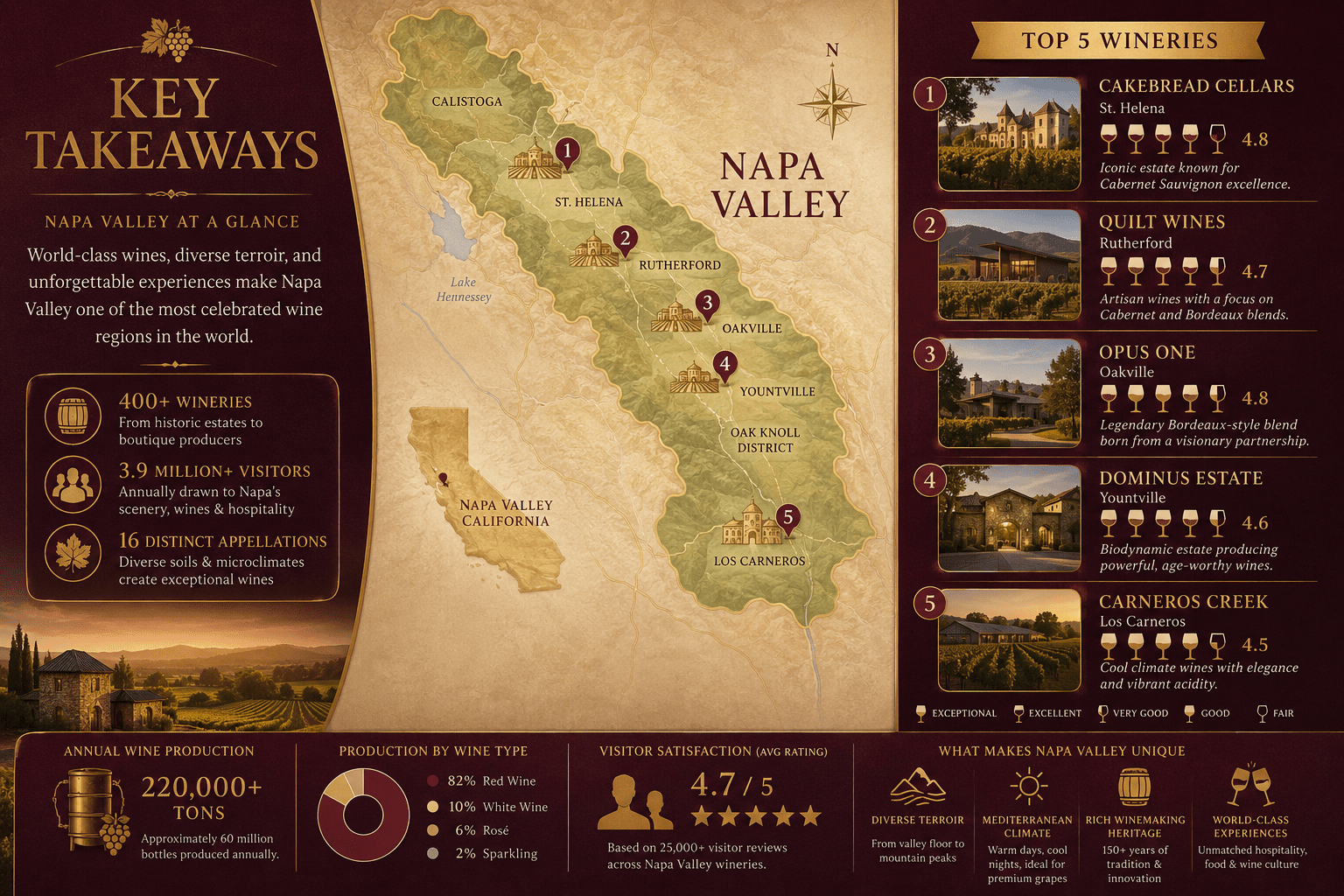
What Makes Napa Valley Wineries Different from Other Wine Regions
Napa Valley’s combination of geography, climate diversity, and regulatory standards sets it apart from virtually every other wine region in the world. The valley floor sits between two mountain ranges, the Mayacamas to the west and the Vaca Mountains to the east, creating a natural funnel that draws cool Pacific air from San Pablo Bay each afternoon. That temperature swing, sometimes 50 degrees Fahrenheit between midday and midnight, is one reason Napa Cabernet develops both ripe fruit and firm structure in the same glass.
Beyond climate, Napa benefits from:
- Soil diversity: Over 100 distinct soil types across a valley roughly 30 miles long and 5 miles wide
- Sub-appellation precision: 16 recognized AVAs (American Viticultural Areas), each with its own flavor profile
- Regulatory standards: Napa Valley appellation rules require at least 85% of grapes to come from within the valley
- Investment in quality: Wineries here consistently reinvest in technology, cave aging, and viticulture research
Master Sommelier Carlton McCoy has noted a clear trend toward more age-worthy, elegant Napa Cabernets, moving away from the high-alcohol, extracted styles that dominated the 1990s [7]. That shift means today’s Napa wines reward both immediate enjoyment and long cellaring.
For comparison: Bordeaux offers similar prestige but far less visitor access. Burgundy matches Napa’s terroir obsession but at a fraction of the production scale. Napa is unique in combining world-class wine with a highly developed, visitor-friendly tourism infrastructure.
The Best Wineries in Napa Valley for Every Type of Visitor
The right winery depends entirely on what you want from the experience. Here are the top categories with specific recommendations for 2026.
For Collectors and Serious Wine Enthusiasts
- Opus One (Oakville): A joint venture between Robert Mondavi and Baron Philippe de Rothschild, Opus One averages 97 points across its last 10 vintages on the Decanter Fine Wine Index, with the 2013 vintage earning a perfect 100 points [1]. Tastings are by appointment and priced accordingly.
- Stag’s Leap Wine Cellars (Stags Leap District): Famous for the 1973 Cabernet that outscored Bordeaux first-growths in the 1976 Paris Tasting. Their S.L.V. and Cask 23 wines remain benchmarks.
- Screaming Eagle (Oakville): Allocation-only and nearly impossible to visit without connections, but worth knowing about for context.
For Beginners and Casual Wine Lovers
- Robert Mondavi Winery (Oakville): The most accessible entry point into Napa’s history and wine culture. Guided tours are educational, staff are welcoming, and the wines are consistently excellent.
- Domaine Carneros (Carneros): A stunning chateau-style property specializing in sparkling wine. The terrace tasting experience is relaxed, scenic, and a perfect introduction to the region.
- Beringer Vineyards (St. Helena): One of Napa’s oldest continuously operating wineries, with approachable wines and a beautiful historic estate.
For Unique Architecture and Art
- Hall Wines (St. Helena): Known for its contemporary art installations alongside serious Cabernet.
- Quixote Winery (Stags Leap District): Designed by Austrian artist Friedensreich Hundertwasser, this organic winery is visually unlike anything else in the valley. Daily tastings by appointment offer an intimate experience [8].
How Much Does a Wine Tasting Tour Cost in Napa Valley
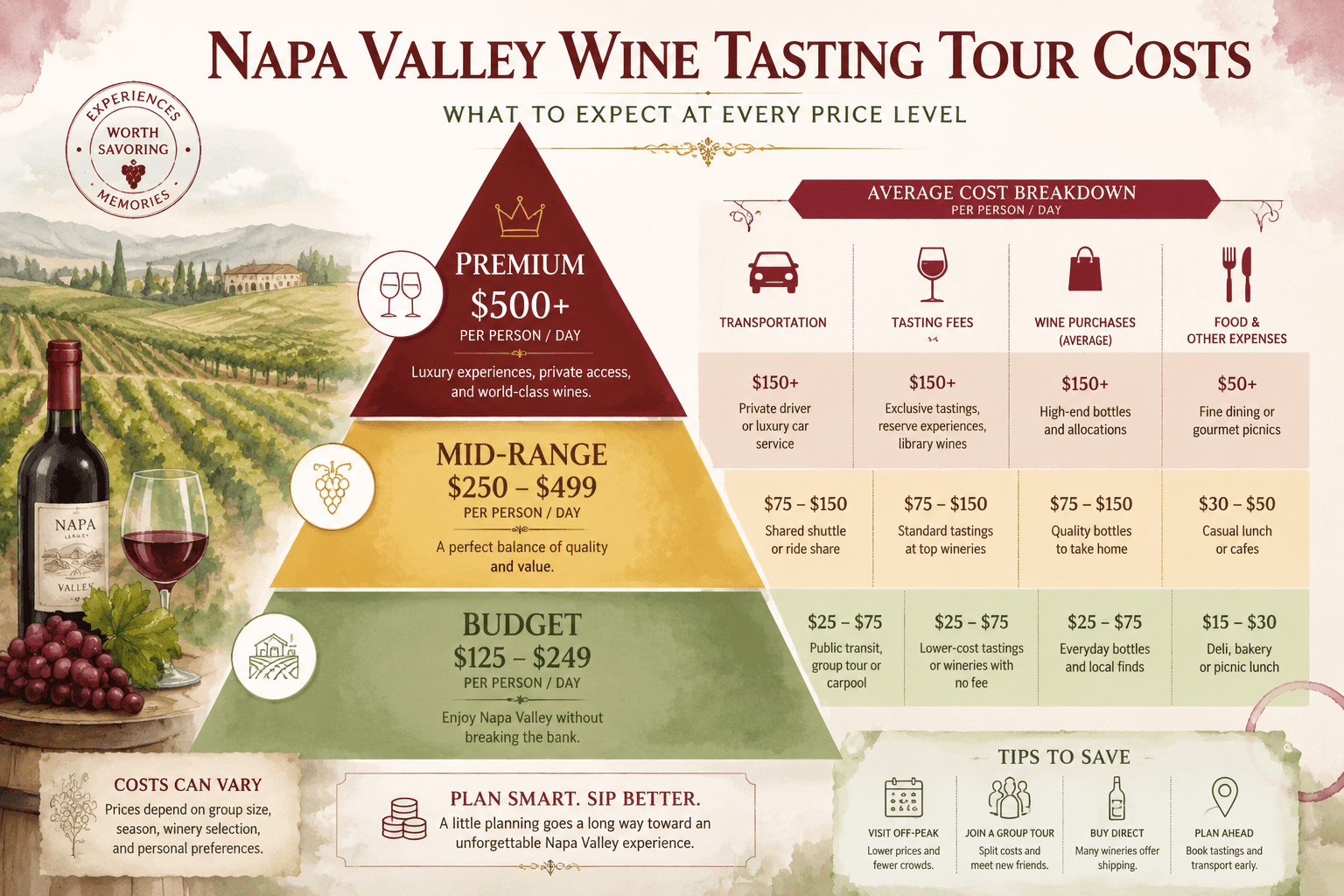
Wine tasting in Napa Valley costs between $40 and $300 per person per winery, depending on the tier of experience. Standard tastings (three to five wines poured at a bar or terrace) typically run $40 to $80. Reserve or library tastings range from $80 to $150. Cave tours, barrel tastings, and seated food-pairing experiences generally start at $150 and can reach $300 or more at top estates.
Typical cost breakdown for a two-day trip (per person):
| Experience Type | Cost Per Winery |
|---|---|
| Standard tasting (3-5 wines) | $40 – $80 |
| Reserve/library tasting | $80 – $150 |
| Cave tour with barrel tasting | $100 – $200 |
| Seated food pairing experience | $150 – $300+ |
| Private vineyard tour | $200 – $500+ |
Note: Many wineries waive the tasting fee if you purchase a bottle or join their wine club. This can significantly reduce costs if you plan to buy wine anyway.
Transportation adds to the budget. A hired driver or wine tour van typically costs $100 to $200 per person for a half-day. Rideshare is available but limited in rural areas. Staying in Napa town itself keeps accommodation costs lower than Yountville, which skews toward luxury.
Can I Visit Napa Valley Wineries on a Budget
Yes, budget-conscious visits are possible, though they require more planning than a standard Napa trip. The key is to prioritize wineries that offer lower tasting fees, look for fee waivers tied to purchases, and visit on weekdays when some properties offer reduced rates.
Budget strategies that actually work:
- Visit Carneros and the southern end of the valley, where tasting fees tend to be lower than in Oakville or Rutherford
- Look for wineries that offer complimentary tastings with a bottle purchase (several smaller producers still do this)
- Book directly through winery websites, where discounts occasionally appear
- Consider a picnic lunch at a winery that allows outside food rather than paying for a formal food pairing
- Visit during January or February, when crowds are thin and some wineries run promotional rates
Avoid: Booking through third-party tour aggregators without checking the winery’s own website first. Direct bookings are often cheaper and give you more flexibility.
What Are the Top Cabernet Sauvignon Wineries in Napa
Napa Valley produces some of the world’s finest Cabernet Sauvignon, and the 2023 vintage is being called one of the greatest in the valley’s history. A long, stable growing season produced wines with abundant tannins, bright acidity, and significant aging potential, drawing comparisons to the celebrated 2021 vintage [2].
Top Cabernet Sauvignon wineries to visit in 2026:
- Stag’s Leap Wine Cellars: Historically significant and consistently excellent, especially for structured, age-worthy Cabernet
- Caymus Vineyards (Rutherford): Known for approachable, full-bodied Cabernet that appeals to a wide range of palates
- Jordan Winery: Located in nearby Alexander Valley but worth the detour for Bordeaux-style elegance
- Heitz Cellar (St. Helena): A Napa institution producing single-vineyard Cabernets with decades of track record
- Duckhorn Vineyards (St. Helena): Strong across multiple varietals, with Cabernet that over-delivers for its price point
“The best Napa Cabernets today are built for the long haul. Tasting them young is fine, but returning to the same bottle five or ten years later is where the real reward lives.” – paraphrased from Master Sommelier Carlton McCoy’s guidance on Napa Cabernet [7]
Are There Organic or Sustainable Wineries in Napa Valley
Sustainability has become one of Napa’s defining characteristics in 2026. Approximately 12.5% of vineyard acreage is now certified organic, and many more producers follow biodynamic or regenerative practices without formal certification [4]. Winemakers increasingly view these approaches not as a marketing angle but as the foundation of quality.
Notable sustainable and organic producers:
- Quixote Winery: Certified organic, focused on Petite Sirah and red blends [8]
- Frog’s Leap (Rutherford): One of Napa’s earliest adopters of organic farming, dry-farmed vines, solar-powered facility
- Cakebread Cellars (Rutherford): Certified sustainable, with a strong commitment to water conservation
- Spottswoode Estate (St. Helena): Certified organic since 1985, one of the longest-running organic programs in Napa
Choose organic/biodynamic wineries if: You want to taste wines that reflect a specific terroir without chemical intervention, or if sustainability aligns with your values as a traveler.
Which Napa Valley Wineries Have the Best Restaurant or Food Pairings
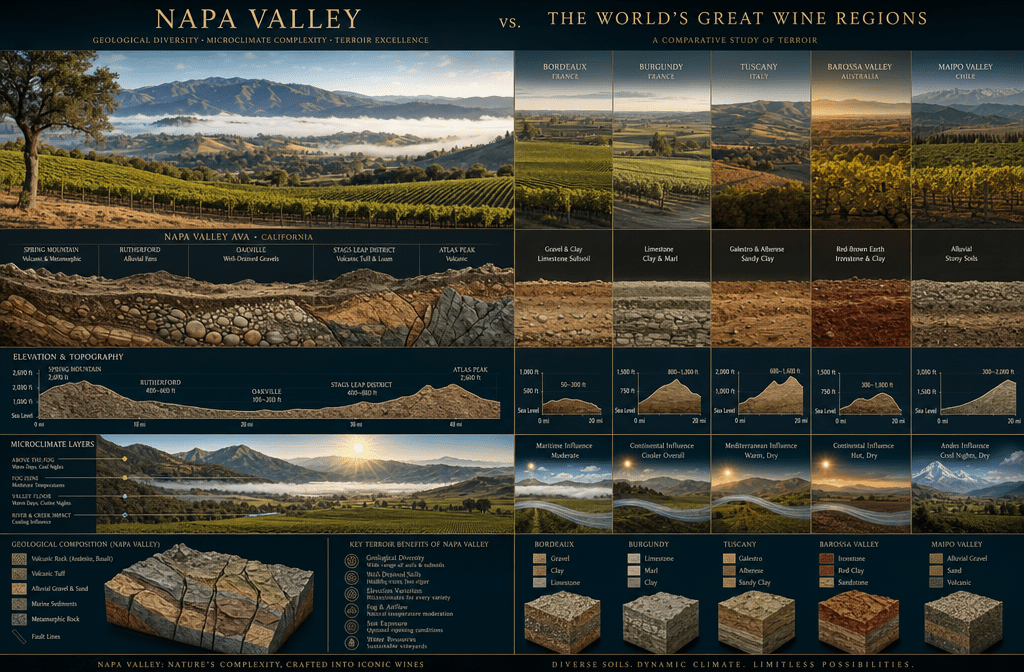
Several Napa wineries have elevated food pairing into a full dining experience, making them destinations in their own right. The best options combine serious cuisine with wines that genuinely complement each dish, rather than just serving cheese boards as an afterthought.
Top wineries for food and wine experiences:
- The Restaurant at Meadowood (St. Helena): While technically a resort restaurant rather than a winery tasting room, it sits within the broader Napa wine country ecosystem and offers exceptional wine-paired tasting menus
- Inglenook (Rutherford): Francis Ford Coppola’s historic estate offers curated food pairings alongside its flagship Rubicon Cabernet
- Auberge du Soleil (Rutherford): A luxury resort with a Michelin-recognized restaurant and a wine list that spans Napa’s best producers
- Charles Krug Winery (St. Helena): Offers seated food pairing experiences in a historic setting
For travelers who want to combine world-class wine with equally serious food, Napa competes with any wine region globally. If you’re planning a broader California trip, pairing Napa with a coastal drive makes for a memorable itinerary. Our California 10-day coastal road trip guide covers how to structure that kind of trip efficiently.
What Time of Year Is Best to Visit Napa Valley Wineries
The best time to visit Napa Valley depends on your priorities. Harvest season (September through November) is the most dramatic and atmospheric, with active crushing, vibrant vineyard colors, and a palpable energy across the valley. However, it’s also the busiest and most expensive period.
Seasonal breakdown:
| Season | Pros | Cons |
|---|---|---|
| Spring (Mar-May) | Wildflowers, mild temps, fewer crowds | Some roads and wineries still closed |
| Summer (Jun-Aug) | Long days, outdoor tastings ideal | Crowded, hot midday, higher prices |
| Harvest (Sep-Nov) | Most exciting atmosphere, peak wine activity | Busiest season, book far in advance |
| Winter (Dec-Feb) | Quiet, lowest prices, intimate feel | Some wineries reduce hours or close |
Best overall recommendation: Visit in late September or early October for harvest energy without the full summer crowds, or in March for a quieter, more local experience. The Great Wine Capitals Global Network’s 2026 Best of Wine Tourism Awards highlighted Napa’s year-round appeal, with The George recognized for accommodation excellence [3].
How Do I Book Wine Tastings in Advance
Most Napa Valley wineries require advance reservations, and the top estates fill up weeks or months ahead. The standard advice is to book at least two to four weeks out for weekdays and four to eight weeks for weekend visits during peak season.
Step-by-step booking process:
- Decide on your dates and how many wineries you want to visit per day (two to four is realistic)
- Visit each winery’s official website directly for the most accurate availability and pricing
- Use NapaValley.com as a starting directory for winery listings and contact information [9]
- Book the most sought-after estates first (Opus One, Stag’s Leap, Inglenook), then fill in around them
- Confirm your reservations 48 hours before arrival
- Check cancellation policies, as some wineries charge fees for no-shows
Common mistake: Assuming walk-ins are welcome. A handful of smaller producers still accept them, but the majority of the best wineries in Napa Valley are reservation-only, and showing up without one often means being turned away.
Are Napa Valley Wine Tours Kid-Friendly or Adults Only
Most Napa Valley wineries are designed as adult experiences, and the majority of tasting rooms are 21-and-over environments. That said, a growing number of estates welcome families, particularly those with outdoor spaces, gardens, or non-wine activities.
Family-friendly options:
- Castello di Amorosa (Calistoga): A genuine 13th-century-style Tuscan castle with grape juice tastings for kids and a dramatic setting that appeals to all ages
- V. Sattui Winery (St. Helena): Has a large deli and picnic grounds where families can spread out
- Sterling Vineyards (Calistoga): Offers an aerial tram ride to the hilltop winery, which kids tend to find exciting
If traveling with children: Call ahead to confirm the winery’s policy. Some require all guests to be 21-plus even if children won’t be tasting. Planning a broader family trip? Our guide to budget-friendly family vacations offers useful framing for balancing adult and kid-friendly activities.
What Common Mistakes Do First-Time Napa Visitors Make
First-time visitors consistently make the same errors, and most of them are avoidable with a little preparation.
The most common mistakes:
- Overloading the itinerary: Trying to visit five or six wineries in a day leads to palate fatigue and rushed experiences. Two to three is the practical sweet spot.
- Skipping reservations: Assuming walk-ins are welcome at top estates. They usually aren’t.
- Driving between tastings: Napa has strict DUI enforcement. Hire a driver, use a tour service, or designate a non-drinking driver.
- Ignoring sub-appellations: Treating Napa as one uniform region misses the point. Carneros tastes different from Howell Mountain, which tastes different from Rutherford.
- Booking only the famous names: Some of the most memorable pours come from smaller, lesser-known producers. Leave room for discovery.
- Forgetting to eat: Wine tasting on an empty stomach is a recipe for a short afternoon. Many wineries now offer food, or bring snacks.
This mirrors the kind of planning discipline that makes any destination trip work well. The same principle applies whether you’re navigating wine country or planning a first-timer’s trip to a complex destination.
Which Wineries Offer Unique Experiences Like Cave Tours or Barrel Tastings
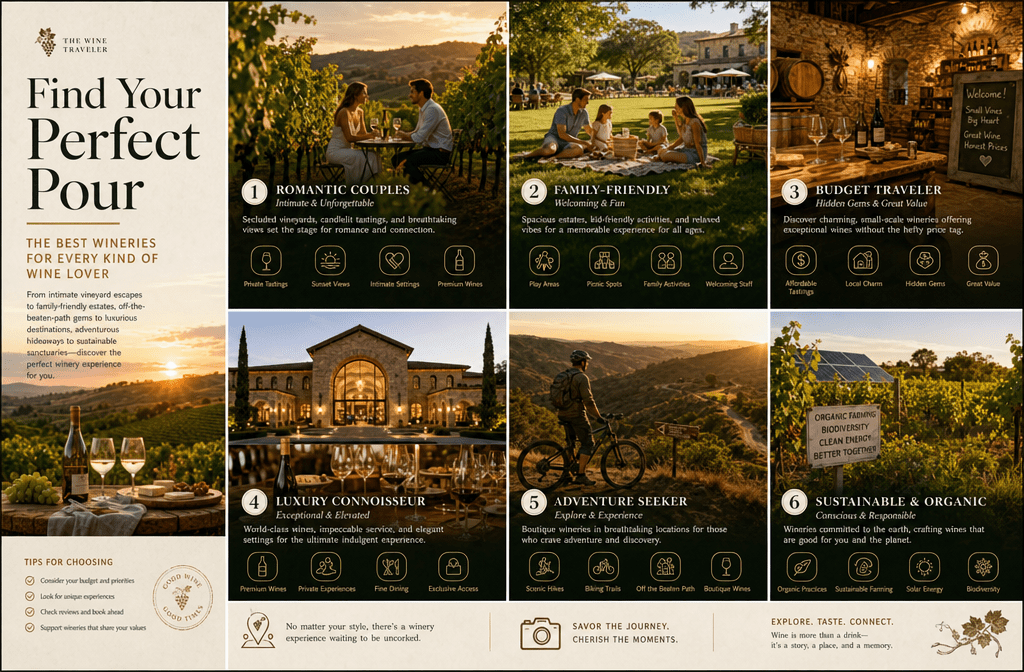
Cave tours and barrel tastings represent some of the most memorable experiences available at the best wineries in Napa Valley. Several estates have invested heavily in underground cave systems that maintain perfect temperature and humidity for aging wine.
Top picks for unique experiences:
- Beringer Vineyards: Offers tours of its historic hand-dug limestone caves, some of the oldest in Napa
- Schramsberg Vineyards (Calistoga): Cave tours that go deep into the hillside, with sparkling wine tastings by candlelight
- Darioush Winery (Napa): Persian-inspired architecture and a dramatic tasting experience unlike anything else in the valley
- Stag’s Leap Wine Cellars: Offers barrel tastings from current vintages alongside library wine comparisons
- Quixote Winery: Intimate, appointment-only tastings in a Hundertwasser-designed building with organic wines [8]
For Chardonnay lovers: Don’t overlook the Carneros and Coombsville sub-appellations. Vineyards like Hyde and Hudson benefit from cooler microclimates and produce Chardonnays with rich flavors and balanced acidity that challenge the assumption that Napa is only about Cabernet [6].
How Far Are Top Napa Wineries from Each Other
Most of Napa Valley’s top wineries are within a 30-to-45-minute drive of each other, making it entirely feasible to visit multiple estates in a single day without excessive travel time.
Key distances along Highway 29 (the main artery):
- Napa town to Yountville: approximately 9 miles (15-20 minutes)
- Yountville to Oakville: approximately 5 miles (10 minutes)
- Oakville to Rutherford: approximately 3 miles (5-7 minutes)
- Rutherford to St. Helena: approximately 5 miles (10 minutes)
- St. Helena to Calistoga: approximately 8 miles (15 minutes)
The Silverado Trail runs parallel to Highway 29 on the eastern side of the valley and is generally less congested. Many experienced visitors use it to move between wineries more quickly, especially during summer weekends.
Planning tip: Cluster your winery visits by geography rather than by fame. Grouping Oakville and Rutherford stops on the same day, for example, saves significant driving time compared to zigzagging across the valley.
FAQ: Visiting the Best Wineries in Napa Valley
How many wineries should I visit in one day?
Two to three wineries per day is the practical maximum for most visitors. More than that leads to palate fatigue and rushed experiences. Quality over quantity applies here.
Do I need a car to visit Napa Valley wineries?
A car is the most flexible option, but you should not drive between tastings if you plan to drink. Hire a driver, join a guided tour, or use a designated driver. Rideshare availability is limited in rural areas.
What is the best sub-appellation for first-time visitors?
Carneros and Yountville are ideal starting points. They offer a range of styles, approachable tasting rooms, and some of the valley’s most scenic settings.
Are tasting fees refunded if I buy wine?
Many wineries waive or credit the tasting fee against a bottle purchase. Confirm this policy when you book, as it varies by estate.
What should I wear to a Napa Valley winery?
Smart casual is the standard. You’ll be walking through vineyards and standing at tasting bars, so comfortable shoes matter. Avoid heavy perfume or cologne, as it interferes with wine aromas.
Is the 2023 Napa vintage worth buying?
Yes. The 2023 vintage is considered one of the finest in Napa’s history for Cabernet Sauvignon, with wines showing abundant tannins, bright acidity, and strong aging potential [2]. Buy it to cellar if possible.
Can I ship wine home from Napa wineries?
Most wineries offer direct shipping to most U.S. states, but laws vary. Confirm your state’s regulations before purchasing. International shipping is more complex and often not offered directly.
What is the difference between a standard and reserve tasting?
A standard tasting typically features current-release wines poured at a bar. A reserve tasting includes older vintages, single-vineyard wines, or wines not available for retail purchase, usually in a more intimate seated setting.
Which Napa winery is best for sparkling wine?
Domaine Carneros and Schramsberg Vineyards are the two standout sparkling wine producers. Both offer cave or terrace experiences that showcase their méthode traditionnelle wines.
How do I find hidden gem wineries in Napa?
Ask your hotel concierge, check local wine shop recommendations in Napa town, or look for wineries with small production numbers and limited distribution. The Silverado Trail and the Howell Mountain AVA both have producers that see far fewer visitors than the Highway 29 corridor.
Are there wineries near Napa that are worth visiting?
Sonoma County is directly adjacent and offers a very different wine culture, generally more casual and diverse in varietals. It’s easy to combine both regions in a multi-day trip.
What are the 2026 Best of Wine Tourism Award winners in Napa?
The Great Wine Capitals Global Network recognized several Napa establishments in its 2026 Best of Wine Tourism Awards, including The George for accommodation, reflecting the region’s continued investment in visitor experience [3].
Conclusion
Napa Valley in 2026 offers more depth, more variety, and more reasons to visit than at any point in its history. The combination of an exceptional 2023 vintage, a growing commitment to organic and sustainable farming, and a maturing wine tourism infrastructure means that whether you’re a first-time visitor or a seasoned collector, there is something genuinely worth your time and money here.
Your actionable next steps:
- Decide on your travel dates and identify your priority sub-appellations based on your wine preferences (Cabernet lovers should focus on Oakville, Rutherford, and the Stags Leap District; sparkling and Chardonnay fans should start in Carneros)
- Book your top two or three winery reservations at least four weeks in advance, going directly through each winery’s website
- Arrange transportation before you arrive, whether that’s a hired driver, a guided tour, or a clear designated driver plan
- Budget realistically: $100 to $200 per person per day for tastings is a reasonable baseline, with food and accommodation on top
- Leave room for discovery. The best wineries in Napa Valley include names you haven’t heard yet, and some of the most memorable pours come from producers you’ll find by asking a local
If Napa is part of a larger California trip, our 10-day California coastal road trip itinerary shows how to build Napa into a broader journey. For those who love pairing great wine regions with great scenery, the Tuscany travel guide for first-timers offers a useful comparison point for how the world’s other great wine destinations approach the visitor experience.
Napa rewards the prepared traveler. Go in with a plan, stay flexible, and drink slowly.
References
[1] Decanter Fine Wine Index A 100 Point Opus One Among The Wines Offering Value To Collectors – https://www.decanter.com/wine-collecting/decanter-fine-wine-index-a-100-point-opus-one-among-the-wines-offering-value-to-collectors?utm_source=openai
[2] Why 2023 Is The Vintage Of A Lifetime In Napa Valley – https://www.decanter.com/learn/vintage-guides/why-2023-is-the-vintage-of-a-lifetime-in-napa-valley?utm_source=openai
[3] 2026 Best Of Wine Tourism Award Winners – https://www.visitnapavalley.com/blog/post/2026-best-of-wine-tourism-award-winners/?utm_source=openai
[4] Napa Valley Is Grape Farming Both Its New Luxury And Future – https://www.decanter.com/wine/napa-valley/napa-valley-is-grape-farming-both-its-new-luxury-and-future?utm_source=openai
[5] Napa Valley – https://winetravelguides.com/best-wineries/napa-valley?utm_source=openai
[6] My 12 Best Napa Chardonnays Of All Time Our Expert Picks A Dozen Greats – https://www.decanter.com/wine/napa-valley/my-12-best-napa-chardonnays-of-all-time-our-expert-picks-a-dozen-greats?utm_source=openai
[7] Master Sommelier Carlton Mccoys Rules For Drinking Napa Cabernet Today – https://www.decanter.com/wine-news/master-sommelier-carlton-mccoys-rules-for-drinking-napa-cabernet-today?utm_source=openai
[8] Quixote Winery – https://en.wikipedia.org/wiki/Quixote_Winery?utm_source=openai
[9] Wineries – https://www.napavalley.com/wineries/?utm_source=openai