
Last updated: May 31, 2026
Quick Answer: A glacier national park itinerary 3 days works best by splitting your time across three distinct regions: Going-to-the-Sun Road and Logan Pass on Day 1, the Many Glacier area on Day 2, and Two Medicine Valley on Day 3. This route covers the park’s most iconic trails, wildlife corridors, and scenic drives without doubling back. Book lodging and vehicle reservations well in advance, especially for summer visits.
Key Takeaways
- The Going-to-the-Sun Road is the park’s backbone — drive it early on Day 1 to avoid vehicle reservation windows and afternoon crowds
- Logan Pass, Many Glacier, and Two Medicine Valley each offer a distinct landscape experience that justifies a dedicated half-day or full day
- Most trails in this itinerary range from easy to moderate, with one challenging option (Grinnell Glacier Trail) for stronger hikers
- Grizzly bears, black bears, mountain goats, and moose are all regularly spotted — carry bear spray and know how to use it
- The park’s free shuttle system is available seasonally; check the 2026 schedule on the NPS website before you go [1]
- Peak season (July through mid-August) brings heavy crowds; arriving before 8 a.m. at trailheads is the single most effective strategy
- Budget roughly $150 to $300 per person per day for lodging, food, and fees, depending on whether you camp or stay in a lodge
- Glaciers still exist in the park but are significantly reduced — Grinnell Glacier is the most accessible remaining glacier worth visiting
- Guided tours are available for first-timers through outfitters like Glacier Guides, which offer multi-day hiking packages [4]
- Photography conditions peak at golden hour (6 to 8 a.m. and 7 to 9 p.m.) along the Sun Road and at Swiftcurrent Lake
How to Plan Your Glacier National Park Itinerary 3 Days: The Best Route
The most efficient 3-day route through Glacier National Park moves from west to east on Day 1, then focuses on the northeast (Many Glacier) on Day 2, and finishes in the quieter southeast (Two Medicine) on Day 3. This structure avoids backtracking and lets you experience three genuinely different ecosystems.
Day 1 — Going-to-the-Sun Road and Logan Pass
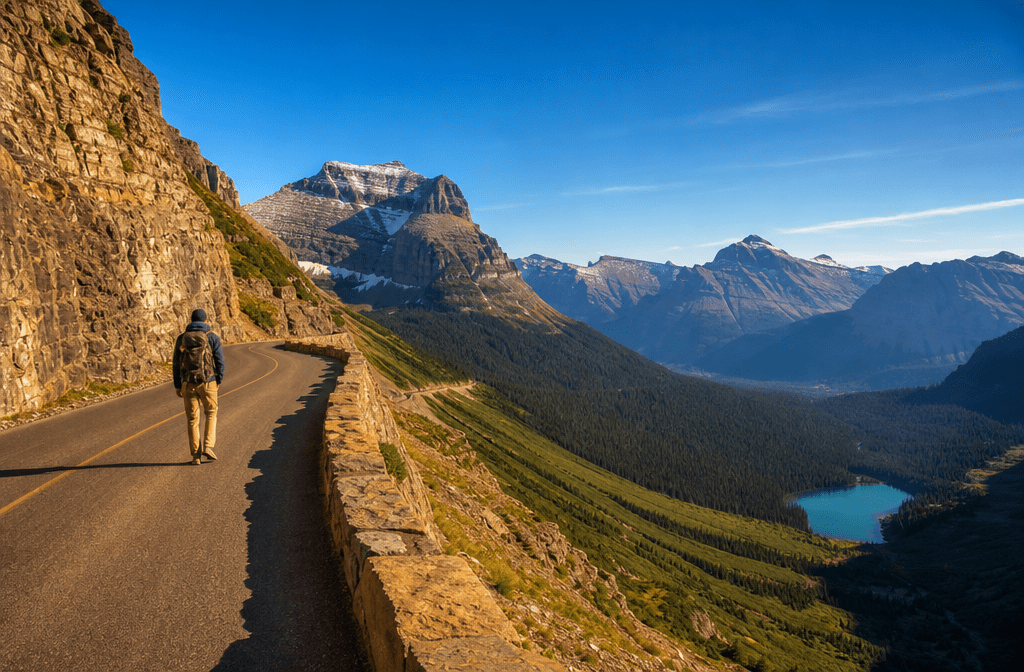
Start at the Apgar Visitor Center on the park’s west side, then drive the 50-mile Going-to-the-Sun Road east toward Logan Pass. The road itself is a National Historic Landmark and one of the most scenic drives in North America [1]. Stop at Lake McDonald for a short lakeside walk before heading up.
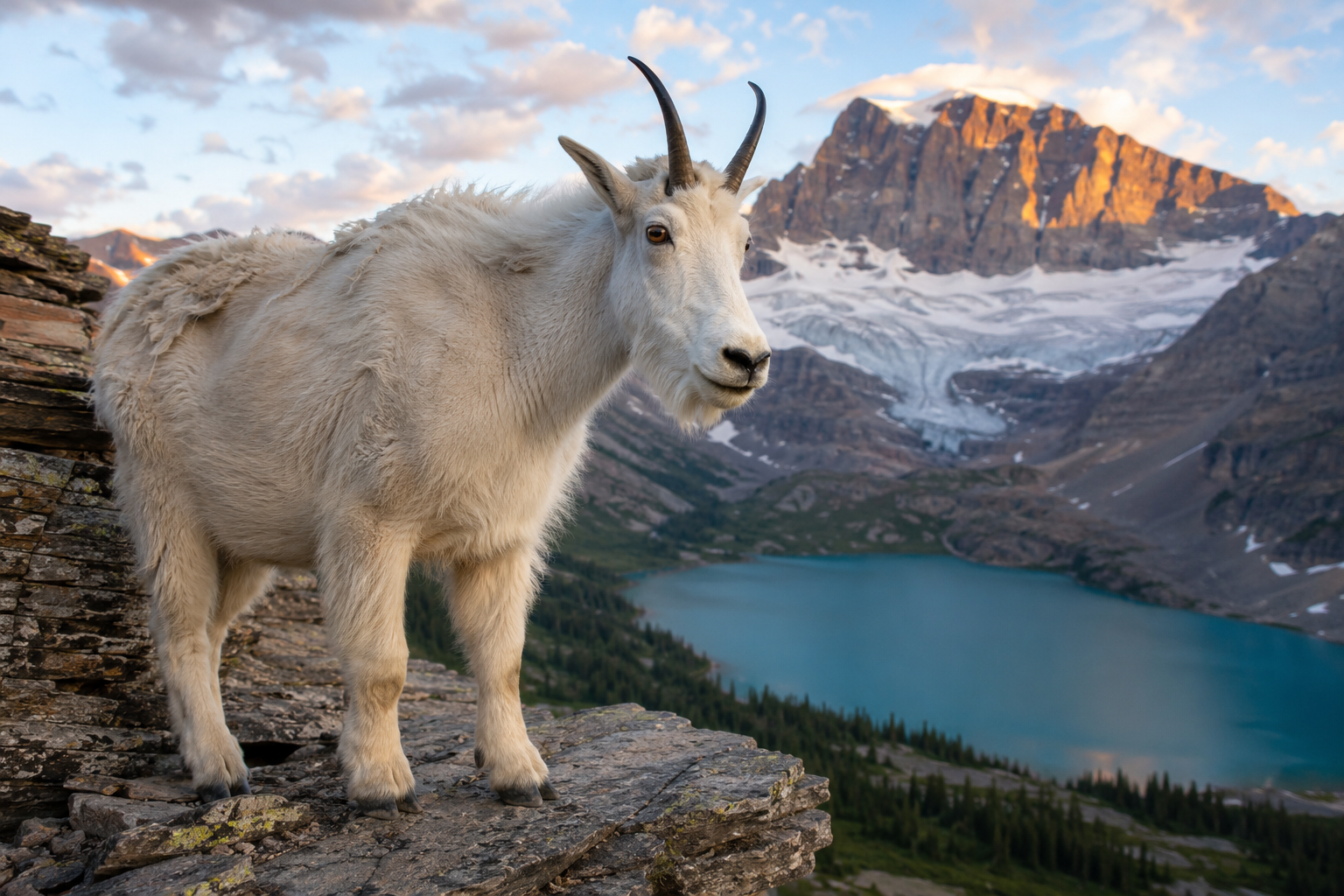
At Logan Pass (elevation 6,646 feet), hike the Hidden Lake Overlook Trail — a 2.7-mile round trip through alpine meadows with strong odds of seeing mountain goats and bighorn sheep [2]. The boardwalk protects fragile vegetation and makes the trail accessible even for casual hikers. Afterward, drive down to St. Mary on the east side for the night.
Day 2 — Many Glacier Valley
Many Glacier, often called the “Switzerland of North America,” is the park’s wildlife and hiking hub [3]. Strong hikers should attempt the Grinnell Glacier Trail (10.6 miles round trip, 1,600 feet of elevation gain) for views of the actual glacier, turquoise lakes, and waterfalls [3]. Moderate hikers can take the boat shortcut across Swiftcurrent Lake and Lake Josephine to cut 4 miles off the total distance.
If you prefer a shorter option, the Swiftcurrent Nature Trail (2.6 miles) loops around the lake with excellent moose and bear sightings at dawn.
Day 3 — Two Medicine Valley
Two Medicine is the park’s least-visited major area, which makes it ideal for a quieter final day. Take the Two Medicine Lake boat tour (a 45-minute narrated trip), then hike the 3.6-mile round-trip trail to Twin Falls [3]. The combination of boat and trail gives you dramatic scenery without a strenuous full day. End the afternoon at the Two Medicine Camp Store for a well-earned meal before driving out.
What Are the Must-See Trails for a Short Trip?
For a 3-day visit, prioritize trails that deliver the highest scenic return for the effort. The Hidden Lake Overlook, Grinnell Glacier Trail, and the Twin Falls hike at Two Medicine cover alpine meadows, active glaciers, and waterfall scenery respectively — the three defining landscapes of the park [2][3].
Ranked by scenic value vs. effort:
| Trail | Distance (RT) | Difficulty | Highlight |
|---|---|---|---|
| Hidden Lake Overlook | 2.7 miles | Easy-Moderate | Alpine meadows, mountain goats |
| Grinnell Glacier Trail | 10.6 miles | Strenuous | Active glacier, turquoise lakes |
| Swiftcurrent Nature Trail | 2.6 miles | Easy | Wildlife, lake reflections |
| Twin Falls (Two Medicine) | 3.6 miles | Moderate | Waterfall, quiet valley |
| Highline Trail (partial) | Variable | Moderate | Cliff-edge views, wildflowers |
Common mistake: Many first-timers attempt the Highline Trail (7.6 miles one-way) without arranging a shuttle back. If you add it to Day 1, hike only as far as the Haystack Butte overlook (about 3 miles out) and return the same way.
How Difficult Are the Hiking Trails for Average Fitness Levels?
Most trails in this 3-day itinerary are manageable for someone with average fitness who walks regularly. The Hidden Lake Overlook and Swiftcurrent Nature Trail are genuinely easy. The Grinnell Glacier Trail is the one exception — it’s long and gains significant elevation, so skip it if you’re not comfortable hiking 10+ miles.
A practical rule: if you can walk 5 miles on flat ground without stopping, you can handle most trails here. For Grinnell, add consistent stair-climbing fitness to that baseline.
Altitude note: Logan Pass sits above 6,600 feet. Visitors coming from sea level may feel mild shortness of breath on the first day. Drink extra water, go slowly, and give yourself 30 minutes to acclimate before starting any hike.
Best Time of Year to Visit Glacier National Park for Good Weather
Late June through mid-September is the optimal window for this 3-day itinerary. The Going-to-the-Sun Road typically opens fully to vehicles by late June, and most trails are snow-free by early July [1]. Weather is most stable in July and early August, with daytime highs in the 60s to low 70s Fahrenheit at lower elevations.
- July: Best trail conditions, peak wildflowers, all facilities open. Also the most crowded month.
- Early September: Fewer crowds, cooler temperatures, fall foliage starting. Some facilities close after Labor Day.
- Avoid late May/early June: The Sun Road is often partially closed, and high-elevation trails remain snow-covered.
Afternoon thunderstorms are common in summer, especially in July and August. Plan to be off exposed ridgelines by 1 p.m.
Average Cost for a 3-Day Trip Including Lodging and Park Fees
A 3-day Glacier National Park trip costs roughly $150 to $350 per person per day, depending heavily on lodging choice. Here’s a realistic breakdown:
| Expense | Budget Option | Mid-Range | Higher-End |
|---|---|---|---|
| Park entrance (7-day pass) | $35/vehicle | $35/vehicle | $35/vehicle |
| Lodging (per night) | $25-45 (camping) | $120-180 (motel) | $200-350 (lodge) |
| Food (per day) | $25-40 | $50-70 | $80-120 |
| Boat tours / activities | $0 | $20-30 | $50+ |
| Gear rental / guided tour | $0 | $50-80 | $150-300 |
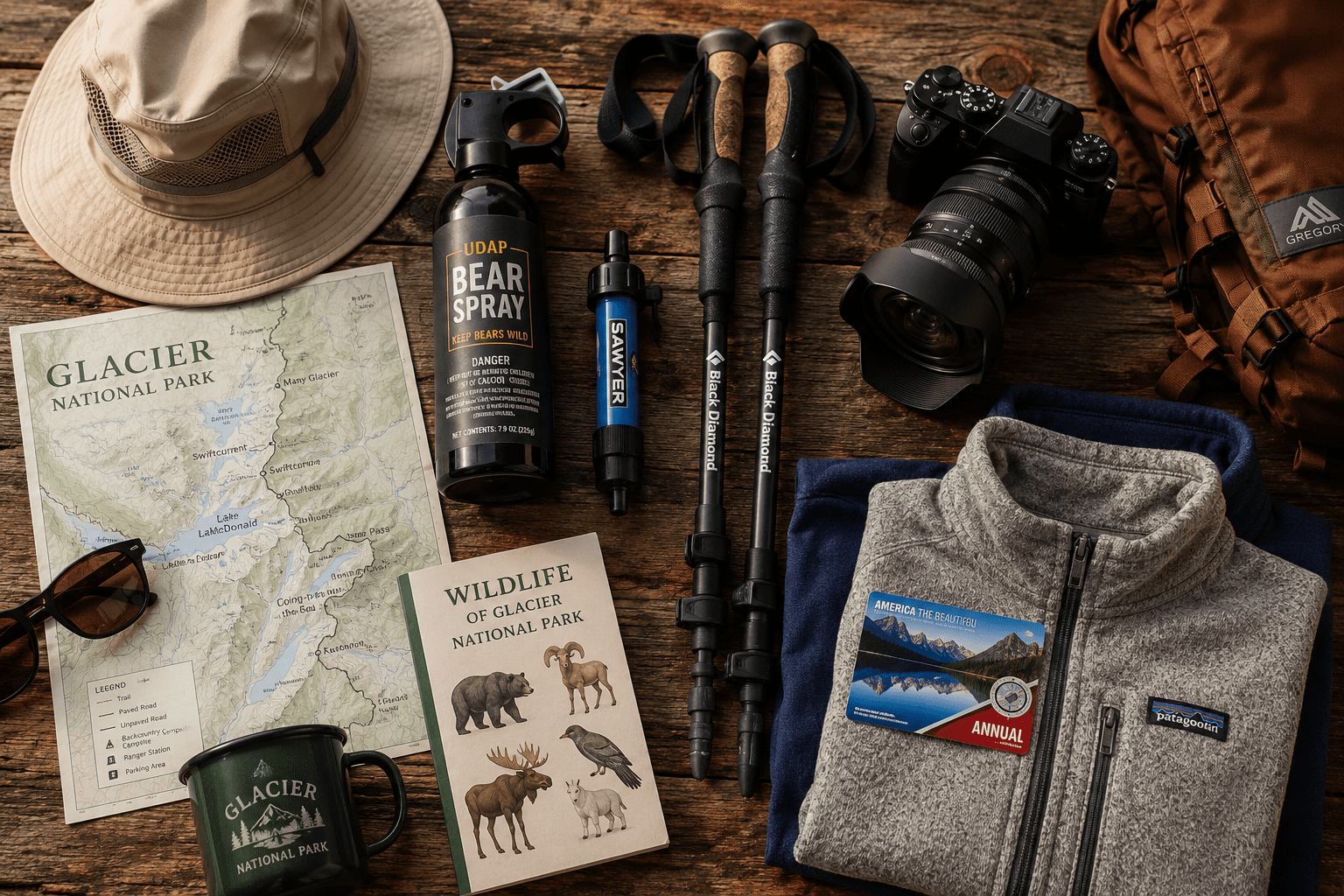
The park’s annual pass (America the Beautiful, around $80) makes financial sense if you plan to visit any other national park within 12 months. Camping inside the park requires advance reservations through Recreation.gov, and spots fill within minutes of opening in spring.
If you’re looking for more US outdoor destinations, the best camping spots in the US guide covers options ranging from free dispersed sites to full-service campgrounds.
Wildlife Safety Tips When Hiking in Glacier National Park
Glacier is home to both grizzly and black bears, as well as mountain lions, moose, and bison. Wildlife encounters are common, especially in Many Glacier and along the Grinnell Glacier Trail. The most important safety rule: carry bear spray and know how to deploy it before you leave the trailhead.
Core wildlife safety practices:
- Hike in groups of three or more whenever possible — bear encounters are significantly less likely with larger groups
- Make noise on the trail, especially near streams or in dense brush where bears can’t hear you approaching
- Never approach any wildlife; the NPS requires staying at least 100 yards from bears and wolves, 25 yards from all other animals [1]
- Store all food, scented items, and trash in bear boxes or canisters — never in your tent or car overnight
- If you encounter a grizzly, do not run; stand your ground, speak calmly, and deploy bear spray if the bear charges
Edge case: Moose are involved in more injuries in the park than bears. They’re unpredictable and will charge if they feel cornered, especially cows with calves. Give them even more space than you think is necessary.
What Photography Gear Should You Bring to Capture Mountain Landscapes?
For mountain landscape photography in Glacier, a wide-angle lens (16-35mm equivalent) and a telephoto lens (200-400mm) cover the two main needs: sweeping vistas and wildlife portraits. You don’t need professional camera equipment — a modern mirrorless camera or even a recent smartphone with a good zoom function produces excellent results.
Recommended gear list:
- Wide-angle lens for landscape shots along the Sun Road and at Logan Pass
- Telephoto or zoom lens (at least 200mm) for mountain goats, bears, and eagles
- Polarizing filter to cut glare on alpine lakes and deepen sky color
- Sturdy daypack tripod or gorilla-style flexible tripod for low-light shots
- Extra batteries — cold temperatures at elevation drain batteries faster than expected
- Rain cover for your bag; afternoon weather changes quickly
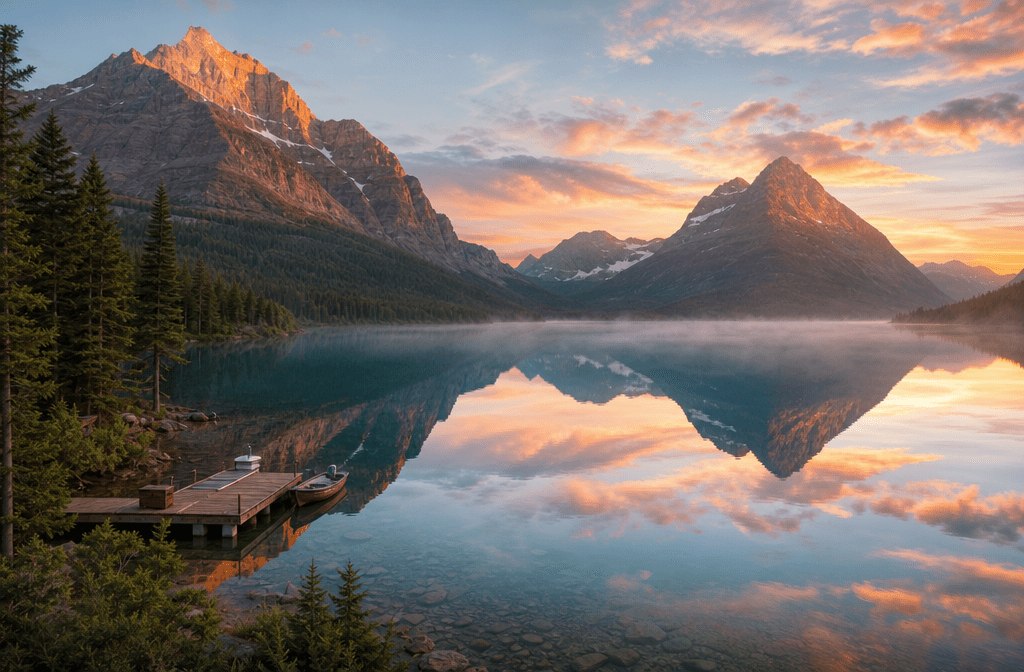
Best photography windows: Golden hour light (roughly 6 to 8 a.m. and 7 to 9 p.m. in summer) transforms the red and gray peaks into warm amber tones. Swiftcurrent Lake at dawn offers mirror-like reflections that disappear once wind picks up mid-morning.
How Crowded Does Glacier National Park Get in Peak Season?
Glacier is one of the most visited national parks in the US, and peak season (mid-July through mid-August) brings serious congestion. The park received over 3 million visitors in recent years, with the majority arriving in a 6-week summer window [1]. The Going-to-the-Sun Road vehicle reservation system was introduced to manage this volume, and it remains in effect for the 2026 season.
Practical crowd management strategies:
- Reserve your vehicle entry window on Recreation.gov as early as possible — these sell out months ahead
- Arrive at trailheads before 8 a.m. or after 4 p.m. to find parking
- Use the park’s free shuttle system to skip driving and parking stress entirely [1]
- Two Medicine Valley (Day 3 in this itinerary) is consistently less crowded than Logan Pass or Many Glacier
If you enjoy the idea of exploring a less-trafficked national park in a day, the one day in Yellowstone guide shows how a similar early-start strategy works in another high-traffic park.
Alternatives to Hiking for Less Athletic Travelers
Glacier National Park offers strong non-hiking experiences. The Going-to-the-Sun Road drive alone is a world-class scenic experience, and several boat tours, ranger programs, and accessible viewpoints require no trail walking at all.
Non-hiking highlights:
- Going-to-the-Sun Road drive: Pull-outs at Weeping Wall, Bird Woman Falls overlook, and the Jackson Glacier Overlook are all roadside stops
- Two Medicine Lake boat tour: A narrated 45-minute cruise with mountain views [3]
- Swiftcurrent Motor Inn area: Flat lakeside walking paths with frequent wildlife sightings
- Apgar Village: Easy flat paths around Lake McDonald’s shore with striking colored pebbles visible through clear water
- Red Bus Tours: Historic 1930s “jammers” (open-top red buses) offer guided drives along the Sun Road — a classic way to experience the road without driving yourself
Can You Still See Glaciers in Glacier National Park?
Yes, glaciers still exist in the park, but their number and size have declined substantially. The park had roughly 150 named glaciers in the early 20th century; current estimates put the number of active glaciers at around 25, with Grinnell Glacier being the most accessible and visually dramatic [1][3].
Grinnell Glacier is the best target for this 3-day itinerary. The hike to the glacier’s edge (10.6 miles round trip from the trailhead, or shorter via boat shortcut) rewards you with a view of the ice field, meltwater pools, and the characteristic blue-green color of glacial water. The glacier is visibly smaller than in historical photos, which makes the visit both stunning and sobering.
If the full hike is too demanding, the Jackson Glacier Overlook on the Going-to-the-Sun Road provides a clear view of a glacier from your car window — no hiking required.
Best Scenic Drives and Alternatives If You Don’t Want Intense Hiking
The Going-to-the-Sun Road is the park’s defining scenic drive and should be the centerpiece of any 3-day visit, regardless of fitness level. The 50-mile road crosses the Continental Divide and passes through five distinct ecological zones, from cedar forests at lake level to bare alpine tundra at Logan Pass [1].
Other scenic drives worth adding:
- Chief Mountain International Highway: Connects the park’s northeast corner to Waterton Lakes National Park in Canada — dramatic plains-to-peaks transition
- Two Medicine Road: A quieter 7-mile road ending at Two Medicine Lake with mountain reflections
- Many Glacier Road: 12 miles of valley driving with frequent bear and moose sightings at dusk
For travelers who love scenic road trips as a primary activity, the California 10-day coastal road trip and the Miami to Key West road trip offer similar drive-first travel formats in other stunning regions.
What Camping and Lodging Options Are Near the Park?
Glacier National Park has 13 campgrounds inside park boundaries, ranging from primitive tent-only sites to full-service campgrounds with flush toilets. Apgar Campground (west entrance) and St. Mary Campground (east entrance) are the largest and most convenient for this 3-day itinerary. Both require advance reservations through Recreation.gov [1].
Lodging options by category:
- Inside the park: Many Glacier Hotel (historic, iconic, books out months ahead), Lake McDonald Lodge, and Swiftcurrent Motor Inn offer the most immersive experience [2]
- Gateway towns: Whitefish and Browning offer motels, B&Bs, and vacation rentals within 30 to 60 minutes of the park entrances
- Camping: Sites inside the park cost roughly $20 to $35 per night; first-come, first-served sites exist but fill by 7 a.m. in peak season
Book early: Many Glacier Hotel reservations for July and August open in January and sell out within days. If you miss the window, check for cancellations in May and June.
Common Mistakes First-Time Glacier National Park Visitors Make
The most costly mistakes are logistical, not physical. Most first-timers underestimate how early they need to book reservations and how quickly afternoon weather turns dangerous.
Top mistakes and how to avoid them:
- Not reserving the vehicle entry permit: The Sun Road requires timed entry tickets during peak season. Book on Recreation.gov the moment your dates are set.
- Starting hikes too late: Parking lots at Logan Pass fill before 9 a.m. in July. Aim to arrive by 7 a.m. or use the shuttle.
- Skipping bear spray: It’s not optional. Rent it at the park entrance if you don’t own it.
- Underestimating elevation: Even fit hikers feel the altitude on the first day. Build in acclimatization time.
- Ignoring afternoon weather: Storms build fast over the peaks. Start hikes early and plan to be back at the trailhead by 1 p.m. on exposed routes.
- Only visiting Logan Pass: Many Glacier and Two Medicine are equally spectacular and far less crowded — don’t skip them.
- Not downloading offline maps: Cell service is unreliable throughout most of the park. Download the NPS app maps or a trail app like AllTrails before you arrive [1].
Are There Guided Tours Available for First-Time Visitors?
Yes, guided options range from half-day interpretive walks led by NPS rangers (free with park admission) to multi-day backpacking expeditions with full outfitters. Glacier Guides is the park’s longest-running licensed outfitter and offers a 3-day backpacking package that covers terrain beyond what day hikers can reach [4].
Guided tour options:
- NPS ranger programs: Free, daily in summer, covering geology, wildlife, and park history — check the schedule at any visitor center
- Red Bus Tours: Half-day and full-day narrated drives along the Sun Road, operated by Glacier National Park Lodges
- Glacier Guides: Multi-day hiking and backpacking trips with gear, meals, and experienced guides included [4]
- Boat tours: Two Medicine Lake and Lake McDonald both offer guided boat tours with ranger narration [3]
Guided tours are especially valuable for first-timers who want wildlife interpretation or who are nervous about bear country. A guide won’t guarantee a bear sighting, but they’ll know exactly where to look and how to behave safely.
FAQ: Glacier National Park 3-Day Itinerary
Do I need a reservation to enter Glacier National Park?
During peak season (late May through mid-September), a timed vehicle entry reservation is required to drive the Going-to-the-Sun Road between 6 a.m. and 3 p.m. Book through Recreation.gov well in advance. Entry before 6 a.m. or after 3 p.m. does not require a reservation [1].
How much does it cost to enter Glacier National Park in 2026?
The standard vehicle pass costs $35 and is valid for 7 days. The America the Beautiful annual pass ($80) covers entrance to all US national parks for 12 months and is worth it if you visit more than two parks per year.
Can I drive the entire Going-to-the-Sun Road in one day?
Yes. The full 50-mile drive takes 2 to 3 hours without stops, but most visitors spend a full day with pull-outs, short walks, and the Logan Pass hike. Plan for 6 to 8 hours if you want to do it properly [1][2].
Is Glacier National Park safe for solo hikers?
Solo hiking is common but carries higher risk in bear country. If you hike alone, make extra noise, carry bear spray, tell someone your route and expected return time, and stick to well-trafficked trails. The Grinnell Glacier Trail is not recommended for solo hikers due to its length and remoteness.
What should I pack for a day hike in Glacier?
Essentials: bear spray, 2 to 3 liters of water, snacks, a rain layer, sun protection, trail map (downloaded offline), and sturdy hiking shoes with ankle support. Trekking poles are helpful on the Grinnell Glacier Trail.
When does the Going-to-the-Sun Road open each year?
The full road typically opens to vehicles by late June, though the exact date varies by snowpack. Check the NPS website for current road conditions before your trip [1].
Is Glacier National Park worth visiting if I can only go for 3 days?
Absolutely. Three days is enough time to experience the park’s three most distinct regions and see its signature landscapes. You won’t see everything, but you’ll see enough to understand why it’s consistently ranked among the top national parks in the country.
Are there cell service and Wi-Fi options inside the park?
Cell service is limited to near the entrance areas and a few lodges. Download offline maps, trail apps, and NPS information before you enter. Some lodges offer Wi-Fi in common areas, but it’s slow and unreliable.
What is the best area to stay inside the park for a 3-day trip?
St. Mary (east entrance) is the most central base for this itinerary, putting you close to Logan Pass, Many Glacier, and Two Medicine. Many Glacier Hotel is the most atmospheric option if you can get a reservation [2].
Can children do these hikes?
Yes, with appropriate trail selection. The Hidden Lake Overlook boardwalk and Swiftcurrent Nature Trail are family-friendly. The Grinnell Glacier Trail is too long for young children. The Two Medicine boat tour is excellent for families with kids of any age [3].
Conclusion: Make the Most of Your 3-Day Glacier Adventure
A glacier national park itinerary 3 days is genuinely achievable without feeling rushed, as long as you plan logistics before you arrive. The route outlined here — Going-to-the-Sun Road on Day 1, Many Glacier on Day 2, Two Medicine on Day 3 — gives you the park’s best trails, most reliable wildlife corridors, and most dramatic scenery in a logical sequence.
Your actionable next steps:
- Book your vehicle entry reservation on Recreation.gov as soon as your dates are confirmed
- Reserve lodging or campsite at least 3 to 6 months ahead for summer visits
- Download the NPS Glacier app and AllTrails maps for offline use before you leave home
- Purchase or rent bear spray before entering the park
- Set your alarm for 6 a.m. on each hiking day — early starts are the single biggest factor in a great experience
If this trip sparks a broader national parks road trip, the one day in Yellowstone guide is a natural companion for extending your adventure. And for travelers planning other short-format trips, the Yosemite National Park 1-day itinerary and 25 hidden gems in the USA offer more inspiration for making the most of limited time in spectacular places.
Glacier National Park rewards preparation. The visitors who leave saying it changed their lives are almost always the ones who showed up early, carried bear spray, and chose trails that matched their fitness level honestly. Do those three things, and three days here will be more than enough to understand why this place matters.
References
[1] Glac – https://www.nps.gov/glac/?utm_source=openai
[2] Your Glacier National Park Three Day Itinerary – https://www.glacierparkcollection.com/lodging/apgar-village-lodge-cabins/stories/your-glacier-national-park-three-day-itinerary/?utm_source=openai
[3] Glacier – https://www.tourparks.com/parks/glacier/?utm_source=openai
[4] 3 Day Backpacking Trip – https://glacierguides.com/hike/hiking-trips/backpacking-trips/3-day-backpacking-trip/?utm_source=openai