Last updated: October 1, 2026
Quick Answer
Tuscany Italy in winter trades sunflower fields for fog-wrapped hills, empty piazzas, and wood-smoke evenings that feel like a film set. Towns like Montepulciano, Siena, and Lucca glow with Christmas markets and candlelit wine cellars from late November through early January. It’s colder and quieter than summer, but that’s exactly the point if you want authentic streets, cheaper rooms, and a slower pace.
Key Takeaways
- Winter temperatures in Tuscany typically run between 2°C and 12°C (36°F to 54°F), with the coldest stretch in January.
- December is the best month for a cinematic trip, thanks to Christmas markets in Florence, Montepulciano, and Lucca.
- Hotel prices drop 20 to 40 percent compared to peak summer, especially outside the Christmas week.
- Fewer crowds mean you can actually see the Duomo, the Palio-less Piazza del Campo, and hill towns without shoulder-to-shoulder tourists.
- 4 to 7 days is the sweet spot for a winter Tuscany itinerary covering Florence, Siena, and at least two small villages.
- Swimming and beach activities are off the table, but wine tasting, truffle hunting, and spa towns stay open year-round.
- Packing layers matter more than packing light. Stone buildings hold the cold, and wind off the hills bites harder than the thermometer suggests.
What Is Tuscany Italy in Winter Weather Really Like?
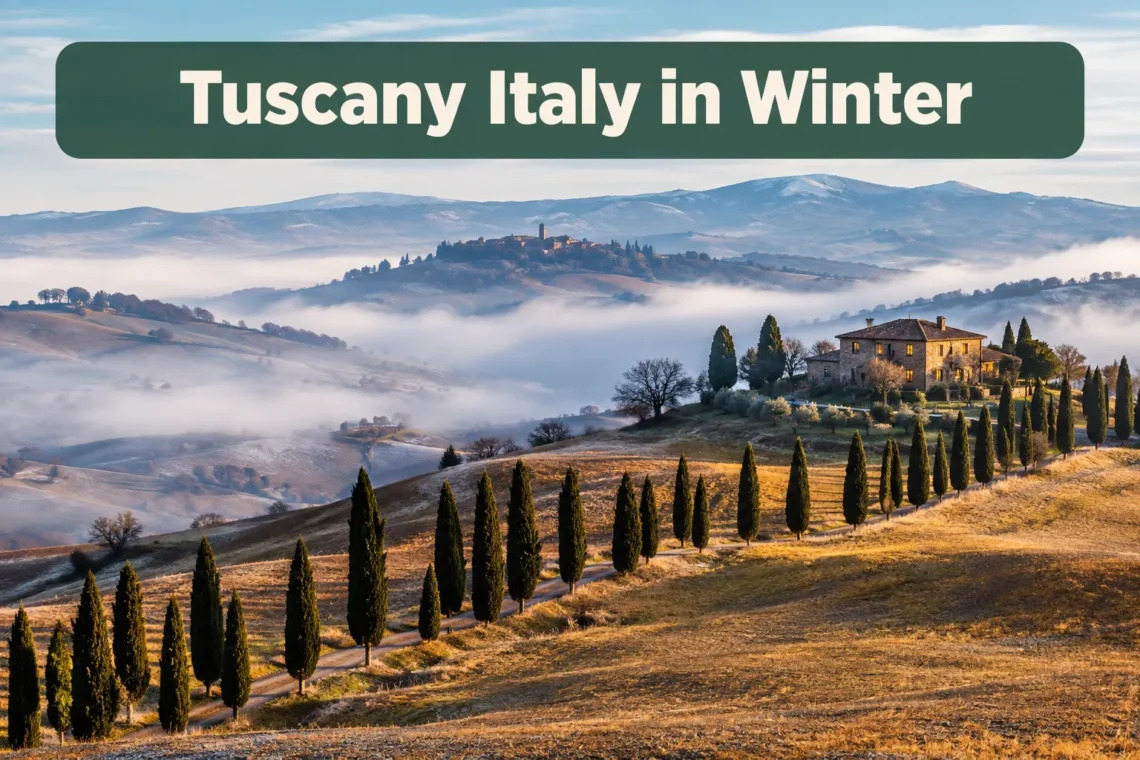
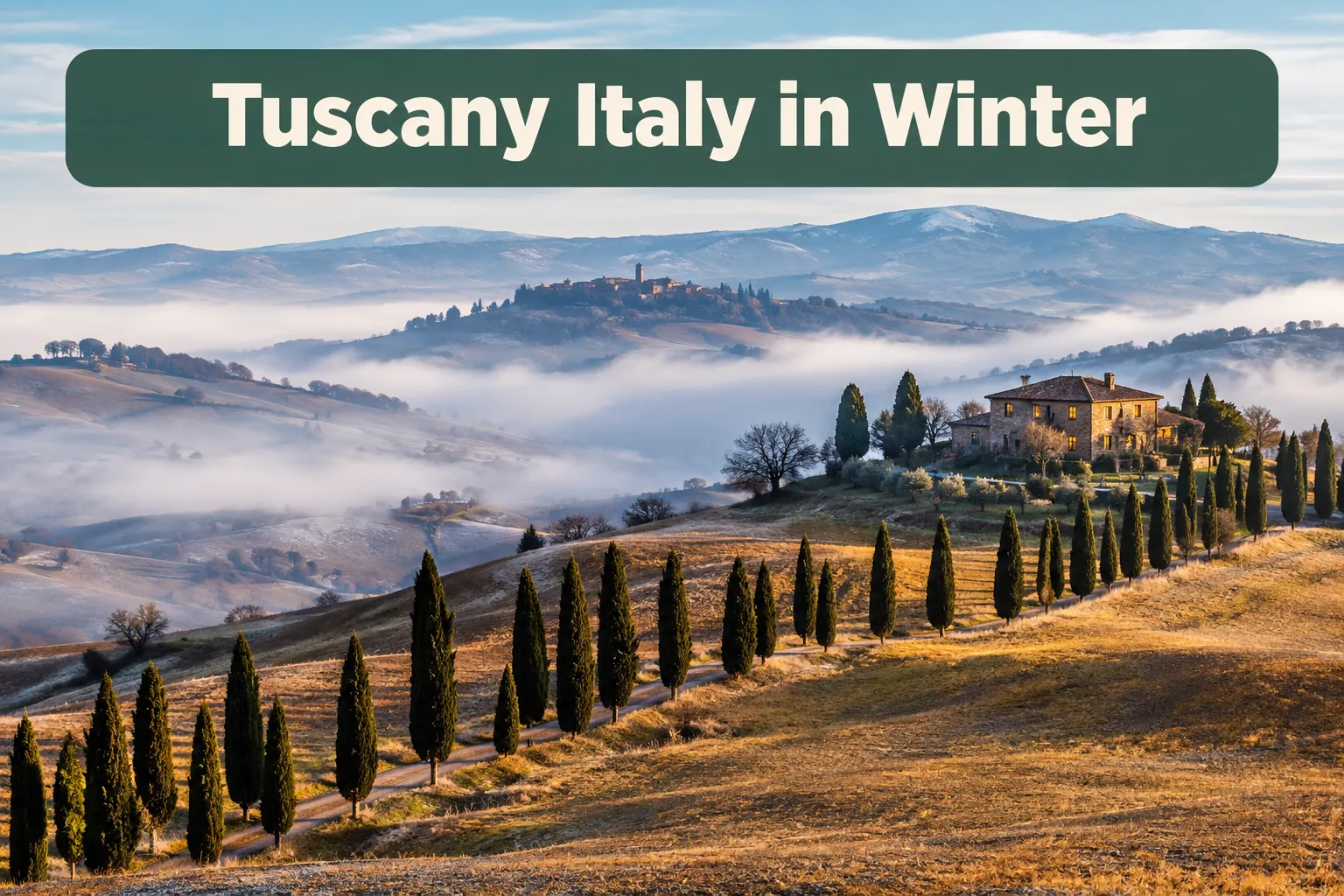
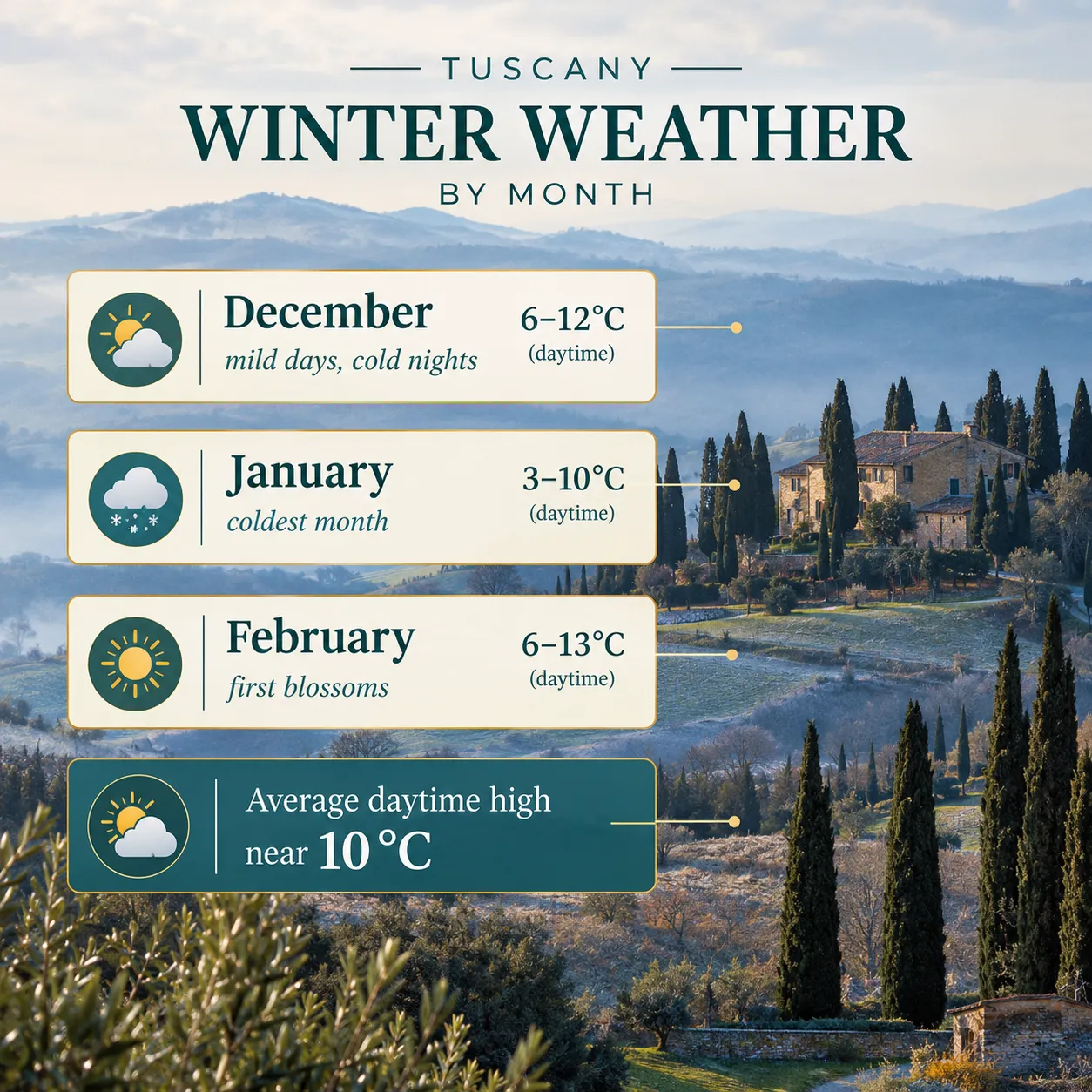
Tuscany in winter is cool, damp, and often foggy, with daytime highs around 8 to 12°C (46 to 54°F) and nights dropping closer to freezing in January. It is not Alpine-cold, but the humidity and stone architecture make it feel colder than the number on your phone.
{#IMG_SLOT_1}
Here’s what to actually expect month by month:
- December: Mild days, cold nights, occasional rain. Christmas lights make up for the grey skies.
- January: The coldest month, with frost in the countryside and crisp, clear mornings.
- February: Starting to warm slightly, with almond blossoms appearing late in the month.
Fog is common in the Val d’Orcia and Chianti valleys early in the morning, which is actually why so many photographers chase this season. The mist rolling over cypress-lined roads is the exact image people picture when they think of a Tuscan movie scene.
Is Tuscany too cold to visit in winter? No, not if you pack layers and plan museum or wine-cellar visits for the coldest afternoons. Choose winter if you want atmosphere over sunbathing. Choose late spring instead if cold mornings genuinely ruin your trip.
Best Time to Visit Tuscany in Winter for Fewer Crowds
The best window for fewer crowds and lower prices is early December before the holiday rush, or January after New Year’s Day through mid-February. Christmas week and New Year’s itself get busy with Italian domestic travelers, so prices creep back up during that short stretch.
According to Discover Tuscany’s December events guide, the region’s towns light up with markets and concerts throughout the month, which draws some crowds on weekends but leaves weekdays wide open.
A simple rule: book weekday visits to Florence and Siena, and save weekend days for smaller villages where crowd size barely changes.
Cheapest time to book Tuscany hotels tends to be mid-January through February, right after the holiday spike ends. Hotels in Florence and Siena routinely drop rates once the Christmas lights come down. Compare that to July and August, when the same rooms can cost nearly double.
Is Tuscany Worth Visiting in Winter or Should I Go in Summer?
Tuscany is worth visiting in winter if you want authentic town life, cozy food, and photogenic fog over the hills instead of crowded piazzas and 90°F heat. Summer wins if your priority is long daylight hours, outdoor pools, and sunflower fields in full bloom.
Here’s a quick side-by-side to help you decide:
| Factor | Winter (Dec-Feb) | Spring (Apr-May) | Summer (Jun-Aug) |
|---|---|---|---|
| Crowds | Low | Moderate | High |
| Hotel prices | Lowest | Moderate | Highest |
| Daytime temps | 8-12°C | 15-22°C | 28-35°C |
| Christmas markets | Yes | No | No |
| Outdoor swimming | No | Limited | Yes |
| Landscape look | Misty, golden-brown | Green, blooming | Golden, dry |
Tuscany winter vs spring: choose winter if you want the Christmas market atmosphere and the cheapest rates of the year. Choose spring if you want green rolling hills, longer days, and milder walking weather without peak summer heat. If you’re also weighing other Italian regions, the Piedmont Italy itinerary that feels like Tuscany is worth a look for a similar vibe with different festival timing.
10 Cozy Places in Tuscany Italy in Winter That Feel Like a Movie Set
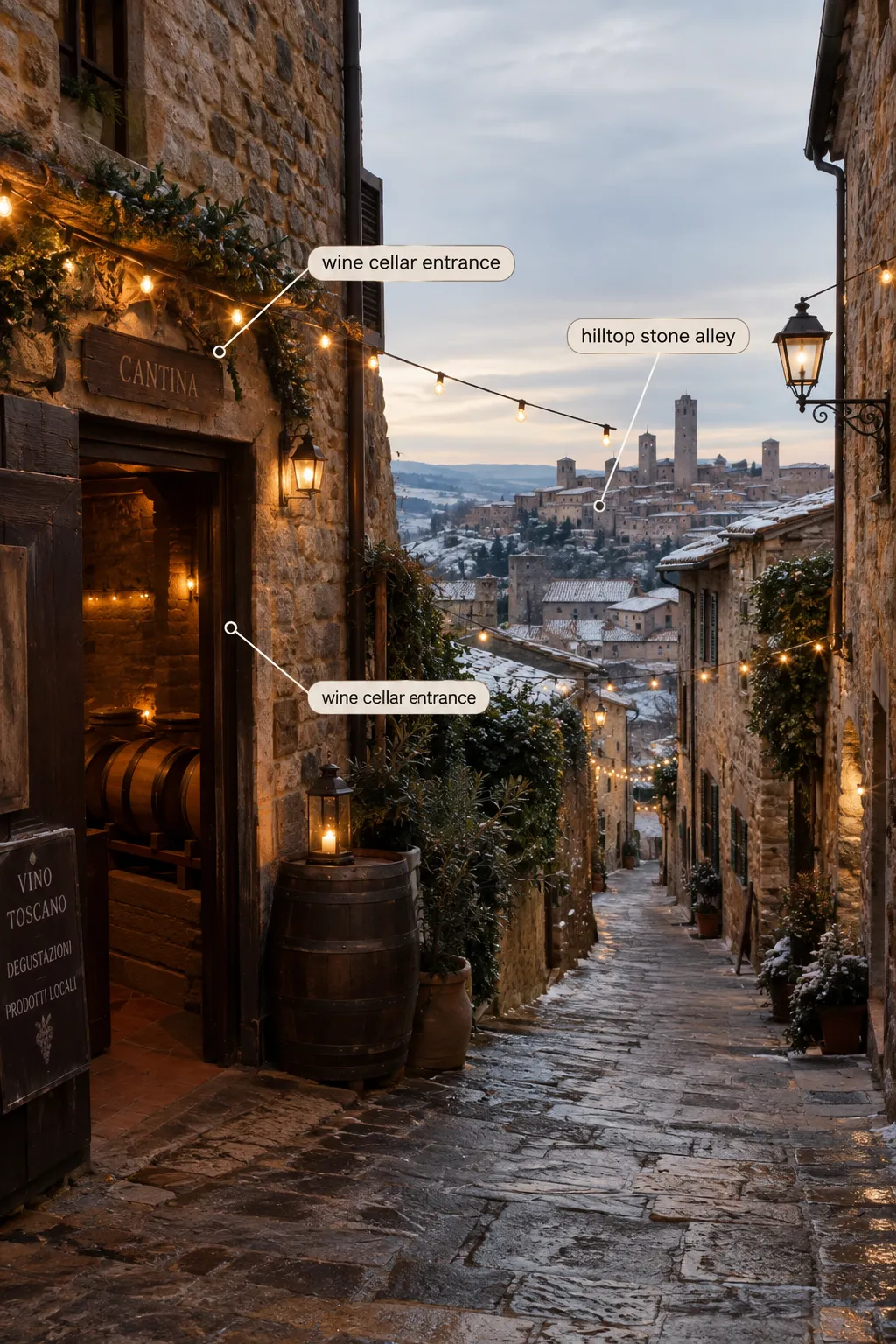
These ten Tuscan towns and accommodations deliver the fog, firelight, and stone-alley charm that make winter feel cinematic rather than bleak. Each one pairs well with a short stay of one to two nights.
{#IMG_SLOT_2}
- Montepulciano – Its Christmas Village in Piazza Grande turns the hilltop square into a wooden-stall market with wine barrels doubling as tasting counters, according to Visit Tuscany’s roundup of Christmas markets.
- Siena – The Mercato nel Campo fills Piazza del Campo with early-December medieval market stalls, per Discover Tuscany’s Christmas guide.
- Lucca – “Magico Natale” wraps the city walls in lights, and its winter markets stay low-key compared to Florence’s crowds, as noted by My Travel in Tuscany.
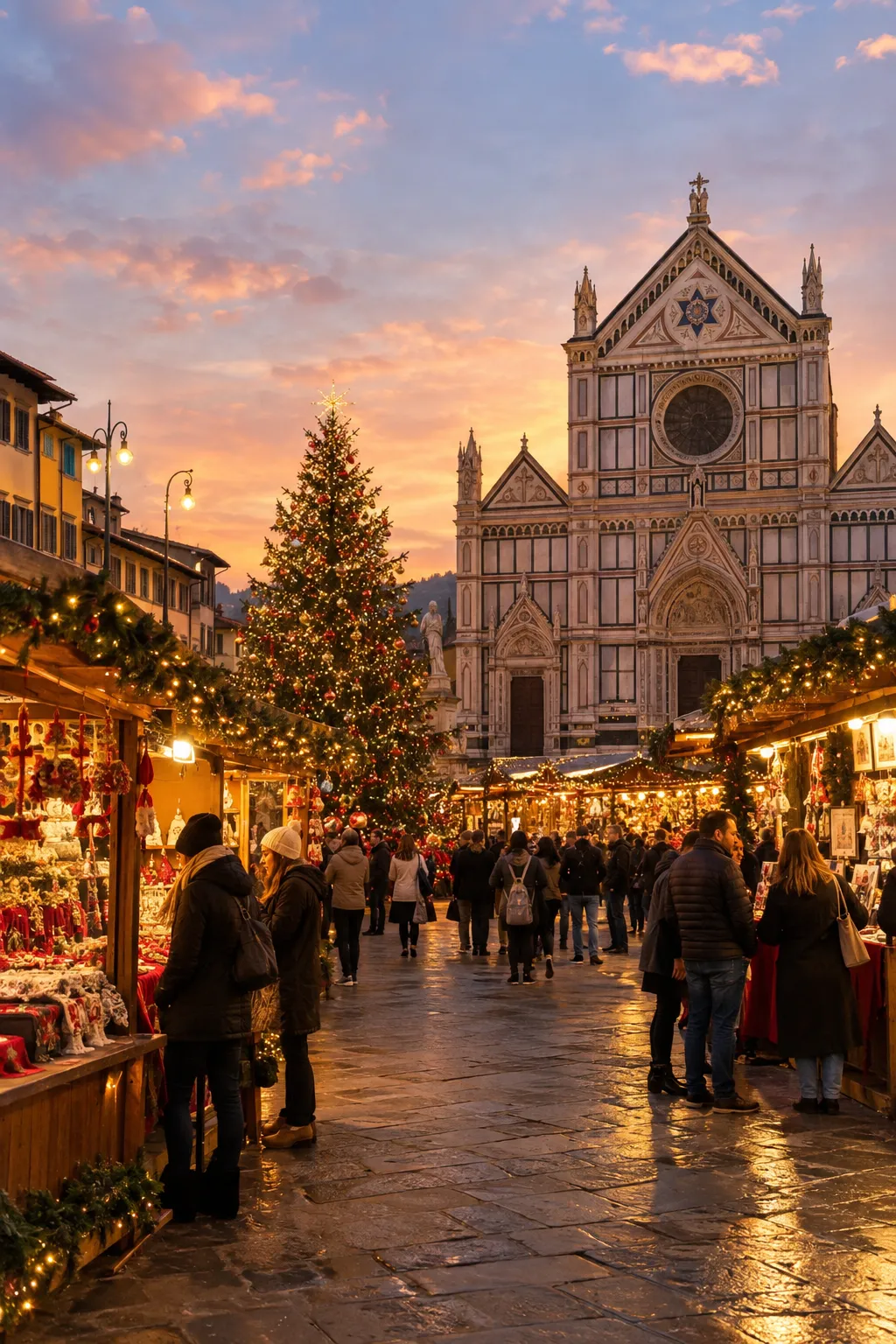
- Florence’s Santa Croce district – The Weihnachtsmarkt near the basilica brings a German-style wooden market into the historic center, described by European Best Destinations.
- Arezzo – Its December antique fair gives the whole center a period-film look, fitting given its film history.
- San Gimignano – Towers wrapped in winter mist, with far fewer bus tours than summer.
- Empoli – The “Città del Natale” program turns a smaller, local town into a genuinely cozy stop, per It’s Tuscany.
- Volterra – Quiet stone streets and alabaster shops, best visited on a crisp clear morning.
- Pienza – Tiny, walkable, and famous for pecorino cheese shops that smell incredible when it’s cold outside.
- Cortona – Hillside views over the valley fog, with a slower, film-set pace once the day-trippers leave.
For planning a base in the region’s biggest city first, the Tuscany Italy travel guide for first-time visitors and the Florence hidden gems guide both pair naturally with this list.
Where to stay: Pick an agriturismo with a working fireplace near Montepulciano or Pienza if you want the “farmhouse movie” feel. Pick a central apartment in Lucca or Siena if you’d rather walk to markets without driving winter roads at night.
Tuscany Winter Activities: Things to Do When It’s Cold
The best winter activities in Tuscany swap beach days for wine cellars, truffle hunts, thermal spas, and museum time. Cold weather actually makes indoor Tuscan experiences more appealing, not less.
Try these when the temperature drops:
- Wine tasting in Chianti or Montalcino cellars, many of which are warmer and cozier in winter than during a hot August tour.
- Truffle hunting with a local guide, since winter is peak white and black truffle season in parts of the region.
- Thermal baths at Saturnia or Bagno Vignoni, where the warm mineral water feels even better against cold air.
- Museum visits in Florence and Siena, with far shorter lines than summer.
- Cooking classes focused on winter dishes like ribollita and wild boar ragu.
Can you swim and do outdoor activities in Tuscany winter? Outdoor pools and beach swimming are closed or impractical, but hiking on clear, cold days and visiting hot springs are both doable. Choose a thermal spa day if you want the “outdoor water” experience without the summer crowds.
Tuscany Winter Festivals and Christmas Markets
Tuscany’s winter festival season runs from late November through early January, centered on Christmas markets, concerts, and regional food fairs. This is the single biggest reason winter feels cinematic rather than just cold.
{#IMG_SLOT_3}
According to Italia.it’s list of the best Christmas markets, Tuscany’s markets stand out for blending wooden Alpine-style stalls with distinctly Italian food stalls selling roasted chestnuts, mulled wine, and local pastries.
Key events worth building a trip around:
- Florence’s Santa Croce Weihnachtsmarkt – typically runs through most of December.
- Montepulciano’s Christmas Village – weekends in early to mid-December.
- Siena’s Mercato nel Campo – early December, right in Piazza del Campo.
- Lucca’s Magico Natale – lights and markets through the holidays.
- Arezzo’s antique fair – first weekend of most months, including a notable December edition.
As Firenze Made in Tuscany points out, these markets also showcase local artisans selling ceramics, leather goods, and handmade ornaments, which adds a slower, craft-fair warmth you won’t find in summer souvenir shops. Several tour operators now run curated Christmas market itineraries across the region for the 2026 season, bundling two or three towns into a single cozy day trip.
What to Pack for Tuscany Italy in Winter
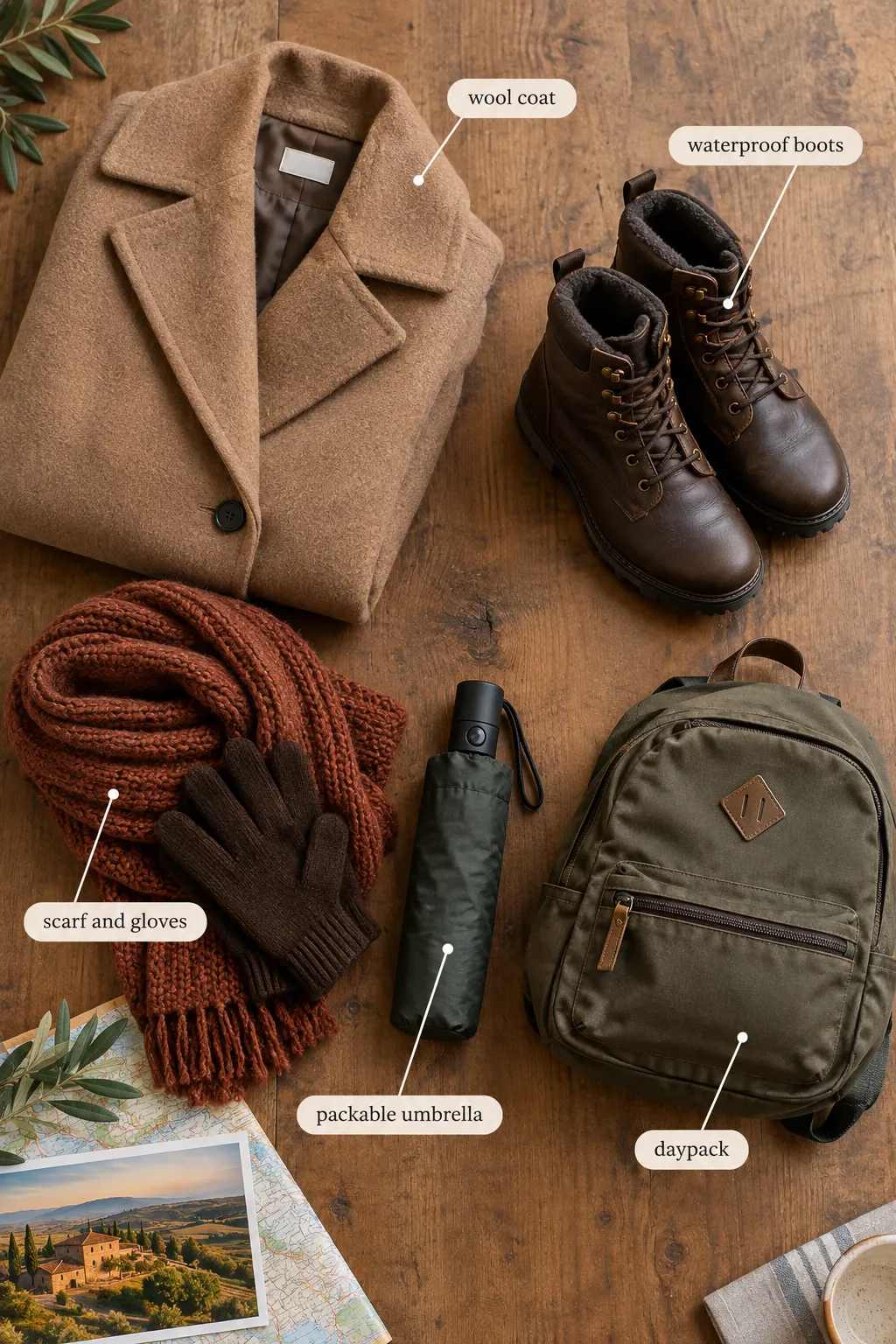
Pack warm layers, waterproof boots, and a proper coat for Tuscany in December, January, and February, since stone interiors and foggy mornings feel colder than the daytime temperature suggests. A rain-ready outer layer matters just as much as warmth.
{#IMG_SLOT_4}
Your packing list should include:
- A wool or down coat, not just a light jacket.
- Waterproof, comfortable walking boots for cobblestones and wet stone steps.
- Layers: thermal base layer, sweater, and a scarf you can add or remove.
- Gloves and a hat, especially for early-morning fog in the hills.
- A compact umbrella, since winter rain in Tuscany is common but usually brief.
- A daypack for market shopping and layers you shed by midday.
If you’re combining this trip with another cold-weather European stop, the packing logic lines up closely with this guide to packing for France in winter.
Common mistake: packing only one mid-weight jacket. Tuscan winter weather swings from damp morning fog to clear, cold afternoons, so layers you can adjust beat one “do everything” coat.
How Many Days Do You Need in Tuscany in Winter?
Four to seven days works well for a winter Tuscany trip, covering one or two base cities plus a handful of small towns. Fewer than three days means you’ll spend more time driving than actually enjoying the markets and villages.
A simple structure that works:
- Days 1-2: Florence, including the Santa Croce Christmas market and a museum day.
- Days 3-4: Siena and a day trip to San Gimignano or Volterra.
- Days 5-6: Montepulciano and Pienza, with a wine cellar afternoon.
- Day 7 (optional): Lucca, if time allows before heading home.
For a shorter trip, the 3-day Florence itinerary built around a slow pace adapts well to winter’s shorter daylight hours. And before you go, it’s worth skimming this list of common mistakes to avoid in Italy, since several of them (like underestimating winter closing hours) apply directly to a cold-season trip.
FAQ
Is Tuscany Italy in winter actually cold?
Yes, but moderately. Daytime highs usually sit between 8 and 12°C (46-54°F), with colder, damp mornings and occasional frost in January.
What is the cheapest month to visit Tuscany?
Mid-January through February tends to offer the lowest hotel rates, right after the Christmas holiday demand fades.
Do Tuscany’s Christmas markets run the whole month of December?
Most run for several weekends or a continuous stretch through mid-to-late December, though exact dates vary by town and year.
Can I visit Tuscan hill towns by public transport in winter?
Yes, though bus schedules to smaller villages reduce on weekends and holidays, so renting a car gives more flexibility.
Is winter a good time for wine tasting in Tuscany?
Yes, winter is an excellent time since cellars are warm, less crowded, and many wineries offer longer, more relaxed tastings than in peak summer.
Will I see snow in Tuscany in winter?
Snow is rare in the lowland towns but possible in higher hill areas a few times each winter, usually melting within a day or two.
Are Tuscany’s outdoor attractions open in winter?
Most gardens, viewpoints, and hiking trails stay open, though some rural agriturismi and seasonal outdoor pools close for the season.
Should I visit Tuscany in winter or save it for summer?
Visit in winter if you want lower prices, fewer crowds, and Christmas market charm. Save it for summer if long daylight and swimming matter more to you.
Conclusion
Tuscany Italy in winter isn’t a compromise season. It’s a genuinely different trip, built around foggy hilltop views, candlelit wine cellars, and Christmas markets that thin out the crowds you’d otherwise fight in July.
If you want the cinematic version of Tuscany, go in December for the markets or January for the quiet, frosty mornings. Pack real layers, book four to seven days, and split your time between one city base and at least two small hill towns.
Start by picking two or three towns from this list, check their specific Christmas market dates for 2026, and build your days around slow mornings and warm evenings. That’s the whole secret to making winter feel like the best season, not the leftover one.