
Last updated: October 7, 2026
Quick Answer: Melbourne has far more to offer than the postcard highlights. Beyond Federation Square and the MCG, the city hides steam railways through fern gullies, centuries-old laneways covered in world-class street art, and free museums that rival any in the world. This guide covers 17 Melbourne attractions – including hidden gems, family picks, solo spots, and free experiences – so you can plan a trip that actually surprises you.
Key Takeaways
- Several of Melbourne’s best attractions are completely free, including the State Library Victoria and Royal Botanic Gardens
- The laneway network is one of the city’s most distinctive features and is easy to explore on foot
- Queen Victoria Market is the largest open-air market in the Southern Hemisphere and has operated for over 140 years
- The Dandenong Ranges and Puffing Billy Railway are about an hour from the CBD and feel like a different world
- Weekends are busier at most sites – early mornings (before 10am) give you a much calmer experience
- Eureka Skydeck sits 300 metres above the city and is the Southern Hemisphere’s highest urban viewing point
- Many of Melbourne’s best spots for photography are free or low-cost
- The best time to visit is March to May (autumn) or September to November (spring) for mild weather and fewer crowds
What Are the Best Hidden Gems to Visit in Melbourne
Melbourne’s best-kept secrets tend to be the places locals use every day. Think narrow cobblestone laneways, a 19th-century prison, a grassroots theatre scene, and a steam train that winds through ancient fern gullies.
Here are 17 Melbourne attractions that go beyond the obvious:
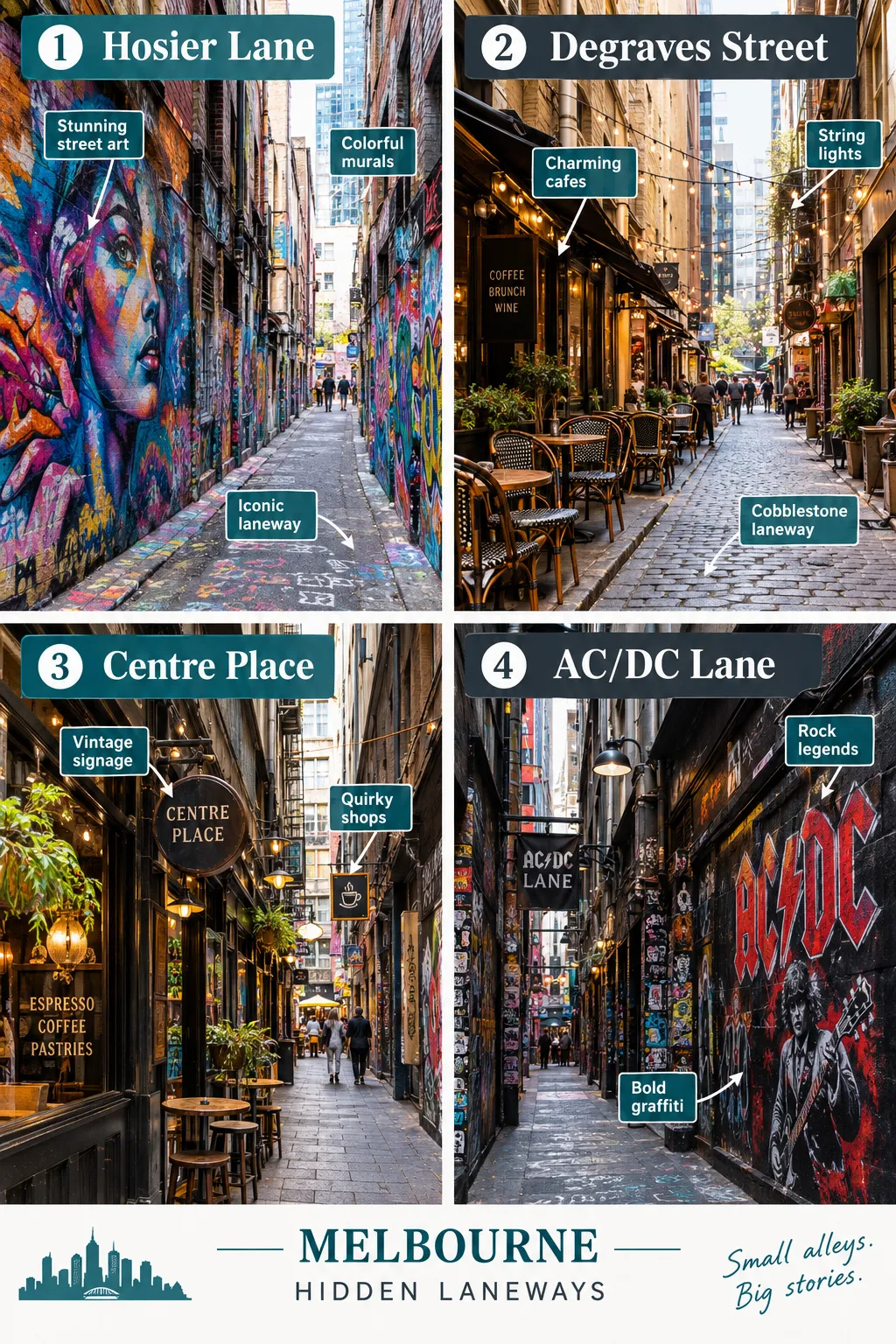
- Hosier Lane – Melbourne’s most famous street art corridor
- Degraves Street – cobblestone laneway lined with espresso bars
- Centre Place – narrow alley with vintage signage and hidden cafes
- AC/DC Lane – rock-themed graffiti haven near Flinders Street
- State Library Victoria – Australia’s oldest public library, completely free
- Old Melbourne Gaol – the city’s oldest surviving prison
- Puffing Billy Railway – heritage steam train through the Dandenong Ranges
- Healesville Sanctuary – native wildlife in a bush setting, about an hour out
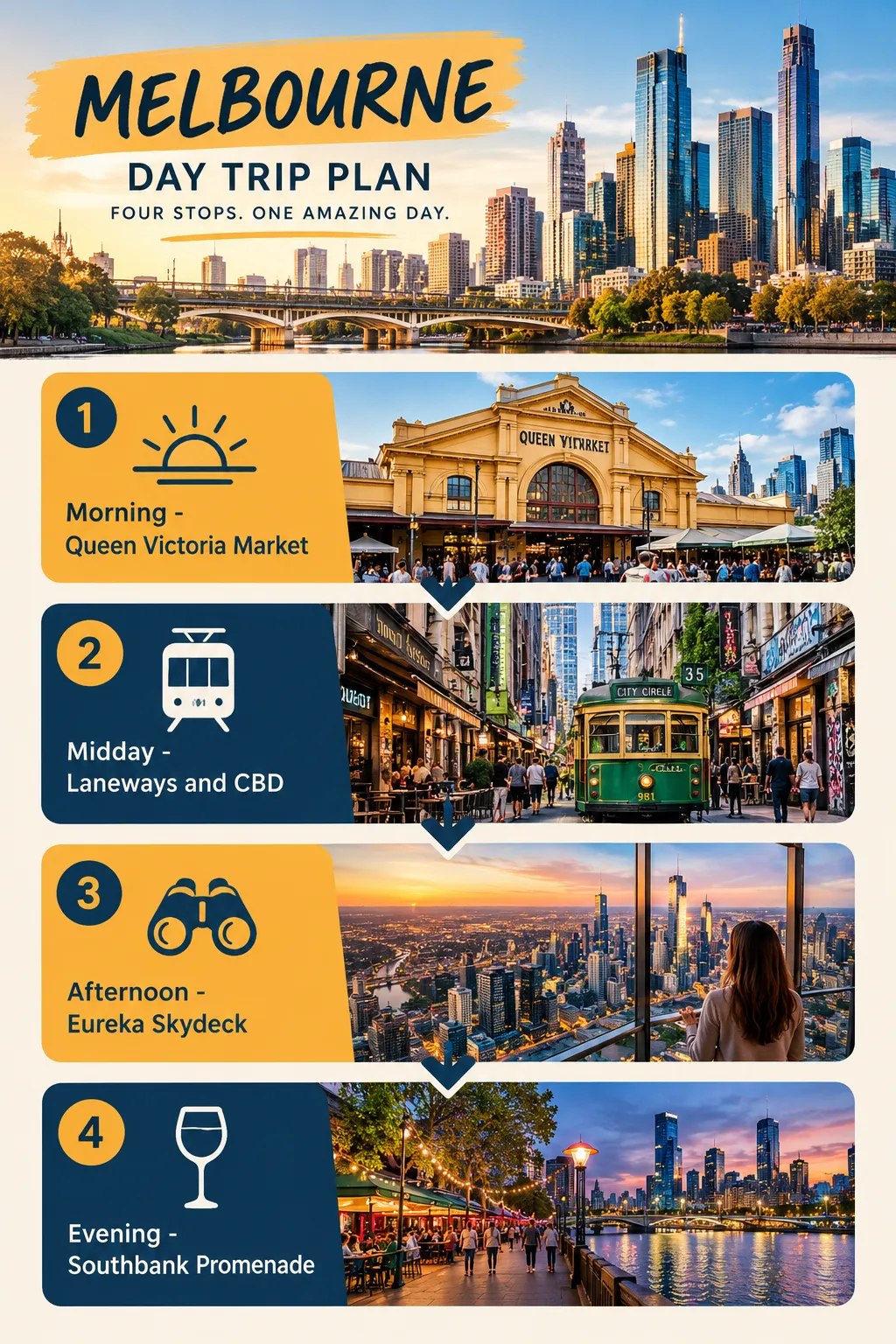
- Queen Victoria Market – 140+ years of history in an open-air market
- Eureka Skydeck – 300m observation deck with panoramic city views
- Royal Botanic Gardens – 38 hectares of free green space in the CBD
- GoBoat on the Yarra River – self-drive electric boat hire
- Arts Centre Melbourne – iconic spire and world-class performances
- SEA LIFE Melbourne Aquarium – city-centre marine life experience
- Werribee Open Range Zoo – safari-style wildlife park west of the city
- La Mama Theatre – grassroots independent performance space in Carlton
- Fitzroy Gardens – Victorian-era gardens with a Tudor-style cottage
What Melbourne Attractions Are Free to Visit
Quite a few of Melbourne’s best experiences cost nothing at all. Free Melbourne attractions include the Royal Botanic Gardens, State Library Victoria, the laneway street art network, Fitzroy Gardens, and the National Gallery of Victoria’s permanent collection.
Free Melbourne attractions at a glance:
| Attraction | What You Get |
|---|---|
| Royal Botanic Gardens | 38 hectares, lake, rare plant collections |
| State Library Victoria | Historic reading rooms, rotating exhibitions |
| Hosier Lane / Laneways | World-class street art, always changing |
| Fitzroy Gardens | Victorian-era design, Captain Cook’s Cottage exterior |
| Federation Square | Public events, architecture, riverside views |
| NGV International | Permanent collection free, ticketed exhibitions vary |
The Royal Botanic Gardens is consistently rated one of the best free places to visit in Melbourne and the surrounding Yarra parklands add even more space to explore without spending a cent.
How Much Does It Cost to Visit Popular Melbourne Attractions
Costs vary widely. Free attractions like the laneways and gardens cost nothing, while ticketed experiences like Eureka Skydeck or Old Melbourne Gaol typically range from AUD $20 to $50 per adult as of 2026. Family passes and combo tickets are usually available and worth checking before you book.
Rough cost guide (per adult, 2026 estimates):
- Eureka Skydeck – approx. AUD $30-$35
- Old Melbourne Gaol (day entry) – approx. AUD $30
- SEA LIFE Melbourne Aquarium – approx. AUD $40+ (cheaper online)
- Melbourne Zoo – approx. AUD $40
- Puffing Billy Railway – approx. AUD $60+ return
- GoBoat Yarra River – priced per boat (fits up to 8 people)
Tip: Book ticketed attractions online in advance. Most offer a 10-20% discount over gate prices, and you skip queues too.
For families, GetYourGuide lists dozens of Melbourne activity options with combo deals that bundle two or three attractions at a reduced rate.
Best Melbourne Attractions for Families With Kids
Melbourne is genuinely family-friendly, with wildlife experiences, interactive museums, and outdoor spaces that keep kids engaged without draining your budget. The best family Melbourne attractions include Melbourne Zoo, SEA LIFE Aquarium, Puffing Billy Railway, and the Royal Botanic Gardens.
Top picks for families:
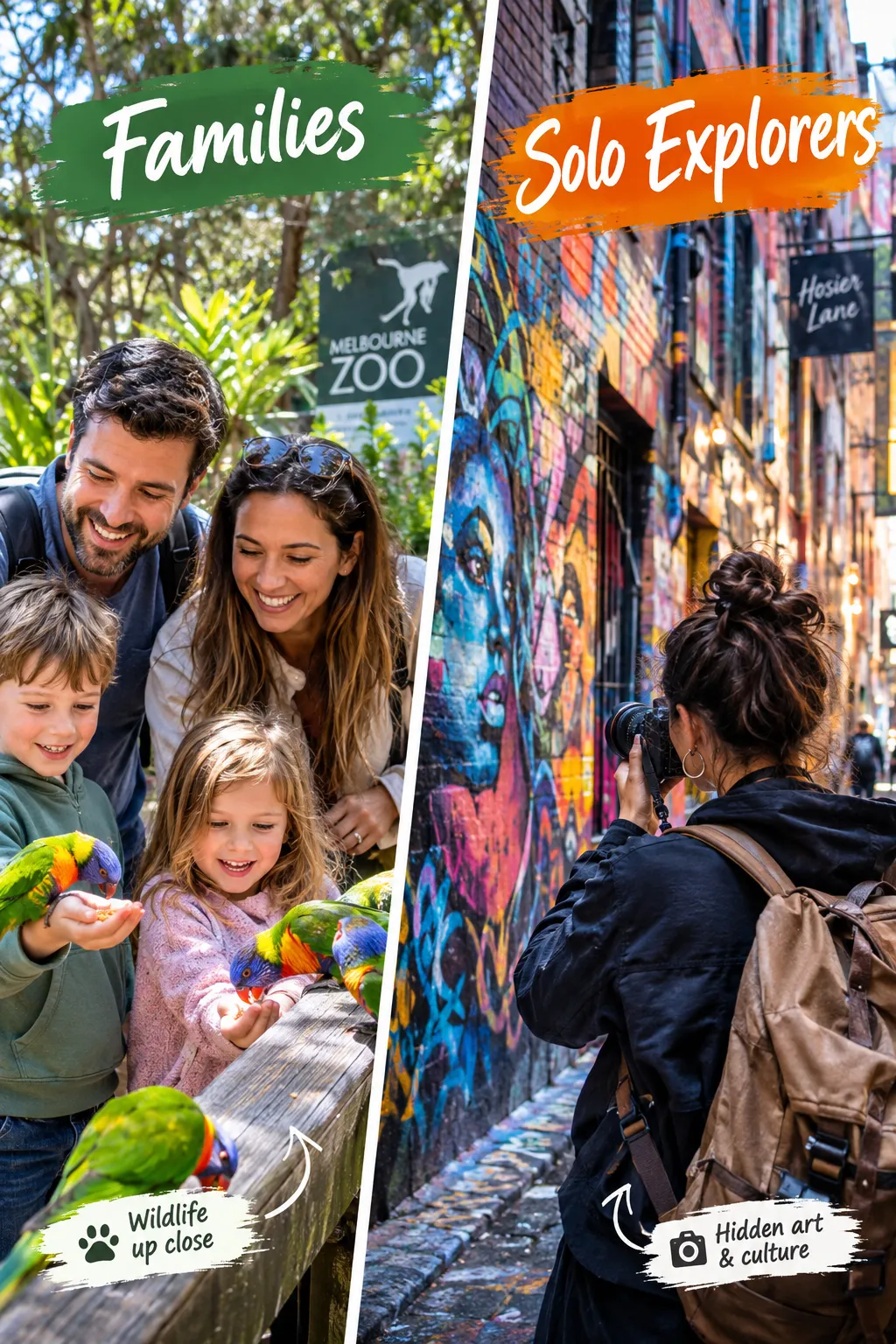
- Melbourne Zoo – one of the oldest zoos in the world, with native and exotic animals
- SEA LIFE Melbourne Aquarium – sharks, rays, and a glass ocean tunnel in the CBD
- Puffing Billy Railway – kids love riding with legs dangling out of the open carriages
- Healesville Sanctuary – platypus, wombats, and koalas in a natural bush setting
- Werribee Open Range Zoo – open savannah-style park with rhinos and giraffes
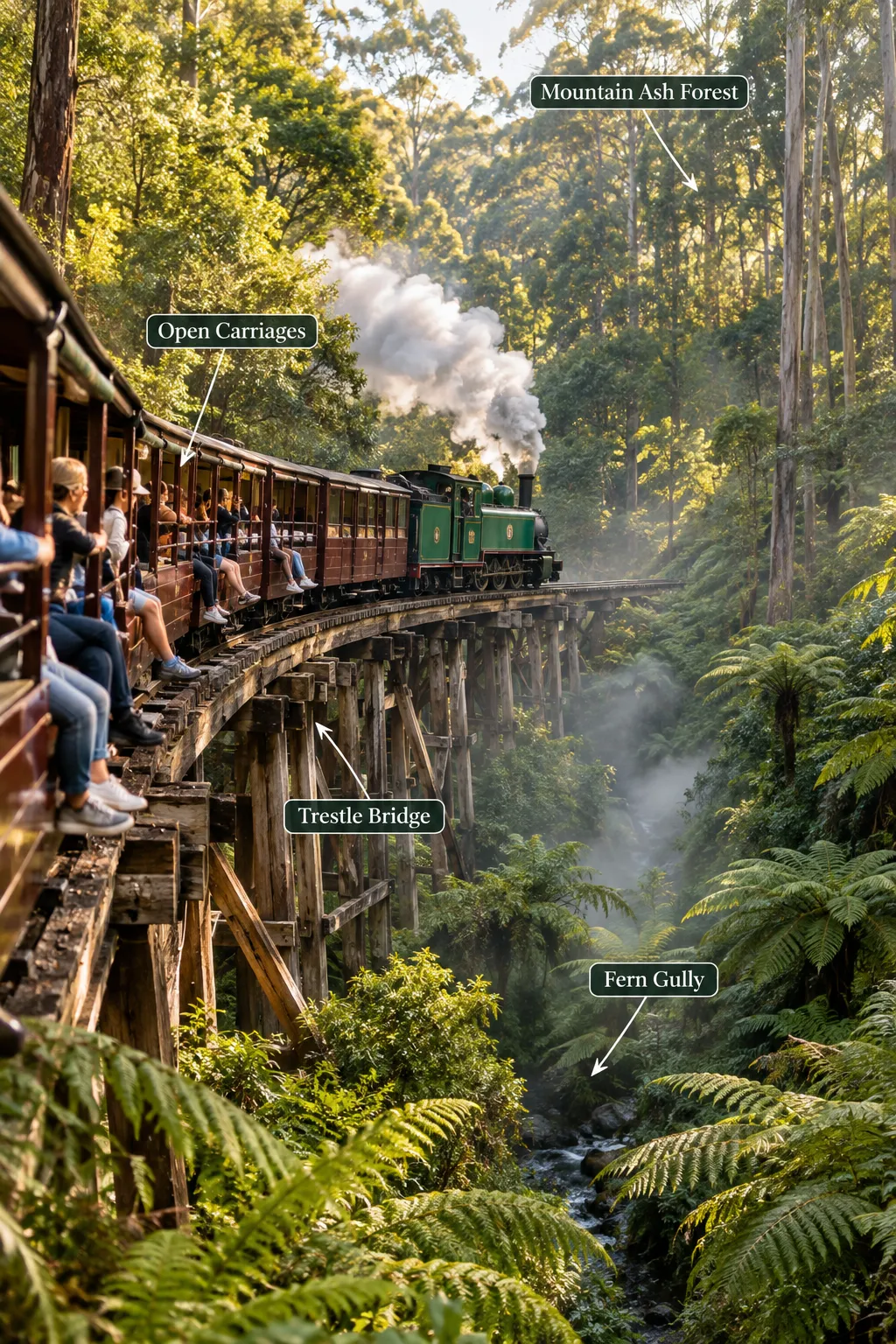
The Dandenong Ranges and Puffing Billy experience is especially popular with families – the steam train winds through mountain ash forests and fern gullies, crossing wooden trestle bridges that feel straight out of a storybook.
If you enjoy finding family-friendly hidden gems in unexpected places, check out these Ontario family vacation ideas that feel like abroad for more inspiration.
Melbourne Attractions for Solo Travelers
Solo travelers do very well in Melbourne. The city is walkable, the public transport is reliable, and many of the best experiences – laneway exploration, coffee culture, gallery hopping – are naturally suited to going at your own pace.
Best solo Melbourne experiences:
- Walk the laneways with a camera – Hosier Lane changes constantly
- Join a free walking tour of the CBD (tips-based, departs Federation Square)
- Spend a morning at State Library Victoria – beautiful reading rooms, no entry fee
- Pilot a GoBoat solo on the Yarra River – electric, easy to operate, no licence needed
- Visit Old Melbourne Gaol on a night tour for a genuinely atmospheric experience
- Explore Fitzroy and Collingwood neighbourhoods for independent galleries and cafes
Melbourne’s coffee culture is a real thing – locals take it seriously, and solo cafe-hopping is practically a sport here. Budget a morning just for that.
How Do I Get to the Hidden Laneways in Melbourne
Melbourne’s laneways are in the CBD and are easy to reach on foot from Flinders Street Station or Federation Square. The main laneway network sits between Flinders Street and Bourke Street, roughly between Swanston Street and Spring Street.
Simple directions:
- Start at Flinders Street Station – the main train hub
- Walk north on Hosier Lane (just east of Federation Square)
- Continue to Centre Place and Degraves Street (parallel laneways off Flinders Lane)
- Head to AC/DC Lane via ACDC Lane off Flinders Street
- Use Google Maps in “walking” mode – the laneways are all mapped
The City of Melbourne’s official guide frames the laneway network as a defining feature of the city’s identity. You don’t need a tour – just wander. Most laneways are within a 10-minute walk of each other.
Common mistake: Tourists often miss the smaller, unmarked laneways by sticking to the main ones. Look for any narrow gap between buildings – many hide the best art.
What’s the Difference Between Federation Square and Southbank
Federation Square sits on the north bank of the Yarra River and is Melbourne’s main civic gathering space – it hosts events, markets, and has the NGV Ian Potter Centre and ACMI inside. Southbank is the precinct directly across the river, anchored by the Arts Centre Melbourne, the NGV International gallery, and a long riverside promenade lined with restaurants.
Quick comparison:
- Federation Square – events, public art, galleries, adjacent to Flinders Street Station
- Southbank – performing arts, fine dining, riverside walks, Crown entertainment complex nearby
Both are free to enter and easy to reach from the CBD. If you’re planning a cultural day, start at Federation Square in the morning and cross the Princes Bridge to Southbank in the afternoon.
Best Time of Year to Visit Melbourne Attractions
The best time to visit Melbourne is March to May (autumn) or September to November (spring). Temperatures are mild (15-22°C), crowds are lighter than summer, and the city’s outdoor spaces look their best.
- Summer (Dec-Feb) – hot and occasionally very hot (40°C+), busy, but good for outdoor events
- Autumn (Mar-May) – ideal weather, golden foliage in the Dandenong Ranges
- Winter (Jun-Aug) – cold but manageable, fewer tourists, great for indoor attractions
- Spring (Sep-Nov) – gardens in bloom, comfortable temperatures, festival season
In September 2026 specifically, La Mama Theatre’s HOPE PUNK Climate Festival runs 1-20 September, and Footy Fest returns to Yarra Park 23-26 September – both offer a genuine window into Melbourne’s grassroots culture and sporting identity.
Are Melbourne Attractions Crowded on Weekends
Yes, popular Melbourne attractions are noticeably busier on weekends, especially between 10am and 3pm. Queen Victoria Market, Hosier Lane, the Royal Botanic Gardens, and Eureka Skydeck all see peak crowds on Saturday and Sunday mornings.
How to avoid the worst of it:
- Arrive before 9:30am at Queen Victoria Market
- Visit Hosier Lane on a weekday morning for the best photography light and fewer people
- Book Eureka Skydeck for a weekday late afternoon or early evening slot
- Explore Fitzroy and Collingwood neighbourhoods on a Sunday – quieter than the CBD
If you enjoy discovering under-the-radar spots in any city, the approach works just as well for Porto city attractions and unexpected experiences or hidden gems in Milan.
What Melbourne Attractions Should I Skip
A few Melbourne attractions get heavy marketing but deliver a mixed experience for independent travelers. These aren’t necessarily bad – they’re just often not worth the time or cost compared to alternatives.
Consider skipping (or deprioritising):
- Melbourne Star Observation Wheel – permanently closed as of 2024
- Generic hop-on hop-off bus tours – Melbourne is very walkable; the tram network is free in the CBD
- Crowded souvenir shops on Swanston Street – better shopping at Queen Victoria Market or Fitzroy
Choose X if… You’re short on time and want maximum impact – prioritise the laneways, one wildlife experience, and Eureka Skydeck. That combination covers Melbourne’s urban, natural, and elevated perspectives in a single day.
What Can You Do in Melbourne If You Don’t Like Crowds
If you prefer quieter experiences, Melbourne has plenty of options. The State Library Victoria, smaller neighbourhood galleries in Fitzroy and St Kilda, the Dandenong Ranges, and early-morning walks along the Yarra River trail are all genuinely low-crowd options.
Low-crowd Melbourne picks:
- State Library Victoria – vast, beautiful, rarely packed outside school holidays
- Healesville Sanctuary – 45 minutes from the CBD, far fewer visitors than Melbourne Zoo
- Fitzroy Gardens on a weekday – locals walking dogs, almost no tourists
- Williamstown foreshore – historic port suburb with bay views, very relaxed
- Dandenong Ranges walks – multiple trail options through mountain ash forest
For more ideas on finding the quieter side of popular destinations, see our guide to 17 Utah hidden gems that feel like a secret map.
How Long Does It Take to Visit Melbourne’s Main Attractions
Most visitors need at least 3-4 days to cover the core Melbourne attractions without rushing. A week gives you time to add day trips to the Dandenong Ranges or Mornington Peninsula.
Rough time guide:
- Laneways + CBD walk – half day
- Queen Victoria Market – 2-3 hours (longer if you browse)
- Eureka Skydeck – 1-2 hours
- Royal Botanic Gardens – 1.5-2 hours
- Melbourne Zoo or SEA LIFE – half day
- Puffing Billy + Dandenong Ranges – full day
- Federation Square + Southbank – 2-3 hours combined
Best Melbourne Attractions for Photography
Melbourne is one of Australia’s most photogenic cities for street and travel photography. The best spots combine texture, colour, and interesting light – and most are free.
Top photography locations:
- Hosier Lane – ever-changing murals, best light in the morning
- Flinders Street Station – golden hour on the facade from the Federation Square side
- Eureka Skydeck – city panoramas, especially at dusk
- Puffing Billy Railway – steam, forest, and open carriages make for cinematic shots
- Royal Botanic Gardens – lake reflections, ornamental beds, and the city skyline behind
The Puffing Billy Railway in particular offers shots that feel genuinely rare – a vintage steam train winding through fern gullies is not something you can replicate anywhere else in Australia.
If you love photography-driven travel, the same instinct works well when exploring hidden gems in Italy or unexpected experiences in Porto.
FAQ
What is the most unique Melbourne attraction?
Puffing Billy Railway is arguably Melbourne’s most unique experience – a heritage steam train that runs through ancient fern gullies in the Dandenong Ranges, about an hour from the CBD. Passengers ride in open carriages with legs dangling out the side.
Is Melbourne good for a weekend trip?
Yes. A long weekend (3 days) is enough to cover the laneways, one major cultural site, a wildlife experience, and a riverside walk. For day trips like Puffing Billy or Healesville Sanctuary, plan for 4-5 days.
What is the best free thing to do in Melbourne?
The laneway street art network is completely free, always changing, and genuinely world-class. The Royal Botanic Gardens and State Library Victoria are close runners-up.
How do I get around Melbourne cheaply?
The CBD tram zone is free to ride. Outside that zone, a Myki card covers trams, trains, and buses. Daily caps apply, so even full-day travel stays affordable.
Is Queen Victoria Market worth visiting?
Yes – it’s the largest open-air market in the Southern Hemisphere and has been operating for over 140 years. It’s best visited on a Wednesday or Saturday morning before 11am.
What is Hosier Lane in Melbourne?
Hosier Lane is a short cobblestone laneway in the CBD, just east of Federation Square, covered floor-to-ceiling in rotating street art murals. It’s one of the most photographed spots in Australia and is always free to visit.
Can you visit Melbourne on a tight budget?
Absolutely. Between free laneways, free gardens, free library visits, free tram travel in the CBD, and the NGV permanent collection, you can fill multiple days without spending much at all.
What’s the best Melbourne attraction for a rainy day?
State Library Victoria, the NGV International gallery, SEA LIFE Melbourne Aquarium, and the Melbourne Museum are all excellent rainy-day options – mostly indoors and easy to reach by tram.
Is Old Melbourne Gaol scary?
The daytime tours are atmospheric but not frightening – more historically interesting than horror. The night tours are deliberately spooky and better suited to adults or older teens.
What time does Queen Victoria Market open?
Opening hours vary by day. Generally Tuesday and Thursday from 6am, Friday from 6am, Saturday from 6am, and Sunday from 9am. It’s closed Monday and Wednesday (check the official site for current hours).
Are there good day trips from Melbourne?
Yes – the Dandenong Ranges (Puffing Billy + forest walks), Healesville Sanctuary, Mornington Peninsula (beaches and wineries), and Phillip Island (penguin parade) are all within 1-2 hours of the CBD.
Is Melbourne safe for solo female travelers?
Melbourne consistently ranks as one of Australia’s safest cities. The CBD, inner suburbs, and main tourist areas are well-lit and busy. Standard city awareness applies at night, particularly around late-night entertainment strips.
Conclusion
Melbourne rewards travelers who look past the obvious. The city’s real character lives in the laneways, the steam railways, the grassroots theatres, and the parks that locals treat as backyards.
Actionable next steps:
- Plan your base – stay in the CBD or inner suburbs like Fitzroy or South Yarra for easy access to most attractions
- Book Puffing Billy early – it sells out on weekends, especially in spring and autumn
- Download the Myki app before you arrive to sort transport on day one
- Start with the laneways – free, walkable, and the fastest way to understand what makes Melbourne different
- Check the events calendar – Melbourne has something on almost every weekend, from food festivals to grassroots theatre
Whether you have two days or two weeks, Melbourne has a version of itself that will surprise you. Start with the laneways and go from there.