

Last updated: October 7, 2026
Quick Answer: The best travel insurance plans in 2026 protect you from the four things that actually keep travelers up at night – unexpected medical bills abroad, last-minute trip cancellations, long travel delays, and lost baggage. Top-rated providers like World Nomads, Seven Corners, Travelex, Tin Leg, Travel Guard, and Battleface consistently earn the highest marks for coverage breadth, claims reliability, and value. Comprehensive travel insurance typically costs 4-10% of your total prepaid trip cost, and the right plan depends on your trip type, health, and destination.
Key Takeaways
- 🏆 World Nomads earns a 94/100 score from MoneyGeek as the best overall travel insurance for 2026, especially for adventure travelers
- 💰 Comprehensive travel insurance costs roughly 4-10% of your prepaid, non-refundable trip cost, per Squaremouth’s 2026 guidance
- 🌍 Seven Corners Trip Protection Choice offers up to $500,000 in medical expenses and $1 million for medical evacuation per person
- 📅 Annual travel insurance plans make sense if you take three or more trips per year – they combine pre- and post-departure coverage with baggage benefits up to $2,000
- ⚠️ Standard policies often exclude war, terrorism, civil unrest, and some climate-related disruptions – always read the terms
- 🛳️ Cruise insurance plans add specific protections like missed port departures and itinerary changes that standard plans skip
- 🔍 Comparison sites like Squaremouth let you view benefits side by side and get a free quote from multiple providers at once
- ✅ Pre-existing condition waivers and Cancel For Any Reason (CFAR) add-ons are the two most important upgrades to consider when you purchase travel insurance
What Does Travel Insurance Actually Cover?
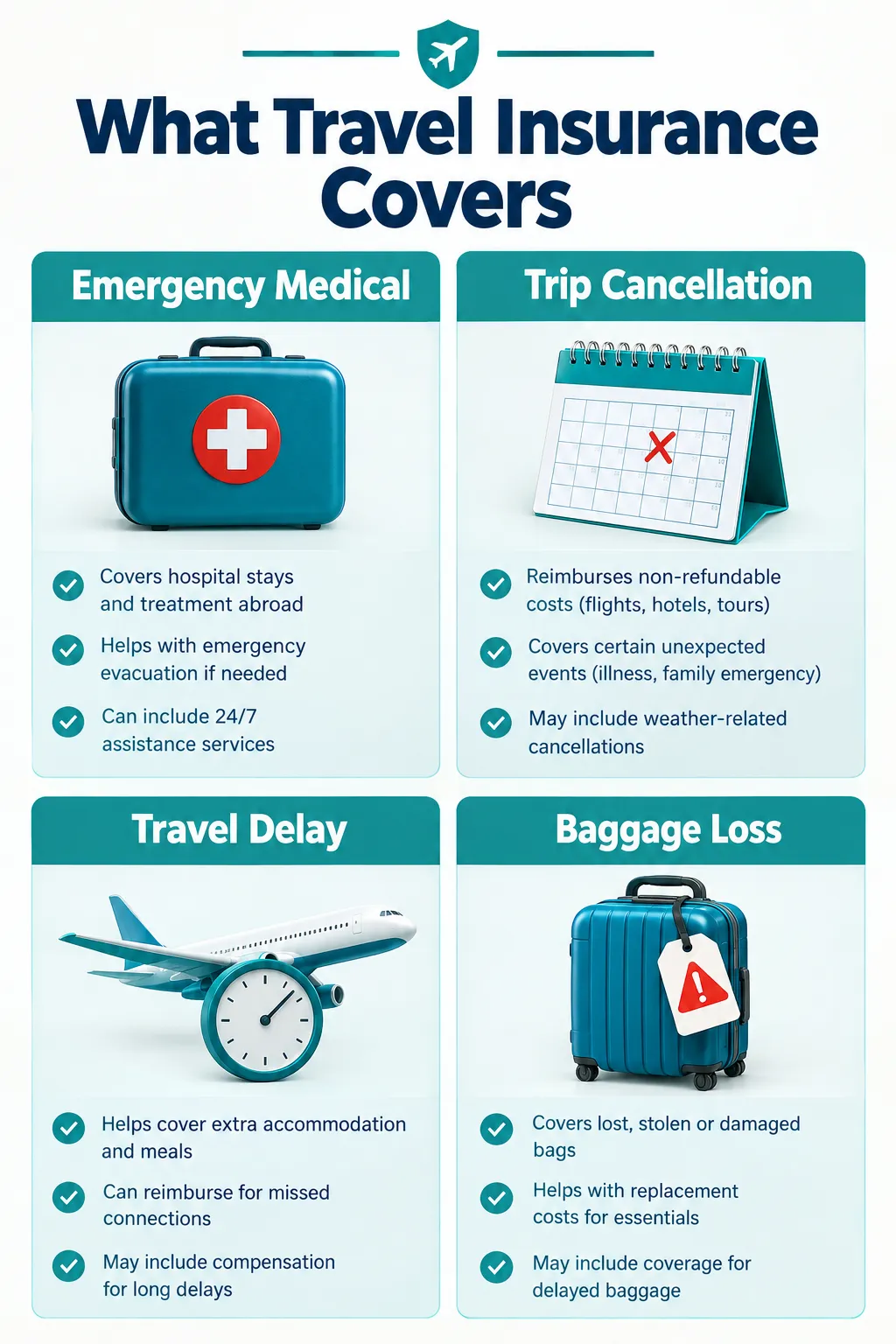
Travel insurance covers financial losses tied to unexpected events before or during your trip. Most comprehensive plans include trip cancellation, trip interruption, emergency medical expenses, medical evacuation, travel delay reimbursement, and baggage loss or delay.
The exact benefits depend on the plan you choose. Here’s what most standard comprehensive policies include:
- Trip cancellation – reimbursement if you cancel for a covered reason (illness, death in the family, severe weather)
- Trip interruption – coverage if you need to cut your trip short
- Emergency medical – pays for hospital and doctor bills when you get sick or hurt abroad
- Medical evacuation – covers emergency transport to the nearest adequate facility or back home
- Travel delay – reimburses meals and hotels when you’re stranded by a covered delay
- Baggage loss/delay – compensates for lost, stolen, or delayed luggage
- 24/7 assistance – access to a service team that can help you find a doctor, replace a passport, or arrange emergency travel
Choose comprehensive coverage if: you’re traveling internationally, have prepaid non-refundable costs, or have any health conditions that could flare up on the road.
How Much Does Travel Insurance Cost?
Travel insurance typically costs between 4% and 10% of your total prepaid, non-refundable trip expenses, according to Squaremouth’s 2026 pricing data. A $5,000 trip would cost roughly $200 to $500 to insure, depending on your age, destination, and the plan you pick.
Forbes Advisor’s 2026 analysis found that Battleface is the cheapest overall option, averaging around $180 for five trips – about 35% below the overall average. Travelex came in second at roughly $203. More comprehensive plans from Seven Corners and HTH Worldwide run slightly higher but deliver significantly more medical coverage.
Factors that raise your premium:
- Older traveler age (especially 60+)
- Longer trip duration
- Higher trip cost
- Adding Cancel For Any Reason (CFAR) coverage
- International or remote destinations
Ways to keep the insurance cost reasonable:
- Compare at least three quotes before you buy
- Skip CFAR if you have flexible bookings
- Consider an annual plan if you travel more than three times a year
- Buy travel insurance shortly after your first trip deposit to qualify for pre-existing condition waivers
The 7 Best Travel Insurance Plans in 2026
These seven providers consistently top expert rankings for coverage quality, claims handling, and value. Each earns its spot by addressing the specific worries most travelers have.
1. World Nomads – Best Overall
MoneyGeek rates World Nomads 94/100 for its balance of affordability, adventure activity coverage, and strong medical protections. It’s especially popular with solo travelers and backpackers heading to destinations like Egypt, Japan, or Portugal.
2. Seven Corners Trip Protection Choice – Best for High Medical Limits
Offers up to $500,000 in medical expenses per person and $1 million in evacuation coverage. Travel delay kicks in after 6 hours with up to $2,000 reimbursement.
3. Travelex Travel Select – Best for Families
Covers children under 17 for free when traveling with a parent. Provides $250,000 in medical coverage, $1 million evacuation, and up to $2,000 for travel delays after a 5-hour wait.
4. Travel Guard – Best for Customization
CNBC Select highlights Travel Guard as a standout for combining value, solid coverage limits, and strong customer service. Its tiered plans let you add benefits like rental car coverage or CFAR.
5. Tin Leg – Best for Transparent Coverage
Squaremouth’s marketplace data points to Tin Leg as a top choice for real customer purchases and claims satisfaction. Plans are straightforward with clear terms and no hidden exclusions.
6. Battleface – Best Budget Option
The cheapest comprehensive option in Forbes’ 2026 rankings at an average of $180 for five trips. Good for travelers who want real coverage without overpaying on insurance cost.
7. Travel Insured International – Best for Seniors
Strong pre-existing condition waiver terms and high medical limits make this a top pick for older travelers. U.S. News & World Report’s 2026 ranking evaluated 45 providers and consistently placed Travel Insured International among the top tier.
How to Compare Travel Insurance Plans Before You Buy
Comparing travel insurance plans is easier when you know exactly what to look for. The best approach is to use a comparison site like Squaremouth or TravelInsurance.com to get a free quote from multiple providers at once, then evaluate each plan on five core criteria.

Step-by-step: How to compare travel insurance on Squaremouth
- Enter your trip departure date, return date, destination, and total trip cost
- Choose your traveler ages and citizenship
- View benefits side by side across multiple plans
- Filter by the coverage types you need most (medical, CFAR, adventure sports)
- Read reviews from verified customers before you buy
- Get your quote and purchase travel insurance directly online
What to compare across plans:
| Coverage Area | Minimum to Look For |
|---|---|
| Emergency Medical | $100,000+ (international trips) |
| Medical Evacuation | $500,000+ |
| Trip Cancellation | 100% of trip cost |
| Travel Delay | $150+/day after 6 hours |
| Baggage Loss | $1,000+ |
Pro tip: Always read the full terms before you purchase. The definitions of “covered reason” vary significantly between providers, and that’s where most claims disputes happen.
America’s largest travel insurance comparison sites – Squaremouth and TravelInsurance.com – let you compare travel insurance from 14+ providers including Trawick International, World Nomads, Travelex, and Generali Global Assistance. This makes it much easier to match coverage to your actual risk profile rather than guessing.
Best Travel Insurance for International Trips and Adventure Activities
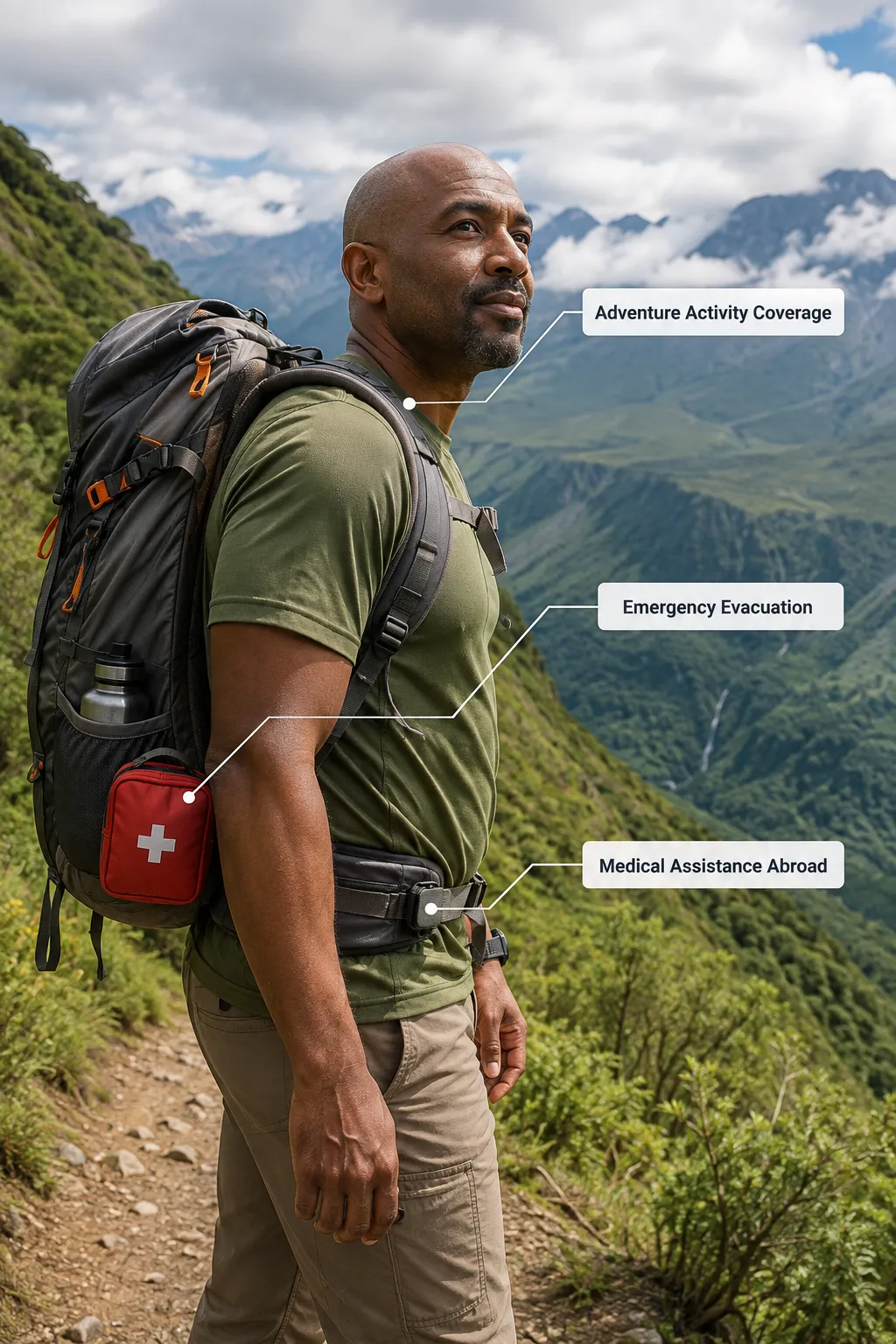
International travel insurance needs higher medical limits than domestic plans because hospital costs abroad can be enormous – and your regular health insurance likely won’t help. For international trips, look for at least $100,000 in emergency medical coverage and $500,000 in evacuation, especially if you’re heading somewhere remote.
Adventure activity coverage is a separate issue that many travelers overlook. Standard plans often exclude injuries from hiking, skiing, scuba diving, or motorcycling unless you specifically add an adventure sports rider or choose a plan like World Nomads that includes many activities by default.
Activities commonly excluded from standard plans:
- Rock climbing and mountaineering
- Skydiving and paragliding
- Scuba diving beyond recreational depths
- Off-piste skiing
- Motorcycle or moped riding
If you’re planning a trip to Positano, Italy for hiking the Path of the Gods, or heading to Sedona in September for canyon adventures, make sure your plan explicitly covers those activities.
A 2026 Insurance Business report noted that a major Grand Canyon flood requiring 62 helicopter evacuations exposed gaps in standard policies – many travelers found their plans didn’t cover park closures or certain climate-related disruptions.
Best international travel insurance options in 2026:
- World Nomads – strong adventure coverage, flexible policy dates
- Seven Corners – very high medical limits for remote destinations
- IMG – popular with expats and long-term international travelers
- Faye Travel Insurance – newer provider with strong digital claims experience and good international medical benefits
- Travelex – solid all-around international plan with family-friendly terms
For anyone planning international travel to places like Jordan or the Azores, getting a proper international travel insurance plan isn’t optional – it’s essential.
Cruise Insurance Plans, Annual Plans, and Specialized Coverage
Cruise insurance plans are not the same as standard travel insurance. Cruise-specific policies add protections that matter on the water: missed port departures, itinerary changes, shipboard medical care, and emergency evacuation from a vessel. If you’re planning a cruise to Grand Cayman or St. Lucia, a dedicated cruise insurance plan is worth the extra cost.
Annual travel insurance is a smart move for frequent travelers. Forbes Advisor’s 2026 annual travel insurance review found that top annual plans combine strong pre- and post-departure coverage with baggage benefits up to $2,000 and travel delay coverage up to $1,000. Annual plans are especially valuable for business travelers, digital nomads, and anyone taking three or more trips per year.
Types of travel insurance plans to know:
- Standard single trip plans – cover one trip from departure date to return date
- Annual/multi-trip plans – one purchase covers all trips within 12 months
- Group plans – cover families or travel groups under one policy
- Cruise insurance plans – specialized coverage for sea voyages
- Adventure and sports plans – add high-risk activity coverage
- Flight insurance plans – cover flight cancellation and accident benefits only
- Travel medical plans – focus purely on medical and evacuation, no trip cancellation
Does Travel Insurance Cover COVID, Pre-Existing Conditions, and What’s Not Covered?
Most travel insurance plans sold in 2026 do cover COVID-19 as a medical illness – meaning if you test positive and need to cancel your trip or get hospitalized abroad, you’re covered. However, the policy language matters. “Fear of travel” due to COVID is generally not a covered reason unless you have a CFAR add-on.
Pre-existing conditions are trickier. Most plans exclude them by default, but many offer a pre-existing condition waiver if you purchase travel insurance within 14-21 days of your first trip deposit. This waiver is one of the most valuable benefits available, so timing your purchase matters.
What’s commonly NOT covered by standard travel insurance:
- Cancellations due to war, terrorism, or civil unrest (unless specifically added)
- Pre-existing medical conditions without a waiver
- Extreme weather or climate events in some plans
- Mental health conditions (varies by provider)
- Elective medical procedures
- Losses from illegal activities
- Travel to destinations under government “Do Not Travel” advisories
Money.com’s 2026 travel insurance analysis specifically warns that disruptions caused by war or civil unrest are frequently excluded from standard policies – a real risk for travelers heading to politically unstable regions.
Is Travel Insurance Worth It? What Reddit and Real Travelers Say
Travel insurance is worth it when your trip has significant non-refundable costs, you’re traveling internationally, or you have health conditions that could affect your ability to travel. For a $500 domestic weekend trip with fully refundable bookings, it probably isn’t necessary. For a $8,000 international trip with prepaid tours and flights, skipping it is a real financial risk.
The Reddit consensus on travel insurance in 2026 tends to align with expert guidance: most travelers who’ve had to file a claim are glad they had coverage, while those who never needed it still feel it was worth the peace of mind. The most common regret is buying a cheap, bare-bones plan that didn’t actually cover the situation they faced.
Travel insurance is worth buying if:
- Your trip costs more than $2,000 in non-refundable expenses
- You’re traveling internationally, especially to remote areas
- You’re over 60 or have any chronic health conditions
- Your trip involves adventure activities
- You’re going on a cruise
- You’re traveling during hurricane season or to areas with political instability
You might skip it if:
- All your bookings are fully refundable
- You have a premium credit card with strong built-in travel protections
- You’re taking a short, low-cost domestic trip
How to File a Travel Insurance Claim
Filing a travel insurance claim is straightforward if you document everything from the moment the problem starts. The biggest reason claims get denied is insufficient documentation – not the policy terms.
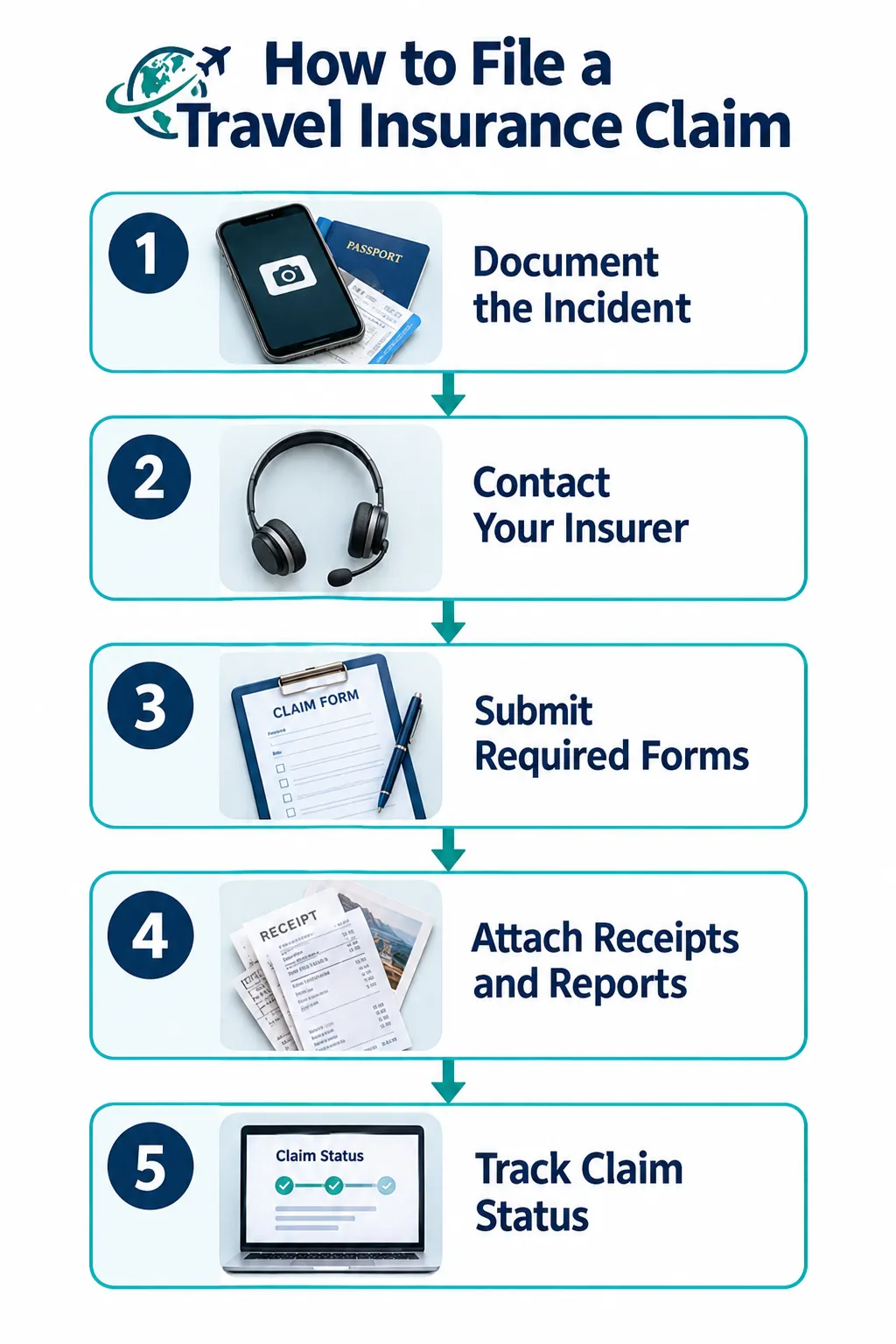
Step-by-step claims process:
- Document the incident immediately – take photos, get written confirmation from airlines or hotels, save all receipts
- Contact your insurer or their 24/7 assistance service – most providers have a help line that can guide you in real time
- Request the claims forms – available through your insurer’s website or app; log in to your account to access them
- Submit all required documentation – medical records, police reports, receipts, booking confirmations, and any official delay or cancellation notices
- Track your claim status – most providers allow you to view claim progress online
- Follow up if needed – if your claim is delayed, contact the company directly and reference your policy number
Common mistake: Waiting until you get home to start the claims process. File as soon as possible and while evidence is fresh.
Most insurers aim to process straightforward claims within 10-15 business days. Complex medical claims or disputes can take longer. If you feel a claim was wrongly denied, you can escalate to your state’s insurance commissioner.
Cheapest Travel Insurance That’s Actually Good
The cheapest travel insurance that still delivers real protection costs roughly 4-5% of your trip cost and includes at least $50,000 in emergency medical and $250,000 in evacuation. Going below that threshold usually means accepting serious coverage gaps.
Forbes Advisor’s 2026 rankings identify Battleface as the cheapest comprehensive option, averaging $180 for five trips. Travelex comes in second at around $203. Both provide meaningful medical and cancellation coverage – not just token benefits.
Tips for finding cheap travel insurance that’s actually good:
- Use a comparison site to get a free quote from multiple providers at once
- Compare travel insurance plans by coverage limits, not just price
- Read reviews from verified purchasers before you buy
- Look for plans that include medical evacuation – this is the most expensive thing that can happen to you abroad
- Check if your credit card already covers trip cancellation or delay before you purchase a standalone plan
AAA travel insurance and Travelex are often cited as reliable budget-friendly options, while AXA Assistance USA gets strong marks from CNBC Select for combining value with solid customer service.
Travel Insurance for Senior Citizens and Last-Minute Trips
Senior travelers face higher premiums but also have the most to gain from comprehensive travel insurance. Medical costs abroad rise sharply with age, and evacuation from a remote destination can easily cost $50,000 or more without coverage. Travel Insured International and HTH Worldwide are consistently rated among the best options for travelers over 65 because of their high medical limits and reasonable pre-existing condition waiver terms.
For last-minute trips, you can still buy travel insurance right up to your departure date – but you lose access to some key benefits. Pre-existing condition waivers require early purchase (usually within 14-21 days of your first deposit). CFAR add-ons also have purchase deadlines, typically 10-21 days after your initial booking.
What you can still get with last-minute travel insurance:
- Emergency medical and evacuation coverage
- Baggage loss and delay benefits
- Travel delay reimbursement
- 24/7 assistance service
What you miss if you buy late:
- Pre-existing condition waiver
- Cancel For Any Reason (CFAR) add-on
- Some “cancel for work reasons” riders
Even a basic medical travel insurance plan purchased the day before departure is far better than nothing, especially for international travel.
FAQ: Best Travel Insurance Questions Answered
Which travel insurance is considered the best?
World Nomads is widely considered the best overall travel insurance in 2026, earning a 94/100 score from MoneyGeek for its balance of affordability, coverage breadth, and adventure activity protections. Seven Corners and Travelex also rank at the top for high medical limits and strong trip cancellation benefits. The “best” plan depends on your trip type, age, and destination.
Who is the best company to get travel insurance with?
The best company depends on your needs. World Nomads leads for adventure travelers and international trips. Travel Guard and Travelex are top picks for families and customizable coverage. Battleface is the best budget option. For seniors, Travel Insured International consistently earns top marks. Use a comparison site to get a free quote from multiple providers and read reviews before you decide.
Is Travel Guard or Allianz better?
Travel Guard and Allianz are both strong, reputable providers, but they serve slightly different travelers. Travel Guard offers more customization options and add-ons, making it better for travelers who want to tailor their plan. Allianz Partners is known for its broad distribution, straightforward plans, and strong customer service infrastructure. For most international travelers, Travel Guard’s flexibility gives it a slight edge, but Allianz is a solid choice for simpler trips.
Which travel insurance has the best coverage?
Seven Corners Trip Protection Choice offers some of the highest coverage limits available in 2026 – up to $500,000 in medical expenses and $1 million in medical evacuation per person. For overall coverage breadth including adventure activities, World Nomads is hard to beat. If you want the best coverage for cruise vacations specifically, look for dedicated cruise insurance plans that include missed port departures and shipboard medical care.
Conclusion: How to Pick the Right Plan for Your Next Trip
The best travel insurance isn’t the cheapest one or the most expensive one – it’s the one that actually covers the things most likely to go wrong on your specific trip.
Start by figuring out your biggest risks. Traveling internationally? Prioritize medical and evacuation limits. Going on a cruise? Get a dedicated cruise insurance plan. Over 60 or managing a health condition? Make sure you buy early enough to qualify for a pre-existing condition waiver.
Your action plan:
- Get a free quote from at least three providers using a comparison site like Squaremouth
- Compare plans on medical limits, cancellation terms, and delay benefits – not just price
- Read the terms carefully, especially the exclusions section
- Buy travel insurance within 14-21 days of your first deposit to keep all options open
- Save your policy documents and the 24/7 assistance number before your departure date
The global travel insurance market is growing fast – projected to reach $56.5 billion by 2034 according to a USA Today industry forecast – which means more competition, better plans, and more options for travelers in 2026 and beyond.
Whether you’re heading to Tuscany, Bora Bora, or just taking a solo trip somewhere new, the right travel insurance plan means you can focus on the experience – not the what-ifs.