
Last updated: November 17, 2026
Quick Answer
A solid 2027 travel plan starts with picking your destinations, setting travel months, choosing a trip style, and opening a dedicated vacation fund now. Most travelers should start planning 2027 vacation dates between January and March 2026, since flights and cruises often sell out 9 to 12 months ahead. Spread your trips across the year instead of cramming them into one season, and track every booking in one shared calendar or app.
Key Takeaways
- Pick 3 to 5 destinations before you touch a booking site
- Start a vacation fund with automatic weekly transfers, even just a few pennies a day adds up
- 2027 travel trends favor shorter, more frequent trips over one long vacation (BBC Travel, 2026)
- Book flights 3 to 6 months out, cruises 9 to 12 months out for best pricing
- Travel insurance should be bought separately for each trip, not bundled
- Check passport expiration dates at least 6 months before any international trip
- “Trip snacking,” or quick one to two night getaways, is a major part of how people are planning 2027 vacation time (Expedia, 2026)
- Global tourism growth forecasts through 2027 support booking bigger trips with confidence
What’s the Best Way to Plan Multiple Trips for the Whole Year
The best way to plan a full year of travel is to map out your calendar first, then layer destinations on top. Start with fixed dates (work blackout periods, school breaks, holidays) and build around them.
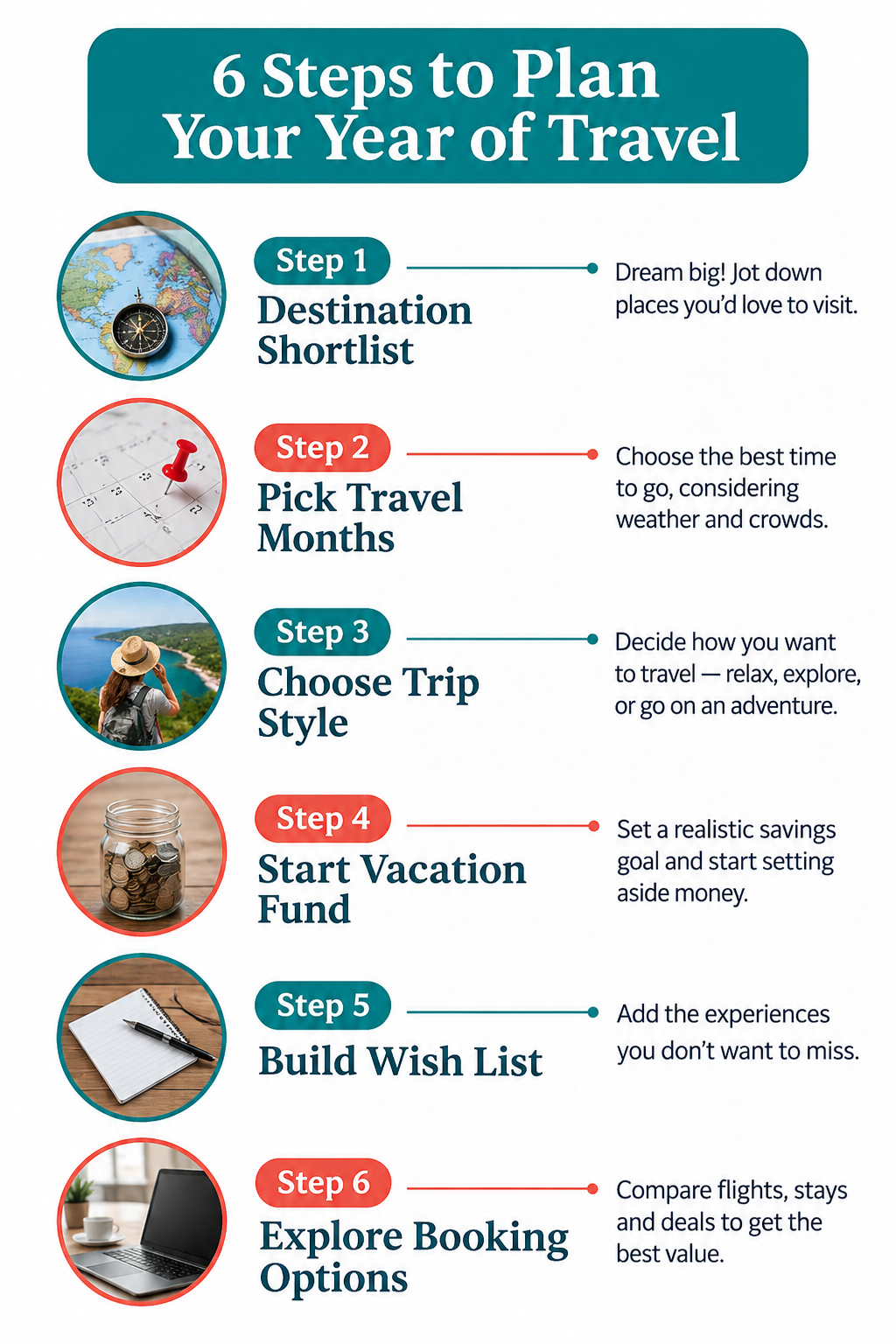
I do this every January with a plain wall calendar and sticky notes. It sounds old school, but seeing the whole year at once stops me from double-booking two trips into the same week.
Steps that work:
- Block out fixed commitments first (work, school, family events)
- Mark 3 to 4 “anchor” trips you’re excited about
- Fill gaps with shorter weekend trips
- Leave at least one month totally open for spontaneous plans
Travel brands are calling 2027 “The Great Rebalance,” meaning shorter, more frequent trips are replacing one giant annual vacation for a lot of travelers (Hilton, 2026). That actually makes year-long planning easier, since you’re not trying to squeeze everything into two weeks.
If you want European trips in the mix, our Spain trip itinerary ideas for 2027 are a good starting point for an anchor trip.
How Much Should I Budget for Traveling All Year
Budget 10 to 20% of your annual take home pay for travel if you want multiple trips without debt, though this varies a lot by destination and style. A realistic starting point is figuring out your cost per trip, then dividing by the months until departure.
Quick example:
- Weekend domestic trip: $300 to $600
- One week Caribbean cruise: $800 to $1,500 per person
- Two week Europe trip: $2,500 to $4,500 per person
Don’t try to fund everything out of one checking account. Open a separate savings account just for travel, even if you start with pennies. A $20 weekly transfer builds over $1,000 in a year, which covers a solid weekend trip or a down payment on a cruise.
When Should I Start Booking 2027 Trips to Get Good Prices
Start booking flights 3 to 6 months before departure and cruises 9 to 12 months ahead for the best rates and cabin selection. Popular holiday weeks need even more lead time.
I learned this the hard way booking a Caribbean cruise two months out. The price had already jumped $400 per cabin, and only inside rooms were left.
General booking windows:
| Trip type | Ideal booking window |
|---|---|
| Domestic flights | 6 to 10 weeks out |
| International flights | 3 to 6 months out |
| Cruises | 9 to 12 months out |
| Disney resort packages | 6 to 9 months out |
| Peak holiday travel | 4 to 6 months out |
Use Google Flights to track price trends before committing. If your dates are flexible, price alerts can save real money over several trips in a year.
What Apps or Tools Help Organize a Full Year of Travel
A shared calendar app plus a dedicated trip-tracking app like TripIt covers most of what you need to organize a full year of travel. Pair that with a simple spreadsheet for budget tracking.
Tools that actually help:
- TripIt or similar apps to auto-sync confirmation emails
- Google Calendar shared with travel partners
- A spreadsheet for the vacation fund and per-trip costs
- Google Flights for fare tracking
- A notes app for your running wish list
Keep it simple. Too many apps becomes its own planning headache.
How Do I Keep Track of All My Bookings and Plans
Keep every confirmation number, date, and contact detail in one central place, whether that’s a trip app or a single shared document. Don’t rely on scattered emails.
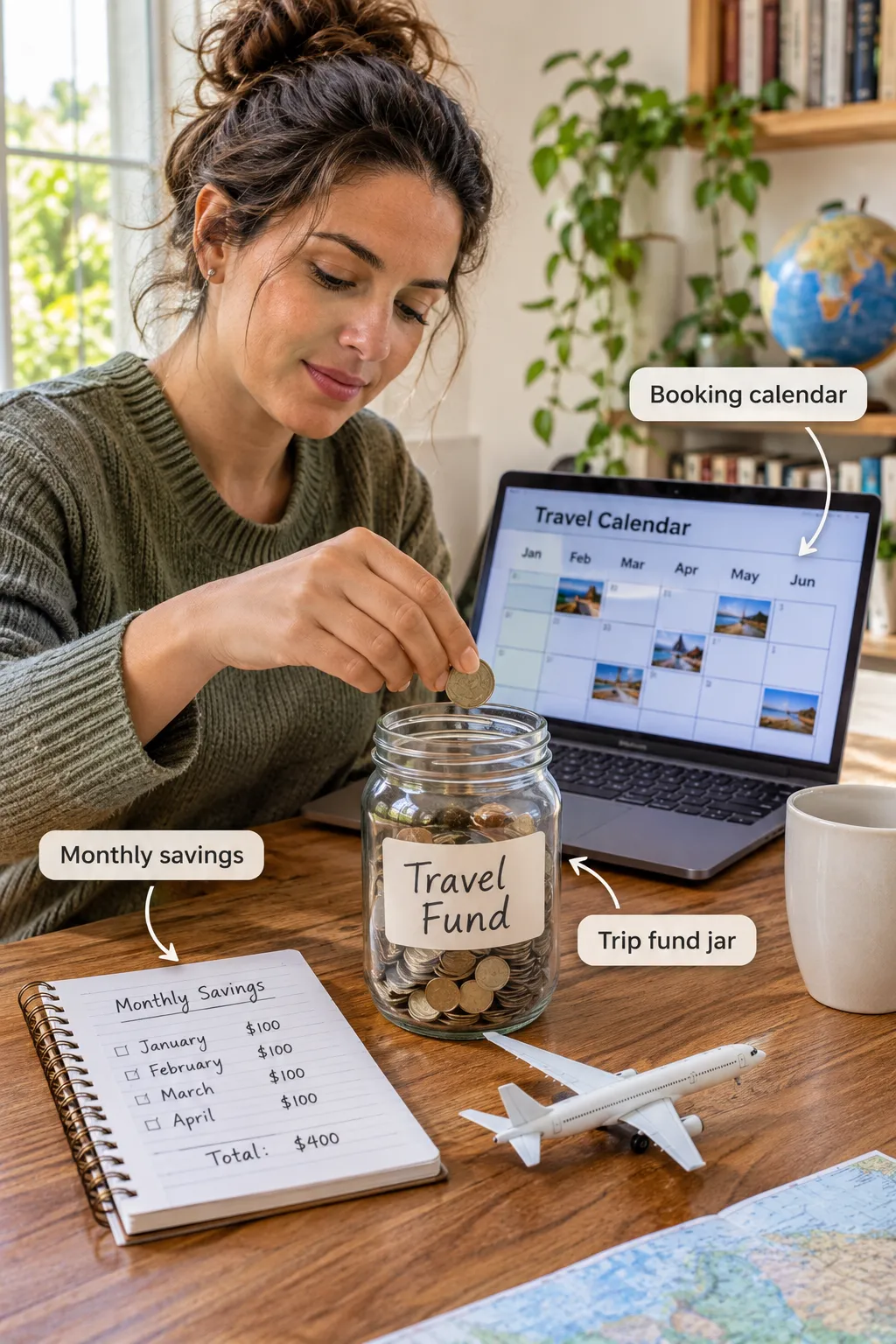
A simple system:
- Forward every booking confirmation to one folder or app
- Add trip dates to a shared calendar the day you book
- Print a backup copy of key documents before departure
- Review your full-year calendar monthly to catch conflicts
This matters even more once you’re juggling four or five trips across 12 months. One missed overlap can mean losing a deposit.
Can You Really Travel Every Month on a Budget
Yes, but it usually means shorter, cheaper trips instead of month-long vacations. Expedia’s research on 2027 travel habits found that “trip snacking,” meaning frequent one to two night getaways, is becoming a core planning style rather than a backup option (Expedia, 2026).
Choose this approach if:
- You want travel to feel like a regular part of life, not a once-a-year event
- You’d rather save smaller amounts weekly than one big lump sum
- You live near airports or drivable destinations
Mix in budget-friendly road trips with your bigger anchor vacation. Our guide on 20 ways to cut travel costs has practical tips that stretch a travel fund further across more trips.
How to Make Yearly Travel Work With a Full Time Job
Yearly travel works with a full time job when you plan trips around existing time off instead of fighting for extra vacation days. Short trips also fit better into a work schedule than long ones.
Practical approach:
- Use three-day weekends for short trips
- Save longer PTO blocks for one or two bigger annual trips
- Request time off for your biggest trip first, before the calendar fills up
- Consider remote work days bookended by a trip, if your job allows it
Booking.com’s 2027 travel predictions describe this flexible approach as “travel flex,” where people choose trips and timing based on mood and schedule rather than rigid plans (Booking.com, 2026).
What if I Need to Change My Travel Plans Mid-Year
You can almost always change travel plans mid-year, but the cost depends on what you booked and when. Refundable fares and travel insurance make changes far less painful.
Decision rule: choose refundable rates or flexible fares if your schedule is uncertain more than 4 months out. Choose cheaper non-refundable rates only once your dates are locked.
Common mistake: booking every single trip non-refundable to save a little money, then losing the whole amount when life happens.
Common Mistakes People Make When Planning a Year of Trips
The biggest mistake is overbooking the calendar and leaving no buffer time between trips. Burnout from back-to-back travel is real, even when the trips are fun.

Other frequent mistakes:
- Not checking passport expiration dates until the week before departure
- Skipping travel insurance to save a small amount upfront
- Booking all trips before setting any kind of budget
- Ignoring shoulder season pricing that could save hundreds per trip
Passports typically need at least six months of validity left for international entry, so check yours early if any 2027 trip crosses a border.
Should I Book Everything at Once or Book Separately
Book your biggest, most time-sensitive trips first, then fill in smaller trips separately as the year progresses. Booking everything in one sitting sounds efficient but locks you into dates before you know how the rest of the year will unfold.
Choose booking everything upfront if: your schedule is fixed and unlikely to change (teachers, for example).
Choose booking separately if: you have a flexible job or want room to adjust based on price drops or new opportunities.
How to Handle Travel Insurance Across Multiple Trips
Buy travel insurance per trip unless you travel extremely often, in which case an annual multi-trip policy may cost less overall. Compare the price of several single-trip policies against one annual plan before deciding.
Quick comparison:
- Single-trip insurance: better for one or two big trips a year
- Annual multi-trip insurance: better if you’re traveling monthly or near-monthly
- Always check coverage for cruise-specific issues if a Caribbean or ocean cruise is part of your plan
Is It Better to Do Round Trips or Separate Destinations
Round trips work best for straightforward vacations, while separate one-way legs make sense for multi-city international travel. The right choice depends entirely on your itinerary shape.
Choose separate legs if: you’re combining cities across a region, like pairing a Tuscany stop with another Italian city, similar to ideas in our Tuscany travel guide for first-time visitors.
Choose round trip if: you’re visiting one destination, such as a Disney resort trip or a single-island Caribbean stay.
What’s the Cheapest Way to Plan a Lot of Travel
The cheapest way to plan a lot of travel is to travel during shoulder season, stay flexible on dates, and mix big trips with cheap short ones. Off-peak travel keeps flight and hotel costs noticeably lower across the year.
Shifting even one or two trips to off-peak months can free up budget for an extra getaway later in the year. Government tourism data shows solid growth forecasts for international travel through 2027, which suggests prices won’t necessarily drop, making early planning and off-peak timing even more valuable.
How to Organize Flights Hotels and Activities Across 12 Months
Organize flights, hotels, and activities by building one master trip folder per destination, then syncing dates into your shared yearly calendar. Keep booking confirmations together so nothing gets lost between January and December.
Simple structure:
- One folder per trip (digital or physical)
- Flights booked first, hotels second, activities last
- A shared calendar entry the day anything gets booked
- A monthly check-in to review the whole year at a glance
If a Disney trip is on your list, our 17 Disney World travel tips cover booking windows and park reservation timing worth knowing before you commit dates.
Planning a 2027 Vacation Should Be Part of the Excitement
Planning a 2027 vacation shouldn’t feel like a chore, it’s genuinely part of the fun if you treat it that way. Pull up a map, start a wish list, and let yourself get excited about where the year might take you.
Travel in 2027 is leaning heavily into mood and nostalgia over specific bucket-list destinations (BBC Travel, 2026). That means there’s no wrong way to plan, whether you want a Caribbean cruise, a Disney trip, or a quiet countryside stay in Europe.
Ready for Some Vacation Inspiration
If you’re still deciding where to go, start browsing real itineraries instead of staring at a blank wish list. Seeing an actual day-by-day plan makes it much easier to picture your own trip.
Check out our Brazil travel itinerary or New Zealand travel guide for a sense of scale and pacing. Both show how much ground you can realistically cover without overpacking the schedule.
FAQ
What’s the best way to plan multiple trips for the whole year?
Map out fixed dates first, pick a few anchor trips, then fill gaps with shorter getaways throughout the year.
How much should I budget for traveling all year?
Aim for 10 to 20% of annual take-home income, adjusted based on trip style and number of trips planned.
When should I start booking 2027 trips to get good prices?
Book flights 3 to 6 months out and cruises 9 to 12 months out for the best available pricing and cabin options.
What apps or tools help organize a full year of travel?
TripIt, Google Calendar, Google Flights, and a basic budget spreadsheet cover most planning needs.
Can you really travel every month on a budget?
Yes, by mixing short one to two night trips with one or two bigger annual vacations instead of planning only long trips.
Should I book everything at once or book separately?
Book time-sensitive trips first, then book the rest separately as your schedule and budget become clearer.
How to handle travel insurance across multiple trips?
Buy per-trip insurance for occasional travelers, or an annual multi-trip policy if you travel almost every month.
Conclusion
A 2027 travel plan doesn’t need to be complicated, it just needs structure. Start with your calendar, pick a few anchor destinations, open a vacation fund today, and book your biggest trips first. From there, let the smaller trips fill in naturally throughout the year.
Don’t wait until next year to start planning 2027 vacation dates. Prices climb the longer you wait, and good cabin or hotel availability disappears first. Pull out a calendar this week, start the fund, and take the first real step toward a year full of trips worth remembering.