Last updated: November 24, 2026
Quick Answer
A ski trip packing list doesn’t need 80 items. It needs three layers done right: a moisture-wicking base, an insulating midlayer, and a waterproof shell, plus a short accessories kit. For a 5-7 day trip, plan on 3-4 base tops, 2-3 base bottoms, 2 midlayers, 1 jacket, 1 pair of ski pants, and 3-5 pairs of ski socks.
Key Takeaways
- The three-layer system (base, mid, shell) replaces the need for a huge wardrobe.
- Most skiers only need one shell jacket and one shell pant for a whole week.
- Merino wool or synthetic base layers work. Cotton does not.
- A spare midlayer in your backpack covers sudden weather swings.
- Overheating usually means too many layers, not too few.
- Small bag? You can still ski for a week with 6-8 clothing items total.
- Warm weather resorts need lighter base layers, not a different system.
What Is the Three Layer System for Skiing
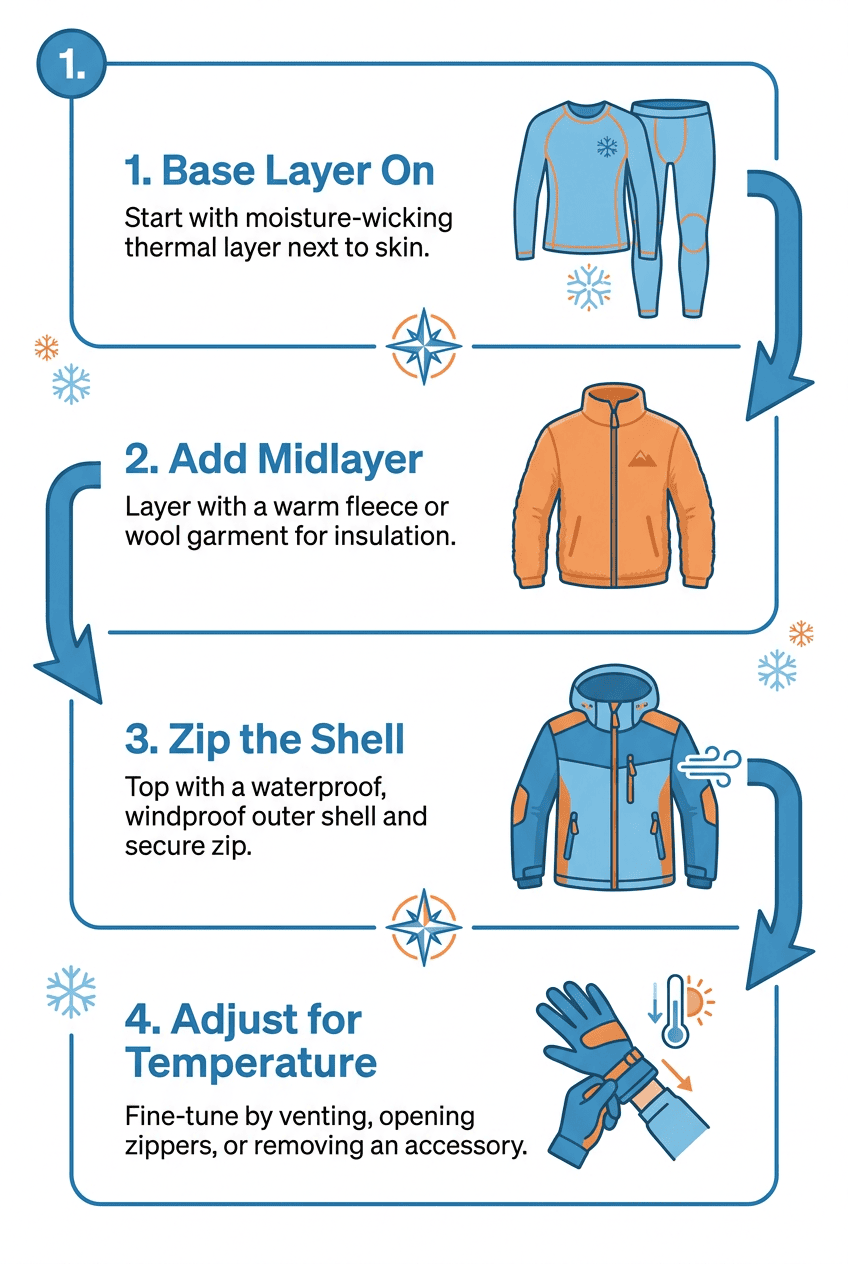
The three layer system means dressing in a base layer, a midlayer, and an outer shell, each with one job. This is the standard most ski brands and retailers now teach instead of long clothing lists.
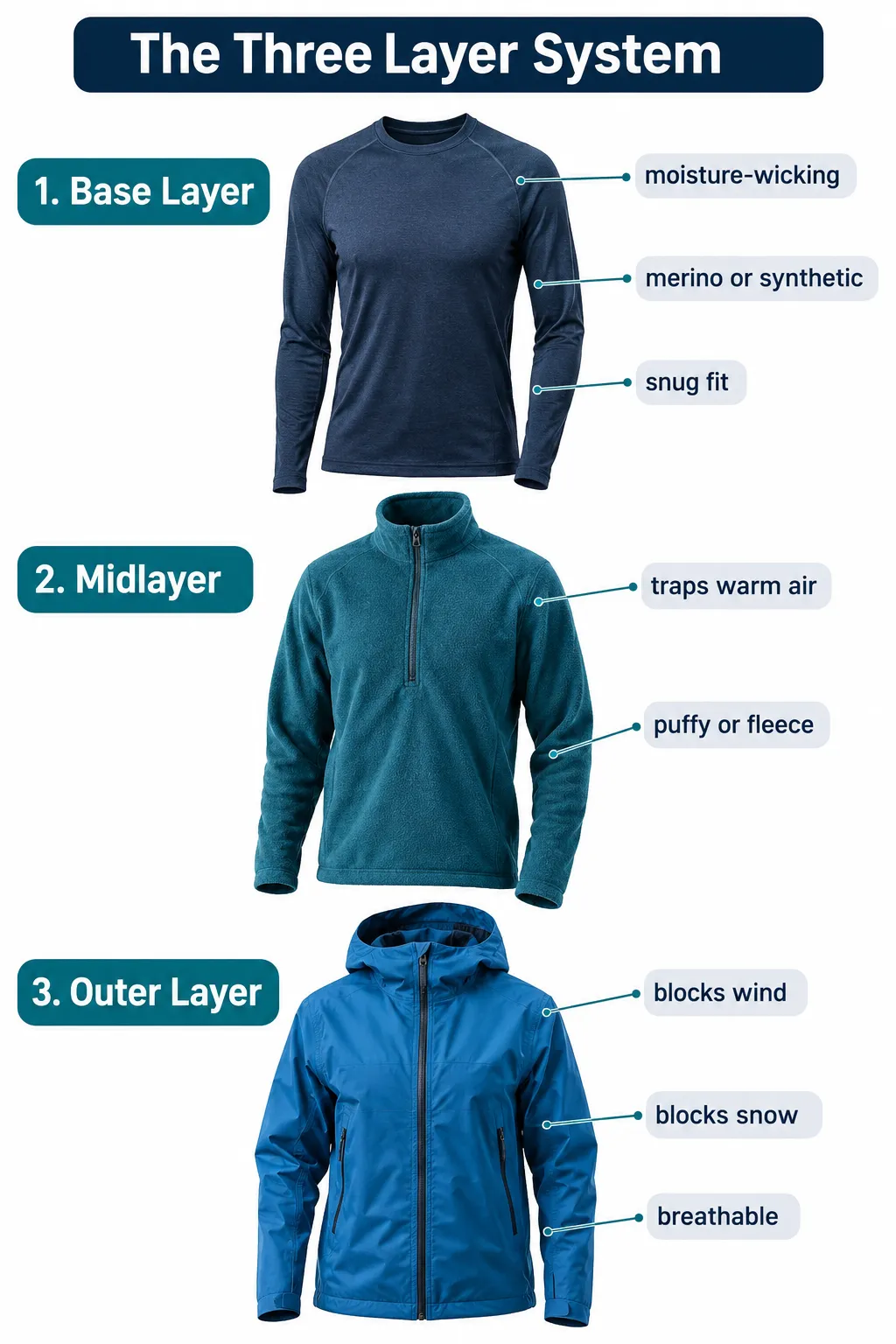
Here’s how the jobs break down:
- Base layer: sits against your skin and moves sweat away from your body.
- Midlayer: traps warm air close to you, usually fleece or light down.
- Outer shell: blocks wind, snow, and rain while letting sweat vapor escape.
This setup works because it lets you add or remove warmth without changing your whole outfit, which is the core idea behind modern ski layering guidance. You’re not packing five sweaters hoping one fits the weather. You’re packing pieces that stack.
Base Layer vs Thermal Layer Difference
Base layer and thermal layer mean the same thing in skiing. There’s no real difference, just different brands using different words for the piece worn closest to your skin.
What matters is the material and fit, not the name on the tag:
- Snug but not tight, so it can wick moisture properly.
- Made from merino wool or a synthetic blend like polyester.
- Worn on both top and bottom, as thermal leggings and a long-sleeve top.
If a product is called a “thermal top” at one store and a “base layer tee” at another, they’re built for the same job, as several retailer layering guides confirm.
Do I Really Need All Three Ski Layers or Can I Skip One
You need all three layers for a full ski day, but you don’t need to wear all three every minute. On a warm bluebird afternoon you might ski in just a base layer and shell, skipping the midlayer.
The mistake is packing only two layers and hoping the weather cooperates. Mountain weather changes fast, especially above the treeline. A clear morning can turn windy by lunch.
Decision rule: if you’re skiing more than two days, bring all three layer types. Skip the midlayer only on the mildest days, and only if you packed one in the first place.
Best Base Layers for Skiing That Won’t Break the Bank
You don’t need a $150 merino set to ski comfortably. A synthetic base layer from a mainstream outdoor brand does the job for a fraction of the price.
Look for these features over brand names:
- Polyester or polyester-spandex blend fabric.
- Tag that says “moisture-wicking” or “quick-dry.”
- Flat seams so nothing rubs under your shell.
Budget synthetic sets are a sound choice for beginners or occasional skiers, according to guidance from Columbia’s layering advice. Save the merino splurge for when you’re skiing more than a few times a season.
Why Am I Still Cold Even With Layering While Skiing
If you’re cold despite wearing three layers, the problem is usually fit, not layer count. A base layer that’s too loose can’t wick moisture, and a shell that’s too tight compresses your midlayer’s insulation.
Other common causes of staying cold:
- Cotton somewhere in the system, usually socks or a t-shirt under the base layer.
- Wet gloves or boots from the day before that never fully dried.
- Skipping a hat or neck warmer, which lets heat escape fast from your head and neck.
Common mistake: people blame the jacket when the real issue is damp base layer fabric sitting against skin all day. Swap it at lunch if you’re skiing full days, as several brand packing guides suggest.
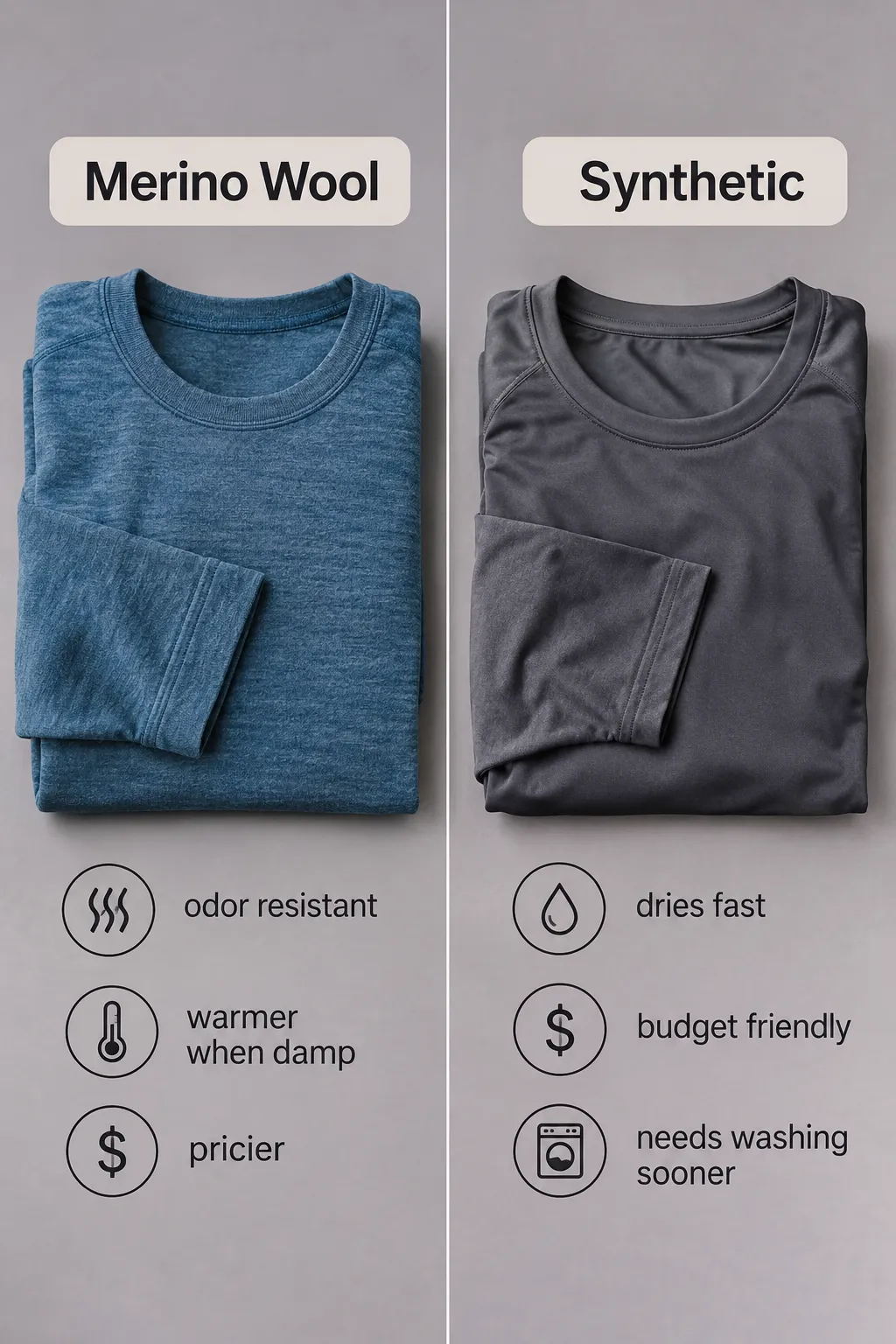
Merino Wool vs Synthetic Base Layers for Skiing Which Is Better
Merino wool resists odor and stays warmer when damp, while synthetic fabric dries faster and costs less. Neither one is objectively better, it depends on your trip length and budget.
| Feature | Merino Wool | Synthetic |
|---|---|---|
| Warmth when wet | Better | Worse |
| Odor resistance | Better | Worse |
| Price | Higher | Lower |
| Dry time | Slower | Faster |
| Durability | Can be delicate | More rugged |
Choose merino if you’re skiing a week straight and don’t want to do laundry mid-trip. Choose synthetic if you’re on a budget or only skiing a weekend, a split confirmed by Columbia’s gear guidance and POC’s layering guide.
Common Mistakes People Make With Ski Trip Packing
The biggest mistake is packing a separate full outfit for each ski day instead of mixing and matching layers. This is where the “80 item” packing list comes from, and it’s unnecessary.
Other mistakes worth fixing before you go:
- Packing cotton socks or shirts “just in case.”
- Forgetting a spare pair of gloves when the first pair gets soaked.
- Bringing only one midlayer when two let you adjust for changing temperatures.
- Skipping a packable backpack for carrying a spare layer on the mountain.
Retailers like Snow+Rock and Powder’s packing checklist both point to the same fix: fewer items, used more than once, beats a suitcase full of single-use outfits.
How to Pack for a Ski Trip if You Have a Small Bag
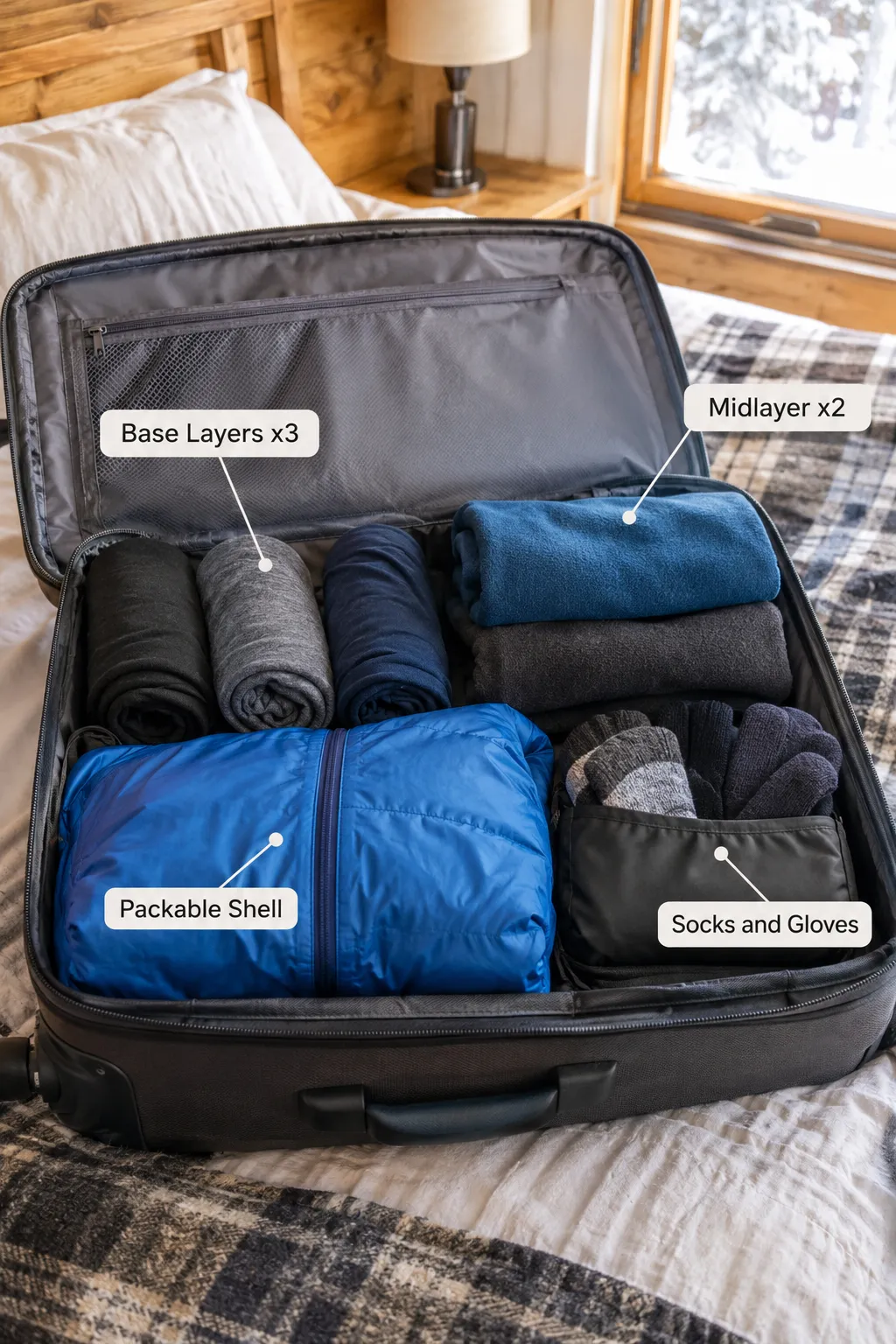
A small bag works fine for skiing because layers are reused across days, not swapped out daily. You only need one shell jacket and pant no matter how long the trip is.
For a carry-on-sized ski packing list, aim for:
- 3 base layer tops, 2 base layer bottoms
- 1 midlayer fleece
- 1 shell jacket, 1 shell pant (worn, not packed, if bag space is tight)
- 3 pairs of ski socks
- 1 hat, 1 neck warmer, 1 pair of gloves, goggles
Wash base layers in a sink one night mid-trip if you’re going longer than five days. This single swap can cut your packing list nearly in half, a strategy echoed in Listonic’s ski checklist. If you’re also wondering what else belongs in your carry-on, our personal item packing list covers the small essentials that get forgotten.
Ski Layering for Beginners: What Do I Actually Need
Beginners need the same three layers as experienced skiers, just without the extra technical gear advanced skiers add. Don’t overthink it with your first trip.
A first-timer’s list looks like this:
- 2-3 base layer sets (top and bottom)
- 1 midlayer (fleece is fine, down isn’t required)
- 1 rented or borrowed shell jacket and pant if you’re not sure you’ll ski again
- Ski socks, gloves, goggles, and a warm hat
Renting outerwear for a first trip is common and keeps costs down, a point made in financial-institution travel guidance on ski trip essentials. Save the shell jacket purchase for once you know you’ll ski again.
How Many Layers Should I Wear Skiing at High Altitude
At high altitude, wear all three layers plus pay closer attention to your head, hands, and neck, since wind and cold intensify above the treeline. The layer count doesn’t change, but exposure management does.
Extra steps at altitude:
- Use a thicker neck buff or balaclava for exposed chairlifts.
- Bring insulated gloves, not just thin liners, for above-treeline runs.
- Pack a spare midlayer in your backpack for sudden wind.
Resorts in the Rockies or high Alps see bigger temperature swings between base and summit than lower resorts, which is why WeSki’s layering guide recommends carrying, not just wearing, a backup layer.
Getting Too Hot While Skiing: How to Fix Overheating With Layers
Overheating while skiing usually means you’re wearing too many layers for the activity level, not that your gear is broken. Skiing generates a lot of body heat, more than standing around at the lodge.
Quick fixes for overheating:
- Vent your shell jacket’s underarm zips if it has them.
- Remove the midlayer on warmer days and carry it in your backpack.
- Unzip the jacket collar at the chairlift, then zip back up on the descent.
Edge case: if you’re overheating even in just a base layer and shell, check whether your base layer is actually insulated rather than just moisture-wicking. Some “thermal” products are warmer than a plain wicking tee.
Can I Wear Normal Winter Clothes Instead of Ski Layers
Normal winter clothes like a street coat and jeans don’t work for skiing because they aren’t waterproof or built to wick sweat. You’ll get wet fast and stay cold for the rest of the day.
Here’s why the swap fails:
- Street coats aren’t breathable, so sweat gets trapped inside.
- Jeans absorb snow and water, then freeze against your legs.
- Wool sweaters without a shell soak through in wet snow.
If budget is the concern, rent a shell jacket and pants at the resort rather than substituting regular outerwear. Many resorts offer rental outerwear alongside ski and boot rentals.
Ski Trip Packing List for Warm Weather Resorts
Warm weather or spring skiing still needs the three-layer system, just in lighter weights. Don’t skip layers entirely because the forecast says sunny.
Adjustments for warmer resort trips:
- Swap heavyweight base layers for lightweight ones.
- Bring a light fleece instead of a thick midlayer, or skip it on the warmest days.
- Pack sunscreen and sunglasses alongside goggles, since spring sun at altitude is intense.
Mornings at warm weather resorts can still start below freezing even if afternoons hit 50°F, so layers you can remove matter more than layers you can add, a nuance covered in Ski Austria’s packing guide.
What if I Only Have Cotton Clothes for a Ski Trip
If cotton is all you have, buy or rent at least a synthetic base layer before skiing, because cotton gets wet and stays wet, pulling heat from your body fast. This is the one packing rule nearly every expert source agrees on.
Cheap fixes if you’re in a pinch:
- Buy a synthetic base layer set at the resort shop, usually available even at small mountains.
- Layer a cotton sweater only under a proper waterproof shell, never as your top layer.
- Avoid cotton socks entirely, borrow or buy wool or synthetic ones.
Cotton is discouraged across every major ski brand guide, including Blizzard-Tecnica’s packing advice, because once it’s wet from sweat or snow, it stops insulating.
FAQ
Do I need ski-specific socks or will regular socks work?
Regular thick socks don’t work as well. Ski socks are thinner than you’d expect, over-the-calf, and made from wool or synthetic blends to avoid bunching inside ski boots.
How many ski jackets do I need for a week-long trip?
One. A single waterproof, breathable shell jacket handles a full week when paired with fresh base and midlayers underneath.
Can I use a running base layer for skiing?
Yes, if it’s moisture-wicking synthetic or merino. Running base layers work the same way ski base layers do.
Should I pack a separate outfit for après-ski?
Pack one casual warm outfit for evenings, separate from your ski layers, since wet ski gear needs to dry overnight.
Is down or fleece better for a ski midlayer?
Fleece breathes better and handles damp conditions, while down is warmer but less effective when wet. Fleece is the safer all-around pick.
Do I need goggles if I already have sunglasses?
Yes. Goggles protect against wind and snow spray that sunglasses don’t block, and many ski areas require them for lift access in storms.
Conclusion
Stop building your ski trip packing list around a full outfit for every day. Build it around three layers, a few of each, that mix and match all week.
Pack 3-4 base tops, 2-3 base bottoms, 2 midlayers, one jacket, one pair of pants, and enough socks and accessories to round it out. Check the materials before you check the quantity, and skip cotton entirely.
If you’re planning the rest of a mountain getaway, check out our couple ski trip ideas or bachelorette trip ideas for the mountains for destination inspiration once your bag is packed.