Last updated: November 28, 2026
Most “best of Europe” lists repeat the same five cities. Paris, Rome, Barcelona, Amsterdam, London. I get why. They’re beautiful. But if you’ve already done the highlight reel, or you just don’t want to stand in another two-hour line for a museum, there’s a different way to spend 10 days on the continent.
Quick Answer
A bold travel adventure itinerary for Europe works best when you pick one region instead of chasing seven countries. Ten days is enough time to base yourself in 3 to 4 towns, drive or train between them, and fill your days with hikes, small cities, and local food instead of landmark checklists. Think Slovenia, the Baltics, the Alps, or southern Italy’s shoulder season instead of the usual capital-hopping route.
Key Takeaways
- Ten days is widely treated as the standard planning unit for an adventure trip to Europe, long enough for depth but short enough to stay sane.
- Off the beaten path doesn’t always mean a remote island. It often just means secondary cities, rural regions, and shoulder-season timing instead of the same five capitals everyone visits.
- Cap your route at 3 to 4 main bases. More than that and you spend your trip packing bags, not seeing places.
- Regions like Slovenia, the Baltic capitals, and the Alps across Switzerland, Austria, and Italy are consistently recommended as bold alternatives to Western Europe’s usual circuit.
- A car gives you access to rural detours. Trains work fine if you’re sticking to towns with good rail links.
- Shoulder season (spring or late fall) usually means fewer crowds and lower prices, with mild weather in places like Sicily or Salento.
- Budget and adventure aren’t opposites. Hostels, regional trains, and self-catering keep costs down without cutting the experience short.
What does off the beaten path actually mean for travel
Off the beaten path means visiting places that get a fraction of the tourist volume of nearby famous spots, not necessarily places that are hard to reach. It’s as much about timing and transport choices as it is about geography.
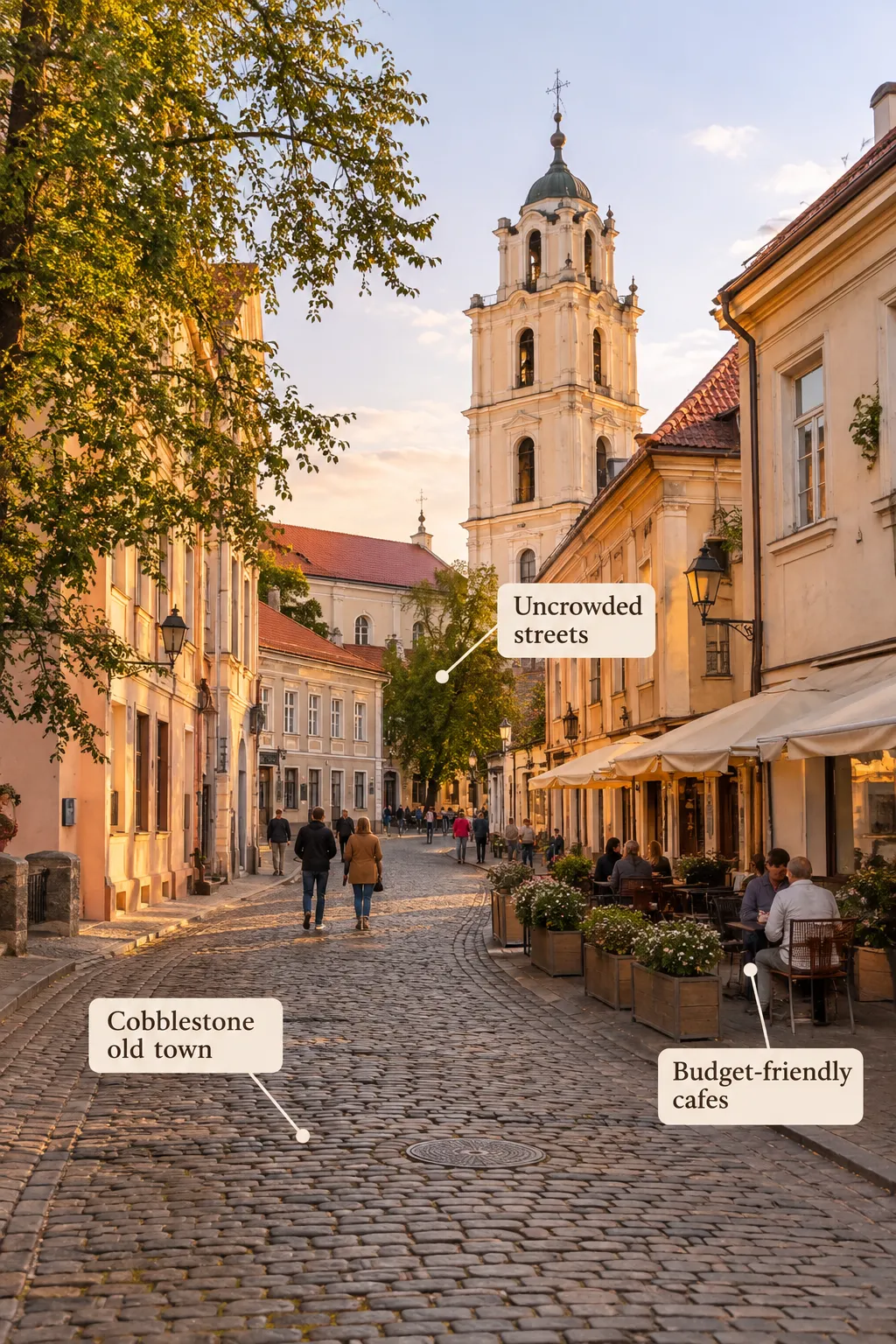
A lot of travelers assume this means roughing it somewhere remote. In practice, it usually means picking Ljubljana over Venice, or Gdańsk over Prague. The infrastructure is still there. The crowds just aren’t.
How you travel matters too. Renting a car and taking detours through small Alpine valleys, or riding local trains instead of high-speed rail between capitals, naturally pulls you toward quieter, less commercialized stops. Community discussion among European travelers backs this up, with recommendations to use flexible hubs like Zurich or Turin and rent a car specifically to find these under-visited pockets, rather than following a rigid list of must-see cities reported by Reddit’s Europe travel community.
How much does a 10-day Europe trip really cost
Costs vary a lot depending on region and style, but structured 10-day itineraries are widely published with real pricing so you can compare before booking. One compendium lists 12 separate 10-day Europe itineraries with costs broken down by travel style, from backpacker to comfort-focused trips, which is a useful benchmark if you’re building your own budget according to European Tourism’s itinerary guide.
Eastern Europe and the Baltics tend to run cheaper than Western Europe for the same quality of experience. Expect lower costs for accommodation and food in places like Vilnius or Sofia compared to Paris or Zurich.
Decision rule: if your budget is tight, choose Eastern Europe or the Balkans over Western Europe or Scandinavia. You’ll stretch 10 days further without sacrificing the adventure.
Is 10 days enough time to do Europe properly
Ten days is enough time if you commit to one region and resist the urge to cover the whole continent. It’s not enough time if you try to hit six countries in a row.
Planning frameworks consistently argue that 10 days sits in a sweet spot: long enough to go deep into a region, short enough to avoid the logistical fatigue that comes with 14-plus day multi-country trips per a widely cited itinerary planning guide. Seven days limits you to basically one city and a day trip. Ten days lets you combine an iconic anchor city with a cluster of secondary stops nearby.
Common mistake: trying to recreate a 3-week trip in 10 days. If your itinerary has more than 4 overnight stops, you’re planning a transit marathon, not an adventure.
Best time of year for a Europe adventure trip
Late spring (May to early June) and early fall (September to mid-October) give you the best mix of good weather and manageable crowds across most of Europe. Winter works too, but only in specific regions built for it.
If you’re set on November travel specifically, current Italy-focused guidance recommends mountain bases like Brunico in South Tyrol for quiet, nature-focused trips away from ski crowds, plus southern Sicily around Catania and Ragusa, southern Salento, and Genoa, where temperatures stay mild while visitor numbers drop sharply according to recent Italy travel advice.
For river-based adventures, a notable Douro River itinerary running Lisbon to Porto operates from March through December, giving a long shoulder-season window for travelers who want a slower pace through wine country rather than city hopping.
What are the most underrated destinations in Europe
Slovenia, the Baltic capitals, and Bulgaria-Romania combinations rank among the most consistently recommended underrated regions for a bold 10-day route. Each offers a full, varied trip without the crowd pressure of Western Europe’s main circuit.
A few concrete examples worth knowing:
- Slovenia loop: Bled, Bovec, Piran, and Ljubljana, mixing mountains, a short coastline, and one walkable capital.
- Baltic capitals: Tallinn, Riga, and Vilnius, three distinct old towns within a manageable train or bus distance of each other.
- Black Sea route: Bucharest, Constanța, Varna, and Sofia, a cultural route that skips the saturated Prague-Budapest-Vienna triangle entirely.
- Eastern Europe alternative: Gdańsk, Vilnius, and Warsaw, or a Bulgaria-Romania loop pitched as even further off the main tourist path as outlined in a 2026 Eastern Europe travel guide.
If you’d rather stay closer to familiar territory but still skip the obvious stops, a train-based route through Europe’s secondary cities is worth comparing against these options.
How to plan an itinerary that isn’t just the main tourist spots
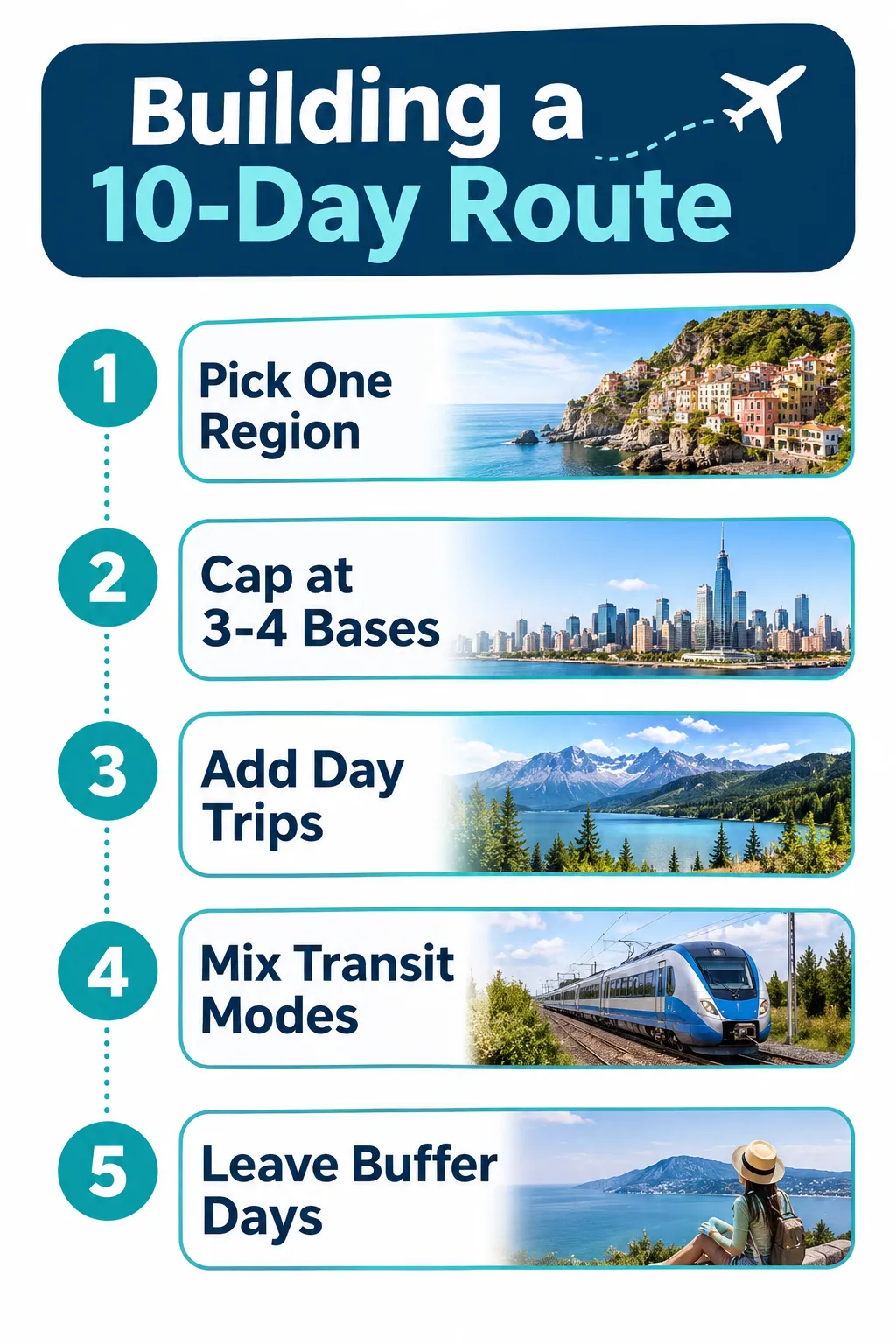
Start by picking one region, then cap your overnight bases at 3 to 4 towns, filling gaps with day trips instead of new hotel bookings. This single rule does more to create a bold, off-the-beaten-path feel than any specific destination choice.
A widely used planning table links trip length to a recommended maximum city count, and for 10 days it suggests 3 to 4 primary bases, using a sample route like Paris, Amsterdam, and Prague as the model structure to follow (even though those are famous cities, the logic of fewer bases plus day-trip detours applies anywhere) per established itinerary planning frameworks.
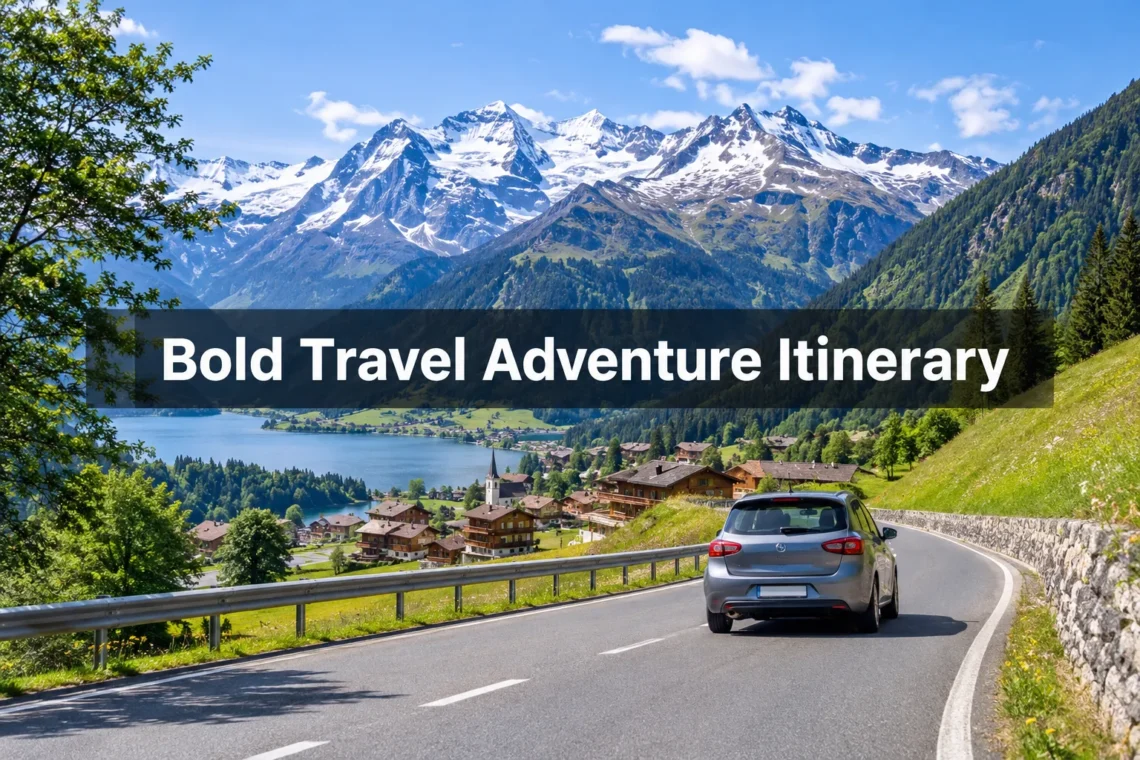
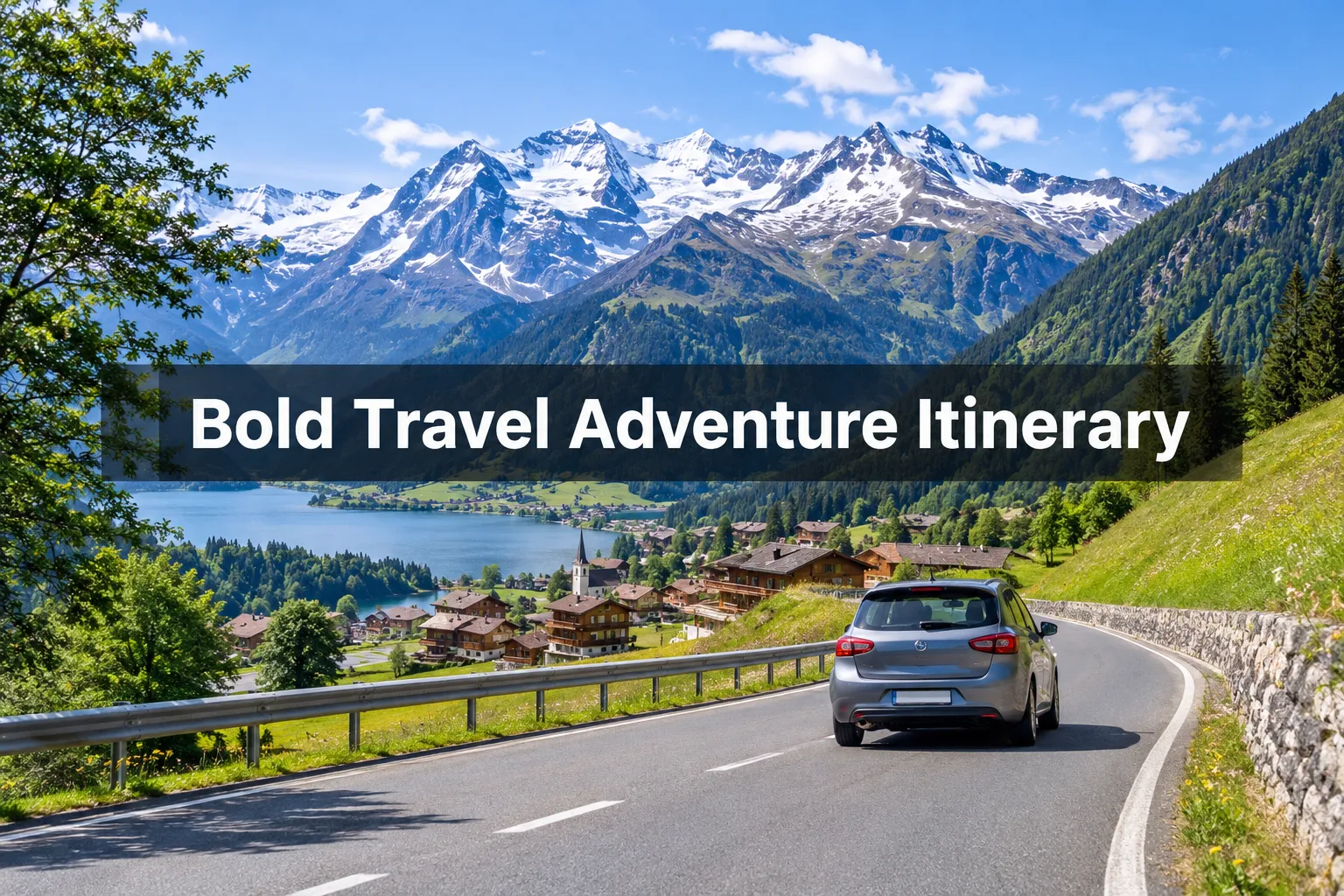
Alpine road trips follow the same logic well. A German-Austrian-Swiss Alps loop recommends deep immersion in mountain towns rather than jumping between capitals, which naturally pulls you into smaller valleys and villages along the way according to Nordic Visitor’s itinerary resources.
Quick example: instead of Vienna, Budapest, Prague (classic, crowded, rushed), try Ljubljana as a single base with day trips to Lake Bled, Bovec, and the Soča Valley. Same country, totally different crowd level.
Can you do Europe on a budget and still have adventure
Yes, budget and adventure travel aren’t in conflict in Europe, especially outside Western capitals. Eastern Europe, the Balkans, and smaller towns in general cost noticeably less than Paris, Zurich, or Amsterdam for hotels, food, and transport.
Ways to keep costs down without losing the adventure factor:
- Book regional trains or buses instead of flights between nearby towns.
- Stay in guesthouses or small hotels in secondary cities rather than capital-city chains.
- Travel in shoulder season, when accommodation prices drop and crowds thin out.
- Self-cater some meals, especially in Alpine or rural areas where grocery stores are easy to find.
If you want more general budget strategy before you build the Europe-specific plan, our budget travel guides cover cost-cutting tactics that apply well beyond this trip.
Is solo travel or group travel better for adventure in Europe
Solo travel suits flexible, slow-paced adventure routes better, while group travel suits road trips where splitting car rental and fuel costs matters. Neither is objectively better, it depends on your pace preference and budget.
Solo travelers get full control over the itinerary and can change plans mid-trip if a town turns out to be worth an extra day. Group travel makes Alpine road trips cheaper per person and adds safety for remote hiking detours. If you’re leaning solo, our solo travel resources and Spain solo female travel guide cover practical safety and planning tips that transfer well to other regions.
What are common mistakes people make on European road trips
The biggest mistake is packing too many cities into too few days, which turns a 10-day adventure into a 10-day transit schedule. The second biggest is underestimating driving times through mountain passes.
Other frequent mistakes worth avoiding:
- Skipping toll and vignette research. Switzerland and Austria require highway vignettes, and fines for driving without one are steep.
- Ignoring mountain pass closures. Passes like Arlberg and Brenner are usually fine in summer, but conditions change fast in shoulder season.
- Booking one-way car rentals across borders without checking fees. Cross-border drop-off charges can be substantial.
- Not building in buffer days. A flat tire or a closed road shouldn’t wreck your whole route.
A flagship 10-day Alpine road trip across Switzerland, Austria, and northern Italy, using passes like Arlberg and Brenner, is a solid model for pacing this kind of route correctly as detailed in Travelandoo’s driving itinerary guide.
Do you need a car to do an off the beaten path Europe trip
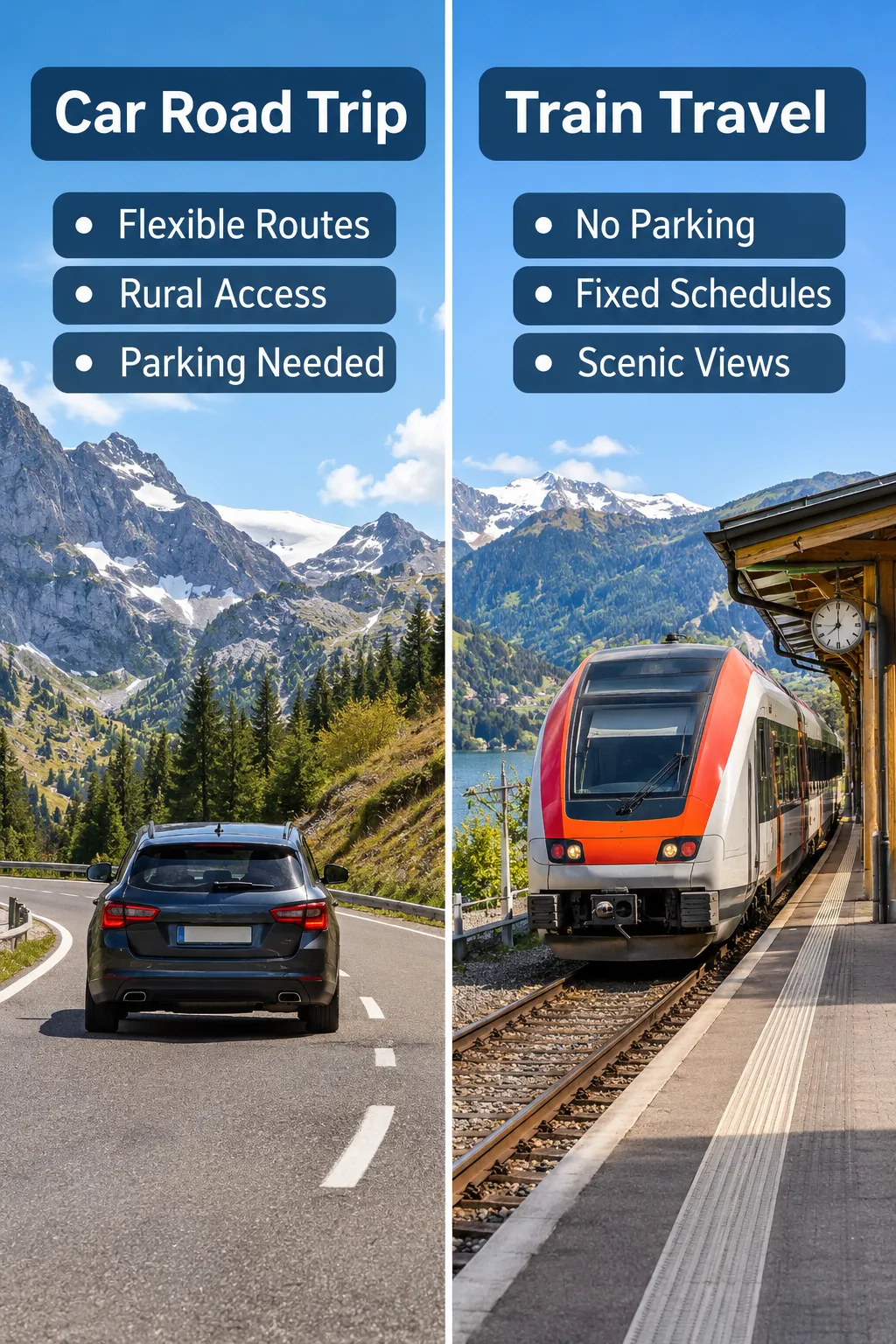
You don’t strictly need a car, but it opens up far more rural and small-town stops than trains alone. Trains work well if your off-the-beaten-path towns happen to sit on a rail line, which is common in the Baltics and parts of Eastern Europe.
| Travel mode | Best for | Limitation |
|---|---|---|
| Rental car | Alpine valleys, rural regions, flexible stops | Tolls, vignettes, parking in old towns |
| Regional train | Baltic capitals, city-to-city hops | Fixed schedules, less rural access |
| Mixed (train + local bus) | Balancing cost and flexibility | Requires more pre-trip research |
Choose a car if: your route includes mountain valleys, small villages, or regions with thin public transit, like rural Slovenia or the Dolomites. For more on scenic mountain driving specifically, our Dolomites Italy itinerary is a useful companion read.
Choose trains if: you’re sticking to well-connected towns like the Baltic capitals or a Central Europe loop, where a one-month Central Europe itinerary shows how far rail connections stretch.
Which European countries are safest for adventure travelers
Most of Western, Central, and Northern Europe, along with Slovenia and the Baltic states, rank consistently among the safest regions globally for travelers, according to annual safety indices. This doesn’t mean zero risk, but violent crime against tourists is rare in these areas.
Standard precautions still apply everywhere: watch for pickpockets in crowded tourist zones, keep copies of documents, and check your government’s travel advisories before departure for any region you’re less familiar with. Mountain and outdoor adventure specifically carries its own separate risk profile tied to weather and terrain, not crime.
How to book accommodations for an adventure travel itinerary
Book guesthouses, small family-run hotels, or mountain huts in your chosen bases rather than large chain hotels, and lock in reservations earlier for shoulder-season trips to smaller towns where inventory is limited. Smaller regions often have fewer total rooms, so popular guesthouses fill up faster relative to their size than big-city hotels do.
A practical booking checklist:
- Pick your 3 to 4 bases before searching for rooms.
- Book mountain huts or rural guesthouses 2 to 3 months ahead if traveling in peak hiking season.
- Confirm cancellation policies, especially for Alpine routes where weather can shift plans.
- Check if your base has parking included if you’re driving, since old towns often restrict car access.
If your trip includes any multi-day hiking stretch, consider travel insurance built for adventure activities. Our guide to the best travel insurance plans breaks down which policies actually cover hiking and outdoor incidents.
What should you pack for an active European adventure
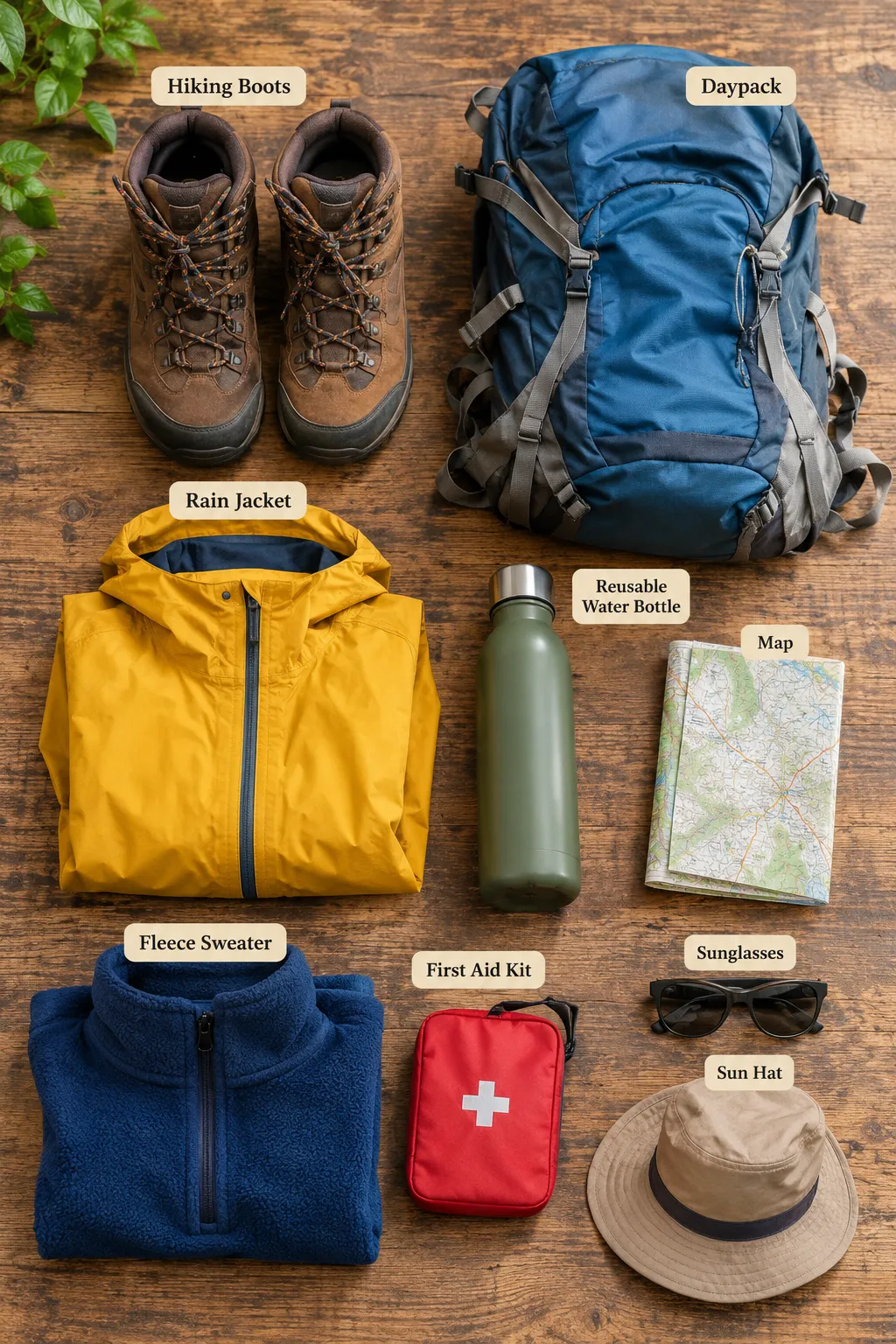
Pack for layered weather, comfortable broken-in hiking shoes, and a daypack you can use for both city walking and trail days. Europe’s shoulder seasons can shift from warm afternoons to cold mountain evenings within the same day.
Core packing list for a bold 10-day route:
- Broken-in hiking boots or trail shoes, not brand new ones
- A rain jacket, even in summer, especially for Alpine regions
- A daypack with a hip belt for longer walking days
- Layered clothing: base layer, insulating layer, waterproof shell
- A reusable water bottle, since tap water is drinkable across most of Western and Central Europe
For a broader packing checklist that applies beyond this specific trip, see this complete travel essentials list.
Is adventure travel in Europe harder than other regions
No, adventure travel in Europe is generally easier logistically than in regions like Southeast Asia or parts of Africa, thanks to dense transport networks, reliable road signage, and widely spoken English in tourist areas. The main challenge is overcomplicating your own itinerary, not the destination itself.
Where Europe can get harder is language in truly rural areas, and mountain weather that shifts fast. Compared to a trip like New Zealand’s varied terrain or a 2-week Australia road trip, Europe’s compact geography makes recovering from a bad day (missed train, closed pass) much easier since alternatives are usually close by.
FAQ
Is 10 days enough for a Slovenia and Baltic combo trip?
No, combining Slovenia and the Baltics in one 10-day trip means too much flight time between regions. Pick one or the other for a focused route.
Do I need to rent a car for the Alps?
Not required, but strongly recommended. Trains cover main towns, but valleys and smaller villages are much easier to reach by car.
What’s the cheapest off-the-beaten-path region in Europe?
Eastern Europe and the Balkans, including Bulgaria and Romania, generally offer the lowest costs for accommodation and food among the regions covered here.
Is November a bad time to visit Italy’s mountains?
It depends on the area. Non-ski mountain bases like Brunico work well for quiet hiking-adjacent trips, while high-altitude ski resorts aren’t open yet.
Can solo female travelers do an Alpine road trip safely?
Yes, Switzerland, Austria, and northern Italy are consistently ranked among the safest regions for solo travelers, though standard road trip precautions still apply.
Should I book accommodation before or after planning the route?
After. Lock in your 3 to 4 bases first, then book accommodation, since booking rooms before finalizing your route often leads to wasted reservations.
Are Baltic capitals walkable without a car?
Yes, Tallinn, Riga, and Vilnius all have compact, walkable old towns, and trains or buses connect the three cities reasonably well.
What’s a realistic daily budget for a budget-focused 10-day trip?
This varies widely by region and isn’t something to estimate without a real source, but Eastern Europe and the Balkans consistently cost less than Western Europe for the same categories of spending.
Conclusion
Pick one region, not five countries. Cap your stops at 3 to 4 bases. Build in day trips instead of new hotel check-ins every night. That’s the whole formula behind a bold travel adventure itinerary that actually feels different from the standard Europe trip everyone else is doing.
Start by choosing between an Alpine road trip, a Baltic capitals loop, or a Slovenia-based route, since each one works well within 10 days without rushing. Book your accommodation after locking the route, not before. Then pack for shifting weather and go find the parts of Europe that don’t show up in everyone else’s photos.
For more route inspiration before you commit, browse our full Europe travel category for additional region-specific guides.