
Last updated: November 28, 2026
There’s a number problem hiding in every “63 national parks” article published in 2026: it’s wrong. The National Park Service now manages 64 national parks after Chiricahua in Arizona got redesignated from a national monument on October 20, 2026, making it the first new national park added in six years.
So any national parks list still stuck at 63 is already out of date. I’ll walk through all of them below, state by state, with the best months to go, and I’ll flag exactly where the old “63” count needs an update.
Quick Answer
The US has 64 national parks as of late 2026, spread across 30 states plus American Samoa, following Chiricahua’s redesignation from monument to national park. California leads with nine parks, Alaska has eight, and Utah’s “Mighty 5” remain some of the most visited. Best times to visit vary by region: spring and fall work for most desert and canyon parks, while summer is the window for high-elevation and Alaska parks.
Key Takeaways
- The official national parks list now totals 64 parks, not 63, after Chiricahua’s October 2026 redesignation.
- California has the most national parks (nine), followed by Alaska (eight) and Utah (five).
- Shoulder seasons (April-May, September-October) offer the best mix of good weather and smaller crowds at most parks.
- National monuments and national parks are legally different categories, created through different processes.
- An America the Beautiful annual pass costs $80 and pays for itself after about three park visits.
- Some of the most visited parks (Great Smoky Mountains, Zion, Grand Canyon) now require timed-entry reservations during peak months.
- Least visited parks like Gates of the Arctic and Isle Royale offer near-solitude but need serious planning to reach.
What’s the difference between a national park and a national monument
A national park is created by an act of Congress and generally protects a large area with varied ecosystems and scenic value. A national monument can be created by the President alone under the Antiquities Act, and often protects a single feature or smaller area.
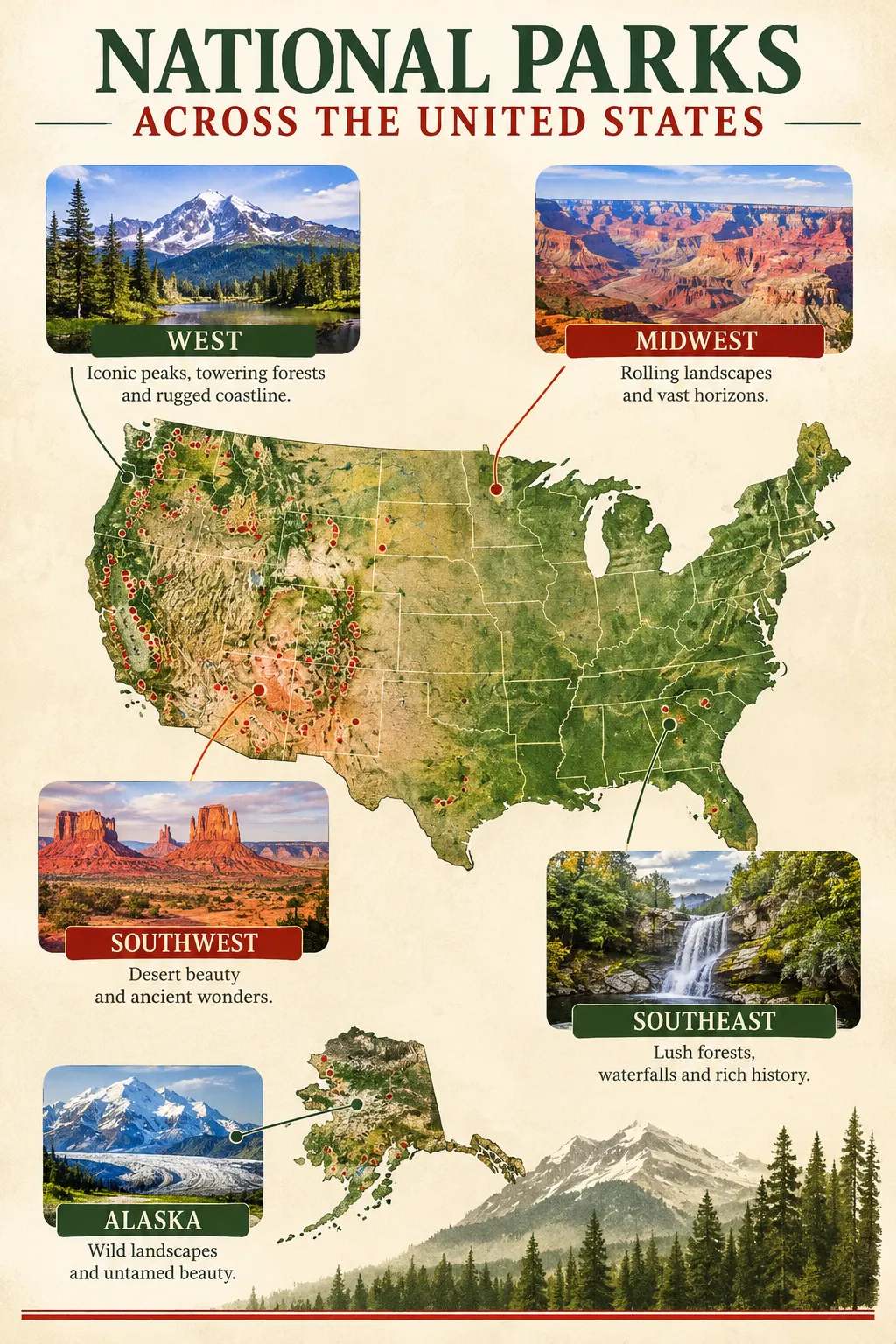
Both fall under the National Park System, which includes over 400 units total, but only parks earn the “national park” title.
Here’s the practical difference for travelers:
- National parks need Congressional approval, tend to be larger, and usually have more visitor infrastructure.
- National monuments can be designated faster and protect things like cliff dwellings, fossil beds, or rock formations.
- Chiricahua spent over 100 years as a monument before Congress and the President elevated it to full park status in 2026, a move widely covered as the country’s newest national park hiding in plain sight.
Common mistake: assuming monument status means a place is less worth visiting. Chiricahua’s “wonderland of rocks,” with its balanced boulders and rhyolite spires, drew visitors for a century before the title changed, as local coverage of the redesignation noted.
Which national parks should I visit as a first-timer
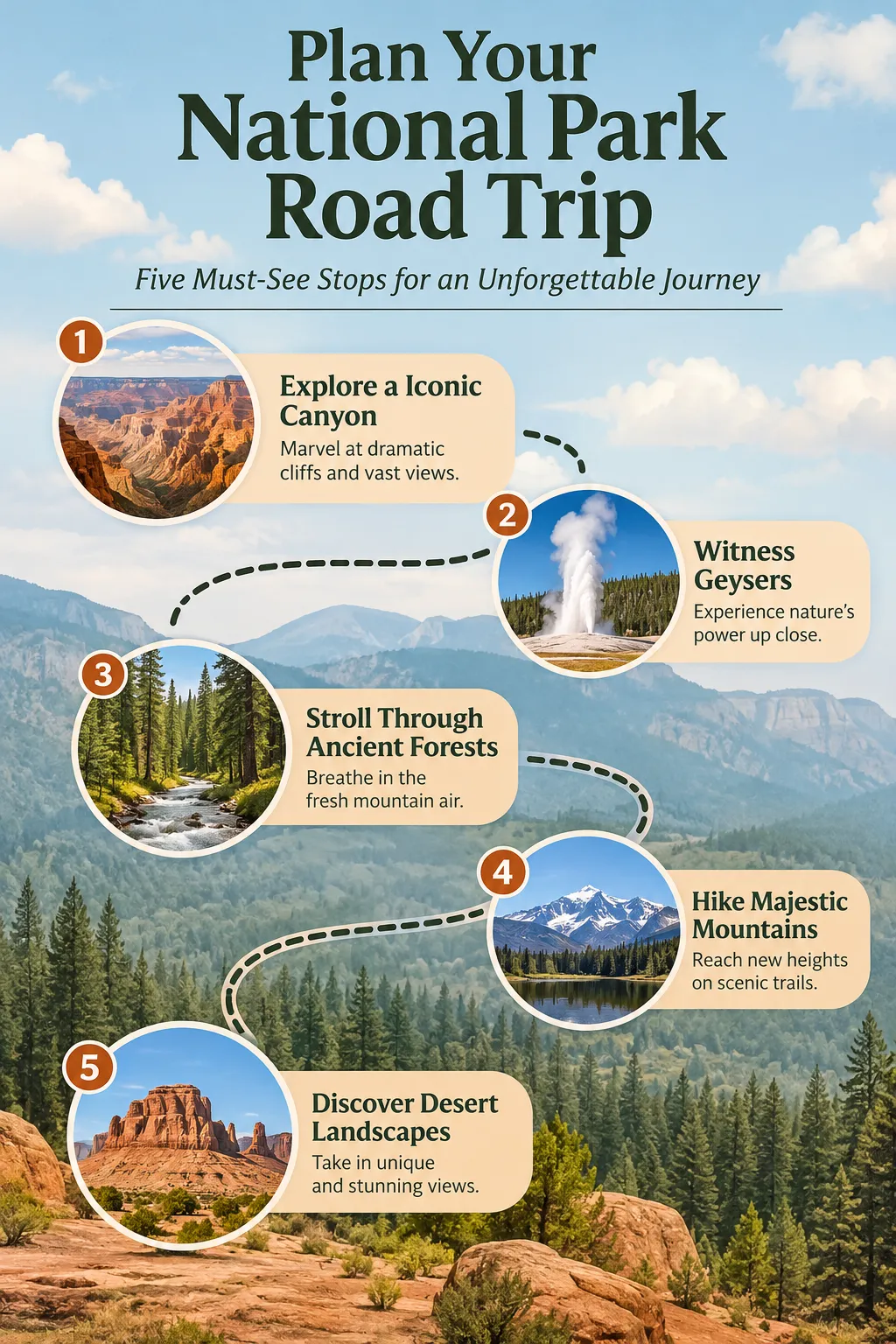
First-timers should start with parks that have strong infrastructure, clear trail systems, and manageable logistics, like Zion, Grand Canyon, Great Smoky Mountains, or Acadia. These four cover desert, canyon, forest, and coastal landscapes without requiring technical gear or long backcountry experience.
A good starter list looks like this:
- Zion National Park (Utah): shuttle-based access, short and long trail options, dramatic canyon walls.
- Grand Canyon National Park (Arizona): South Rim is drive-up accessible with paved overlooks.
- Great Smoky Mountains National Park (Tennessee/North Carolina): no entrance fee, easy day hikes, wildlife viewing.
- Acadia National Park (Maine): compact size, carriage roads, coastal views without a long drive between stops.
Choose Zion or Grand Canyon if you want dramatic scenery with minimal hiking skill required. Choose Great Smoky Mountains if you’re traveling with a tight budget, since it charges no entrance fee.
If you’re also weighing other US destinations for a first family trip, our guide to best USA travel destinations with kids covers more than just parks.
How much does it cost to visit a national park
Most national parks charge a per-vehicle entrance fee between $20 and $35, valid for seven days, though some parks charge no fee at all. Great Smoky Mountains, for example, has never charged an entrance fee.
Fee structure breakdown:
- Per-vehicle fee: typically $20-$35 for seven days at busier parks like Zion or Grand Canyon.
- Per-person fee: around $10-$20 for those entering by foot, bike, or motorcycle at some parks.
- No-fee parks: Great Smoky Mountains and several others don’t charge admission.
- America the Beautiful pass: $80 per year, covers entrance to all federal recreation sites including every national park.
If you plan to visit three or more fee-charging parks in a year, the annual pass almost always saves money.
Best national parks for families with kids
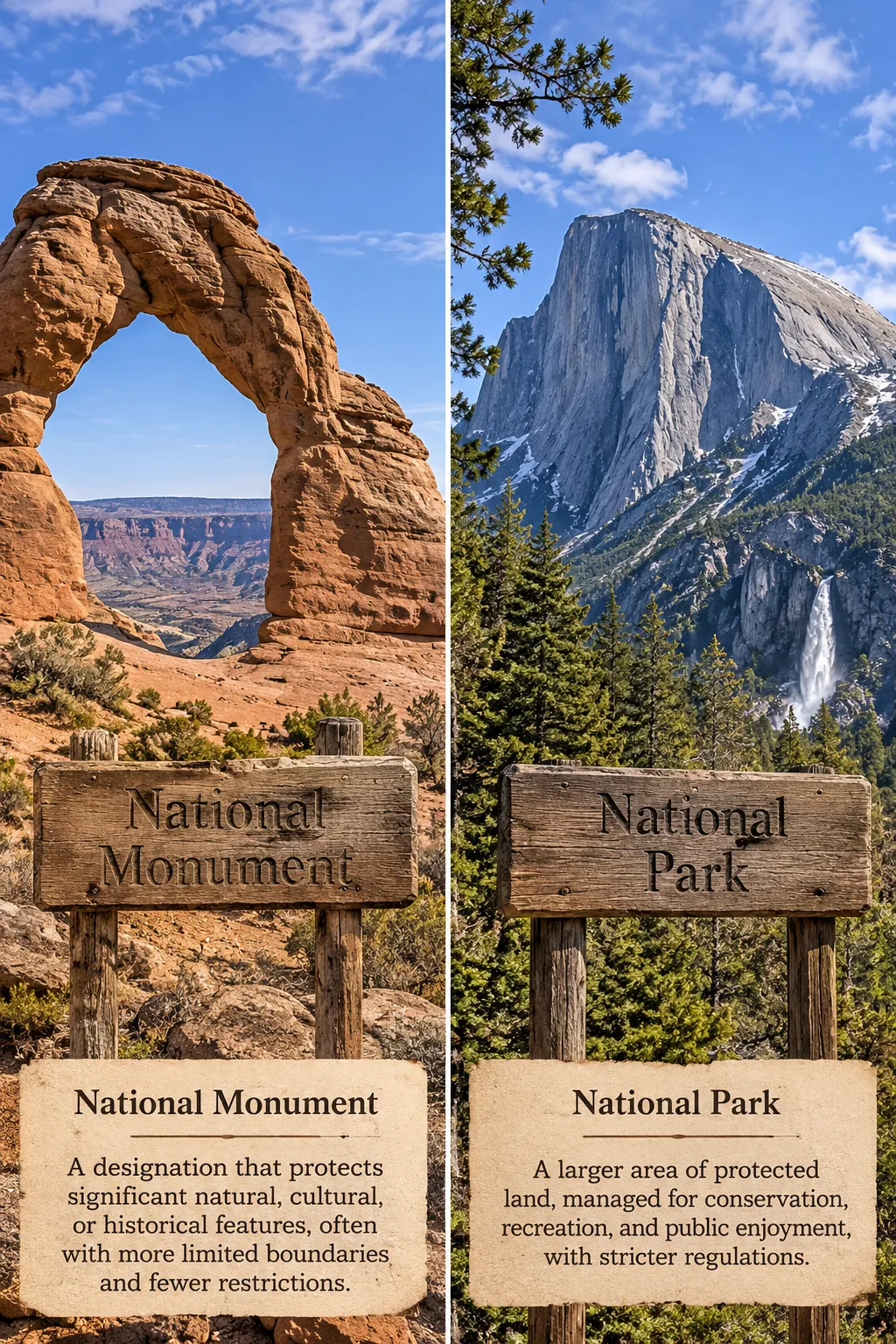
Families do best at parks with Junior Ranger programs, flat accessible trails, and visitor centers with exhibits, like Great Smoky Mountains, Rocky Mountain, and Acadia. These parks combine easy logistics with enough variety to keep kids engaged for a full day.
Good family picks and why:
- Great Smoky Mountains: Cades Cove loop road, easy waterfall hikes, free entry.
- Rocky Mountain National Park: Trail Ridge Road for scenic driving, wildlife like elk visible from pullouts.
- Acadia National Park: short Jordan Pond Path, Thunder Hole for an easy “wow” stop.
- Everglades National Park: boardwalk trails over water, alligator sightings without strenuous hiking.
Edge case: avoid high-elevation parks like Rocky Mountain or Grand Teton with very young kids during peak summer heat and altitude; stick to lower trails and build in rest days. For broader family travel planning beyond parks, see our family guide to USA travel destinations with kids.
Is the annual national parks pass worth it
The $80 America the Beautiful annual pass is worth it if you’ll visit three or more fee-charging parks in a 12-month period, since that’s roughly the break-even point against paying individual entrance fees. It also covers everyone in the vehicle, not just the pass holder.
Decision rule: buy the pass if you’re planning any kind of multi-park road trip. Skip it if you’re only visiting one or two parks and one of them (like Great Smoky Mountains) is already free.
Seniors get an even better deal: a lifetime senior pass costs far less than the annual pass for anyone 62 or older, making repeat visits across decades cheap.
How do I book camping at national parks
Most national park campgrounds take reservations through Recreation.gov, and popular campgrounds like those in Yosemite or Zion often book out months ahead. Some first-come, first-served sites still exist, but they’re increasingly rare at busy parks.
Booking steps:
- Pick your park and check which campgrounds are inside versus outside the boundary.
- Go to Recreation.gov and search by park name.
- Reserve as early as the booking window opens (often 6 months ahead for peak-season dates).
- Have a backup plan: nearby national forest or private campgrounds if park sites sell out.
Common mistake: waiting until a month before a summer trip to book Yosemite or Glacier campsites. Those usually sell out within minutes of release.
Most visited vs least visited national parks in the US
The most visited national parks, led by Great Smoky Mountains, Zion, and Grand Canyon, see over 4 million visitors a year, while the least visited, like Gates of the Arctic in Alaska, see only a few thousand. This gap comes down almost entirely to road access.
| Category | Example Parks | Approx. Annual Visitors | Access |
|---|---|---|---|
| Most visited | Great Smoky Mountains, Zion, Grand Canyon | 4-13 million | Paved roads, no bush plane needed |
| Moderately visited | Acadia, Rocky Mountain, Glacier | 1-4 million | Drive-in, seasonal road closures |
| Least visited | Gates of the Arctic, Isle Royale, Kobuk Valley | Under 20,000 | Bush plane, boat, or long hike required |
Choose a high-visitation park if you want full services and easy logistics. Choose a low-visitation park if solitude matters more to you than convenience, and you’re willing to arrange charter flights or boats.
Can you visit multiple national parks on one road trip
Yes, several regions let you link multiple parks in a single trip without excessive driving, especially Utah’s “Mighty 5” and the California park cluster. Utah’s five parks (Zion, Bryce Canyon, Capitol Reef, Canyonlands, Arches) sit within roughly a day’s drive of each other.
Good multi-park loops:
- Utah’s Mighty 5: Zion to Bryce Canyon to Capitol Reef to Canyonlands to Arches, about 7-10 days total.
- California cluster: Sequoia, Kings Canyon, and Yosemite can be chained in one trip, with Redwood and Lassen Volcanic as a separate northern add-on. Our 3-day Redwood itinerary and 3-day Lassen Volcanic itinerary both work as standalone stops too.
- Glacier plus Mount Rainier: not adjacent, but both Pacific Northwest parks are worth combining into a longer Western trip. See our Glacier National Park itinerary and Mount Rainier itinerary for planning details.
Edge case: Alaska’s eight parks are not easily linked. Most require separate flights, so treat each as its own trip rather than a loop.
Best way to avoid crowds at national parks
Visit during shoulder season months (April-May or September-October) and arrive before 8 a.m., since crowd data consistently shows mornings and non-summer months draw far fewer visitors at nearly every major park. A crowd calendar analysis of all 64 parks backs up this pattern across the system.
Practical tactics:
- Enter the park gate within the first hour of opening.
- Pick weekdays over weekends, especially Tuesday through Thursday.
- Target shoulder months instead of June, July, or August at popular parks.
- Choose less famous trails inside popular parks; the main overlook is always busiest.
Common mistake: assuming any national park is crowd-free in winter. Some desert parks like Joshua Tree see steady winter crowds because summer heat pushes visitors to cooler months instead.
What are common mistakes people make when visiting national parks
The biggest mistakes are skipping reservation systems, underestimating drive times between park entrances, and not checking seasonal road closures before arriving. All three cause more trip disruption than weather does.
Watch for these specific errors:
- Not booking timed entry: Zion, Rocky Mountain, and Glacier all use timed-entry systems during peak season; show up without one and you may get turned away.
- Ignoring road closures: Going-to-the-Sun Road in Glacier and Trail Ridge Road in Rocky Mountain close for months each winter.
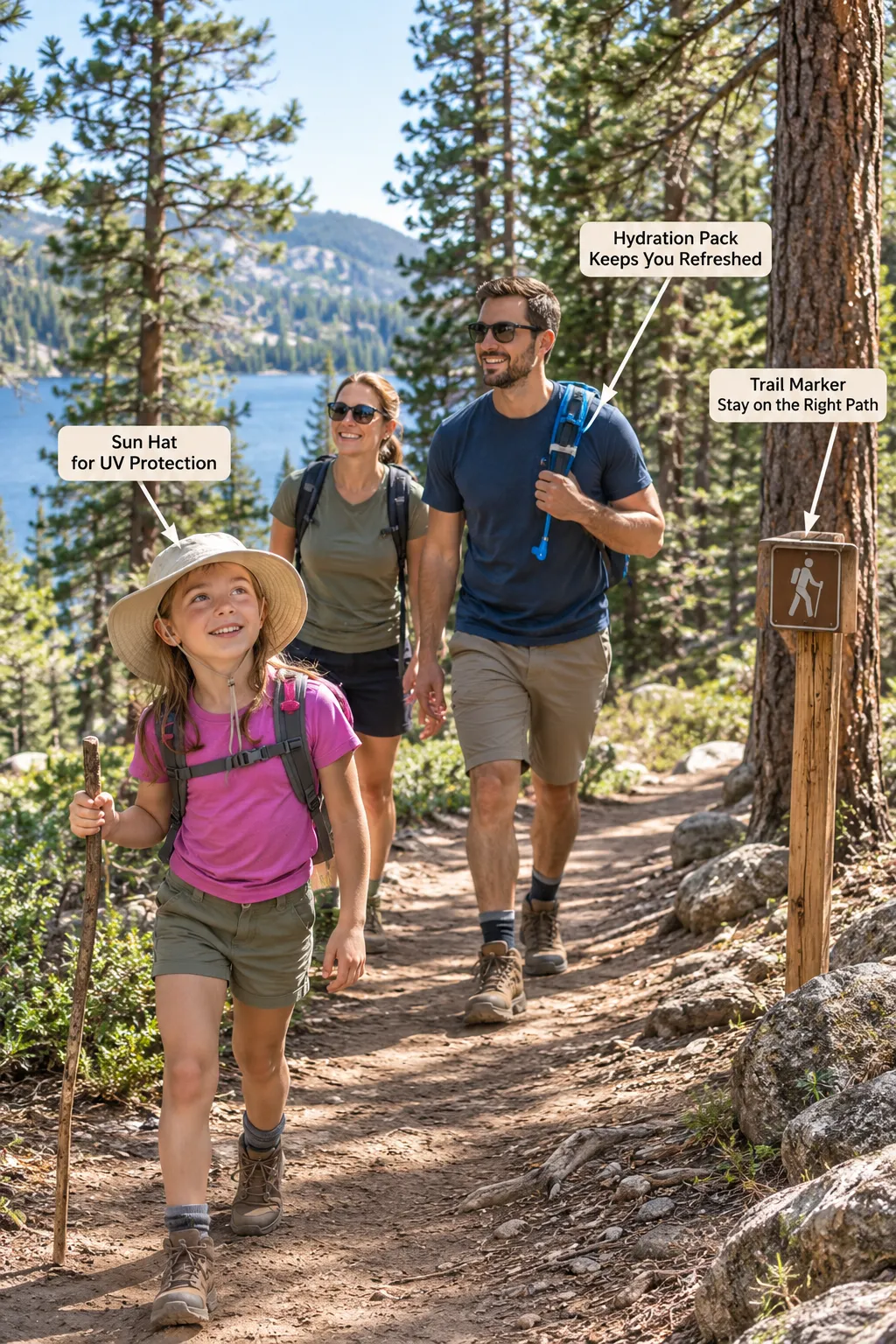
- Underpacking water: desert parks like Grand Canyon and Joshua Tree have minimal shade and high dehydration risk.
- Overpacking the itinerary: trying to see Zion, Bryce, and Grand Canyon in two days leaves no real time at any of them.
Do all national parks require reservations in advance
No, most national parks don’t require advance reservations just to enter, but a growing number use timed-entry systems during their busiest months. Reservation requirements change year to year, so always check the specific park’s website before a summer trip.
Parks known for timed-entry or permit systems in recent years include Zion (Angels Landing permit), Rocky Mountain, Glacier, and Arches. Many others, including Great Smoky Mountains and most Alaska parks, have no entry reservation system at all.
Decision rule: if you’re visiting a well-known park between May and September, check its NPS page for reservation requirements at least a month ahead.
Best national parks for hiking and outdoor activities
Zion, Glacier, Grand Teton, and Yosemite stand out for hiking because each offers trail networks ranging from easy valley walks to multi-day backcountry routes within one park boundary. That range lets hikers of any fitness level find something worthwhile.
Strong hiking picks:
- Zion: Angels Landing (permit required) and the Narrows for serious hikers, Riverside Walk for easier days.
- Glacier: Highline Trail along the Continental Divide, covered in our Glacier in September guide.
- Grand Teton: Jenny Lake loop plus technical alpine routes for climbers.
- Yosemite: Mist Trail to Vernal Fall for day hikers, Half Dome for permit-holding veterans.
What should I pack for visiting a national park
Pack layers, sturdy footwear, more water than you think you need, and offline maps, since cell service drops out in most park backcountry areas. What you need shifts a lot by season and region, but these basics apply almost everywhere.
Core packing list:
- Broken-in hiking shoes or boots, not brand-new ones.
- At least 2 liters of water per person per half-day hike.
- Layers: a base layer, insulating layer, and rain shell, even in summer at high elevation.
- Offline maps downloaded before you lose signal.
- Sun protection: hat, sunscreen, sunglasses, especially at desert parks.
Our personal item packing list and travel essentials list both cover gear that transfers well to park trips.
Which national parks are easiest to get to without a car
Acadia, Great Smoky Mountains (via nearby Knoxville or Asheville shuttles), and Rocky Mountain’s park shuttle system make car-free visits realistic, though most national parks still assume you’ll drive in. Public transit coverage to parks remains limited across the system.
Best options for car-free travelers:
- Acadia: Island Explorer shuttle connects Bar Harbor to most park stops seasonally, free of charge.
- Zion: once inside, the park’s own shuttle handles all main canyon stops, so you only need to get to the gateway town.
- Grand Canyon South Rim: shuttle buses cover the rim once you arrive via tour bus or rideshare from Flagstaff.
Edge case: Alaska parks are the opposite extreme. Denali is the only Alaska park reachable by road and rail; the other seven need small planes or boats.
Best time to visit national parks by season: a quick reference
Different park types peak in different seasons, and matching your visit to the right window matters more than the specific park you choose. A month-by-month system-wide analysis of NPS visitation data backs up these general patterns, and detailed park-by-park timing guides confirm the same seasonal logic.
- Spring (April-May): desert parks like Zion, Joshua Tree, Death Valley; wildflowers, milder heat.
- Summer (June-August): Alaska parks, Glacier, Rocky Mountain; roads and trails fully open.
- Fall (September-October): Great Smoky Mountains, Acadia, Shenandoah for foliage; smaller crowds everywhere.
- Winter (December-February): Death Valley, Everglades, Big Bend; cooler temps make desert and subtropical parks pleasant.
Editorial roundups like ParksCollecting’s month-by-month guide and mainstream coverage from Bloomberg’s national parks planner both point to shoulder seasons as the sweet spot for most first-time visitors.
FAQ
How many national parks are there in the US right now?
There are 64 national parks as of late 2026, after Chiricahua National Monument in Arizona was redesignated a national park on October 20, 2026.
Which state has the most national parks?
California has the most, with nine national parks including Yosemite, Sequoia, Kings Canyon, Death Valley, Joshua Tree, Redwood, Channel Islands, Lassen Volcanic, and Pinnacles.
What is the newest national park?
Chiricahua National Park in Arizona, redesignated from a national monument in October 2026, is the newest addition to the list.
Do I need a reservation for Yellowstone or Yosemite?
Yellowstone doesn’t require a general entry reservation, but Yosemite has used timed-entry reservations during peak summer dates in recent years; check current requirements before you go.
Is the $80 annual pass worth buying for one trip?
Only if that one trip includes three or more fee-charging parks, since the pass covers the whole vehicle at any federal site, not just a single park.
What’s the cheapest way to visit national parks?
Pick parks with no entrance fee, like Great Smoky Mountains, or buy the annual pass if you’re hitting multiple paid parks in one trip.
Can beginners hike in national parks safely?
Yes, most parks have well-marked easy trails alongside harder routes, so beginners can stick to shorter, flatter paths and still see major highlights.
Conclusion
Update any saved national parks list you’re working from: the count is 64, not 63, and Chiricahua in Arizona is the newest entry. Start planning by picking one region instead of trying to cover the whole map in one trip.
If you’re new to parks, book Zion, Grand Canyon, or Great Smoky Mountains first, and reserve campsites or timed entries the moment booking windows open. For deeper dives into specific parks, check our full national parks category for itineraries and seasonal guides before you lock in dates.