
Last updated: November 25, 2026
Quick Answer
Hidden gems London spots are the places locals actually use, not the ones on the postcard rack. Think ruined gardens, wetland reserves, small museums, and churchyards that sit minutes from famous landmarks but stay quiet because they’re inconvenient to reach or easy to walk past. You can visit most for free, reach them by Tube or bus, and avoid crowds just by going on a weekday morning.
Key Takeaways
- Hidden gems London spots are usually free or very cheap to visit.
- Most are reachable by Tube, Overground, or bus; you don’t need a car.
- Weekday mornings are consistently quieter than weekends and school holidays.
- Not every spot suits young kids; some (like crypt museums) work better for older children or solo travelers.
- You can realistically see 4 to 6 of these in one day, not all 15.
- Several spots, including Walthamstow Wetlands and Holland Park’s Kyoto Garden, are wheelchair accessible with paved paths.
- A few, like Chislehurst Caves, require a guided tour and advance planning.
What exactly counts as a hidden gem in London
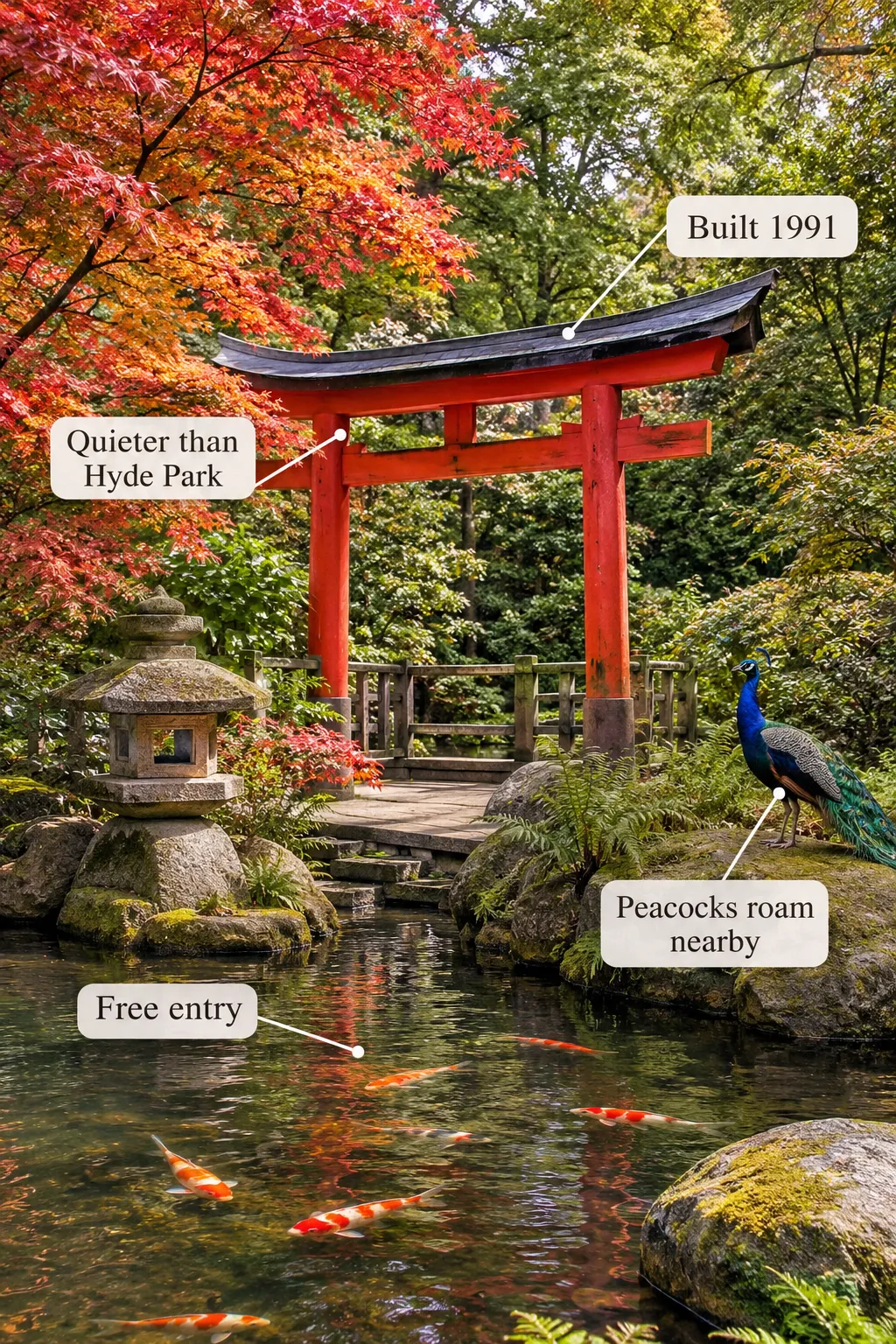
A hidden gem in London is a place that’s genuinely worth visiting but stays quiet because of its location, limited hours, or lack of signage. It’s not about secrecy for its own sake. It’s about places that get skipped simply because they’re not on the main tourist route.
Recent London guides point to spots like Crossness Pumping Station, Chislehurst Caves, Eltham Palace, the Hampstead Pergola, and the Old Operating Theatre as good examples. They’re far from the center, or they only open certain days, so foot traffic stays low even though they’re historically significant.
I’d add one more test: if a place shows up on every “top 10 London attractions” list, it’s not hidden anymore, no matter how good it is. That rules out the London Eye and Tower Bridge, even though they’re great.
Are these quiet spots in London actually free to visit
Yes, most of the 15 spots in this guide are free to enter. A handful, like Chislehurst Caves, charge a small fee because they require a guided tour through unlit tunnels.
Here’s a quick breakdown:
| Spot | Cost | Why it’s quiet |
|---|---|---|
| Postman’s Park | Free | Tucked behind office buildings near St Paul’s |
| Kyoto Garden, Holland Park | Free | Overlooked even by Holland Park visitors |
| St Dunstan-in-the-East | Free | Many tourists walk past the gate without noticing |
| Walthamstow Wetlands | Free | Far from central London, feels rural |
| Sir John Soane’s Museum | Free | Small entrance, limited daily visitor numbers |
| Chislehurst Caves | Paid, guided tour only | Requires booking, outside central London |
| Wilton’s Music Hall | Free to view foyer, paid for shows | Historic venue, low name recognition |
Bunhill Fields and Tower Hamlets Cemetery Park are also free and function as quiet green spaces most of the week, according to recent guides on quiet London escapes.
How do you get to hidden gems in London without a car
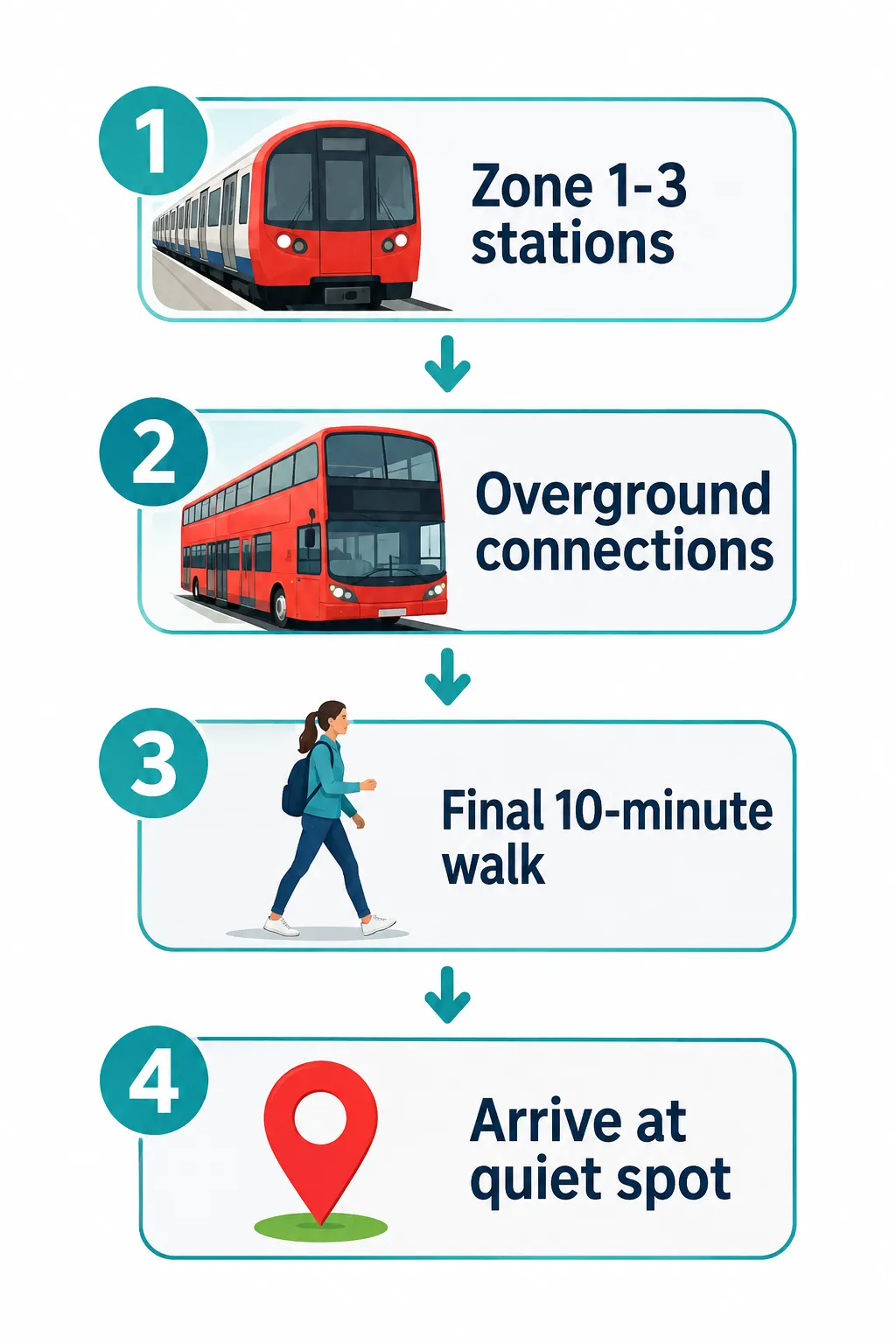
You don’t need a car for any spot on this list. London’s Tube, Overground, and bus network covers all 15 locations, including the ones outside Zone 1.
A few practical notes:
- Walthamstow Wetlands is a 10 to 15 minute walk from Blackhorse Road Underground station.
- Chislehurst Caves is reachable by train from London Bridge to Chislehurst, then a short walk or local bus.
- Little Venice sits right by Warwick Avenue Tube station, making it one of the easiest to reach.
- Eltham Palace is a short walk from Mottingham or Eltham rail stations.
If you’re already planning a longer stay, pairing this with a broader city itinerary like what to see in London in 3 days helps you slot these quieter spots between the bigger sights without wasting travel time.
Are hidden gem spots good for families with kids
Some are great for kids, others are better suited to adults. Green spaces like Hampstead Heath, the Hill Garden & Pergola, and Walthamstow Wetlands work well for families because kids can run around and there’s open space.
Spots to be more careful with:
- The Old Operating Theatre has narrow spiral stairs and medical exhibits that can be unsettling for young children.
- Chislehurst Caves involves dark, enclosed tunnels, which isn’t ideal for toddlers or anyone uneasy underground.
- Dennis Severs’ House asks visitors to stay silent throughout, which is a tough ask for small kids.
Choose the wetlands or heath if you’re traveling with young children. Choose the museums and caves if your kids are older and curious about history.
What’s the difference between hidden gems and main tourist attractions in London
Main tourist attractions draw large, steady crowds year-round and usually require tickets booked in advance. Hidden gems rarely need advance booking and see a fraction of the foot traffic, even at peak season.
The British Museum sees millions of visitors a year. Postman’s Park, a five-minute walk from St Paul’s Cathedral, sees a steady trickle of office workers on lunch break and the occasional tourist who wandered off the main route, as noted in several 2026 London guides. Same city, completely different experience.
The trade-off is scale. You won’t find the grandeur of Westminster Abbey at a quiet churchyard. What you get instead is space to actually look around without someone’s elbow in your side.
How crowded are hidden gems in London on weekends
Weekends bring more visitors to nearly every spot on this list, but “more crowded” for a hidden gem still means far fewer people than a main attraction on a weekday. Green spaces like Hampstead Heath get genuinely busy on sunny weekends with joggers, picnickers, and dog walkers.
Smaller, enclosed sites like Sir John Soane’s Museum and Dennis Severs’ House feel the crowd difference more sharply because their rooms are small. A dozen extra visitors changes the whole atmosphere.
If weekends are your only option, aim for early opening hours. Most museums on this list open by 10am, and arriving right then beats the midday rush by a wide margin.
Best time to visit hidden gems in London to avoid crowds
Weekday mornings, roughly 9am to 11am, are the best window for nearly all 15 spots. This timing works because office commuters have cleared out and tour groups haven’t started their day yet.
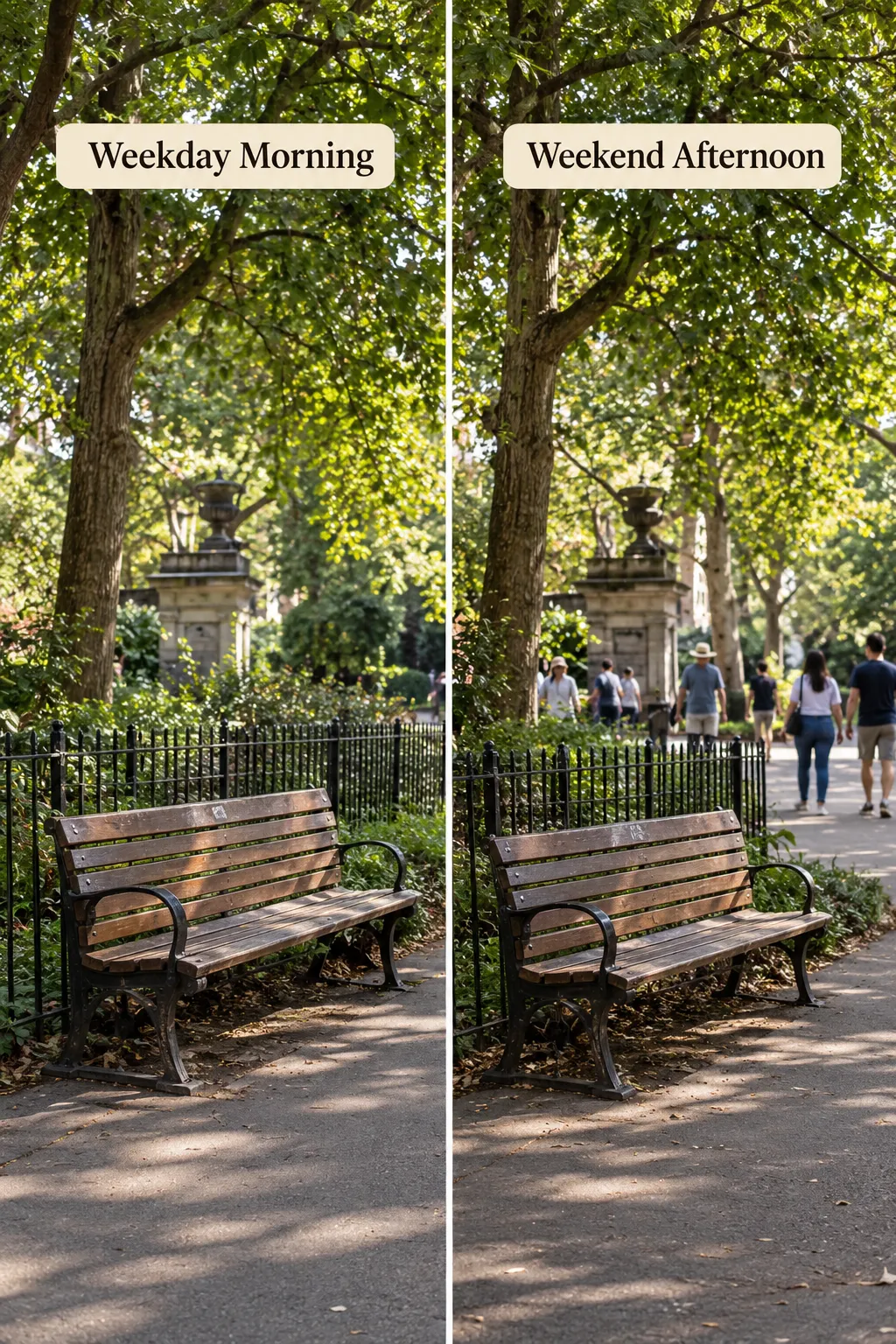
Seasonal timing matters too:
- Spring and autumn weekdays are ideal for outdoor spots like the Kyoto Garden and St Dunstan-in-the-East, since summer weekends draw bigger crowds and winter days are short.
- Winter mornings work well for indoor museums since fewer tourists are in London overall.
- Avoid school holiday weeks if you want the quietest version of any heath or park.
This matches advice across multiple 2026 quiet-corner guides, which consistently recommend weekday or off-season visits to keep these places genuinely calm.
Can you visit all 15 hidden gems in one day
Realistically, no. Trying to cram all 15 into one day means rushing through each one, which defeats the purpose of visiting quiet spots in the first place.
A more workable plan is grouping by area:
- City cluster: Postman’s Park, St Dunstan-in-the-East, Bunhill Fields (all within a 20-minute walk of each other).
- West London cluster: Kyoto Garden, Little Venice, Hill Garden & Pergola.
- East London cluster: Walthamstow Wetlands, Tower Hamlets Cemetery Park, Viktor Wynd Museum.
- South London / further out: Eltham Palace, Chislehurst Caves, Crossness Pumping Station.
Pick one cluster per day. You’ll see 3 to 4 spots properly instead of 15 badly.
Are hidden gems in London safe to visit alone
Yes, all 15 spots are generally safe to visit solo during opening hours, since they’re public parks, museums, or ticketed heritage sites with regular visitor traffic. Standard city precautions apply: keep valuables close, and if you’re visiting an enclosed site like Chislehurst Caves, stick with the guided group rather than wandering off.
Quiet doesn’t mean unsafe. Postman’s Park sits in the middle of the financial district, and the Kyoto Garden is inside a well-maintained public park with regular staff presence.
The main thing to watch for alone is closing times, since several sites (like Dennis Severs’ House) have limited evening hours and you don’t want to be locked out after dark in an unfamiliar area.
What should I avoid when visiting hidden spots in London
Avoid treating these like Instagram backdrops and nothing else. The biggest mistake visitors make is showing up just for a photo, staying five minutes, and missing the point of a slower, quieter visit.
Other common mistakes:
- Skipping opening hours research. Several sites, including Chislehurst Caves and Dennis Severs’ House, have restricted days or require booked tours.
- Talking loudly in small museums. Spaces like Sir John Soane’s Museum are tight, and noise carries.
- Ignoring posted etiquette. Dennis Severs’ House specifically asks for silence throughout the visit.
- Assuming everywhere is step-free. Some historic buildings have narrow stairs with no lift access.
If you’re also packing for the trip, check a seasonal list like the London winter packing essentials guide or the London in September packing list depending on when you’re going, since several of these spots are outdoors.
Hidden gems in London for rainy weather or indoor activities
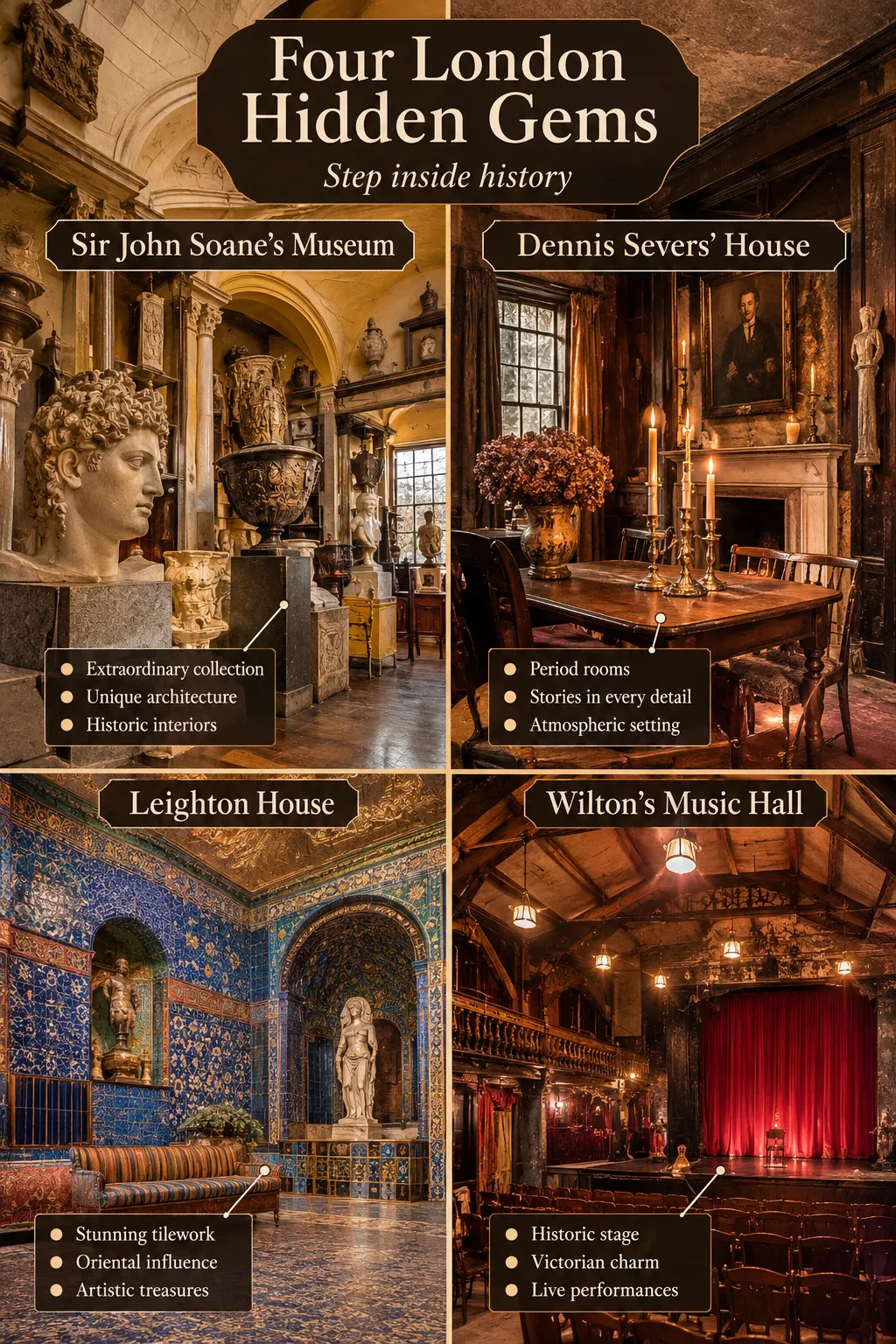
Indoor hidden gems London options include small museums and historic houses that stay dry and interesting regardless of weather. Sir John Soane’s Museum, the Old Operating Theatre, Dennis Severs’ House, Leighton House, and the Viktor Wynd Museum of Curiosities all work well on a wet day.
Wilton’s Music Hall is another solid rainy-day pick, especially if there’s a show on. It’s one of the oldest surviving music halls in the world and feels completely different from a standard West End theater, as described in guides to London’s secret cultural venues.
Choose Leighton House if you want ornate interiors with tiled rooms. Choose the Old Operating Theatre if you’re curious about Victorian medical history, including a genuine 19th-century operating table.
How do I find these spots if they’re not well signposted
Use offline maps and exact street addresses rather than relying on tourist signage, since many of these spots have minimal or no street-level markers. Google Maps and Citymapper both have accurate pins for every location on this list, even the ones tucked behind buildings.
A few tips that actually help:
- Search the exact name, not a general area. “St Dunstan-in-the-East” pulls up the gate entrance directly.
- Note the nearest Tube or rail exit before you leave, since underground signal can be weak near some of these sites.
- Check official opening hours the same day you plan to visit. Smaller sites sometimes close without much online notice.
Are there hidden gems in London that are wheelchair accessible
Yes. Walthamstow Wetlands has paved, flat paths throughout and is one of the most accessible nature sites in the city. The Kyoto Garden in Holland Park has accessible paths too, though some areas near the pond have uneven stone.
Bunhill Fields and Tower Hamlets Cemetery Park both have level paths suitable for wheelchairs and pushchairs. Older buildings like Dennis Severs’ House and the Old Operating Theatre are harder, since they involve narrow stairs with no lift, a common issue in historic London structures.
Choose outdoor green spaces if accessibility is a priority. Choose ahead-of-time phone calls to confirm access at historic house museums, since step-free routes aren’t always listed online.
Other quiet neighbourhoods in London besides these 15
Beyond individual sites, entire neighborhoods offer a slower pace than central London. Dalston, London Fields, Stoke Newington, and Greenwich are regularly described in late-2026 travel coverage as quiet hubs with weekend markets, local parks, and independent restaurants, while still being easy to reach by Overground or DLR, according to industry neighborhood guides.
Greenwich in particular pairs well with a day exploring Eltham Palace and Crossness Pumping Station, since all three sit in the same southeast corner of the city. Stoke Newington works well alongside Walthamstow Wetlands for a northeast London day that skips the center entirely.
If this kind of slower city exploring appeals to you, it’s worth comparing notes with other cities that reward the same approach, like the ideas in 15 hidden gems in Amsterdam or hidden gems in Milan Italy.
FAQ
Is it worth visiting hidden gems if I only have 2 days in London?
Yes, but pick just 2 or 3 close together, like the City cluster around Postman’s Park and St Dunstan-in-the-East, so you’re not spending your short trip on transit.
Do I need to book tickets in advance for any of these?
Chislehurst Caves requires booking a guided tour slot. Most other spots, including parks and gardens, need no booking at all.
Are hidden gems London spots good for photography?
Yes, especially St Dunstan-in-the-East and the Kyoto Garden, since both have strong natural light and minimal crowds blocking shots.
Which hidden gem is closest to central London?
Postman’s Park, just steps from St Paul’s Cathedral, is the most central on this list.
Can I combine hidden gems with a normal sightseeing day?
Yes. Many sit close to major landmarks, so you can add one or two to a standard day without extra travel time.
Is Walthamstow Wetlands really worth the trip out?
If you like nature and birdlife, yes. It’s Europe’s largest urban wetland and offers a genuinely rural feel inside city limits, per quiet London guides.
Conclusion
Pick one cluster from this list, City, West, East, or South, and build a half-day around it rather than trying to chase all 15 spots at once. Go on a weekday morning if quiet matters to you. Book ahead only for Chislehurst Caves and check hours for the smaller house museums the same day you plan to go. Bring a paper or offline map backup since signal and signage are both weak at several of these sites. Start with whichever cluster sits closest to where you’re already staying, and build outward from there.