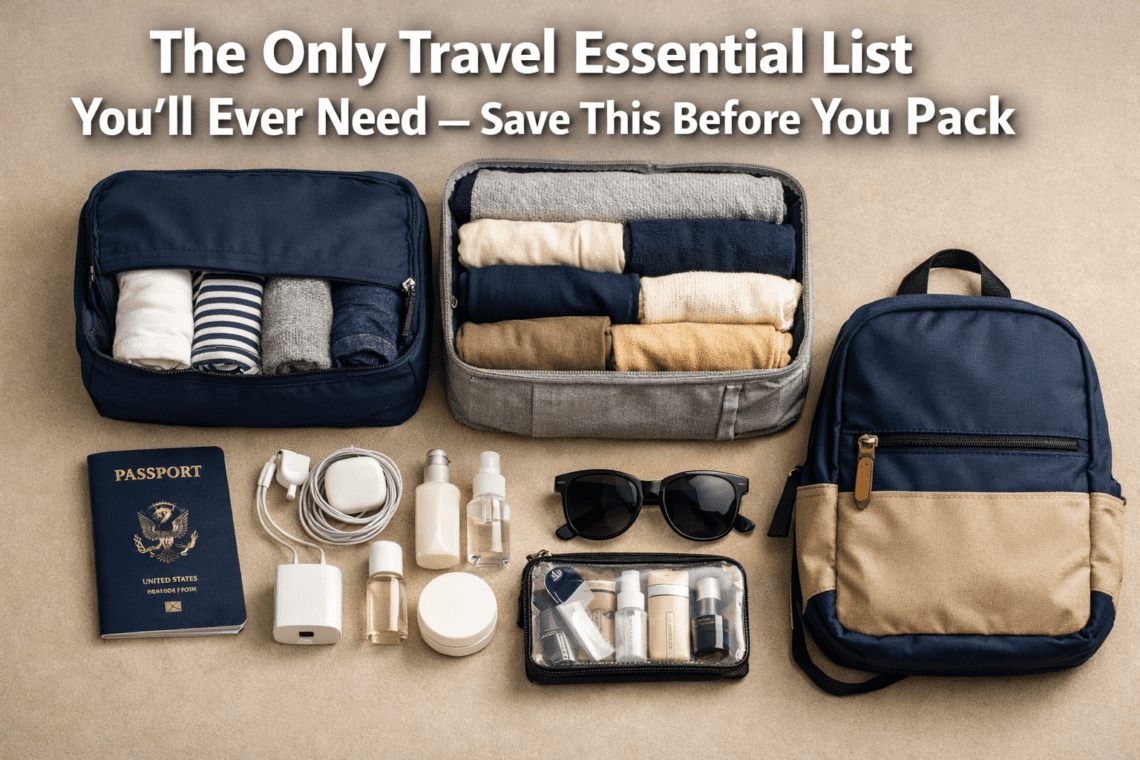
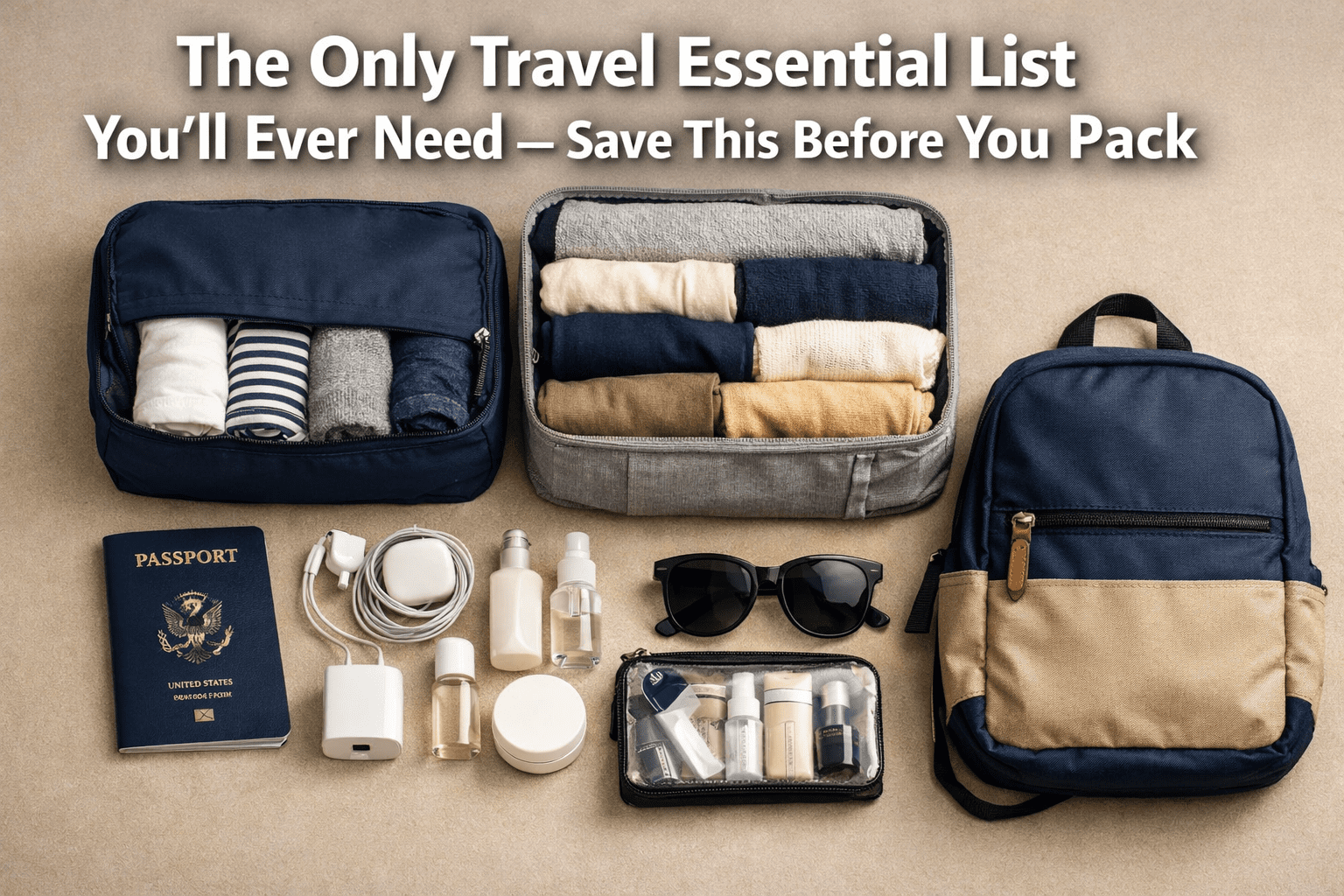
I’ve learned the hard way that overpacking ruins trips. After years of dragging oversized suitcases through cobblestone streets and paying excess baggage fees, I finally cracked the code to smart packing. This travel essential list strips away the clutter and focuses on what actually matters—the items that make every journey smoother, safer, and more enjoyable, whether you’re heading to Lisbon for a first-time visit or exploring hidden gems in Italy.
Key Takeaways
- Pack for versatility: Choose clothing and gear that serves multiple purposes to minimize luggage weight
- Prioritize technical fabrics: Merino wool and quick-dry synthetics outperform cotton for travel
- Organize with packing cubes: Compression systems keep belongings accessible and maximize space
- Never skip document backups: Store digital and physical copies of passports, visas, and insurance
- Invest in quality charging gear: Multi-port adapters and portable batteries are non-negotiable in 2026
- Build a toiletries kit once: Create a permanent travel-size collection to grab and go
- Layer for weather changes: Adaptable clothing beats packing separate outfits for every scenario
- Keep essentials in carry-on: Pack medications, chargers, and one change of clothes in your personal item
Quick Answer
A complete travel essential list includes three core categories: versatile clothing (7-10 pieces in technical fabrics), critical documents and tech (passport, phone, chargers, backup copies), and organized toiletries in TSA-compliant sizes. Focus on multi-purpose items that work across different climates and activities, pack everything in compression cubes for organization, and always keep valuables and medications in your carry-on bag.
What Should Be on Every Travel Essential List?
Every solid travel essential list starts with items you’ll use daily regardless of destination: passport or ID, payment methods (cards plus backup cash), phone with charger, and any necessary medications[3]. These are your non-negotiables—the things that can’t be easily replaced on the road.
Beyond those basics, your list should include:
- Versatile clothing that layers and mixes easily (7-10 pieces maximum)
- One pair of comfortable walking shoes plus sandals or dress shoes
- Toiletries in travel sizes organized in a clear bag
- Universal power adapter and charging cables
- Reusable water bottle for hydration and cost savings
- Small first aid kit with bandages and pain relievers
- Copies of important documents stored separately from originals
The key difference between a good list and a great one is prioritizing items that serve multiple functions. For example, a lightweight scarf works as a blanket on flights, a beach cover-up, and a modest layer for visiting religious sites.
Common mistake: People pack for every possible scenario instead of choosing adaptable pieces. If you’re visiting top places that ruin other vacations, you want gear that transitions seamlessly between activities.
How Do I Build My Travel Essential List for Clothing?
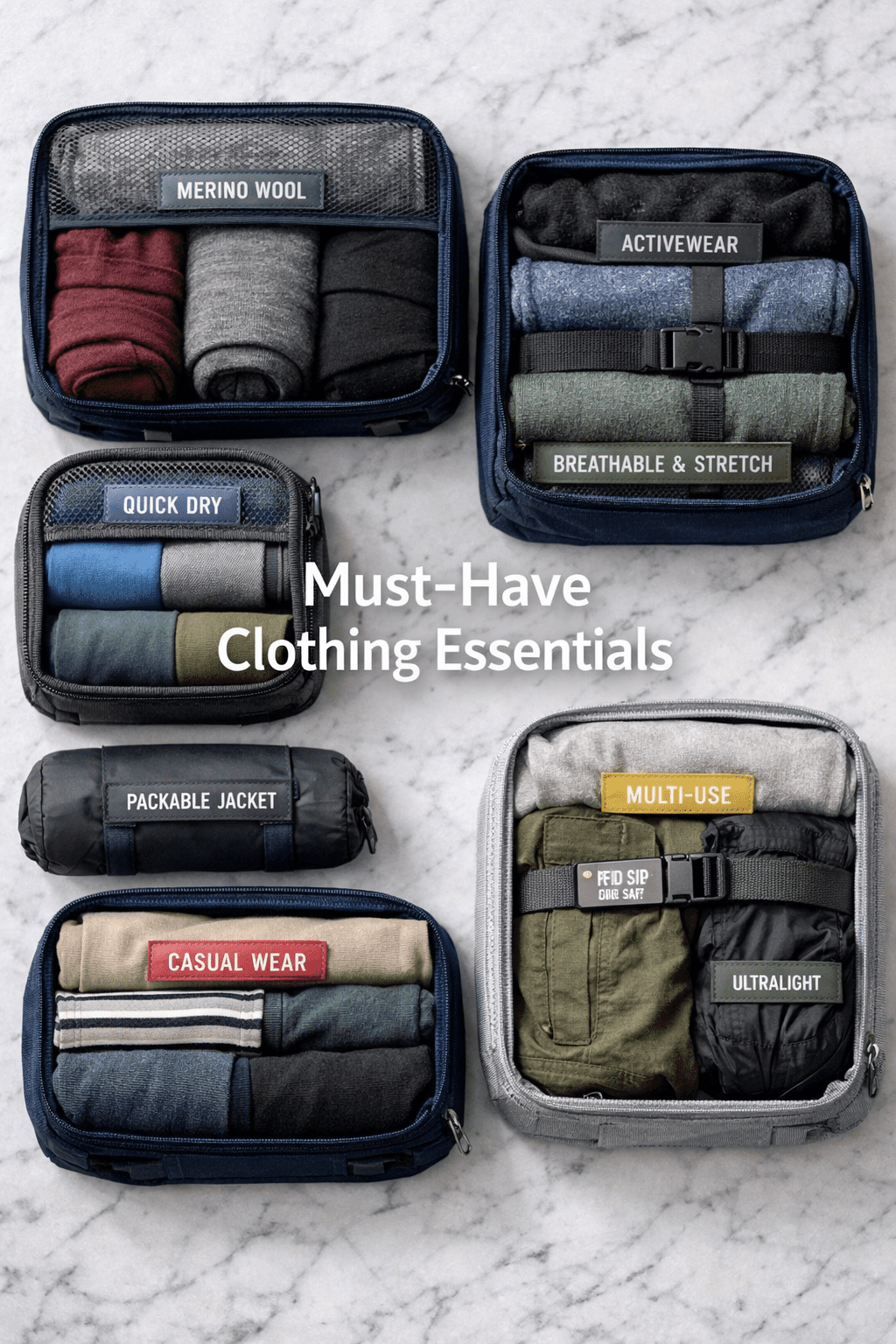
Pack 7-10 clothing items total, focusing on pieces that layer and coordinate in a simple color palette[2]. This approach, popular among minimalist travelers in 2026, means you can create multiple outfits from fewer items while keeping your bag light.
Your core clothing essentials:
- 3-4 tops (mix of short and long sleeves in merino wool or synthetic blends)
- 2 bottoms (one pair of pants, one pair of shorts that double as swimwear)
- 1 versatile dress or button-up shirt for nicer occasions
- 1 warm layer (fleece or lightweight down jacket)
- Undergarments for 4-5 days (plan to do laundry)
- 1 pair of walking shoes plus flip-flops or sandals
Choose merino wool and technical fabrics like Coolmax or microfiber over cotton[2][3]. These materials dry overnight, resist odors, and pack smaller. I can wear the same merino t-shirt three days in a row without it smelling, which is impossible with cotton.
Decision rule: If an item only works for one specific activity or weather condition, leave it home unless that activity is your trip’s main purpose.
For weather adaptation, bring thermal underwear and a packable rain jacket rather than bulky seasonal clothing[1]. These layers add minimal weight but dramatically expand your comfort range.
What Documents and Tech Belong on a Travel Essential List?
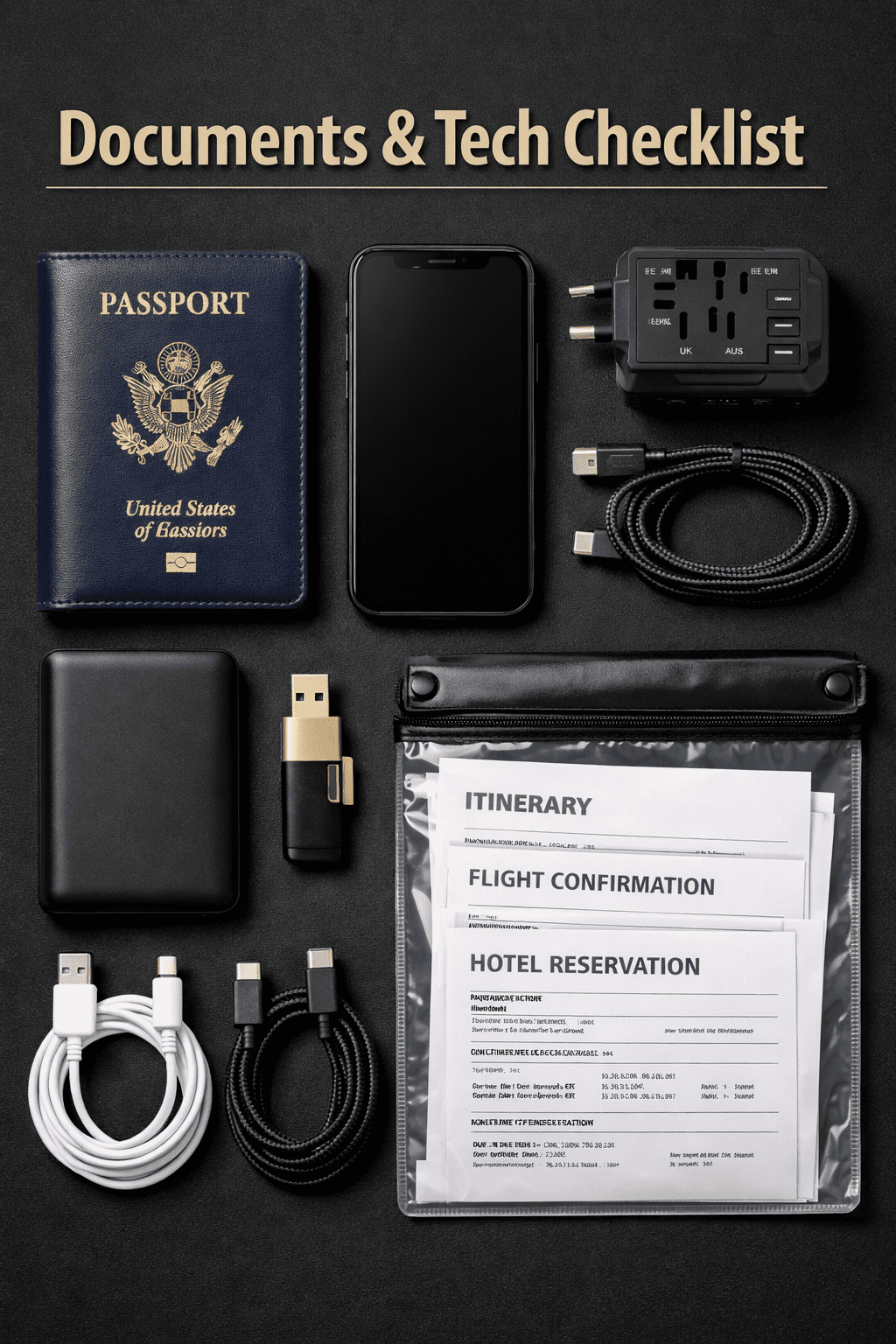
Your documents and technology are the backbone of modern travel. At minimum, you need your passport (valid for 6+ months beyond your return date), payment cards, phone, and charging equipment[3].
Essential documents checklist:
- Passport and visa (if required for destination)
- Driver’s license or additional photo ID
- Travel insurance policy with emergency contact numbers
- Vaccination records (increasingly important in 2026)
- Hotel confirmations and flight tickets (digital copies work)
- Emergency contact list with embassy phone numbers
Technology essentials:
- Smartphone with downloaded maps and translation apps
- Universal power adapter (USB-C standard in most countries by 2026)
- Portable charger (10,000+ mAh capacity)
- Charging cables for all devices
- Laptop or tablet if working remotely
- Flash drive or cloud access for document backups[3]
Create digital backups of all important documents and email them to yourself. I also keep physical photocopies stored separately from my originals—if my bag gets stolen, I can still prove my identity at the embassy.
Edge case: When traveling to areas with unreliable internet, download offline maps, translation dictionaries, and save key information as screenshots before you leave. This saved me during a trip to Belize when cell service disappeared in rural areas.
Which Toiletries and Health Items Are Actually Essential?
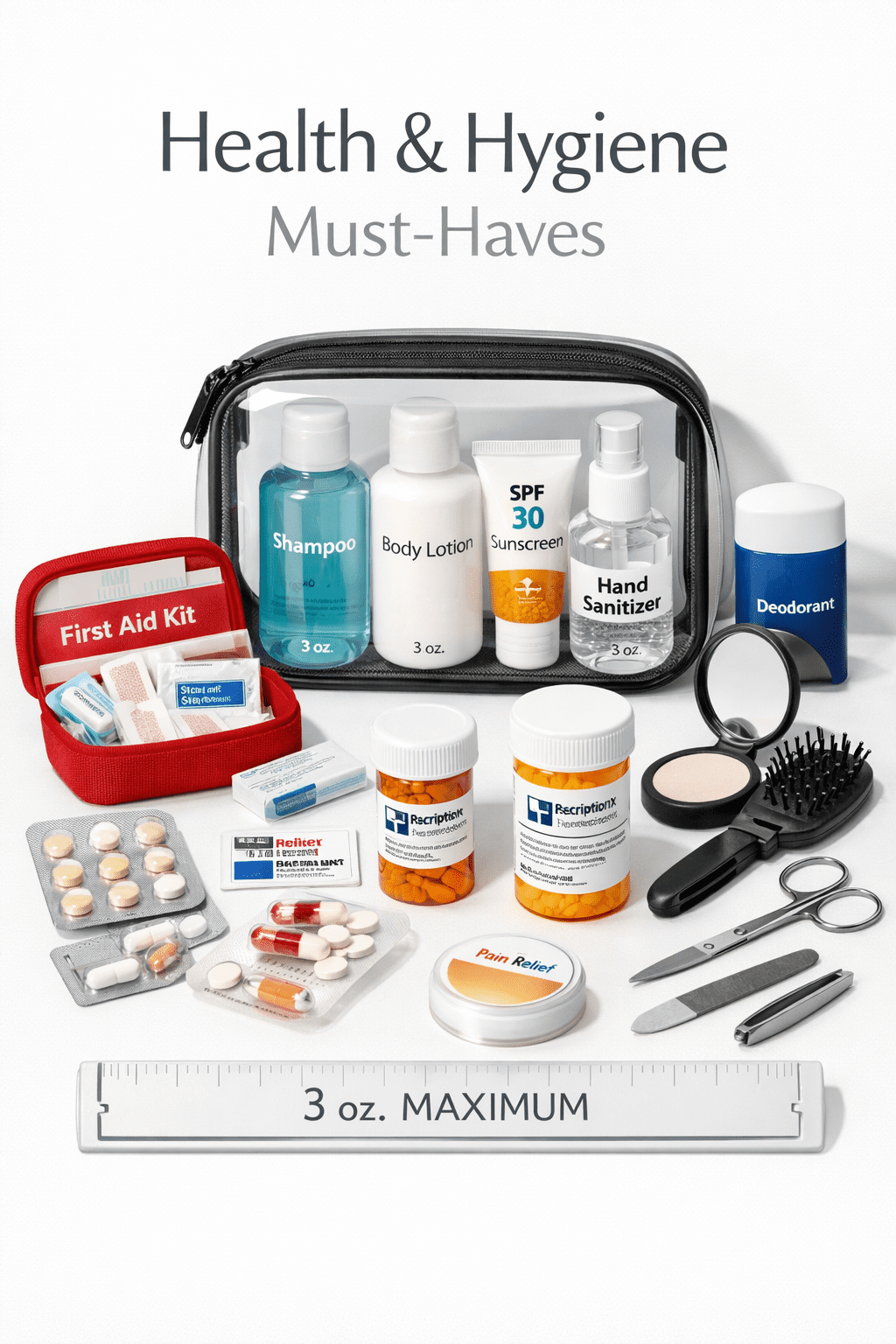
Build a permanent travel toiletries kit in TSA-compliant sizes (3.4 oz/100ml or less) that stays packed between trips[3]. This eliminates the stress of gathering products before each journey and ensures you never forget critical items.
Core toiletries:
- Travel-size shampoo and conditioner (or solid bars to save space)
- Toothbrush, toothpaste, and floss
- Deodorant
- Sunscreen (SPF 30+)
- Moisturizer and lip balm
- Razor and shaving cream
- Quick-drying microfiber towel[3]
Health and safety essentials:
- Prescription medications in original bottles with extra days’ supply
- Basic first aid kit: bandages, antibiotic ointment, blister treatment
- Pain relievers (ibuprofen and acetaminophen)
- Anti-diarrheal medication and antacids
- Hand sanitizer and disinfecting wipes
- Insect repellent for tropical destinations
- Personal hygiene products (tampons, etc.)
Store everything in a clear, organized toiletry bag—Peak Design packing cubes and specialized organizers are considered essential tools rather than optional accessories in 2026[2].
Choose quick-drying microfiber over traditional towels to save significant luggage space[3]. A quality microfiber towel packs to the size of a water bottle but works as well as a full bath towel.
What Travel Accessories Make the Biggest Difference?
The right accessories transform chaotic travel into smooth experiences. These items don’t take much space but solve common problems that arise on every trip.
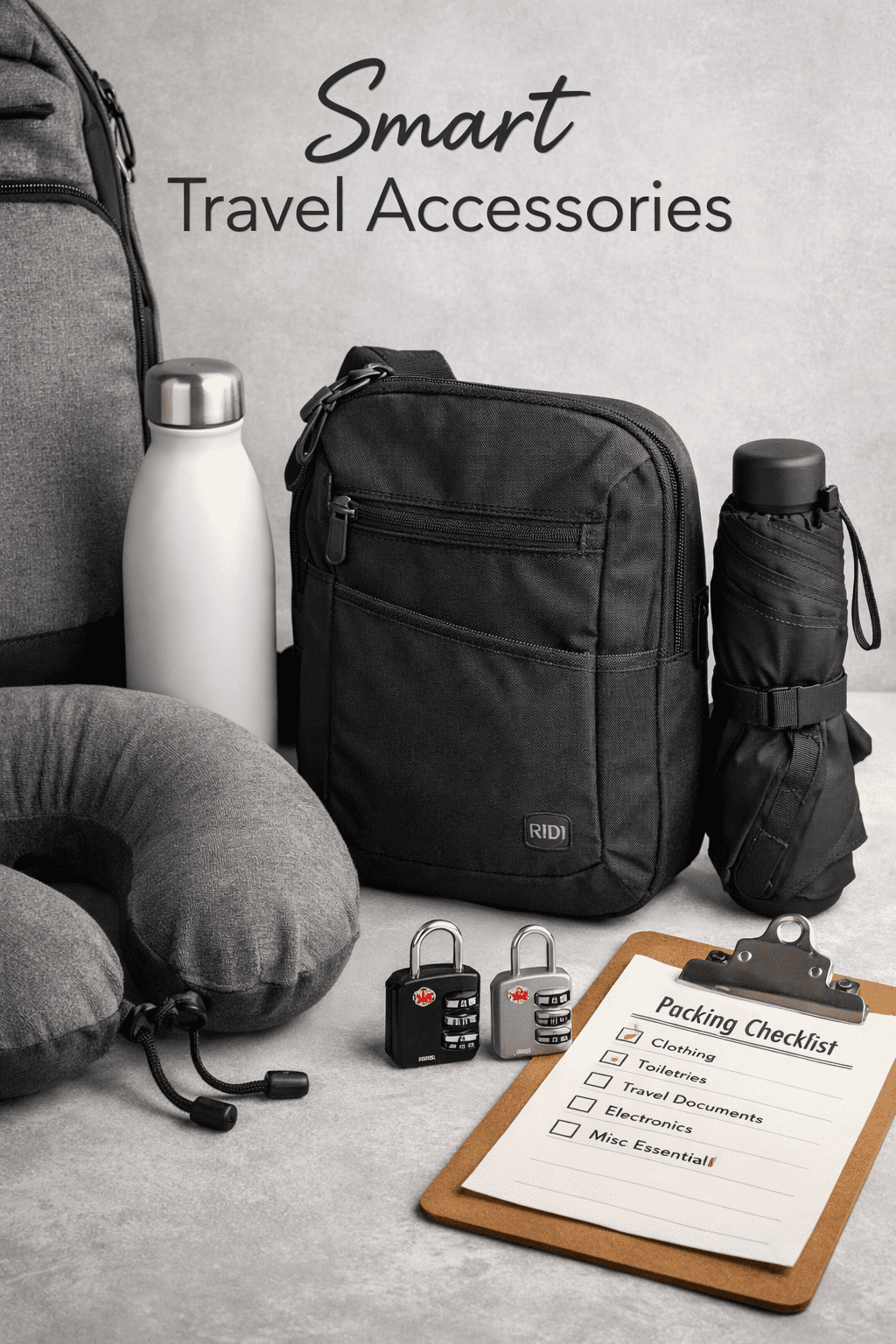
High-impact travel accessories:
| Accessory | Purpose | Why It Matters |
|---|---|---|
| Packing cubes | Organization and compression | Find items instantly, maximize luggage space |
| Reusable water bottle | Hydration | Save $3-5 daily on bottled water |
| Neck pillow | Comfort on flights/buses | Actually sleep during long journeys |
| Luggage locks | Security | TSA-approved locks protect belongings |
| Crossbody day bag | Daily carry | Hands-free security for sightseeing |
| Universal adapter | Power access | Charge devices in any country |
| Compression bags | Space saving | Fit 30% more in same luggage |
I never travel without packing cubes anymore. They let me unpack into a hotel drawer in 30 seconds and keep clean clothes separated from dirty ones. The compression versions can reduce clothing volume by nearly half.
For longer trips or summer adventures with friends, add a portable luggage scale to avoid overweight baggage fees. Weighing your bag before heading to the airport has saved me hundreds of dollars over the years.
A packable daypack or tote bag serves double duty: it’s your personal item on flights and becomes your daily sightseeing bag at your destination. Choose one that folds flat when not in use.
How Should I Organize My Travel Essential List by Trip Type?
Different trips require slight modifications to your base packing list, but the core essentials remain consistent. Start with your foundation items and add trip-specific gear only when necessary.
Beach/tropical destinations:
- Add: swimsuit, reef-safe sunscreen, sun hat, waterproof phone case
- Subtract: heavy layers, boots
- Keep: all core essentials
City exploration trips (like visiting New York for the first time):
- Add: dressier outfit, comfortable walking shoes with arch support, portable umbrella
- Subtract: outdoor gear, excessive casual wear
- Keep: all core essentials plus extra phone battery (heavy navigation use)
Adventure/outdoor trips:
- Add: hiking boots, technical outerwear, headlamp, water purification
- Subtract: dress clothes, multiple shoe options
- Keep: all core essentials plus expanded first aid kit
Business travel:
- Add: professional clothing, laptop with accessories, business cards
- Subtract: excessive casual wear
- Keep: all core essentials plus garment folder for wrinkle-free packing
Budget travel (check out these cheap U.S. vacation ideas):
- Add: lightweight sleeping bag liner, reusable utensils, extra snacks
- Subtract: expensive electronics, jewelry
- Keep: all core essentials with emphasis on versatile clothing
The 80/20 rule applies here: 80% of your packing list stays the same regardless of destination, with only 20% varying based on specific trip requirements.
What Are the Most Common Packing Mistakes to Avoid?
After years of travel mistakes, I’ve identified patterns that consistently cause problems. Avoiding these errors will dramatically improve your packing efficiency.
Top packing mistakes:
Overpacking “just in case” items: If you haven’t needed it on your last three trips, you won’t need it on this one. Most destinations have stores where you can buy forgotten items.
Bringing cotton clothing: Cotton takes forever to dry and wrinkles easily. Technical fabrics and merino wool outperform cotton in every travel scenario[2][3].
Packing full-size toiletries: These add unnecessary weight and risk leaking. Build a permanent travel-size collection instead.
Forgetting medication backups: Always pack prescription medications in your carry-on with a few extra days’ supply. Checked bags get lost, and foreign pharmacies may not carry your specific medication.
Not testing gear before departure: Don’t discover your power adapter doesn’t work or your shoes cause blisters on day one of your trip. Test everything at home first.
Ignoring airline size restrictions: Measure your carry-on and personal item against your airline’s specific limits. Rules vary significantly between carriers in 2026.
Packing without a list: Even experienced travelers benefit from a checklist. It’s too easy to forget critical items when packing from memory alone.
Choose versatile items over specialized ones whenever possible. A sarong works as a beach blanket, scarf, skirt, and picnic blanket—that’s four items replaced by one.
How Do I Create a Reusable Travel Essential List System?
Building a permanent packing system saves hours of stress before every trip. The goal is to create a process you can repeat automatically rather than starting from scratch each time.
Step 1: Create your master list
Document every item you might need across different trip types in a spreadsheet or note app. Organize by category (clothing, toiletries, documents, tech, accessories).
Step 2: Build trip-type templates
Create variations of your master list for beach trips, city breaks, business travel, and adventure journeys. Each template includes your core essentials plus trip-specific additions.
Step 3: Maintain a packed toiletries kit
Keep a permanent bag of travel-size toiletries that never gets unpacked. When items run low, replace them immediately so it’s always ready to grab.
Step 4: Designate travel-only items
If possible, keep certain items exclusively for travel: a specific charger, adapter, toiletry bag, and packing cubes. This eliminates the need to gather items from around your house.
Step 5: Review and refine after each trip
Note what you used, what you didn’t, and what you wished you’d brought. Update your master list accordingly. Your packing system should improve with each journey.
I keep my master list in a shared note that syncs across devices. When planning a trip, I duplicate the relevant template, adjust for specific needs, and check items off as I pack. The whole process takes 15 minutes instead of hours.
For frequent travelers: Consider buying duplicates of essential items (phone chargers, toiletries, adapters) so one set stays permanently packed. This small investment eliminates packing stress entirely.
FAQ
How many days of clothing should I pack?
Pack for 4-5 days maximum regardless of trip length. Plan to do laundry or hand-wash items in your hotel sink. Quick-dry fabrics make this practical even on short trips.
Should I pack a full-size towel?
No. A quick-drying microfiber towel packs to a fraction of the size and dries in hours rather than days[3]. Save the space for more important items.
What’s the best way to pack liquids?
Use travel-size containers (3.4 oz or less), place them in a clear quart-size bag, and pack that bag in an easily accessible part of your carry-on. Put the bag in your personal item for quick TSA removal.
How do I pack electronics safely?
Keep all electronics and chargers in your carry-on bag. Use a dedicated tech pouch or packing cube to organize cables and prevent tangling. Never pack laptops or tablets in checked luggage.
What if I forget something important?
Most destinations have stores where you can buy forgotten items. The exception is prescription medications—always pack these with extras in your carry-on. For everything else, you can usually find a replacement.
How much should a carry-on weigh?
Aim for 15-20 pounds maximum for comfortable carrying through airports. Most airlines allow 15-22 pounds for carry-ons, but lighter is always better for your back and mobility.
Should I bring a first aid kit?
Yes, but keep it minimal: bandages, antibiotic ointment, pain relievers, anti-diarrheal medication, and any prescription drugs. This covers 95% of common travel health issues without taking much space.
How many shoes should I pack?
Two pairs maximum: comfortable walking shoes and either sandals or dressier shoes depending on your trip type. Wear your bulkiest shoes on the plane to save luggage space.
What’s the best luggage for minimalist packing?
A quality carry-on roller bag (21-22 inches) plus a personal item backpack works for trips up to two weeks. This combination avoids checked bag fees and keeps everything accessible[4].
How do I pack for different climates?
Layer instead of packing separate wardrobes. Bring base layers, mid-layers, and an outer shell that work together. Thermal underwear and a packable jacket add minimal weight but handle major temperature swings[1].
Should I pack a water bottle?
Absolutely. A collapsible or standard reusable water bottle saves money and reduces plastic waste. Fill it after airport security and refill throughout your trip.
What documents do I need copies of?
Make photocopies or digital scans of your passport, driver’s license, travel insurance policy, credit cards, and any visas. Store copies separately from originals and email them to yourself[3].
Conclusion
A well-crafted travel essential list transforms packing from a stressful chore into a simple system. Focus on versatile, multi-purpose items in technical fabrics, organize everything with packing cubes, and maintain a permanent toiletries kit that’s always ready to go. The minimalist approach—7-10 clothing pieces, critical documents and tech, and organized toiletries—works for trips ranging from weekend getaways to month-long adventures.
Start by creating your master packing list today. Document everything you typically bring, then ruthlessly eliminate items you didn’t use on your last trip. Build trip-type templates for different travel styles, and refine your system after each journey. The investment of an hour now saves countless hours of packing stress in the future.
Before your next trip, whether you’re finding cheap flights or planning cheap island vacations, pull out your refined list, check off items as you pack them, and travel with confidence knowing you have exactly what you need and nothing you don’t.
References
[1] What Pack Ultimate Travel Packing Checklist – https://eaglecreek.com/blogs/articles/what-pack-ultimate-travel-packing-checklist
[2] Watch – https://www.youtube.com/watch?v=sTIgmnCQopI
[3] Ricks Packing List – https://www.ricksteves.com/travel-tips/packing-light/ricks-packing-list
[4] Minimalist Travel – https://www.thepackablelife.com/travel/gear/minimalist-travel