


Quick Answer: The best beach hacks for kids focus on four things: keeping sand manageable, protecting little ones from the sun, staying organized, and keeping children entertained safely. Simple tools like baby powder, mesh bags, fitted sheets, and pop-up tents can turn a chaotic beach day into a genuinely relaxing one for the whole family.
Key Takeaways
- Baby powder removes sand from skin fast, no water needed
- A fitted sheet anchored at the corners creates a sand-free zone for babies and toddlers
- Waterproof temporary tattoos with your phone number are a smart safety hack for crowded beaches
- Mesh bags let beach toys drain and dry before they go back in the car
- A makeup brush applies sunscreen more evenly on small, wiggly faces
- Pop-up tents and foldable pools give babies a shaded, wave-free play area
- Collapsible sand buckets pack flat and save serious luggage space
- Cheap UV sunglasses mean you won’t stress if they get lost or scratched
- Arrive early to claim a good spot before the beach fills up
- Shell painting and simple crafts keep kids busy during downtime
Why Do You Need Beach Hacks for Kids in the First Place?
A beach day with kids sounds idyllic until you’re hauling four bags, a toddler covered in sand, and a sunscreen-smeared baby who won’t stop crying. The truth is, beaches are genuinely challenging environments for families with young children: there’s no shade on demand, no bathroom nearby, sand gets into everything, and the ocean is unpredictable.
The good beach hacks for kids aren’t about buying expensive gear. Most of these solutions cost next to nothing or use items you already own. The goal is simple: fewer meltdowns, less mess, and more actual fun.
If you’re planning a trip to a family-friendly destination, check out the family travel guides on Traveeler for destination-specific tips alongside these hacks.
What Are the Best Beach Hacks for Kids to Manage Sand?
Sand is the number one complaint on every family beach day. These hacks tackle it head-on.
Hack 1: Baby powder is your best friend 🏖️
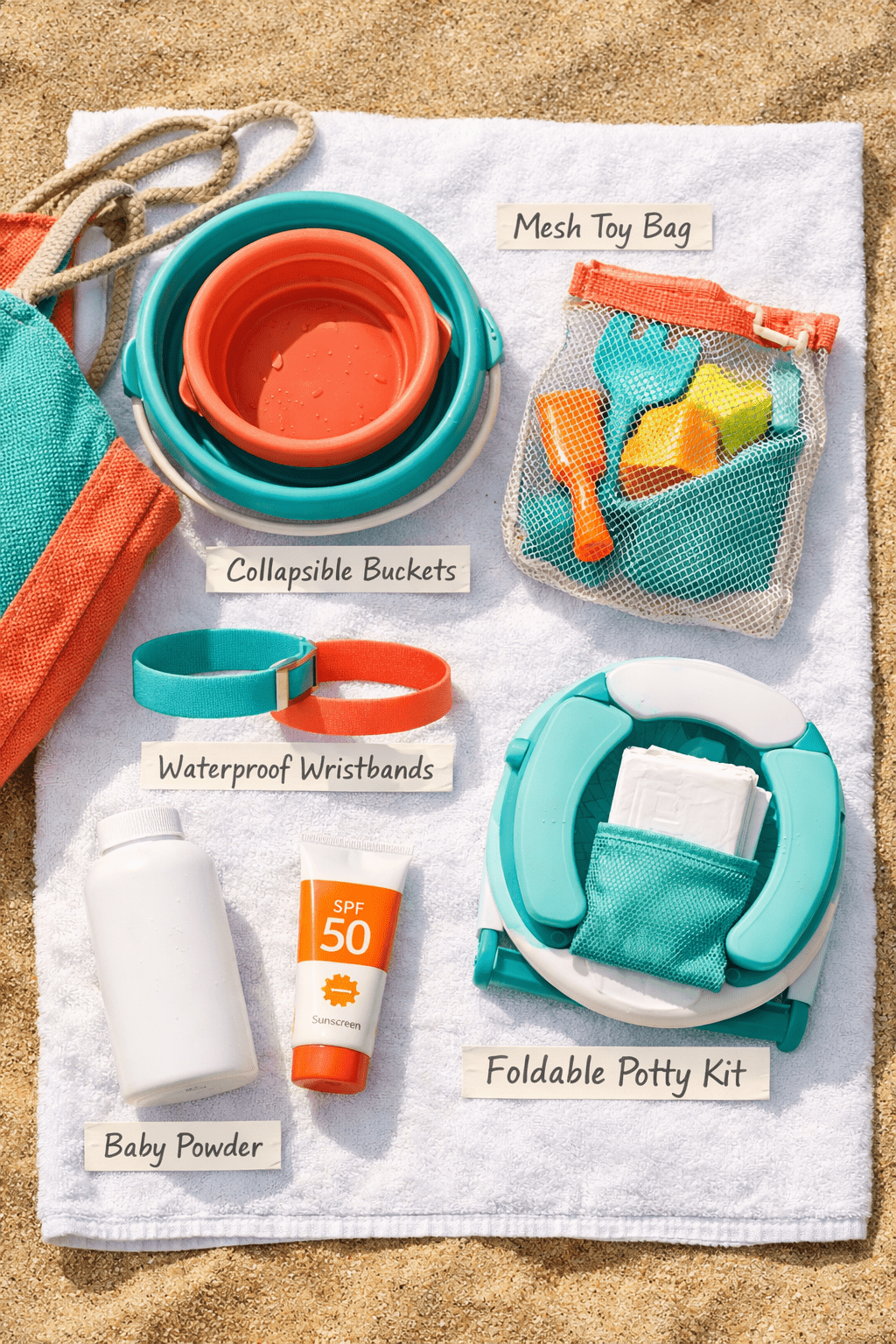
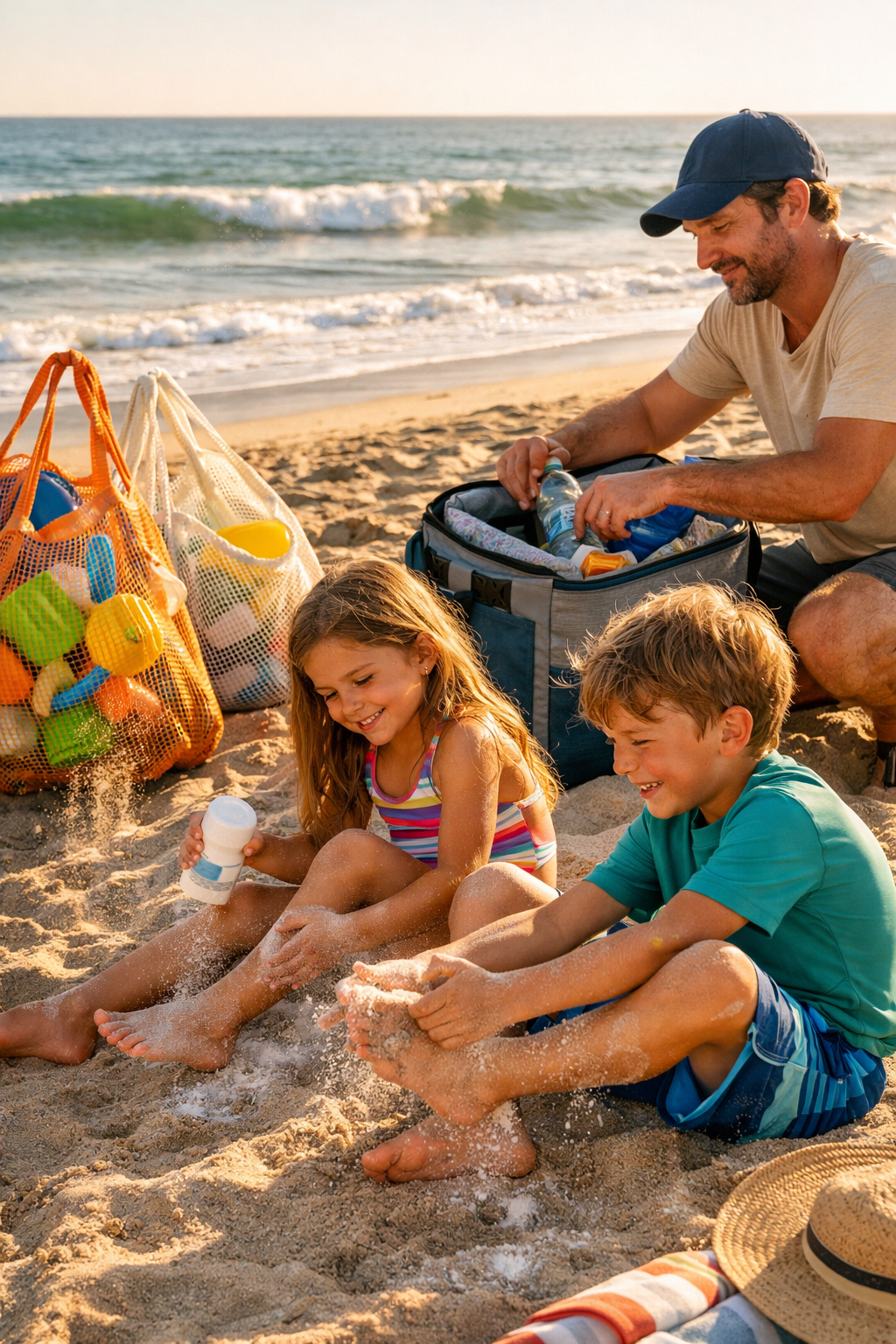
Sprinkle baby powder on sandy hands, feet, and legs, then brush it off. The powder absorbs moisture and causes sand to fall right off skin without needing water or a towel [1]. Keep a small bottle in your beach bag at all times.
Hack 2: Use a fitted sheet as a sand-free base
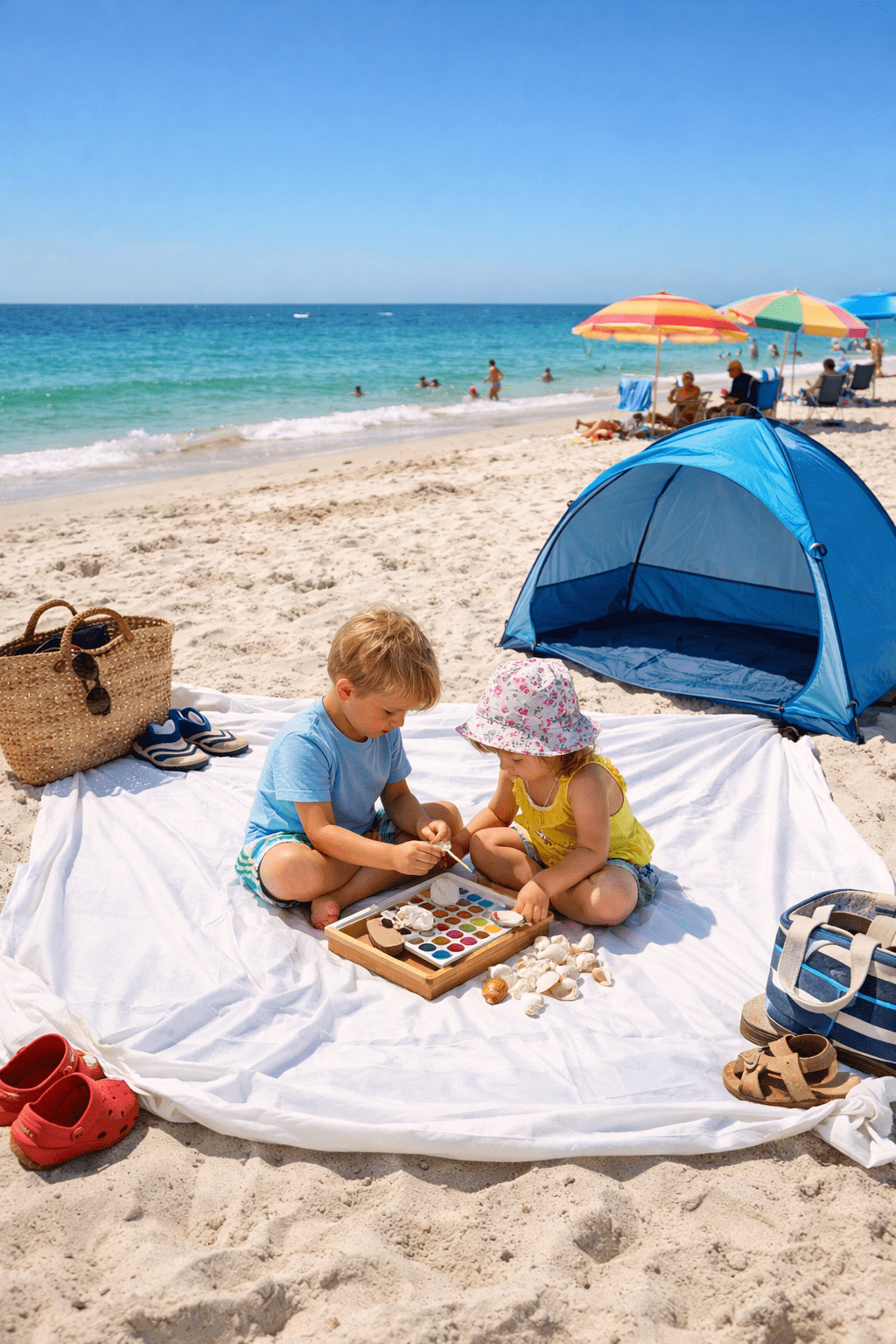
Take a queen-size fitted sheet to the beach and anchor each corner with a heavy item: a beach bag, cooler, or shoes. The raised edges act as a barrier that keeps sand out of your family’s lounging area [2][3]. Babies and toddlers can sit, crawl, and nap without getting coated in grit.
“The fitted sheet trick genuinely changed our beach days. Our two-year-old could play with her toys without us constantly brushing sand out of her mouth.” — a real parent hack, widely shared online [2]
Hack 3: Mesh bags for toys
After playing, toss all beach toys into a mesh bag and give it a shake or quick rinse in the ocean. Sand and water drain right through [2]. No more hauling a bucket full of wet, sandy toys back to the car.
Hack 4: Collapsible sand buckets pack flat
Traditional plastic buckets are bulky in luggage. Collapsible silicone buckets fold completely flat and take up almost no space in a beach bag or suitcase [3]. They work just as well for sandcastles and water play.
Hack 5: Designate a “sandy zone” and a “clean zone”
Set up your space so one area (near the water) is the play zone and another (on your fitted sheet or towels) is the clean zone. Teach kids to brush off before crossing back. It takes about two minutes to explain and saves an hour of cleanup.
How Do You Keep Kids Safe and Sun-Protected at the Beach?
Sun protection and safety are non-negotiable. Here are the hacks that actually work for squirmy, impatient kids.
Hack 6: Apply sunscreen with a makeup brush
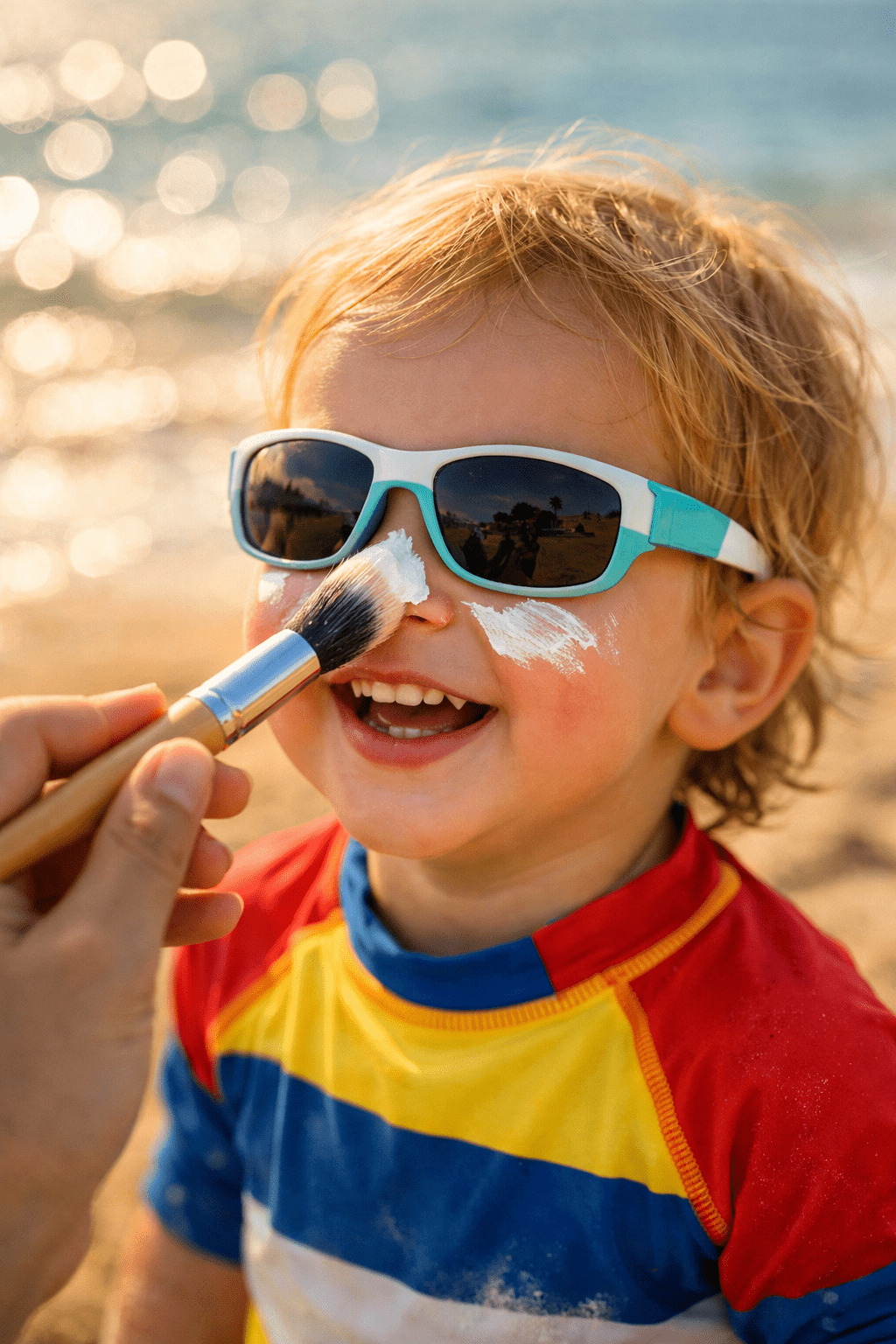
Using a soft foundation or makeup brush to apply sunscreen to a baby or toddler’s face gives you much more even coverage than fingers [1][2]. It also feels gentler on sensitive skin, so kids are less likely to fuss. Apply sunscreen 20–30 minutes before heading outside for best protection.
Hack 7: Waterproof temporary tattoos for emergency contact info
Write your phone number on a waterproof temporary tattoo or use a permanent marker on a wristband, then put it on your child’s wrist before heading to a crowded beach [1]. If your child wanders off, any adult or lifeguard can immediately see how to reach you. This is especially useful at busy public beaches or resort beaches with large crowds.
Hack 8: Affordable UV sunglasses only
Kids lose and scratch sunglasses constantly. Buy inexpensive pairs that still offer UV400 protection rather than expensive ones [1]. You’ll stop stressing every time they hit the sand, and your child will actually wear them.
Hack 9: Pop-up tents and foldable pools for babies
For babies and young toddlers who aren’t ready for ocean waves, a pop-up UV tent with a foldable pool inside creates a safe, shaded play area [3][1]. Fill the pool with a little ocean water or fresh water for splashing. Many pop-up tents have SPF 50+ ratings built into the fabric.
Hack 10: Rashguards over sunscreen alone
Sunscreen needs reapplication every two hours, especially after swimming. A long-sleeve rashguard with UPF protection covers large areas of skin so you’re not chasing a wet, sandy child with a sunscreen bottle every hour. Use sunscreen on exposed areas (face, hands, feet) and let the rashguard handle the rest.
What Are the Smartest Beach Hacks for Kids’ Comfort and Convenience?
These hacks make the logistics of a beach day much smoother, especially for families with babies or multiple kids.
Hack 11: Freeze water bottles overnight
Freeze half your water bottles the night before. They double as ice packs in your cooler and then melt into ice-cold drinking water throughout the day. This keeps snacks cold without buying a bag of ice.
Hack 12: Baby bathtub for infants
A small inflatable or plastic baby bathtub filled with warm, sun-heated water gives babies a safe place to splash without the risk of ocean waves [2]. Set it up in the shade of your tent and let them play supervised while you actually sit down for five minutes.
Hack 13: DIY potty station
If your beach doesn’t have nearby restrooms (or the walk is long), bring a foldable travel potty and biodegradable waste bags [1]. Set it up behind your tent or a large towel for privacy. This is a game-changer for toddlers who are potty training and can’t hold it long enough to reach a bathroom.
Hack 14: Pack snacks in a muffin tin with a lid
A muffin tin with a silicone lid keeps different snacks separated, prevents sandy fingers from contaminating everything at once, and is easy for kids to serve themselves. It’s also flat enough to sit on a cooler lid.
Hack 15: Stake your spot early
Arrive at the beach at least 30–45 minutes before peak time to claim a good location [3]. Positioning near a lifeguard stand is smart for families with young swimmers. Closer to the water means more supervision needed; farther back means more walking for bathroom trips but less chasing toddlers into waves.
Hack 16: Bring a small spray bottle of fresh water
A spray bottle filled with fresh water is useful for rinsing sandy faces, cooling down overheated kids, and cleaning minor cuts without needing to find a tap. Chill it in the cooler for an extra refreshing effect.
How Do You Keep Kids Entertained Without Hauling a Ton of Gear?
The best beach activities for kids don’t require much. Here’s what actually works.
Hack 17: Shell watercolor painting
Collect smooth shells during a morning beach walk, then set up a small watercolor kit in the afternoon [1]. Kids paint the shells, which dry quickly in the sun. It’s a calm, creative activity that works well during the hottest part of the day when you want everyone under the tent anyway. The shells also make great souvenirs.
Hack 18: Scavenger hunt list
Before you leave home, write a simple beach scavenger hunt list: find a smooth rock, a piece of seaweed, a shell with a hole, something red, something soft. Kids can hunt independently while you relax nearby. No equipment needed, just a printed or laminated card.
Hack 19: Kinetic sand or moldable sand toys
Standard plastic molds are fine, but kinetic sand or moldable sand tools (like a sand extruder) keep kids engaged much longer than a basic bucket and spade. They’re compact and pack easily.
Hack 20: Glow sticks for late afternoon/evening beaches
If you’re staying past sunset, a pack of glow sticks costs almost nothing and keeps kids visible and entertained in low light. They can play tag, make bracelets, or just wave them around happily.
Hack 21: Audiobooks or podcasts for car rides
This one starts before you even hit the sand. Download a kid-friendly audiobook or podcast for the drive. It reduces “are we there yet?” significantly and gets kids in a calm, happy mood before the beach day even starts.
What Should You Pack? A Beach Day Checklist for Families
Here’s a practical packing table to keep things organized. Print it or screenshot it before your next trip.
| Category | Item | Why It Matters |
|---|---|---|
| Sun protection | Sunscreen SPF 50+, rashguards, UV tent | Essential for all ages |
| Sun protection | Makeup brush for sunscreen application | Even coverage on small faces [1][2] |
| Sand management | Baby powder | Removes sand from skin fast [1] |
| Sand management | Fitted sheet (queen size) | Sand-free lounging zone [2][3] |
| Sand management | Mesh toy bags | Drain sand before leaving [2] |
| Organization | Collapsible buckets | Save luggage space [3] |
| Organization | Muffin tin with lid | Keeps snacks separate and clean |
| Safety | Waterproof ID wristband/tattoo | Emergency contact visible [1] |
| Safety | UV sunglasses (inexpensive) | Eye protection without stress [1] |
| Baby/toddler | Pop-up tent + foldable pool | Shaded, wave-free play area [1][3] |
| Baby/toddler | Baby bathtub | Safe splashing for infants [2] |
| Baby/toddler | Foldable travel potty | No restroom? No problem [1] |
| Entertainment | Shell + watercolor kit | Low-gear creative activity [1] |
| Entertainment | Scavenger hunt card | Free, no equipment needed |
| Hydration | Frozen water bottles | Ice pack + cold water in one |
Are These Beach Hacks for Kids Worth It on a Budget?
Yes, and most of them cost nothing extra. Baby powder, fitted sheets, and frozen water bottles use things you already have. The items worth buying (mesh bags, collapsible buckets, a pop-up tent) are one-time purchases that last multiple seasons.
Choose the pop-up tent if: you have a baby or toddler who needs shade and a contained space.
Skip the pop-up tent if: your kids are older (6+) and mostly want to swim.
Choose collapsible buckets if: you’re flying to a beach destination and luggage space is tight.
Skip them if: you’re driving and have plenty of car space.
For budget-friendly beach destinations, our guide to cheap islands to visit for dream vacations has great options that won’t break the bank. If you’re looking for U.S. options, the best cheap U.S. vacations guide covers coastal trips under $500.
For a great family beach destination on the East Coast, Myrtle Beach is one of the most family-friendly options in the U.S., with calm waters and plenty of amenities. If you’re considering something tropical, Aruba’s best beach hotels are worth a look for families who want calm, clear water.
Common Mistakes Families Make at the Beach (and How to Avoid Them)
- Applying sunscreen at the beach: By the time you’re on the sand, it’s too late for full protection. Apply 20–30 minutes before leaving the house.
- Bringing too many toys: Kids mostly want to dig, splash, and collect things. Three or four toys maximum.
- No shade plan: Even on cloudy days, UV exposure is significant. Always bring a tent or large umbrella.
- Forgetting dry clothes: A quick change after swimming prevents kids from sitting in wet swimwear for hours, which causes discomfort and sometimes skin irritation.
- Packing glass containers: Sand and glass don’t mix well. Use silicone or plastic for everything at the beach.
FAQ: Beach Hacks for Kids
Q: Does baby powder actually work for removing sand?
Yes. Baby powder absorbs the moisture that causes sand to stick to skin. Sprinkle it on, rub gently, and brush off. The sand comes with it. It works best on dry or slightly damp skin [1].
Q: What age is the fitted sheet hack useful for?
It’s most useful for babies and toddlers under 3 who are sitting or crawling on the beach. Older kids who are running around won’t stay on it, but it’s still a great clean base for your gear, food, and younger siblings.
Q: How do I keep sunscreen from getting in my baby’s eyes?
Use a stick sunscreen or apply with a makeup brush, working away from the eye area. A wide-brimmed hat also reduces how much sunscreen you need near the face [1][2].
Q: What’s the safest way to handle a child wandering off at the beach?
Write your phone number on their wrist with a waterproof marker or use a waterproof temporary tattoo with your contact info before you arrive [1]. Also agree on a meeting point (like a lifeguard stand) with older kids before they start playing.
Q: Are pop-up beach tents worth buying?
For families with babies or toddlers, yes. A good pop-up tent with UPF 50+ protection lasts several seasons and makes beach days much more manageable. Look for one with a ground sheet attached for extra sand protection [1][3].
Q: How do I stop sand from getting in the car on the way home?
Use baby powder on feet and legs before getting in. Keep a small brush in the car for a final sweep. Store wet swimwear and sandy towels in a separate plastic bag or mesh bag rather than loose in the trunk.
Q: What’s the best snack for a beach day with kids?
Snacks that don’t melt, aren’t sticky, and don’t attract bees. Good options: grapes, cheese cubes, crackers, cut vegetables, and granola bars. Avoid chocolate, gummy candies, and anything with strong smells.
Q: How early should we arrive at the beach?
At least 30–45 minutes before peak hours (typically 10 a.m.–2 p.m.) to secure a good spot near a lifeguard stand and get settled before it gets crowded [3].
Q: Can I use regular sunscreen on a baby?
The American Academy of Pediatrics recommends avoiding sunscreen on babies under 6 months and using mineral-based sunscreen (zinc oxide or titanium dioxide) on babies 6 months and older. Always check with your pediatrician for specific guidance.
Q: What do I do if my child gets sand in their eyes?
Don’t rub. Rinse gently with clean, fresh water. Keep a small bottle of saline solution in your beach bag for exactly this situation.
Conclusion: Make Your Next Beach Day Actually Enjoyable
The difference between a stressful beach day and a great one usually comes down to a handful of small decisions made before you leave the house. These beach hacks for kids don’t require a big budget or a lot of extra gear. Baby powder, a fitted sheet, a mesh bag, and a makeup brush are already in most homes. A waterproof wristband with your phone number takes two minutes to prepare and could matter enormously.
Your actionable next steps:
- Pack baby powder in your beach bag today.
- Grab a queen-size fitted sheet to use as your sand-free base.
- Buy one or two mesh bags for toy storage.
- Write your phone number on a waterproof wristband for each child before your next beach trip.
- Apply sunscreen at home, 20–30 minutes before you leave.
If you’re still deciding where to go, check out some of the best places to travel that ruin other vacations for inspiration, or browse tropical island destinations for a beach trip the whole family will remember.
A great beach day is absolutely possible with kids. You just need the right setup.

References
[1] Genius Beach Hacks – https://nautiatthebeach.com/blogs/nauti-at-the-beach/genius-beach-hacks
[2] Moms Genius Beach Day Hacks Baby Praise Millions 77532983 – https://www.goodmorningamerica.com/family/story/moms-genius-beach-day-hacks-baby-praise-millions-77532983
[3] Beach Hacks Beach Day – https://happymomhacks.com/beach-hacks-beach-day/