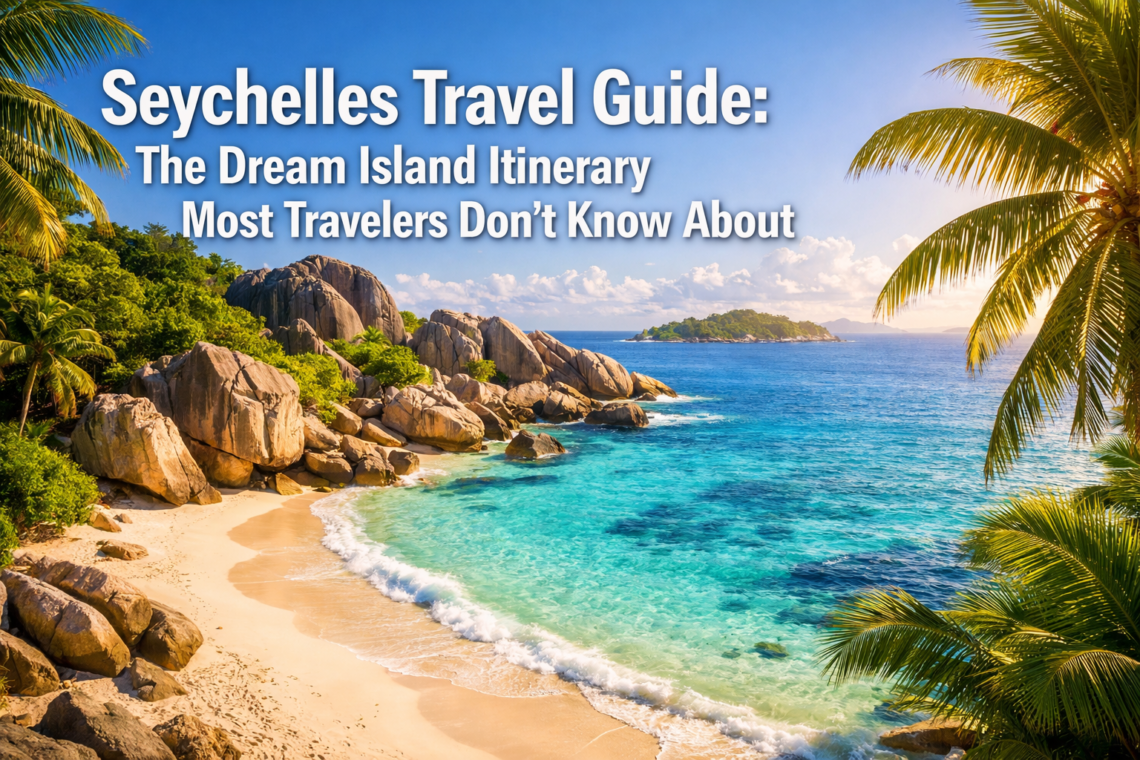
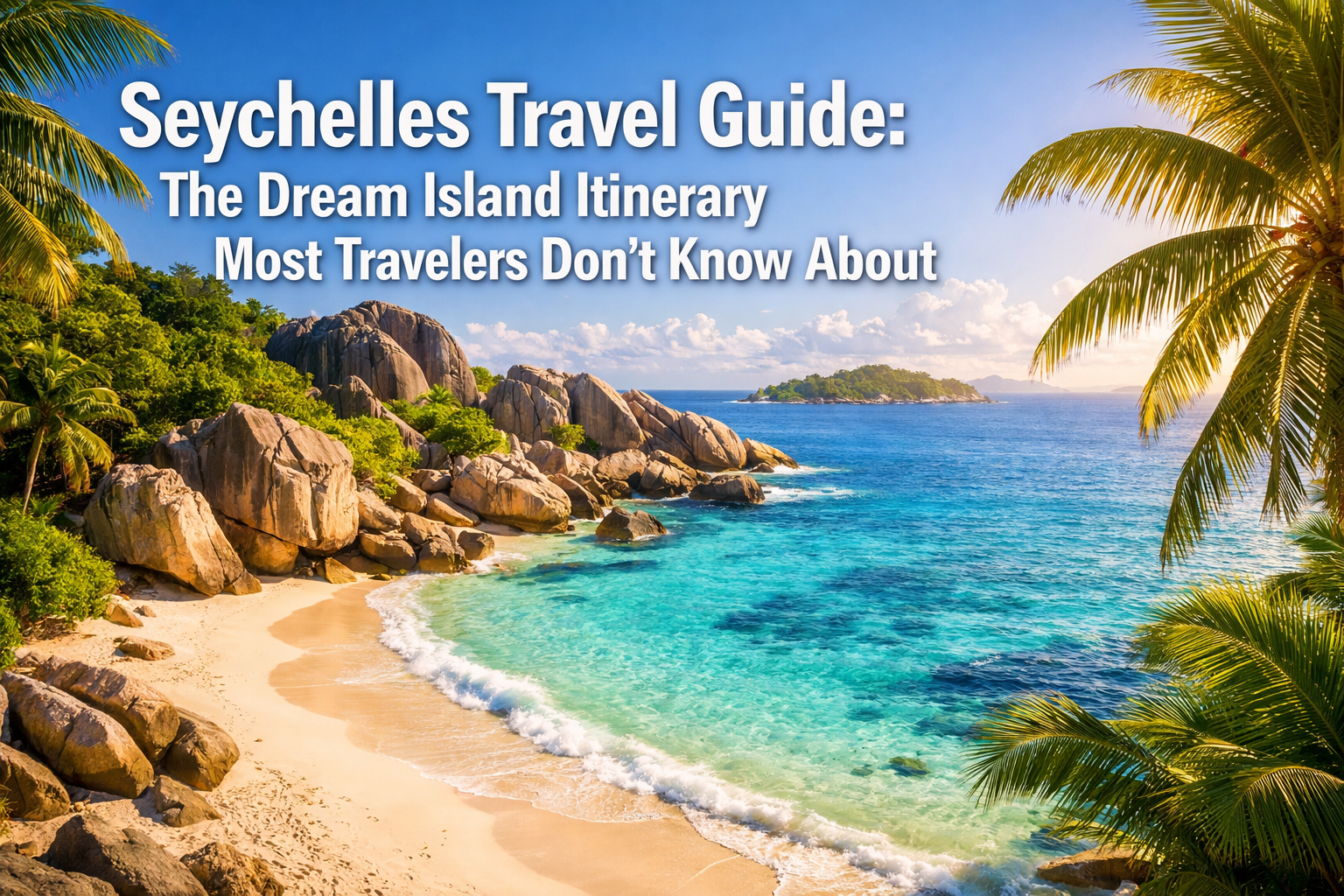
Most travelers visiting Seychelles stick to the same overcrowded beaches and miss the archipelago’s most magical experiences. This Seychelles travel guide reveals the island-hopping itinerary that locals recommend but few tourists discover—combining the essential three-island circuit with hidden beaches, seasonal activities, and insider timing strategies that transform a good trip into an unforgettable adventure.
Key Takeaways
- Three islands form the essential circuit: Mahé, Praslin, and La Digue offer the best combination of beaches, nature, and accessibility with fast ferry connections
- Travel Authorization is now mandatory: All visitors must obtain digital TA approval through the official portal before arrival (as of 2026)
- Timing matters for activities: October-April for fishing, May-September for hiking, mid-October to mid-January for turtle watching
- Tourism is thriving: Seychelles recorded 398,841 visitor arrivals in 2025, up 13% from 2024, with continued momentum into 2026
- Skip the crowds strategically: Visit popular beaches early morning or late afternoon, and explore lesser-known spots on each island
- Budget varies widely: From affordable guesthouses to €9,550+ luxury expedition packages
- Safety rating is excellent: U.S. State Department Level 1 advisory (lowest risk) for main islands
Quick Answer
Seychelles offers a three-island dream itinerary that most travelers overlook: spend 3-4 days on Mahé exploring Victoria and hidden southern beaches, 2-3 days on Praslin visiting Vallée de Mai and Anse Lazio, and 2 days on La Digue cycling to secluded coves beyond the famous Anse Source d’Argent. The key is timing your visit for specific activities (diving March-May, hiking May-September, turtle watching October-January) and obtaining your mandatory Travel Authorization before departure. This balanced approach lets you experience both iconic locations and secret spots that 90% of tourists never see.
What Makes This Seychelles Travel Guide Different From Standard Itineraries?
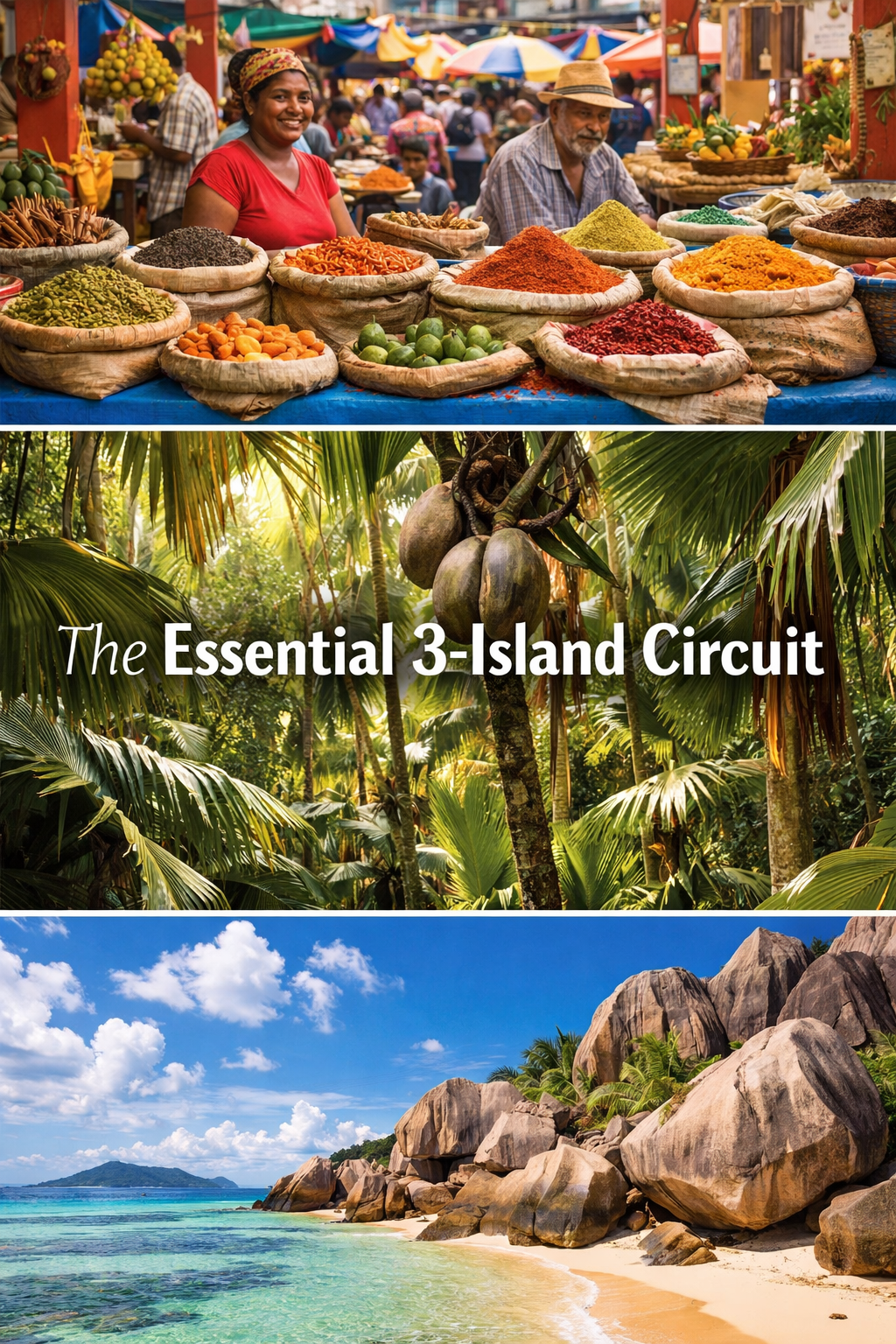
This guide focuses on the practical three-island circuit that balances must-see attractions with hidden experiences locals actually recommend. Unlike generic guides that list every beach alphabetically, this itinerary follows the natural flow between Mahé, Praslin, and La Digue with fast ferry connections[6].
The difference lies in seasonal activity optimization. Most guides ignore that diving conditions peak March-May and September-November, while hiking and sailing work best May-September[6]. Turtle observation happens mid-October to mid-January, and bird watching peaks in April and May-September[6].
Choose this itinerary if you want:
- A mix of iconic beaches and secluded spots
- Activities timed to seasonal conditions
- Efficient island-hopping without backtracking
- Both adventure and relaxation options
Skip this approach if you prefer:
- Staying at one resort the entire trip
- Only luxury experiences without local interaction
- Avoiding ferry travel between islands
The essential circuit covers Saint-Anne Marine National Park, Beau Vallon Beach, Anse Lazio, Vallée de Mai, and Anse Source d’Argent[6]—but the real magic happens in the timing and lesser-known additions between these highlights.
How Do I Plan the Perfect Island-Hopping Route in Seychelles?
Start with Mahé (3-4 days), move to Praslin (2-3 days), then finish on La Digue (2 days). This sequence follows the natural ferry routes and lets you experience progressively quieter islands as you decompress into vacation mode.
Mahé serves as your base because it has the international airport and Victoria, the world’s smallest capital city. Spend your first days adjusting to the tropical pace while exploring:
- Victoria’s Sir Selwyn Selwyn-Clarke Market for local spices and fresh fish
- Southern beaches like Anse Intendance (less crowded than Beau Vallon)
- Morne Seychellois National Park for hiking with panoramic views
- Sunset at Beau Vallon Beach with local grilled fish from beachside vendors
Praslin offers the middle ground between Mahé’s activity and La Digue’s tranquility. Take the fast ferry (45 minutes) and focus on:
- Vallée de Mai, a UNESCO World Heritage site with endemic coco de mer palms
- Anse Lazio, consistently ranked among the world’s best beaches (arrive before 10am to avoid crowds)
- Anse Georgette, accessible through Constance Lemuria resort (call ahead for beach access)
- Curieuse Island day trip for giant tortoises and mangrove forests
La Digue is where you slow down completely. The 15-minute ferry from Praslin brings you to an island where bicycles outnumber cars. Your focus here:
- Anse Source d’Argent at sunrise (iconic granite boulders without tour groups)
- Cycle to Grand Anse, Petite Anse, and Anse Cocos on the eastern coast
- Snorkel at Anse Severe in the late afternoon
- Watch traditional boat building at La Passe village
Common mistake: Trying to see all three islands in 5 days or less. You’ll spend half your time on ferries and miss the relaxed rhythm that makes Seychelles special. Budget at least 7-8 days for the full circuit.
Ferry booking tip: Book Cat Cocos or Cat Roses ferries in advance during peak season (December-January, July-August). The journey itself offers spectacular views of the archipelago.
For more island-hopping inspiration, check out our guide to cheap islands to visit for budget dream vacations.
When Should I Visit Seychelles for Specific Activities?
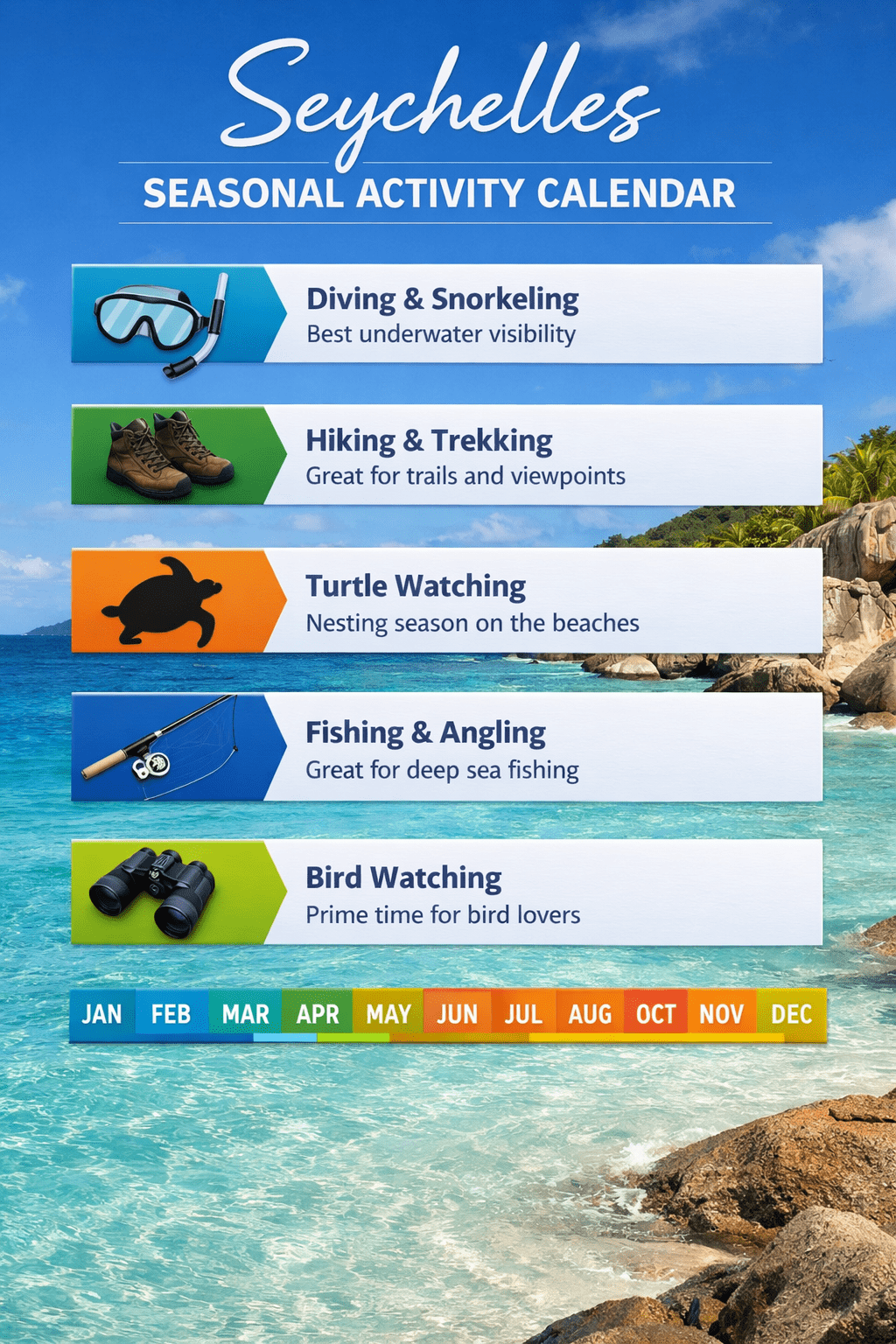
The best time depends entirely on what you want to do. Seychelles has a tropical climate year-round, but seasonal variations dramatically affect specific activities[6].
For diving and snorkeling: March-May and September-November offer the calmest, clearest water with visibility up to 30 meters. The ocean settles between the northwest monsoon (December-March) and southeast trade winds (May-September)[6].
For hiking and sailing: May-September brings drier weather and cooler temperatures (24-28°C). The southeast trade winds make sailing conditions ideal, and trails in Morne Seychellois National Park are less muddy[6].
For turtle watching: Mid-October to mid-January for nesting, and mid-December to mid-March for hatching. Visit beaches on the southern coasts of Mahé and Silhouette Island at dawn or dusk[6].
For fishing: October-April is prime season for marlin, sailfish, and tuna. Charter boats operate from Mahé and Praslin with experienced local guides[6].
For bird watching: April, May-September, and October are peak periods. Seychelles hosts endemic species like the Seychelles black parrot (found only in Vallée de Mai) and fairy terns throughout Victoria[6].
Budget consideration: May-June and September-October offer the best balance of good weather and lower accommodation prices. December-January and July-August are peak season with prices 30-50% higher.
Choose November-March if you want: Warmer water (28-30°C), lush green landscapes, occasional afternoon rain showers that cool things down
Choose April-October if you want: Drier conditions, better hiking, slightly cooler temperatures, stronger winds for sailing
I’ve found that visiting in May or October gives you excellent conditions across most activities without the peak-season crowds. Tourism momentum continues strong into 2026, with Seychelles recording 398,841 visitor arrivals in 2025—a 13% increase over 2024[1].
What Are the New Entry Requirements for Seychelles in 2026?
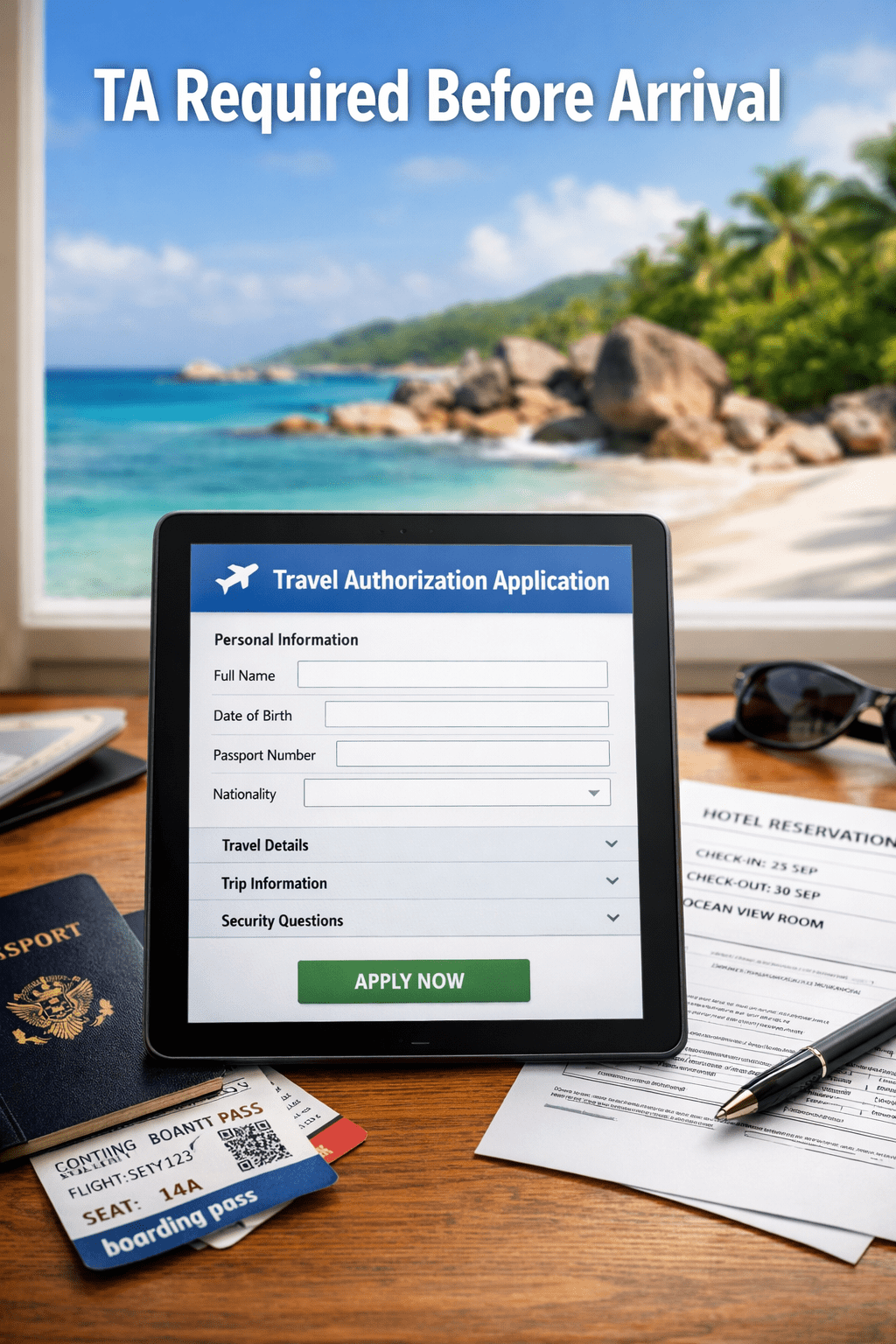
All travelers must now obtain a Travel Authorization (TA) before arrival, regardless of nationality. This digital system launched recently and is mandatory for entry[3][4].
The application process requires:
- Valid passport (minimum 6 months validity)
- Digital passport photo page scan
- Recent digital selfie photograph
- Complete contact information
- Detailed trip itinerary with dates
- Airline booking confirmation showing arrival and departure flights
- Accommodation booking confirmations for each location you’ll stay
- Proof of sufficient funds (credit or debit card information)[3][5]
Apply through the official portal: https://seychelles.govtas.com/[3][7]
Processing time: Most applications receive approval within 24-48 hours, but apply at least one week before departure to avoid issues.
Visa-free stays: Citizens of most countries, including the U.S., EU nations, and many others, can stay up to 3 months within a 6-month period without a separate visa[3]. The TA is not a visa—it’s a pre-arrival authorization system.
Common mistake: Waiting until the last minute to apply. If your application has issues with documentation, you won’t have time to correct and resubmit before your flight.
Cost: The TA system is currently free, though this may change. Always check the official portal for current fees.
At arrival: Immigration officers will verify your TA approval, return ticket, accommodation bookings, and sufficient funds. Have digital or printed copies of all documents ready.
The U.S. State Department maintains a Level 1 travel advisory for Seychelles (the lowest risk category), recommending travelers “exercise normal precautions”[5]. This makes it one of the safest destinations in the region.
Important safety note: If you plan to visit outer islands by boat, you need prior approval from the Seychelles Maritime Safety Authority due to occasional piracy incidents in coastal waters surrounding remote atolls[5]. This doesn’t affect the main three-island circuit most travelers follow.
Before you go, review our travel essential list to make sure you’ve packed everything you need for a tropical island adventure.
Which Hidden Beaches and Experiences Do Locals Recommend?
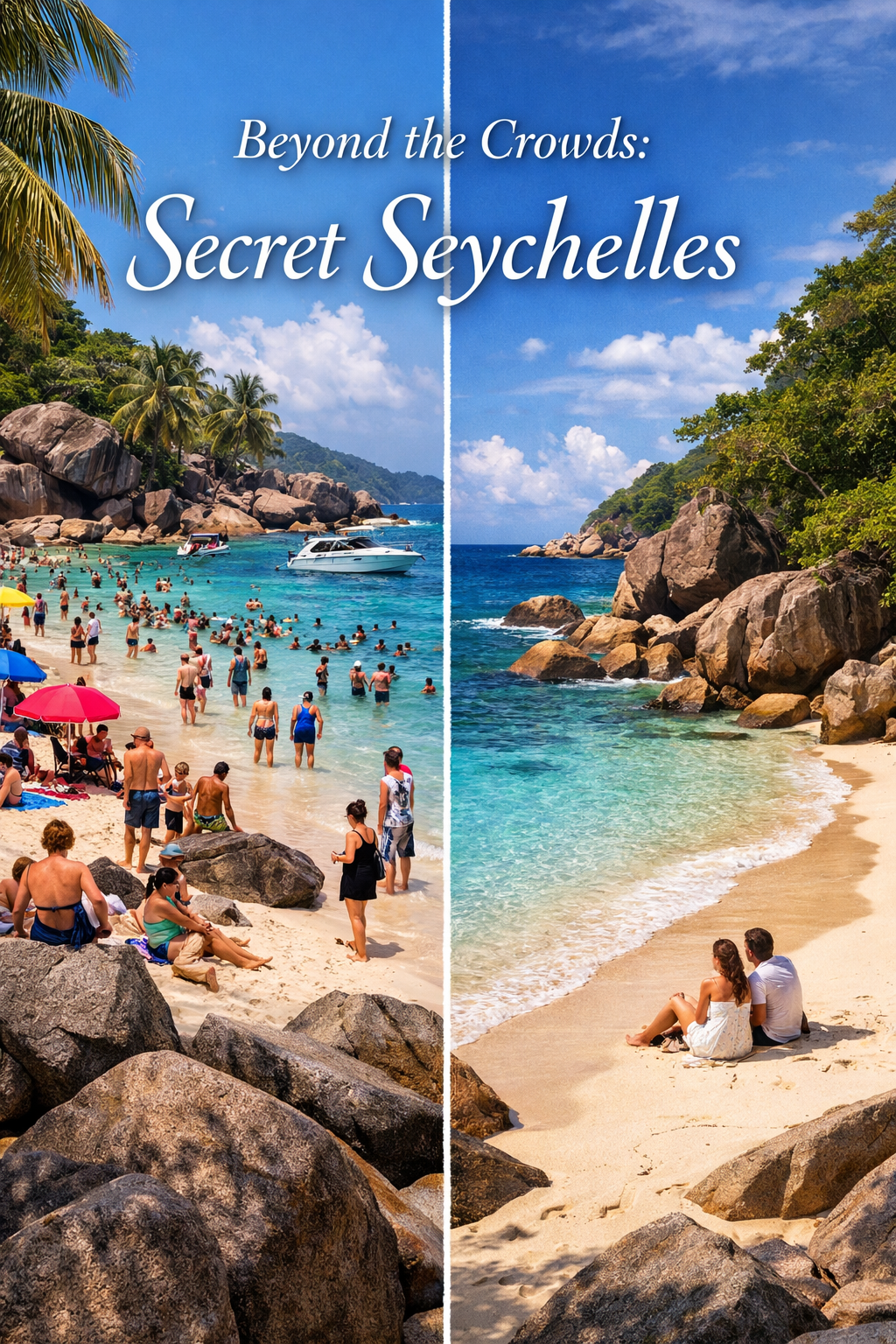
The secret to experiencing Seychelles like a local is knowing when to visit popular spots and which lesser-known alternatives offer similar beauty without crowds.
On Mahé, skip the crowds at:
- Anse Soleil: Southern beach with calm water, perfect for families, accessible by car with a small local restaurant
- Petite Anse: Next to Anse Soleil, even quieter, requires a short walk down stairs
- Anse Takamaka: Popular with locals on weekends but empty weekdays, excellent bodysurfing waves
- Police Bay: Near the airport, almost always deserted, dramatic granite formations
On Praslin, go beyond Anse Lazio to:
- Anse Boudin: Local fishing village beach, authentic Creole atmosphere, no facilities but stunning at sunset
- Anse Consolation: Requires a short hike from Anse Boudin, completely secluded, bring your own water
- Côte d’Or Beach: Long stretch perfect for walking, local guesthouses and restaurants, less touristy than Anse Lazio
On La Digue, cycle past Anse Source d’Argent to:
- Anse Marron: Requires a guide (granite boulder scrambling), absolutely pristine, worth the effort
- Grand Anse, Petite Anse, Anse Cocos circuit: The eastern coast trio that most tourists skip because of the 30-minute bike ride
- Anse Severe: North end of the island, excellent snorkeling, quiet in late afternoon
Local food experiences most tourists miss:
- Victoria Market on Saturday mornings for fresh coconut water and local fruit
- Takeaway fish curry from small shops in La Passe village on La Digue
- Grilled fish at Beau Vallon Beach on Wednesday evenings (local gathering spot)
- Creole restaurants in the hills above Victoria (ask your accommodation host for recommendations)
Timing strategy for popular beaches:
- Anse Source d’Argent: Arrive at 7am or after 4pm
- Anse Lazio: Before 10am or after 3pm
- Beau Vallon: Weekday mornings or sunset hours
Choose a local guide if you want: Access to beaches requiring navigation through private property, insider knowledge about current conditions, authentic cultural experiences beyond tourist zones
The Seychelles Tourism Department is actively promoting sustainable tourism through their “Sustainable Seychelles” program, encouraging visitors to respect local communities and natural environments[2].
For travelers who love discovering hidden gems, you might also enjoy our guide to hidden gems in Italy for similar off-the-beaten-path inspiration.
How Much Does a Seychelles Trip Actually Cost?
Seychelles can accommodate both budget-conscious travelers and luxury seekers, but costs vary dramatically based on your choices.
Budget breakdown for a 7-day trip (per person):
| Category | Budget Option | Mid-Range | Luxury |
|---|---|---|---|
| Accommodation | $350-500 (guesthouses) | $700-1,200 (3-star hotels) | $2,500+ (5-star resorts) |
| Food | $150-250 (local restaurants, self-catering) | $400-600 (mix of local and hotel dining) | $800+ (resort restaurants) |
| Inter-island ferries | $150-200 (economy class) | $150-200 (same) | $150-200 (same) |
| Activities | $100-200 (snorkeling, hiking, beaches) | $300-500 (guided tours, diving) | $1,000+ (private excursions) |
| Car/bike rental | $200-300 (bikes on La Digue, shared taxi) | $400-500 (rental car on Mahé/Praslin) | $600+ (private drivers) |
| TOTAL (excluding flights) | $950-1,450 | $1,950-3,000 | $5,050+ |
Specialized luxury options: Multi-day expedition packages like the Aldabra Atoll exploration start at €9,550 per person for 13 days/12 nights, operating on set dates throughout the year[6].
Ways to reduce costs:
- Visit during shoulder season (May-June, September-October) for 30-40% lower accommodation rates
- Stay in guesthouses or self-catering apartments instead of resorts
- Eat at local takeaway shops and markets instead of hotel restaurants
- Use public buses on Mahé (SCR 7-10 per ride, about $0.50-0.75)
- Snorkel from shore instead of booking boat tours
- Rent bikes on La Digue instead of using taxis
Worth splurging on:
- At least one nice dinner at a beachfront restaurant
- A guided snorkeling or diving trip to pristine reefs
- Car rental for one day on Mahé to explore remote beaches
- Fresh seafood at local markets (affordable luxury)
Common budget mistake: Underestimating food costs. Even budget meals at local restaurants run $10-15 per person, and resort dining easily hits $40-60 per meal.
Flight costs (not included above): Expect $800-1,500 from Europe, $1,200-2,000 from North America, depending on season and booking timing. Use our guide on where to find cheap flights to save hundreds on airfare.
Money-saving tip: Many guesthouses include breakfast and offer kitchen facilities. Buying fresh fruit, bread, and local cheese at markets can cut your food budget in half.
If you’re interested in balancing adventure with affordability, check out our Belize vacation itinerary for similar tropical planning strategies.
What Should I Pack for a Seychelles Island-Hopping Trip?
Pack light because you’ll be moving between islands, but include specific items for tropical conditions and varied activities.
Essential items:
- Reef-safe sunscreen (SPF 50+): Regular sunscreen damages coral reefs; choose mineral-based options
- Lightweight rain jacket: Brief afternoon showers happen year-round
- Water shoes: Granite rocks and sea urchins make these essential for beach walking
- Dry bag: Protect electronics and documents during ferry rides and water activities
- Snorkel gear: Rental quality varies; bringing your own ensures comfort and hygiene
- Insect repellent: Mosquitoes appear after rain, especially near vegetation
- Reusable water bottle: Tap water is safe to drink on the main islands
- Power adapter: Seychelles uses UK-style three-pin plugs (Type G)
Clothing strategy:
- 3-4 swimsuits (one dries while you wear another)
- Lightweight, quick-dry clothing in breathable fabrics
- One nicer outfit for upscale restaurants
- Long sleeves and pants for sun protection and evening mosquitoes
- Comfortable walking sandals and closed-toe shoes for hiking
Photography gear:
- Waterproof phone case or underwater camera
- Extra memory cards (limited availability on islands)
- Portable charger (power outlets aren’t common on beaches)
What to leave home:
- Heavy jeans or non-breathable fabrics
- Expensive jewelry (casual island atmosphere)
- Excessive formal clothing
- Hair dryer (most accommodations provide them)
Packing mistake to avoid: Bringing too much. You’ll wear swimsuits and casual clothes 90% of the time. One small carry-on and a daypack work perfectly for the three-island circuit.
Local shopping tip: If you forget something, Victoria has supermarkets and pharmacies with most essentials. Prices are higher than mainland, but availability is good for basics.
For a comprehensive packing approach, see our complete travel essential list that covers everything from documents to toiletries.
How Do I Experience Seychelles Sustainably and Respectfully?
Seychelles is actively promoting sustainable tourism through official programs, and visitors play a crucial role in protecting this fragile ecosystem[2].
The “Sustainable Seychelles” program encourages:
- Using reef-safe sunscreen to protect coral ecosystems
- Avoiding single-use plastics (bring reusable bags and bottles)
- Respecting marine life (look but don’t touch coral or sea creatures)
- Supporting local businesses over international chains
- Staying on marked trails in nature reserves
Marine conservation practices:
- Never stand on or touch coral reefs while snorkeling
- Maintain distance from sea turtles (at least 3 meters)
- Don’t feed fish or other marine animals
- Take all trash with you from beaches
- Use designated mooring buoys instead of anchoring on reefs
Cultural respect guidelines:
- Dress modestly when visiting Victoria or local villages (cover shoulders and knees)
- Ask permission before photographing local people
- Learn basic Creole greetings (“Bonzour” for hello, “Mersi” for thank you)
- Support local restaurants, guesthouses, and tour operators
- Purchase souvenirs from local artisans rather than imported goods
Wildlife protection rules:
- Don’t remove shells, coral, or other natural items from beaches
- Keep noise levels low near nesting bird areas
- Report any injured wildlife to local authorities
- Observe the coco de mer palms in Vallée de Mai without touching
- Follow guide instructions during turtle watching season
Accommodation choices that support sustainability:
- Small locally-owned guesthouses
- Properties with solar power or rainwater collection
- Hotels participating in the Sustainable Seychelles certification
- Accommodations that employ local staff
Common sustainability mistake: Thinking your individual actions don’t matter. With nearly 400,000 annual visitors[1], small choices multiply quickly. Using reef-safe sunscreen alone prevents tons of harmful chemicals from entering the ocean.
Give back options:
- Volunteer for beach cleanups (organized by local environmental groups)
- Donate to Seychelles conservation organizations
- Choose tour operators that contribute to conservation funds
- Share your sustainable travel practices with other visitors
The tourism industry is working to balance growth (13% increase in 2025)[1] with environmental protection. As a visitor, your choices directly impact whether Seychelles can maintain this balance.
For more sustainable travel approaches, explore our tropical islands category for eco-conscious destination guides.
FAQ
Do I need a visa to visit Seychelles?
Most nationalities don’t need a visa for stays up to 3 months within a 6-month period[3]. However, all travelers must obtain a Travel Authorization (TA) before arrival through https://seychelles.govtas.com/. The TA is free and typically processes within 24-48 hours.
Is Seychelles safe for solo travelers?
Yes, Seychelles has a U.S. State Department Level 1 travel advisory (lowest risk)[5]. Solo travelers, including women, generally feel safe on the main islands. Standard precautions apply: avoid isolated areas after dark, watch your belongings on beaches, and use registered taxis.
Can I island-hop without booking tours?
Absolutely. Public ferries (Cat Cocos, Cat Roses) run regular schedules between Mahé, Praslin, and La Digue. Book tickets online in advance or at ferry terminals. No tour package required for independent island hopping.
What language is spoken in Seychelles?
Seychellois Creole is the primary language, but English and French are widely spoken. All signs, menus, and official documents appear in English. You won’t face language barriers in tourist areas.
Is the water safe to drink?
Yes, tap water on Mahé, Praslin, and La Digue is safe to drink. It comes from desalination and rainwater collection systems. Bring a reusable bottle to reduce plastic waste.
How much cash should I bring?
Seychelles uses Seychellois Rupees (SCR), but euros and U.S. dollars are accepted at most hotels and tour operators. Credit cards work at major establishments. Bring some cash for local markets, small restaurants, and taxis. ATMs are available in Victoria and on Praslin.
Can I swim year-round in Seychelles?
Yes, water temperature stays between 26-30°C throughout the year. However, ocean conditions vary seasonally. Calmer waters occur March-May and September-November[6]. Stronger currents and waves appear during monsoon transitions.
Are there direct flights to Seychelles?
Direct flights operate from major European cities (Paris, London, Frankfurt), Middle Eastern hubs (Dubai, Doha), and some African cities. From North America, expect one or two connections. All international flights arrive at Seychelles International Airport on Mahé.
Do I need vaccinations for Seychelles?
No mandatory vaccinations exist for Seychelles. The CDC recommends being up-to-date on routine vaccines. Yellow fever vaccination is required only if you’re arriving from a yellow fever-endemic country. Consult your doctor 4-6 weeks before travel.
What’s the best island for families with young children?
Mahé offers the most family-friendly infrastructure with calm beaches like Beau Vallon, easy access to medical facilities, and varied dining options. La Digue works well for older children who can cycle. Praslin falls in the middle with good beaches but fewer amenities.
Can I see whale sharks in Seychelles?
Yes, whale sharks appear around Seychelles, particularly August-October. Book a responsible tour operator that follows guidelines: no touching, maintain distance, limit time in water with sharks. Sightings aren’t guaranteed but chances improve during peak months.
How many days do I need for Seychelles?
Minimum 7-8 days for the three-island circuit without feeling rushed. Ideal is 10-14 days to include relaxation time and optional activities like diving or outer island excursions. Less than 5 days means you’ll spend most of your time traveling between islands rather than enjoying them.
Conclusion
This Seychelles travel guide gives you the island-hopping framework most tourists never discover: the strategic three-island circuit timed for optimal seasonal activities, balanced between iconic beaches and hidden local spots, with practical entry requirements and budget considerations for 2026.
Your next steps:
- Apply for your Travel Authorization at https://seychelles.govtas.com/ at least one week before departure
- Book your flights targeting shoulder season (May-June or September-October) for better prices and weather
- Reserve accommodation on Mahé (3-4 nights), Praslin (2-3 nights), and La Digue (2 nights)
- Pre-book ferry tickets between islands during peak season
- Pack reef-safe sunscreen and essential gear from the packing list above
- Plan activities around seasonal conditions: diving March-May, hiking May-September, turtle watching October-January
The beauty of Seychelles lies not just in the granite boulders and turquoise water you’ve seen in photos, but in the rhythm of island life you discover when you move beyond the standard tourist circuit. With tourism continuing its strong momentum into 2026[1], now is the perfect time to experience these islands before they become even more popular.
Start with the three-island foundation, add hidden beaches locals recommend, time your activities to seasonal conditions, and approach the islands with respect for their fragile ecosystems. That’s the dream Seychelles itinerary most travelers never find—but now you have the complete roadmap.
For more tropical island inspiration and planning resources, explore our tropical islands section and travel planning tips.
References
[1] Seychelles Tourism Carries Its Momentum Confidently Into 2026 – https://www.nation.sc/articles/29548/seychelles-tourism-carries-its-momentum-confidently-into-2026
[2] tourism.gov.sc – https://tourism.gov.sc
[3] Seychelles Guide – https://www.dovolenkarka.cz/en/seychelles-guide/
[4] seychelles – https://www.seychelles.com
[5] Seychelles – https://travel.state.gov/en/international-travel/travel-advisories/seychelles.html
[6] Seychelles 100153 – https://qa.trip.com/moments/seychelles-100153/
[7] Seychelles Travel Authorization Portal – https://seychelles.govtas.com/