


Quick Answer: Hawaii is one of the most rewarding destinations in the world, but a great trip depends on choosing the right island, timing your visit well, and knowing what costs to expect in 2026. This Hawaii travel guide covers everything from island comparisons and budgeting to what’s new after the Lahaina recovery, so you can plan with confidence and skip the guesswork.
Key Takeaways
- There are four main islands to choose from: Oahu, Maui, Kauai, and the Big Island each offer a different experience.
- No travel restrictions apply as of 2026 — no testing, no vaccination proof, and no capacity limits on any island.
- Accommodation taxes now total 18–19% [1], so budget an extra $15–$30 per night beyond your base room rate.
- New state park fees apply to visitors: $10 per vehicle or $5 per person for walk-in access starting 2026. [1]
- Maui’s Ka’anapali area is fully open and operating as West Maui’s main hub, with Lahaina Harbor in phased reopening since December 2025. [1]
- Best time to visit: April–May and September–October offer lower prices, fewer crowds, and good weather.
- Renting a car is almost always necessary on Maui, Kauai, and the Big Island.
- Reef-safe sunscreen is required by law in Hawaii — pack accordingly.
- Budget travelers can do Hawaii — it just takes smart timing, self-catering, and choosing the right island base.
Which Island Should You Choose?
The right island depends entirely on what kind of trip you want. Oahu suits first-timers and city lovers, Maui is ideal for beach and resort experiences, Kauai is best for nature and seclusion, and the Big Island is perfect for adventure and diversity.

Here’s a quick breakdown:
| Island | Best For | Vibe | Crowds |
|---|---|---|---|
| Oahu | First-timers, nightlife, history | Urban + beach | High |
| Maui | Beaches, romance, snorkeling | Resort + relaxed | Medium-high |
| Kauai | Hiking, nature, peace | Remote + lush | Low-medium |
| Big Island | Volcanoes, diversity, adventure | Wild + varied | Low |
Choose Oahu if you want a mix of iconic landmarks (Diamond Head, Waikiki, Pearl Harbor), good food, and easy transport. It’s the most visited island for good reason. Check out our Honolulu Hawaii things to do guide for a full first-timer breakdown.
Choose Maui if you want beautiful beaches, whale watching (November–May), and the Road to Hana. Ka’anapali is fully operational as West Maui’s activity hub, and snorkeling and sunset cruises run daily. [1]
Choose Kauai if you want dramatic scenery, fewer tourists, and serious hiking like the Napali Coast trail. It’s the most photogenic island by most accounts.
Choose the Big Island if you want to see active lava flows, diverse climates, and real space to breathe. It’s the largest island and still feels relatively undiscovered.
“The biggest mistake first-timers make is trying to see multiple islands in one week. Pick one or two and go deep.”
What Does a Hawaii Trip Actually Cost in 2026?
Hawaii is expensive, but knowing the real numbers helps you plan without surprises. A mid-range trip for two people runs roughly $400–$600 per day including accommodation, food, a rental car, and activities.
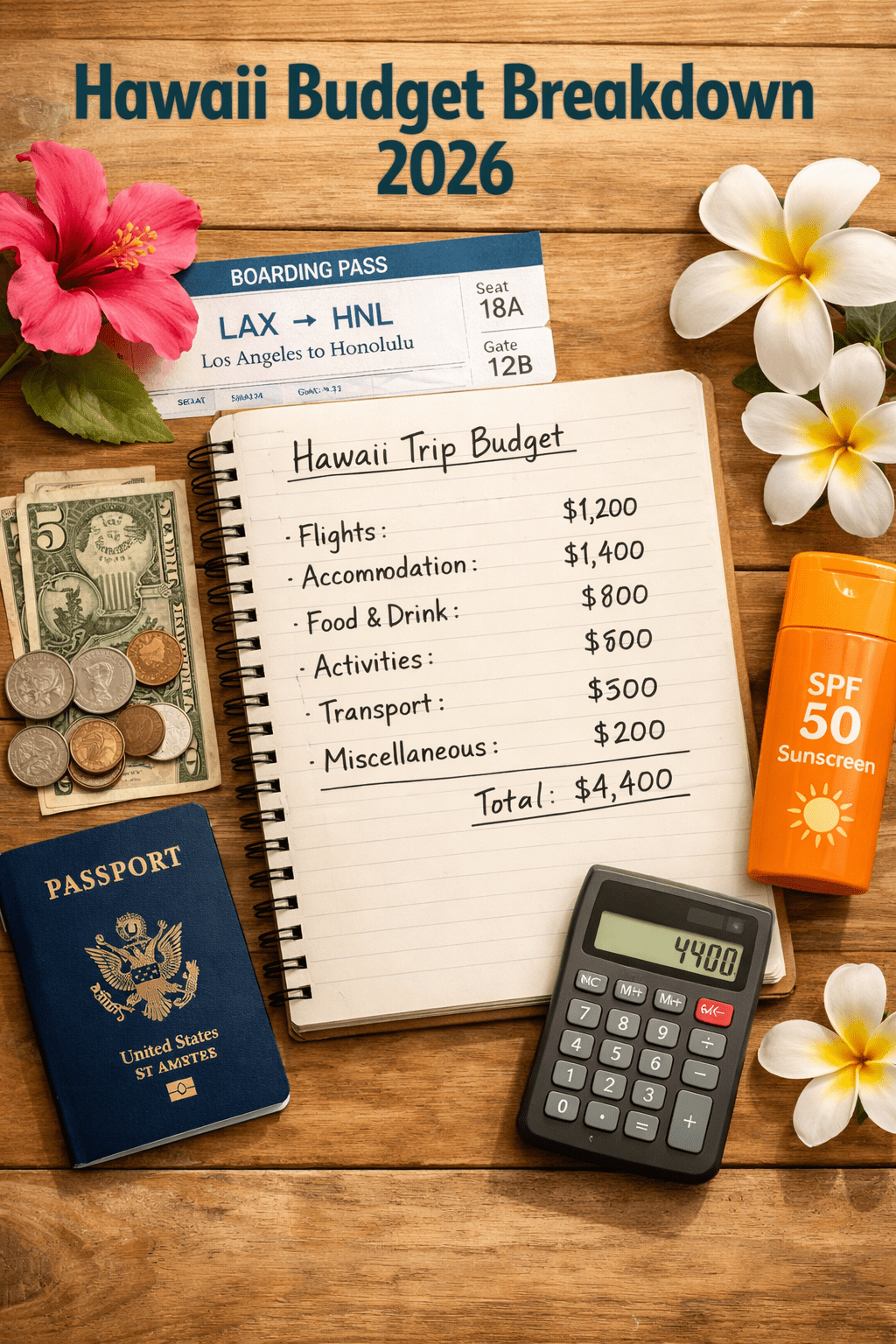
Key costs to know:
- Flights: From the US mainland, round-trip flights typically range from $300–$700 per person depending on your departure city and how far in advance you book. Use tools like Google Flights and set price alerts. For tips on finding deals, see our guide on where to find cheap flights.
- Accommodation: Budget hotels start around $150/night, mid-range resorts run $250–$400/night, and luxury properties go well above $500/night. Important: As of January 1, 2026, accommodation taxes total approximately 18–19% (combining the state Transient Accommodations Tax raised to 11%, county taxes around 3%, and general excise tax). Budget an extra $15–$30 per night beyond the base rate. [1]
- Rental car: Roughly $50–$100/day. Essential on Maui, Kauai, and the Big Island.
- Food: Expect $15–$25 for a casual lunch, $40–$80 per person for dinner at a sit-down restaurant.
- State park fees: New in 2026 — $10 per vehicle or $5 per person (walk-in/bike). Hawaii residents with valid ID are exempt. Annual passes are available if you’re visiting multiple parks. [1]
Common mistake: Forgetting to factor in the accommodation tax increase. A $300/night room now effectively costs $354–$357 after taxes. Always check the total price at checkout, not just the nightly rate.
If you’re watching your budget, Hawaii can still be done affordably. Browse our cheap US vacations guide for strategies that apply here too.
When Is the Best Time to Visit Hawaii?
Hawaii has good weather year-round, but the sweet spots for most travelers are April–May and September–October. These shoulder seasons offer warm temperatures, calmer seas, lower hotel rates, and noticeably smaller crowds.
Season breakdown:
- December–March: Peak season. Whale watching is excellent on Maui (humpbacks arrive November–May). Prices are highest. Rain is more common on the north shores.
- April–May: Excellent weather, lower prices, fewer crowds. One of the best windows to visit.
- June–August: Summer peak. Families dominate, prices spike, but the weather is reliably sunny and ocean conditions are calm.
- September–October: Another sweet spot. Crowds thin out after Labor Day, prices drop, and weather stays warm.
- November: Shoulder season with good deals, though whale season starts picking up on Maui.
Hurricane season runs June–November, but direct hits on Hawaii are rare. It’s worth checking forecasts if you’re visiting in late summer or fall.
What Are the Entry Requirements for Hawaii in 2026?
There are no travel restrictions for visiting Hawaii in 2026. No testing, no vaccination proof, and no pre-travel health documentation is required for domestic travelers. [2]
For international visitors arriving in the US, no pre-travel COVID test is required regardless of vaccination status, in line with US federal rules that have been in place since June 2022. [2] All four major islands — Oahu, Maui, Kauai, and the Big Island — have eliminated all capacity limits and gathering restrictions. [2]
What you do need:
- A valid US government-issued ID (or passport for international travelers)
- Standard customs declaration if arriving internationally
- Reef-safe sunscreen (required by state law — oxybenzone and octinoxate are banned)
What Are the Best Things to Do on Each Island?
Every Hawaiian island has a distinct personality, and the best activities depend on where you’re based. Here’s a practical, island-by-island breakdown.
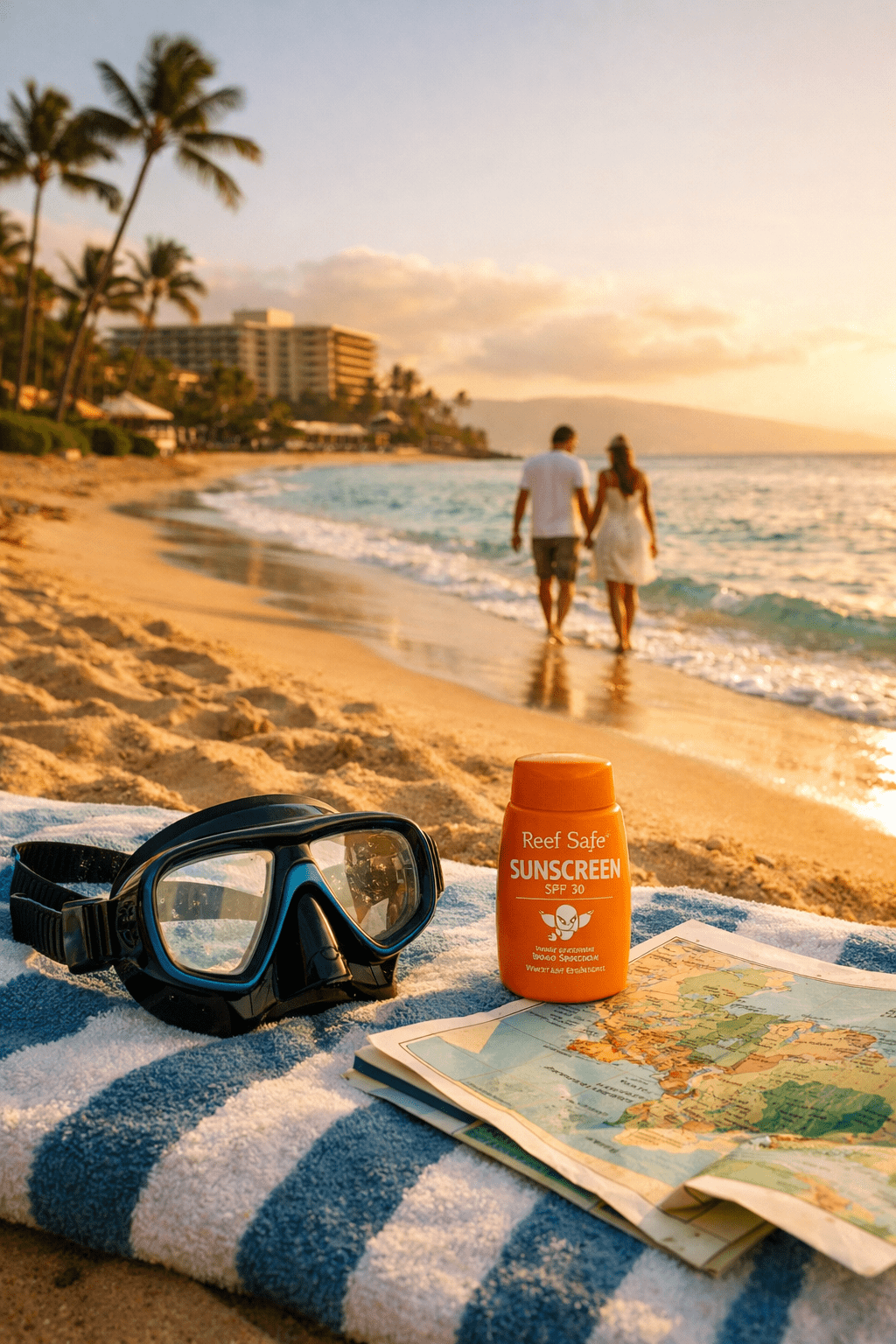
Oahu:
- Walk or hike Diamond Head for panoramic views of Waikiki
- Visit Pearl Harbor and the USS Arizona Memorial
- Surf lessons at Waikiki Beach (great for beginners)
- North Shore in winter for world-class surf watching
- Explore the Polynesian Cultural Center
Maui:
- Drive the Road to Hana (pack snacks and start early)
- Snorkel at Molokini Crater
- Watch the sunrise from Haleakala summit (book the permit in advance)
- Whale watching cruises from Ka’anapali (November–May) [1]
- Lahaina Harbor is in phased reopening with tour operators returning to service as of late 2025 [1]
Kauai:
- Hike the Kalalau Trail along the Napali Coast
- Take a boat or helicopter tour of the Napali Coast
- Explore Waimea Canyon (the “Grand Canyon of the Pacific”)
- Kayak the Wailua River to Secret Falls
Big Island:
- Visit Hawaii Volcanoes National Park (active lava viewing conditions vary)
- Snorkel with manta rays at night off the Kona Coast
- Stargaze from Mauna Kea summit (dress warmly — it’s cold at 13,796 feet)
- Black sand beaches at Punalu’u
If you love tropical island adventures, you might also enjoy our Bora Bora travel guide for a different kind of Pacific paradise.
How Should You Get Around Hawaii?
Renting a car is the most practical option on most islands. Public transport is limited outside of Oahu, and rideshares can be expensive and unreliable in rural areas.
By island:
- Oahu: The TheBus system is surprisingly good for getting between Waikiki, Honolulu, and major attractions. A car helps for the North Shore but isn’t essential.
- Maui: Rent a car. Full stop. The Road to Hana, Haleakala, and most beaches are not accessible without one.
- Kauai: Rent a car. The island is small but spread out, and the best spots require driving.
- Big Island: Rent a car. It’s the largest island in the chain — driving between Kona and Hilo alone takes about 2 hours.
Tips:
- Book your rental car early, especially for summer and holiday travel. Inventory gets tight and prices jump.
- A standard sedan works fine for most trips. A 4WD is only necessary for specific unpaved roads (like the summit of Mauna Kea on the Big Island).
- Gas is more expensive in Hawaii than on the mainland — factor that into your budget.
What Should You Pack for Hawaii?
Pack light, pack smart, and make sure your sunscreen is reef-safe. Hawaii’s casual culture means you rarely need formal clothing, but a few specific items make a real difference.
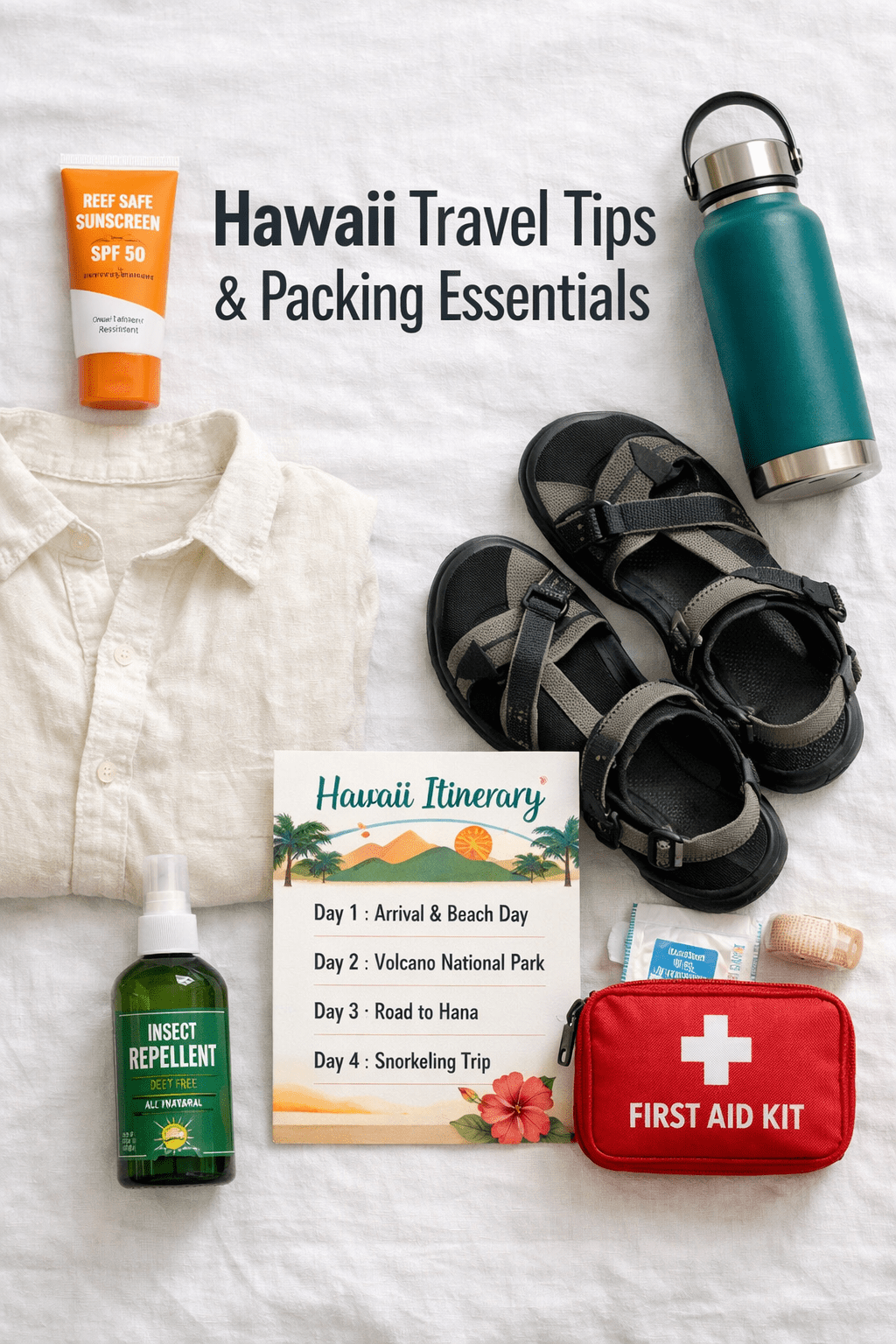
Essentials checklist:
- ✅ Reef-safe sunscreen (required by law — check the label)
- ✅ Lightweight, quick-dry clothing (linen, moisture-wicking fabrics)
- ✅ Water shoes or reef-safe sandals for rocky shorelines
- ✅ Snorkel gear (buying or renting locally is fine, but bringing your own saves money)
- ✅ Light rain jacket (especially for Kauai and Maui’s north shores)
- ✅ Reusable water bottle (Hawaii is hot and hiking is common)
- ✅ Insect repellent (especially for rainforest hikes)
- ✅ A light layer for Haleakala or Mauna Kea summits (temperatures drop sharply at elevation)
For a complete packing framework, our travel essential list covers everything you need regardless of destination.
Common packing mistakes:
- Bringing too many clothes — you’ll live in swimwear and casual shorts
- Forgetting reef-safe sunscreen and having to pay premium prices at resort shops
- Not packing a light rain layer for the wetter north shores
FAQ: Hawaii Travel Guide
Do I need a passport to visit Hawaii?
No. Hawaii is a US state, so US citizens only need a government-issued ID. International travelers need a valid passport and must meet standard US entry requirements.
Is Hawaii safe for tourists?
Yes, Hawaii is generally very safe. As with any destination, use common sense in crowded areas, don’t leave valuables in rental cars, and respect ocean conditions — rip currents are the most common hazard.
Can I visit Lahaina in 2026?
Parts of Lahaina are still in recovery following the August 2023 wildfires, but Ka’anapali operates fully as West Maui’s main activity and resort hub. Lahaina Harbor began a phased reopening in December 2025, with tour operators gradually returning. [1]
How many days do I need in Hawaii?
A minimum of 5–7 days per island is ideal. Trying to cover multiple islands in less than 10 days often feels rushed. If you only have a week, pick one island and explore it properly.
What’s the best island for a honeymoon?
Maui is the classic choice for romance, with luxury resorts, stunning sunsets, and excellent dining. Kauai is a close second for couples who prefer seclusion and nature. See our most romantic honeymoon destinations for broader inspiration.
Is Hawaii good for families?
Absolutely. Oahu has the most family-friendly infrastructure, with calm beaches, cultural attractions, and easy logistics. Maui is also excellent for families, especially for snorkeling and whale watching. Browse our family travel resources for more tips.
When should I book to get the best prices?
Book flights 2–4 months in advance for the best fares. Hotels and rental cars on popular islands like Maui can sell out during peak season, so earlier is better for those too.
Are there any new fees I should know about in 2026?
Yes. State park entry fees now apply to non-residents: $10 per vehicle or $5 per person for walk-in/bike access. Hawaii residents with valid ID are exempt. [1] Accommodation taxes also increased to approximately 18–19% total as of January 1, 2026. [1]
What’s the weather like in Hawaii?
Most of Hawaii stays between 75°F and 85°F (24°C–29°C) year-round. Higher elevations are cooler, and north-facing shores get more rain. The south and west coasts of most islands are the driest and sunniest.
Can I island-hop during my trip?
Yes, inter-island flights are short (typically 30–50 minutes) and relatively affordable. Hawaiian Airlines and Southwest both operate inter-island routes. If you’re planning to visit two islands, build in at least 4–5 days per island to make it worthwhile.
Conclusion
Hawaii rewards travelers who plan ahead and go in with realistic expectations. This Hawaii travel guide has covered the key decisions: which island fits your travel style, what the real costs look like in 2026, when to go, and what to pack. The most important thing is to choose your island intentionally rather than defaulting to the most popular option.
Your next steps:
- Pick your island based on the comparison table above — don’t try to do everything on your first trip.
- Set a realistic budget that includes the 18–19% accommodation tax and new state park fees.
- Book flights and rental cars early, especially for summer and holiday travel.
- Check park permit requirements — Haleakala sunrise and some Napali Coast trails require advance reservations.
- Pack reef-safe sunscreen before you leave home — it’s cheaper than buying it at a resort shop.
Hawaii is one of those destinations that genuinely lives up to the hype. Go with a plan, stay curious, and respect the land and culture — and it’ll be one of the best trips you ever take. 🌺
References
[1] The Ultimate 2026 Hawaii Family Vacation Guide – https://www.patpat.com/blogs/family-adult/the-ultimate-2026-hawaii-family-vacation-guide
[2] Hawaii Travel Restrictions 2021 – https://intentionaltravelers.com/hawaii-travel-restrictions-2021/
[3] Hawaii Visitor Guide Packet – https://www.hawaii-guide.com/hawaii-visitor-guide-packet
[4] Watch – https://www.youtube.com/watch?v=4wTUtM3sVsY