
Last updated: September 3, 2026
Quick Answer: The fastest way to pack a suitcase efficiently is to build a capsule wardrobe list before you touch the bag, place heavy items near the wheels, roll casual clothes into the middle layer, fold structured pieces flat on top, and use 3-4 packing cubes to stay organized. Most travelers can load a full week’s worth of clothes into a carry-on in about 20 minutes once this system is routine.
Key Takeaways
- Heavy items (shoes, toiletries) go near the wheels for balance and stability
- Roll soft, casual clothes to save space; fold structured pieces like blazers flat
- Use the “123456” formula for short trips: 1 sweatshirt, 2 shoes, 3 bottoms, 4 tops, 5 socks, 6 underwear
- Packing cubes divided by function (not clothing type) keep your bag organized throughout the trip
- Leave 15-20% of your bag empty to absorb layers, snacks, and small purchases
- Weigh your bag at home before heading to the airport to avoid overweight fees
- The 3-1-1 liquids rule applies to all carry-on bags: containers of 3.4 oz (100 ml) max, all in one clear quart-size bag
- Wrinkle-prone clothes like dress shirts wrinkle because they’re folded too many times, not because of rolling
- A carry-on is enough for most trips up to 7 days if you plan one color family and pack multi-use pieces
What’s the Best Way to Pack a Suitcase to Fit More Stuff
The single biggest space-saver is combining a capsule wardrobe with a layered loading order. When every item in your bag works with everything else, you bring less and stress less.
Start with a written list before opening the suitcase. Experts recommend a simple numeric formula to prevent overpacking. For short trips, the “123456” method works well: 1 sweatshirt, 2 pairs of shoes, 3 bottoms, 4 tops, 5 pairs of socks, 6 pairs of underwear. For longer trips, flip to “54321”: 5 shirts, 4 bottoms, 3 shoes, 2 accessories, 1 dressy outfit.
Stick to one color family so every top pairs with every bottom. This alone cuts the number of items you feel you “need” by roughly a third.
According to space-saving packing tips from Baggy Sitter, leaving a small buffer of 15-20% empty space also helps the bag close smoothly and lets you absorb a jacket or a small purchase on the way home.
How Do You Roll Clothes vs Fold Them When Packing
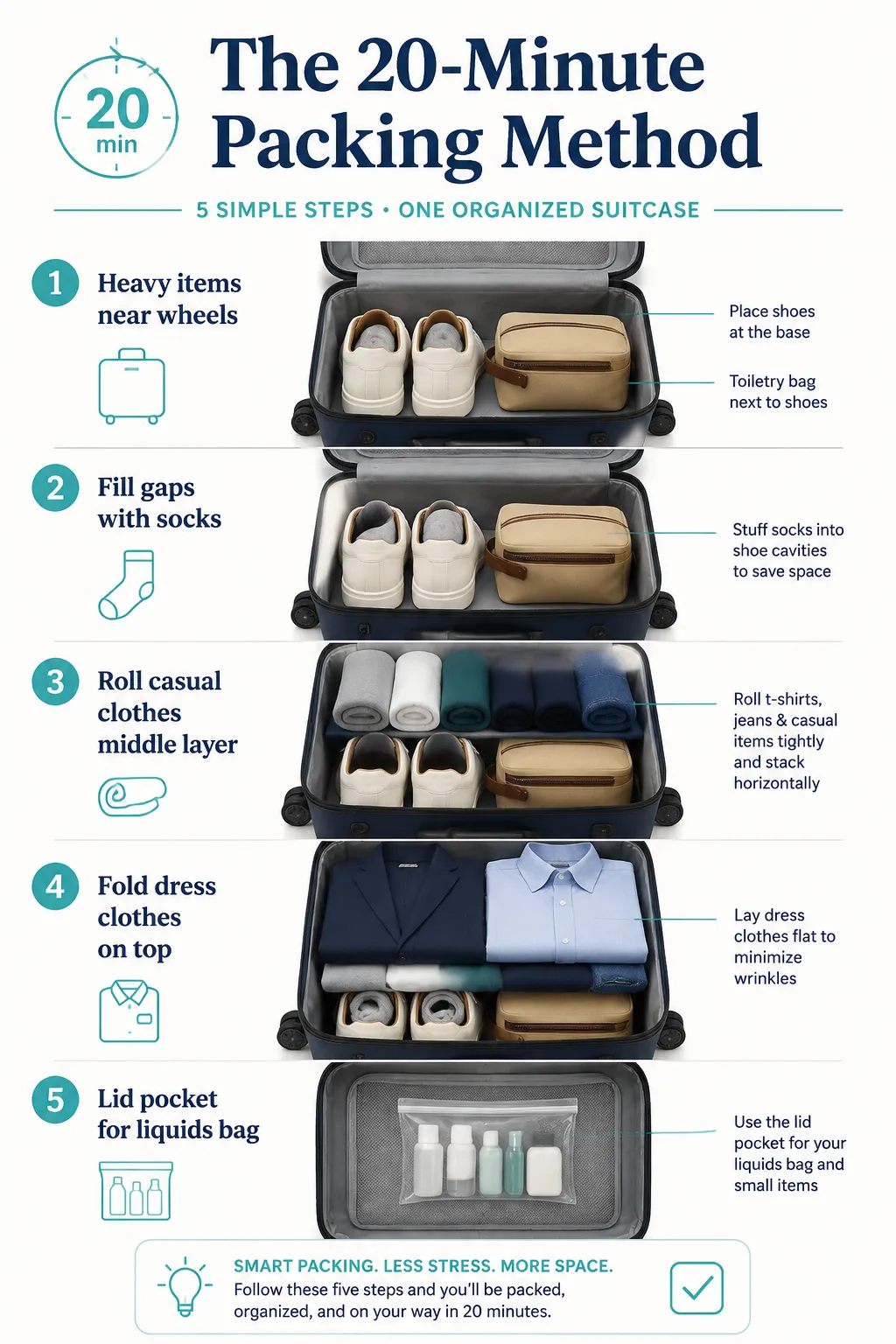
Roll soft, everyday items and fold structured, crease-prone pieces flat. This isn’t just a preference – it’s the method that protects your clothes and uses the most space.
Roll these items:
- T-shirts and casual tops
- Knit sweaters and hoodies
- Jeans and casual trousers
- Activewear and swimwear
- Underwear and socks (bundle these into tight cylinders)
Fold these items:
- Blazers and suit jackets (fold once along the natural seam)
- Dress shirts and blouses (lay flat, fold as few times as possible)
- Tailored trousers (fold along the crease line)
According to step-by-step suitcase packing guidance from Organizing.tv, rolled knits and casual clothes form a tight, compressible middle layer that lets you stack more on top without straining the zipper.
The key mistake most people make is folding everything the same way. Folding a soft cotton t-shirt multiple times wastes space and creates creases. Rolling it takes 10 seconds and cuts the volume in half.
What Packing Method Saves the Most Space
The layered loading method combined with compression packing cubes saves the most space. It treats the suitcase like a puzzle with a specific order, not a bin you fill randomly.
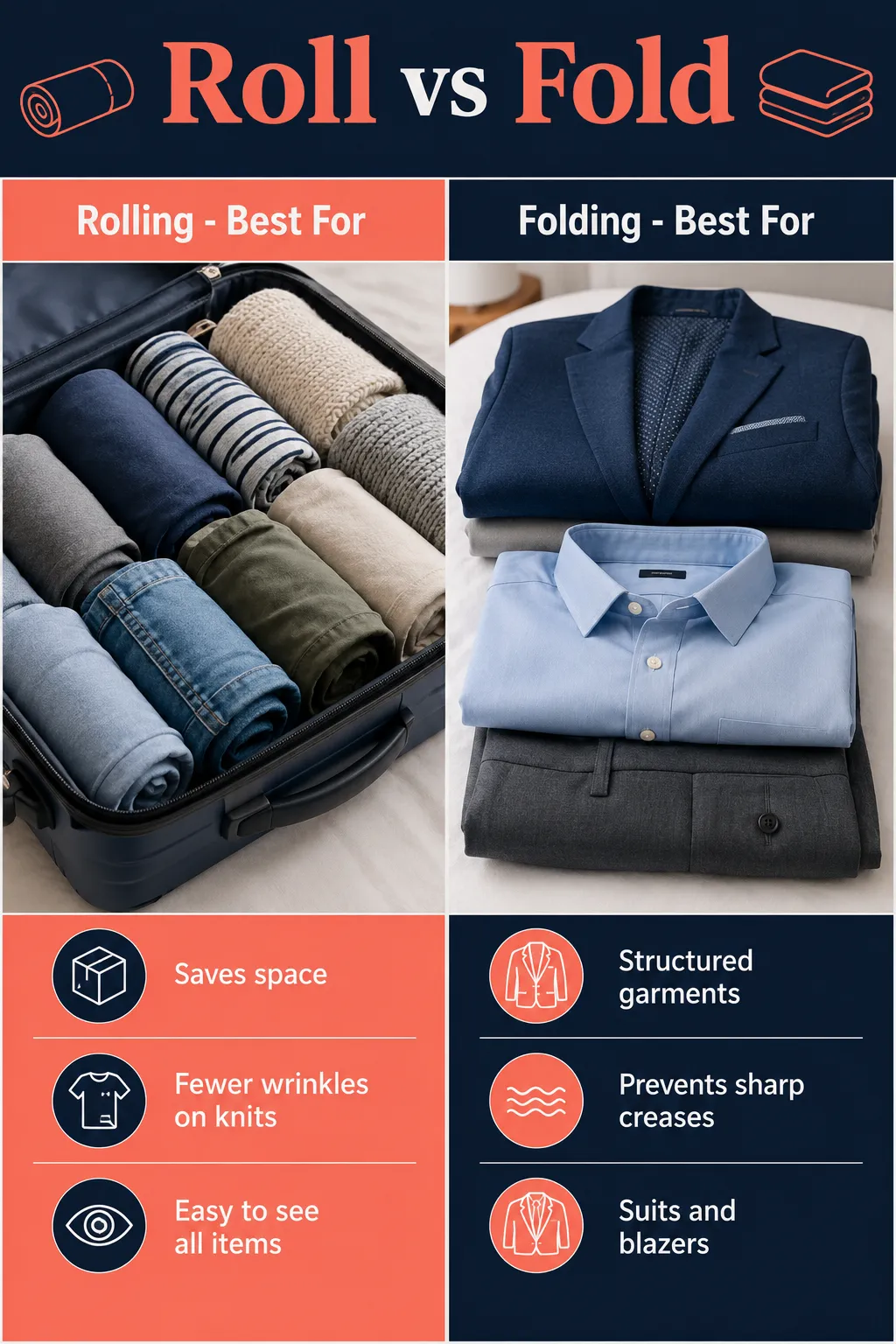
Here’s the exact loading order used in detailed suitcase packing steps from Organizing.tv:
- Shoes and heavy items – place against the wheel end; stuff socks inside shoes to fill dead space
- Toiletry bag – nestle it beside the shoes, also near the wheel end
- Rolled casual clothes – pack tightly across the middle in rows, like logs
- Compression packing cubes – compress bulky sweaters and layers here
- Folded dress clothes – lay flat on top in a single stack
- Lid pocket – reserve for your clear liquids bag and flat documents
This order keeps the center of gravity low (preventing tipping), uses every gap, and puts the items you need first at the top.
How to Pack a Suitcase for a Week Trip
A week-long trip fits comfortably into a medium checked bag or even a large carry-on if you use the capsule wardrobe approach. The goal is 7 outfits from fewer than 10 pieces of clothing.
Use the “54321” formula: 5 shirts, 4 bottoms, 3 pairs of shoes, 2 accessories, 1 dressy outfit. Choose a neutral color base (navy, black, or grey) and add one accent color. Every piece should work with at least two others.
Quick week-trip packing checklist:
- 5 tops (mix of casual and smart-casual)
- 4 bottoms (2 pants, 1 shorts or skirt, 1 dress or suit trousers)
- 3 shoe pairs (walking, casual, one dressy)
- 7 sets of underwear and socks
- 1 light jacket or layer
- Toiletries in 3-1-1 compliant bag
- Chargers and adapters in a small pouch
- Any medications in original packaging
Pack the outfit you’ll wear on arrival at the very top. This makes unpacking frictionless and means you’re not digging through the bag the moment you land.
If you’re heading somewhere like Italy’s hidden gems or a scenic trip through Piedmont, Italy, a single medium bag with a well-edited capsule wardrobe is genuinely all you need.
Best Packing Cubes and Organizers for Suitcases
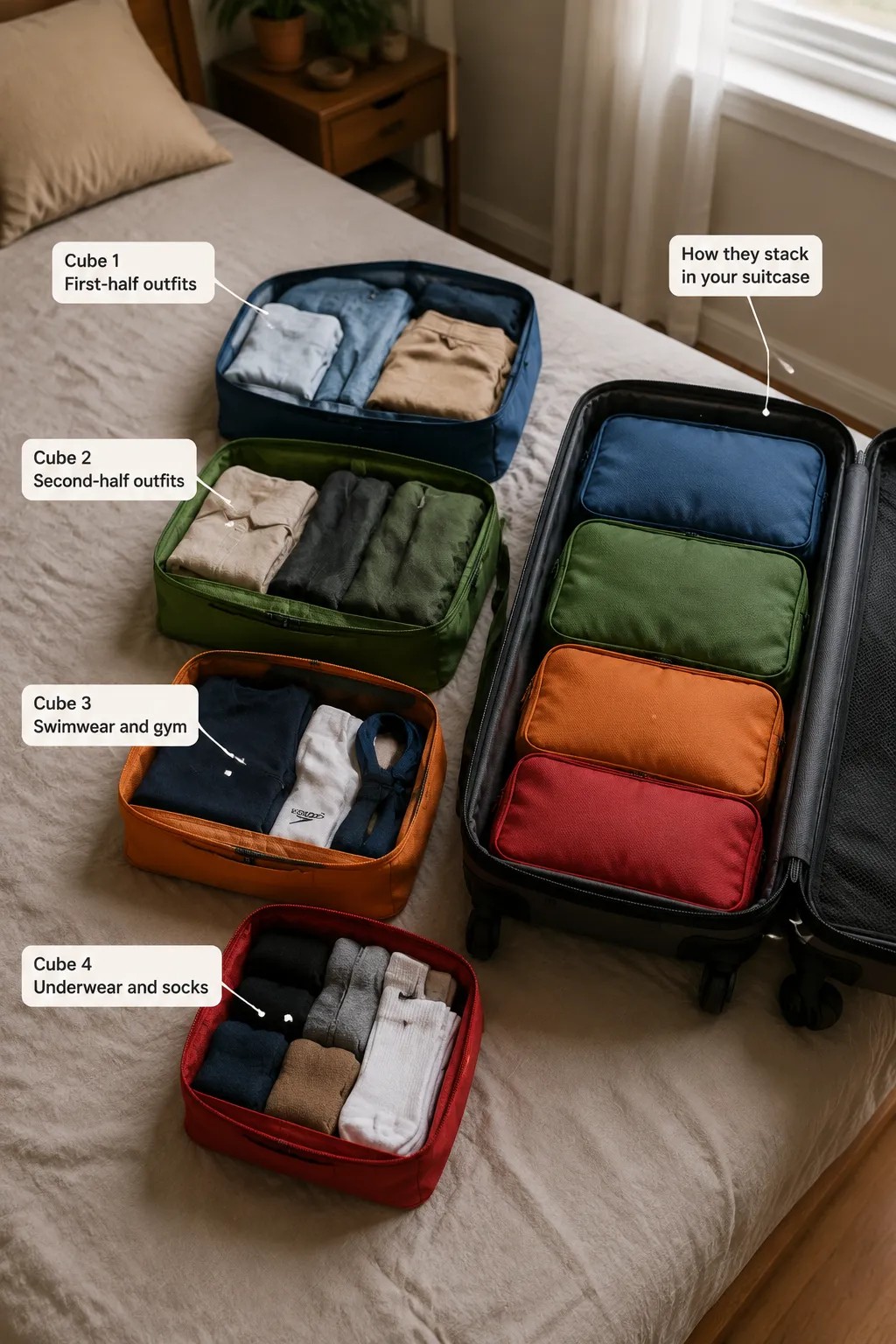
Packing cubes have moved from “nice to have” to a core part of how to pack a suitcase efficiently in 2026. The best setup uses 3-4 cubes divided by function, not by clothing type.
According to smart traveler packing hacks for 2026, a practical four-cube system looks like this:
- Cube 1 – Outfits for the first half of your trip
- Cube 2 – Outfits for the second half
- Cube 3 – Workout gear, swimwear, or activewear
- Cube 4 – Underwear, socks, and small accessories
This setup means you live out of the cubes during the trip, not the suitcase itself. Repacking at checkout takes about 5 minutes because you’re just refilling the same cubes.
For bulky items like sweaters, use compression cubes specifically. They squeeze out dead air and can reduce a sweater’s packed volume by roughly 30-40%.
What to look for in a packing cube:
- Double-zipper closure (more durable)
- Mesh top panel (so you can see contents without opening)
- Compression zipper option for bulky layers
- Lightweight fabric (the cube itself shouldn’t add much weight)
Planning a group trip? These same cube systems work perfectly for bachelorette trips or weekend girls’ getaways where everyone is trying to keep luggage light.
How to Avoid Wrinkles When Packing Clothes
Clothes wrinkle when they’re folded too many times or packed loosely enough to shift around. The fix is fewer folds, tighter packing, and choosing the right fabrics.
Why clothes wrinkle no matter how you pack:
- Too many fold lines in a single garment
- Loose packing that lets clothes slide and crease
- Synthetic-blend fabrics that hold creases under pressure
- Packing damp clothes (always pack fully dry items)
Wrinkle-prevention techniques:
- Bundle wrapping – wrap dress clothes around a central core of soft items; the bundle holds the shape and minimizes fold lines
- Dry cleaning bags – slip dress shirts inside a thin plastic bag before folding; the slick surface reduces friction and creasing
- Roll knits, fold wovens – knit fabrics (cotton jersey, merino wool) don’t crease when rolled; woven fabrics (linen, poplin) need flat folds with minimal layers
- Pack tight – a loosely packed suitcase lets clothes shift in transit, which creates more wrinkles than a firmly packed one
Choosing travel-friendly fabrics also helps a lot. Merino wool, jersey knit, and performance blends resist wrinkles far better than linen or 100% cotton dress shirts.
What Should You Pack First in a Suitcase
Always pack heavy, dense items first, near the wheel end of the suitcase. This keeps the bag stable when upright and prevents heavy items from crushing softer clothes.
The correct loading order, according to Briggs & Riley’s packing guide:
- First in: Shoes (stuffed with socks), toiletry bag, chargers, and any hard items
- Second: Rolled casual clothes packed tightly across the middle
- Third: Compression cubes with bulky layers
- Last in (on top): Folded dress clothes, the outfit for arrival day, and your personal documents pouch
The lid pocket is ideal for your TSA-approved clear liquids bag and any flat items like printed itineraries or a sleep mask.
Common mistake: Putting shoes on top. Shoes are dense and will compress everything below them. They belong at the base, near the wheels, every time.
How to Pack a Carry-On Suitcase Efficiently
A carry-on can handle most trips up to 7 days if you edit ruthlessly and use every cubic inch. The key difference from packing a checked bag is that every item must earn its place.
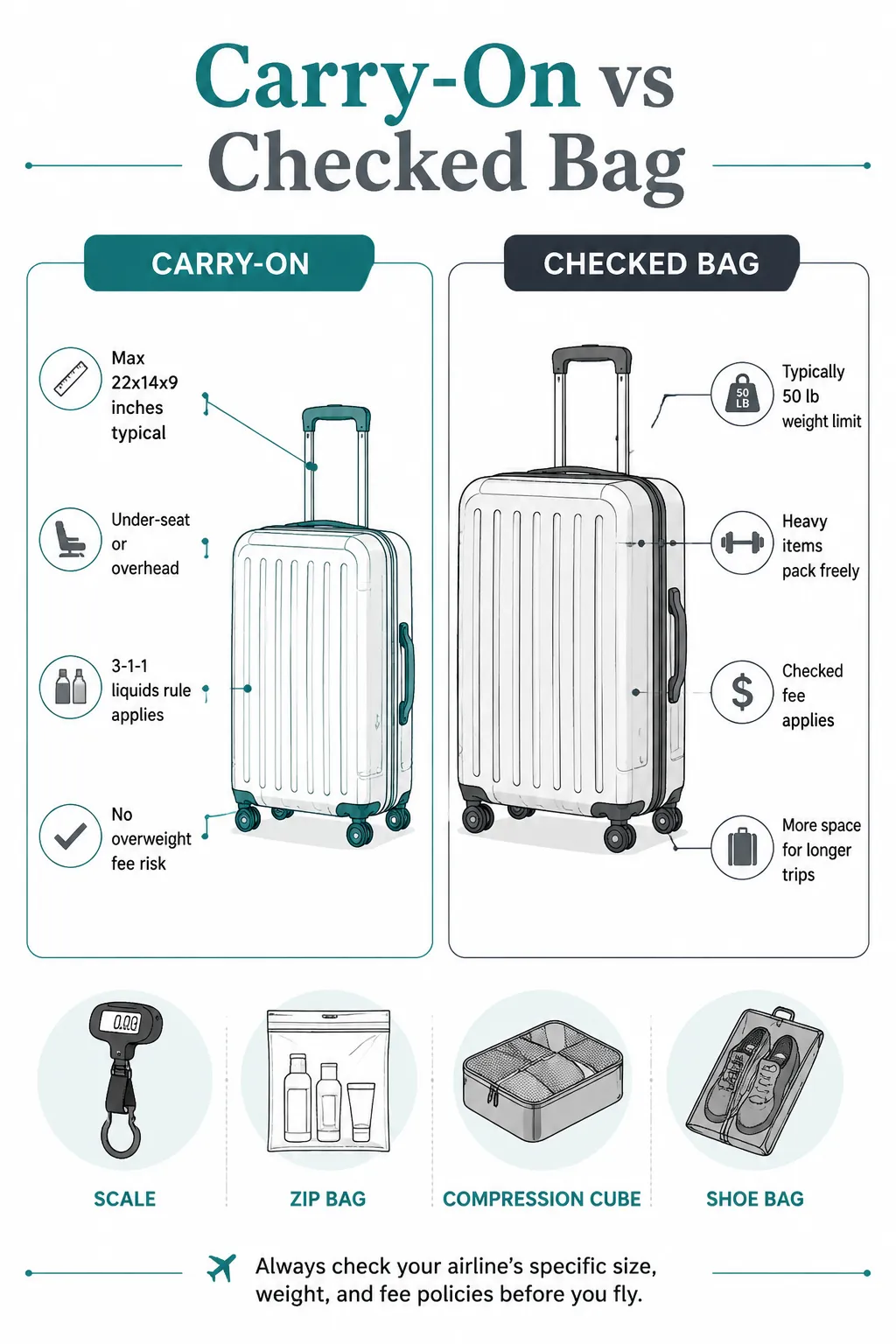
Most airlines allow a carry-on of roughly 22 x 14 x 9 inches (56 x 36 x 23 cm), though limits vary by airline and fare class. Always check your specific airline’s rules 48 hours before departure and screenshot them.
According to WorldTrips’ carry-on packing guidance, the 3-1-1 liquids rule applies strictly to carry-ons: all liquids in containers of 3.4 oz (100 ml) or less, placed in a single 1-quart (1-liter) clear zip bag, one bag per passenger.
Carry-on only priority framework:
- Must-have: ID, medications, phone charger, one day’s outfit
- Daily function: Clothes, toiletries, travel documents
- Comfort extras: Book, neck pillow, snacks
- Cut first: “Just in case” items, duplicate shoes, full-size toiletries
Switch to solid toiletries (shampoo bars, solid deodorant, toothpaste tablets) to skip the liquids bag entirely and free up significant space.
Travel hacks that actually work in 2026 also recommend walking around with a packed carry-on for 10 minutes at home to make sure it’s physically comfortable before you get to the airport.
For destination-specific packing lists, check out the London in September packing list or the ultimate 2 weeks in Europe spring packing guide for ready-made templates.
Can You Overpack a Suitcase and Is It Safe
Yes, overpacking is both a practical and a financial problem. A bag that’s too full risks a broken zipper, a damaged frame, and steep overweight fees at check-in.
Most airlines charge significant fees for bags over 50 lbs (23 kg) for checked luggage. Some budget carriers charge per kilo over the limit, which adds up fast. Skyscanner’s packing tips consistently recommend weighing your bag at home with a dedicated luggage scale before leaving.
Signs you’ve overpacked:
- The zipper requires two people or significant force to close
- The bag feels heavier than you can comfortably lift into an overhead bin
- You can’t fit your hand in to retrieve an item without unpacking half the bag
- There’s no buffer space for a jacket you’ll want to remove mid-flight
The 15-20% buffer rule is practical: leave that space empty on purpose. It absorbs a layer you peel off, a souvenir, or snacks for the flight home.
How Much Can You Actually Fit in a Standard Suitcase
A standard carry-on (22 x 14 x 9 inches) can realistically hold 5-7 days of clothing for one person using the rolling method and packing cubes. A medium checked bag (24 inches) can hold 7-10 days comfortably.
These are estimates based on average clothing volume for an adult using a capsule wardrobe approach. Bulkier items like winter coats, hiking boots, or formal wear reduce capacity significantly.
Rough capacity by bag size:
| Bag Type | Typical Volume | Realistic Trip Length |
|---|---|---|
| Personal item / underseat | 20-30L | Weekend (2-3 days) |
| Carry-on (22 in) | 35-45L | Up to 7 days |
| Medium checked (24 in) | 60-75L | 7-10 days |
| Large checked (28 in) | 85-100L | 10-14 days or family trip |
The biggest variable is how you pack, not the bag size. Two people with the same 22-inch carry-on can have wildly different capacity based on whether they roll, use cubes, and edit their list in advance.
How Do You Pack a Suitcase If You’re a Beginner
If you’re new to packing efficiently, start with the list before you touch the bag. Beginners almost always overpack because they pack by anxiety (“what if I need this?”) rather than by plan.
Beginner-friendly 5-step process:
- Write your list using the “123456” formula for trips under 5 days
- Lay everything out on the bed and cut 20% of it
- Load shoes and heavy items near the wheels first
- Roll all soft clothes tightly and pack them in the middle
- Fold dress items flat on top and zip up
Don’t buy every packing accessory at once. Start with one set of 3 packing cubes. That single tool will make the biggest difference in your first few trips.
Also, check the personal item packing list with 27 genius travel essentials for a solid starting template if you’re not sure what to include.
FAQ
How long does it actually take to pack a suitcase efficiently?
With a pre-made list and packing cubes already organized, most people can load a suitcase for a week-long trip in 15-20 minutes. The first time takes longer because you’re building the system.
Should I pack shoes in a bag or directly in the suitcase?
Use a shoe bag or a shower cap over the soles to keep dirt off your clothes. Place shoes near the wheels, soles facing the wheel end, and stuff socks inside to fill the dead space.
Is rolling clothes better than folding for all items?
No. Roll soft fabrics like t-shirts, knits, and casual trousers. Fold structured items like blazers, dress shirts, and tailored pants flat with as few fold lines as possible.
What’s the 3-1-1 rule for carry-on liquids?
Each liquid must be in a container of 3.4 oz (100 ml) or less. All containers go in a single 1-quart (1-liter) clear zip bag. Each passenger gets one bag. This applies to all carry-on and personal item bags.
Do packing cubes actually save space?
Regular packing cubes organize space but don’t compress it. Compression packing cubes with a secondary zipper do reduce volume for bulky items like sweaters by squeezing out air. Use compression cubes for layers and regular cubes for outfits.
What’s the best way to pack shoes without damaging them?
Stuff shoes with socks or a small pouch to hold their shape. Wrap delicate shoes in a t-shirt or place them in a dust bag. Always pack shoes at the base of the suitcase near the wheels, not on top of clothes.
Should I pack my heaviest items in a checked bag or carry-on?
If you’re checking a bag, put heavy items there to avoid carry-on weight issues. If carry-on only, distribute weight by placing heavy items near the wheels and keeping the bag under the airline’s weight limit (often 15-22 lbs for carry-ons, depending on the airline).
How do I avoid paying overweight baggage fees?
Weigh your bag at home with a luggage scale before leaving. Aim to stay at least 2-3 lbs under the limit to account for scale differences at the airport. Move heavy items to your personal item or carry-on if needed.
Can I use the same packing system for a road trip?
Yes, but with more flexibility. Road trips don’t have weight or size limits, so you can use larger cubes and bring more layers. The same loading order (heavy items at the base, rolled clothes in the middle) still helps with organization.
What’s the difference between packing for a trip vs moving?
Packing for a trip prioritizes versatility, light weight, and quick access. Moving prioritizes protection and maximum volume. For travel, you edit ruthlessly and choose multi-use items. For moving, you pack everything and focus on preventing damage.
Conclusion
Learning how to pack a suitcase efficiently is mostly a system problem, not a space problem. Once you have a capsule wardrobe formula, a consistent loading order, and a set of packing cubes divided by function, the 20-minute pack becomes genuinely repeatable.
Your next steps:
- Pick your formula – “123456” for short trips, “54321” for longer ones
- Buy one set of 3-4 compression packing cubes
- Build a reusable packing list you can save and reuse
- Weigh your bag at home before every trip
- Pack the outfit for arrival day on top, always
The first time you use this system, it might take 30 minutes. By the third trip, you’ll be done in 20. That’s time you get back at the airport, at the hotel, and every time you need to find something mid-trip.
Pack smart, travel lighter, and enjoy the destination more.