

Last updated: August 17, 2026
Quick Answer: Learning how to plan a cheap vacation in 2026 comes down to three things – timing, flexibility, and knowing where to look for deals. The average American family now spends over $5,000 on a summer vacation, but with the right moves you can cut that number dramatically. Book at the right lead time, target shoulder-season dates, bundle your flights and hotels, and pick destinations with structurally low daily costs. You do not need to sacrifice fun to save serious money.
Key Takeaways
- Book domestic flights 1-3 months out and international flights 3-6 months out for the best fares
- Shoulder season (just before or after peak) can cut your total trip cost by 20-40%
- Destinations in Southeast Asia, Eastern Europe, and Central America often cost $30-$70 per day all-in
- Bundling flights and hotels through package deals typically saves 10-25% versus booking separately
- Free outdoor travel – national parks, hiking, beaches – delivers some of the best vacation value available
- Travel rewards credit cards can offset hundreds of dollars in airfare and hotel costs per year
- Packing light and skipping checked bags saves $60-$150 round-trip on most airlines
- Eating where locals eat (street food, markets, grocery stores) cuts food costs by 50% or more
- Staying just outside a popular hotspot lowers accommodation costs without sacrificing access
- The cheapest week of summer 2026 to fly is typically the last week of August, after school resumes
What Does a Budget Vacation Actually Cost These Days?
A realistic budget vacation in 2026 costs anywhere from $500 to $2,500 per person for a week, depending on your destination, travel style, and how far in advance you plan. Domestic trips within the US tend to run $800-$1,500 per person, while international trips to low-cost countries can come in under $1,000 all-in if you plan carefully.
Here is a rough breakdown of what to expect:
| Trip Type | Estimated Cost Per Person (7 days) |
|---|---|
| US road trip (budget motels, cooking) | $400-$700 |
| Domestic flight + hotel (mid-tier city) | $800-$1,400 |
| International (Southeast Asia, Central America) | $700-$1,200 |
| International (Western Europe) | $1,500-$2,800 |
The biggest cost drivers are flights, accommodation, and food – in that order. Control those three and you control your whole trip budget.
Common mistake: People underestimate hidden costs like airport parking, baggage fees, resort fees, and travel insurance. Budget an extra 15% for these on top of your headline number.
Best Time of Year to Book Cheap Vacations (and How Far in Advance)
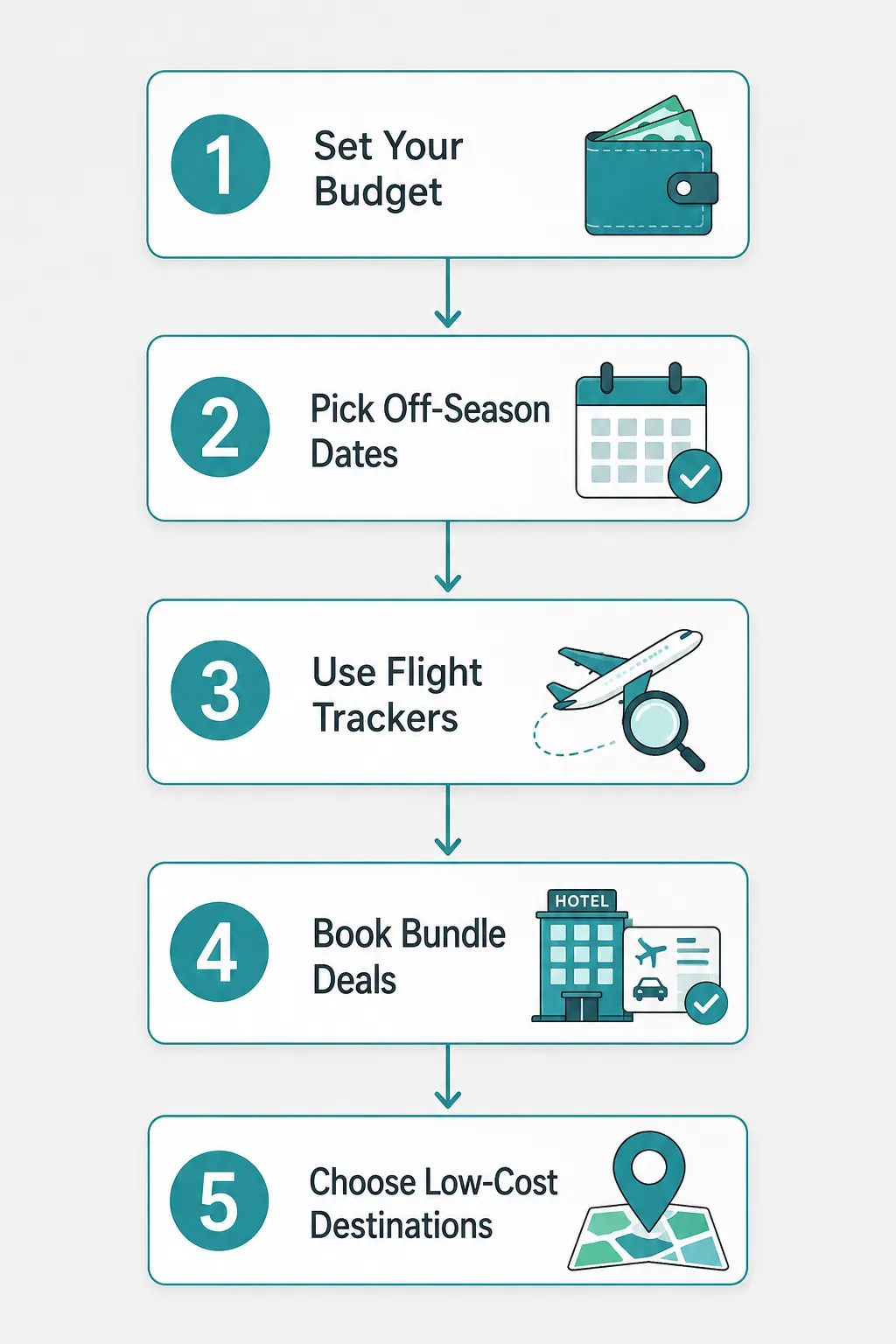
The best time to book is earlier than most people think, and the best time to travel is when most people are not. For domestic flights, booking 1-3 months ahead typically gets you the lowest fares. For international travel, aim for 3-6 months out. Summer 2026 budget travel research confirms that travelers who book at least 8 weeks before peak summer dates pay significantly less than last-minute bookers.
Shoulder season is your best friend. Travel just before or just after peak season – think late May instead of July 4th, or early September instead of August – and you will find lower prices on almost everything.
- Spring (April-May): Great for Europe, Japan, and the US South
- Late summer (late August-September): Beaches empty out, prices drop fast
- November: Excellent for Caribbean and Mexico before holiday surges
- January-February: Deep discounts on most sun destinations after New Year
The cheapest week of summer 2026 to fly is generally the last week of August, once school resumes in most US states. Airfare and hotel rates can drop 20-30% compared to peak July prices.
Decision rule: If you have flexibility of even 3-4 days on your travel dates, use a flight tracker like Google Flights or Hopper to find the cheapest combination. Shifting your departure by just one day can save $50-$150 per ticket.
Cheapest Destinations to Travel to Right Now
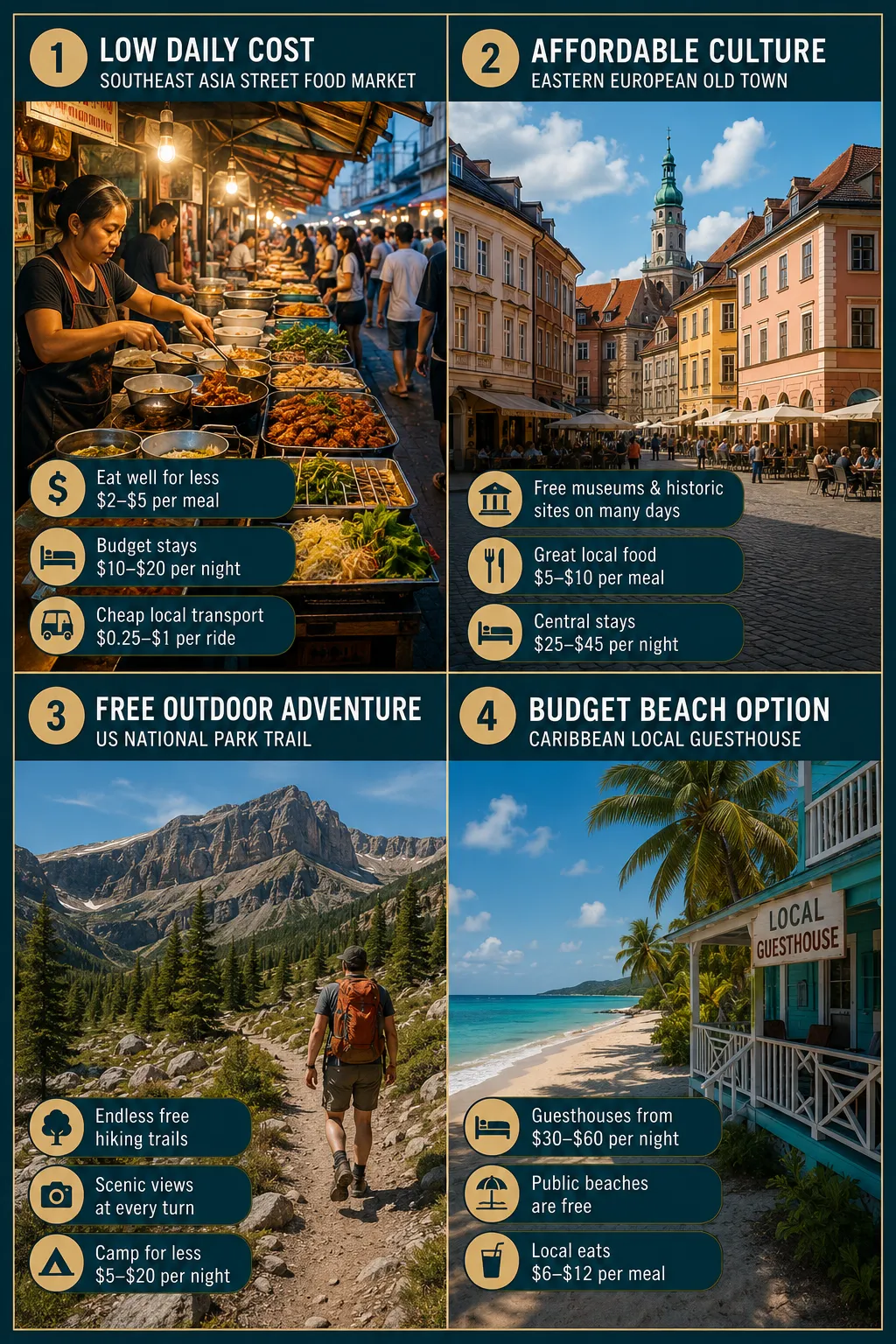
The cheapest places to travel right now are in Southeast Asia, Eastern Europe, and Central America, where daily costs of $30-$70 per person are genuinely achievable. Top cheap travel destinations in 2026 include Vietnam, Portugal, Mexico, Colombia, and Albania – all offering excellent value without sacrificing culture or beauty.
Top budget destinations by region:
- Southeast Asia: Vietnam, Thailand, Cambodia, Indonesia – $30-$50/day
- Eastern Europe: Albania, North Macedonia, Georgia, Romania – $35-$60/day
- Central America: Guatemala, Nicaragua, Belize – $40-$70/day
- South America: Colombia, Bolivia, Peru – $35-$65/day
- US domestic budget picks: Smoky Mountains, Gulf Coast, Ozarks, Ocean City Maryland
For international options that feel luxurious on a small budget, check out our guide to 11 cheap islands to visit for a dream vacation.
Edge case: A “cheap” destination becomes expensive fast if you fly there on a premium airline with checked bags and stay in tourist-zone hotels. The destination matters less than your behavior once you arrive.
1. Make a Swap for a Free Stay (Home Exchange and Points Hotels)
One of the fastest ways to cut your accommodation bill to zero is a home exchange or hotel points redemption. Home exchange platforms like HomeExchange.com let you swap your home with someone in your destination city, eliminating the biggest single cost of most trips. Hotel loyalty programs from Marriott, Hilton, and IHG let you redeem points for free nights – points you can earn through credit card sign-up bonuses without ever setting foot on a plane.
How to get started:
- Sign up for a home exchange platform (most have free trial periods)
- Apply for a travel rewards credit card with a strong sign-up bonus
- Meet the minimum spend requirement through normal purchases
- Redeem points for free hotel nights at your destination
Even one free night out of five cuts your accommodation cost by 20%. Two free nights and you are already well ahead.
2. Head to the Great Outdoors for Free or Near-Free Travel
National parks, state parks, beaches, and hiking trails are among the best free travel experiences available anywhere. The US National Park Service’s America the Beautiful pass costs $80 and covers entrance to over 2,000 federal recreation sites for a full year – an extraordinary value if you visit even two or three parks.
Outdoor-focused trips naturally cut costs across the board:
- Camping fees run $15-$35/night versus $120-$250 for a hotel
- Cooking at a campsite saves $40-$80/day versus eating out
- Hiking, swimming, and wildlife watching are free
- Road trips to national parks are some of the most shockingly cheap US vacations available right now
Pro tip: Combine a national park visit with a nearby small town for one or two nights of affordable lodging and local food. You get the outdoor experience plus a taste of local culture without the tourist-zone price tag.
3. Do Not Settle for High Rental-Car Costs
Rental car prices have stayed elevated since 2021, but there are real ways to cut them. Booking through comparison sites like Kayak, AutoSlash, or Costco Travel consistently finds lower rates than going direct to rental companies. Booking early (4-6 weeks out) and re-checking prices closer to your trip date often reveals drops.
Rental car money-saving moves:
- Skip airport locations – off-airport rentals are often 20-40% cheaper
- Decline the rental company’s collision damage waiver if your credit card covers it (many do)
- Return the car with a full tank – prepaid fuel options are almost always a bad deal
- Consider public transit, rideshare, or e-bikes for city destinations where a car is more hassle than help
For some destinations, skipping the rental car entirely is the smartest financial move. Cities like New York, New Orleans, and San Francisco are genuinely easier and cheaper to navigate without one.
4. Use Flight and Gas Trackers to Buy Flights as Cheap as Possible
Flight trackers are the single most effective free tool for cutting airfare costs. Google Flights, Hopper, and Kayak all offer price alerts that notify you when fares drop on your chosen route. Set an alert 2-3 months before your target travel dates and let the algorithm do the work.
For road trips, GasBuddy tracks fuel prices along your route in real time, helping you plan fill-up stops at cheaper stations.
Flight deal hunting tips:
- Search for flights on Tuesday or Wednesday – fares are often slightly lower mid-week
- Use the “flexible dates” calendar view in Google Flights to see the cheapest day combinations
- Check nearby airports – flying into a secondary airport 60-90 minutes from your destination can save $100-$200 per ticket
- Follow deal alert newsletters like Scott’s Cheap Flights (now Going) for error fares and flash sales
For a deeper dive into finding the lowest airfare, see our full guide on where to find cheap flights.

5. Pack Light and Skip Checked Bag Fees
Packing light is one of the easiest ways to save money on travel and almost nobody does it consistently. Most major US airlines now charge $35-$45 per checked bag each way, meaning a round-trip for two people with one checked bag each costs $140-$180 in fees alone. A carry-on-only strategy eliminates that cost entirely.
Packing light basics:
- Use a 40L backpack or carry-on sized roller bag
- Pack a 5-7 day capsule wardrobe in neutral colors that mix and match
- Use compression packing cubes to maximize space
- Plan to do laundry once mid-trip rather than packing for every day
- Wear your bulkiest items (boots, jacket) on the plane
Check out the only travel essential list you will ever need for a practical packing checklist that keeps your bag light and your wallet happy.
Edge case: If you are traveling with kids, checked bags become harder to avoid. In that case, book with airlines that include a free checked bag (like Southwest domestically) or use a credit card that provides free checked bags as a perk.
6. Consider Hotels That Offer More Than Just a Room
Hotels that include free breakfast, free parking, free airport shuttles, or kitchen access deliver far more value than their nightly rate suggests. A hotel at $110/night with free breakfast for two is often a better deal than a $90/night hotel where you spend $30/day on morning meals.
What to look for:
- Free breakfast included (saves $15-$30 per person per day)
- Free parking (saves $20-$50/day in cities)
- In-room kitchen or kitchenette (enables self-catering)
- Free airport shuttle (saves $30-$60 in rideshare costs)
- Free gym or pool access
Extended-stay hotels and apartment-style rentals on platforms like Vrbo or Airbnb often include full kitchens, which is one of the best ways to cut food costs on longer trips. For budget-friendly vacations with kids, a suite or apartment with a kitchen is almost always worth the slightly higher nightly rate because it eliminates multiple restaurant meals per day.
7. Stay Near the Action (But Not in the Middle of It)
Staying just outside a popular tourist area – one or two neighborhoods away – consistently delivers lower accommodation costs without meaningfully reducing your access to the things you came to see. In cities like Paris, Rome, or New York, moving 10-15 minutes by metro from the most famous neighborhood can cut hotel costs by 30-50%.
How to apply this:
- Search for hotels in the second or third ring of neighborhoods around your target area
- Check transit connections first – a 15-minute subway ride is no sacrifice
- Look for areas with good local restaurants and grocery stores nearby
- Read recent reviews specifically about safety and walkability
This approach also tends to put you in more authentic, less tourist-saturated areas where food and entertainment are cheaper and more interesting.
8. Time Your Trip Right: Travel During the Off-Season
Traveling during the off-season or shoulder season is the single highest-leverage timing decision you can make when figuring out how to plan a cheap vacation. Affordable summer getaways in 2026 are easiest to find in late August and early September, when school resumes and demand drops sharply.
Off-season timing by destination type:
- Beach destinations: September-November and March-May
- Ski destinations: November (pre-peak) and March-April (late season)
- European cities: November-March (excluding Christmas week)
- Caribbean: May-June (before hurricane season peaks in August-September)
The financial difference is real. A hotel that costs $200/night in peak July might run $120/night in late September at the same quality level. Multiply that by 7 nights and you have saved $560 on accommodation alone.
9. Eat Outside of Restaurants to Cut Food Costs in Half
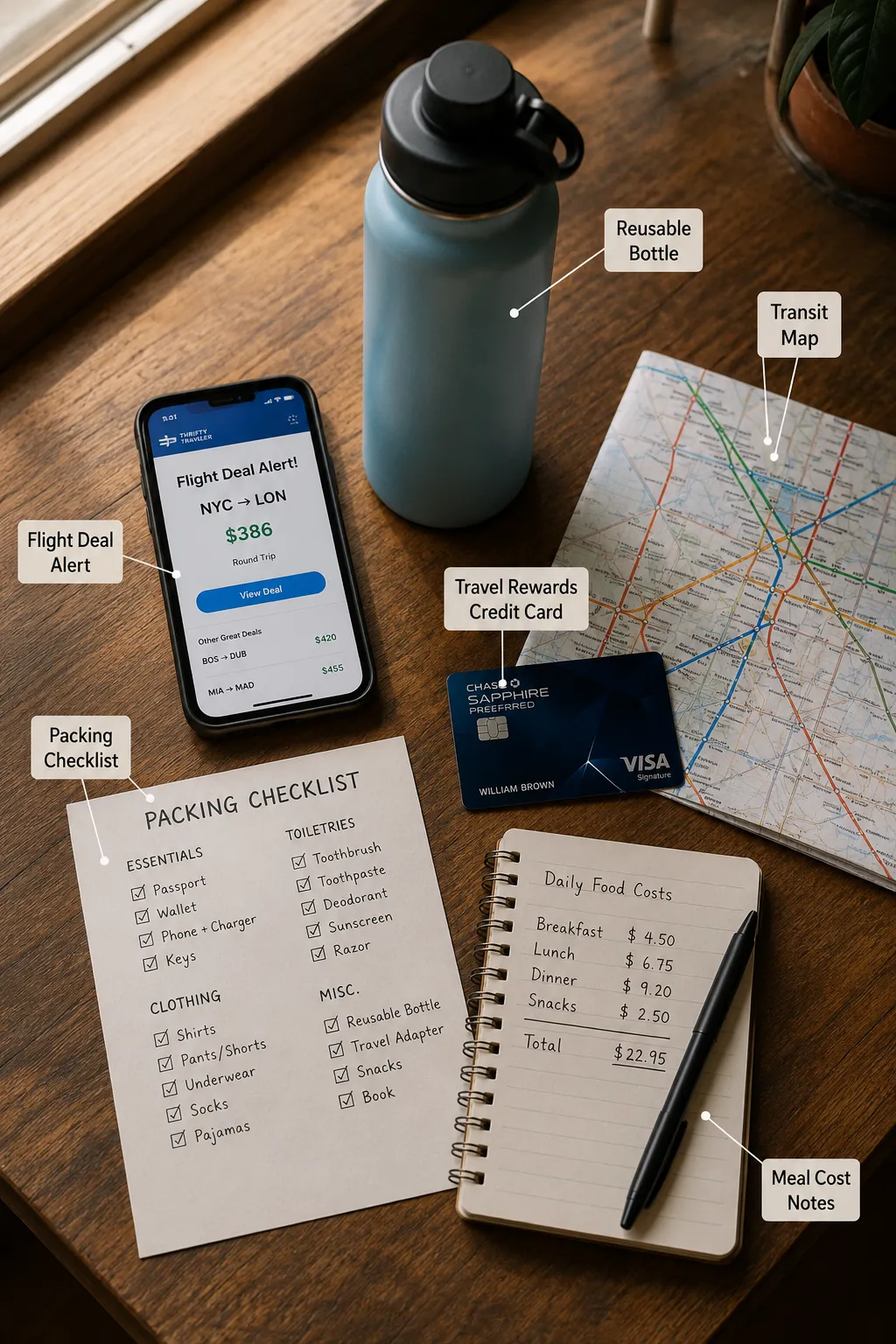
Food is the most controllable daily cost on any trip, and eating outside of sit-down restaurants is the fastest way to cut it. Street food, local markets, grocery stores, and self-catering can reduce your daily food spend from $60-$100 to $20-$40 without sacrificing quality or experience.
Practical food strategies:
- Breakfast: Buy from a grocery store or bakery (yogurt, fruit, pastries) – saves $10-$20/day versus hotel dining
- Lunch: Street food, food halls, or market stalls – often the best food in any city at a fraction of restaurant prices
- Dinner: One sit-down meal per day is plenty; make it the experience, not every meal
- Snacks: Pack reusable water bottles and carry snacks to avoid tourist-trap convenience store prices
In destinations like Southeast Asia, Mexico, and Eastern Europe, street food is not just cheap – it is genuinely the best food available. Eating where locals eat is both a financial strategy and a cultural one.
Ask locals for travel advice on where to eat. Hotel concierges often recommend tourist-oriented restaurants. A local Airbnb host, a market vendor, or a quick question in a neighborhood Facebook group will point you to the real spots.
10. Opt for Credit Cards That Offer Travel Rewards
Travel rewards credit cards are one of the most underused tools for people learning how to plan a cheap vacation. The right card can offset $300-$800 in travel costs per year through sign-up bonuses, points on everyday spending, and perks like free checked bags, lounge access, and travel credits.
How to use travel rewards effectively:
- Choose a card with a strong sign-up bonus (50,000-100,000 points is common)
- Meet the minimum spend requirement through normal monthly expenses
- Redeem points for flights or hotels at the highest-value transfer partners
- Use the card for all travel purchases to earn bonus category points
- Take advantage of annual travel credits (many cards offer $100-$300/year)
Popular options include the Chase Sapphire Preferred, Capital One Venture, and American Express Gold. Each has different strengths depending on whether you prioritize flights, hotels, or flexibility.
Important: Only use a travel rewards card if you pay the full balance every month. Carrying a balance means interest charges that will far outpace any rewards earned.
How to Find Flight Deals and Cheap Hotels: Best Apps and Websites
The best tools for finding cheap flights and hotels are Google Flights, Hopper, Kayak, and Skyscanner for airfare, and Booking.com, Hotels.com, and Expedia for accommodation. Expedia vacation packages and Trip.com package deals bundle flights and hotels at a combined discount that is often 10-25% cheaper than booking each separately.
Best tools by category:
- Flights: Google Flights (best calendar view), Hopper (best price prediction), Kayak (best alerts)
- Hotels: Booking.com (widest inventory), Hotels.com (rewards program), Expedia (best bundles)
- Vacation packages: Expedia, Trip.com, United Vacations
- Last-minute deals: HotelTonight, Priceline Express Deals
- Alternative accommodation: Airbnb, Vrbo, Hostelworld
Subscribe to deal newsletters. Signing up for email alerts from Scott’s Cheap Flights (Going), Secret Flying, and Airfarewatchdog puts real deals in your inbox without any extra effort. Many travelers find their best-ever fares this way.
Budget Vacation vs Expensive Vacation: What Is the Real Difference?
The real difference between a budget vacation and an expensive one is not the quality of the experience – it is the decisions made before and during the trip. Research consistently shows that experiences drive happiness more than luxury amenities, which means a well-planned budget trip often delivers more satisfaction than an expensive one booked without thought.
What budget travel does NOT mean:
- Staying in unsafe or uncomfortable places
- Eating bad food
- Missing out on the best experiences at your destination
- Constant stress about money
What it does mean:
- Booking earlier and with more flexibility
- Choosing value-driven accommodation over brand names
- Spending money on experiences rather than convenience
- Being willing to take public transit instead of taxis
The travelers who get the most out of budget trips are the ones who plan ahead, stay curious, and spend their money on the things that actually matter to them.
Is It Cheaper to Travel Solo or With a Group?
Solo travel and group travel each have genuine cost advantages, and the answer depends on your destination and travel style. Solo travelers pay single-occupancy rates on hotels (often 60-80% of a double room, not 50%), which makes accommodation relatively more expensive per person. But solo travelers also have total flexibility to use the cheapest options at every step.
Group travel benefits from shared accommodation costs, split rental cars, and shared cooking expenses. A group of four sharing a vacation rental pays roughly one-quarter of the nightly rate each, which is almost always cheaper than a solo hotel room.
Decision rule:
- Travel solo if flexibility and spontaneity matter more than cost efficiency
- Travel with 2-4 people if you want the best per-person cost on accommodation and transport
- Groups larger than 6 start to lose efficiency due to coordination costs and limited accommodation options
For solo travelers on a tight budget, our solo travel budget ideas guide covers 17 specific strategies for stretching your money further.
Common Mistakes People Make When Trying to Save on Vacations
The most common mistake is optimizing for the headline price while ignoring total cost. A $99 flight with $45 in baggage fees, a $15 seat selection fee, and a $30 airport transfer is not cheaper than a $149 flight with free bags and a free shuttle.
Other frequent mistakes:
- Booking too late – last-minute deals exist but are rare; most of the time late booking means higher prices
- Ignoring resort fees – some hotels advertise low nightly rates but add $30-$50/night in mandatory resort fees at checkout
- Skipping travel insurance – one medical emergency or trip cancellation can cost more than the entire vacation
- Over-planning paid activities – the best experiences in most destinations are free or nearly free (walking tours, beaches, markets, parks)
- Not checking visa and entry requirements – last-minute visa fees or entry requirements can add unexpected costs
- Exchanging currency at the airport – airport exchange rates are typically 10-15% worse than using a no-fee ATM at your destination
Edge case: “Cheap” all-inclusive resorts sometimes deliver poor value because you are locked into one property for food and drink. Compare the all-in cost carefully against a flexible booking before committing.
How to Vacation Cheap Without Sacrificing Fun: Book Accommodations and Be Flexible
Vacationing cheap without losing the fun is entirely achievable when you separate the things that actually create memories from the things that just cost money. The research on travel happiness consistently points to novelty, connection, and experience – none of which require a big budget.
Practical ways to keep the fun high and costs low:
- Book accommodations in advance for the best rates, but keep your activity schedule flexible
- Use free walking tours (tip-based) in almost every major city – they are often the best introduction to a destination
- Check local event calendars for free festivals, markets, concerts, and cultural events
- Prioritize one or two “splurge” experiences per trip and cut costs everywhere else
- Travel with a great vacations mindset – curiosity and openness cost nothing
For couples looking for affordable getaways, cheap vacation packages for two can be found on Expedia and similar platforms, often bundling flights and hotels at significant discounts. Planning a vacation with a clear budget and a short list of must-do experiences is the simplest framework that actually works.
How to Plan a Vacation When You Have Limited Time Off
When time off is limited, the goal is to maximize the experience-to-travel-time ratio. Short trips of 3-5 days work best when you minimize transit time – which means choosing destinations within a 2-3 hour flight or drive from home, or picking a single city rather than trying to cover multiple destinations.
Tips for short-trip planning:
- Choose a destination with a direct flight to avoid layover time
- Arrive Thursday evening or Friday morning to maximize weekend time
- Pick accommodation in a central location to reduce daily transit time
- Focus on depth over breadth – do fewer things better rather than rushing through a checklist
- Use the Sunday return flight (or Monday morning if you can swing it) to squeeze out an extra day
For a quick US getaway, 25 weekend girls trip ideas and shockingly cheap US vacations offer inspiration for short, high-value domestic trips that do not require a week of PTO.
Ready to Start Saving? Put Your Travel Money to Work
Saving for a vacation is one thing – but if you want to build real financial momentum, consider putting your travel fund in a high-yield savings account where it earns interest while you plan. Platforms like Fidelity, Vanguard, and other financial management tools offer money market accounts and short-term savings options that beat standard bank rates.
Simple travel savings framework:
- Set a total trip budget (use the table above as a starting point)
- Divide by the number of months until your trip
- Set up an automatic transfer to a dedicated high-yield savings account
- Track your progress and adjust spending elsewhere to stay on target
Financial planning for travel is not complicated. It is about making the money work for you between now and your departure date. Wealth management does not have to mean investing in stocks – even basic retirement planning principles (pay yourself first, automate savings, avoid high-interest debt) apply directly to saving for a great vacation.
If you are carrying high-interest debt, paying that down first is the smartest financial move before spending money on travel. Check resources like Fidelity’s debt management guidance for free tools on managing debt before committing to big travel expenses.
FAQ
Is $5000 enough for a trip?
Yes, $5,000 is a generous budget for most trips and can cover an excellent week-long international vacation for two people, including flights, accommodation, food, and activities. For a solo traveler, $5,000 can fund 2-3 weeks in Southeast Asia or Central America with money to spare. Smart planning stretches it even further.
Can you go on a trip with $500?
Yes, $500 is enough for a meaningful trip, especially for domestic travel. A weekend road trip, a camping adventure, or a budget flight to a nearby city with affordable accommodation are all realistic on $500. Solo travelers can also find international destinations – particularly in Southeast Asia or Central America – where $500 covers 5-7 days of basic but comfortable travel.
Where is the cheapest place to take a vacation?
The cheapest places to vacation right now include Vietnam, Cambodia, Albania, North Macedonia, Guatemala, and Bolivia, where daily costs of $30-$50 per person are achievable. Within the US, the Smoky Mountains, Gulf Coast beaches, and Midwest cities like Pittsburgh and Kansas City offer strong value. Southeast Asia consistently ranks as the most affordable region for international travel overall.
Where can I travel with a $1000 budget?
With $1,000, you can comfortably do a week in Southeast Asia (Vietnam, Thailand, or Cambodia), a 5-day trip to Mexico or Central America, or a domestic US road trip covering multiple states. For two people, $1,000 works well for a 3-4 day domestic getaway with budget flights and a mid-range hotel. Flexibility on dates and destinations is the key to making $1,000 go far.
Conclusion
Knowing how to plan a cheap vacation in 2026 is less about finding magic deals and more about making a series of smart, connected decisions – on timing, destination, accommodation, food, and transport. The 10 strategies in this guide are not theoretical. They are the specific moves that consistently produce real savings for real travelers.
Your action plan:
- Set a firm total budget before you start searching
- Pick 2-3 flexible date windows and run them through Google Flights
- Compare bundled packages on Expedia or Trip.com against booking separately
- Subscribe to a flight deal newsletter and set price alerts on your target routes
- Choose a destination where your daily costs will be $40-$70 or less
- Book accommodation with free breakfast or kitchen access
- Pack carry-on only and use a travel rewards card for all purchases
Travel does not have to be expensive to be extraordinary. The best trips I have taken were not the most expensive ones – they were the ones planned with intention and a clear budget. Start planning now, and your next great vacation is closer than you think.