Last updated: July 7, 2026
Quick Answer: Paraguay is South America’s most overlooked country – a landlocked nation that most travelers skip entirely, yet it holds UNESCO-listed Jesuit ruins, the world’s largest hydroelectric dam, one of the planet’s last great wildernesses, and a culture unlike anywhere else on the continent. This Paraguay travel guide covers everything you need to plan a trip in 2026, from visa rules and costs to the 17 places that genuinely surprise first-time visitors.
Key Takeaways
- 🗓️ Best time to visit: April to September (dry season, cooler temperatures)
- 💰 Daily budget: Roughly $30-$50 USD for budget travelers; $80-$120 for mid-range
- 🛂 Visa: Most Western nationalities (USA, EU, UK, Canada, Australia) enter visa-free for 90 days
- 🗣️ Languages: Spanish AND Guaraní – both are official, and Guaraní is widely spoken in daily life
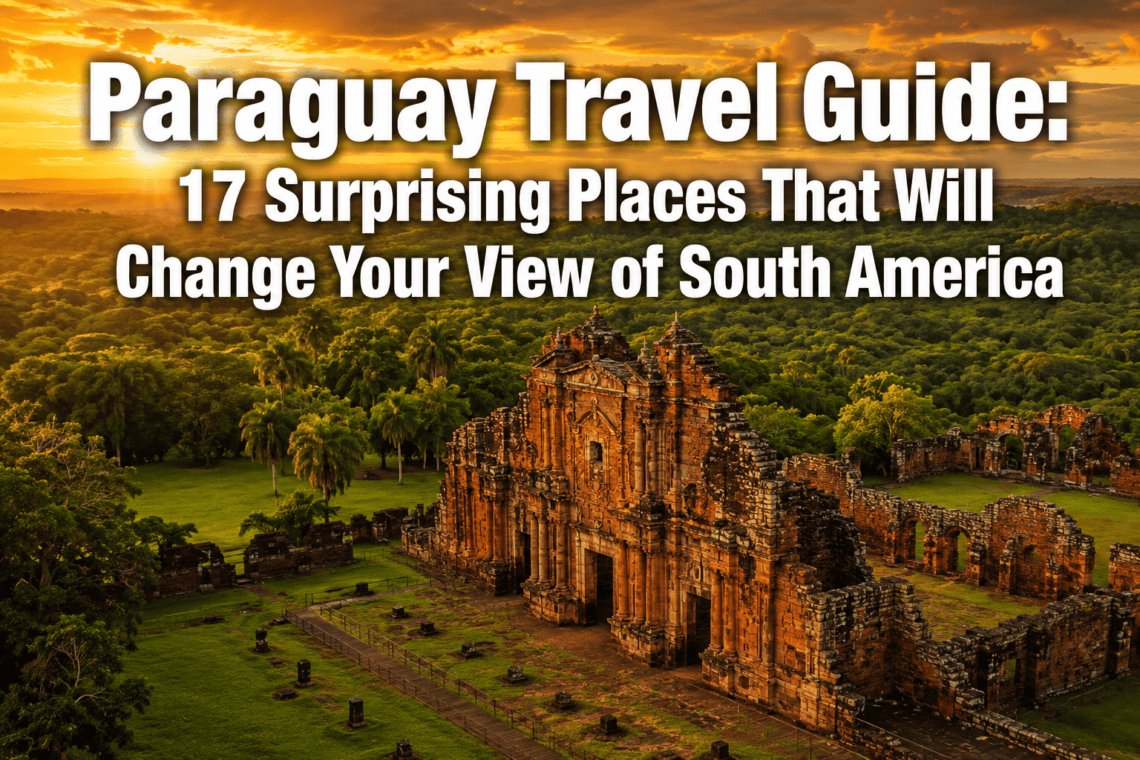
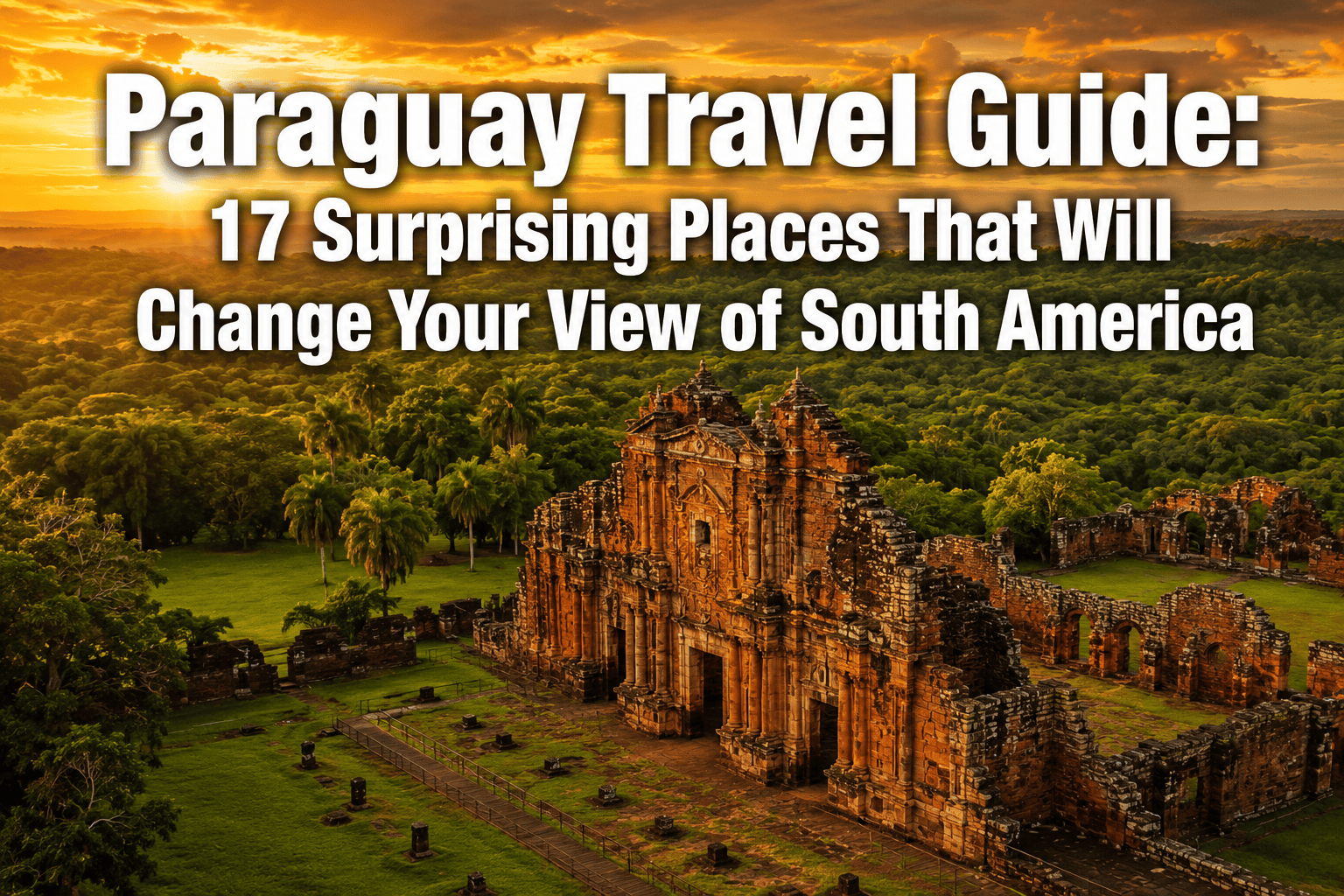
- 🏛️ Top draw: The Jesuit Missions of La Santísima Trinidad de Paraná (UNESCO World Heritage Site)
- ⚠️ Safety: Generally safe for tourists in main areas; exercise normal caution in Asunción’s poorer neighborhoods
- 🌿 Hidden gem: The Paraguayan Chaco – one of the world’s last great wildernesses, nearly untouched by tourism
- ✈️ Recommended stay: 7-10 days covers the highlights comfortably
What Are the Top Attractions in Paraguay?
Paraguay’s top attractions span ancient ruins, engineering marvels, and raw wilderness. The country punches well above its weight for a destination most travelers have never seriously considered.
Here are the 17 places that genuinely change how people see this country:
The UNESCO Ruins and History Belt
- Jesuit Ruins of Trinidad – The best-preserved Jesuit mission in South America, with carved stone facades still standing after 300 years
- Jesús de Tavarangue – Less visited than Trinidad, eerily beautiful at sunset
- San Cosme y Damián – A working astronomical observatory built by Jesuits in the 1700s still functions today
Asunción – The Capital
4. Palacio de López – The presidential palace overlooking the Paraguay River, a genuinely striking piece of 19th-century architecture
5. Mercado 4 – The city’s chaotic, colorful central market where locals actually shop
6. Loma San Jerónimo – Asunción’s oldest neighborhood, with colonial-era streets and river views
7. Museo del Barro – One of South America’s best collections of indigenous and folk art
Natural Wonders
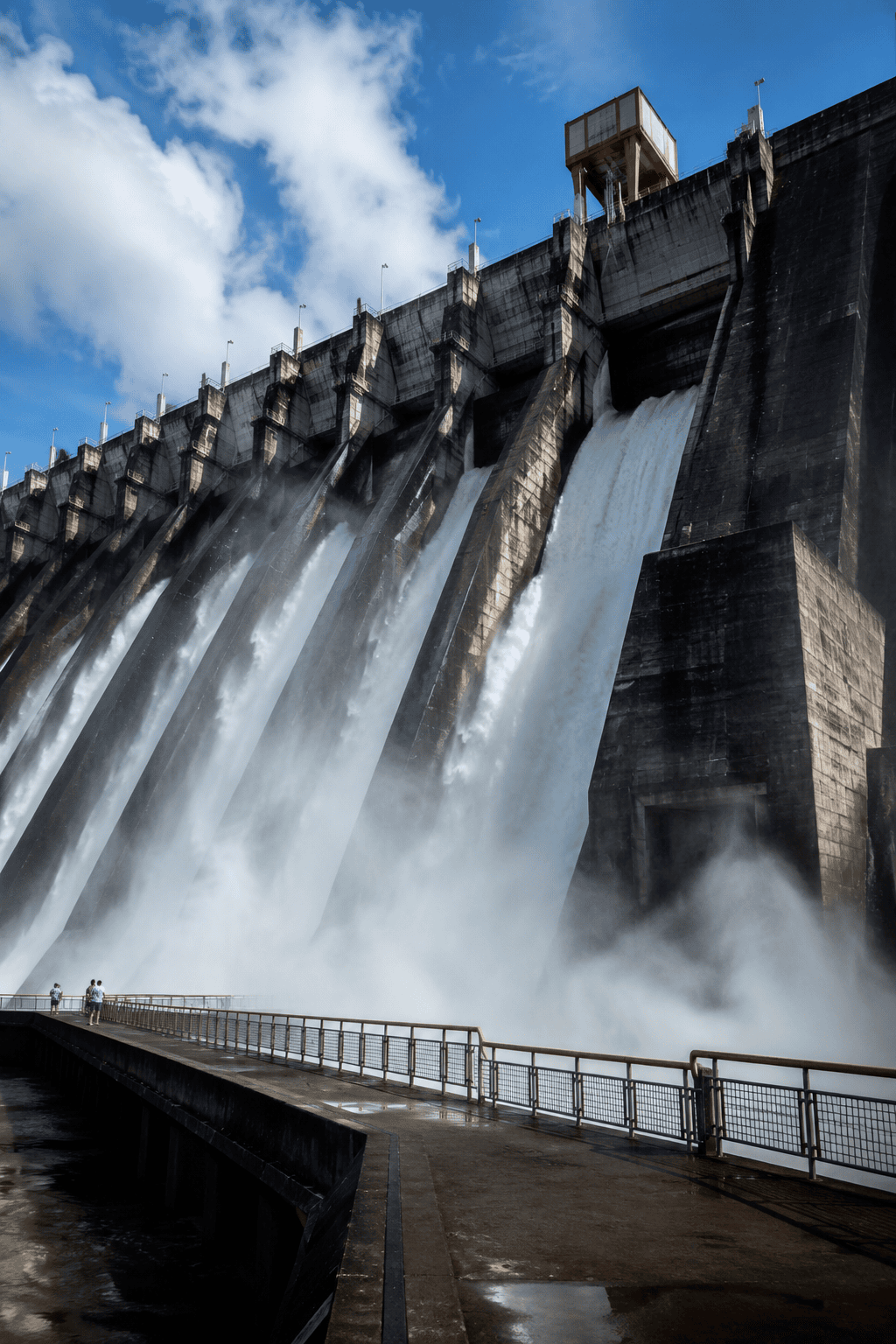
8. Itaipu Dam – The world’s largest hydroelectric dam by energy output (according to Itaipu Binacional’s own records); the night tour is spectacular
9. Ybycuí National Park – Waterfalls, Atlantic Forest, and almost no other tourists
10. Lago Ypacaraí – A large lake near San Bernardino, popular with Paraguayans but rarely on foreign itineraries
11. Cerro Corá National Park – Where the War of the Triple Alliance ended; haunting history meets beautiful landscape
The Chaco Wilderness
12. Filadelfia and the Mennonite Colonies – A surreal pocket of German-speaking Mennonite communities in the middle of South America
13. Parque Nacional Defensores del Chaco – One of the continent’s most remote and wild national parks
14. Laguna Capitán – A hidden lake deep in the Chaco used by local ranchers and almost unknown to tourists
Cultural and Day Trips
15. Areguá – A lakeside artisan town famous for strawberries and handmade ceramics
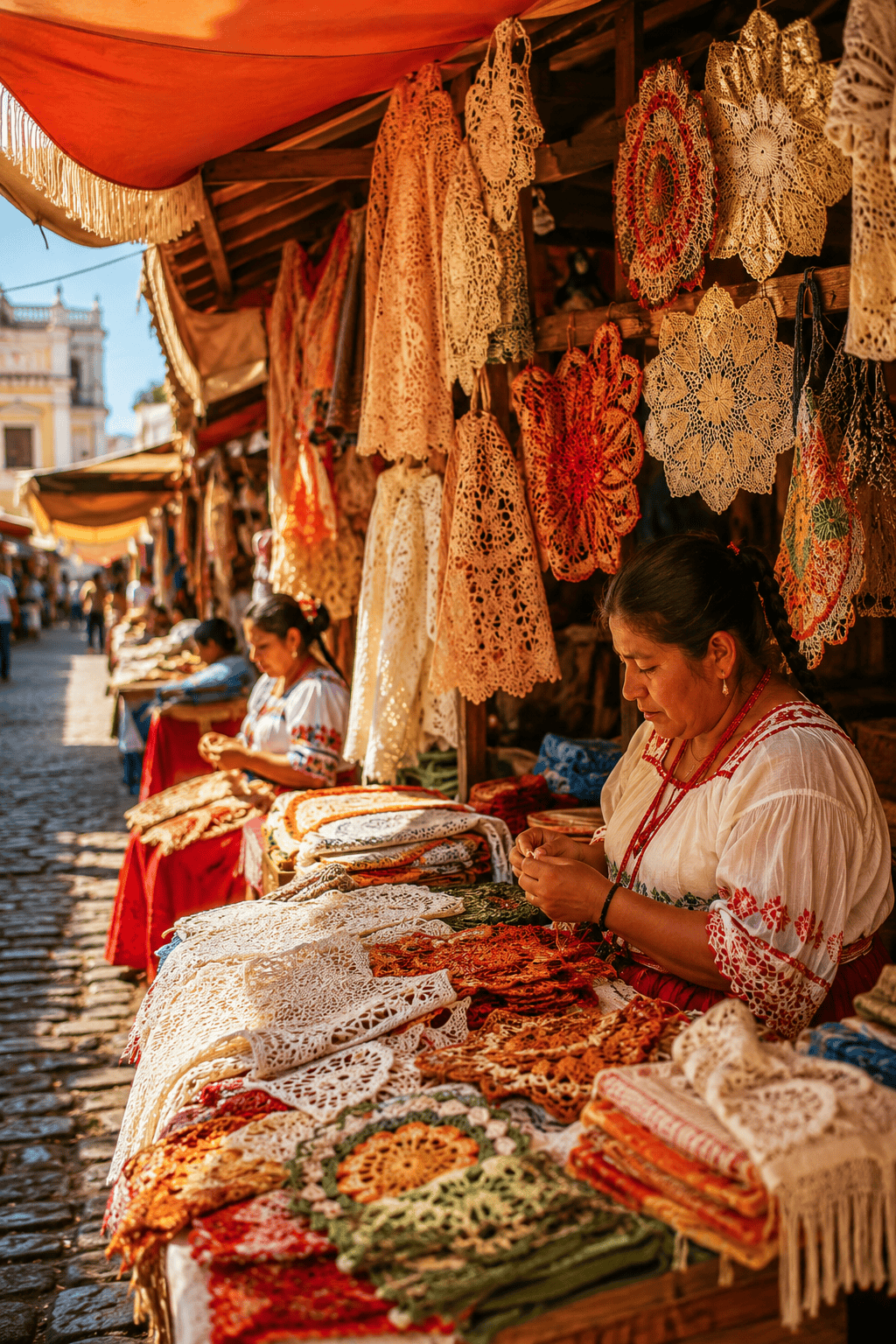
16. Itauguá – The birthplace of ñandutí (spider-web lace), one of Paraguay’s most iconic crafts
17. Encarnación – Called the “Pearl of the South,” with a beach promenade that genuinely surprises visitors expecting a landlocked city
What’s the Best Time to Visit Paraguay?
The best time to visit Paraguay is April through September. These months bring cooler, drier conditions – temperatures range from roughly 15°C to 28°C (59°F to 82°F), making outdoor sightseeing comfortable.
- April-June: Ideal. Mild temperatures, low humidity, green landscapes after the wet season
- July-August: Coolest months; occasional cold fronts from Argentina can push temperatures below 10°C (50°F), so pack a layer
- September: Warming up again, wildflowers bloom in the Chaco
- October-March: Hot and humid, with heavy rain possible. The Chaco can hit 45°C (113°F) in summer – genuinely dangerous for unprepared travelers
“Visiting the Chaco in January without proper preparation is one of the most common mistakes tourists make. The heat is not a metaphor.” – Every local guide I spoke with said some version of this.
Do I Need a Visa to Visit Paraguay?
Most Western travelers do not need a visa for Paraguay. Citizens of the USA, UK, EU member states, Canada, Australia, New Zealand, and most Latin American countries can enter visa-free for 90 days.
Check the current list via Paraguay’s Dirección General de Migraciones before you travel, as policies can change. Your passport must be valid for at least six months beyond your planned entry date.
What you will need at the border:
- Valid passport (6+ months validity)
- Proof of onward travel (sometimes checked)
- Yellow fever vaccination certificate if arriving from Brazil or Bolivia
How Much Does It Cost to Travel to Paraguay?
Paraguay is one of the cheapest countries to travel in South America. Budget travelers can get by on $30-$50 USD per day; mid-range travelers spending $80-$120 USD per day will eat and sleep very well.
| Expense | Budget | Mid-Range |
|---|---|---|
| Hostel/budget hotel | $10-$20 | $40-$80 |
| Local meal (restaurant) | $3-$6 | $10-$20 |
| City bus | $0.50 | $0.50 |
| Itaipu Dam tour | $15-$25 | $15-$25 |
| Trinidad ruins entry | ~$5 | ~$5 |
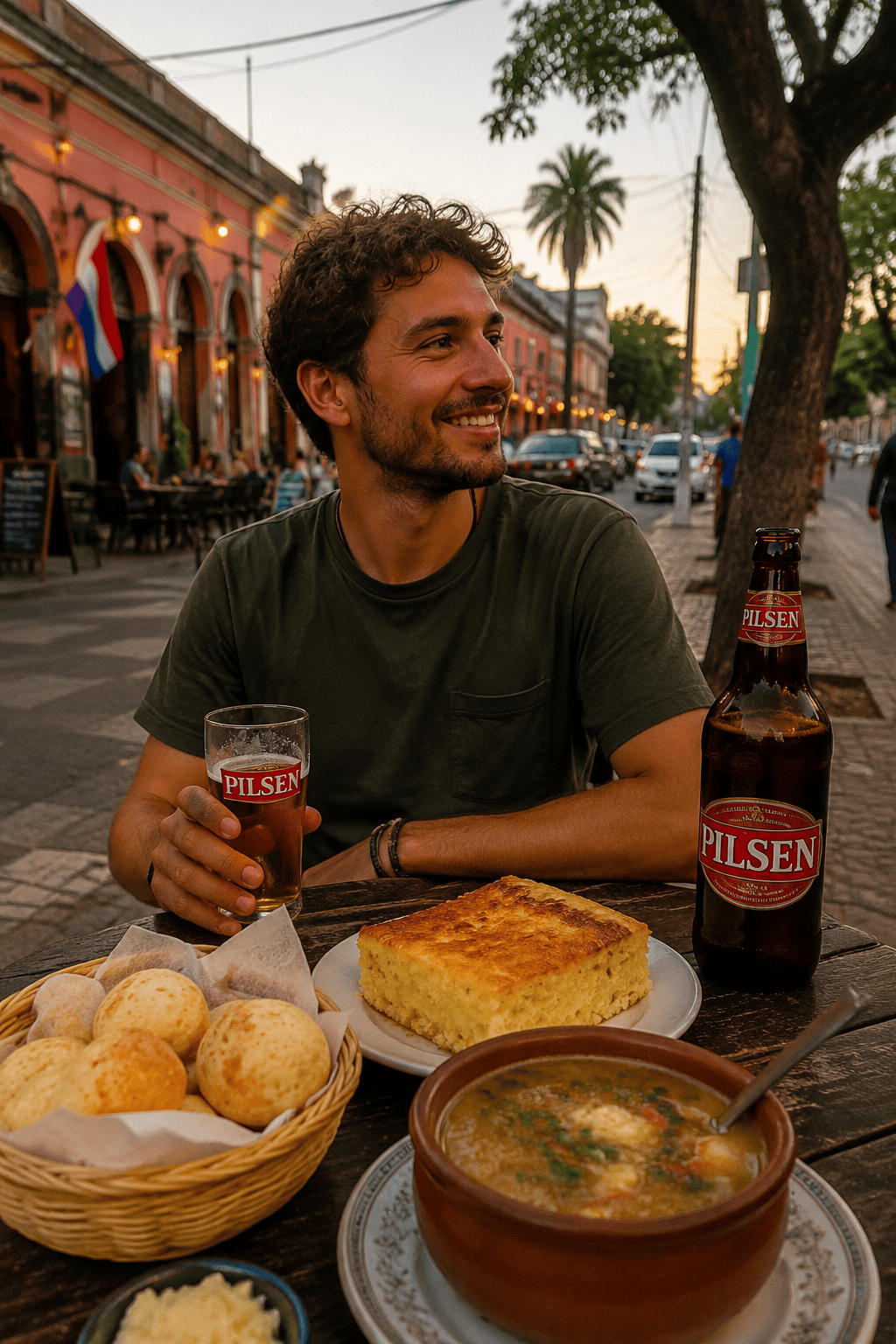
Can I visit Paraguay on a budget? Absolutely. Paraguay is arguably the best value destination in South America right now. Street food like chipa (cheese bread) costs under $1. A cold Pilsen beer at a local bar runs about $1.50. Even mid-range restaurants rarely charge more than $15 for a full meal with drinks.
If you’re comparing it to pricier destinations like Brazil or Chile, Paraguay feels almost shockingly affordable. For more budget travel inspiration, check out this guide on hidden gems across Vietnam – another destination where your dollar goes a long way.
Is Paraguay Safe for Tourists?
Paraguay is generally safe for tourists who use basic common sense. It’s not a high-crime destination by South American standards, but like any country, certain areas require more caution than others.
Practical safety tips:
- Asunción’s city center and tourist areas are fine during the day
- Avoid the neighborhoods of Chacarita and Zeballos Cué after dark
- The border city of Ciudad del Este has a reputation for petty theft – keep bags close
- The Chaco is physically remote; always travel with a guide and tell someone your plans
- Petty theft (phone snatching, pickpocketing) is the most common issue for tourists
For solo female travelers: Asunción is manageable, and locals are generally friendly and helpful. That said, street harassment does occur. Our guide on the best places for solo female travel has broader context if you’re planning a solo trip through the region.
How Many Days Should I Spend in Paraguay?
Seven to ten days is the sweet spot for a first visit. That gives you enough time to cover Asunción, the Jesuit ruins circuit, Itaipu Dam, and at least one natural area without feeling rushed.
Sample itinerary:
- Days 1-2: Asunción – city exploration, Mercado 4, Museo del Barro, Loma San Jerónimo
- Days 3-4: Encarnación and the Jesuit ruins (Trinidad, Jesús de Tavarangue)
- Day 5: Ciudad del Este and Itaipu Dam
- Days 6-7: Ybycuí National Park or Areguá and the lake region
- Days 8-10 (optional): Chaco expedition or Cerro Corá National Park
If you only have 4-5 days, focus on Asunción plus the Jesuit ruins circuit. That alone will shift your perception of the country.
What’s the Difference Between Visiting Iguazu Falls in Paraguay vs. Argentina?
Here’s the honest answer: Paraguay doesn’t actually have the main Iguazu Falls viewpoints. The falls sit on the border of Argentina and Brazil. Paraguay’s connection is through Ciudad del Este, which is the nearest Paraguayan city and a common base for visiting the falls from the Paraguayan side.
Most travelers visit Iguazu from either the Brazilian side (covered in our Brazil travel itinerary) or the Argentine side. The Argentine side offers closer walkways and is generally considered the better experience. The Brazilian side gives you the broader panoramic view.
What Paraguay adds to the Iguazu trip:
- Itaipu Dam is right next to Ciudad del Este – combining both in one trip makes sense
- Accommodation in Ciudad del Este can be cheaper than Foz do Iguaçu or Puerto Iguazú
- Duty-free shopping in Ciudad del Este is a regional draw (though not a reason to visit on its own)
What Language Do They Speak in Paraguay?
Paraguay has two official languages: Spanish and Guaraní. This makes it the only country in the Americas where an indigenous language is spoken by the majority of the population alongside the colonial language.
Roughly 90% of Paraguayans speak Guaraní, and many use it at home even in cities. Spanish is used in business, government, and with foreigners. In rural areas, you may encounter people who are more comfortable in Guaraní than Spanish.
For travelers: Spanish gets you everywhere. Learning a few Guaraní phrases earns you genuine warmth from locals:
- Mba’éichapa – How are you?
- Iporã – It’s good / Beautiful
- Aguyje – Thank you
This bilingual culture is one of the most distinctive things about Paraguay – it’s not a tourist gimmick, it’s everyday life.
What Should I Pack for Paraguay?
Pack for heat, humidity, and occasional cold snaps depending on the season. Paraguay’s climate swings more than most travelers expect.
Essential packing list:
- 🌞 Lightweight, breathable clothing (linen or moisture-wicking fabrics)
- 🧥 A mid-layer fleece or light jacket for July-August cold fronts
- 🦟 Strong insect repellent (DEET-based for the Chaco and wetlands)
- 💊 Oral rehydration salts if visiting the Chaco in warmer months
- 👟 Comfortable walking shoes for cobblestone streets in Asunción
- 🥾 Hiking boots if visiting national parks
- 💳 Cash in Paraguayan Guaraní – many smaller places don’t accept cards
- 📱 A local SIM card (Tigo or Personal are the main networks; cheap and widely available)
Yellow fever vaccination: Required if you’re arriving from Brazil or Bolivia, and strongly recommended regardless if you’re heading into the Chaco or Pantanal areas.
Where Should I Stay in Asunción, Paraguay?
For most travelers, the best areas to stay in Asunción are Villa Morra, Carmelitas, or the historic city center. Each suits a different travel style.
- Villa Morra: The safest, most modern neighborhood. Good restaurants, shopping, and nightlife. Best for mid-range and above travelers
- Carmelitas: Quieter, residential feel, close to the center. Good mid-range hotel options
- Historic Center: Walking distance to the main sights, but requires more caution at night. Budget-friendly options here
Recommended accommodation types:
- Budget: Hostels in the center or near Villa Morra run $10-$20/night
- Mid-range: Boutique hotels in Villa Morra or Carmelitas, $50-$90/night
- Upscale: The Sheraton Asunción and Bourbon Asunción Convention Hotel are the main international-standard options
Book ahead if visiting during Carnaval (February) or the Encarnación beach season (December-February), when domestic tourism peaks.
Is Paraguay Worth Visiting Compared to Other South American Countries?
Yes – but it’s worth visiting for different reasons than its neighbors. Paraguay won’t give you Patagonia’s scenery, Machu Picchu’s ancient grandeur, or Rio’s beaches. What it offers instead is authenticity, affordability, and the feeling of being somewhere genuinely off the beaten path.
Choose Paraguay if you:
- Want to explore South America without crowds
- Are interested in indigenous culture and living languages
- Love history (the Jesuit missions are genuinely world-class)
- Travel on a tight budget
- Are already visiting Brazil or Argentina and want to add something unexpected
Skip Paraguay (or save it for later) if you:
- Only have one trip to South America and want the “greatest hits”
- Need reliable tourist infrastructure everywhere you go
- Aren’t comfortable with some language barriers in rural areas
I’d compare it to the experience of visiting Oaxaca in Mexico – a place that rewards curiosity over convenience, and where the travelers who show up tend to leave as its biggest advocates.
What’s Unique About Paraguay That Other Countries Don’t Have?
Paraguay has several things that are genuinely one-of-a-kind. This isn’t marketing language – these are things you can’t experience anywhere else.
- Living Guaraní language culture – The only country in the Americas where an indigenous language is a true national language spoken by the majority
- Ñandutí lace – A spider-web lace-making tradition from Itauguá with no equivalent elsewhere
- The Paraguayan Chaco – One of the world’s last great dry wilderness areas, covering 60% of the country but home to only 3% of the population
- Mennonite colonies in the tropics – German-speaking Mennonite communities that have farmed the Chaco for nearly a century, creating a surreal cultural contrast
- Itaipu Dam – For decades, this was the world’s largest hydroelectric dam by installed capacity; it still holds records for annual energy production (per Itaipu Binacional’s official data)
- Sopa paraguaya – Despite the name meaning “Paraguayan soup,” it’s actually a dense, savory cornbread. The story of how it got that name is a genuinely fun piece of food history
What Are Common Mistakes Tourists Make in Paraguay?
The biggest mistake is underestimating the distances and the heat. Paraguay looks small on a map, but road quality outside the main highways varies, and the Chaco in summer is not forgiving.
Other common mistakes:
- Skipping the Jesuit ruins because they’re “out of the way” – they’re the country’s single most impressive sight
- Only spending time in Ciudad del Este – it’s a transit and shopping hub, not a destination
- Not carrying cash – ATMs exist but can be unreliable outside Asunción and major towns
- Assuming everyone speaks Spanish fluently – in rural areas, Guaraní dominates; patience and gestures help
- Visiting the Chaco without a guide – the terrain is disorienting and the heat is extreme
- Ignoring the food – Paraguayan cuisine (chipa, sopa paraguaya, mbejú, asado) is underrated and delicious; don’t eat at international chains
Paraguay Travel Guide: FAQ
Q: Do I need vaccinations to visit Paraguay?
Yellow fever vaccination is required if arriving from Brazil or Bolivia, and recommended if visiting the Chaco or wetland areas. Hepatitis A and typhoid are also recommended. Check with your doctor or a travel health clinic at least 4-6 weeks before departure.
Q: What currency does Paraguay use?
The Paraguayan Guaraní (PYG). As of mid-2026, roughly 7,500-8,000 PYG equals 1 USD (rates fluctuate). USD is sometimes accepted in tourist areas, but you’ll get better value exchanging for local currency.
Q: Can I drink the tap water in Paraguay?
In Asunción and major cities, tap water is treated, but most travelers and locals drink bottled or filtered water to be safe. In rural areas, always use bottled water.
Q: How do I get around Paraguay?
Buses (called “ómnibus”) are the main intercity transport and are cheap and reliable on major routes. In Asunción, apps like Uber and InDriver operate. For the Chaco, renting a 4WD vehicle or joining a guided tour is strongly recommended.
Q: Is there a tourist infrastructure in Paraguay?
It’s improving but still limited compared to Brazil or Argentina. Asunción, Encarnación, and the Jesuit ruins circuit have good options. The Chaco and more remote parks require more planning and self-sufficiency.
Q: What’s the food like in Paraguay?
Hearty, meat-heavy, and delicious. Asado (grilled meat) is a national obsession. Chipa (cheese bread baked in a clay oven) is eaten for breakfast everywhere. Sopa paraguaya is a savory cornbread. Mbejú is a crispy cassava flatbread. Tereré (cold herbal mate) is the national drink and a social ritual.
Q: Is English spoken in Paraguay?
Rarely outside of upscale hotels and some tour operators. Spanish is essential; Guaraní is a bonus. Download Google Translate with Spanish offline before you go.
Q: What’s the best way to see the Jesuit ruins?
Rent a car or join a guided day tour from Encarnación. Trinidad and Jesús de Tavarangue are about 25-30 km apart and can be combined in one day. Arriving at Trinidad for the late afternoon light is worth timing your day around.
Q: Can I visit Paraguay as part of a bigger South America trip?
Easily. Paraguay connects well with Argentina (Encarnación/Posadas border crossing), Brazil (Ciudad del Este/Foz do Iguaçu), and Bolivia (via the Chaco). It works as a 5-10 day add-on to a broader South America itinerary.
Q: Is Paraguay good for wildlife watching?
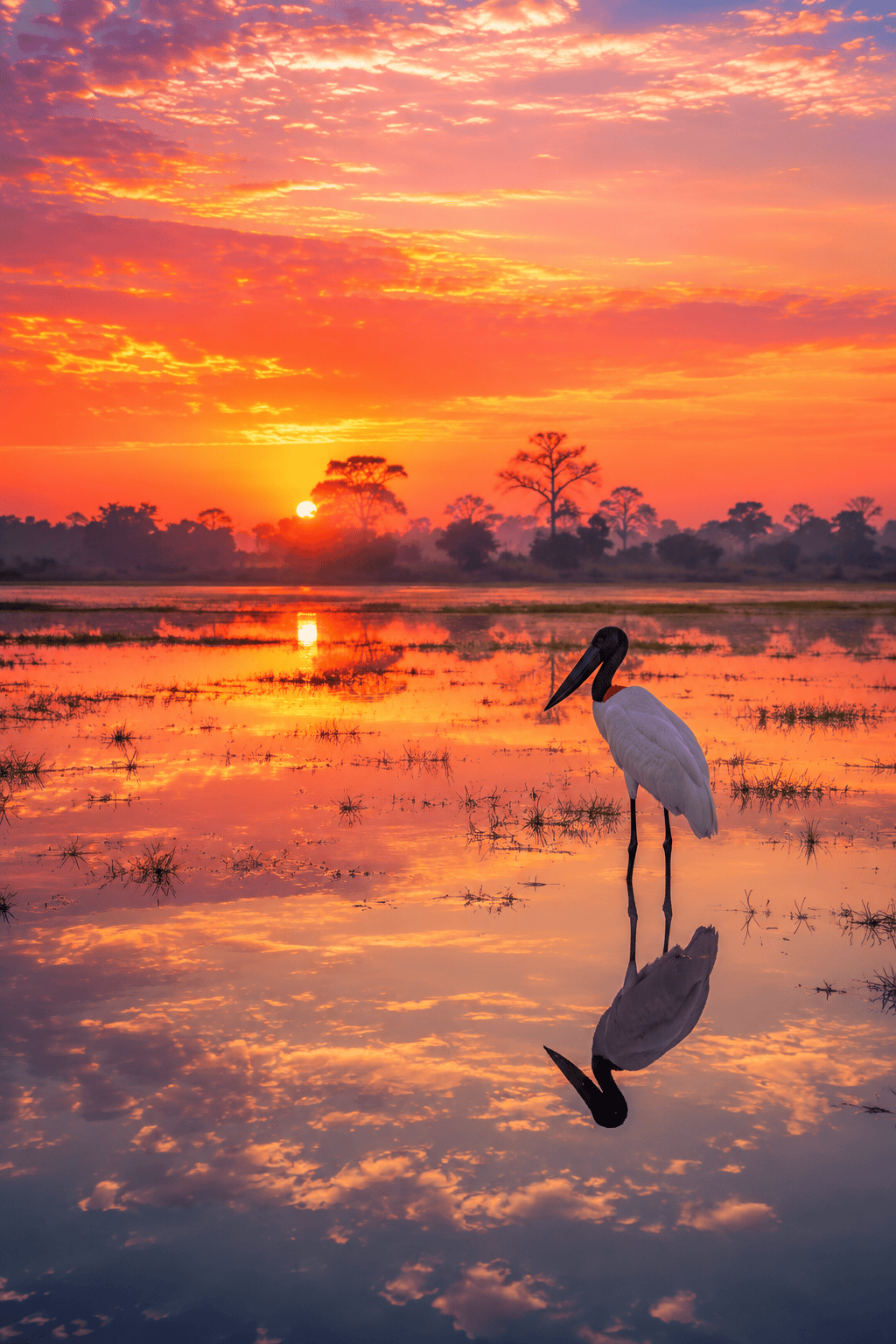
Yes, especially in the Chaco and the Pantanal areas. Jaguars, giant anteaters, tapirs, capybaras, and hundreds of bird species live here. The Paraguayan Pantanal is less visited than the Brazilian side, which means fewer crowds and more authentic wildlife encounters.
Conclusion: Why Paraguay Deserves a Spot on Your South America Itinerary
Most travelers who visit Paraguay say the same thing afterward: “I had no idea.” That’s both the challenge and the appeal of this country. It doesn’t market itself aggressively, it doesn’t have an obvious hook like Machu Picchu or Iguazu Falls, and it doesn’t show up on many “best of South America” lists.
But that’s exactly why it’s worth going.
Your actionable next steps:
- Decide your entry point – Flying into Asunción’s Silvio Pettirossi International Airport is the easiest option; overland from Argentina or Brazil works well for multi-country trips
- Book accommodation in Villa Morra for Asunción – it’s the safest and most comfortable base
- Plan the Jesuit ruins as a non-negotiable – book a day tour from Encarnación or rent a car
- Add Itaipu Dam if you’re near Ciudad del Este – the night illumination tour is worth the extra cost
- Check your vaccinations at least 6 weeks before departure
- Download offline Spanish on Google Translate and learn five Guaraní phrases
If you’re building a broader South America itinerary, Paraguay pairs naturally with a Brazil trip that includes Iguazu Falls. And if the idea of finding genuinely off-the-radar destinations appeals to you, the same instinct that leads travelers to Paraguay also leads them to places like Jordan’s underrated destinations or Vietnam’s hidden gems – places where curiosity pays off more than any guidebook ranking.
Paraguay won’t be overlooked forever. Go while it’s still the continent’s best-kept secret.
References
- Itaipu Binacional. (2023). Annual Energy Production Records. https://www.itaipu.gov.py
- UNESCO World Heritage Centre. (2023). Jesuit Missions of La Santísima Trinidad de Paraná and Jesús de Tavarangue. https://whc.unesco.org/en/list/648
- Dirección General de Migraciones Paraguay. (2024). Visa Requirements and Entry Conditions. https://www.migraciones.gov.py
- Centers for Disease Control and Prevention (CDC). (2024). Paraguay Traveler Health Information. https://wwwnc.cdc.gov/travel/destinations/traveler/none/paraguay
- Lonely Planet. (2023). Paraguay. Lonely Planet Publications.