
Last updated: June 17, 2026
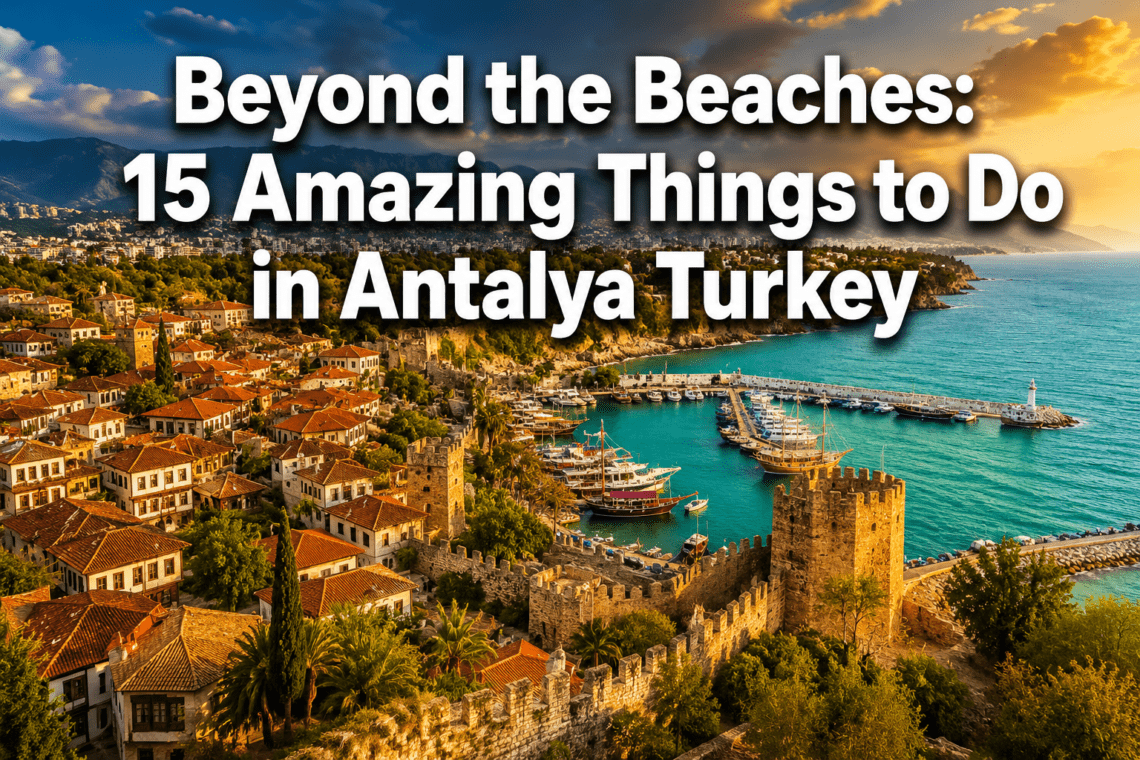
Quick Answer: Antalya is far more than a sun-and-sand resort destination. The city and its surrounding region pack in ancient ruins, mountain hikes, canyon walks, UNESCO-listed sites, and rich Turkish food culture – all within easy reach of the city center. Whether you have three days or a full week, the things to do in Antalya Turkey beyond the beach will genuinely surprise you.
Key Takeaways
- Kaleiçi (Old Town) is safe, walkable, and one of the best free things to do in Antalya Turkey – budget a half-day minimum.
- Termessos and Phaselis are two of the most dramatic ancient sites in the region and are rarely crowded.
- A week in Antalya costs roughly $500-$900 USD per person (mid-range budget), including accommodation, food, transport, and entrance fees.
- The Taurus Mountains offer hikes ranging from easy canyon walks to challenging summit routes – suitable for most fitness levels with the right preparation.
- The best time for non-beach activities is April-June or September-October, when temperatures are mild and crowds are smaller.
- Day trips to Sapadere Canyon, Çıralı Beach, and Ormana Village reward travelers who venture beyond the resort strip.
- Local food is a highlight – try testi kebab, piyaz (white bean salad), and fresh pomegranate juice from market stalls.
- Getting from Antalya Airport to the city center costs as little as $1-$2 USD by public bus (Havaş or city bus line 600).
What Are the Best Historical Sites to Visit in Antalya?
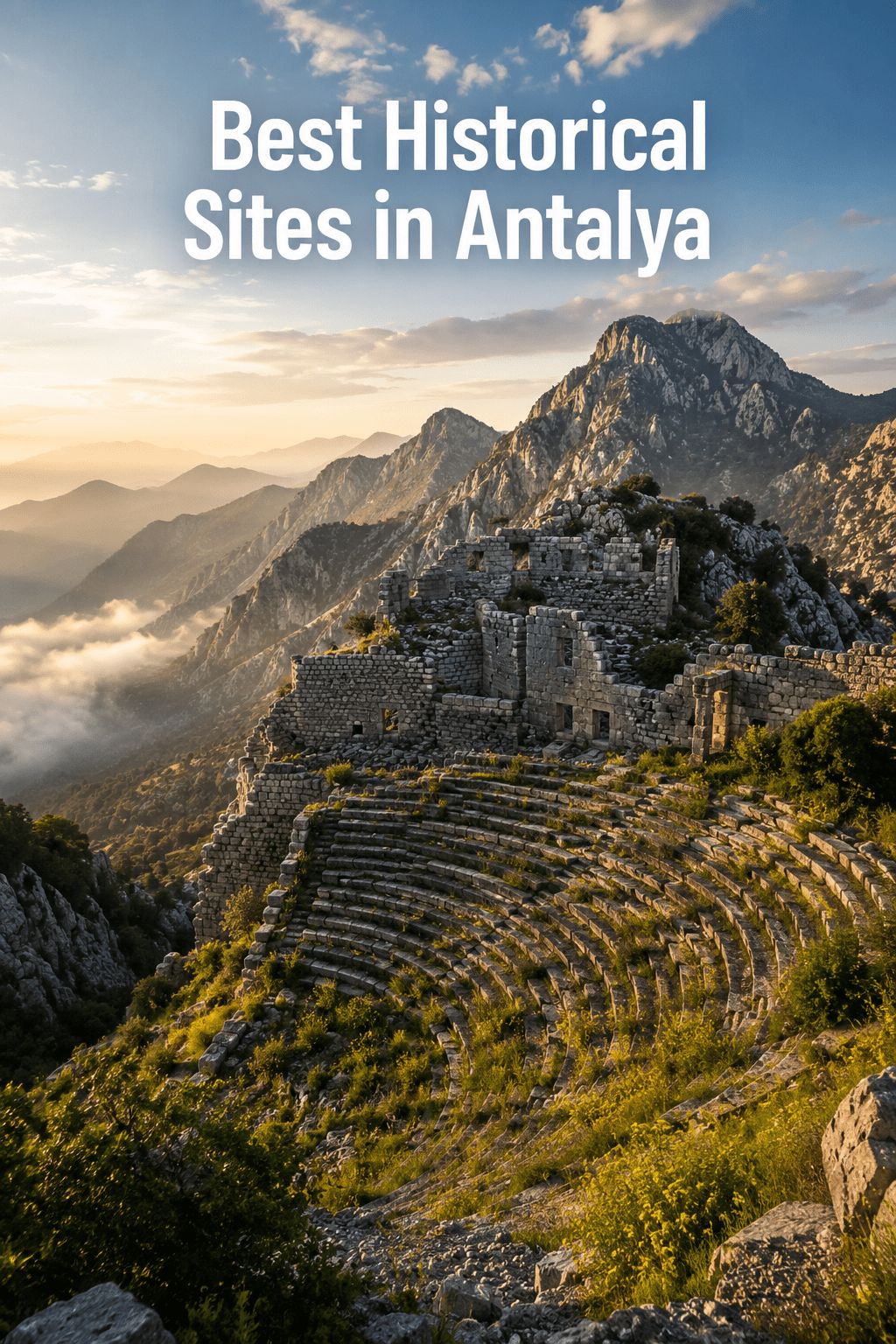
Antalya’s historical sites are genuinely world-class, and most travelers walk right past the best ones. The top picks are Termessos Ancient City, Phaselis Ancient City, and the Kaleiçi district itself, each offering a completely different experience.
Termessos Ancient City sits at roughly 1,050 meters elevation inside Güllük Dağı National Park, about 34 km northwest of the city. Alexander the Great tried to take it and gave up – the mountain city was simply too hard to reach. That same inaccessibility is what makes it magical today. You’ll find a well-preserved theater, rock-cut tombs, and sweeping views over the Taurus Mountains, often with almost no other visitors around [5].
Phaselis Ancient City is easier to reach (about 58 km southwest of Antalya) and blends ruins with pine forest and a small beach. Three harbors, a main colonnaded street, and a Roman aqueduct are all still standing. It’s a great pick if you want history plus a swim in the same afternoon [5].
Kaleiçi is Antalya’s Roman-era old town, where you can walk streets that have been in continuous use for over 2,000 years. The Hadrian’s Gate (built in 130 AD to honor Emperor Hadrian’s visit) is free to see and genuinely impressive [4].
Entrance fee estimates (2026):
- Termessos: approximately 200-300 TRY per person
- Phaselis: approximately 200-300 TRY per person
- Kaleiçi streets: free (individual museum entry varies)
“Termessos is the kind of place that makes you feel like you discovered something. You probably won’t see more than a handful of other tourists there on a weekday morning.” – a common sentiment from independent travelers who visit.
Are the Old Town Streets of Kaleiçi Safe for Tourists?
Yes, Kaleiçi is considered safe for tourists, including solo travelers and families. The district is well-lit, has a visible police presence, and is one of the most visited neighborhoods in the city. Standard travel precautions apply – watch your pockets in crowded bazaar areas and agree on taxi prices before you get in.
The narrow Ottoman-era streets can feel disorienting at first, but the area is compact enough that you’re never truly lost. Most shop owners and restaurant staff speak basic English. Boutique hotels, rooftop cafes, and small art galleries fill the old Roman harbor area [4].
Tips for visiting Kaleiçi:
- Go early morning (before 9am) for empty streets and better photos.
- The Roman harbor area gets crowded by midday in summer – arrive early or after 5pm.
- Wear comfortable shoes; the cobblestones are uneven.
- Avoid unofficial “guides” who approach you on the street offering tours.
What Traditional Turkish Experiences Can I Have in Antalya?
Antalya offers some of the most authentic Turkish cultural experiences on the Mediterranean coast – and many of them cost very little.
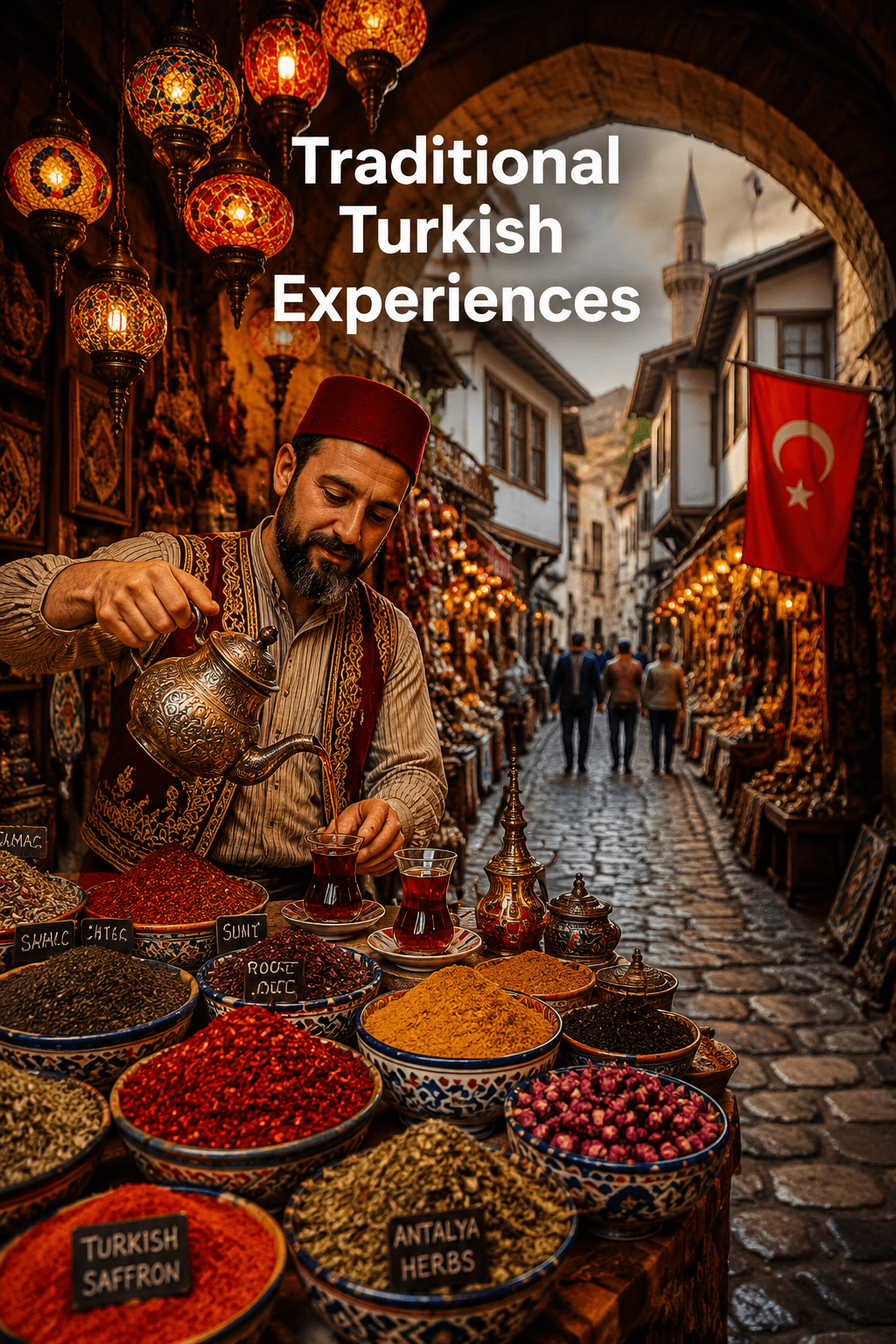
Top traditional experiences to try:
- Turkish bath (hammam): Several historic hammams operate in Kaleiçi. A full scrub and massage typically costs $15-$40 USD depending on the venue.
- Çay culture: Pull up a plastic chair at a local tea house (çay bahçesi), order a tulip glass of black tea for about $0.30, and watch the city move. This is genuinely how locals spend their afternoons.
- Covered bazaar shopping: The Antalya Bazaar near the old town sells spices, dried fruits, leather goods, and ceramics. Bargaining is expected on most non-food items.
- Cooking class: Several operators in Kaleiçi offer half-day Turkish cooking classes covering dishes like gözleme (stuffed flatbread), meze spreads, and baklava. Prices range from $30-$60 USD.
- Whirling dervish ceremony: Cultural centers in the city occasionally host Sema ceremonies – check local listings when you arrive.
If you enjoy discovering authentic local culture in historic settings, you might also appreciate our guide to top things to do in Seville Spain for a similar blend of history and street life.
Which Day Trips from Antalya Are Worth Taking?
The best day trips from Antalya are Sapadere Canyon, Çıralı Beach with the Olympos ruins, and Ormana Village. Each takes you somewhere completely different from the resort strip and is doable in a single day.
Sapadere Canyon (near Alanya, about 120 km east) features wooden walkways built along a narrow limestone canyon, turquoise plunge pools, and a waterfall at the far end. It’s genuinely refreshing in summer heat and costs a small entry fee [1]. Plan for 2-3 hours inside the canyon.
Çıralı Beach and Olympos Ruins sit about 70 km southwest of Antalya. Çıralı is a long, quiet pebble beach backed by orange groves, with the ancient city of Olympos tucked into the forest at one end. The beach itself is a nesting ground for loggerhead sea turtles, so development is deliberately limited – which keeps it peaceful [5].
Ormana Village was recognized as one of the “World’s Best Tourism Villages” by UN Tourism in 2024. The village is famous for its “button houses” – traditional stone structures built without cement using a dry-stacking technique that has been passed down for centuries [3]. It’s about 120 km north of Antalya and pairs well with a stop at one of the highland lakes.
Kaputaş Canyon and Beach is a shorter trip (about 80 km west toward Kaş). A steep staircase leads down to a small, vivid blue beach wedged between canyon walls. It’s one of the most photographed spots on the Turkish Riviera – go early to beat the tour buses [5].
| Day Trip | Distance from Antalya | Best For | Approx. Cost |
|---|---|---|---|
| Sapadere Canyon | ~120 km | Nature, cooling off | $10-$20 entry + transport |
| Çıralı & Olympos | ~70 km | History + quiet beach | $5-$10 entry + transport |
| Ormana Village | ~120 km | Culture, architecture | Free to explore |
| Kaputaş Beach | ~80 km | Scenery, photography | Free entry |
| Termessos | ~34 km | Ancient ruins, hiking | $5-$10 entry |
How Difficult Is Hiking in the Taurus Mountains Near Antalya?
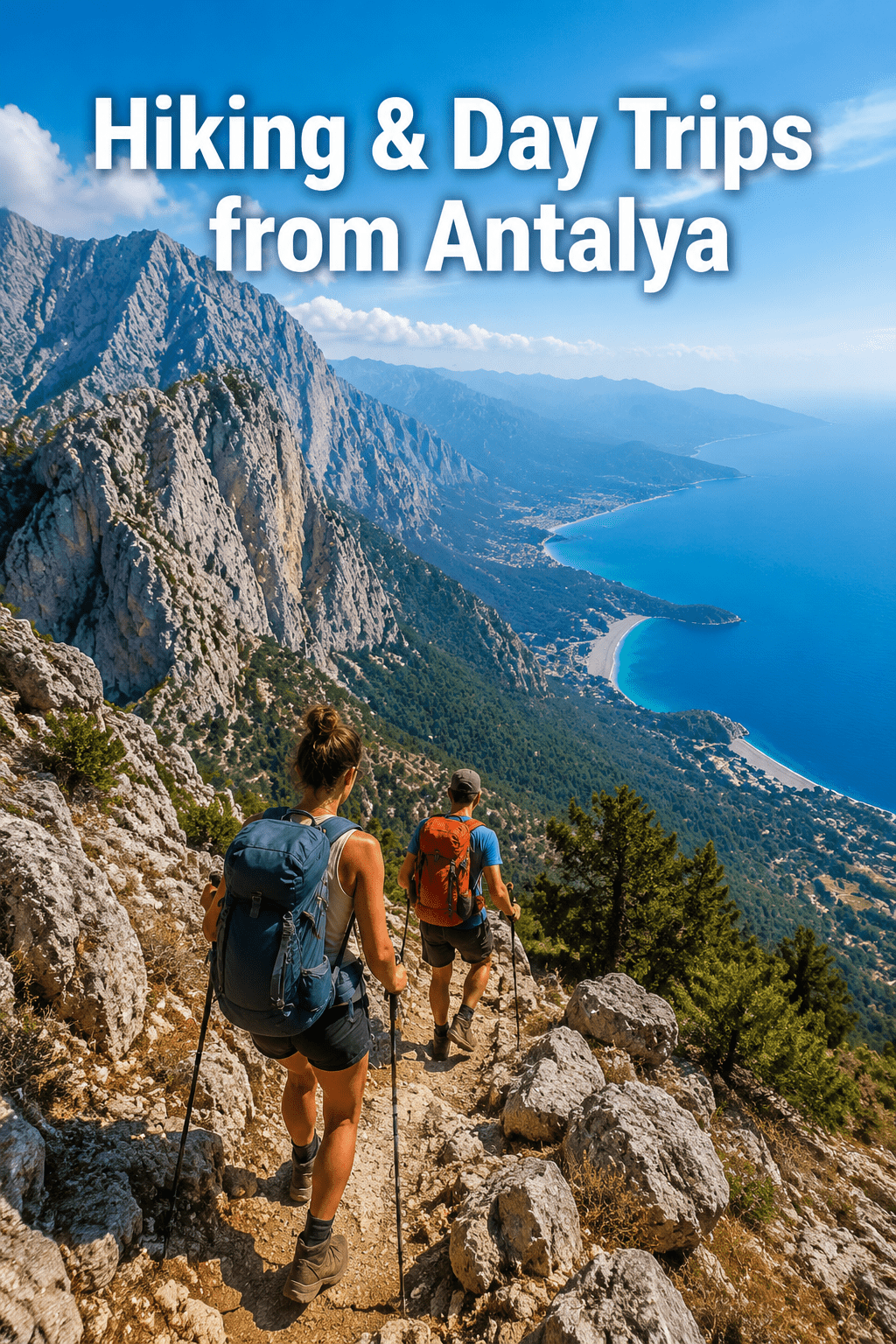
Hiking in the Taurus Mountains ranges from easy canyon walks to serious multi-day treks. Most casual travelers can handle the beginner and intermediate routes without special equipment, but the higher alpine routes require proper gear and fitness.
Difficulty breakdown:
- Easy: Kurşunlu Waterfall Nature Park – a flat, shaded loop trail through forest to a series of small cascades. Ideal for families and anyone who wants nature without a workout [1].
- Moderate: Sapadere Canyon walkway – some steps and uneven terrain, but the wooden walkways handle most of the elevation change.
- Challenging: Tahtalı Mountain (Olympos Teleferik) – you can take the cable car to 2,365 meters and hike the summit ridge. The cable car itself is a highlight, with views stretching across the Mediterranean [2]. Hiking from the base is a serious undertaking (full-day, steep).
- Expert: Multi-day routes along the Lycian Way, which passes through the Antalya region. This long-distance trail is well-marked but requires navigation skills, camping gear, and physical preparation.
Choose hiking if: You’re visiting in April-June or September-October, when temperatures at altitude are comfortable and the wildflowers are out. Avoid mid-summer hiking above 1,500 meters unless you start before 8am.
Common mistake: Underestimating sun exposure on rocky terrain. Bring more water than you think you need (at least 2 liters per person for any hike over 2 hours) and wear sun protection even on overcast days.
What Local Foods Should I Definitely Try in Antalya?
Antalya’s food scene is one of the most underrated things to do in Antalya Turkey – and it goes well beyond kebabs. The city sits at the intersection of Mediterranean produce, Taurus Mountain herbs, and centuries of Anatolian cooking tradition.
Must-try dishes and where to find them:
- Piyaz: A white bean salad dressed with tahini, lemon, olive oil, and hard-boiled egg. It’s Antalya’s signature dish and every local restaurant does a version. Try it as a starter.
- Testi kebab: Meat and vegetables slow-cooked inside a sealed clay pot, then cracked open at the table. Theatrical and delicious.
- Gözleme: Thin flatbread stuffed with cheese, spinach, or minced meat, cooked on a griddle. Market stalls sell it for $1-$3.
- Fresh pomegranate juice: Street vendors press it to order. One large cup costs about $1-$2 and is worth every cent.
- Şiş köfte: Grilled spiced meatballs on skewers, served with flatbread and grilled tomato.
- Baklava: The pistachio version from local pastry shops beats most tourist-area versions significantly.
Where to eat without overpaying: Walk two streets back from the Roman harbor in Kaleiçi and prices drop noticeably. Look for places with Turkish menus posted outside and locals eating inside – that’s the reliable signal.
Is Antalya Good for Families or More for Solo Travelers?
Antalya works well for both families and solo travelers, but for different reasons. Families benefit from the resort infrastructure, calm beaches, and easy day trips. Solo travelers get more out of the cultural depth, hiking, and the social atmosphere of Kaleiçi’s hostels and rooftop bars.
For families:
- The Antalya Aquarium (one of the largest tunnel aquariums in the world) is a reliable hit with kids.
- Lara Beach and Konyaaltı Beach both have calm, shallow water sections suitable for young children.
- Most resorts offer all-inclusive packages that simplify logistics significantly.
- Day trips to Phaselis combine history with a safe swimming spot in the same outing.
If you’re planning a beach trip with kids, our beach hacks for families can help you stay organized and stress-free.
For solo travelers:
- Kaleiçi has a strong hostel and boutique hotel scene with social common areas.
- The city is generally safe for solo female travelers, though standard awareness applies in crowded areas.
- Public transport is cheap and reliable enough to explore independently.
- The Lycian Way hiking trail attracts a community of solo trekkers.
For more inspiration on traveling alone safely, see our list of best places for solo female travel.
What Are Common Tourist Mistakes When Visiting Antalya?
The biggest mistakes tourists make in Antalya are spending the entire trip at the resort, skipping the old town, and not checking museum hours before visiting.
Mistakes to avoid:
- Booking an all-inclusive and never leaving: The resort strip is comfortable but it’s not Antalya. Even one day in the old town changes your entire impression of the city.
- Visiting Termessos in the middle of the day in summer: The hike up to the ruins is exposed and gets brutally hot. Go before 9am or after 4pm.
- Taking taxis without agreeing on a price first: Always confirm the fare before getting in, or use the meter. Overcharging tourists is common near tourist attractions.
- Skipping the local market: The weekly neighborhood markets (pazar) sell produce, olives, cheese, and household goods at prices that reflect what locals actually pay.
- Ignoring the dress code at mosques: Bring a scarf and cover your shoulders if you plan to visit any of the city’s mosques. Yivli Minare Mosque in Kaleiçi is worth the stop.
- Exchanging money at the airport: Rates at airport exchange offices are consistently worse than in the city center or at ATMs.
Are There Any UNESCO World Heritage Sites Near Antalya?
The Antalya region doesn’t currently have a UNESCO World Heritage Site within the city limits, but several significant sites are within day-trip range.
Xanthos-Letoon (about 200 km west, near Fethiye) is a UNESCO World Heritage Site since 1988, encompassing the ancient Lycian capital of Xanthos and the sanctuary of Letoon. It’s a long day trip but manageable if you rent a car.
Göbekli Tepe is in southeastern Turkey and not a practical day trip, but it’s worth mentioning for context on Turkey’s extraordinary archaeological depth.
Closer to Antalya, Termessos and Phaselis are both nationally protected ancient cities of significant historical importance, even without UNESCO designation. The Antalya Museum (city center) houses one of the finest collections of Greco-Roman artifacts in Turkey and is itself considered a world-class institution [5].
What’s the Best Time of Year to Visit for Non-Beach Activities?
April through June and September through October are the best months for non-beach activities in Antalya. Temperatures are mild (20-28°C / 68-82°F), hiking is comfortable, historical sites are less crowded, and accommodation prices drop significantly compared to July-August.
- April-May: Wildflowers cover the Taurus Mountains, waterfalls run strong from snowmelt, and the Lycian Way is at its most beautiful.
- September-October: Crowds thin out, sea temperatures are still warm (great if you want both beach and sightseeing), and the light for photography is exceptional.
- November-March: Some attractions have reduced hours or close. The city is quiet and cheap, but rain is common and mountain hiking gets cold. Good for budget travelers who prioritize the old town and museums.
- July-August: Peak season. Beaches are packed, prices are highest, and hiking in direct sun is genuinely unpleasant above 500 meters.
How Do I Get from the Airport to City Center Cheaply?
The cheapest way to get from Antalya Airport to the city center is by public bus. The city bus line 600 connects the airport to the city center for approximately 20-30 TRY (roughly $0.60-$1.00 USD as of 2026 estimates). The Havaş airport shuttle is slightly more expensive but goes directly to key stops in the city.
Options compared:
| Transport | Cost (approx.) | Journey Time | Best For |
|---|---|---|---|
| City bus (line 600) | $0.60-$1 USD | 45-60 min | Budget travelers |
| Havaş shuttle | $3-$5 USD | 30-45 min | Ease + speed |
| Taxi (metered) | $15-$25 USD | 20-35 min | Groups, heavy luggage |
| Ride-share app | $10-$18 USD | 20-35 min | Solo travelers |
Tip: Buy a Kentkart (city transport card) at the airport or any newsstand. It works on buses and trams and gives you a small discount per ride compared to cash.
How Much Does It Cost to Travel Around Antalya for a Week?
A week in Antalya on a mid-range budget costs roughly $500-$900 USD per person, covering accommodation, food, local transport, and entrance fees. Budget travelers can do it for $300-$500 USD; those staying in boutique hotels and eating at sit-down restaurants regularly should budget $900-$1,400 USD.
Weekly budget breakdown (mid-range, per person):
- Accommodation: $30-$70/night ($210-$490 total)
- Food: $15-$30/day ($105-$210 total)
- Local transport: $20-$40 total for the week
- Entrance fees (museums, ruins): $30-$60 total
- Day trips (2-3): $50-$150 total
- Miscellaneous (souvenirs, hammam, etc.): $50-$100
Turkey’s currency fluctuates, so check the current TRY exchange rate before you travel and carry some local cash for markets and small vendors who don’t accept cards.
Hidden Gems That Most Guides Miss
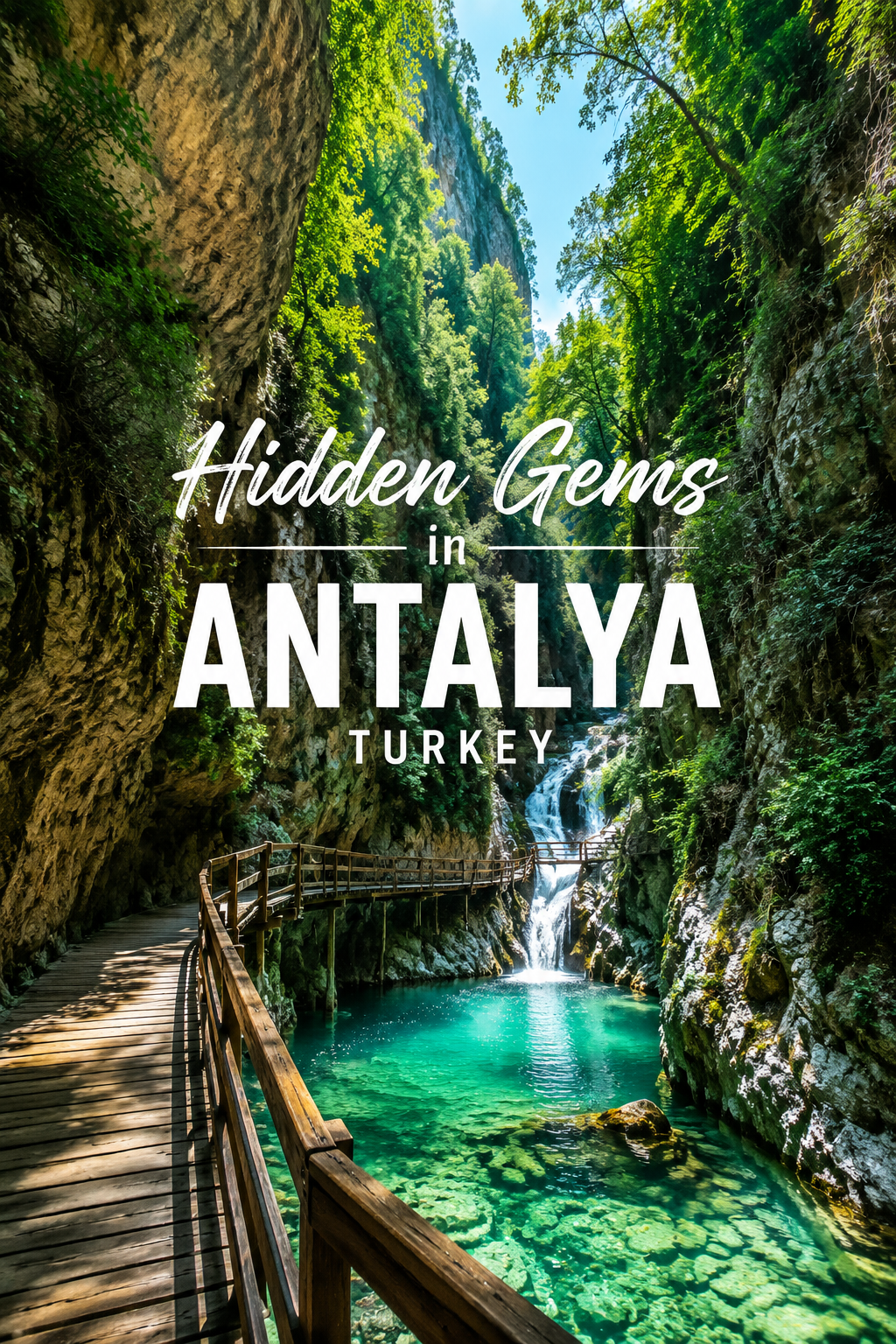
Beyond the well-known spots, a few places consistently reward travelers who seek out the things to do in Antalya Turkey that don’t appear on the first page of search results.
Suluada Island is sometimes called the “Maldives of Turkey” – a small island with brilliant turquoise water accessible only by boat tour from Anamur or Alanya. It’s remote enough that crowds rarely overwhelm it [5].
Karaalioğlu Park in the city center has hidden viewpoints along its cliff-edge paths that look straight down to the Mediterranean. Locals use it for evening walks; tourists mostly miss it entirely [5].
Akyarlar Village is a quiet coastal settlement near Bodrum (a longer drive, but worth noting for those extending their trip) that offers an authentic fishing village atmosphere with almost no tourist infrastructure [2].
Kurşunlu Waterfall Nature Park is only about 12 km from the city center but sees a fraction of the visitors that Düden Waterfall gets. The forest setting is peaceful, there are picnic areas, and the cascades are genuinely pretty without being dramatic [1].
If you enjoy finding places that most tourists overlook, you might also like our guide to hidden gems in the Amalfi Coast or our roundup of what to see in Athens Greece beyond the Acropolis.
FAQ
Is Antalya worth visiting beyond the beach resorts?
Yes, absolutely. The city has ancient ruins, mountain hiking, canyon walks, a well-preserved old town, and excellent food – enough to fill a week without touching the beach at all.
How many days do I need in Antalya to see the highlights?
Five to seven days gives you enough time to cover the old town, two or three historical sites, one or two day trips, and still have time to relax. Three days is the minimum for a meaningful visit beyond the resort.
Do I need a visa to visit Turkey as an American or European citizen?
Most nationalities require an e-Visa, which you apply for online before travel at evisa.gov.tr. The process takes about 10 minutes and costs approximately $50 USD for Americans (verify current fees before travel).
Is English widely spoken in Antalya?
In tourist areas, hotels, and restaurants, yes. In local neighborhoods and markets, less so. A translation app on your phone handles most situations easily.
Can I visit Antalya on a budget?
Yes. Street food, public transport, free historical walking areas, and affordable guesthouses make Antalya one of the more budget-friendly Mediterranean destinations in 2026.
What currency is used and should I bring cash?
Turkey uses the Turkish Lira (TRY). Cards are accepted at most hotels and restaurants, but local markets, small eateries, and transport require cash. ATMs are widely available in the city center.
Is Antalya safe for solo female travelers?
Generally yes, particularly in tourist areas and Kaleiçi. Exercise standard awareness at night, dress modestly in non-tourist neighborhoods, and trust your instincts. Many solo female travelers report positive experiences.
What’s the best way to get around the Antalya region?
For the city itself, public buses and trams are cheap and reliable. For day trips, renting a car gives you the most flexibility. Organized tours are a good option if you prefer not to drive.
Are the ancient ruins kid-friendly?
Phaselis is the most family-friendly ancient site – it has a small beach, flat walking areas, and enough visual interest to hold kids’ attention. Termessos involves a steeper hike and is better for older children and adults.
What should I pack for non-beach activities in Antalya?
Comfortable walking shoes (essential for cobblestones and ruins), a light layer for evenings, sun protection, a reusable water bottle, and a scarf for mosque visits. If hiking, add proper trail shoes and a small daypack.
Conclusion
Antalya is one of those destinations that genuinely delivers more than it promises on the surface. Most visitors come for the beach and leave having barely scratched the city’s real depth. The things to do in Antalya Turkey beyond the resort strip – from the ghost-city atmosphere of Termessos to the canyon walks of Sapadere, from a proper hammam scrub to a bowl of piyaz at a local lunch spot – are what turn a good holiday into a trip you actually remember.
Your actionable next steps:
- Book accommodation in or near Kaleiçi for at least part of your stay – it changes how you experience the city.
- Plan your day trips first, since some (like Termessos) require an early start.
- Get a Kentkart on arrival for cheap, easy city transport.
- Set aside one morning with no plan and just walk – the old town rewards wandering.
- Check the Antalya Museum early in your trip to build context for all the ruins you’ll visit.
For more Mediterranean travel inspiration, explore our guide to what to see in Crete Greece or our tips on things to do in Croatia Dubrovnik – both share Antalya’s blend of ancient history and stunning coastline.
References
[1] Antalya Hidden Gems 12 Experiences Beyond The Resorts – https://www.bookmytaxiantalya.com/antalya-hidden-gems-12-experiences-beyond-the-resorts/?utm_source=openai
[2] Antalya Hidden Gems – https://www.villaplusturkey.com/blog/antalya-hidden-gems?utm_source=openai
[3] Discover Antalyas Hidden Gems Beyond The Coastline – https://www.newscentralasia.net/2025/05/06/discover-antalyas-hidden-gems-beyond-the-coastline/?utm_source=openai
[4] Antalya Beyond The Resorts Hidden Coastal Gems – https://www.gotobeach.co.uk/blog/antalya-beyond-the-resorts-hidden-coastal-gems?utm_source=openai
[5] Antalya Hidden Gems Beyond The Coastline – https://wowwatchers.com/antalya-hidden-gems-beyond-the-coastline/?utm_source=openai