
Last updated: September 11, 2026
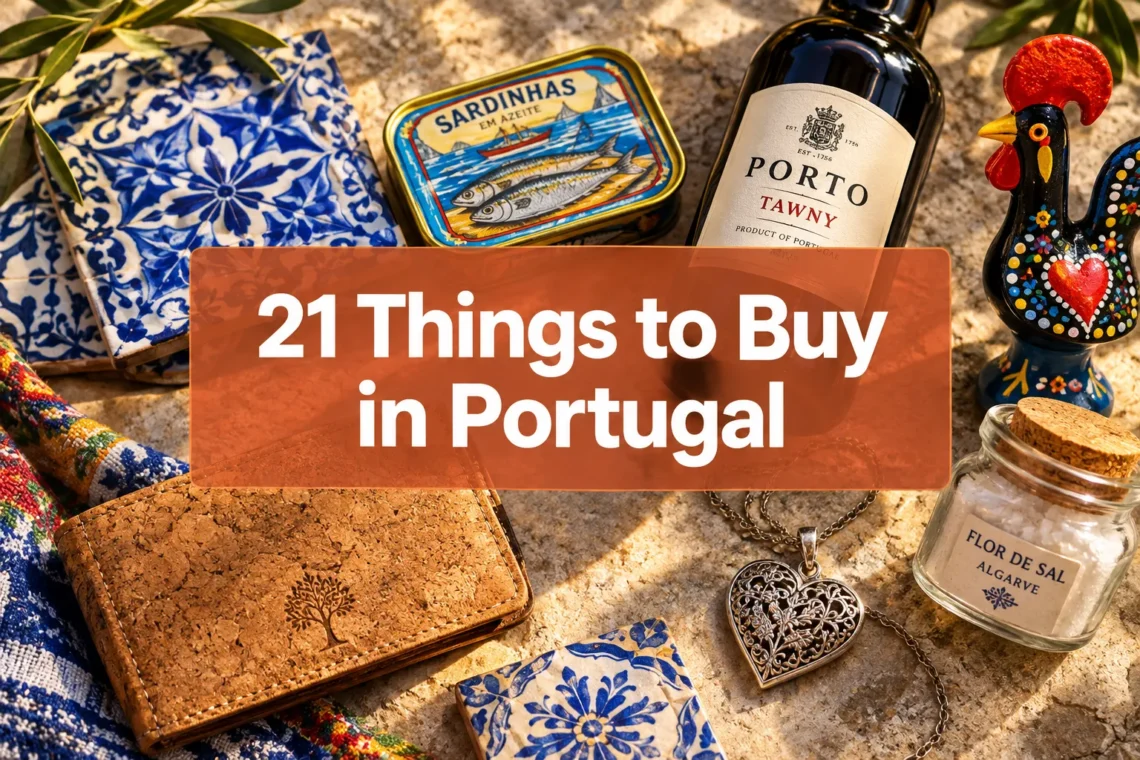
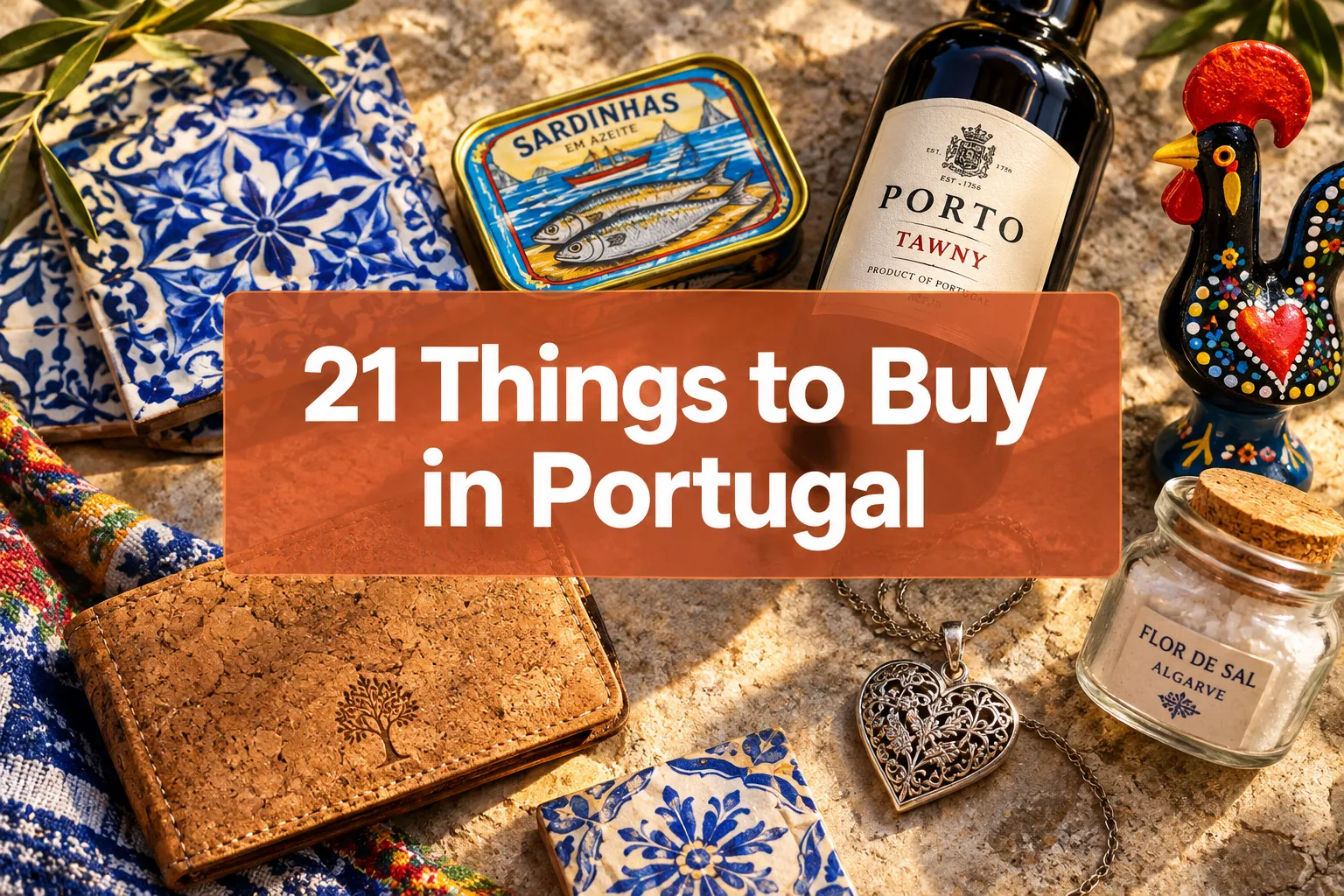
Quick Answer: The best things to buy in Portugal include hand-painted azulejo tiles, cork products, Port wine, conservas (tinned sardines), filigree jewelry, and gourmet foods like flor de sal and olive oil. These items are genuinely made in Portugal, hold up well in transit, and represent real cultural and artisan value – not just airport filler.
Key Takeaways
- 🏺 Azulejo tiles are the single most iconic Portuguese souvenir – buy them from certified artisan shops, not tourist stalls
- 🍷 Port wine, Douro reds, and Madeira are outstanding value and easy to pack with proper protection
- 🐟 Conservas (tinned fish) are shelf-stable, customs-friendly, and make excellent gifts
- 🌿 Portugal wins major international awards for olive oil – it’s one of the best edible souvenirs you can bring home
- 🪨 Cork products are a uniquely Portuguese export, backed by serious global trade volume
- 💍 Filigree gold and silver jewelry (especially Viana hearts) are heirloom-quality and affordable by European standards
- 🧂 Flor de sal from Algarve salt pans is a chef-grade seasoning that costs a fraction of what it does abroad
- 🧵 Arraiolos rugs and Burel wool textiles are investment-level handicrafts worth the luggage space
- 🛒 Shop in local neighborhoods (Mouraria, Intendente, Bairro Alto) to avoid inflated tourist pricing
- 📅 January through March offers the best sales and least competition at artisan markets
What Are the Best Souvenirs to Buy in Portugal?
The best souvenirs to buy in Portugal are items that are actually made there, carry real cultural meaning, and survive the journey home intact. That rules out most of the generic “Lisboa” keyrings and mass-produced rooster magnets you’ll see near every major landmark.
Here’s a full list of the 21 things worth buying:
- Hand-painted azulejo tiles
- Cork wallets, bags, and homeware
- Port wine
- Conservas (tinned sardines and fish)
- Filigree gold or silver jewelry
- Flor de sal (Algarve sea salt)
- Portuguese olive oil
- Vinho Verde or Douro red wine
- Madeira wine
- Arraiolos embroidered rugs
- Burel wool products
- Barcelos rooster ceramics (quality versions)
- Ginjinha (sour cherry liqueur)
- Pastel de nata kits or recipe books
- Serra da Estrela cheese
- Piri-piri sauce
- Minho or Madeira embroidery
- Ceramic swallows (andorinhas)
- Artisanal soaps and perfumes
- Vintage-style sardine tin art prints
- Hand-stitched leather goods
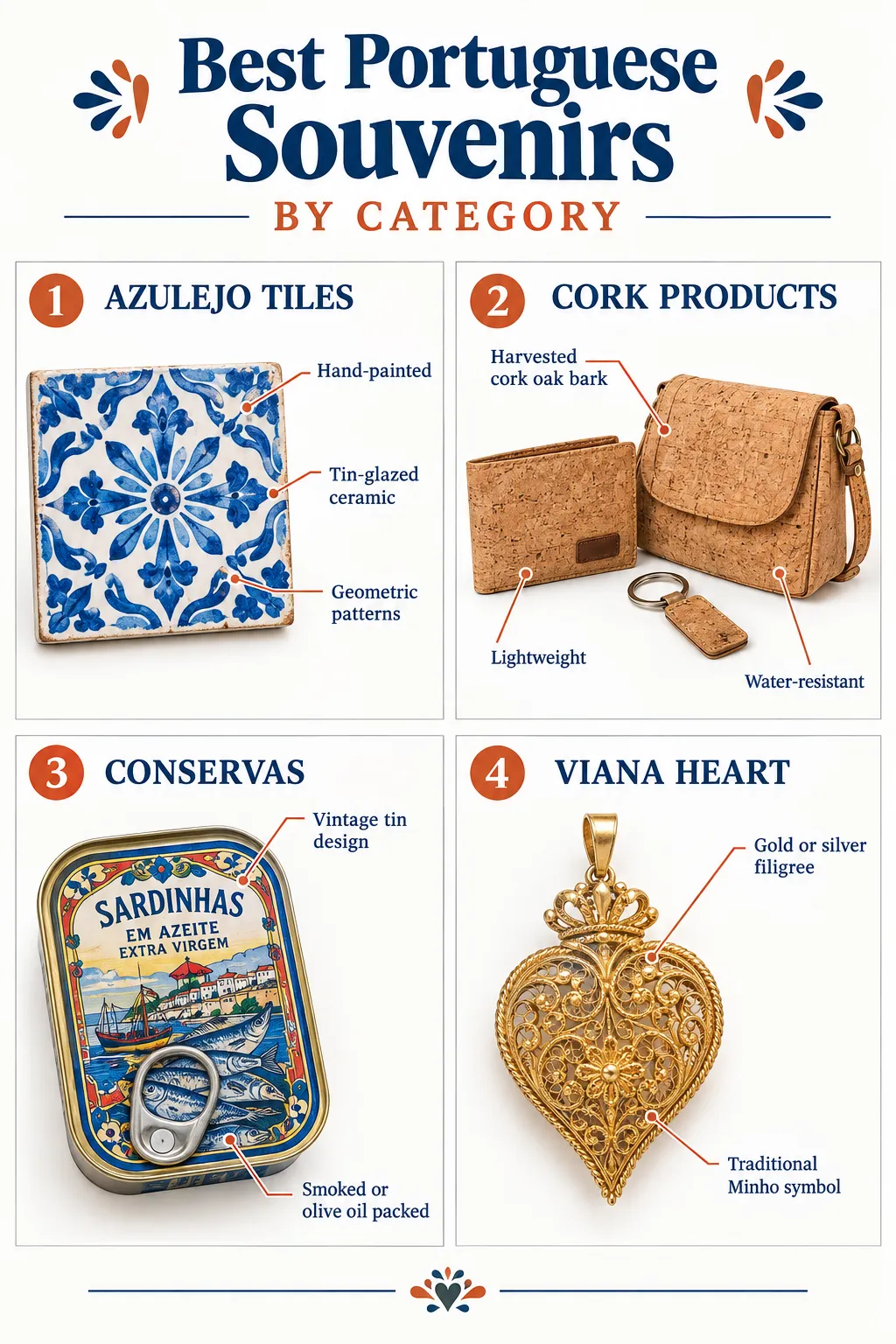
The items above split into three practical categories: edibles, crafts and textiles, and decorative objects. Each category travels differently, so it’s worth planning your packing before you shop.
Where to Buy Authentic Portuguese Tiles and Ceramics
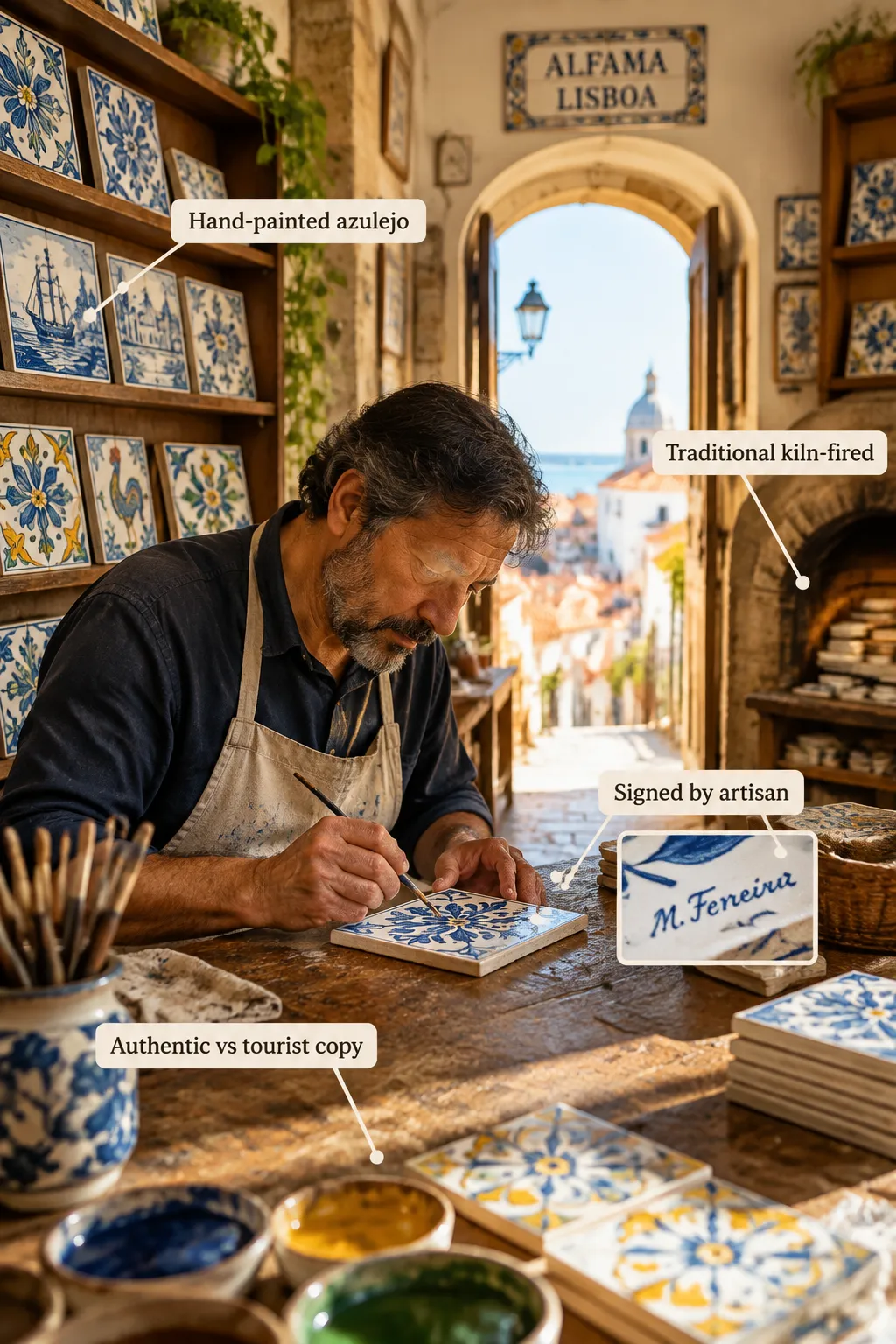
Authentic azulejo tiles and Portuguese ceramics are best found at certified artisan workshops, dedicated tile shops, and a handful of trusted Lisbon markets – not at souvenir kiosks near Belém Tower.
For tiles specifically, look for:
- Sant’Anna (Lisbon, since 1741) – one of the oldest tile manufacturers still operating
- Viúva Lamego – a historic tile factory with a stunning showroom in Intendente
- Fábrica Cerâmica Artística de Coimbra – known for its distinctive warm yellows and greens
- Feira da Ladra flea market – good for vintage individual tiles at lower prices
What to check before buying:
- Is the tile hand-painted or printed? Flip it over – hand-painted tiles show slight glaze irregularities on the back
- Does the shop have an artisan certificate or maker’s mark?
- Are the colors rich and slightly uneven? That’s a good sign
A single authentic hand-painted tile typically runs €5 to €25 depending on size and complexity. A full panel can cost several hundred euros and can be shipped directly to your home by the shop.
How Much Does It Cost to Buy Azulejo Tiles in Portugal?
Individual decorative tiles cost roughly €5 to €30 for hand-painted pieces. Framed panels start around €40 and go up significantly for large or custom work. Mass-produced printed tiles sold in tourist shops can be as cheap as €2 – but they’re not the same product.
If you’re buying more than a few tiles, ask the shop about padded packaging or direct shipping. Most serious tile shops offer both.
Why Is Portuguese Cork So Popular, and Where to Buy It in Lisbon?
Portugal produces more than half of the world’s cork supply, and Portuguese cork exports represent a significant share of global trade in cork articles. That dominance isn’t just history – it’s backed by active production from cork oak forests (montados) that have been harvested sustainably for centuries.
Cork products make excellent souvenirs because they’re:
- Lightweight and easy to pack
- Genuinely unique to Portugal (no other country produces cork at this scale)
- Durable and water-resistant
- Available in a huge range of items: wallets, handbags, hats, umbrellas, phone cases, yoga mats, and placemats
Best places to shop for cork products in Lisbon:
- Cork & Co (Rua das Salgadeiras) – a well-curated shop with quality control
- Loja das Conservas – stocks cork alongside conservas
- LX Factory (Sunday market) – multiple cork vendors with competitive prices
- Mercado de Campo de Ourique – good for everyday cork homeware
Cork article exports from Portugal have shown strong performance in recent years, reflecting sustained global demand. That said, some fluctuation in cork exports has occurred due to pressures in the wine industry, which uses cork stoppers heavily – so buying cork goods directly supports local producers at a meaningful time.
Is Portuguese Wine a Good Souvenir to Bring Home?
Yes – Portuguese wine is one of the best-value souvenirs you can buy, especially if you’re flying home to a country where Port, Madeira, or Vinho Verde is expensive or hard to find.
Best wine souvenirs by type:
| Wine | Region | Why It Travels Well |
|---|---|---|
| Port (Tawny or LBV) | Douro Valley | Fortified, long shelf life |
| Madeira | Madeira Island | Nearly indestructible, lasts decades |
| Douro red | Douro Valley | World-class, underpriced vs. France/Italy |
| Vinho Verde | Minho | Light and fresh – drink within a year |
| Moscatel de Setúbal | Setúbal | Sweet, fortified, excellent value |
Packing tip: Use a wine skin or bubble-wrap sleeve inside your checked bag. Most airlines allow wine in checked luggage if it’s under 24% ABV – Port and Madeira are above that, so check your airline’s rules or pack them in carry-on with a secure seal.
For the best selection and honest advice, skip airport duty-free and visit a dedicated wine shop like Garrafeira Nacional or Napoleão in Lisbon.
What’s the Difference Between Portuguese and Spanish Ceramics?
Portuguese and Spanish ceramics share some Moorish influence but are visually and technically distinct. Knowing the difference helps you avoid buying mislabeled goods.
Portuguese ceramics:
- Azulejos use a tin-glazed earthenware technique with flat, matte surfaces
- Color palette leans heavily on cobalt blue and white (especially in Lisbon and Porto)
- Coimbra ceramics use warm yellows, greens, and ochres
- Barcelos roosters are a uniquely Portuguese folk symbol
Spanish ceramics:
- Talavera pottery (from Talavera de la Reina) uses similar blue-and-white but with more figurative, busy patterns
- Andalusian ceramics are often more colorful and use a glossier glaze
- Spanish tiles tend to be thicker and more three-dimensional in relief
The easiest tell: Portuguese azulejos are almost always flat and matte. If a tile has a raised, glossy surface, it’s likely Spanish or a modern reproduction.
Are Portuguese Sardine Cans Worth Buying as Gifts?
Absolutely. Conservas are one of the most practical and genuinely Portuguese souvenirs you can buy. They’re shelf-stable for years, customs-friendly in most countries, and the tin artwork is often beautiful enough to frame.
What makes conservas worth buying:
- Brands like Comur, José Gourmet, and Conservas Portugal Norte use high-quality fish and traditional recipes
- Tins come in smoked, olive oil, lemon, and spiced varieties
- The vintage-style label art varies by brand and year – some people collect them
- A single tin costs €3 to €8 at a dedicated conservas shop
Best shops for conservas:
- Loja das Conservas (Rua do Arsenal, Lisbon) – the flagship experience, with hundreds of tins on display
- A Conga (Porto) – a local favorite
- Any municipal market – often cheaper than tourist-facing shops
Can You Bring Portuguese Food Back Through Customs?
Most Portuguese food souvenirs are customs-friendly, but the rules depend on your destination country.
Generally allowed in most countries (including the US, UK, Canada, and Australia):
- Tinned fish and conservas (sealed, commercially packaged)
- Olive oil (sealed bottles)
- Flor de sal and other dried seasonings
- Commercially packaged cookies, pastries, and sweets
- Wine and spirits (within duty-free limits)
Items that may be restricted:
- Fresh cheese (Serra da Estrela in its fresh, runny form) – often flagged at US and Australian customs
- Cured meats like presunto – restricted in the US and Australia due to agricultural rules
- Fresh fruit or produce
Practical tip: Buy the vacuum-sealed or aged version of Serra da Estrela if you want to bring cheese home. It travels much better and clears customs more reliably.
Best Portuguese Handicrafts That Aren’t Touristy
The best non-touristy handicrafts in Portugal are the ones that take real skill to make and aren’t sold in the shops clustered around major monuments.
Worth seeking out:
- Arraiolos rugs – hand-stitched wool rugs from the Alentejo town of Arraiolos. Each one takes weeks to complete. Prices start around €80 for a small piece
- Burel wool products – thick, felted wool from Serra da Estrela sheep, made into blankets, bags, and jackets by Burel Factory in Manteigas
- Filigree jewelry – delicate gold or silver wirework from the Minho region. The Viana heart (Coração de Viana) is the most iconic piece
- Minho embroidery – colorful hand-stitched linen from northern Portugal, often used for tablecloths and aprons
- Madeira embroidery – finer and more intricate, often used for clothing and linens
Where to find them without the tourist markup:
- Lisbon’s Mouraria neighborhood – artisan workshops and small shops
- Porto’s Bonfim district – emerging craft scene with local makers
- Arraiolos village – buy directly from the workshops that line the main street
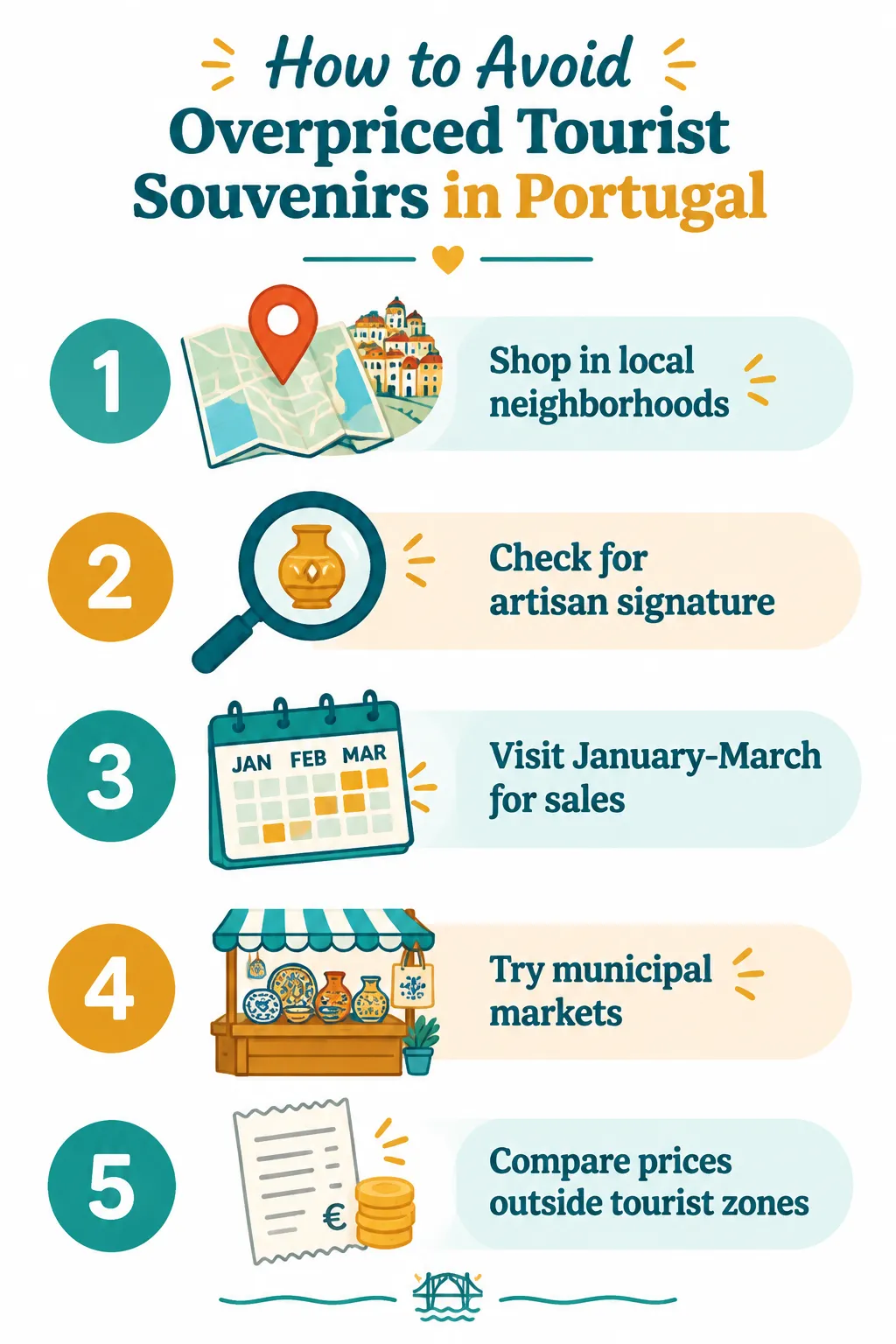
How to Avoid Overpriced Tourist Souvenirs in Portugal
The simplest rule: if the shop is within 200 meters of a major tourist attraction, prices are likely 30-50% higher than elsewhere in the city.
Practical strategies:
- Shop in local neighborhoods – Mouraria, Intendente, and Campo de Ourique in Lisbon; Bonfim and Cedofeita in Porto
- Visit municipal markets – Mercado de Bolhão (Porto) and Mercado de Campo de Ourique (Lisbon) have local vendors at fair prices
- Look for the “Produto Artesanal” certification – a Portuguese government label for authentic handmade goods
- Buy directly from workshops – many artisans sell from their studios, especially in smaller towns
- Travel in January to March – post-Christmas sales and fewer tourists mean lower prices and more negotiating room
What Should I Not Buy as a Souvenir in Portugal?
Skip anything labeled “Made in China” that’s dressed up with Portuguese imagery. This includes most cheap ceramic roosters, printed-not-painted tiles, and generic “Lisboa” merchandise. Also avoid:
- Mass-produced fado CDs at tourist shops – stream fado instead and buy a quality recording from a local music store
- Synthetic cork products – real cork has a distinct texture and slight imperfections; synthetic versions feel uniform and plasticky
- Bottled wine from supermarket tourist displays – often overpriced; go to a proper wine shop for the same bottle at half the price
What’s the Best Time to Buy Things in Portugal for Cheaper Prices?
January through March is the best window for cheaper shopping in Portugal. Post-Christmas sales (soldes) run through January, and tourist footfall is at its annual low – which means artisans and market vendors are more willing to negotiate.
Seasonal shopping tips:
- January: Best for textiles, ceramics, and clothing – sales of 30-50% are common
- Summer (June-August): Highest prices, most competition, but also the most markets and pop-up artisan fairs
- September-October: Good balance – summer crowds thin out but artisan markets are still active
- December: Christmas markets in Lisbon and Porto have excellent handicrafts but at peak prices
For wine, prices don’t fluctuate much seasonally – but visiting the Douro Valley during harvest (September-October) gives you access to estate sales and tastings that aren’t available year-round.
Portuguese Olive Oil and Gourmet Foods Worth Buying
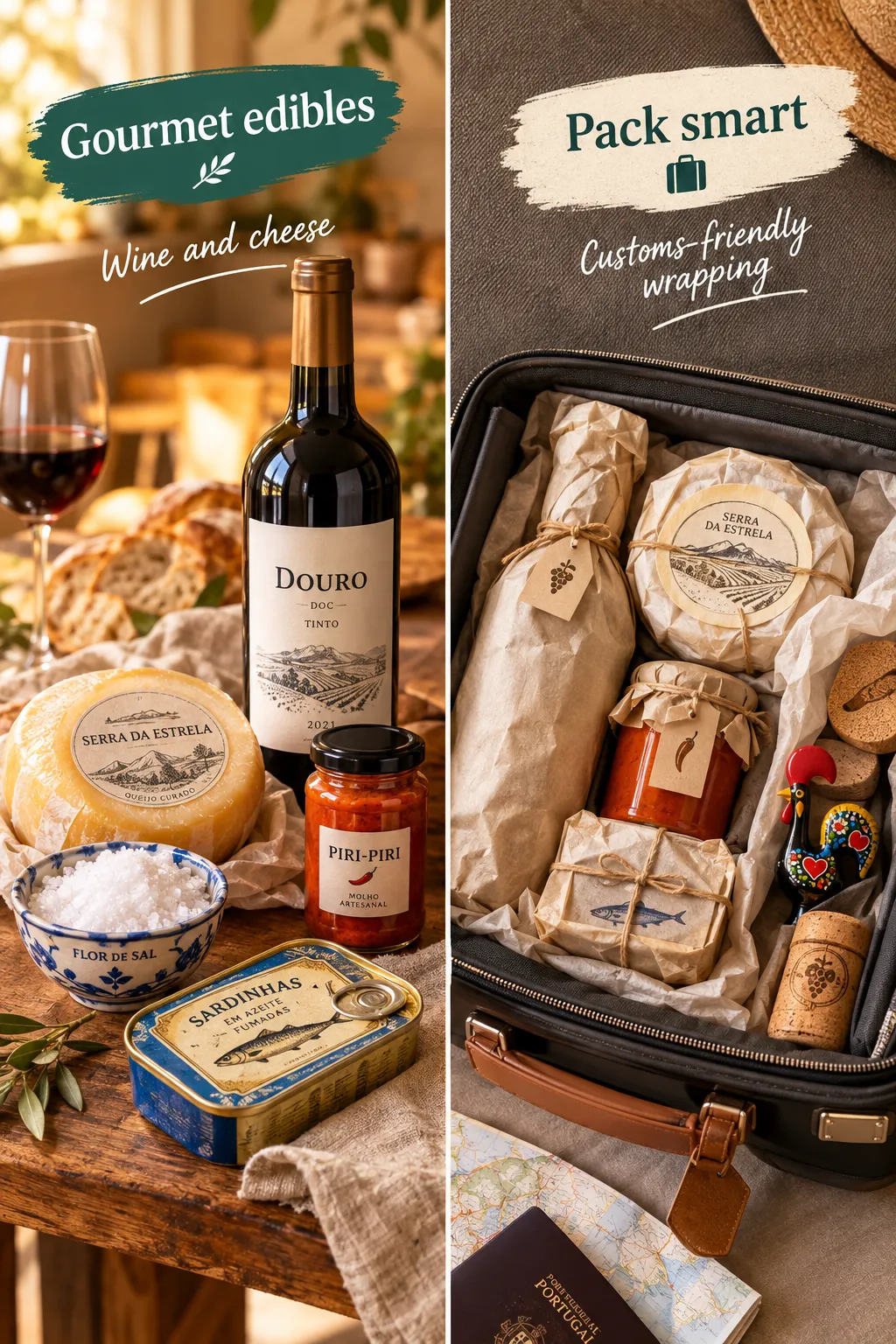
Portuguese olive oil is genuinely world-class. Portugal won 32 awards at the 2025 NYIOOC World Olive Oil Competition, one of the most respected competitions in the industry. Bringing home a bottle of award-winning Portuguese olive oil costs €8 to €20 – a fraction of what you’d pay for comparable quality elsewhere.
Top gourmet food souvenirs:
- Flor de sal (Algarve) – hand-harvested sea salt, sold in ceramic pots or linen bags. Around €4 to €10
- Piri-piri sauce – the real Portuguese version is smoky and complex, not just hot
- Serra da Estrela cheese – Portugal’s most celebrated cheese, a soft, buttery sheep’s milk variety from the central mountains
- Mel do Alentejo – Alentejo honey, often sold at local markets
- Pastel de nata kits – some bakeries sell premade kits with the custard tart recipe and pre-made pastry shells
If you’re planning a broader Iberian trip, you might also enjoy reading about things to do in Marbella, Spain or top things to do in Seville, Spain – both destinations have their own excellent food and craft markets worth exploring.
Where Do Locals Actually Shop for Gifts in Portugal?
Locals shop at municipal markets, neighborhood concept stores, and artisan cooperatives – not the souvenir shops near Praça do Comércio.
Lisbon locals’ favorites:
- Mercado de Campo de Ourique – food hall with local producers selling olive oil, cheese, and conservas
- A Vida Portuguesa (multiple locations) – a beloved concept store stocking nostalgic Portuguese household goods, soaps, and ceramics with a design edge
- Embaixada (Príncipe Real) – a curated shopping gallery in a 19th-century palace, focused on Portuguese designers
- Fábrica Sant’Anna showroom – locals buy tiles here for home renovations and gifts
Porto locals’ favorites:
- Mercado de Bolhão – renovated historic market with local food vendors
- Rua Miguel Bombarda – independent galleries and design shops
- Livraria Lello – yes, it’s touristy, but locals genuinely buy books here
For a deeper look at what to do while you’re in the capital, our ultimate Lisbon Portugal travel guide covers neighborhoods, food, and day trips in detail.
FAQ
What is the most popular thing to buy in Portugal?
Hand-painted azulejo tiles are consistently the most popular souvenir. They’re uniquely Portuguese, made by skilled artisans, and available in sizes that fit any budget or luggage allowance.
Is cork from Portugal good quality?
Yes. Portugal is the world’s leading cork producer, and cork articles exported from Portugal represent some of the highest-quality cork goods available globally. Look for products from certified Portuguese brands rather than imported imitations.
Can I bring Port wine on a plane from Portugal?
Port wine is typically above 20% ABV, which means it falls under fortified wine rules. You can pack it in checked luggage (well-wrapped) or carry it on if it’s sealed and within your airline’s liquid limits for duty-free purchases. Check your specific airline and destination country rules before flying.
How do I know if a ceramic rooster is authentic?
An authentic Barcelos rooster is hand-painted and will have slight irregularities in the glaze and brushwork. It should have a maker’s mark or label from a certified Portuguese ceramics workshop. Mass-produced versions are uniform, lightweight, and often made outside Portugal.
What’s the best Portuguese food souvenir for customs?
Tinned conservas (sardines, mackerel, tuna) and sealed olive oil are the safest food souvenirs for international customs – they’re commercially packaged, shelf-stable, and accepted in most countries including the US, UK, and Australia.
Is Portuguese filigree jewelry expensive?
Not by European standards. A quality silver filigree Viana heart pendant typically costs €30 to €80. Gold versions run higher but are still affordable compared to similar artisan jewelry in France or Italy.
Where is the best place to buy wine in Lisbon?
Garrafeira Nacional (Rua de Santa Justa) and Napoleão (Rua dos Fanqueiros) are the two most respected wine shops in Lisbon. Both have knowledgeable staff and a wide selection at fair prices.
What should I buy in Porto specifically?
Porto is the home of Port wine, so visiting a lodge in Vila Nova de Gaia for a tasting and bottle purchase is the obvious answer. Porto is also excellent for filigree jewelry (the Minho region is nearby), Burel wool products, and conservas from local brands.
Are there good souvenirs to buy in the Algarve?
Yes – flor de sal from the Algarve salt pans is the standout regional souvenir. Local honey, almond-based sweets (like Dom Rodrigo), and handmade pottery from Porches are also worth buying.
How much should I budget for souvenirs in Portugal?
A reasonable budget is €100 to €200 for a good mix of items – a bottle of Port, a hand-painted tile or two, a cork wallet, a few tins of conservas, and a jar of flor de sal. You can spend much more on textiles or jewelry, but the basics are very accessible.
Conclusion
Portugal punches well above its weight when it comes to souvenirs that are actually worth buying. The things to buy in Portugal that hold up best are the ones rooted in real craft traditions – azulejo tiles, cork goods, filigree jewelry, conservas, and gourmet foods like olive oil and flor de sal.
Your action plan before you go:
- Research one or two artisan shops in each city you’re visiting – book a tile-painting workshop if you want a truly personal souvenir
- Pack a reusable wine sleeve or bubble wrap for bottles
- Plan at least one shopping trip outside the main tourist zones
- Check your home country’s customs rules for food and alcohol before you buy
- Set a rough budget by category (edibles, crafts, wine) so you don’t blow it all on tiles in the first city
If you’re still planning your trip, check out our ultimate Lisbon Portugal travel guide for neighborhood-by-neighborhood advice. And if Portugal is just one stop on a broader European adventure, our guides to best things to do in Granada, Spain and top things to do in Seville, Spain are worth a read too.
Portugal’s craft traditions are genuinely special. Buy the real thing, and you’ll still be using it years from now.