Quick Answer: The Lofoten Islands sit above the Arctic Circle in northern Norway and rank among the most visually dramatic destinations on Earth, officially recognized by National Geographic as one of the world’s most appealing places to visit [6]. The best time to go depends entirely on what you want: summer (June–August) for the Midnight Sun and hiking, or September–April for the Northern Lights. Plan for at least 5–7 days to cover the highlights without rushing [3].
Key Takeaways 🗺️
- Best overall window: Late June through August for long daylight hours, accessible hiking, and warm(ish) weather
- Northern Lights season: September through April, with peak chances in October–February [6]
- Minimum trip length: 5–7 days for beaches, hikes, and fishing villages; 10–14 days for deep exploration [3]
- Getting there: Fly Wideroe to Leknes or Svolvær, take the ferry from Bodø, or drive the E10 from the north [4]
- Don’t skip: Reinebringen hike, Reine village, Henningsvær, and Nusfjord
- Worth skipping: Overpriced souvenir shops in Å, generic “Arctic experience” tourist packages, and driving the E10 in a rush
- Accommodation: Book rorbuer (traditional fishermen’s cabins) at least 3–4 months ahead for summer
- Budget reality: Norway is expensive. Expect $150–$250+ per person per day including accommodation, food, and activities
- Crowds: July is peak season; shoulder months (May, September) offer a better balance of weather and fewer tourists
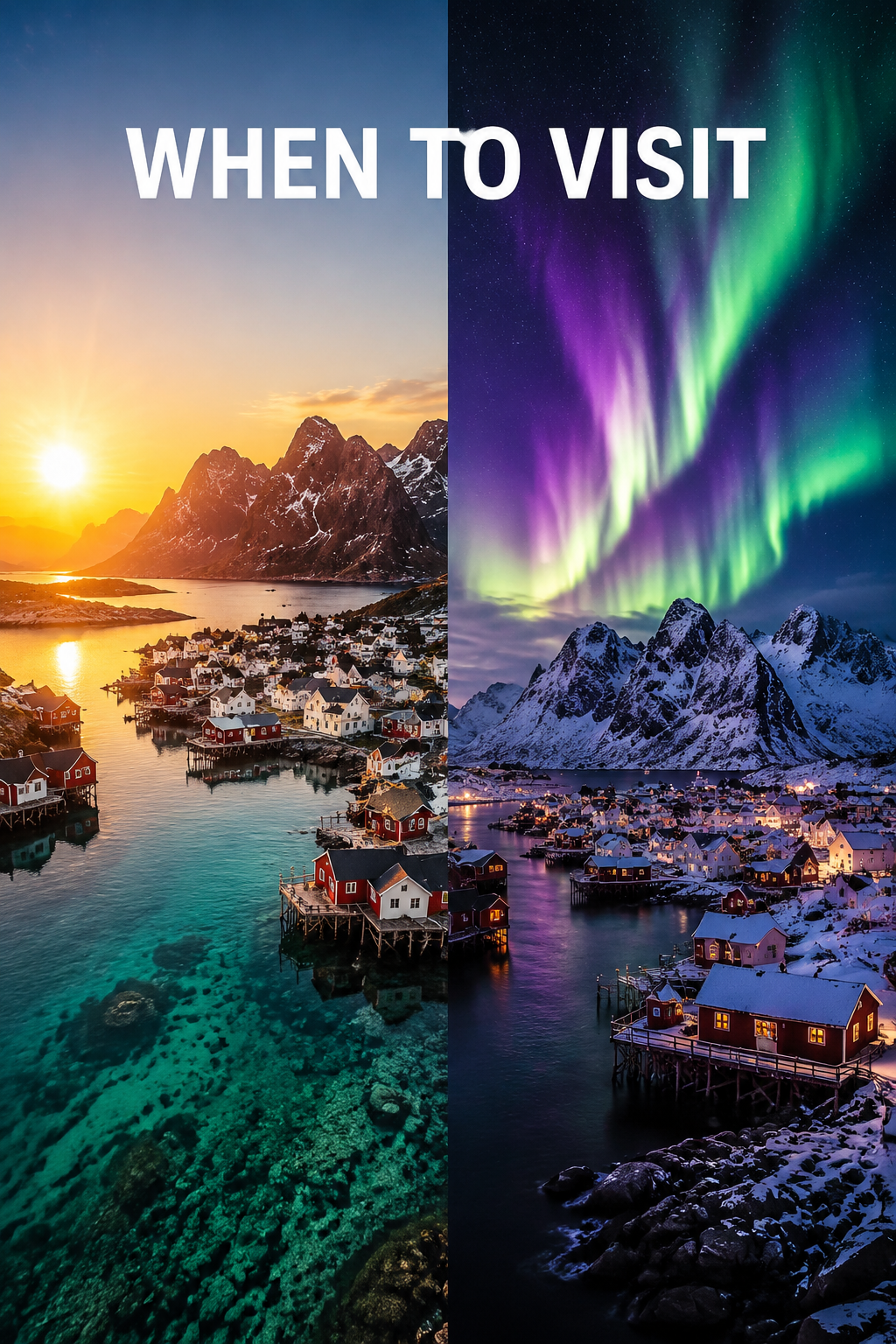
When Should You Visit the Lofoten Islands? (Honest Seasonal Breakdown)
The short answer: visit June–August for hiking and scenery, or October–February for Northern Lights. Every other month is a trade-off worth understanding before you book.
Here’s how each season actually plays out:
| Season | Months | Highlights | Drawbacks |
|---|---|---|---|
| Summer | June–August | Midnight Sun, 24-hr daylight, hiking, beaches | Crowded, expensive, book months ahead |
| Autumn | September–October | Fall colors, fewer crowds, Northern Lights start | Unpredictable weather, some services close |
| Winter | November–February | Northern Lights peak, snow scenery, quiet | Very cold, limited daylight, some hikes closed |
| Spring | March–May | Quiet, affordable, longer days returning | Still cold, patchy snow, limited tourist services |
Summer (June–August) is the most popular window for good reason. The Midnight Sun delivers 24 hours of daylight, which means you can hike Reinebringen at 11 p.m. with full visibility [6]. Temperatures hover around 12–18°C (54–64°F), and all ferries, tours, and restaurants are fully operational.
Autumn (September–October) is genuinely underrated. The contrast between changing leaf colors and the dark blue mountain faces creates a completely different visual palette [1]. Northern Lights viewing begins in September, and the crowds thin out noticeably after mid-August.
Winter (November–February) is for travelers who specifically want the Northern Lights and don’t mind short days (sometimes just 2–3 hours of usable daylight). The islands are stunning under snow, but many hiking trails are icy and dangerous without proper gear.
Practical tip: If you’re combining Lofoten with other parts of Norway, note that tour packages from operators like Nordic Visitor run May through September, with their 12-day Bergen, Fjords & Lofoten self-drive package priced from around $4,713 USD per person [2].
Choose summer if you want hiking, beaches, and the full visual spectacle. Choose October–February if the Northern Lights are your primary goal. Choose May or September if you want to avoid peak crowds while still having reasonable weather.
How Do You Actually Get to the Lofoten Islands?
There are four main ways to reach Lofoten, and the right one depends on your budget, time, and how much of Norway you want to see along the way [4].
Option 1: Fly (Fastest)
Wideroe Airlines connects Oslo and Bergen to three small airports near Lofoten: Leknes, Svolvær (Helle), and Harstad/Narvik. This is the most practical option for most international travelers. Expect connecting flights via Oslo or Bodø.
Option 2: Ferry from Bodø (Most Popular)
The Bodø–Moskenes ferry is a classic entry point. Bodø is easily reached by train or short flight from Oslo. The ferry crossing takes about 3.5 hours and the views are already spectacular before you arrive [4].
Option 3: Drive the E10 from the North
If you’re already in northern Norway, you can drive onto the islands via the E10 highway, which connects Lofoten to the mainland through a series of bridges and tunnels. The road trip from Oslo is roughly 19.5 hours of driving one-way, so this only makes sense if you’re doing a broader Norway road trip [1].
Option 4: Hurtigruten Coastal Ferry (Scenic Slow Option)
The famous Hurtigruten ferry runs from Bergen to Kirkenes with daily stops in Svolvær. It’s a beautiful way to arrive, but it’s slow and often more expensive than flying [4].
Common mistake: Many travelers assume the overnight train from Oslo is the budget option. It’s actually more expensive than flying and takes 30+ hours [1]. Fly, then rent a car in Leknes or Svolvær.
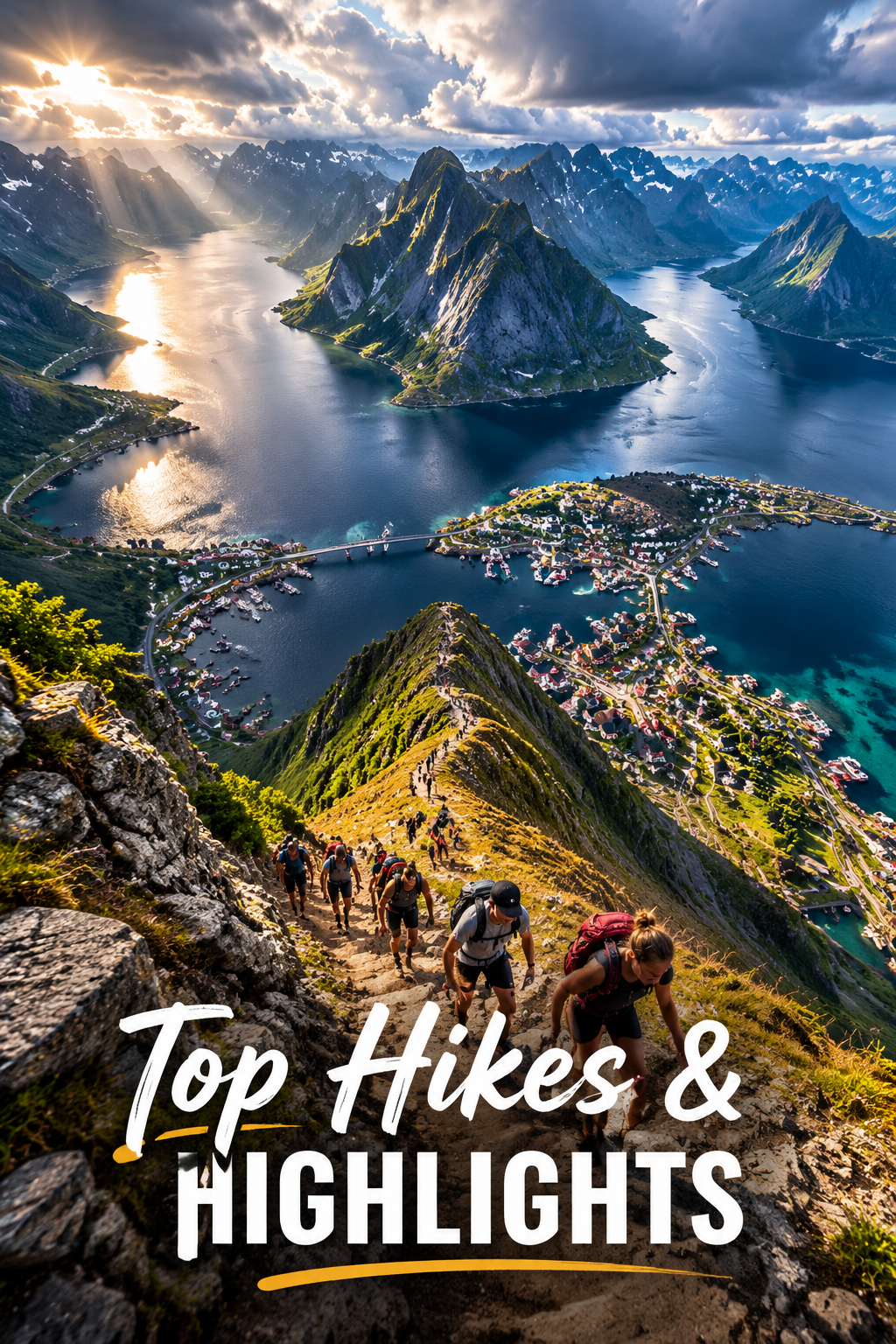
Lofoten Islands Norway Travel Guide: What You Actually Need to See
The islands reward slow travel. The best experiences here are free or low-cost, and the ones worth paying for are specific hikes and boat tours, not generic tourist packages.
🏔️ Reinebringen (Don’t Skip This)
The most iconic hike in Lofoten. The trail climbs steeply from Reine village to a ridge at 448 meters, giving you a jaw-dropping view of the Moskenesøya coastline and surrounding peaks [7]. It’s challenging but not technical. Allow 2–3 hours round trip. The trail has been reinforced with stone steps in recent years to manage erosion from heavy foot traffic.
🏘️ Reine Village
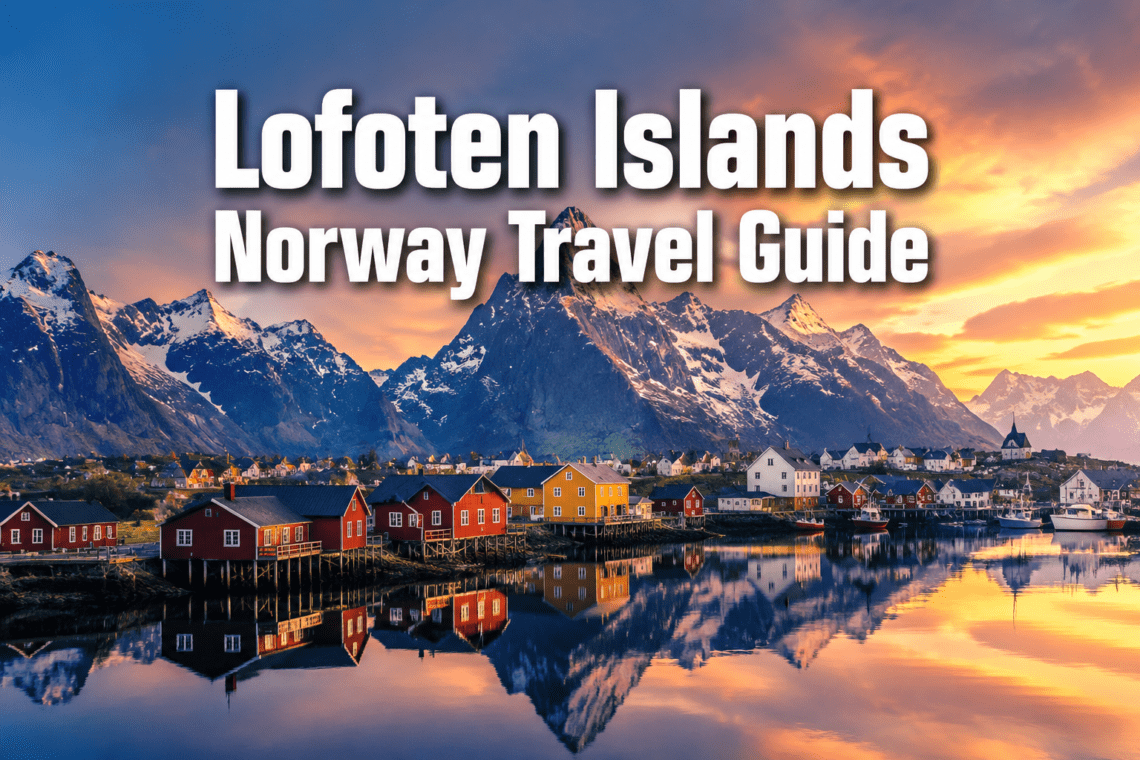
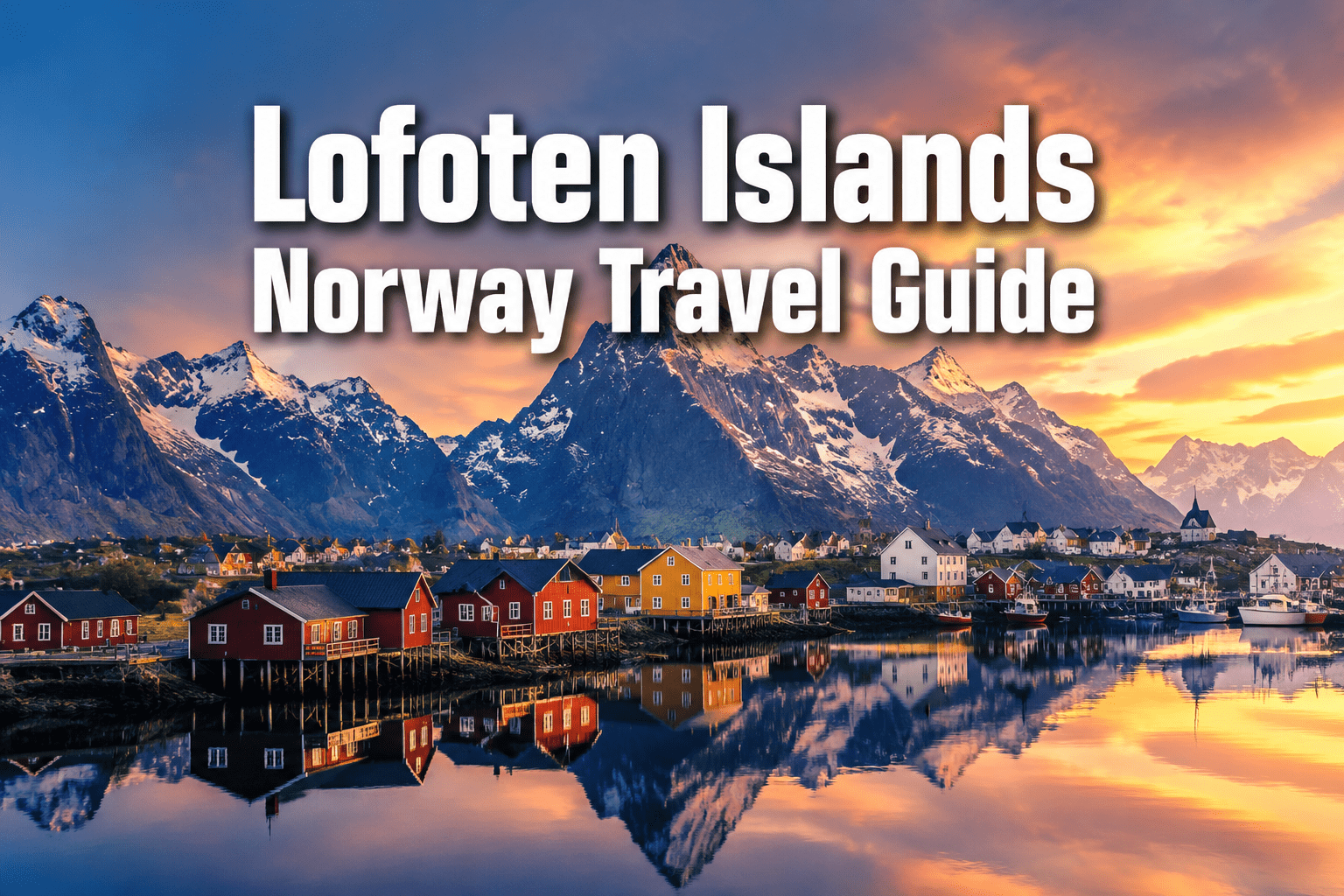
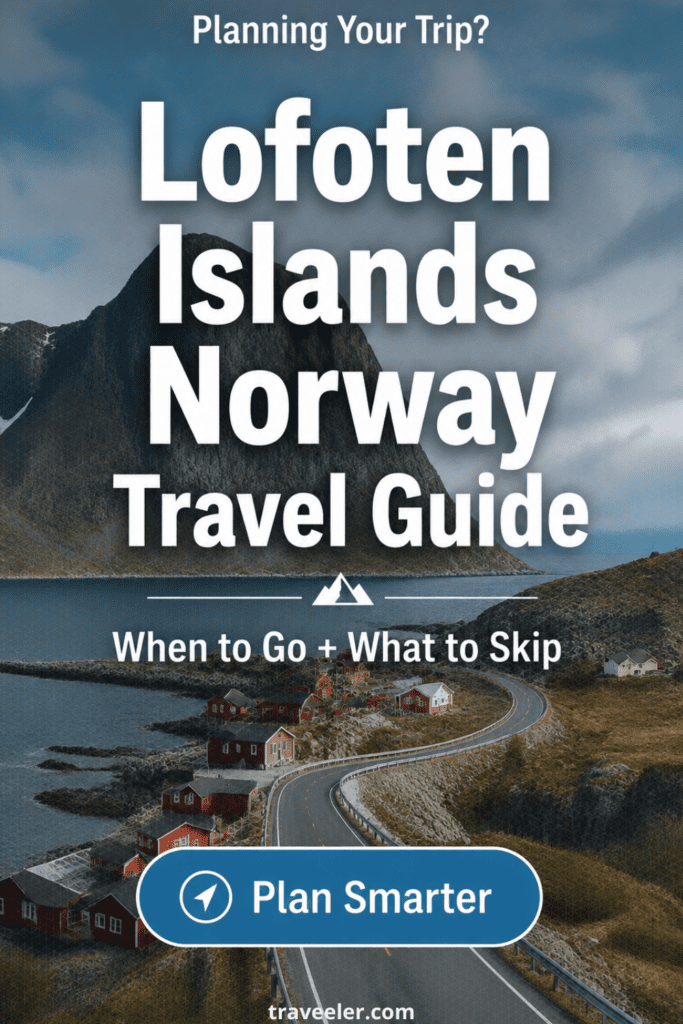
Widely considered the most photogenic village in Norway, Reine sits at the base of Reinebringen surrounded by still water and mountain walls. Walk around the harbor, grab coffee, and watch the light change. It looks different every hour [5].
🎣 Henningsvær
Often called the “Venice of Lofoten,” this fishing village sits on a cluster of small islands connected by bridges. It has the best café scene on the islands, a famous football pitch built on a tiny island (look it up), and a thriving art gallery community.
🏖️ Kvalvika Beach
A remote Arctic beach with turquoise water that genuinely looks like it belongs in the tropics, except it’s cold. Getting there requires a 45-minute hike each way from Fredvang or a longer trail from Nusfjord. Worth every step [7].
🏚️ Nusfjord
One of the best-preserved fishing villages in Norway, Nusfjord charges a small entry fee (around 50 NOK) but it’s completely worth it. The red and yellow rorbuer cabins here are the most photographed in Lofoten.
🌊 Unstad Beach
The surf capital of the Arctic. Yes, people surf here year-round. Even if you don’t surf, the beach and the drive to get there through the mountains are spectacular.
Also worth your time: Lofotr Viking Museum in Borg (the largest Viking longhouse ever discovered), the Å fishing village at the very end of the E10, and the Svolværgeita twin peaks above Svolvær town.
What to Skip (Or at Least Temper Your Expectations)
Not everything marketed to tourists in Lofoten is worth your time or money. Here’s what you can safely deprioritize.
- Generic “Arctic experience” packages: Many tour operators bundle overpriced boat trips and snowshoe walks that you can do independently for a fraction of the cost.
- Souvenir shops in Å: The village itself is charming, but the shops selling mass-produced Viking merchandise are identical to what you’ll find at Oslo Airport.
- Driving the E10 without stopping: The highway itself is beautiful, but rushing it just to say you drove it misses the point entirely. Stop at every pull-off.
- Svolvær city center: Svolvær is the largest town and a useful base, but it’s not particularly scenic compared to Reine or Henningsvær. Use it for logistics, not sightseeing.
- Crowds at Reinebringen in July: The hike is worth doing, but going at 6 a.m. or after 8 p.m. in summer gives you the same view with a fraction of the people.
Where to Stay in the Lofoten Islands (Accommodations Guide)
Book early, especially for summer. The most sought-after accommodation in Lofoten sells out 3–4 months in advance, and prices reflect the remote location.
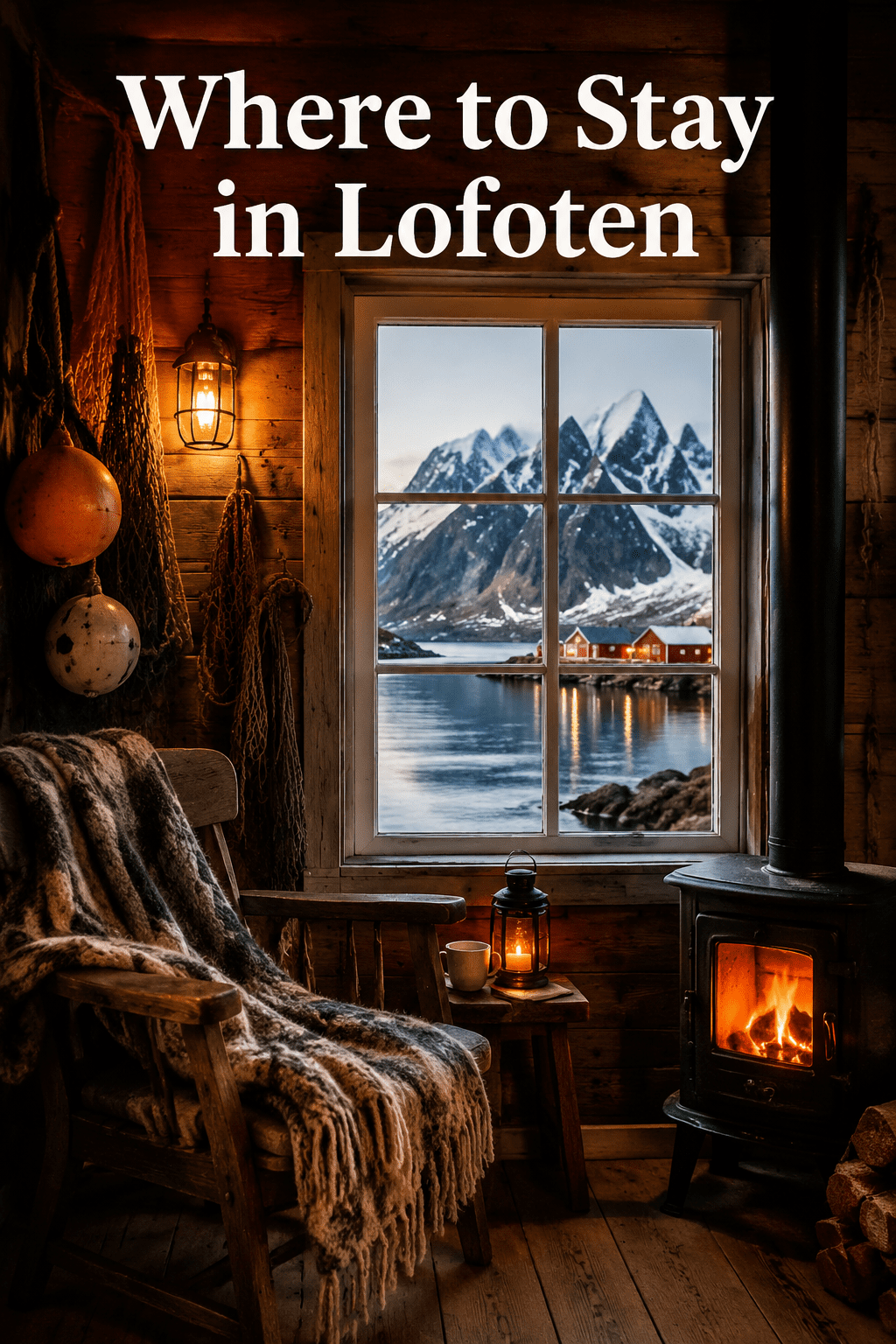
Rorbuer (Traditional Fishermen’s Cabins)
These iconic red or yellow wooden cabins built on stilts over the water are the defining Lofoten experience. Many have been converted into comfortable tourist accommodation with modern kitchens and bathrooms while keeping the original character. Expect to pay $150–$350+ per night depending on location and season.
Best rorbuer clusters:
- Sakrisøy (near Reine): Arguably the most scenic location on the islands
- Nusfjord: Historic cabins with the full fishing village atmosphere
- Å i Lofoten: End-of-the-road charm, very limited options so book early
Hotels & Guesthouses
Svolvær has the most hotel options including the well-regarded Thon Hotel Lofoten and Scandic Svolvær. These are practical for logistics but lack the character of a rorbuer stay.
Camping
Wild camping is legal in Norway under the “allemannsretten” (right to roam) law, and Lofoten has several established campsites. This is the budget option, but weather can be unpredictable so a quality tent is non-negotiable.
Hostels
A handful of hostels operate in Svolvær and Leknes, popular with solo travelers and hikers. Expect $40–$80 per night for a dorm bed.
Budget reality check: Norway is one of the most expensive countries in Europe. A mid-range trip (rorbuer accommodation, self-catering some meals, a few paid activities) runs approximately $150–$250 per person per day. Eating out for every meal adds up fast: a main course at a restaurant typically costs $30–$50 USD.
If you enjoy island-hopping in dramatic scenery, you might also like our Sardinia Italy Travel Guide for First-Timers for a warmer alternative with similarly stunning coastal landscapes.
How Long Should You Spend in Lofoten?
For most travelers, 5–7 days covers the main highlights comfortably. If you want to hike remote trails or combine Lofoten with other parts of Northern Norway, plan for 10–14 days [3].
Here’s a rough framework:
- 3–4 days: You can see Reine, Henningsvær, and do Reinebringen, but it’ll feel rushed
- 5–7 days: The sweet spot for most travelers — beaches, hikes, villages, and some flexibility for weather delays
- 10–14 days: Allows for remote hikes like Munkebu, day trips to outer islands, and combining with Tromsø or the Vesterålen archipelago
Weather caveat: Build in at least one buffer day. Rain and low clouds can close hiking trails and reduce visibility significantly. Having a flexible itinerary matters more here than almost anywhere else.
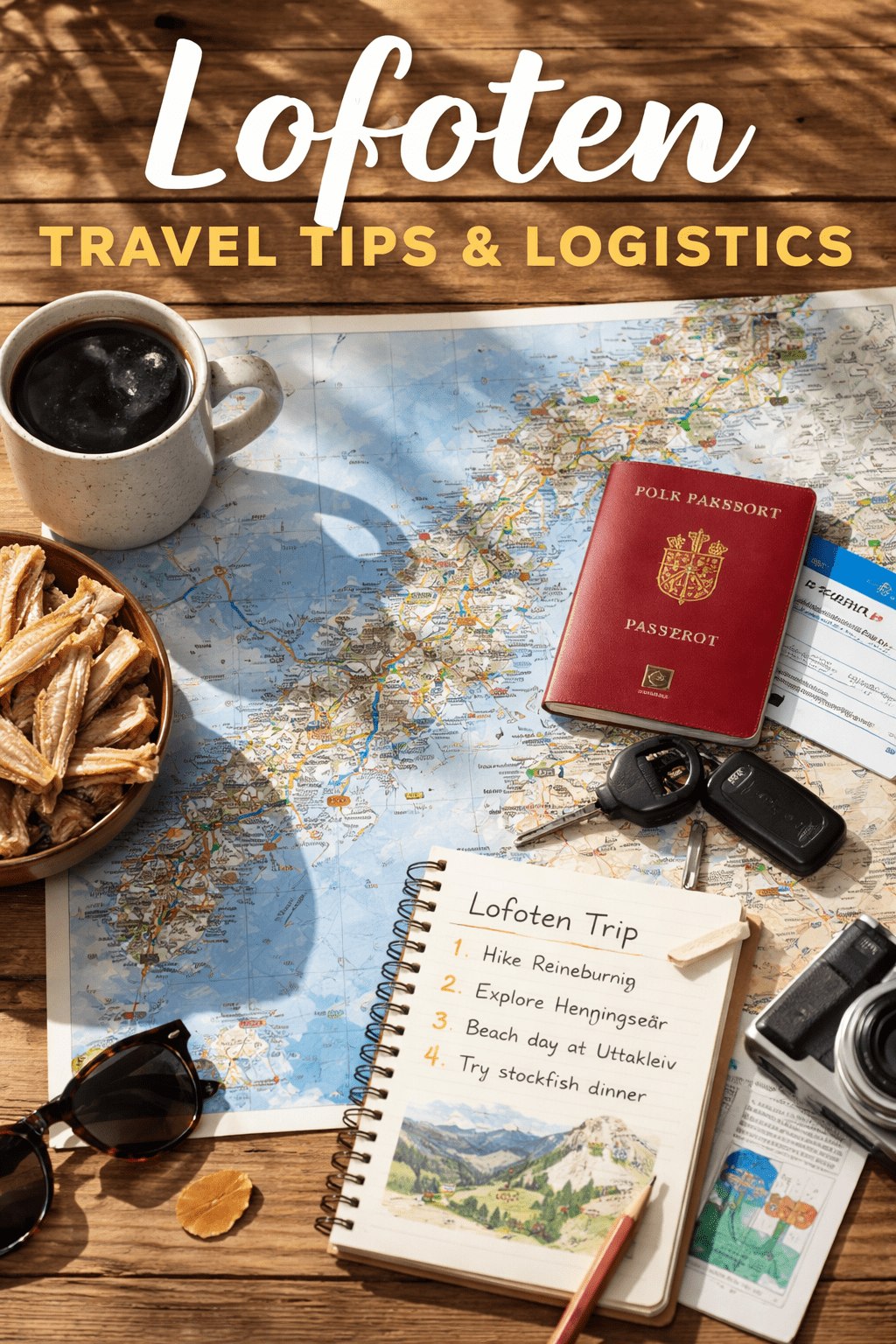
Lofoten Islands Norway Travel Guide: Practical Tips Before You Go
A few things that will save you time, money, and frustration:
- Rent a car. Public transport exists but is limited. A rental car is almost essential for reaching Kvalvika Beach, Nusfjord, and the smaller villages. Book through the Leknes or Svolvær airport for best availability [4].
- Download offline maps. Mobile signal drops in mountain areas and on remote roads.
- Pack layers. Even in July, temperatures can drop quickly and wind off the water is cold.
- Book accommodation before flights. In peak summer, accommodation sells out before flights do.
- Try the stockfish (tørrfisk). Lofoten is the center of Norway’s dried cod industry. It’s not for everyone, but trying it fresh at a local restaurant is a genuine cultural experience.
- Respect trail conditions. Several popular hikes have been closed or restricted in recent years due to erosion. Check with local tourist offices before heading out [7].
- Carry cash. Most places accept cards, but a few remote cabins and small vendors are cash only.
For more inspiration on planning a Scandinavian trip, check out our guide on what to see in Copenhagen or explore what to see in Scotland if you’re building a broader Nordic and North Atlantic itinerary.
If you’re planning a solo trip, our 15 best places for solo female travel includes Scandinavia as one of the safest and most rewarding regions for independent travelers.
FAQ: Lofoten Islands Norway Travel Guide
Q: Is Lofoten worth the expense?
Yes, if dramatic Arctic landscapes and authentic Norwegian culture are priorities for you. It’s expensive, but the scenery is genuinely unlike anywhere else in Europe.
Q: Can I see the Northern Lights in Lofoten?
Yes. The Northern Lights are visible from September through April, with the highest activity in October–February [6]. Clear skies are required, so there’s no guarantee on any given night.
Q: Do I need to speak Norwegian?
No. English is widely spoken throughout Norway, including in remote Lofoten villages.
Q: Is Lofoten good for families with kids?
Yes, with some planning. The rorbuer experience is unique for children, and beaches like Haukland are safe and accessible. Strenuous hikes like Reinebringen are not suitable for young children.
Q: What’s the best village to base yourself in?
Reine is the most scenic, but accommodation is limited and expensive. Svolvær offers the most services and transport links. Leknes is central and practical. Most travelers base in one location and day-trip across the islands.
Q: Can I visit Lofoten on a budget?
Relatively. Wild camping is legal, self-catering cuts food costs dramatically, and most of the best experiences (hiking, beaches, village walks) are free. Budget travelers report spending $60–$90 per day with camping and self-catering.
Q: How do I get from Bodø to Lofoten?
The ferry from Bodø to Moskenes takes approximately 3.5 hours and runs daily. Book in advance during summer as car spaces sell out [4].
Q: Is Lofoten safe for solo travelers?
Very safe. Norway consistently ranks among the safest countries in the world. The main risks are weather-related on hiking trails, not personal safety.
Q: What’s the weather like in Lofoten in September?
Expect temperatures of 8–14°C (46–57°F), frequent rain, and the start of Northern Lights season. It’s a beautiful time to visit with autumn colors and fewer crowds [1].
Q: Are there any hidden gems beyond the main tourist spots?
Yes. The Engelbreen glacier near Svartisen (accessible from the mainland before crossing to Lofoten), the Trollfjord boat trip from Svolvær, and the Lofotr Viking Museum are all undervisited relative to their quality [9].
Conclusion: Your Next Steps for Planning a Lofoten Trip
The Lofoten Islands are one of those rare destinations that actually live up to the hype, but only if you plan with realistic expectations about cost, weather, and timing. The razor-sharp peaks, red rorbuer cabins, and Arctic light are genuinely extraordinary [6]. The key is giving yourself enough time (at least 5–7 days), renting a car, and booking accommodation well in advance.
Here’s what to do next:
- Decide your season based on whether you want the Midnight Sun (June–August) or Northern Lights (October–February)
- Book your rorbuer first, then your flights — accommodation is the harder thing to secure
- Arrange a rental car at Leknes or Svolvær airport
- Plan your route around the E10, with Reine, Henningsvær, and Nusfjord as anchor stops
- Build in one buffer day for weather flexibility
For more European island inspiration while you’re planning, our Sardinia Italy Travel Guide and what to see in Crete Greece offer warmer alternatives worth comparing. And if you’re building a broader Nordic adventure, our Glasgow Scotland guide is a great add-on for a UK and Scandinavia combination trip.
Lofoten rewards the traveler who slows down. Go for the light, stay for the silence.
References
[1] Lofoten Islands – https://www.explorenlauren.com/lofoten-islands/
[2] Lofoten Islands – https://www.nordicvisitor.com/norway/lofoten-islands/
[3] Ultimate Lofoten Travel Guide – https://beyondurban.se/ultimate-lofoten-travel-guide/
[4] Lofoten Islands Travel Guide – https://traveltonorway.org/lofoten-islands-travel-guide/
[5] Attraction Review – Guide To Lofoten Reine – https://www.tripadvisor.com/Attraction_Review-g1527771-d28121859-Reviews-Guide_To_Lofoten_Reine-Reine_Moskenes_Municipality_Moskenesoy_Lofoten_Islands_N.html
[6] visitlofoten – https://visitlofoten.com/en/
[7] The Best Viewpoints And Hikes Of Lofoten Islands – https://www.thebestviewpoints.com/2025/10/14/the-best-viewpoints-and-hikes-of-lofoten-islands/
[9] Activities Lofoten – https://souvenirs.vincent.voyage/activities-lofoten/