
Last updated: September 7, 2026
Quick Answer: Most tourists visiting Paris and France in winter pack the obvious stuff – a coat and a sweater – and forget the 17 smaller items that actually make or break the trip. Packing for France in winter means planning for wet cobblestones, cold wind tunnels near the Seine, and a local style culture that quietly judges athletic sneakers. This guide covers every forgotten item, the real winter weather by month, and exactly how French people stay warm and chic at the same time.
Key Takeaways
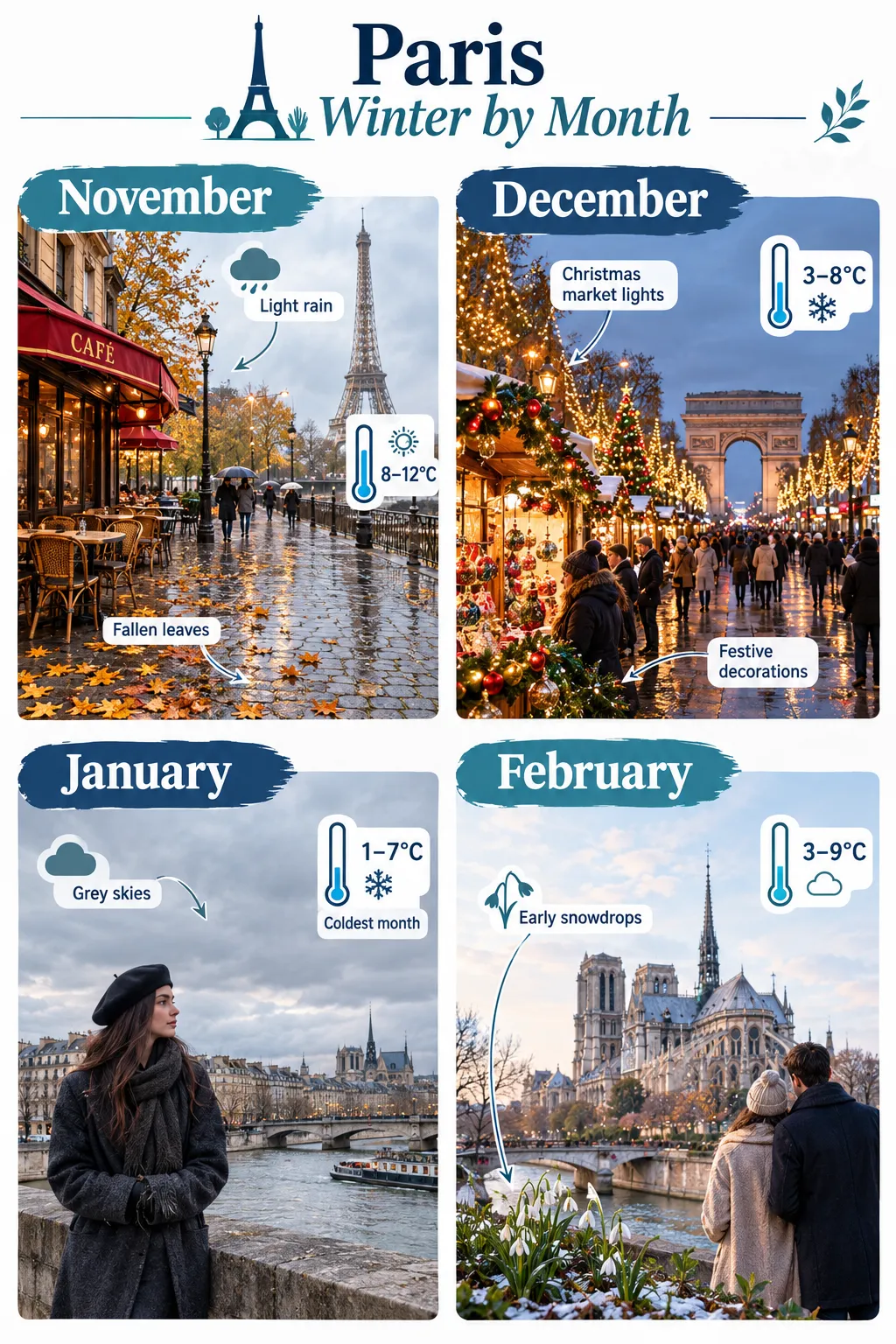
- Paris winter temperatures range from about 1°C (34°F) in January to 12°C (54°F) in November, with persistent drizzle throughout.
- A waterproof, tailored wool coat is the single most important item for packing for France in winter.
- Thermal base layers are the most commonly forgotten item – tourists skip them and regret it fast.
- Waterproof leather ankle boots beat sneakers on wet cobblestones every single time.
- The French don’t do “puffy tourist” – dark colors, tailored cuts, and quality fabrics are the local standard.
- A compact travel umbrella, a silk or wool scarf, and a crossbody bag round out the essentials most visitors miss.
- Pack light: a 40-liter carry-on or a medium checked bag handles a 10-day Paris winter trip comfortably.
- Winter is actually a great time to visit Paris – fewer crowds, lower hotel rates, and magical Christmas markets from late November through early January.
What’s the Weather Like in France in Winter – and How Cold Does It Get?
France in winter is cooler and wetter than most North American and British visitors expect, but it’s rarely brutal. Paris sits at roughly the same latitude as Vancouver, Canada, so winters are damp and grey rather than deeply frozen.
Here’s a quick breakdown by month:
| Month | Average Low | Average High | Rain Days |
|---|---|---|---|
| November | 5°C (41°F) | 12°C (54°F) | ~13 days |
| December | 3°C (37°F) | 8°C (46°F) | ~12 days |
| January | 1°C (34°F) | 7°C (45°F) | ~11 days |
| February | 2°C (36°F) | 9°C (48°F) | ~10 days |
| March | 4°C (39°F) | 13°C (55°F) | ~11 days |
Sources: Météo-France historical averages and France travel packing guide
January is the coldest month in Paris, with lows that can dip to -2°C (28°F) during cold snaps. February and March bring slightly warmer days but still plenty of rain. November and December feel mild at first but the wind chill near the Seine and in open plazas cuts right through a thin jacket.
Is France colder than the US in winter? Compared to New York or Chicago, Paris winters are milder but far more persistently damp. The humidity makes 5°C feel colder than a dry 0°C in Denver. That’s why layering and waterproofing matter more than raw temperature ratings.
Is France humid or dry in winter? France in winter is humid, especially in Paris and along the Atlantic coast. The air is rarely crisp and dry – it’s the kind of cold that seeps into your bones through damp wool if you’re not dressed right. Packing the right layers for French winter weather makes a real difference to how comfortable you feel.
The Complete Paris Winter Packing List – 17 Things Tourists Always Forget
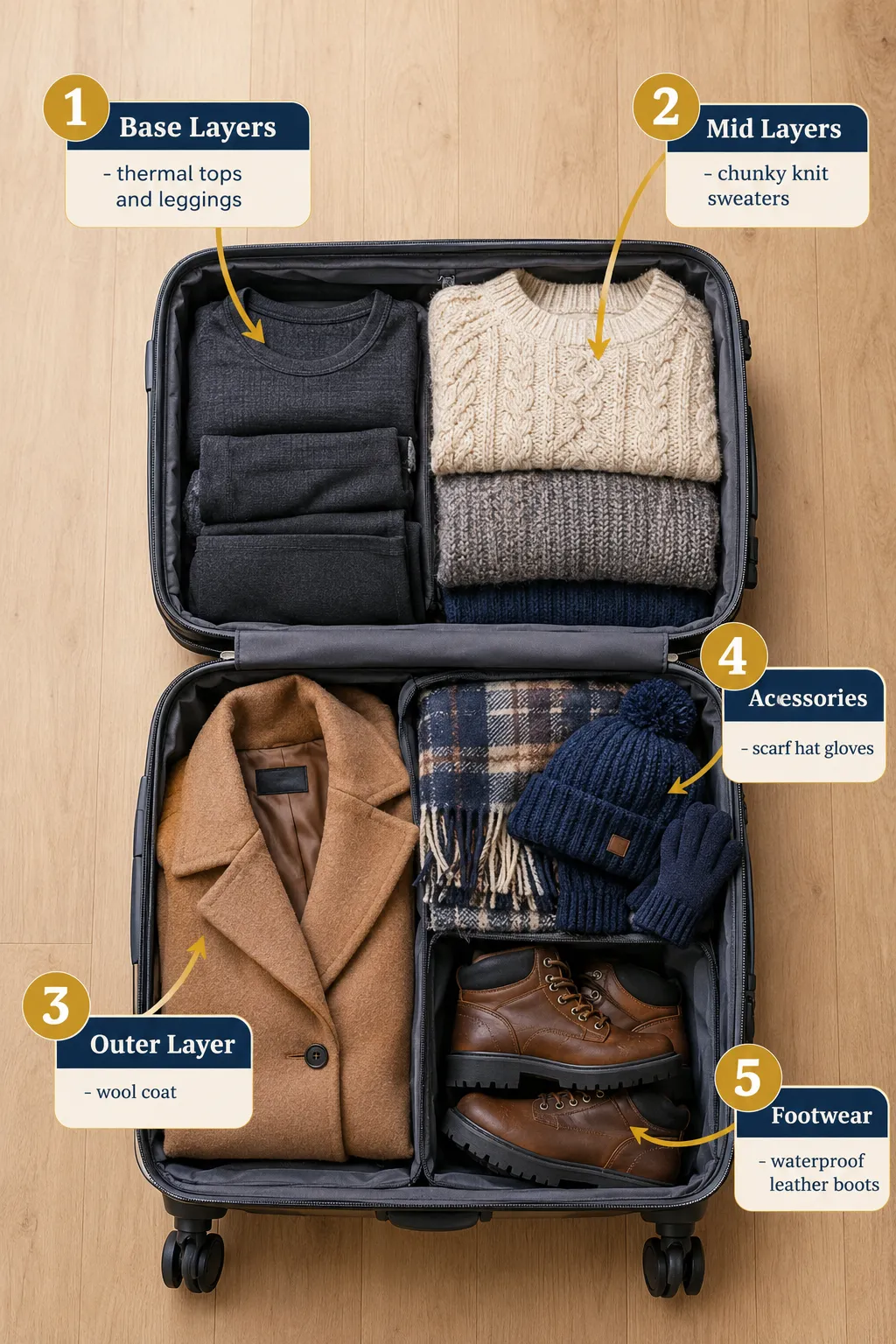
This is the ultimate winter packing guide for France. Most people remember a coat. Here are the 17 items they don’t.
1. Thermal Base Layers
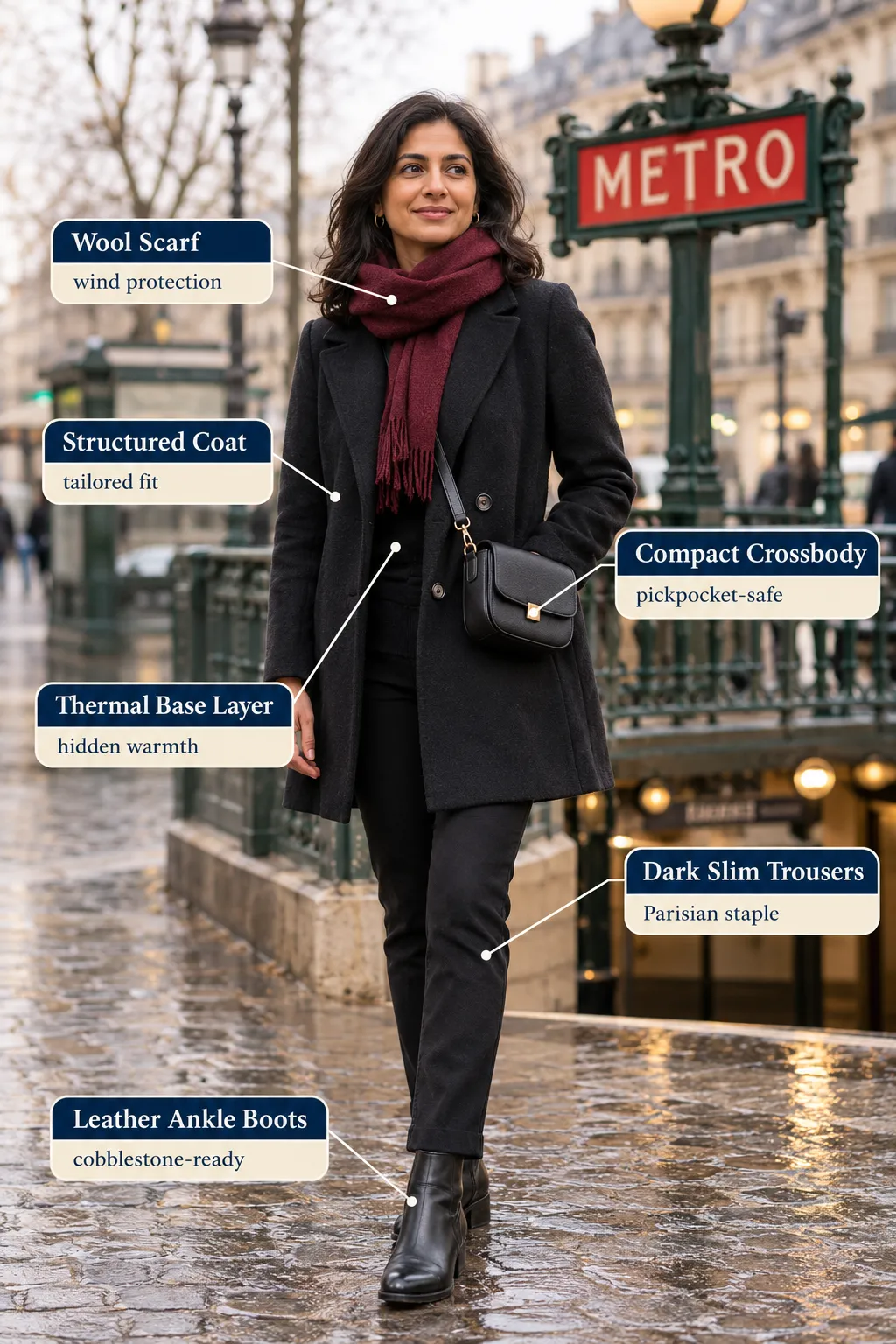
Thermal underwear tops and leggings are the single most forgotten item when packing for France in winter. You don’t see them, so tourists skip them – and then freeze. A thin merino wool or synthetic thermal layer under your regular clothes adds 4-6°C of warmth without bulk. Pack at least two sets.
2. A Waterproof Wool or Wool-Blend Coat
Not a puffer. Not a fleece. A tailored, water-resistant wool or wool-blend coat is the Paris winter standard. Parisian women and men wear structured coats in camel, navy, charcoal, or black – and they look effortlessly put-together while staying warm. A winter coat with a bit of water resistance handles the constant drizzle without looking like you’re about to board a ski lift.
3. Waterproof Leather Ankle Boots
This is the footwear choice that separates comfortable visitors from miserable ones. Paris cobblestones get slick and slushy in winter. Waterproof leather ankle boots with a low, grippy heel are the French go-to. They’re stylish enough for a nice dinner and sturdy enough for a long walk along the Seine.
4. A Compact Travel Umbrella
Please don’t rely on buying one at a Paris tourist shop – they charge a premium and sell flimsy ones. Pack a compact, wind-resistant travel umbrella. Winter in Paris means you’ll need it on at least half your days there.
5. A Wool or Cashmere Scarf
French people treat the scarf like armor. A chunky knit or fine wool scarf blocks wind, adds warmth, and doubles as a style statement. It’s also one of the easiest ways to look like you belong in Paris rather than like a tourist fresh off a plane.
6. Warm Hat and Gloves
These are obvious – and yet tourists leave them behind “to save space.” Don’t. A fitted wool beanie and leather or lined gloves take almost no room in your bag and make a huge difference on cold January mornings waiting for the Metro.
7. Moisture-Wicking Socks
Cotton socks get wet and stay wet. Pack wool or synthetic moisture-wicking socks, especially if you’re wearing boots all day. Cold, wet feet will ruin a museum visit faster than anything else.
8. A Crossbody Bag with a Zipper
Paris is a busy city, and winter crowds around Christmas markets and tourist sites create ideal conditions for pickpockets. A structured crossbody bag with a secure zipper keeps your phone, email confirmation printouts, and travel documents safe while keeping your hands free.
9. Lip Balm and Rich Moisturizer
The damp cold of Paris winter is brutal on skin. Most tourists forget that wind and cold air dry out lips and hands fast. Pack a good lip balm with SPF (yes, UV still matters in winter) and a rich hand cream. Your skin will thank you.
10. A Power Adapter for France
France uses Type E plugs (two round pins, 230V). According to multiple France packing checklists, the power adapter is one of the top forgotten items. One universal adapter handles all your devices – phone, camera, laptop.
11. A Reusable Water Bottle
Paris tap water is safe and excellent. Carrying a reusable bottle saves money and reduces plastic waste. In winter, fill it with hot water at your hotel for a makeshift hand warmer on cold walks.
12. Hand Warmers
Disposable air-activated hand warmers are a winter travel secret weapon. Slip them into your coat pockets on a long day at an outdoor Christmas market or a winter walk through the Tuileries Garden. They’re cheap, lightweight, and not sold everywhere in France.
13. A Waterproof Day Pack or Tote
For day trips – to Versailles, to the French Alps, or just around Paris – a small waterproof day pack or tote protects your camera, snacks, and purchases from rain. A packable option folds flat in your suitcase.
14. Medications and Personal Care Items
France has excellent pharmacies, but prescription medications, specific brands of pain relievers, and menstrual products may differ from what you’re used to. Bring enough of your regular medications for the full trip plus a few extra days. Please don’t assume you’ll find your exact brand.
15. A Portable Charger (Power Bank)
Cold temperatures drain phone batteries faster than normal. In Paris winter, you’ll be using GPS navigation, taking photos, and checking maps constantly. A fully charged power bank is essential – especially on long days out.
16. Dark Slim-Cut Jeans or Trousers
French style in winter is built on dark, well-fitted bottoms. Avoid light-wash jeans and athletic pants. Dark slim jeans or tailored trousers pair with everything and look appropriately Parisian. Pack two pairs and you’re set for a 10-day trip.
17. Tights (for Women)
Opaque tights in 60-100 denier are a Paris winter staple for women. They add warmth under skirts and dresses without bulk, and they’re a key part of the classic French feminine winter look. Pack at least two pairs.
Do I Need a Heavy Coat for France in Winter – and What Do French People Wear?
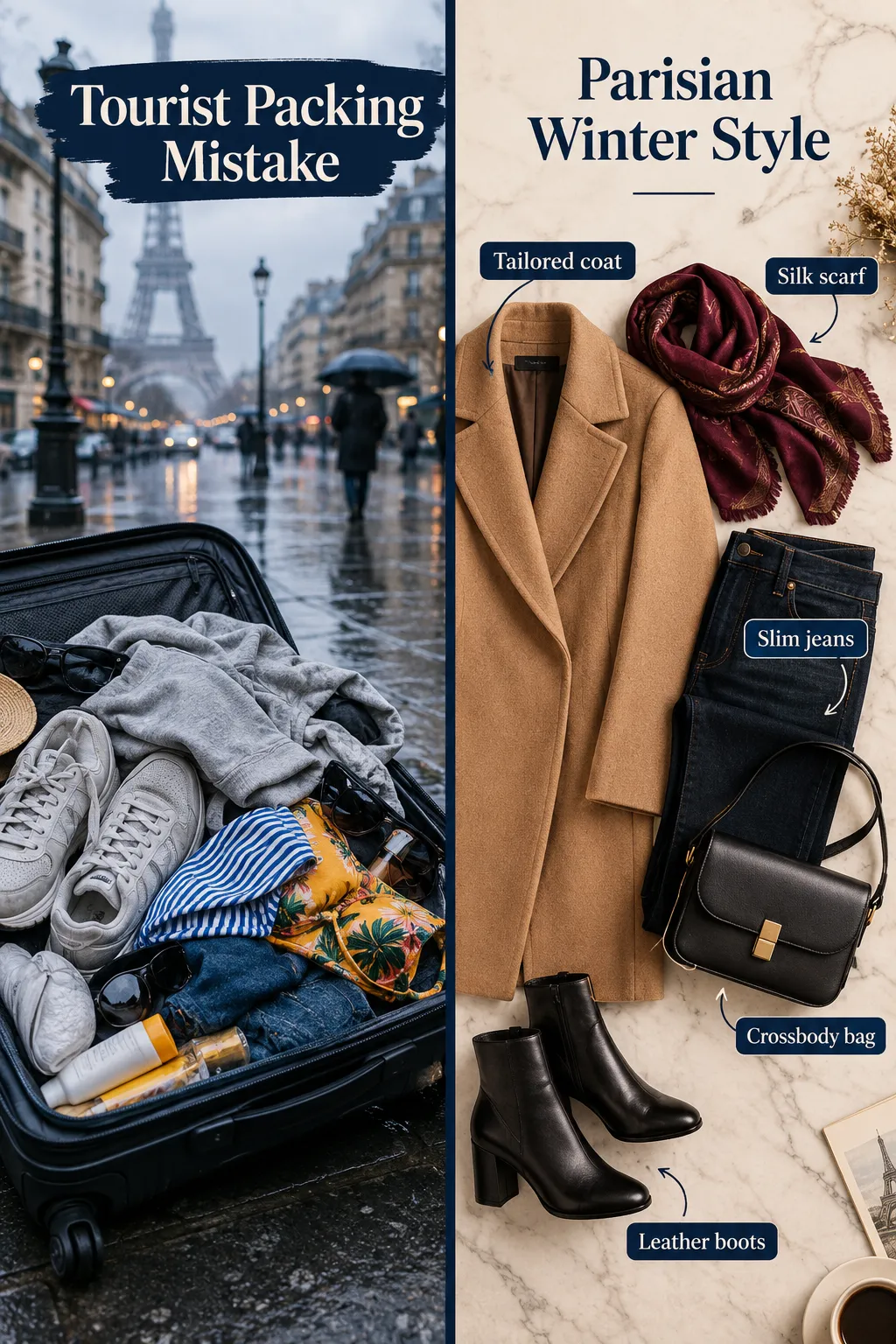
You need a warm coat, but “heavy” doesn’t mean “puffy ski jacket.” The French stay warm through smart layering rather than one enormous outer layer. A medium-weight wool coat over a thermal base layer, a chunky knit sweater, and a scarf handles most Paris winter days comfortably.
How the French stay warm and stylish: The French approach to winter dressing is about quality over quantity. A camel wool coat, a fine merino turtleneck, dark jeans, leather boots, and a silk scarf is the classic Parisian winter outfit. It looks effortless because each piece is well-made and fits properly. French winter style prioritizes tailored silhouettes and neutral palettes – black, navy, camel, burgundy, and grey dominate.
Chunky knits for Paris in winter: A chunky knit sweater or cardigan is a Paris winter essential. It works as a mid-layer under a coat or as a standalone layer in heated museums and restaurants. Pack one or two – they’re versatile and very French.
What about sneakers? You can wear clean, minimalist leather sneakers (think white Stan Smiths or similar) for casual days in Paris. But athletic running shoes or chunky trainers look out of place and get soaked on wet cobblestones. For most winter days, waterproof boots are the better choice.
What to Pack for Paris by Month – November, December, January, February, and March
Each winter month in Paris has a slightly different feel, and your packing list should reflect that.
What to pack for Paris in November: November is the mildest winter month in Paris, with temperatures around 8-12°C. You’ll need a medium-weight coat, a scarf, and waterproof boots, but you can get away with slightly lighter layers than in January. Rain is frequent, so pack that umbrella from day one.
What to pack for Paris in December: December is magical in Paris – Christmas markets line the Champs-Elysées, the city is lit up beautifully, and temperatures hover between 3-8°C. Pack your warmest coat, thermal layers, gloves, and a hat. The Christmas market crowds are dense, so a secure crossbody bag is especially important this time of year.
What to expect in Paris in January and February: January is the coldest month, with potential for frost and occasional light snow. Please make sure your boots have good grip and your coat is genuinely warm. February starts to warm slightly but stays wet. Both months are low season, which means fewer tourists and better hotel rates.
March in Paris: March is technically late winter moving into spring. Temperatures rise to 10-13°C and you’ll see early blooms appearing – some years the cherry blossoms bloom in Paris parks by mid-to-late March. A lighter coat works for March, but keep a warm layer handy for cold evenings.
Packing for France in Winter – Paris vs. the French Alps
Packing for Paris in winter and packing for the French Alps in winter are two very different tasks. Paris is a city trip; the Alps are a mountain adventure.
For Paris: Focus on style-forward warmth – wool coats, leather boots, dark jeans, scarves. You’re walking city streets, sitting in cafes, and visiting museums. Waterproofing matters more than technical performance.
For the French Alps (Chamonix, Méribel, Val d’Isère): You need technical ski gear, UV-protective sunglasses (mountain sun on snow is intense), waterproof ski pants, and proper ski boots. The altitude means temperatures can drop to -15°C or lower. If you’re skiing, rent equipment locally rather than packing it.
Combining both: If your France winter trip includes both Paris and the Alps, pack your Paris wardrobe first, then add technical layers that compress small – a down packable vest, thermal base layers (which serve double duty), and ski gear rented on-site.
How Many Outfits Do I Need – Best Luggage Size for a France Winter Trip
For a 10-day France trip in winter, you need about 5-6 outfit combinations, not 10 separate outfits. The French capsule wardrobe approach means mixing and matching a small number of quality pieces.
A practical 10-day France winter capsule:
- 2 pairs of dark trousers or jeans
- 3-4 tops (mix of lightweight and mid-weight)
- 2 sweaters or chunky knits
- 1 good winter coat
- 1 pair of waterproof leather boots
- 1 pair of comfortable walking shoes or clean sneakers
- Accessories: 2 scarves, 1 hat, 1 pair of gloves
- 5-7 sets of underwear and socks
Best luggage size for France: A 40-liter carry-on backpack or a medium checked bag (around 55-65 liters) handles a 10-day Paris winter trip without checking a bag. According to packing experts, a carry-on forces you to pack smarter and saves time at airports. For two weeks in France, a medium checked bag gives you room for souvenirs on the way home.
For a 2-week France trip in December: Pack the same capsule wardrobe but add one extra sweater, an extra pair of tights or thermal socks, and a small packable tote for day trips. You can do laundry at most Paris hotels or at a local laundromat for about €5-8 per load.
If you’re planning a longer European winter trip, check out the ultimate 2 weeks in Europe spring packing guide for more capsule wardrobe strategies that translate well to winter travel.
Common Packing Mistakes for European Winter Travel in France
The biggest packing mistakes for France in winter fall into three categories: overpacking the wrong things, underpacking the right things, and forgetting the small stuff entirely.
Overpacking mistakes:
- Bringing too many shoes (two pairs maximum works for most trips)
- Packing bulky sweaters instead of thin, packable thermal layers
- Bringing a giant puffer coat that takes up half your suitcase
Underpacking mistakes:
- Skipping thermal base layers (“I’ll be fine”)
- Bringing only one pair of boots with no backup
- Forgetting that you’ll walk 15,000+ steps per day in Paris
The small stuff tourists always forget:
- Power adapter (Type E for France)
- Portable charger
- Lip balm and hand cream
- A printed copy of hotel addresses in French (helpful if your phone dies)
- Travel insurance documents
A complete France packing checklist by season can help you cross-reference before you zip up your bag.
For more packing inspiration, the personal item packing list with 27 genius travel essentials has some great overlap with what works for European winter trips.
Is It Worth Visiting France in Winter?
Absolutely yes – winter is one of the best times to visit France, especially Paris. Crowds thin out significantly after the Christmas holiday rush, and you’ll find better hotel rates and shorter lines at the Louvre, the Musée d’Orsay, and Versailles.
The 15 best things to do in Paris are all accessible year-round, and many are more enjoyable in winter without summer tourist crowds. The Christmas markets (late November through early January) are a genuinely magical reason to visit Paris in winter. The city is beautifully lit, the cafes are warm and inviting, and the atmosphere is special.
For a broader France winter itinerary, the 7-day South of France itinerary for first timers is worth reading – the South of France is noticeably warmer in winter than Paris, with Nice and the Côte d’Azur averaging 10-14°C in December and January.
If you love winter travel, also see our guide to 17 magical things to do in Montreal in winter for another great cold-weather city trip.
Should I Pack an Umbrella for France in Winter?
Yes, please pack a compact umbrella – it’s not optional for a France winter trip. Paris averages 10-13 rainy days per month from November through February. The rain is rarely heavy, but it’s persistent and often comes with wind.
A compact, wind-resistant umbrella that fits in your day bag is the right choice. Large golf umbrellas are awkward on Paris Metro platforms and narrow streets. France packing guides consistently list a travel umbrella as essential for the winter months.
Parisian Winter Fashion – How to Pack Like a Local
Parisian winter fashion is about restraint and quality. The French don’t love loud logos, neon colors, or athletic wear for city walking. The local style code for winter is simple: neutral colors, good fabrics, and clothes that fit well.
The French winter capsule wardrobe formula:
- One great coat (wool or wool-blend, tailored)
- Dark slim jeans or trousers
- Fine knit turtleneck or crewneck sweaters
- A silk or lightweight wool scarf (worn in multiple ways)
- Leather ankle boots or clean leather loafers
- A structured bag – crossbody or tote
For men packing for Paris winter: Dark jeans, a merino wool sweater, a tailored wool coat, and leather boots or clean leather sneakers is the classic French male winter look. Please leave the athletic shoes at home for evenings out.
Paris Winter Outfits Pinterest inspiration: If you want visual ideas before you pack, searching “Paris Winter Outfits Pinterest” gives you hundreds of real outfit examples. The consistent theme is always the same: dark palette, quality coat, leather boots, scarf.
FAQ – People Also Ask About Packing for France in Winter
What is the 5 4 3 2 1 rule for packing?
The 5-4-3-2-1 rule is a minimalist packing framework: pack 5 sets of underwear and socks, 4 tops, 3 bottoms, 2 pairs of shoes, and 1 coat or jacket. It’s designed to keep your bag light and manageable for trips of about a week. For a France winter trip, you’d swap one of the tops for an extra thermal layer and make sure one of the shoe pairs is waterproof boots.
What is the 5’7 rule in France?
The “5’7 rule” in France is not an official regulation – it’s an informal style guideline sometimes referenced in French fashion circles suggesting that hemlines and proportions should be balanced relative to your height. In practical terms for winter packing, it simply means French style favors well-proportioned, tailored clothing over oversized or ill-fitting pieces. Focus on clothes that fit your frame properly.
What does the 3-3-3 rule for clothes mean?
The 3-3-3 rule for clothes means packing 3 tops, 3 bottoms, and 3 pairs of shoes for any trip. It’s a simplified version of capsule wardrobe packing that forces you to choose versatile, mix-and-match pieces. For a France winter trip, apply it as: 3 warm tops (including one thermal), 3 bottoms (two dark jeans plus one dressier option), and 3 footwear choices (waterproof boots, walking shoes, and one dressier pair).
How to pack for 2 weeks in France?
For 2 weeks in France in winter, pack a capsule of 5-6 outfit combinations that mix and match: 2 pairs of dark jeans or trousers, 4-5 tops in neutral colors, 2 chunky knit sweaters, 1 quality wool coat, 1 pair of waterproof leather boots, 1 pair of walking shoes, and accessories including scarves, gloves, and a hat. Plan to do laundry once mid-trip. A medium checked bag or a 40-liter carry-on with a personal item handles this comfortably. Don’t forget your power adapter, portable charger, and thermal base layers.
Conclusion – Your Paris Winter Packing Action Plan
Packing for France in winter doesn’t have to be stressful. The core formula is simple: start with thermal base layers, build up with quality mid-layers and a tailored wool coat, add waterproof leather boots, and finish with the small accessories – scarf, hat, gloves, compact umbrella, and a secure crossbody bag.
The 17 things tourists always forget come down to one pattern: they pack for the temperature they see on a weather app and forget about the wind, the rain, the cobblestones, and the local style expectations. Please take 10 minutes before you leave to run through this guide one more time.
Your action steps before you go:
- Check your coat – is it genuinely warm AND water-resistant? If not, upgrade before you travel.
- Add thermal base layers to your bag right now, even if it feels unnecessary.
- Swap athletic sneakers for waterproof leather boots as your primary footwear.
- Pack a compact travel umbrella and hand warmers.
- Grab a power adapter (Type E) and a portable charger.
- Read up on the best things to do in Paris so you can plan your days and know how much walking to expect.
Paris in winter is genuinely beautiful – frost on the Tuileries, warm light spilling from brasserie windows, the Eiffel Tower sparkling against a grey sky. Pack right, and you’ll love every minute of it.