Last updated: September 7, 2026
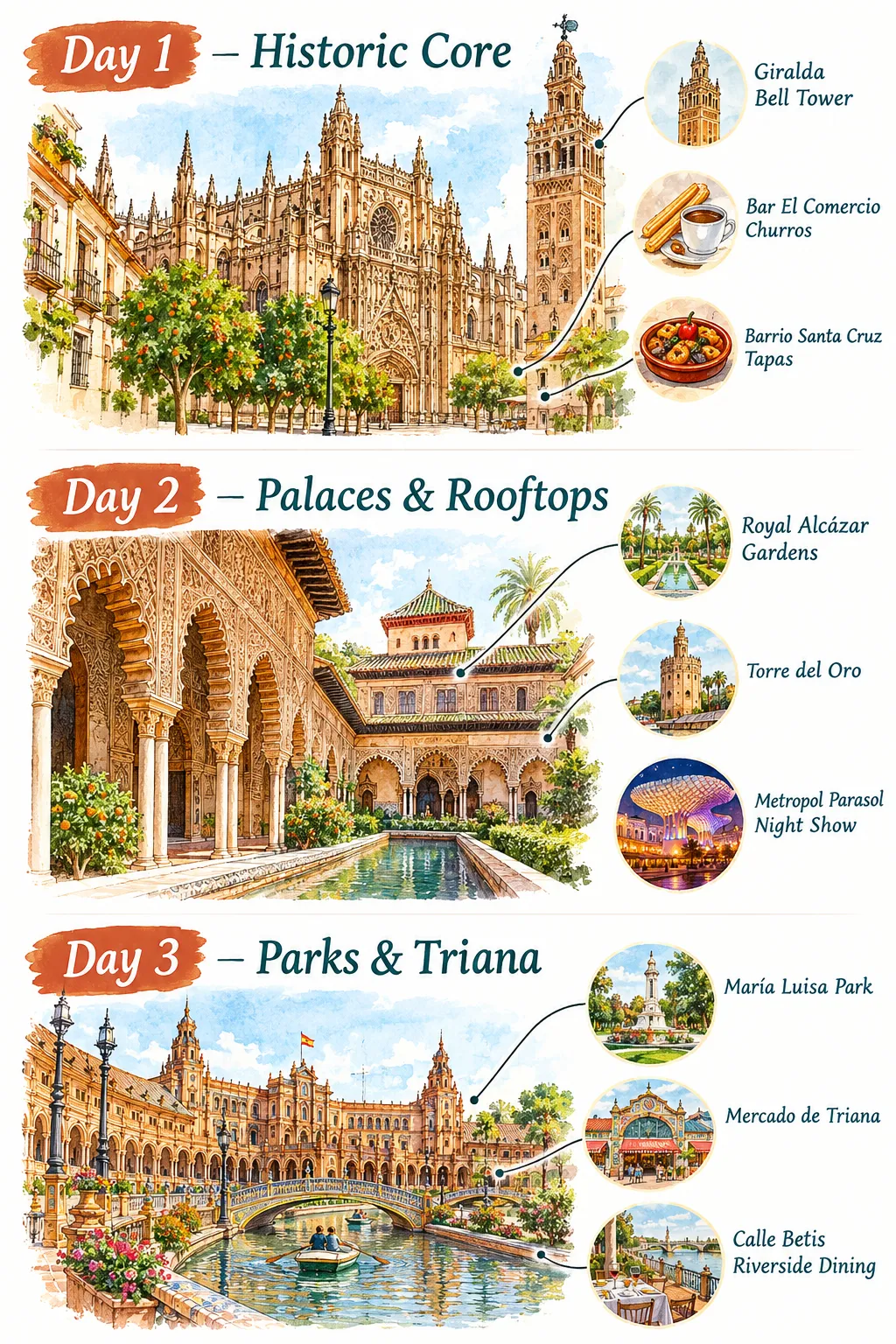
Quick Answer: Three days in Seville is genuinely enough time to see the city’s greatest highlights – the Seville Cathedral, Real Alcázar, Plaza de España, and the Triana neighborhood – without feeling rushed. A well-planned 3 days in Seville itinerary covers the historic core on day one, the palaces and rooftop bars on day two, and the parks and riverside on day three. Book the cathedral and Alcázar tickets in advance, start each morning early, and save your evenings for flamenco and tapas.
Key Takeaways
- 🗓️ Three days in Seville is the sweet spot for first-time visitors – enough to see the big sights without burnout.
- 🏛️ Book Seville Cathedral and Real Alcázar tickets online at least 3-5 days ahead to avoid sold-out mornings.
- 🌞 Start each day before 9 AM to beat the crowds at major monuments.
- 🍷 Evenings belong to tapas, flamenco shows, and the bars along Calle Betis in Triana.
- 💶 A realistic mid-range budget for 3 days in Seville runs around €150-200 per person per day including accommodation, food, and entry fees.
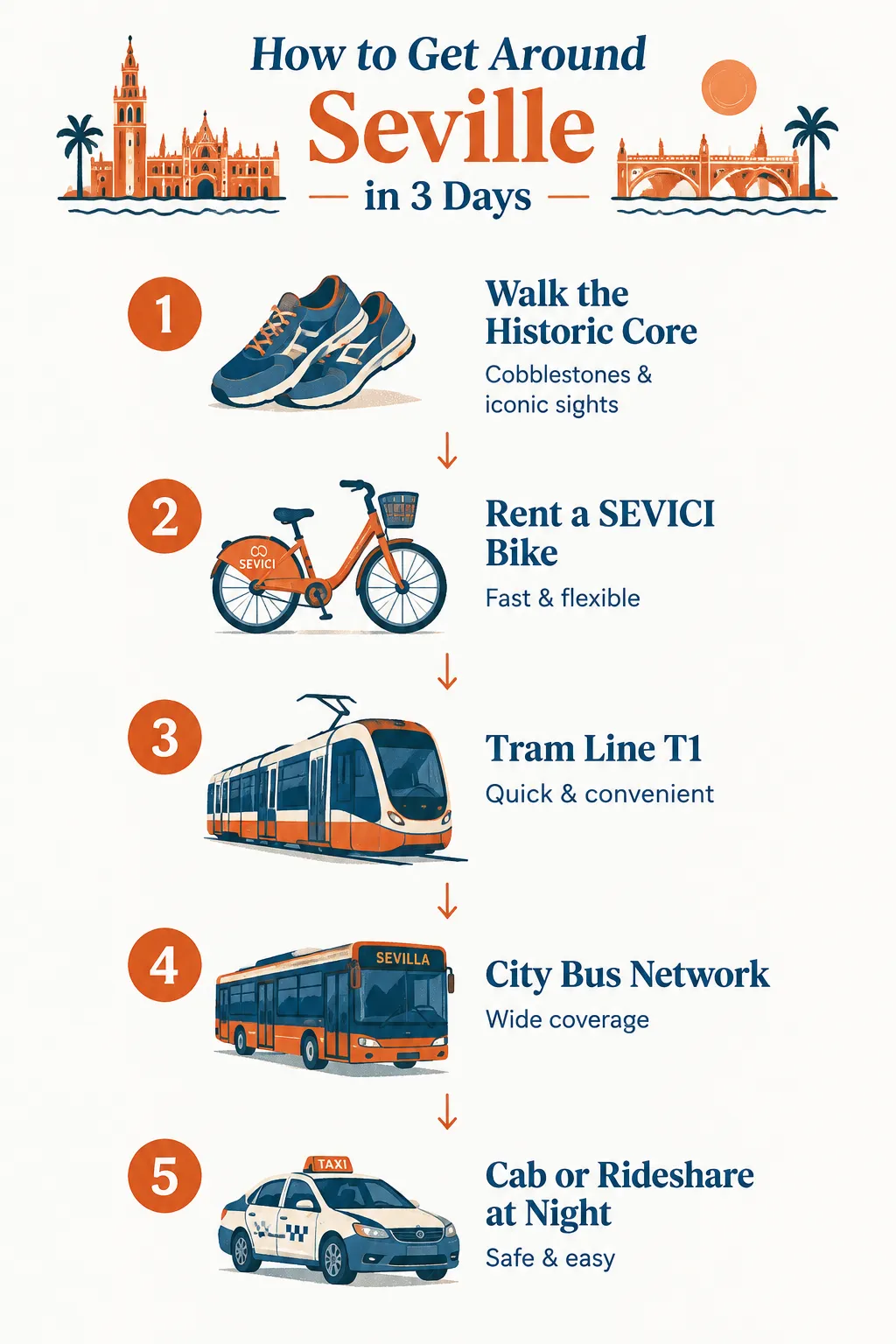
- 🚶 Most of the historic city is walkable; rent a SEVICI bike for longer stretches.
- 🎭 Book a flamenco show at least 24-48 hours ahead – good seats fill fast, especially in peak season.
- ⛔ Skip the overpriced horse-carriage rides and the long queue at the Giralda if you visit at midday in summer.
- 🌍 Seville is one of the top city-break destinations in Europe and sees over 11 million visitors per year.
Day 1: The Historic Core and Seville Cathedral
Day one of any solid 3-day Seville itinerary should be spent in the city’s ancient heart – the cathedral quarter, Barrio Santa Cruz, and the Iglesia Colegial del Divino Salvador. This is where Seville’s story really begins, and getting here early makes a huge difference.
Start the Morning: Order Churros at Bar El Comercio
Bar El Comercio on Calle Lineros is one of the oldest cafés in sevilla, and there’s a reason locals still queue for its churros con chocolate on a cool morning. Get there by 8 AM, grab a table if you can, and fuel up before the monuments open. It’s a small, no-frills stop, but it sets the tone perfectly for the day.
Discover Iglesia Colegial del Divino Salvador
The Iglesia Colegial del Divino Salvador – also called the colegial del divino salvador or simply El Salvador – is the second-largest church in seville and one of the most beautiful Baroque buildings in all of spain. Many travelers walk straight past it toward the cathedral, which is a real mistake. Entry is around €5, and a combined ticket with the cathedral saves you money. The iglesia colegial del divino salvador interior is genuinely stunning, with gilded altarpieces and a scale that rivals many European cathedrals.
Climb the Giralda Bell Tower at Seville Cathedral
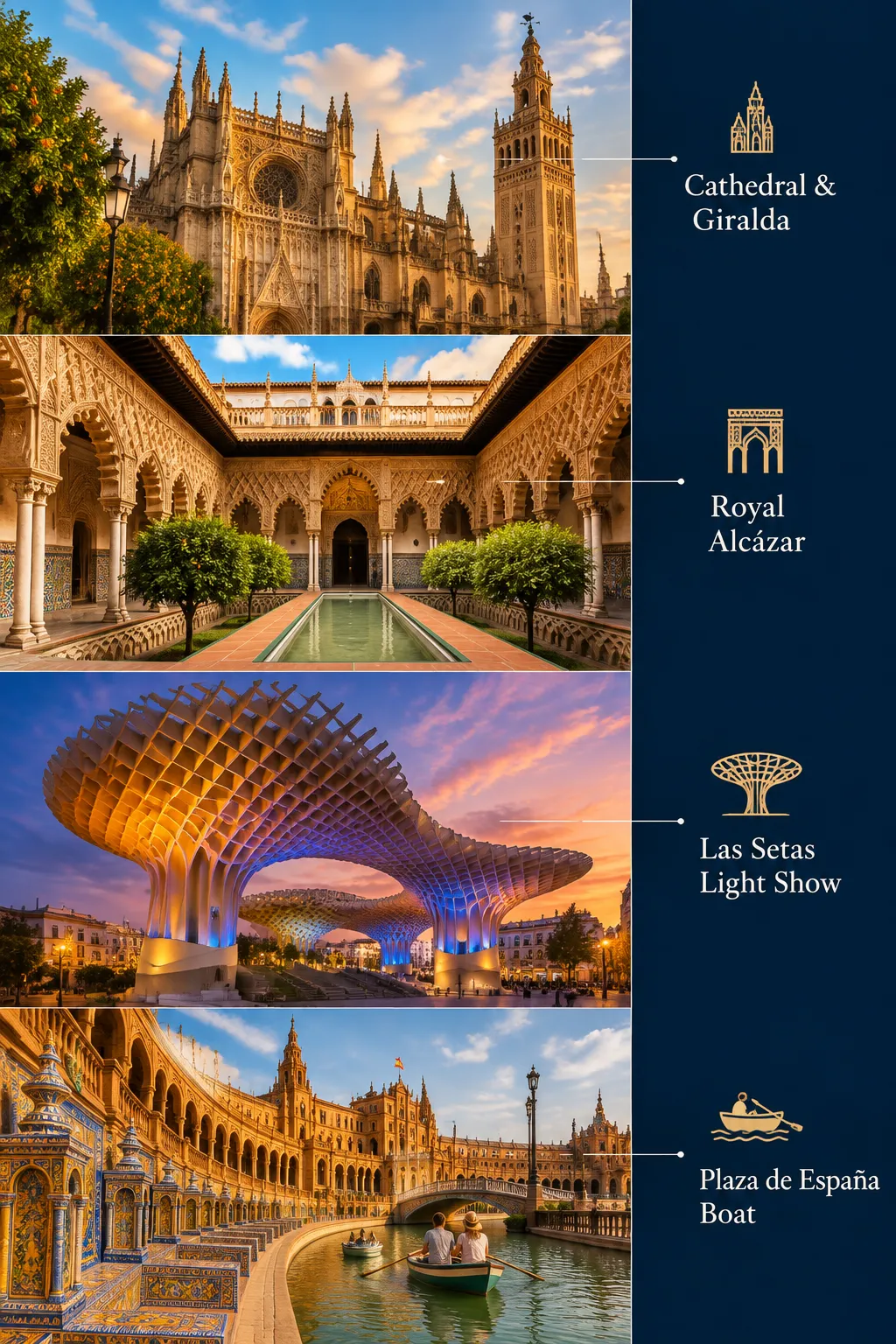
The Seville Cathedral is the largest Gothic cathedral in the world, according to UNESCO, and the giralda bell tower attached to it was originally a Moorish minaret. Climbing the tower involves a series of ramps rather than stairs – designed so the muezzin could ride a horse to the top. The views over the city from up there are really worth the effort.
Tickets for the cathedral seville cost around €12 for adults (2026 pricing). Book online at the official cathedral website to skip the walk-up queue, which can run 45-60 minutes in peak season. Allow at least 90 minutes inside.
Try Tapas in Barrio Santa Cruz
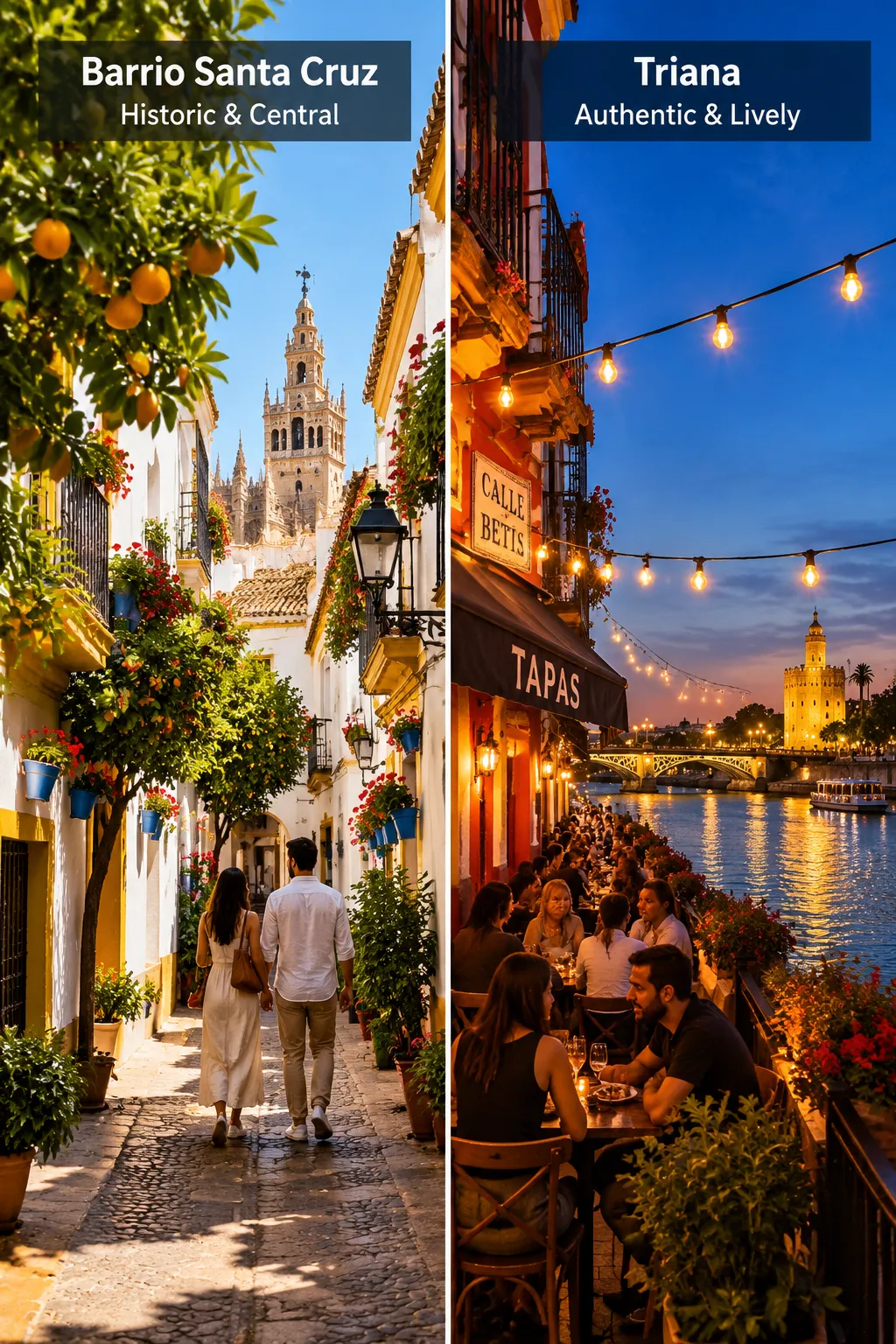
After the cathedral, spend the afternoon wandering Barrio Santa Cruz – the old Jewish quarter just east of the cathedral. The narrow whitewashed lanes, orange trees, and flower-draped balconies make this one of the most beautiful neighborhoods in all of europe. Stop at any of the small tapas bars for a mid-afternoon break. Try the espinacas con garbanzos (spinach with chickpeas) and the salmorejo – both are Seville classics. This area is really the soul of the city, and there’s no need to rush through it.
Enjoy the Passion of Flamenco on Evening One
End day one with a flamenco show. Seville is the birthplace of flamenco, and there are excellent tablaos (flamenco venues) throughout the city. The Museo del Baile Flamenco on Calle Manuel Rojas Marcos offers nightly performances in an intimate courtyard setting. Tickets run €25-35 per person. Book ahead – this is one of the most popular things to do in seville and seats fill fast. The show typically lasts 60-75 minutes and the quality of the dancing and music is really high.
Day 2: Royal Alcázar, Torre del Oro, and Rooftop Bars
Day two of the 3-day Seville itinerary is built around the Real Alcázar – the magnificent Moorish royal palace that is still an official royal residence today. Add the Torre del Oro and a rooftop bar for one of the best days you’ll have anywhere in europe.
Appreciate the Glorious Real Alcázar
The Real Alcázar is one of the finest examples of Moorish architecture in the world and a UNESCO World Heritage Site. It’s also a working royal palace – the Spanish royal family still uses the upper floors when visiting seville. Entry costs €14.50 for adults (2026 pricing), and you really should book online at least 3-5 days ahead because timed entry slots sell out regularly.
Plan to spend 2-3 hours exploring the palace rooms, the Patio de las Doncellas, and the beautiful gardens. The gardens alone are worth the visit – there are fountains, peacocks, and centuries-old trees that make the whole place feel like a dream. This is the single best thing to see in seville for many travelers, and it’s easy to understand why.
Torre del Oro and the Guadalquivir Riverbank
After the Alcázar, walk down to the Torre del Oro – the 13th-century Moorish watchtower on the banks of the Guadalquivir river. The del oro name (meaning “tower of gold”) comes either from the golden tiles that once covered it or from the gold that arrived here from the Americas. Today it houses a small naval museum. Entry is just €3, and the views from the top over the river are lovely.
Walk along the riverbank toward the Triana bridge for a really pleasant afternoon stroll. The area around the torre del oro is one of the most photographed spots in the city.
Watch the Light Show at the Metropol Parasol (Las Setas de Sevilla)
The Metropol Parasol – known locally as Las Setas de Sevilla (The Mushrooms of Seville) – is the world’s largest wooden structure, according to its official site. It sits in Plaza de la Encarnación and looks genuinely unlike anything else in europe. Go at sunset for the best light, then stay for the evening light show that runs across the structure after dark.
There’s a rooftop walkway on top (entry around €3) that gives a 360-degree view over the city. The Encarnaci market below is also worth a quick look for local produce and food amp drink stalls.
Take in the Views from a Rooftop Bar
Seville has some really excellent rooftop bars. La Terraza at the EME Catedral Hotel sits directly opposite the cathedral and offers views that are hard to beat anywhere in the city. Drinks are pricier here than at ground-level bars, but you’re paying for the setting. Another great option is the rooftop at the Hotel Doña María. Both are worth a stop on day two of your itinerary.
Day 3: Plaza de España, Triana, and the Riverside
The final day of the perfect 3 days in seville itinerary covers the grand southern side of the city – Plaza de España, the María Luisa park, and the vibrant Triana neighborhood across the river.
Boat Around Plaza de España
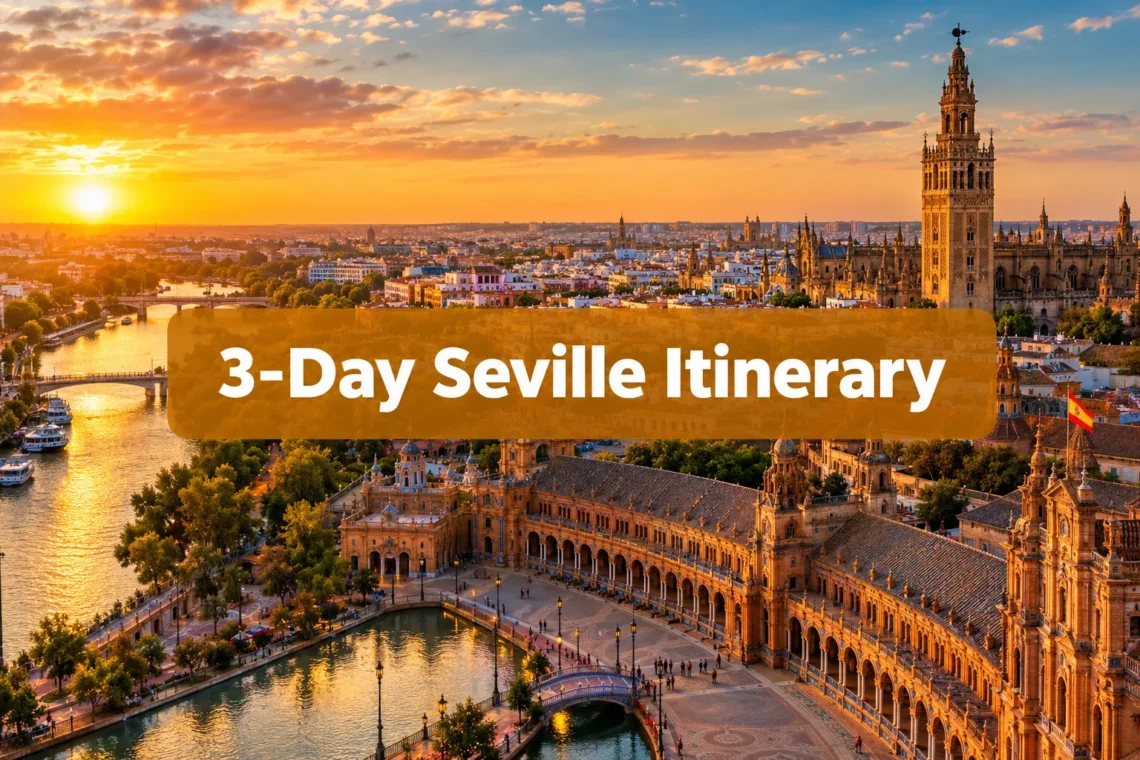
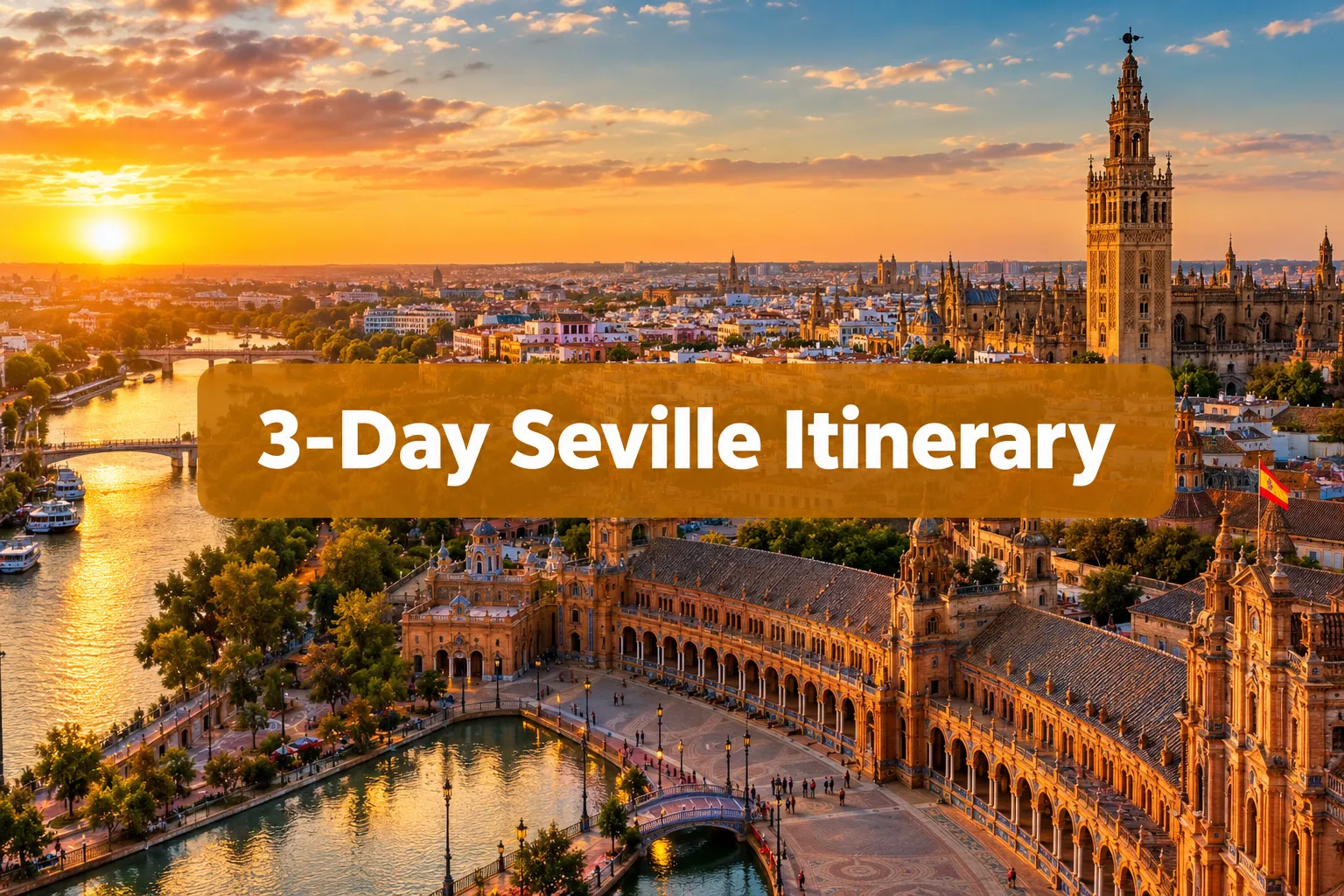
Plaza de España is one of the most spectacular public squares in all of europe, built for the 1929 Ibero-American Exposition (the Ibero connection is still visible in the tiled alcoves representing every Spanish province). You can rent a rowboat on the small canal that runs around the plaza for about €6 per person for 35 minutes – one of the most fun and affordable things to do in seville. The beautiful tiled benches, the sweeping semicircular colonnade, and the fountains make this a genuinely jaw-dropping stop on any seville itinerary.
Stroll Through María Luisa Park
Directly adjacent to Plaza de España, the Parque de María Luisa is a large, shaded park that’s really lovely for a morning walk. There are fountains, peacocks wandering freely, and quiet benches under ancient trees. The park was also built for the 1929 Ibero-American Exposition and covers around 34 hectares. It’s free to enter and makes a beautiful, peaceful contrast to the busier monuments.
Graze at Mercado de Triana
Cross the Puente de Isabel II bridge into the Triana neighborhood and head straight to the Mercado de Triana. This covered market sits on the site of the old Triana castle and is one of the best food markets in seville for fresh produce, local cheeses, olives, and seafood. Grab a stool at one of the market bars and graze on whatever looks good – this is the best kind of late-morning food amp drink experience in the city.
Triana is really the most authentic neighborhood in seville – it’s where the city’s flamenco and ceramic traditions run deepest. The Triana neighborhood feels genuinely different from the tourist-heavy historic center, and locals here are proud of that distinction.
Shop for Ceramics on Calle Alfarería
Triana has been the center of seville’s ceramic tradition for centuries, and Calle Alfarería (Pottery Street) is the best place to shop for hand-painted tiles and pottery. Prices are reasonable compared to the souvenir shops near the cathedral. Look for the distinctive blue-and-white azulejo tiles – they make a beautiful, practical souvenir that won’t break the budget.
Dine Beside the River on Calle Betis
End your final day – and your entire seville itinerary – with dinner on Calle Betis, the street that runs along the Triana side of the Guadalquivir river. The views back across the water toward the Torre del Oro and the city skyline are stunning at sunset. There are dozens of restaurants and bars along calle betis ranging from casual tapas spots to proper sit-down restaurants. Try the grilled fish or the local prawn dishes. This is really one of the best ways to finish a visit to seville.
What to See in Seville in 2 Days vs. 3 Days
If you’ve only got 2 days in seville, you can still see the big three – the cathedral, the Alcázar, and Plaza de España – but you’ll need to move fast and skip the slower neighborhood wandering. Three days is genuinely better for first-time visitors. According to experienced travelers on Reddit, 3 days in seville feels just right – not too rushed, not too slow. A 4-day trip is worth considering if you want to add a day trip to Cádiz or explore the city at a slower pace.
For a longer Andalusia itinerary that includes Granada, Córdoba, and other stops, plan for at least 7-10 days in the region.
Best Neighborhoods to Stay in Seville for 3 Days
The best neighborhood to stay in for a 3-day seville itinerary is the historic center – specifically around the cathedral or Barrio Santa Cruz. Staying here puts you within walking distance of almost every major sight on this itinerary. The Alameda de Hércules area is a good alternative if you want a slightly more local, less tourist-heavy base with excellent bars and restaurants nearby.
Triana is also a great choice if you want to stay across the river – it’s a 10-minute walk to the historic center and has a much more authentic, neighborhood feel. Avoid staying too far south or east of the center if you’re relying on walking.
How to Get Around Seville Without a Car
Seville’s historic center is almost entirely walkable, and most of the sights on this itinerary are within 20-30 minutes on foot of each other. For longer distances, the SEVICI public bike-share system is excellent – there are over 260 docking stations around the city and day passes cost around €1.35. The tram (Line T1) runs along Avenida de la Constitución and connects the city center to the main bus station. City buses cover the wider metropolitan area. You really don’t need a car in seville – and driving in the historic center is restricted anyway.
How Much Does a 3-Day Trip to Seville Cost?
A realistic mid-range budget for 3 days in seville runs around €150-200 per person per day. Here’s a rough breakdown:
- Accommodation: €60-120/night for a mid-range hotel in the historic center
- Food: €30-50/day (tapas culture means you can eat very well without spending a lot)
- Entry fees: Seville Cathedral (
€12), Real Alcázar (€14.50), Metropol Parasol rooftop (€3), Torre del Oro (€3) - Flamenco show: €25-35 per person
- Transport: Minimal – mostly walking and occasional bus or bike
Budget travelers can get by on €80-100/day by staying in a hostel, eating at market bars, and focusing on free sights like Plaza de España and the María Luisa park. According to a detailed 2026 cost breakdown on Reddit, the biggest variable is accommodation – prices spike significantly during Semana Santa (Holy Week) and the Feria de Abril.
What to Skip in Seville to Save Time
Not everything marketed to tourists in seville is worth your time or money. Skip the horse-carriage rides near the cathedral – they’re expensive (around €45 for 45 minutes) and not a great use of your limited days. The Aquarium of Seville is fine for families with young children but not a priority for adult travelers. The long queue for the Giralda bell tower at midday in summer is also worth avoiding – go first thing in the morning or book a skip-the-line ticket online.
The top things to do in Seville are concentrated in a small area, so you really don’t need to travel far or spend a lot to have an excellent trip.
Flamenco Shows and Tapas Bars: How to Fit Them Into 3 Days
Flamenco and tapas are the two things that make seville feel completely different from any other city in europe, and both deserve real time in your itinerary. For flamenco, book one show during your visit – evening one or two works best. The Museo del Baile Flamenco and Casa de la Memoria are both highly rated. Avoid the cheapest tourist tablaos near the cathedral, which can feel performative rather than authentic.
For tapas, the best strategy is to graze across multiple bars rather than sitting down for one big meal. The area around Calle Mateos Gago near the cathedral is touristy but reliable. For a more local experience, head to the bars around the Alameda de Hércules or along Calle Betis in Triana. A good foodie guide to seville recommends trying at least 4-5 different bars across your visit to really get a feel for the city’s food culture.
Day Trips from Seville Worth Doing
If you have a fourth day or want to extend beyond this 3-day seville itinerary, the best day trip from seville is to Cádiz – a beautiful coastal city about 1.5 hours by train. Córdoba (45 minutes by high-speed train) is another excellent stop, famous for the Mezquita. Granada and the Alhambra is a longer day trip (about 3 hours each way) but many travelers consider it worth it. For a broader view of the region, see our full Andalusia itinerary.
If you’re planning a longer trip around southern europe, a 3-day Florence itinerary or a 3 days in Madrid itinerary pair beautifully with a seville visit.
When to Visit Seville
Seville is a year-round destination, but spring (March-May) and autumn (September-November) are the best times to visit. Temperatures in July and August regularly exceed 40°C (104°F), making sightseeing genuinely uncomfortable. The Feria de Abril (April Fair) is one of the most spectacular festivals in spain – a week of flamenco, horses, and celebration – but accommodation prices double and the city gets very busy. Semana Santa (Holy Week before Easter) is equally spectacular and equally crowded.
Winter is actually a great time to visit seville if you want fewer crowds and lower prices – temperatures are mild (15-20°C) and most sights are open as normal.
Common Mistakes to Avoid in Seville
- Not booking ahead: The Alcázar and cathedral both sell out. Book at least 3-5 days in advance, more in peak season.
- Eating on tourist-trap timing: Locals eat lunch at 2-3 PM and dinner at 9-10 PM. Eating earlier means you’ll be surrounded by tourists and paying more.
- Underestimating the heat: In summer, plan all outdoor activities before 11 AM or after 6 PM.
- Ignoring Triana: Many visitors never cross the river. Triana is really one of the best parts of the city.
- Rushing the Alcázar: Many people allow 45 minutes. You need at least 2 hours, ideally more.
- Missing the free sights: Plaza de España, the María Luisa park, and the Triana neighborhood are all free and genuinely among the best things to see in seville.
According to experienced Seville travel guides, the biggest mistake first-time visitors make is trying to see too much. Three days in seville works best when you slow down and let the city come to you.
FAQ
Is 3 days too long in Seville?
No – 3 days in Seville is actually the ideal length for first-time visitors. The city has enough major sights, neighborhoods, and food experiences to fill three full days comfortably without feeling repetitive. Many travelers who visit for 2 days wish they’d stayed longer. If anything, 3 days goes quickly once you factor in the cathedral, Alcázar, Plaza de España, Triana, and evening flamenco and tapas.
What is a good 3-day itinerary for Seville?
A good 3-day Seville itinerary runs like this: Day 1 – churros at Bar El Comercio, Iglesia Colegial del Divino Salvador, Seville Cathedral and the Giralda bell tower, tapas in Barrio Santa Cruz, and a flamenco show in the evening. Day 2 – Real Alcázar, Torre del Oro, the Metropol Parasol (Las Setas) light show, and a rooftop bar. Day 3 – Plaza de España, María Luisa park, Mercado de Triana, ceramics shopping on Calle Alfarería, and dinner on Calle Betis.
Which is better, Granada or Seville?
Both cities are outstanding, but they offer different experiences. Seville is larger, livelier, and has a richer tapas and flamenco culture. Granada is smaller, more intimate, and home to the Alhambra – arguably the most beautiful Moorish palace in the world. For first-time visitors to Andalusia, Seville edges ahead as a city-break destination because there’s more to do across multiple days. If you can, visit both – they’re only 3 hours apart by bus.
What should I not miss in Seville, Spain?
The absolute must-sees in Seville are: the Seville Cathedral and the Giralda bell tower, the Real Alcázar palace and gardens, Plaza de España, the Metropol Parasol (Las Setas) at sunset, a flamenco show at a proper tablao, tapas in Barrio Santa Cruz, and an evening in the Triana neighborhood along Calle Betis. The Torre del Oro and the Mercado de Triana are close runners-up. Don’t leave without eating salmorejo and espinacas con garbanzos.
Conclusion
Three days in Seville is one of the best city-break decisions you can make in Europe in 2026. The city rewards travelers who move at a relaxed pace – mornings at the monuments, afternoons in the neighborhoods, evenings over tapas and flamenco. The key to a great 3-day Seville itinerary is booking the big two (cathedral and Alcázar) well in advance, staying in or near the historic center, and leaving enough unplanned time to just wander.
Your next steps:
- Book Seville Cathedral and Real Alcázar tickets online as soon as your dates are confirmed.
- Reserve a flamenco show for evening one or two.
- Look at adding a day trip to Cádiz if you have a fourth day.
- Check out the full top things to do in Seville for deeper dives into each sight.
- If you’re building a bigger Andalusia trip, our Andalusia itinerary guide covers 10 stops across the region.
Seville is genuinely one of the most beautiful and vibrant cities in all of spain – and three days there will leave you already planning your return.