Last updated: September 10, 2026
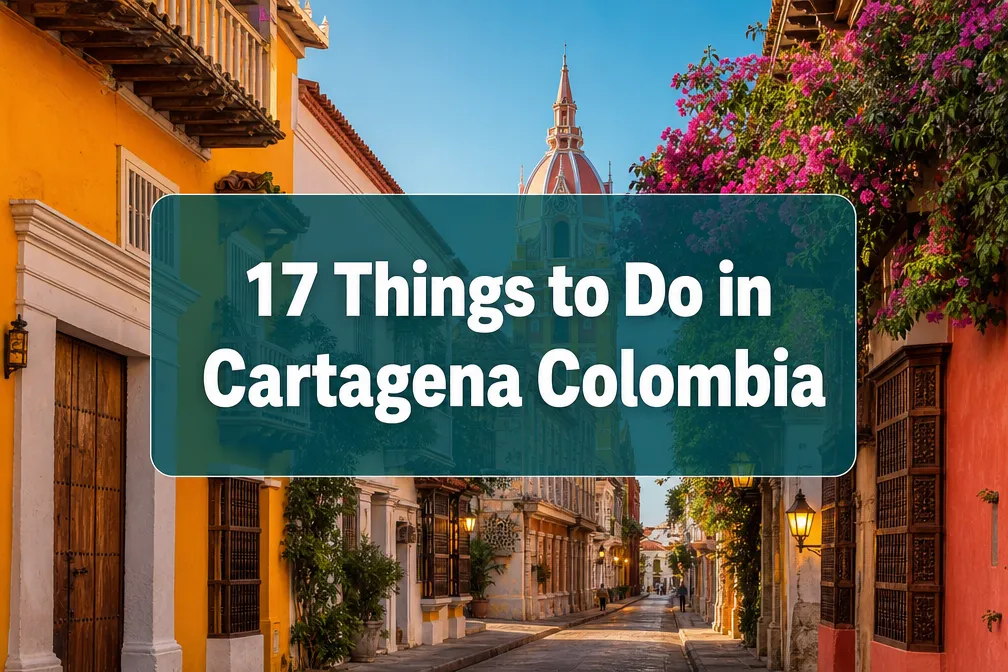
Quick Answer: Cartagena Colombia is far more than colorful walls and Rosario Islands day trips. The best things to do in Cartagena Colombia that most guides skip include visiting San Basilio de Palenque, exploring Getsemaní’s live music scene, touring Bazurto Market with a local guide, and catching world-class festivals in January and March. These experiences go deeper than the postcard version of the city.
Key Takeaways
- 🌍 Cartagena surpassed 3.3 million visitors in the first half of 2026 alone – so timing and neighborhood choice matter more than ever
- 🎶 Getsemaní is Cartagena’s bohemian heart, with live salsa, street art, and cocktail bars that most “top 10” lists reduce to a single photo stop
- 🏘️ San Basilio de Palenque is one of the most culturally significant day trips from any city in South America
- 🛒 Bazurto Market offers the most authentic local food experience in the city – but go with a guide
- 🗓️ January and March pack in three major international festivals: music, literature, and film
- 🏖️ Punta Canoa beats Bocagrande for a local beach experience with far fewer crowds
- 💸 Many of the best experiences in Cartagena are free or low-cost – the city rewards curious travelers on any budget
- 🏛️ Manga neighborhood and La Serrezuela are two architectural gems almost no casual visitor finds
- 🚶 Free walking tours cover neighborhoods like Manga that standard itineraries completely ignore
- ✈️ Four to five days is the sweet spot for Cartagena – enough time to go beyond the walled city
What Are the Best Hidden Things to Do in Cartagena Colombia?
The best hidden things to do in Cartagena Colombia sit just outside the walled city’s famous gates. Think local markets, Afro-Colombian villages, Republican-era mansions, and jazz theaters – not just sunset rooftop bars.
Here are 17 experiences worth building your trip around:
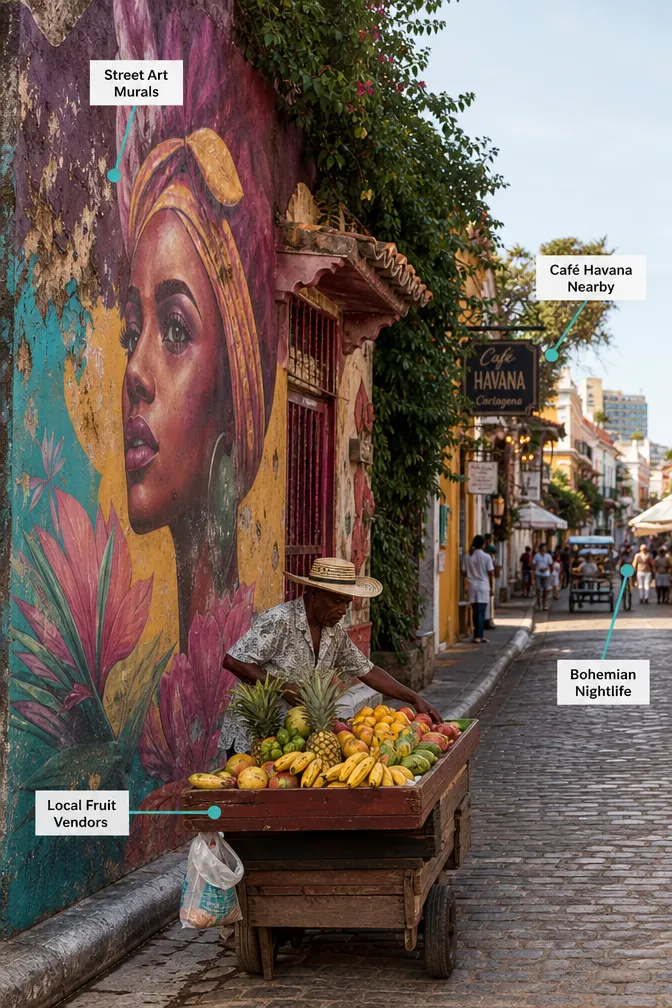
- Walk Getsemaní’s street art circuit at dusk, when the murals catch golden light
- Take a day trip to San Basilio de Palenque for Afro-Colombian music, food, and the unique Palenquero language
- Tour Bazurto Market with a trusted local guide for mote de queso and fresh tropical fruit
- Catch live salsa at Café Havana on a weeknight when it’s less packed
- Visit Alquímico, a multi-level cocktail bar in a colonial building that doubles as a cultural space
- Explore La Serrezuela, a restored bullring turned boutique mall with the original arena preserved on the top floor
- Join a specialty coffee tasting with a local roaster focused on single-origin Colombian beans
- Walk the Manga neighborhood on a free guided tour to see early-20th-century Republican mansions
- Attend the Cartagena International Music Festival in early January for world-class classical concerts
- Book tickets to the Hay Festival in late January for literary talks and panels
- Catch FICCI (Cartagena International Film Festival) in March
- Go to Punta Canoa for a beach day that feels nothing like Bocagrande
- Watch a sunset from the city walls, then continue to a nighttime bay cruise
- Take a champeta or salsa dance workshop – not just a class, but a cultural conversation
- Attend the Fiestas de Independencia in November for comparsas parades and live drumming
- See a show at Teatro Adolfo Mejía, a landmark republican-era theater most visitors walk past
- Eat at a local corrientazo restaurant in Manga for a full lunch under $3 USD
Cartagena Colombia Attractions Off the Beaten Path
Off-the-beaten-path attractions in Cartagena Colombia include the Manga neighborhood, La Serrezuela complex, Teatro Adolfo Mejía, and the day trip to San Basilio de Palenque. These are places locals actually use and love.
San Basilio de Palenque is about 45 minutes from the city. It’s the first free African town in the Americas and a UNESCO Intangible Cultural Heritage site. The community speaks Palenquero – a creole language found nowhere else on earth. According to local guides in Cartagena, a guided visit here includes traditional drumming, home-cooked food, and a real window into Afro-Colombian history that no museum in the walled city can replicate.
La Serrezuela is a converted 19th-century bullring near the old city walls. The original arena is preserved on the top floor and is genuinely worth seeing. Most visitors walk right past it on the way to the Centro Histórico. It’s one of Cartagena’s more underrated indoor attractions in 2026.
Teatro Adolfo Mejía hosts the Festival Voces del Jazz y del Caribe. The 2026 edition launched on September 2 with free entry via a registration code – a rare chance to experience Caribbean jazz in a stunning republican-era building.
Is Cartagena Colombia Worth Visiting for a Week?
Yes – Cartagena Colombia is absolutely worth a week, especially if you plan to go beyond the walled city. A full week lets you combine the historic center, a Palenque day trip, beach time at Punta Canoa, and at least one or two festival events without feeling rushed.
How to split a week:
| Days | Focus |
|---|---|
| Day 1-2 | Walled city, Getsemaní murals, Café Havana |
| Day 3 | San Basilio de Palenque day trip |
| Day 4 | Manga neighborhood walk, La Serrezuela |
| Day 5 | Bazurto Market morning, coffee tasting afternoon |
| Day 6 | Punta Canoa beach day |
| Day 7 | Bay cruise, dance workshop, Teatro Adolfo Mejía |
If you only have 4 days, prioritize Getsemaní, Palenque, one market visit, and one evening of live music. That covers more cultural ground than most week-long “standard” itineraries.
Best Neighborhoods to Explore in Cartagena Besides the Old Town
The best neighborhoods to explore in Cartagena beyond the old town are Getsemaní, Manga, and Bocagrande – each with a completely different personality.
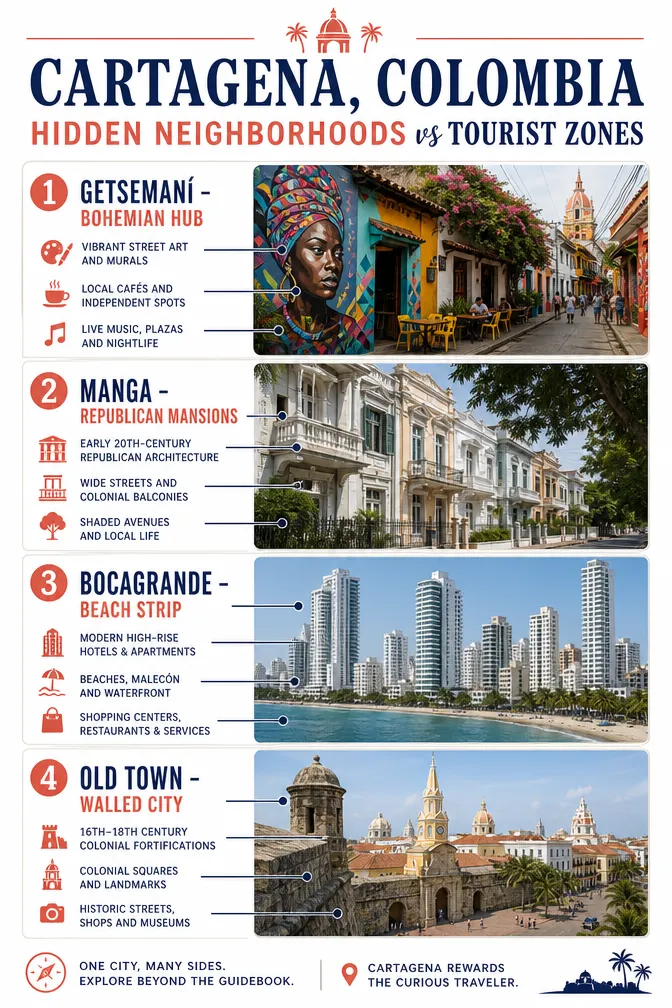
Getsemaní is Cartagena’s bohemian district, directly adjacent to the walled city. It’s where the street art is, where Café Havana and Alquímico operate, and where you’ll find locals mixing with travelers at outdoor tables. It used to be considered rough – it’s now one of the most vibrant urban neighborhoods in Colombia.
Manga is a residential island connected to the city by bridges. It’s full of early-20th-century Republican-era mansions built by Cartagena’s merchant class. Free walking tours that include Manga reveal daily life and architecture that the postcard version of Cartagena never shows.
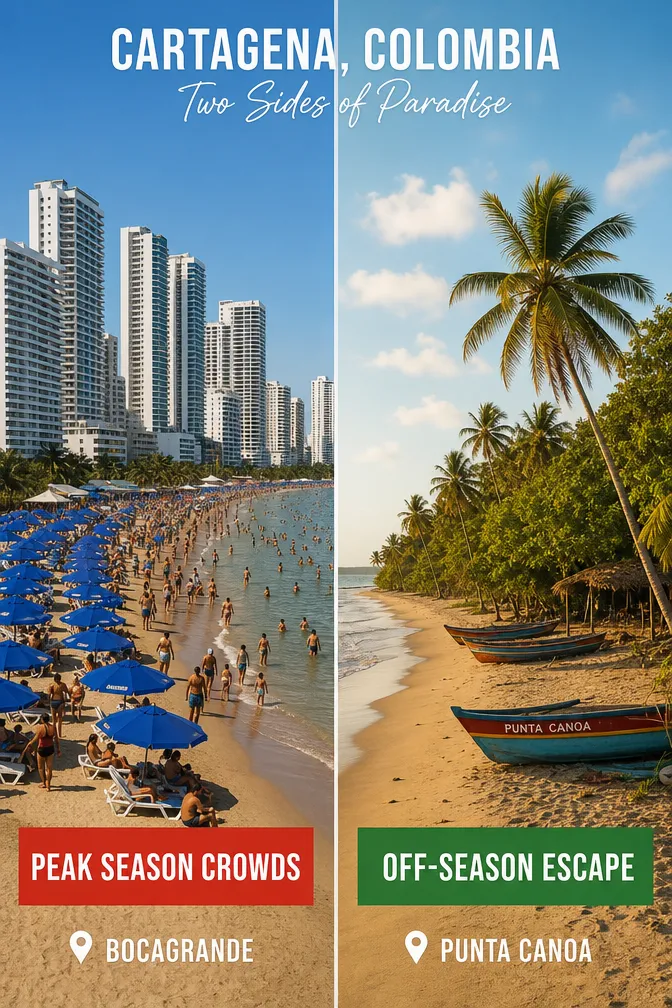
Bocagrande is the modern beach strip – think high-rise hotels, seafood restaurants, and a long urban beach. It’s convenient but crowded. Good for a base, not the most interesting neighborhood for exploration.
Choose based on your style:
- Choose Getsemaní if you want nightlife, art, and local energy
- Choose Manga if you want architecture and quiet residential streets
- Choose Bocagrande if you want beach access and easy hotel options
Cartagena Colombia Day Trips From the City
The best day trips from Cartagena Colombia are San Basilio de Palenque, the Rosario Islands, and Punta Canoa. Palenque is the most culturally distinctive and the least covered in standard guides.
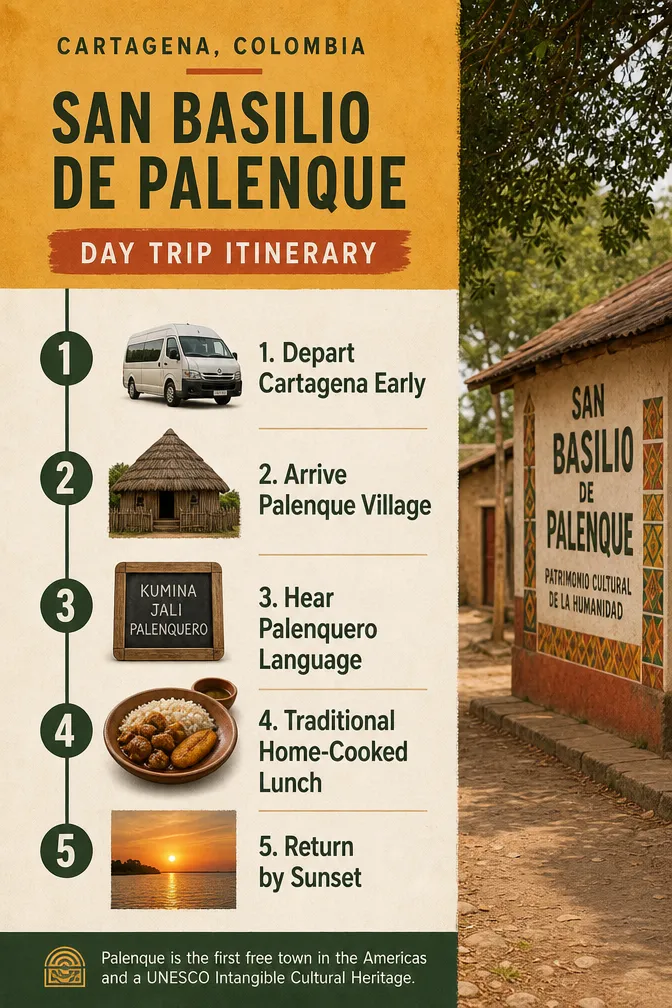
San Basilio de Palenque (45 min drive): Go with a guide who has community connections. You’ll hear live percussion, try traditional food, and learn about the Palenquero language. This is one of the most culturally distinctive excursions from Cartagena and it rarely appears in quick-hit city guides.
Rosario Islands (boat from Muelle de la Bodeguita): Clear water, coral reefs, and snorkeling. The most popular day trip by far – which means it can feel crowded in high season. Book early and go on a weekday.
Punta Canoa (30 min north by road): A small fishing village with a long, calm beach. Far fewer tourists than Bocagrande or the Rosarios. The Buena Vida Beach Festival runs here in early January with live music and a genuinely local crowd.
What to Do in Cartagena Colombia If You Hate Crowds
If you hate crowds, the best things to do in Cartagena Colombia are visiting Manga on foot, attending weeknight events at Teatro Adolfo Mejía, going to Punta Canoa instead of the Rosario Islands, and touring Bazurto Market in the early morning.
The walled city gets dense between 10am and 4pm, especially near Plaza de los Coches and the clock tower. Here’s how to sidestep the worst of it:
- Go to the walls at sunrise – almost no one is there before 7am
- Visit Bazurto Market on a weekday morning with a local guide for the freshest experience and the smallest crowds
- Eat lunch in Manga at a local corrientazo spot instead of a tourist restaurant in the Centro
- Book festival events in advance – Teatro Adolfo Mejía’s jazz nights fill up but don’t attract the same beach-club crowds
Best Time to Visit Cartagena Colombia for Fewer Tourists
The best time to visit Cartagena Colombia for fewer tourists is between May and June, or in September and October. These months fall in the rainy season, which keeps visitor numbers lower – but rain usually comes in short afternoon bursts, not all-day downpours.
Peak season runs December through March and July through August. That’s when prices spike and the walled city gets its most crowded. If your trip is flexible, shoulder season gives you the same city at a fraction of the intensity.
Festival timing note: January is peak season but also packs in the Cartagena International Music Festival (January 4-12), the Hay Festival (late January), and the Buena Vida Beach Festival (January 2-4). If festivals matter to you, peak season is worth it – just book accommodation early.
Is Cartagena Colombia Expensive for Tourists?
Cartagena Colombia has a wide price range. It can be very affordable or surprisingly expensive depending on where you eat, sleep, and what you do. The walled city and Bocagrande skew expensive; Getsemaní and Manga are much more budget-friendly.
Budget breakdown (estimates for 2026):
- Street food and corrientazo lunch: under $4 USD
- Mid-range restaurant in the old city: $15-30 USD per person
- Boutique hotel in the walled city: $80-200+ USD per night
- Hostel in Getsemaní: $15-35 USD per night
- Free walking tours: tip-based, usually $5-15 USD
- Rosario Islands day trip: $30-60 USD depending on operator
- San Basilio de Palenque guided tour: $40-70 USD with transport
Many of the best things to do in Cartagena Colombia cost very little. Free and low-cost options include walking the city walls, exploring Getsemaní’s murals, attending tip-based walking tours, and catching free festival events at Teatro Adolfo Mejía.
For budget travel tips that apply beyond Cartagena, the solo travel budget ideas guide has practical strategies for stretching your money further on longer trips.
What to Avoid as a Tourist in Cartagena Colombia
The main things to avoid as a tourist in Cartagena Colombia are unofficial “guides” near the clock tower, overpriced tourist restaurants in the Centro Histórico, and going to Bazurto Market alone without a trusted local contact.
Common mistakes:
- Skipping Getsemaní because older guides labeled it unsafe – it’s now one of the best areas in the city
- Only eating in the walled city – prices are 2-3x higher than Getsemaní or Manga for similar food
- Taking unofficial taxis at night – use InDriver or a hotel-arranged car instead
- Booking the cheapest Rosario Islands tour – some low-cost operators use overcrowded boats with poor snorkel gear
- Missing the festivals by not checking the calendar before booking flights
Is Cartagena Colombia Safe for Solo Travelers?
Cartagena Colombia is generally safe for solo travelers, including solo women, when you stick to well-trafficked areas and take standard urban precautions. Getsemaní, the walled city, Bocagrande, and Manga are all considered safe for daytime and evening exploration.
Practical safety tips for solo travelers:
- Walk the walled city and Getsemaní freely during the day and early evening
- After midnight, take a car rather than walking alone in unfamiliar streets
- Keep your phone in a bag or pocket in crowded areas like Bazurto Market
- Join a group tour for Palenque and market visits – it’s safer and more rewarding
- Tell your accommodation where you’re going for longer day trips
Solo travel in Cartagena is common and well-supported. The city has a large backpacker and independent traveler community, especially in Getsemaní hostels. For broader solo travel planning advice, the solo travel in Spain guide covers many transferable strategies for navigating unfamiliar cities confidently.
If you’re a solo woman traveler, the best places for solo female travel guide is worth reading before you finalize your itinerary.
What’s Overrated vs Underrated in Cartagena Colombia?
The most overrated experience in Cartagena is the generic Rosario Islands day trip on a crowded party boat. The most underrated is the combination of Getsemaní nightlife, a Palenque day trip, and the January festivals.
Overrated:
- Party boats to the Rosarios (fun but overhyped and crowded)
- Rooftop bars in the walled city (beautiful views, but expensive and touristy)
- The main plaza restaurants near Plaza de Bolívar (food is average, prices are not)
Underrated:
- Bazurto Market with a local guide for real Cartagena food culture
- Manga neighborhood walks for architecture and local life
- La Serrezuela for an unusual indoor cultural stop
- The Hay Festival and FICCI for world-class intellectual and creative programming
- Champeta dance workshops – champeta is Cartagena’s own music genre and most visitors never hear it live
Cartagena Colombia Free and Cheap Things to Do
Many of the best things to do in Cartagena Colombia are free or nearly free. Walking the city walls, exploring Getsemaní’s murals, attending tip-based walking tours, and visiting free festival events all cost little to nothing.
Free and cheap experiences:
- Walk the entire city wall circuit at sunrise or sunset – free
- Explore Getsemaní’s street art on foot – free
- Tip-based walking tours covering Manga and the old city – $5-15 USD suggested tip
- Attend free festival events at Teatro Adolfo Mejía (registration required) – free
- Swim at Bocagrande beach – free
- Visit the Castillo San Felipe de Barajas – small entrance fee, one of the best forts in the Americas
- Eat a full lunch at a Manga corrientazo – under $4 USD
For more ideas on making the most of coastal destinations without overspending, the 50 fun things to do at the beach guide has plenty of low-cost inspiration.
Unique Experiences in Cartagena That Aren’t the Walled City
The most unique experiences in Cartagena that go beyond the walled city are a guided Bazurto Market tour, a San Basilio de Palenque day trip, a champeta dance workshop, and attending the Cartagena International Music Festival.
According to in-depth 2026 city guides, Cartagena’s emerging specialty coffee scene is also worth exploring. Local roasters now offer single-origin tastings and barista workshops that showcase Colombian beans in a way that goes far beyond ordering an espresso in a plaza.
The November Fiestas de Independencia is another experience that rarely appears in generic guides. Comparsas parades, live drumming groups, and traditional dances anchor this event – it’s one of the most locally significant celebrations on the city’s calendar.
If you enjoy discovering hidden cultural layers in cities that seem well-documented, the Vietnam travel guide hidden gems and Paraguay travel guide follow a similar philosophy of going past the obvious.
FAQ
How many days should I spend in Cartagena Colombia?
Four to five days is the sweet spot. It’s enough time to cover the walled city, take a Palenque day trip, explore Getsemaní properly, and fit in a beach day – without rushing.
What is the best month to visit Cartagena Colombia?
January is the most culturally rich month, with three major festivals. For fewer crowds and lower prices, May-June or September-October work well – rain comes in short bursts, not all day.
Is Cartagena Colombia safe for solo female travelers?
Yes, with standard urban precautions. Stick to Getsemaní, the walled city, and Bocagrande for solo evening walks. Use apps like InDriver for late-night transport and join group tours for market and village visits.
What is San Basilio de Palenque and is it worth visiting?
San Basilio de Palenque is an Afro-Colombian village about 45 minutes from Cartagena. It’s the first free African town in the Americas and a UNESCO heritage site. It’s absolutely worth a full day – go with a guide who has community connections.
What should I eat in Cartagena that isn’t in tourist restaurants?
Try mote de queso (a thick yam and cheese soup) at Bazurto Market, a full corrientazo lunch in Manga, and fresh tropical fruit from street vendors in Getsemaní. These are the real flavors of the city.
Is Cartagena Colombia expensive compared to other Colombian cities?
Yes – Cartagena is one of Colombia’s pricier cities for tourists, especially in the walled city and Bocagrande. But street food, local neighborhoods, and free experiences keep it manageable on a moderate budget.
What is champeta music and where can I hear it in Cartagena?
Champeta is Cartagena’s own genre – a mix of African rhythms, Caribbean beats, and Colombian folk. It’s the city’s working-class soundtrack. Look for live champeta nights in Getsemaní or join a workshop to learn the dance.
What are the best festivals in Cartagena Colombia?
The top three are the Cartagena International Music Festival (January 4-12), the Hay Festival (late January), and FICCI film festival (March). The Fiestas de Independencia in November is the most locally significant.
Can I visit Bazurto Market without a guide?
Technically yes, but it’s not recommended. The market is large, disorienting, and not set up for tourists. A local guide makes the experience safer, more informative, and far more enjoyable.
What is La Serrezuela in Cartagena?
La Serrezuela is a 19th-century bullring that was converted into a boutique shopping and cultural complex. The original arena is preserved on the top floor. It’s one of Cartagena’s most underrated architectural stops.
Conclusion
Cartagena Colombia rewards travelers who look past the obvious. The walled city is stunning – but the real depth of the place lives in Getsemaní’s music venues, Palenque’s drumming circles, Manga’s quiet streets, and the festival calendar that turns this Caribbean city into a regional cultural capital every January.
Actionable next steps:
- Check the festival calendar before booking flights – January and March offer the richest programming
- Add San Basilio de Palenque to your itinerary as a full-day trip, not an afterthought
- Book accommodation in Getsemaní for at least part of your stay – it puts you in the middle of the city’s best nightlife and street art
- Download InDriver before you arrive for safe, affordable rides
- Pack a light rain jacket if you’re visiting in shoulder season – short afternoon showers are worth it for the quieter streets
For more inspiration on destinations that reward deeper exploration, check out the Morocco travel guide for first-timers and the Oaxaca travel destinations guide – both cities share Cartagena’s quality of revealing something new every time you turn a corner.