
Last updated: November 23, 2026
Most visitors spend maybe four hours total outside the Opera House, the harbor, and Karl Johans gate. That’s a shame, because Oslo’s best food, street art, and everyday culture live in neighborhoods a fifteen minute tram ride away. I learned this the hard way on my first trip, when I nearly flew home without ever crossing the Akerselva river.
This guide answers the real question behind “what to see in Oslo”: which local neighborhoods are worth your limited time, how to get there, and what actually happens when you show up.
Quick Answer
Skip a full afternoon at the harbor and spend it in Grünerløkka, Grønland, or Kampen instead. These neighborhoods sit 10 to 25 minutes from the Opera House by tram or on foot along the Akerselva river, and they show you daily Oslo life: markets, independent galleries, riverside cafes, and wooden houses that tourists rarely photograph. One solid day covering two or three of these areas gives you a far more complete picture of what to see in Oslo than another hour in the city center.
Key Takeaways
- Grünerløkka is Oslo’s creative heart, with vintage shops, cafes, and the Akerselva river running through it.
- Grønland offers the cheapest, most multicultural food scene in the city.
- Kampen feels like a village, with wooden houses and the Ekeberg sculpture park nearby.
- St. Hanshaugen and Sagene are quieter residential areas where locals actually live.
- Walking the Akerselva corridor connects several neighborhoods in one continuous route.
- Oslo’s neighborhoods are generally safe to walk at night, though normal city caution applies.
- Bygdøy adds a cultural day trip, especially with the new Museum of the Viking Age opening.
- One full day can realistically cover three neighborhoods if you plan a loop route.
What Neighborhoods in Oslo Do Most Tourists Miss
Most tourists miss Grünerløkka, Grønland, Sagene, Kampen, and St. Hanshaugen, all of which sit outside the main downtown tourist loop around the Opera House and Karl Johans gate. These areas are promoted by local tourism boards as Oslo’s “everyday” zones, distinct from the postcard harbor views most people photograph.
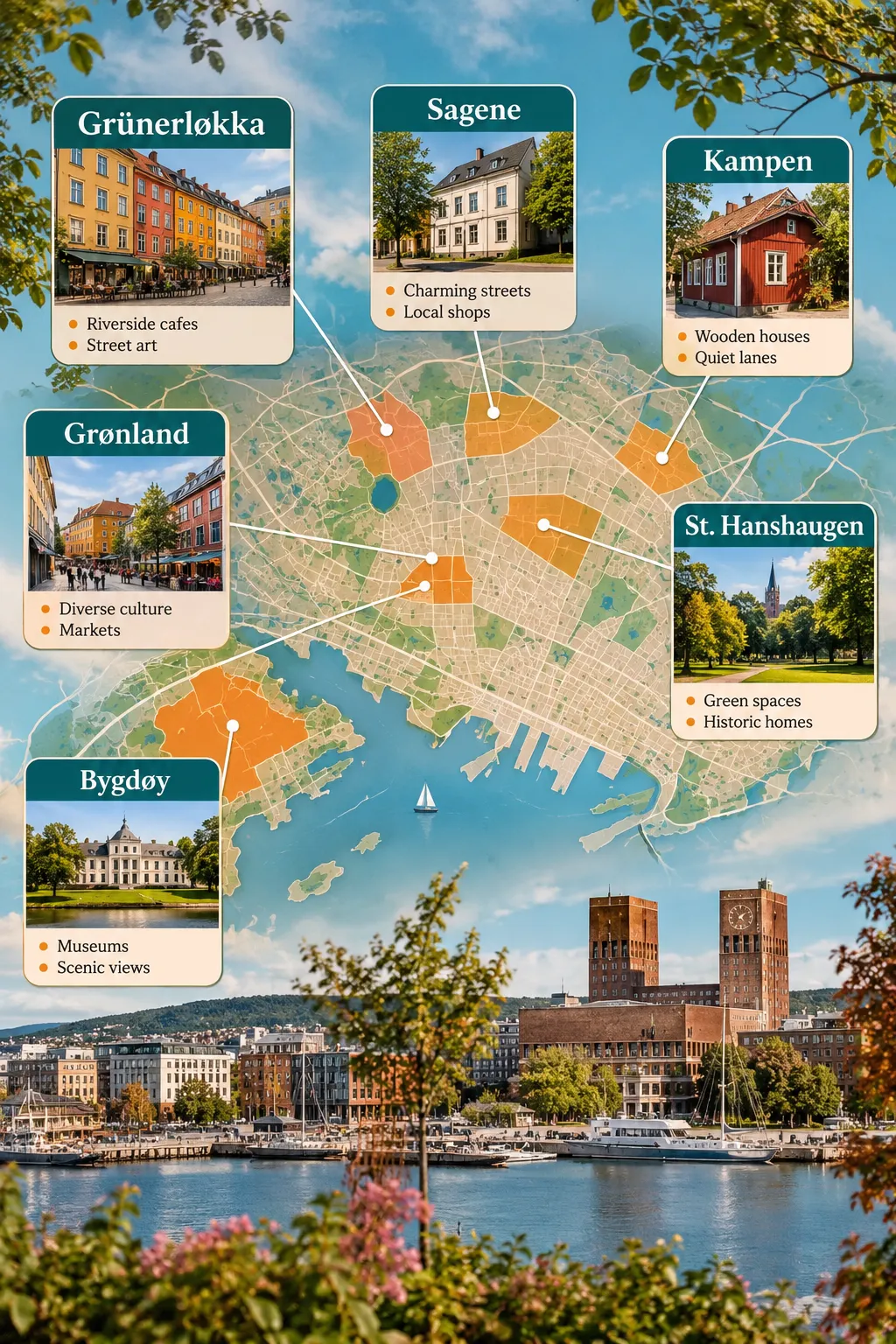
Visit Oslo’s official borough guide now organizes attractions by neighborhood rather than by landmark, which tells you something: the city itself recognizes that borough-based exploration is the real way to experience Oslo.
Here’s the thing. Each of these areas has its own personality:
- Grünerløkka: cafes, vintage stores, independent galleries
- Grønland: markets, halal food, budget eats
- Sagene: quiet riverside residential streets
- Kampen: wooden village houses, close to Ekeberg park
- St. Hanshaugen: hilltop park, local bakeries, family-friendly streets
Choose Grünerløkka if you want energy and nightlife. Choose Sagene or St. Hanshaugen if you want quiet and residential charm.
How Do I Get to Grünerløkka from the Opera House
The simplest way is tram line 11, 12, or 13 from the city center, which takes about 10 to 15 minutes and drops you near Olaf Ryes plass. Walking is also realistic, roughly 20 to 25 minutes along the harbor and up through the Bjørvika area.
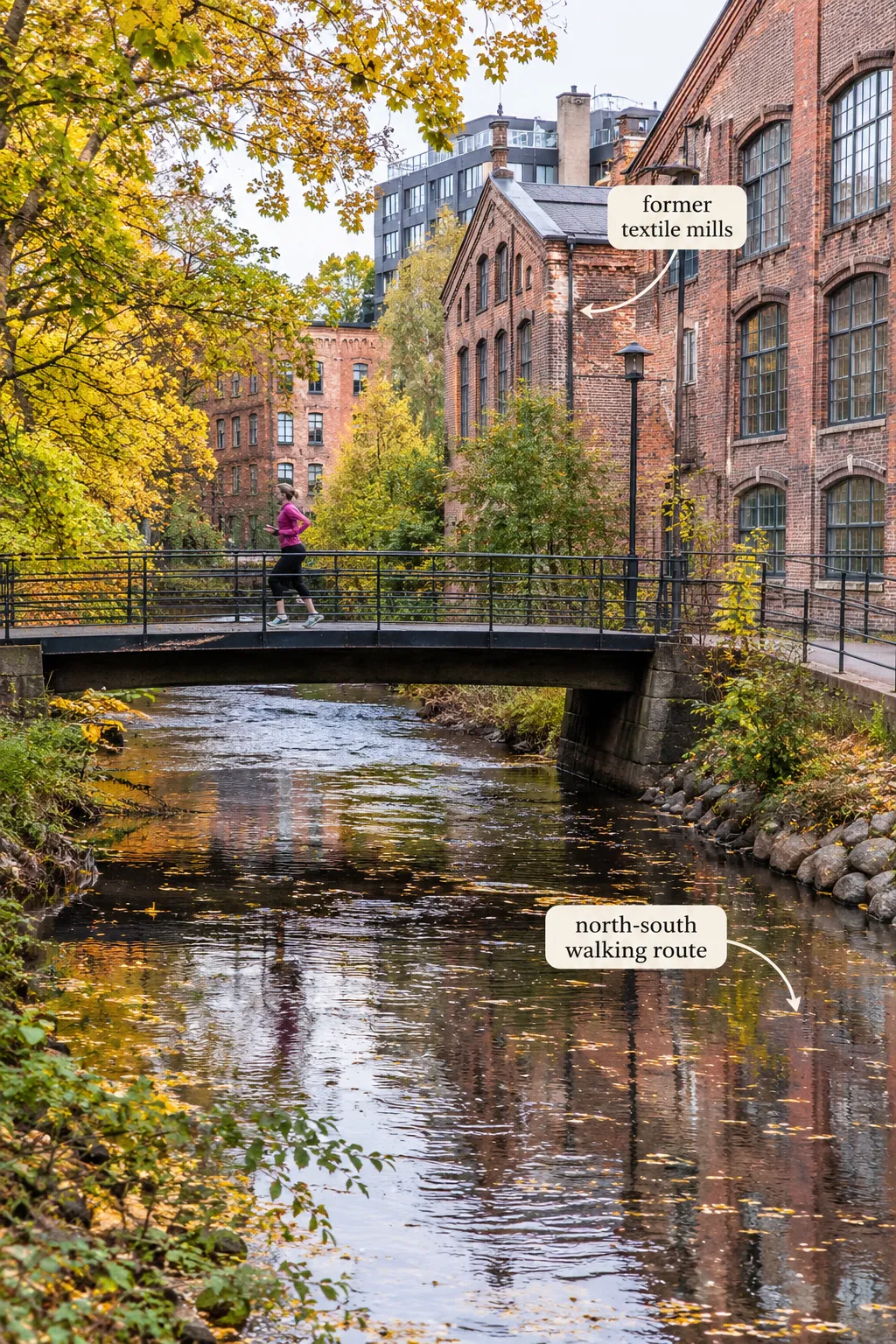
If you’d rather walk the whole route, follow the Akerselva river path. It starts near the city center and runs north, passing old factory buildings before reaching Grünerløkka’s cafes. This river corridor has become an anchor for north-south neighborhood itineraries, connecting several districts without needing public transport at all.
For travelers used to walkable European cities, this will feel familiar. If you’ve ever planned a trip around what to see in Prague beyond Charles Bridge, the same logic applies here: the river is your guide, not the main square.
Is It Safe to Walk Around Oslo Neighborhoods at Night
Yes, Oslo neighborhoods including Grünerløkka, Grønland, and St. Hanshaugen are generally considered safe to walk at night, with normal city precautions. Oslo consistently ranks among Europe’s safer capitals, and these areas are residential and well-lit.
That said, use common sense:
- Stick to main streets late at night in Grønland, where there’s more foot traffic anyway.
- Keep valuables close in crowded bar areas on weekend nights.
- Avoid empty park paths after midnight, same as any city.
Common mistake: assuming “local neighborhood” means “sketchy.” In Oslo, it usually means the opposite, quieter and more residential than the tourist strip.
What’s the Best Local Neighborhood to Eat and Drink in Oslo
Grünerløkka is the best all-around neighborhood for eating and drinking, with the highest concentration of independent cafes, breweries, and restaurants outside downtown. Grønland is the better choice if you want cheaper, more diverse food options.
A few practical picks locals actually use:
| Neighborhood | Best for | Price range feel |
|---|---|---|
| Grünerløkka | Craft coffee, bars, brunch | Mid to high |
| Grønland | Middle Eastern, Asian, budget eats | Low |
| Kampen | Cozy neighborhood restaurants | Mid |
| St. Hanshaugen | Bakeries, family cafes | Mid |
If you’re on a tight budget, Grønland is genuinely the cheapest neighborhood to eat and explore in Oslo. A filling meal there often costs less than half what you’d pay near the Opera House.
Which Oslo Neighborhood Has the Best Street Art and Galleries
Grünerløkka has the best concentration of street art and independent galleries in Oslo, particularly along side streets off Thorvald Meyers gate and near the river. Several small galleries and artist-run spaces operate in converted industrial buildings along the Akerselva.
The riverside walk itself works like an open-air gallery, with murals on old factory walls that you simply won’t see if you stay near the harbor. Visit Oslo’s activities and attractions page lists several of these spaces under the Grünerløkka borough section, confirming it as the city’s creative district.
If street art hunting is your thing, this compares well to what you’d find exploring hidden gems in Florence beyond the obvious sights, small, scattered, and best found on foot.
Are Oslo Neighborhoods Worth Visiting or Should I Stick to the City Center
They’re absolutely worth visiting, and arguably more worth it than extra time downtown. The city center covers the Opera House, Akershus Fortress, and Karl Johans gate well, but it doesn’t show you how Oslo actually lives day to day.
Decision rule: if you’ve already seen the Opera House and the harbor once, spend your second day in neighborhoods instead of repeating the center. Locals and newer tourism guides, including Tourism Oslo’s neighborhood breakdown, increasingly steer first-time visitors this way too.
Edge case: if you only have one day total in Oslo, split it. Morning in the center for the big landmarks, afternoon in Grünerløkka or Grønland. Don’t try to do both fully in under eight hours.
What’s the Difference Between Grünerløkka and Frogner Oslo
Grünerløkka is Oslo’s bohemian, creative district with cafes and vintage shops, while Frogner is an upscale residential area known for elegant apartment buildings and Frogner Park’s famous Vigeland sculptures. They sit on opposite ends of Oslo’s personality spectrum.
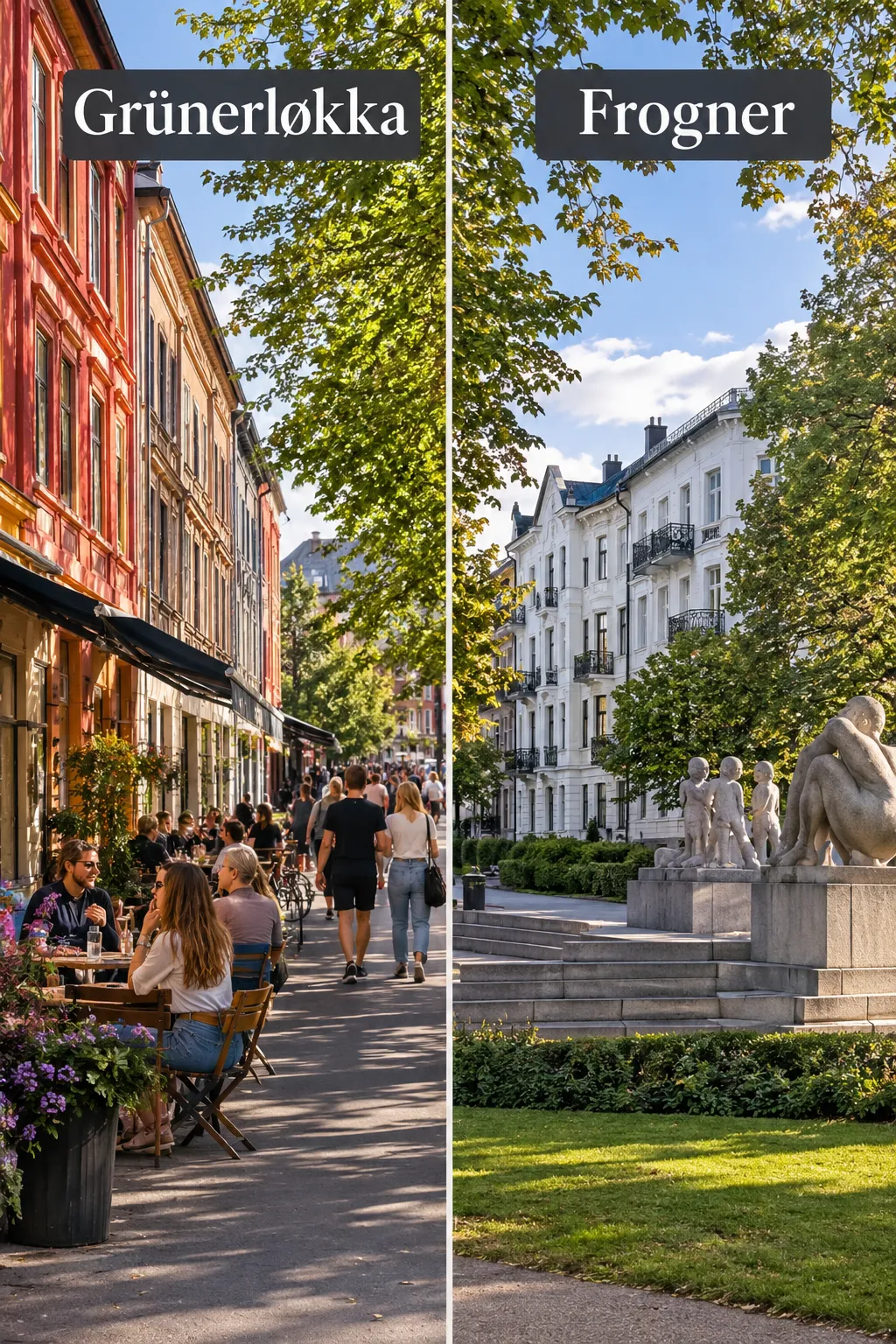
Quick comparison:
- Grünerløkka: younger crowd, casual cafes, street art, river views
- Frogner: quieter streets, green parks, museums, embassy row
Choose Grünerløkka if you want energy and food variety. Choose Frogner if you want a calm park walk and want to see the Vigeland sculptures, which are genuinely worth the trip regardless of your other plans.
How Much Time Should I Spend in Each Oslo Neighborhood
Plan for two to three hours per neighborhood if you’re walking and stopping for food, or about one hour if you’re just passing through for a quick look. Grünerløkka and Grønland reward a longer visit because of the food and shopping options.
A simple time-budget breakdown:
- Grünerløkka: 2 to 3 hours
- Grønland: 1.5 to 2 hours
- Kampen: 1 hour
- St. Hanshaugen: 1 hour
- Bygdøy (museums): half a day
Common mistake: trying to cram four neighborhoods into one afternoon. You’ll spend more time commuting between them than actually experiencing any single one.
What Do Locals Actually Do in Oslo Besides the Opera House
Locals swim at Sørenga’s floating docks, walk the Akerselva river path, browse Saturday markets in Grønland, and hang out in Grünerløkka’s cafes on weekday afternoons. None of this requires a ticket or a tour guide.
The waterfront culture around Sørenga and Bjørvika extends well beyond the Opera House itself, with public swimming docks that locals use from late spring through early autumn. It’s one of the most overlooked parts of a visit, since most travelers photograph the harbor but never actually jump in.
“The Opera House is the photo. Sørenga is where you actually feel like you live here for a day.”
If this kind of local-first exploration appeals to you, it’s worth comparing notes with New Orleans travel advice on skipping tourist traps, the underlying strategy of chasing resident habits over landmark checklists works in almost any city.
Best Oslo Neighborhood for Families with Kids
St. Hanshaugen is the best family-friendly neighborhood, with its central hilltop park, playgrounds, and quiet residential streets close to bakeries and casual restaurants. Frogner Park, with its open lawns and sculptures, is also a strong family option nearby.
Family-friendly checklist:
- Open green space for kids to run: St. Hanshaugen park, Frogner park
- Low traffic streets: St. Hanshaugen, Sagene
- Easy food options: bakeries and casual cafes throughout St. Hanshaugen
Choose Sagene if you want river walks and playgrounds along the water. Choose St. Hanshaugen if you want a central park plus easy access to downtown.
Are Oslo Neighborhoods Crowded with Tourists or More Authentic
They’re noticeably more authentic than the city center, with far fewer tourists and a much higher ratio of locals going about daily life. Grünerløkka has become somewhat more visited in recent years, but it still feels nothing like the crowds around the Opera House or Karl Johans gate.
Sagene, Kampen, and St. Hanshaugen remain genuinely quiet, residential, and largely untouched by tour groups. If authenticity is your priority, these three are your best bets.
What Can I See and Do in a Full Day Visiting Oslo Neighborhoods
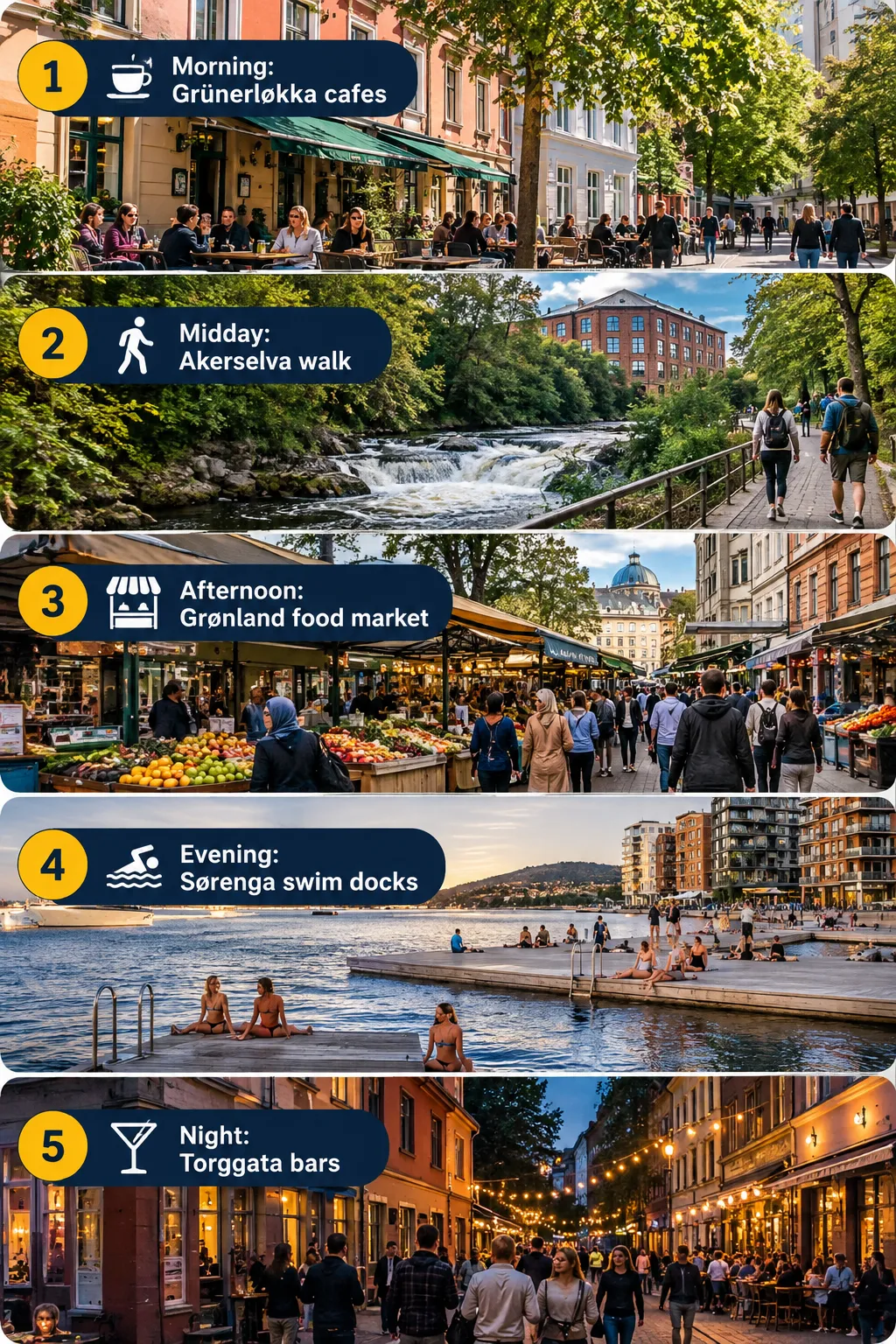
A realistic full day covers three neighborhoods connected by the Akerselva river walk, starting in Grünerløkka in the morning, moving through Sagene at midday, and ending in Grønland for an evening meal.
Suggested route:
- Morning: Coffee and shopping in Grünerløkka
- Midday: Walk the Akerselva path north through Sagene
- Afternoon: Loop back toward Grønland’s market streets
- Evening: Dinner in Grønland, then a short tram back to the harbor
This kind of neighborhood-hopping day trip mirrors strategies used in guides like the Europe train itinerary that skips obvious cities, where the goal is depth over a checklist of landmarks.
Where Do People Go for Nightlife in Local Oslo Neighborhoods
Grünerløkka and Grønland are the main nightlife hubs outside downtown, with Grünerløkka leaning toward craft beer bars and Grønland offering a more laid-back, late-night food and drink scene. Torggata, which sits between the two, has become a popular bar street in recent years.
If you want a livelier scene, pick Grünerløkka on a Friday or Saturday night. If you want something calmer with good late-night food, Grønland is the better call.
FAQ
Is Grünerløkka walkable from the Opera House?
Yes, it’s about a 20 to 25 minute walk, or 10 to 15 minutes by tram.
Do I need a car to visit Oslo’s neighborhoods?
No. Oslo’s tram and metro network covers all the neighborhoods mentioned here easily.
Is Bygdøy worth the extra trip?
Yes, especially with the new Museum of the Viking Age extending Oslo’s cultural circuit beyond downtown.
What’s the cheapest neighborhood for food?
Grønland, by a noticeable margin, especially for Middle Eastern and Asian food.
Can I combine neighborhoods with the Opera House in one day?
Yes, but limit yourself to the center plus one neighborhood if you only have a single day.
Are these neighborhoods good for solo travelers?
Yes, all are considered safe and walkable solo, day or night, with normal precautions.
Conclusion
The real answer to what to see in Oslo isn’t just the Opera House, the fjord views, or Karl Johans gate. It’s the river walk through Grünerløkka, the market stalls in Grønland, and the quiet wooden houses of Kampen.
Next time you plan an Oslo trip, block out at least half a day for neighborhoods beyond downtown. Start with Grünerløkka, follow the Akerselva river, and let the afternoon pull you toward Grønland or Sagene. That’s where the city actually shows itself.