Last updated: November 24, 2026
Italy had 249 million overnight stays in just the third quarter of 2026, a 3% jump from the year before, according to provisional data from Italy’s tourism market data. That number tells you something simple: the crowds are real, but so is the infrastructure built to handle them. Planning an Italy trip in 2026 means working around both.
Quick Answer
A good Italy trip for first-timers runs 7 to 10 days and covers Rome, Florence and either Venice or the Amalfi Coast, using trains between cities. Visit in April-May or September-October to dodge the worst crowds and heat. For aesthetic photos, prioritize early mornings in Cinque Terre, Positano, Matera and Lake Como, and consider November for genuinely quiet, atmospheric shots in major cities.
Key Takeaways
- 7-10 days is the sweet spot for a first Italy trip covering 2-3 regions without rushing.
- Shoulder season (April-May, September-October) balances good weather with smaller crowds.
- November 2026 offers notably thin crowds, with hotel rates 40-60% below summer peaks in many cities.
- Trains work for most of the classic route; a car helps in Tuscany, Puglia and the Dolomites.
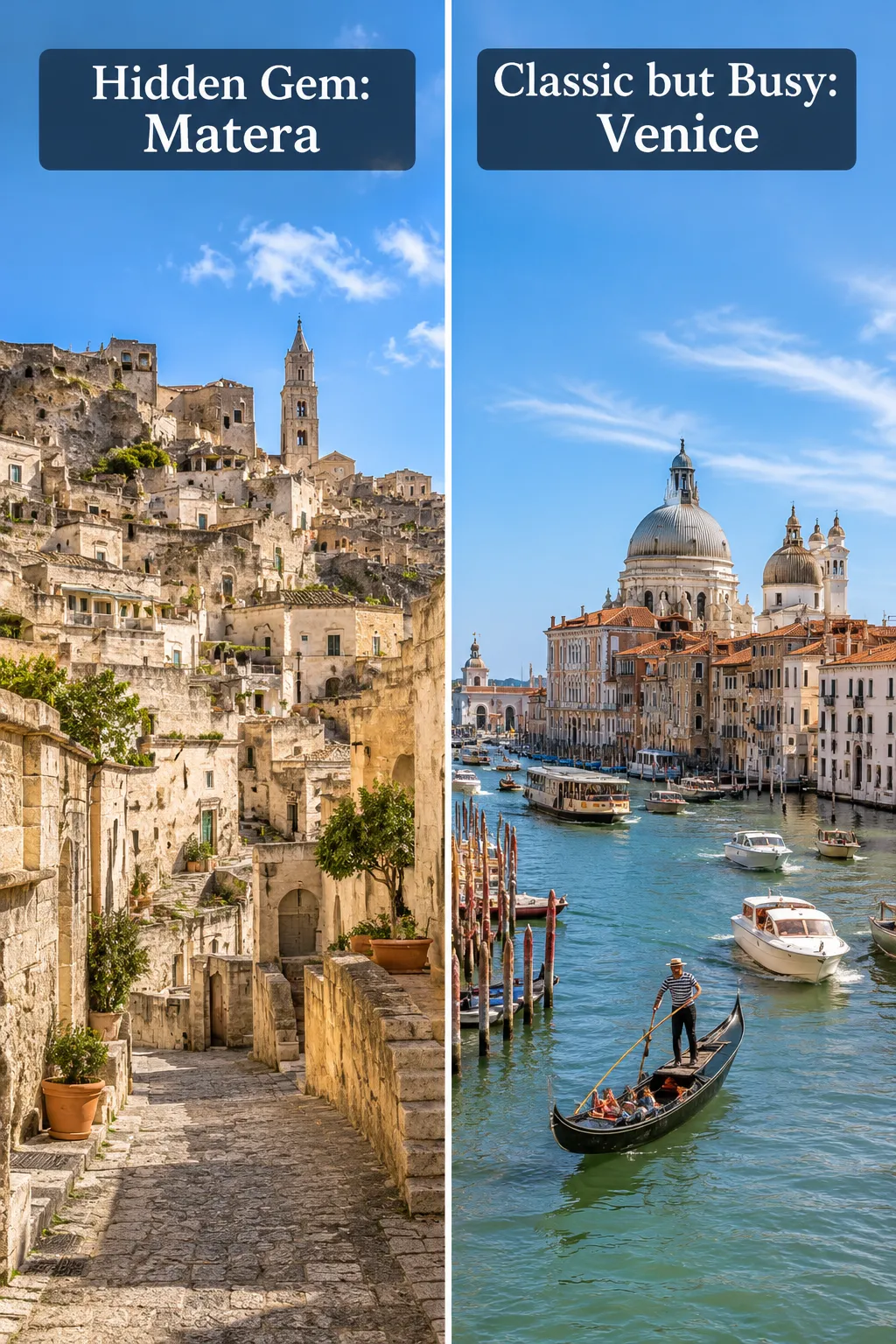
- Matera, Polignano a Mare, Castelmezzano and the Langhe are aesthetic alternatives to Rome and Venice.
- Solo travel is common and comfortable in Italy’s main cities and well-trodden regions.
- Check strike calendars before finalizing dates, since transport strikes can disrupt entire regions.
What are the most aesthetic photo spots in Italy
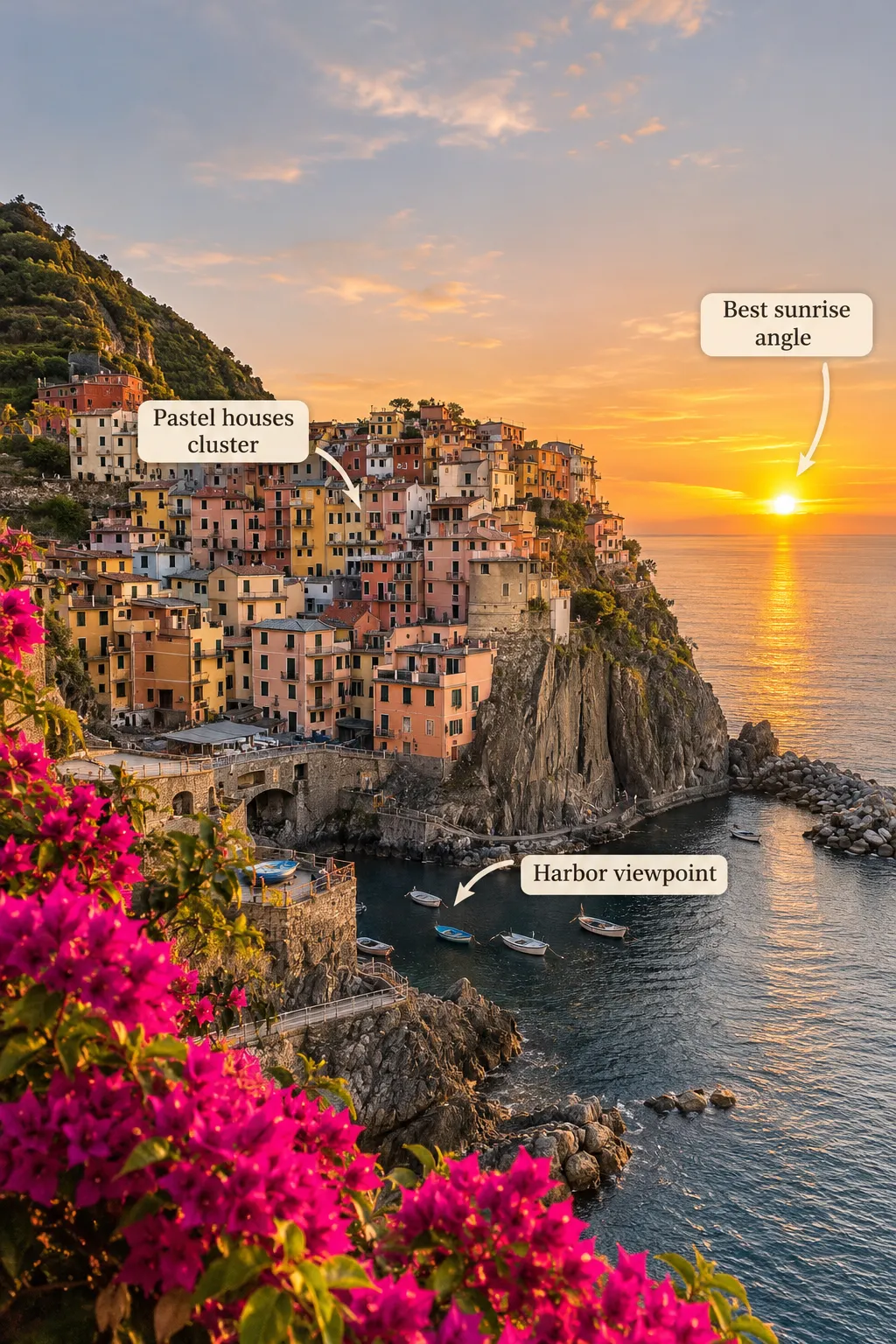
Italy’s most photogenic spots mix dramatic geography with centuries-old architecture, and most reward an early arrival before tour groups show up. The following locations show up again and again in photography guides for good reason: they photograph well in almost any light.
- Cinque Terre: five colorful cliffside villages, best shot from the trail between Manarola and Corniglia.
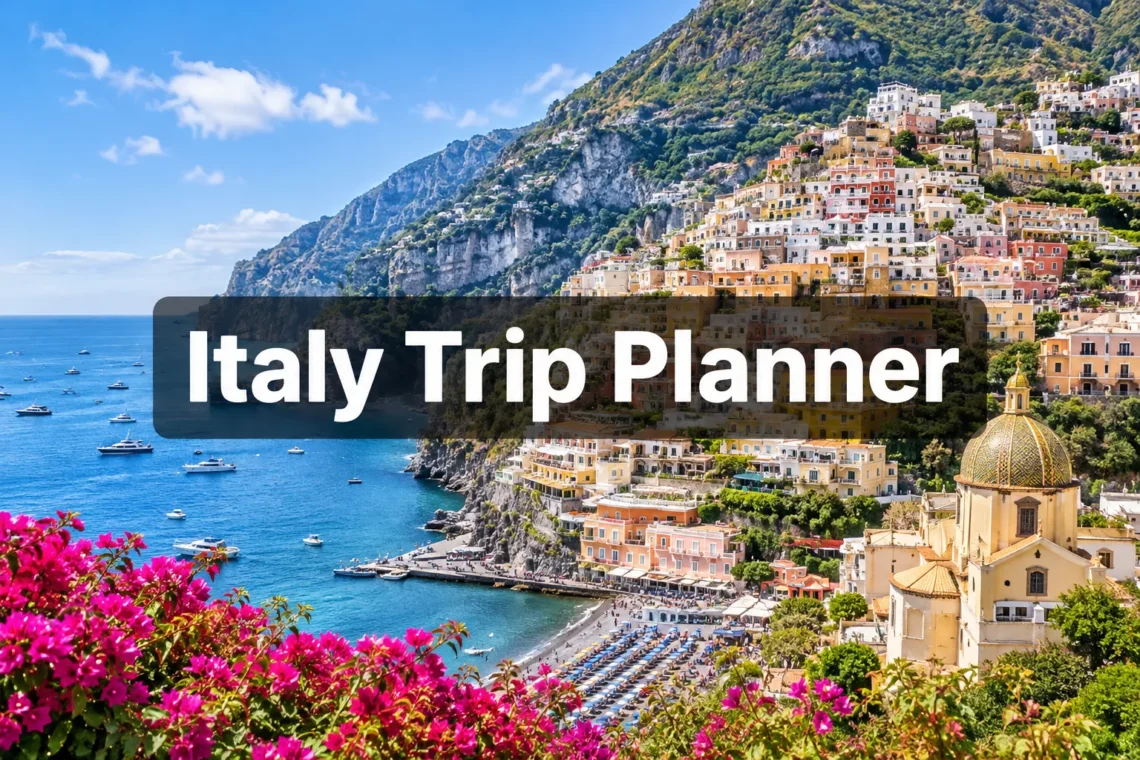
- Positano and the Amalfi Coast: pastel houses stacked above the sea, covered in detail in this dream Amalfi Coast itinerary.
- Lake Como: alpine water framed by villas, especially around Bellagio and Varenna.
- Matera: cave dwellings (sassi) that glow orange at sunset.
- Castelmezzano: a mountain village in Basilicata built into rock cliffs.
- Alberobello: cone-roofed trulli houses in Puglia.
- Polignano a Mare: a town perched on Adriatic limestone cliffs.
- Verona: the Roman arena and medieval riverside streets.
These picks line up closely with lists like Rabbie’s Instagrammers guide to Italy and Trip.com’s photo spot collection. Choose Cinque Terre or the Amalfi Coast if you want coastal color. Choose Matera or Castelmezzano if you want dramatic stone architecture with fewer tourists in frame.
How many days should I spend in Italy
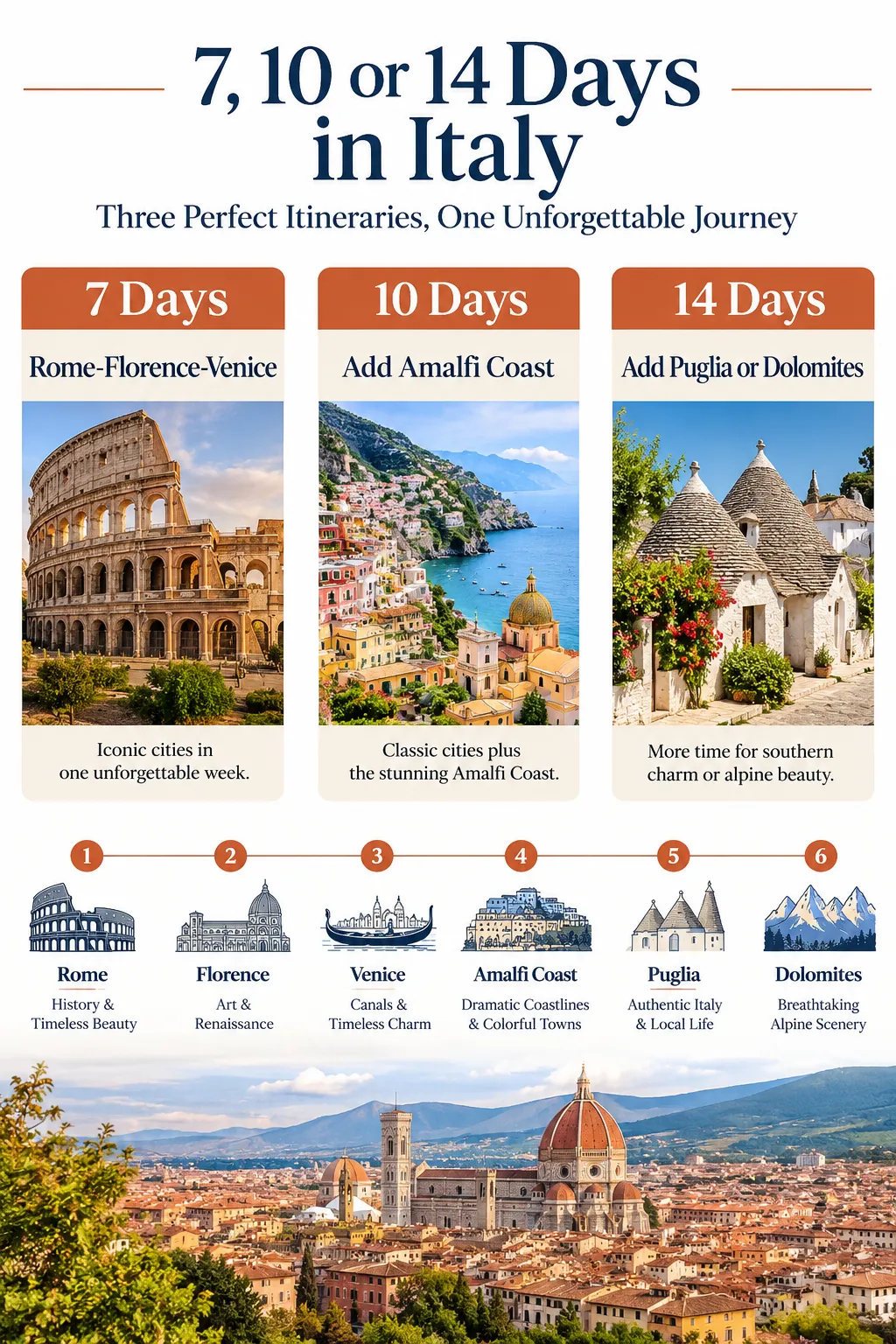
Plan for at least 7 days if this is a first visit, and 10-14 days if you want to add a second region without feeling rushed. A week covers Rome and Florence comfortably with a short Tuscany or Cinque Terre add-on. Ten to fourteen days lets you add Venice, the Amalfi Coast, or a slower countryside stretch.
Shorter trips of 3-5 days work fine if you pick one city or one region and stay put. Longer trips over two weeks make sense if you’re combining north and south, since travel time between, say, Milan and Puglia eats a full day either way.
Best Italy itinerary for first time visitors
The classic first-timer route is Rome, Florence, and Venice, connected by high-speed trains, with 3-4 nights in Rome, 2-3 in Florence, and 2 in Venice. This route hits the most recognizable landmarks while keeping travel days to a minimum.
A practical 9-day version looks like this:
- Days 1-3: Rome – Colosseum, Vatican, Trastevere at night. See what to see in Rome for first timers.
- Days 4-6: Florence – Duomo, Uffizi, a day trip into Tuscany. The 3 day Florence itinerary fits neatly here.
- Days 7-9: Venice – Canals, Murano, and a sunset gondola ride, or swap in magical winter Venice if traveling off-season.
If you’d rather trade Venice for coastline, swap in the Amalfi Coast or Positano, detailed in 17 best things to do in Positano.
How much does an Italy trip cost per person
Costs vary widely by season and travel style, so I won’t invent a fixed number here, but a few patterns are consistent across guides. November hotel rates run 40-60% below summer peaks in many Italian cities, which is one of the clearest cost levers available, according to seasonal Italy travel trend analysis. Trains, museum tickets, and food cost roughly the same regardless of season, but accommodation swings the most.
Budget-minded travelers should book trains in advance (prices rise closer to the date), eat where locals eat rather than near major landmarks, and travel in shoulder or off-season months. Mid-range and luxury travelers get the biggest value shift by simply avoiding July and August.
Best time to visit Italy to avoid crowds
November is one of the quietest months in major Italian cities, with visitor numbers among the lowest of the year in art cities like Florence and Rome, according to Guide to Italy’s November guide. Shoulder months like April-May and late September also offer a solid balance of good weather and thinner crowds.
If you travel in November, you’ll find Christmas markets opening in Trento on November 20 and Bolzano on November 27, running through Epiphany on January 6, both offering atmospheric night photography without the summer crush. All Saints’ Day (November 1) falls on a Sunday in 2026, so it won’t create an extra long weekend rush either.
Avoid July and August if crowds bother you. These months bring peak heat and the thickest tourist lines at every major site.
Hidden gems in Italy beyond Rome and Venice
Puglia, Basilicata, and parts of Piedmont offer the same visual drama as Italy’s famous cities with far fewer people in your shots. Puglia in particular is being actively promoted internationally, including a recent “Destination Puglia” showcase in Beijing, as reported by ANSA, part of a push that has helped grow Chinese visitor numbers from about 500,000 in 2019 to nearly 900,000 in 2025.
Worth building a trip around:
- Puglia: whitewashed hill towns, olive groves, Adriatic cliffs.
- Basilicata: Matera and Castelmezzano, minutes apart.
- Piedmont: rolling vineyard hills that feel like Tuscany without the crowds, covered in this Piedmont itinerary.
- Milan’s secret corners: explored in 12 hidden gems in Milan.
- Sardinia: covered in this Sardinia first-timer guide.
For a broader list, 10 hidden gems in Italy that feel magical rounds up more low-key options.
Italy trip with limited time what should I prioritize
With limited time, pick one base city and take day trips rather than switching hotels every two nights. Packing and checking in and out eats hours you don’t have, and Italy’s regional trains make day trips easy from most hubs.
If you have 3-5 days, base in Rome or Florence and do one day trip. If you have a weekend only, stay in one city completely, see the smart Seville-style approach applied to Florence as a model for tight, efficient sightseeing.
Can you see Italy in 3 days
Three days is enough for one city done well, not for multiple regions. Rome, Florence, or Venice alone can absorb a full three days without you running out of things to see.
Trying to cram Rome, Florence, and Venice into three days means spending most of your time on trains and checking boxes rather than actually experiencing anything. If three days is all you have, choose one city and go deep.
Can you do Italy by train or do I need a car
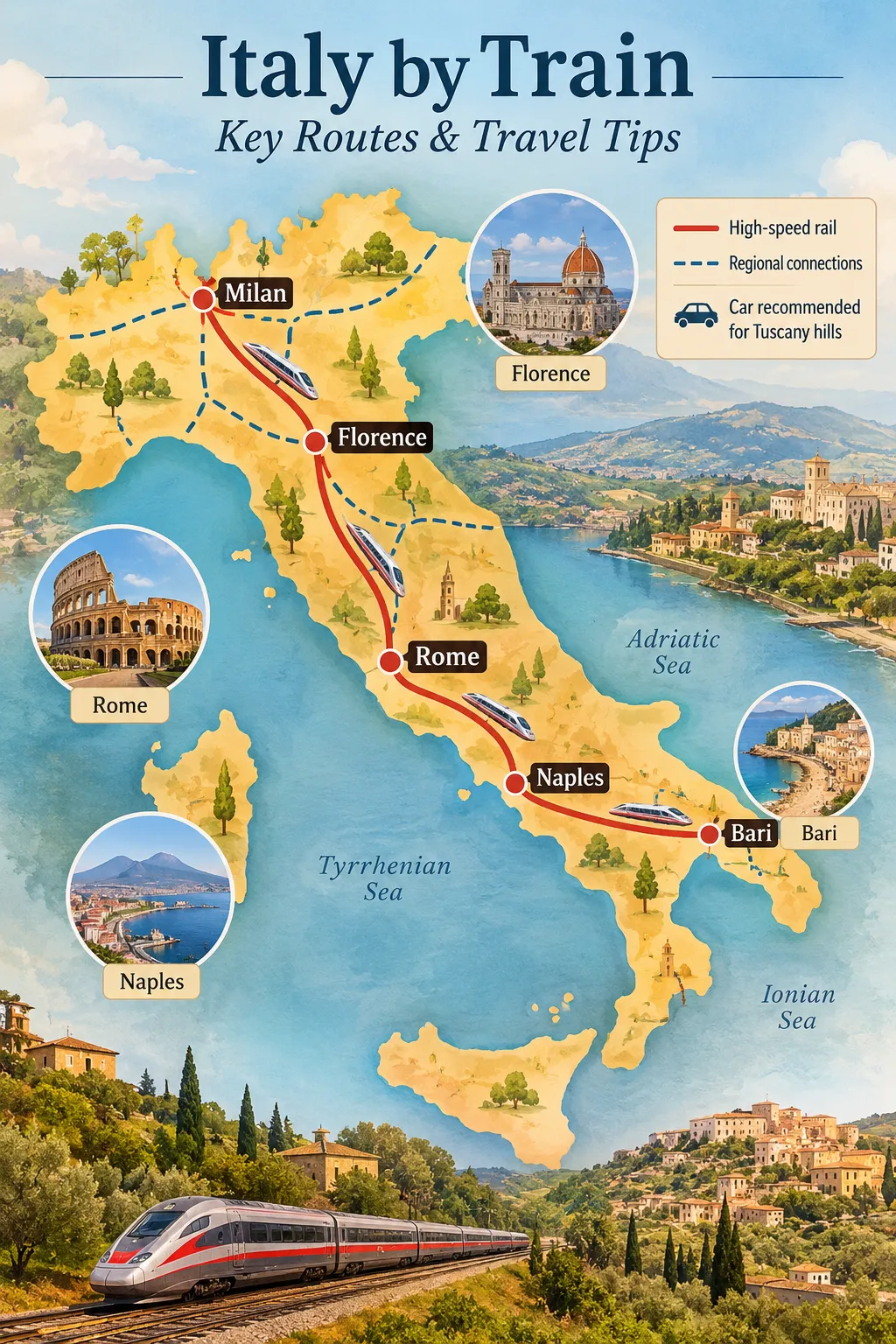
Italy’s high-speed trains connect all the major cities, Milan, Florence, Rome, Naples, and Bari, efficiently and comfortably, so a car isn’t necessary for a classic city-hopping trip. A rail-based itinerary works well and is detailed in this Europe train itinerary guide.
A car becomes useful once you leave the cities: Tuscany’s hill towns, the Dolomites, Piedmont’s wine country, and much of Puglia are easier and often only reachable by road. Choose trains if your trip is city-to-city. Choose a car if your trip includes countryside regions.
Is Italy good for solo travelers
Yes, Italy is a common and comfortable destination for solo travelers, particularly in well-trafficked cities like Rome, Florence, and Venice where English is widely understood in tourist areas. Hostels, group food tours, and walking tours make it easy to meet other travelers if you want company.
Smaller towns and rural regions require a bit more planning around transport schedules, since buses can be infrequent, but they’re not unsafe or unwelcoming. Solo travelers heading south into Puglia or Basilicata should book accommodation with easy transit access in mind.
Common mistakes tourists make in Italy
The most common mistake is overpacking the itinerary: trying to see five cities in seven days leaves no time to actually enjoy any of them. A detailed breakdown of this and other errors is covered in 15 mistakes to avoid in Italy.
Other frequent mistakes include not checking for transport strikes before booking (Italy had a nationwide general strike affecting Rome, Venice, Milan, and Bolzano from November 20-22, 2026, with widespread cancellations, according to travel disruption coverage), skipping restaurant reservations in peak season, and underestimating how early you need to arrive at major landmarks for both crowds and light.
Most instagrammable places in Italy
Beyond the obvious coastal towns, Verona’s Roman arena, Florence’s Duomo viewpoints, and Puglia’s sea stacks consistently rank among Italy’s most photographed locations. Trip.com’s photo spot collection and Rabbie’s Instagrammers guide both put Lake Como, Cinque Terre, and the Amalfi Coast near the top, alongside Matera and Vesuvius for more dramatic, less typical shots.
For the best light, shoot coastal towns at sunrise and cities like Florence or Verona during blue hour, just after sunset, when streetlights come on but the sky still holds color.
Italy itinerary in winter vs summer which is better
Winter suits travelers who want quiet streets, lower prices, and atmospheric photography; summer suits travelers who want long daylight hours, coastal swimming, and festival energy. Neither is objectively better, it depends on what you’re optimizing for.
Winter trade-offs: shorter days, some coastal towns operate on reduced hours, but cities like Florence and Rome feel dramatically less crowded, and November hotel rates run well below peak summer pricing. Summer trade-offs: long days and swimmable coastlines, but intense heat, packed landmarks, and the highest prices of the year.
What to do in Italy if you don’t like crowded cities
Skip the big-three cities entirely and build a trip around the countryside or smaller coastal towns instead. Tuscany’s hill towns, covered in this Tuscany travel guide, and the Dolomites, detailed in this Dolomites itinerary, both offer striking scenery without urban crowds.
Puglia, Basilicata, and the Livorno coastal area in Tuscany, which draws visitors averaging 5.5 days in the region, also make strong low-crowd alternatives for travelers who want beauty without density.
Comparison: Classic Route vs Hidden Gem Route
| Feature | Classic Route (Rome-Florence-Venice) | Hidden Gem Route (Puglia-Basilicata) |
|---|---|---|
| Crowd level | High, especially summer | Low to moderate year-round |
| Transport | High-speed trains | Car recommended |
| Photo style | Iconic landmarks, canals | Cliffside towns, cave architecture |
| Best for | First-time visitors | Repeat visitors, photographers |
| Typical trip length | 7-10 days | 5-8 days |
FAQ
Do I need a car for a classic Rome-Florence-Venice trip?
No. High-speed trains connect all three cities directly and are faster than driving between them.
Is November a good time for an Italy trip?
Yes, November offers thin crowds, lower hotel rates, and Christmas markets in Trento and Bolzano starting late in the month.
How many cities should I visit in 7 days?
Two to three cities is realistic. More than that turns the trip into transit days rather than sightseeing.
Are strikes common in Italy?
Occasional nationwide strikes do happen and can disrupt transport significantly, so check local news before finalizing travel dates.
What’s the single best photo spot in Italy?
There’s no single answer, but Cinque Terre, Positano, and Matera consistently top photography guides for different reasons: coastal color versus stone architecture.
Is Venice’s entry fee still in effect?
Venice has confirmed a day-tripper access fee on select days between March 26 and August 15, 2027, so check current dates before visiting.
Can solo travelers manage Italy without speaking Italian?
Yes, especially in Rome, Florence, Venice, and Milan, where English is widely understood in tourist-facing businesses.
Conclusion
Start by picking your trip length first, then let that decide your route. A week fits Rome and Florence comfortably. Ten days opens the door to Venice or the Amalfi Coast. Two weeks lets you add Puglia or the Dolomites without rushing.
Book trains early, check strike calendars before you lock in dates, and if photography matters to you, build in early mornings at your top one or two locations rather than trying to shoot everything. If crowds are your main worry, shift your trip to November or swap a big city for Puglia or Basilicata instead.