Last updated: November 13, 2026
Quick Answer
Yes, but only in parts. Southern Spain and the Canary Islands stay mild, often 15-17°C by day, while Madrid and the central plateau can dip near freezing at night. Is Spain warm in winter overall? Mostly mild, not hot, and it depends heavily on which region you pick.
Key Takeaways
- Southern Spain (Seville, Malaga, Granada’s lowlands) averages 14-17°C highs in winter, the mildest on the mainland.
- Madrid and the central meseta are the coldest major cities, with highs near 10-13°C and frosty nights.
- Barcelona sits in between: mild coastal air keeps January highs around 13-16°C.
- The Atlantic north coast (Galicia, Asturias, Basque Country) is mild but wet and windy.
- December and January are the coldest months nationwide, per AEMET data.
- Winter 2024-2025 was officially “very warm” in Spain, 1.2°C above the 30-year average.
- Beach weather is unlikely in winter, though Andalusia and the Canaries can feel spring-like.
- Pack layers, not heavy snow gear, unless you’re heading inland to Madrid or the north.
Spain gets labeled “sunny Europe” in travel brochures, and for good reason. But winter temperatures swing more than people expect, from near-freezing mornings in Madrid to shirt-sleeve afternoons on the Costa del Sol. I learned this the hard way on a December trip when I packed one coat for both Madrid and Marbella, and it was completely wrong for half the trip. Understanding is Spain warm in winter really means understanding its geography first.
What’s the Average Temperature in Spain During Winter
Spain’s winter average temperature sits around 7-8°C nationwide, but that number hides huge regional swings. According to Spain’s meteorological agency AEMET, the winter of 2024-2025 (December through February) averaged 7.8°C across mainland Spain, which was officially classified as “muy cálido,” or very warm, and 1.2°C above the 1991-2020 normal.
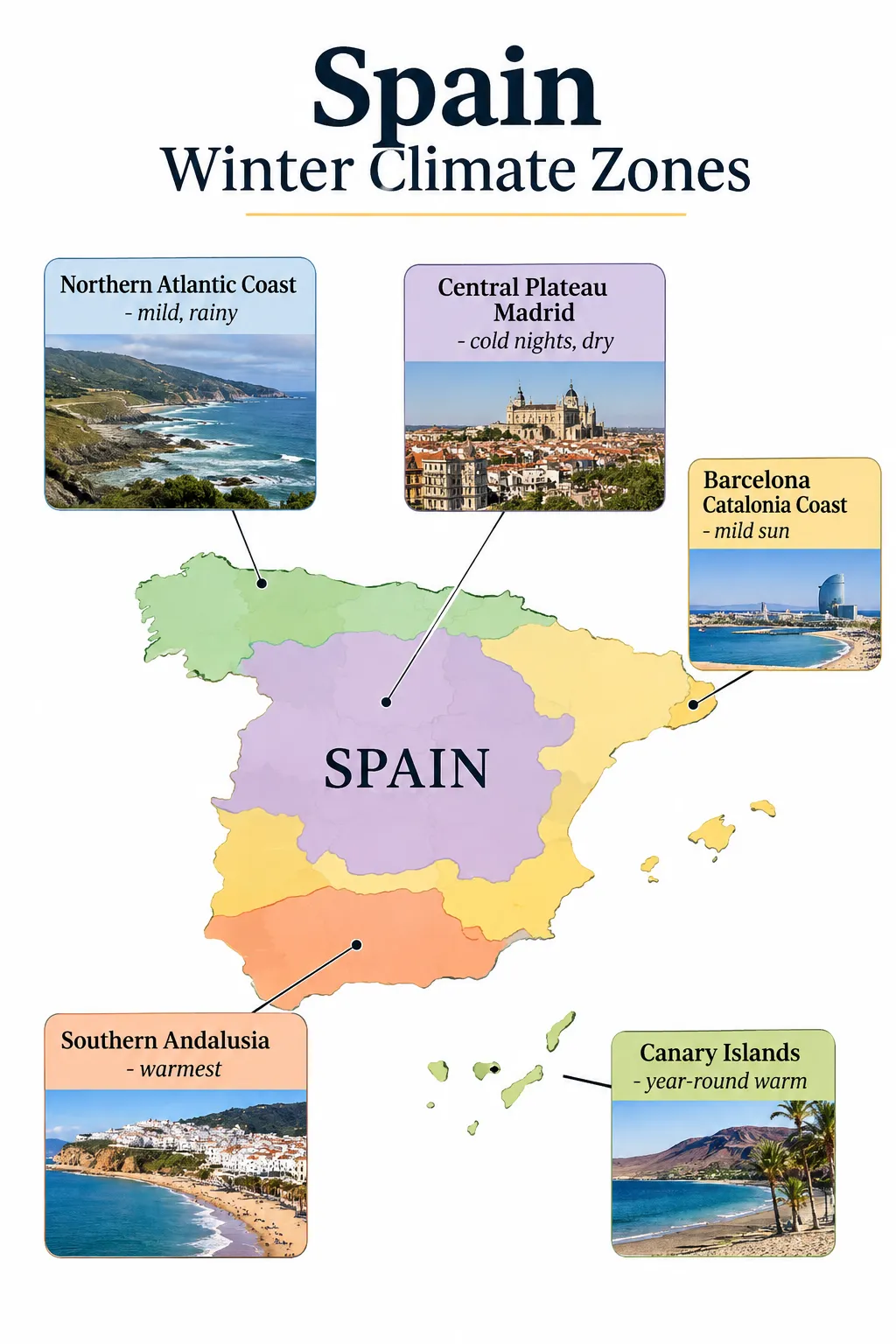
That average blends freezing high-altitude mornings with balmy coastal afternoons. In practice:
- Northern and central Spain: daily means around 5-8°C
- Mediterranean coast: daily means around 10-12°C
- Southern Andalusia: daily means around 11-13°C
So when people ask is Spain warm in winter, the honest answer is “warm for Europe, cool by Spanish summer standards.”
Is Spain Warmer Than Other European Countries in Winter
Yes, Spain is generally warmer in winter than most of northern and central Europe, though not dramatically warmer than Portugal or southern Italy. Spain’s southern coast and Canary Islands benefit from subtropical airflow that keeps nighttime lows well above freezing most winters.
Compare Spain to the UK or Germany, where January highs hover around 5-7°C with frequent gray skies, and Spain’s south looks downright pleasant. Spain and Portugal share a similar mild winter climate, and travelers planning a Spain Portugal combo trip often find Lisbon tracks closely with Seville in temperature.
Spain’s 2024 annual climate report confirmed the broader trend: the country’s annual mean temperature hit 15.0°C, 1.1°C above baseline, part of a steady warming pattern that’s made recent winters notably milder than decades past.
Which Regions of Spain Are Warmest in Winter
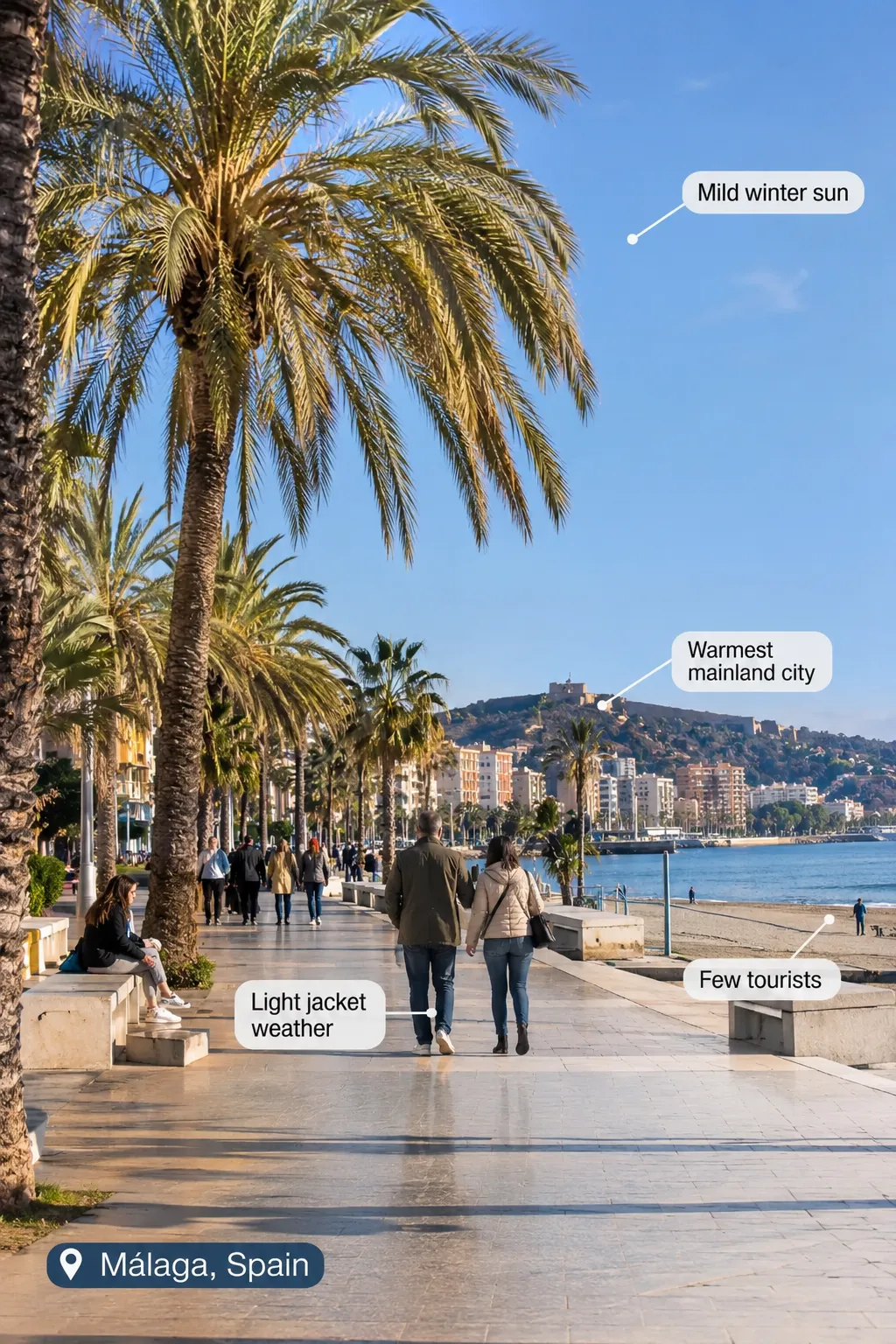
Southern Spain and the Canary Islands are the warmest regions in winter, with daytime highs regularly reaching the mid-teens Celsius even in January. Seville, Malaga, and coastal Andalusia stay mild enough for light jackets most days.
Here’s a rough regional breakdown for winter:
| Region | Typical January High | Typical January Low | Feel |
|---|---|---|---|
| Andalusia / South coast | 16-17°C | 5-8°C | Mild, spring-like |
| Barcelona / Catalonia | 13-16°C | 4-7°C | Cool but pleasant |
| Madrid / Central plateau | 10-13°C | 0-3°C | Cold, dry, frosty nights |
| Northern Atlantic coast | 11-12°C daily mean | – | Mild but rainy and windy |
| Canary Islands | 20-22°C | 14-16°C | Warmest region, near-summer |
For a deeper regional dive, check out this intrepid guide to weather in Spain, which breaks down seasonal patterns by zone.
What Should I Pack for a Winter Trip to Spain
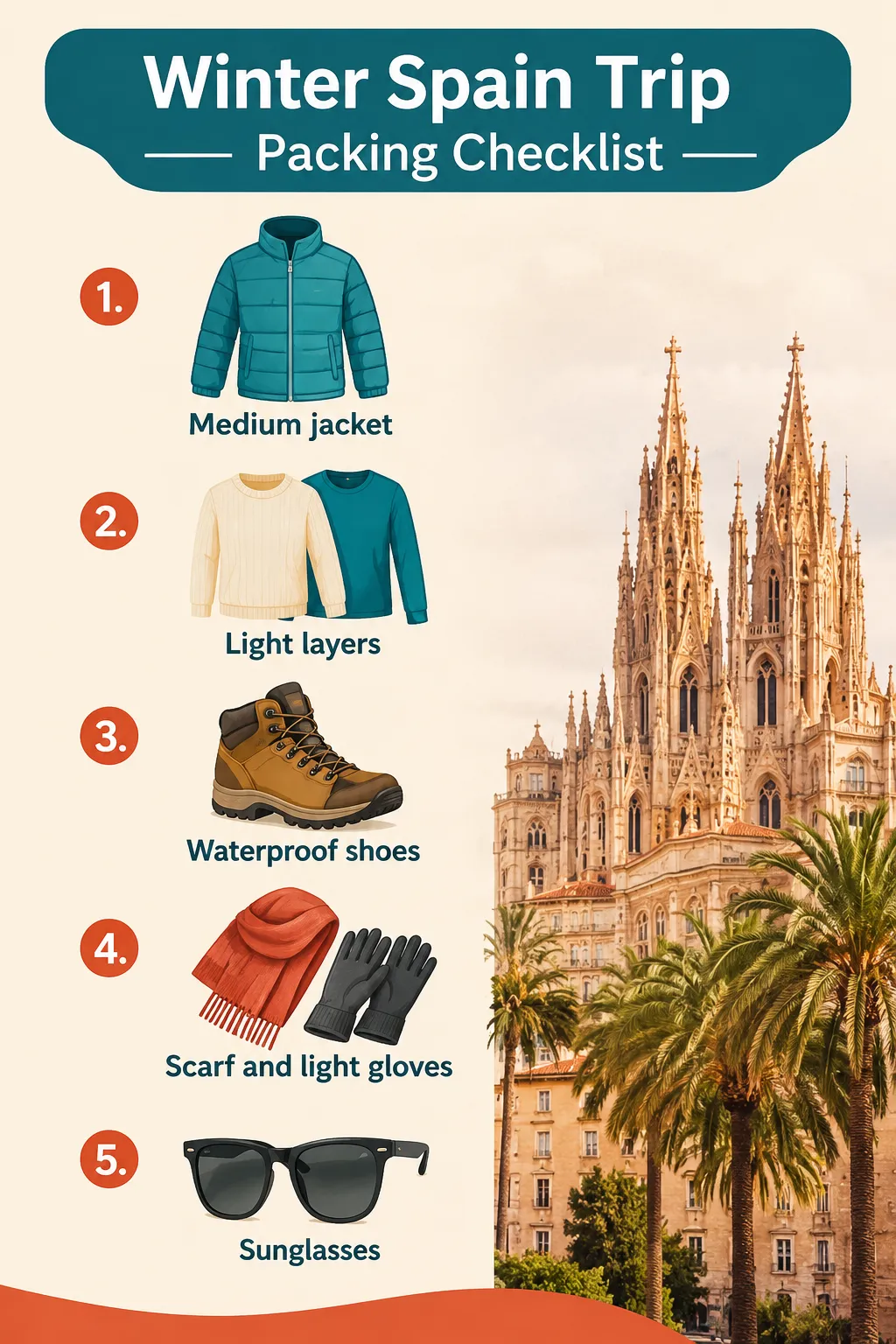
Pack layers you can adjust throughout the day, since mornings run cold almost everywhere and afternoons warm up fast, especially in the south. A medium jacket, a few sweaters, and waterproof shoes cover most of Spain’s winter weather needs.
Basic packing list by region:
- Madrid and inland cities: warm coat, wool scarf, gloves, closed shoes, compact umbrella
- Barcelona and the Mediterranean coast: light-to-medium jacket, light sweater, waterproof shoes for occasional rain
- Seville, Granada, southern coast: think “cool spring,” light layers, sunglasses, a light jacket for evenings
- Northern Atlantic coast: waterproof jacket, sturdy waterproof shoes, warm base layers
According to this winter wardrobe guide for Spain, gloves and heavy coats are usually only necessary at night in inland cities like Granada, not during the day. If you’re also stopping in colder parts of Europe, my guide to packing for France in winter has useful crossover tips on layering systems that work in both countries.
Does It Snow in Spain in Winter
Yes, it can snow, but mostly in mountain areas and occasionally in Madrid during cold snaps. Coastal cities like Barcelona, Malaga, and Seville almost never see snow at sea level.
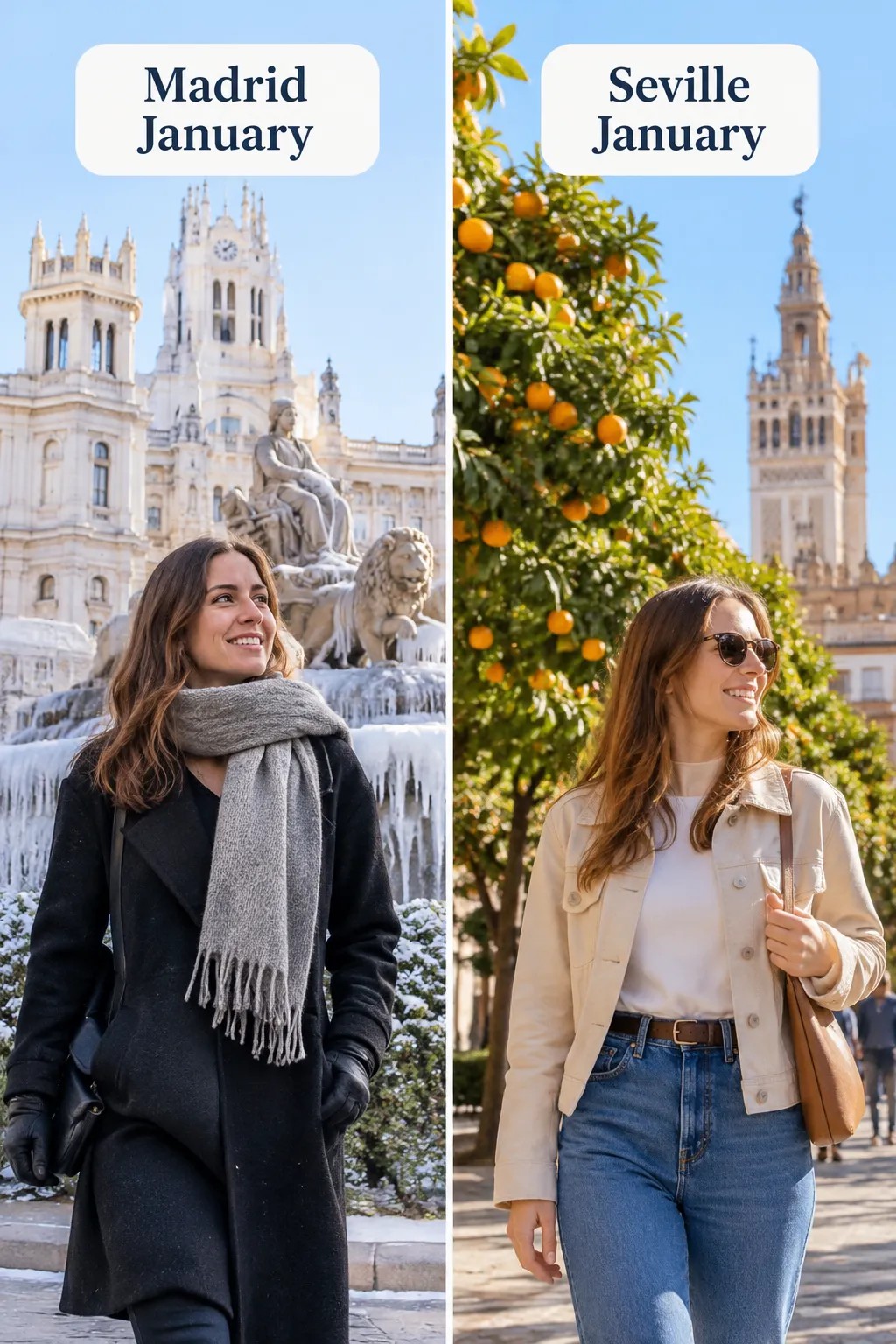
Madrid and the central plateau see occasional light snow or frost during cold spells, according to weather data from Climates to Travel. The Pyrenees and Sierra Nevada mountains get substantial snowfall, which is why ski resorts operate there in winter. If you’re planning a 2 week northern Spain itinerary, expect colder, wetter conditions than the south, with snow likely at higher elevations.
Is Spain Warm Enough for Beach Visits in Winter
Not really, though sunny days on the southern coast can feel warm enough to walk the beach comfortably. Swimming is uncommon since sea temperatures drop to around 14-16°C along most of the coast.
The south, particularly around Malaga and Marbella, offers the best shot at beach-adjacent winter weather. On a sunny 17°C afternoon you can comfortably sit outside at a beachfront cafe, even if actual swimming is off the table. The Canary Islands are the real exception, where sea and air temperatures stay warm enough for swimming nearly year-round.
What Are the Coldest Months in Spain
December and January are consistently the coldest months across Spain, with February close behind. Central and northern regions see the sharpest dips, while the south stays comparatively mild throughout this stretch.
Seasonal breakdown by average high, average low:
- December: central Spain around 10-11°C high, 2-4°C low
- January: the coldest month almost everywhere, central Spain 10-13°C high, 0-3°C low
- February: slight warming begins, southern Spain often back into mid-teens
The gap between south and north is clearest in these three months, when Spain’s winter months show the widest temperature spread of the year.
How Much Warmer Is Southern Spain Compared to Northern Spain in Winter
Southern Spain runs roughly 4-7°C warmer than northern and central Spain during winter months. That gap is driven by latitude, elevation, and proximity to warm Mediterranean and Atlantic currents.
Madrid, sitting on a high central plateau, loses heat fast at night and rarely breaks 13°C in January. Seville and coastal Andalusia, at lower elevation and closer to Africa’s warm air masses, regularly see highs of 16-17°C the same month. This north-south divide is the single biggest factor in deciding where to go if warmth matters most to your trip.
Is December Warm in Spain
December is mild in the south but cold in the center and north. Seville and the southern coast often see highs near 16°C, while Madrid struggles to reach 11°C, and the north stays cool and damp.
December weather data for Seville shows daytime highs commonly in the mid-teens Celsius with cooler evenings. Meanwhile Rough Guides’ December overview notes that northern and central Spain see far more rain and chill during this month.
What’s the Weather Like in Barcelona in January
Barcelona in January is cool but comfortable, with highs around 13-16°C and lows near 4-7°C. Rain is occasional, frost at sea level is rare, and sunny days feel pleasant for walking tours.
Visitors heading to Barcelona in January should pack a medium jacket rather than a heavy winter coat. The city’s daily mean temperature hovers around 10-11°C, mild enough that locals are often out in light sweaters on sunny afternoons. If you want a place to stay while exploring, this Barcelona accommodation guide covers neighborhoods that stay walkable even on cooler winter days.
What Is the Weather Like in Madrid
Madrid stays cold and dry through winter, with January highs around 10-13°C and lows that regularly dip to 0-3°C. Clear skies are common, but the plateau elevation means nights feel noticeably colder than coastal cities.
What Is the Weather Like in Malaga
Malaga is one of the mildest mainland cities in winter, with January highs near 17°C and lows rarely below 8°C. It’s consistently warmer than Madrid by several degrees even on the same date.
What Is the Weather Like in San Sebastian
San Sebastian, on the northern Basque coast, stays mild but damp, with winter daily means around 10-11°C. Rain and wind are frequent, though temperatures rarely drop to freezing at sea level.
What Is the Weather Like in Majorca
Majorca sees winter highs around 14-15°C with cooler, breezy evenings. It’s milder than mainland central Spain but cooler than Andalusia’s southern coast.
Is December Warm in Spain’s Canary Islands
The Canary Islands stay warm nearly year-round, with December highs around 21-22°C. This makes them the single warmest Spanish destination during the European winter, closer in climate to north Africa than mainland Spain.
Is Spain Worth Visiting in Winter
Yes, winter is a smart time to visit Spain if you avoid peak summer crowds and heat. Southern cities offer mild, sunny days perfect for sightseeing, while fewer tourists mean lower prices on flights and hotels.
Cities like Seville, Granada, and Cadiz are genuinely pleasant to explore on foot in December and January. If you’re weighing a broader Andalusia itinerary, winter is actually one of the more comfortable times to do it, avoiding the brutal summer heat that pushes temperatures past 35°C.
Do I Need Heavy Coats and Sweaters for Spain Winter
You need a heavy coat mainly in Madrid, the central plateau, and the northern mountains. For southern Spain and the Mediterranean coast, medium layers are usually enough.
Common mistake: packing one wardrobe for the whole country. Travelers who fly into Madrid then head south often overpack cold-weather gear they never use again after day three. If your trip spans both zones, bring a packable mid-weight jacket that works for both, plus a lighter layer for southern afternoons.
How Does Malaga’s Winter Compare to Madrid’s
Malaga is consistently warmer than Madrid in winter, often by 5-7°C on the same day. Malaga’s coastal location and southern latitude shield it from the cold air masses that settle over the central plateau.
While Madrid residents bundle up in wool coats, Malaga locals are frequently comfortable in a light jacket or even short sleeves on sunny midday walks. This is the clearest real-world example of how much regional geography shapes Spain’s winter climate.
Common Mistakes People Make Packing for Spain in Winter
The biggest mistake is assuming all of Spain has one winter climate. Travelers either over-pack heavy coats for a southern-only trip or under-pack for Madrid, expecting Mediterranean warmth that doesn’t exist on the plateau.
Other frequent errors:
- Forgetting rain gear for the northern coast, where showers are common
- Skipping a scarf or light gloves for Madrid’s frosty mornings
- Assuming beach weather applies anywhere outside the Canary Islands
- Not checking city-specific forecasts before a multi-region trip
For travelers also comparing destinations, our guide to warm places in the USA in winter offers a useful benchmark for how Spain’s south stacks up against similar winter-sun spots.
Want to Learn More About Spain
Spain rewards deeper exploration beyond the big three cities. Regions like northern Spain, Valencia, and Alicante each offer distinct winter character worth planning around.
Check out 3 days in Madrid, 3 days in Valencia, or what to see in Alicante for region-specific planning. Solo travelers can also browse our Spain solo female travel guide for safety and logistics tips.
Our Spain Trips
Whether you’re drawn to Andalusia’s mild winter sun or Catalonia’s coastal charm, there’s a Spain itinerary for every winter traveler. Browse our full Spain category for city guides, itineraries, and packing advice tailored to each region’s climate.
Get Inspired on The Good Times
Winter travel doesn’t mean giving up good weather entirely, it just means choosing your region wisely. Spain’s south, in particular, proves that Europe still has sunny escapes available even in December and January.
FAQ
Is it safe for Americans to go to Spain right now?
Yes, Spain is generally considered safe for American travelers, with standard precautions against petty theft in tourist areas. Major cities like Madrid, Barcelona, and Seville see millions of visitors yearly with low rates of serious crime against tourists.
What is the prettiest city in Spain?
Many travelers name Granada or Seville the prettiest, thanks to their historic architecture, the Alhambra, and colorful old-town streets. Barcelona and San Sebastian also rank highly for their coastal settings and distinctive architecture.
What is the weather like in March in Spain and Portugal?
March brings transitional spring weather, with highs around 14-18°C in the south and 11-14°C inland. Rain is still common in the north, but days grow noticeably longer and warmer than December or January across both countries.
What is the warmest city in Spain in the winter?
Malaga and other southern coastal cities are typically the warmest on the mainland, with January highs near 17°C. The Canary Islands, though technically Spanish territory further south, are warmer still, averaging around 21-22°C in winter.
Conclusion
So, is Spain warm in winter? It depends entirely on where you land. Madrid and the central plateau run cold and dry, the north stays mild but wet, and the south offers genuinely pleasant, jacket-weather days even in the coldest months. My advice: pick your region first, then pack around it, light layers for Andalusia, a proper coat for Madrid, and waterproofs for the north. Spain’s winter warmth is real, just regional, so plan accordingly and you’ll have a far better trip than I did with my one-coat mistake.