
Last updated: August 29, 2026
Quick Answer: A 3-day Lassen Volcanic National Park itinerary gives first-time visitors enough time to cover the park’s top highlights without rushing. Spend Day 1 at Manzanita Lake, Day 2 on the main park highway hitting Bumpass Hell and hydrothermal sites, and Day 3 on either the Lassen Peak summit hike or Cinder Cone. Three days is the sweet spot – long enough to feel the park, short enough to stay energized.
Key Takeaways
- 🗓️ Three days is ideal for first-time visitors to Lassen Volcanic National Park – the park’s official summer itineraries support this structure.
- 🌋 Bumpass Hell is the single most important stop – a 3-mile round-trip hike to the largest hydrothermal area in the park.
- 🏔️ Lassen Peak is the crown jewel hike – allow a full morning and start early to beat afternoon storms.
- 🚗 The 30-mile park highway (CA-89) is fully open for the 2026 season and connects nearly every major attraction.
- 💰 Entrance fee is $35 per vehicle (valid 7 days), or free with an America the Beautiful Pass.
- 🔥 Stage 2 fire restrictions are in effect as of July 31, 2026 – no wood fires; propane stoves only.
- 🌨️ Snow can linger on Lassen Peak Trail into August, so check conditions before heading up.
- 🏕️ Manzanita Lake Campground is the most convenient base for a 3-day visit.
- 📵 Cell service is limited inside the park – download offline maps before you arrive.
- ☀️ Best months to visit are July through September for the most accessible trails and best weather.
How Many Days Do You Need to See Lassen Volcanic National Park?
Three days is the right amount of time for a first visit to Lassen Volcanic National Park. The National Park Service’s own summer itinerary guidance suggests a structure that naturally fills three days, and a family-focused trip planner confirms that Lassen “fills about 3 days at an easy pace.”
One day is not enough to do the park justice – you’d have to skip either Bumpass Hell or Lassen Peak, and both are essential. Two days works if you’re pressed for time, but three days lets you hike, explore hydrothermal features, and still have a morning to sit by Manzanita Lake with coffee.
Can you do Lassen in one day? Yes, but you’ll only scratch the surface. A single day is best spent driving the full 30-mile park highway, stopping at Sulphur Works and Bumpass Hell, and doing one short hike. Save the summit for a longer trip.
Best Time of Year to Visit Lassen Volcanic National Park
July through September is the best window for a 3-day Lassen Volcanic National Park itinerary. The park highway is fully open, most trails are accessible, and the weather is warm enough for comfortable hiking.
Here’s a quick seasonal breakdown:
| Season | Conditions | Best For |
|---|---|---|
| July – Sept | Warm days (mid-80s°F), cool nights (upper 40s°F), dry | All hikes, full park access |
| October | Cooling fast, some trail closures | Fall colors, fewer crowds |
| Nov – May | Snow closes most of the park highway | Snowshoeing near SW entrance only |
| June | Highway opens, snow still on high trails | Early-season wildflowers |
August temperatures near Manzanita Lake average around 82°F highs and 39°F lows, so pack layers even in peak summer. Afternoon thunderstorms can develop quickly at higher elevations – plan summit hikes for early morning.
Crowds: Lassen is far less crowded than Yosemite or Yellowstone. Even in peak July and August, parking lots rarely fill before 9 AM. Weekdays are noticeably quieter than weekends.
Lassen Volcanic National Park 3-Day Itinerary Route
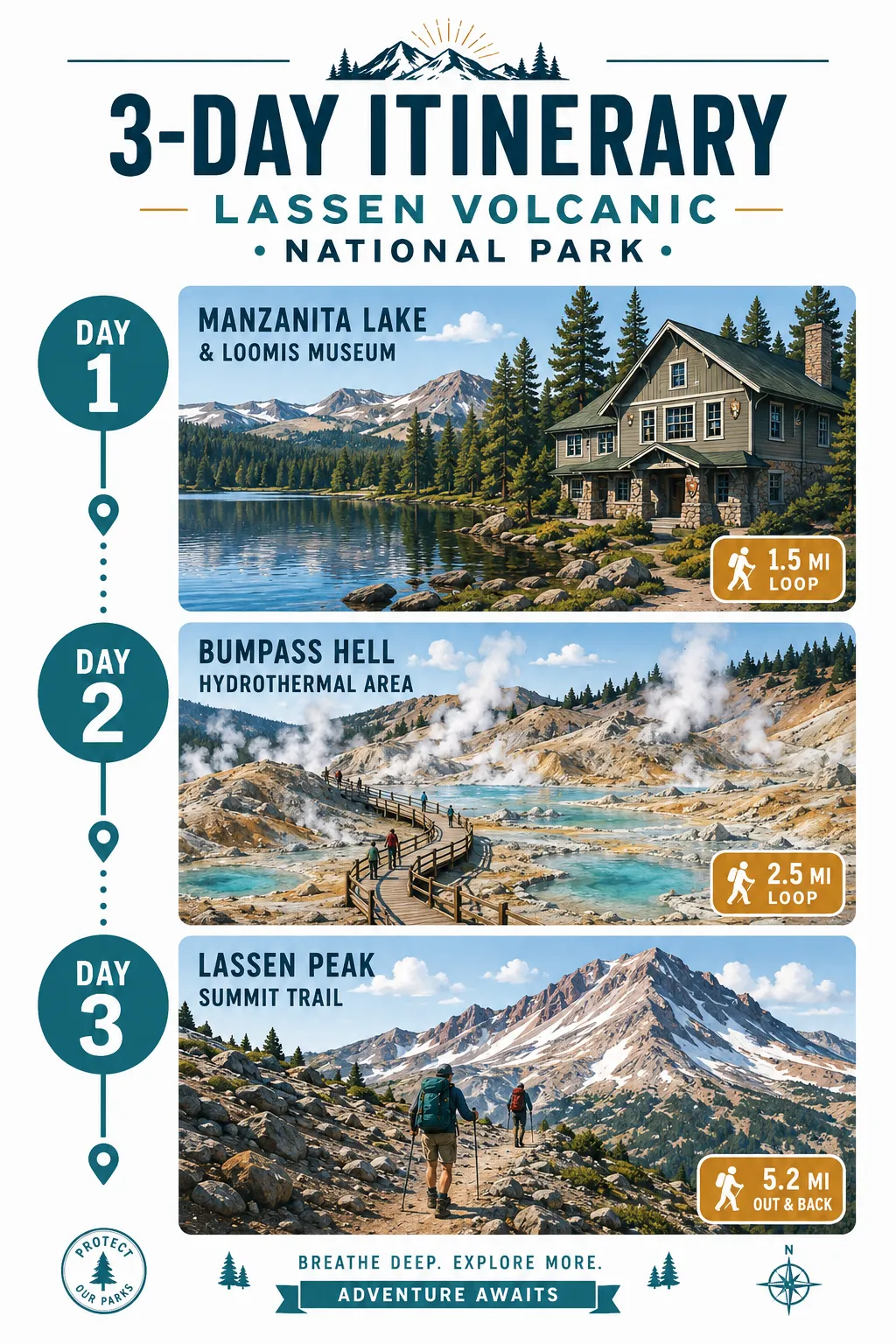
This is the core of any first-timer’s plan. The NPS summer itinerary page outlines a structure that experienced visitors consistently follow: northwest on Day 1, main highway on Day 2, and a big hike or remote area on Day 3.
Day 1 – Manzanita Lake and the Northwest Area
Start at the northwest entrance near Manzanita Lake. This is the most accessible entry point and a beautiful introduction to the park.
- Manzanita Lake Loop (1.9 miles): Flat, easy, and stunning. The reflection of Lassen Peak in the lake is one of the best photos in the park. Do this first thing in the morning.
- Loomis Museum: Small but worthwhile. It covers the 1914-1917 eruption history and sets the scene for everything you’ll see.
- Chaos Jumbles and Chaos Crags: A short drive from the lake, these lava domes and rockslide debris fields show the park’s violent geology up close.
- Afternoon option: Drive south on CA-89 and stop at Hat Lake and the Devastated Area interpretive trail (0.5 miles, flat).
Where to eat: Pack your own lunch. There are no restaurants inside the park. The Manzanita Lake Camper Store has basic supplies.
Evening: Manzanita Lake is one of the best stargazing spots in Northern California. The NPS notes that clear, cool nights in mid-August are ideal for night photography here.
Day 2 – The Main Park Highway: Bumpass Hell, Lake Helen, and Sulphur Works
Day 2 is the most geologically dramatic day of your Lassen Volcanic National Park itinerary. Drive the full 30-mile CA-89 from north to south (or reverse), stopping at the park’s most iconic hydrothermal features.
The 30-mile Lassen Volcanic National Park Highway is fully open for the 2026 season, making this drive straightforward.
Key stops in order (north to south):
- Summit Lake – Good picnic spot, easy 0.5-mile lake loop
- Lake Helen – High-elevation alpine lake, often has snow patches nearby even in July
- Bumpass Hell Trailhead – The crown jewel (see next section for detail)
- Sulphur Works – Roadside hydrothermal area, accessible in under 10 minutes from your car
- Kohm Yah-mah-nee Visitor Center – Southwest entrance, good restrooms and exhibits
How long does it take to drive through Lassen Volcanic National Park? The 30-mile park highway takes about 1 hour to drive straight through without stops. With stops at Bumpass Hell, Lake Helen, and Sulphur Works, plan for a full day – 6 to 8 hours.
Day 3 – Lassen Peak Summit or Cinder Cone
Day 3 is your “big hike” day. You have two excellent options depending on your fitness level and interests.
Option A – Lassen Peak (best for first-timers who want the summit view)
- Distance: 5 miles round trip
- Elevation gain: 2,000 feet
- Time: 4-5 hours
- Start by 7 AM to avoid afternoon storms and snow-softened trails
Option B – Cinder Cone via Butte Lake (best for geology fans)
- Distance: 4 miles round trip to the cone
- Elevation gain: 800 feet
- Requires a 45-minute drive to the Butte Lake trailhead (northeast corner)
- Loose cinder makes the ascent challenging but the crater view is unforgettable
Note: Snow patches can persist on the Lassen Peak Trail into August. Check current trail conditions before heading out.
If you’re traveling with young kids or prefer a lighter day, Kings Creek Falls is a wonderful alternative – a 3-mile round trip with a beautiful waterfall payoff.
What Are the Must-See Attractions at Lassen Volcanic National Park?
The five attractions no first-timer should skip are Bumpass Hell, Lassen Peak, Manzanita Lake, Sulphur Works, and Cinder Cone. These cover all four types of volcanoes found in the park – the only national park in the world with that distinction.
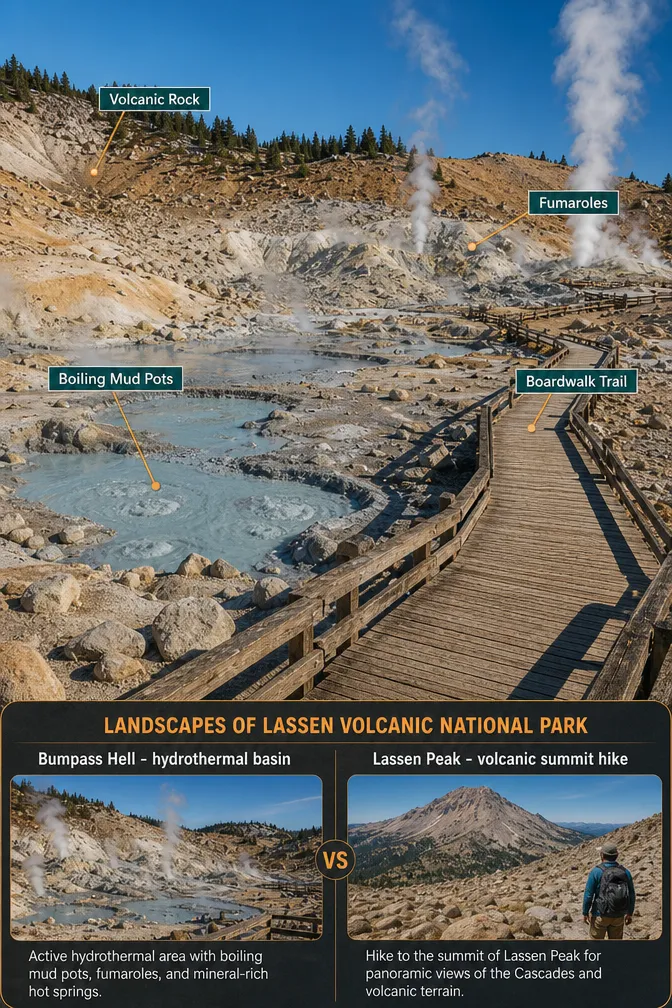
Bumpass Hell deserves its own mention. It’s the largest hydrothermal area in the park, covering about 16 acres of boiling mud pots, fumaroles, and steaming pools. The 3-mile round-trip trail is well-maintained with boardwalks to protect both visitors and the fragile thermal features. Stay on the boardwalk – the ground crust can be dangerously thin.
Quick comparison – Bumpass Hell vs. Lassen Peak:
- Bumpass Hell is a hydrothermal basin hike – moderate, 3 miles round trip, focused on geology and thermal features. Great for all fitness levels.
- Lassen Peak is a summit hike – strenuous, 5 miles round trip, 2,000 feet of gain. Rewards you with views of four states on a clear day.
They’re completely different experiences. If you can only do one, Bumpass Hell is the more unique choice – you can hike to a volcanic summit in many parks, but few places on Earth look like Bumpass Hell.
Lassen Volcanic National Park Entrance Fees and Passes
The entrance fee for Lassen Volcanic National Park is $35 per vehicle (valid for 7 consecutive days). Motorcycles pay $30, and walk-in or cyclist entry is $20 per person.
The America the Beautiful Annual Pass ($80) covers entry to all national parks for 12 months and pays for itself after three park visits. If you’re planning other park trips – like a 3-day Redwood National Park itinerary or a visit to Mount Rainier National Park – the annual pass is a smart buy.
There are no timed entry reservations required at Lassen as of 2026, unlike Yosemite. You can show up and pay at the entrance station.
Is Lassen Volcanic National Park Worth Visiting Compared to Yellowstone?
Lassen is absolutely worth visiting – and for many travelers, it’s actually a better experience than Yellowstone. The key difference is crowds and access.
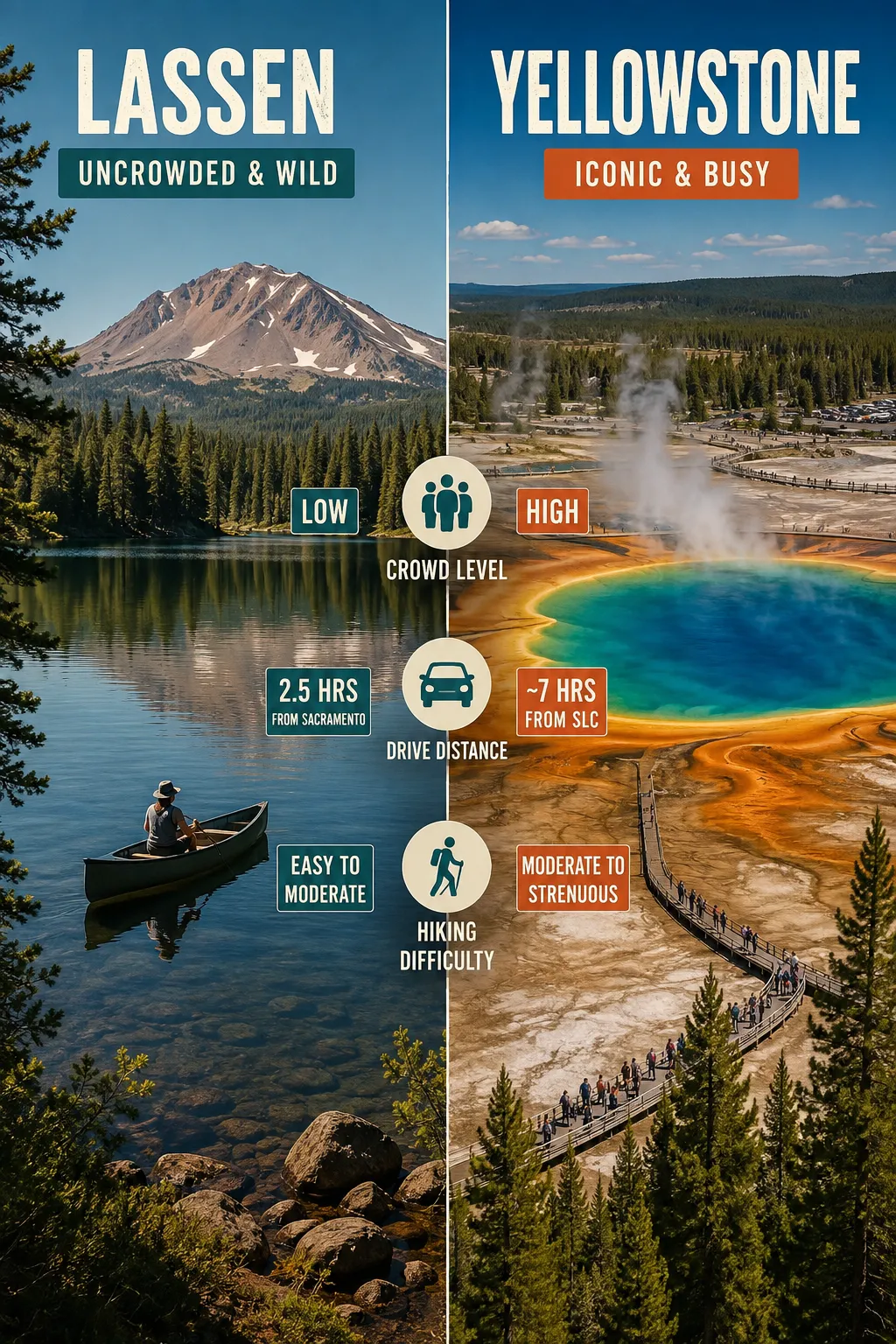
Yellowstone draws over 4 million visitors per year. Lassen sees roughly 500,000 to 600,000 (estimate based on NPS visitation trends). That difference shows up immediately – shorter lines, easier parking, and a more personal connection to the landscape.
Choose Lassen if you:
- Want hydrothermal features without massive crowds
- Are based in Northern California (it’s 3 hours from Sacramento)
- Prefer hiking over driving between geysers
- Want a quieter, more immersive national park experience
Choose Yellowstone if you:
- Want to see the world’s largest concentration of geysers
- Are combining with Grand Teton or other Wyoming parks
- Have kids who want to see Old Faithful
If you’re curious about maximizing a single day at a volcanic park, our one day in Yellowstone guide is a useful comparison.
Lassen’s hydrothermal features are geologically similar to Yellowstone’s but feel far more accessible and less commercialized. For a first-time visitor to volcanic landscapes, Lassen often leaves a deeper impression.
Lassen Volcanic National Park Best Hikes for Beginners
The best beginner hikes at Lassen are Manzanita Lake Loop, Sulphur Works, Bumpass Hell, and Kings Creek Falls. These cover the park’s highlights without requiring advanced fitness or scrambling.
| Hike | Distance | Difficulty | Best For |
|---|---|---|---|
| Manzanita Lake Loop | 1.9 mi | Easy | Families, photography |
| Sulphur Works | 0.3 mi | Easy | Quick hydrothermal stop |
| Bumpass Hell | 3.0 mi RT | Moderate | Geology, thermal features |
| Kings Creek Falls | 3.0 mi RT | Moderate | Waterfall, wildflowers |
| Devastated Area | 0.5 mi | Easy | History, interpretive signs |
For families with young children: Stick to Manzanita Lake Loop and Sulphur Works on Day 1, then do Bumpass Hell on Day 2 (the boardwalk sections are stroller-friendly for part of the trail). Skip Lassen Peak with kids under 10 – the elevation gain is genuinely tough.
Where to Stay Near Lassen Volcanic National Park
Inside the park: Manzanita Lake Campground is the best base for a 3-day visit. It has 179 sites, flush toilets, and a camp store. Summit Lake North and South campgrounds are good mid-park options. Note that Stage 2 fire restrictions implemented July 31, 2026 prohibit wood fires in all campgrounds – bring a propane stove.
Outside the park:
- Chester, CA (30 miles southeast) – Small town with motels and vacation rentals, good base for the south entrance
- Redding, CA (50 miles west) – Larger city with full hotel options, Marriott and Holiday Inn properties available
- Susanville, CA (60 miles east) – Budget-friendly motels, good for Cinder Cone access
Book early: Manzanita Lake Campground fills up weeks in advance for July and August weekends. Reserve on Recreation.gov as soon as your dates are set.
Road Closures, Weather, and What to Check Before You Go
The 30-mile park highway is open for the 2026 season, but conditions can change fast. Always check current park alerts and conditions before your visit.
Key 2026 conditions to know:
- The main CA-89 highway through the park is fully open as of the 2026 season.
- The road to Juniper Lake has been closed due to damage outside the park – skip this area and check for updates before including it in your route.
- Stage 2 fire restrictions are in effect (no wood fires, propane stoves only in all campgrounds and backcountry).
- Snow can linger on the Lassen Peak Trail into August – check trail conditions the morning of your hike.
- UC Berkeley researchers have flagged increasing wildfire risk in California parks including Lassen, so have a backup plan (Burney Falls State Park is a great alternative 30 miles north).
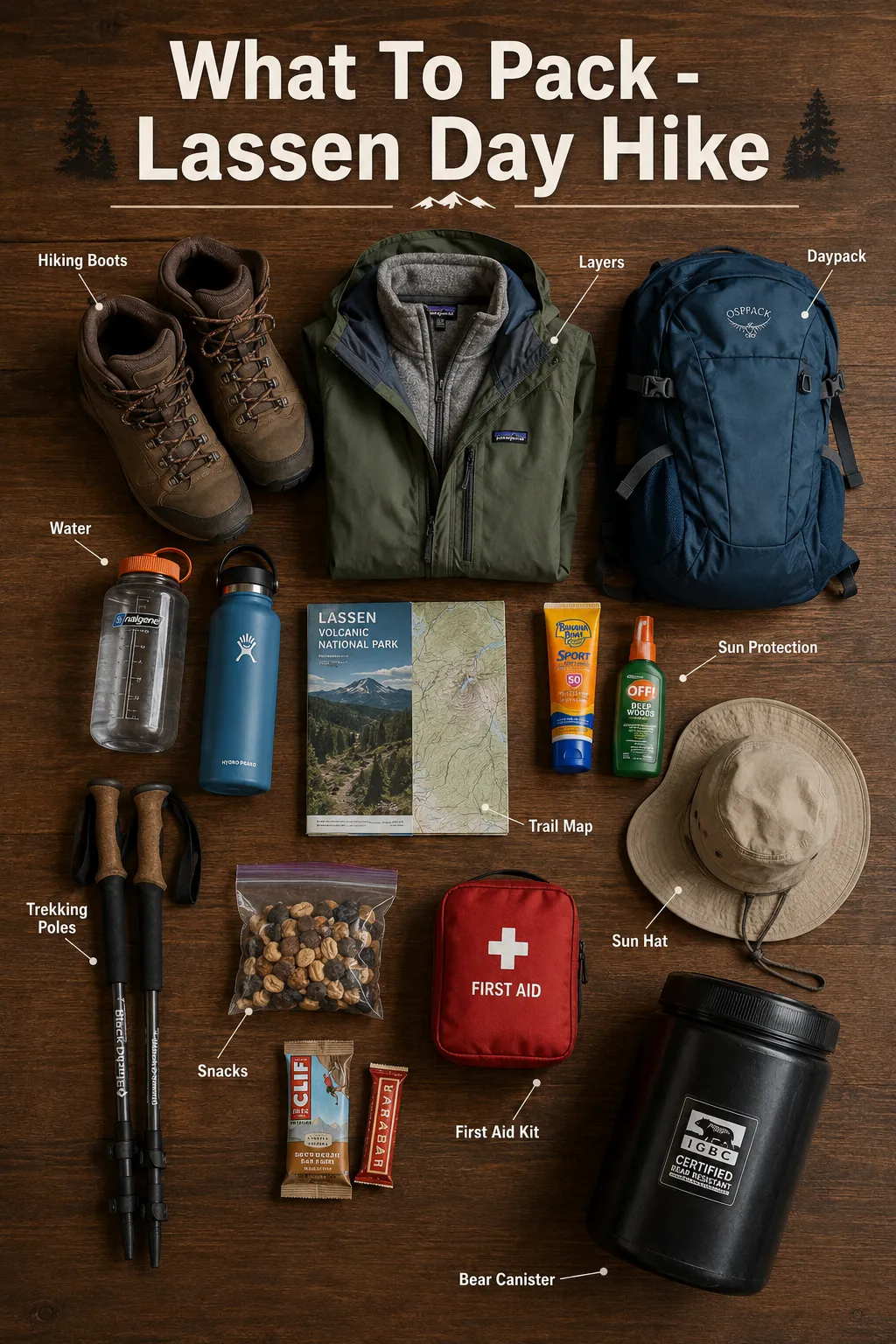
What to bring for a day at Lassen:
- 2-3 liters of water per person (no reliable water sources on most trails)
- Sunscreen and sun hat (high elevation = stronger UV)
- Layers – mornings can be in the 40s°F even in August
- Trekking poles for Lassen Peak
- Offline maps (Google Maps or AllTrails downloaded before arrival)
- Propane camp stove if camping
FAQ: Lassen Volcanic National Park Itinerary
Q: Can I do the full Lassen Volcanic National Park itinerary without camping?
A: Yes. Stay in Chester or Redding and drive into the park each day. The south entrance is closest to Bumpass Hell and the main highway stops.
Q: Is the Lassen Peak hike safe for beginners?
A: It’s strenuous but safe if you’re reasonably fit and start early. The trail is well-marked. The main risks are afternoon thunderstorms and altitude (10,457 feet at the summit).
Q: Do I need a permit for day hikes at Lassen?
A: No permit is needed for day hikes. A free permit is required for overnight backpacking. Entrance fee ($35/vehicle) covers all day use.
Q: Is Lassen Volcanic National Park good for kids?
A: Yes, especially for ages 5 and up. Manzanita Lake, Sulphur Works, and the Devastated Area are all family-friendly. Skip Lassen Peak with young children.
Q: What’s the best entrance to use for a 3-day visit?
A: The northwest entrance (near Manzanita Lake) for Day 1, then the southwest entrance (Kohm Yah-mah-nee Visitor Center) works well for Days 2 and 3.
Q: Are there bears at Lassen Volcanic National Park?
A: Yes, black bears are present. Store food in bear boxes at campgrounds and use a bear canister in the backcountry.
Q: Can I swim in Manzanita Lake?
A: Swimming is allowed in Manzanita Lake. The water is cold even in summer – typically in the 60s°F. No lifeguards on duty.
Q: How far is Lassen from San Francisco?
A: About 250 miles, or roughly 4 hours driving. It’s a reasonable weekend trip from the Bay Area.
Q: Is there cell service in Lassen Volcanic National Park?
A: Very limited. Download offline maps and trail guides before you enter. Some signal near the visitor centers.
Q: What other national parks are near Lassen?
A: Redwood National Park is about 3 hours northwest – check out this 3-day Redwood National Park itinerary if you’re extending your trip. For a longer California road trip, this 10-day California itinerary covers Lassen alongside other major stops.
Conclusion: Your Lassen Volcanic National Park Itinerary Starts Here
Lassen Volcanic National Park is one of the most underrated national parks in the United States. Three days gives you enough time to see the hydrothermal wonders, hike to a volcanic summit, and sit quietly by a lake that reflects a peak that last erupted just over a century ago.
Your action plan:
- Book your campsite at Manzanita Lake on Recreation.gov as soon as possible – sites fill weeks out.
- Get the America the Beautiful Pass if you’re visiting more than two national parks this year.
- Check current conditions the week before your trip for fire restrictions, road closures, and trail snow.
- Download offline maps for AllTrails or Gaia GPS before you leave cell range.
- Start every hike early – before 8 AM for Lassen Peak, before 9 AM for Bumpass Hell in peak season.
If you’re building a bigger trip around this visit, pair it with a 3-day Redwood National Park itinerary to the northwest or check out the Mount Rainier National Park itinerary for another incredible volcanic park experience in the Pacific Northwest.
Lassen rewards visitors who show up curious and unhurried. Give it three days, and it’ll give you memories that last far longer.