Quick Answer: Your first time in Cabo San Lucas will go much smoother if you know a few key things upfront: not all beaches are safe for swimming, the US dollar is widely accepted, and you genuinely don’t need a rental car for most of the trip. This guide covers the 15 most important things first-time visitors consistently wish they’d known before they landed.
Key Takeaways
- 🌊 Many Cabo beaches have dangerous Pacific-side currents — always check flags before entering the water
- 💵 US dollars are accepted almost everywhere; pesos work too, but carry both
- ☀️ Cabo gets roughly 350 days of sunshine per year — pack reef-safe sunscreen and light layers for evenings [1]
- 🚕 Taxis, Uber, and walking cover most needs — a rental car is optional, not essential [2]
- 🐋 January through March is whale-watching season; book water activities early
- 🏨 The hotel corridor (Los Cabos) runs from Cabo San Lucas to San José del Cabo — where you stay changes your whole experience
- 💉 No special vaccinations are required for US citizens, but travel insurance is strongly recommended
- 🍹 All-inclusive resorts are popular but not your only option — boutique hotels in San José del Cabo offer a quieter alternative
- 💧 Drink bottled or filtered water only — tap water is not safe for tourists
- 🤿 Snorkeling, kayaking to El Arco, and sunset cruises are the top bucket-list activities for first-timers [1]
1. Cabo San Lucas vs. San José del Cabo: Which One Is Actually “Cabo”?
When people say “Cabo,” they usually mean Cabo San Lucas — the lively, marina-centered town at the tip of the Baja Peninsula. But Los Cabos is the broader destination that includes both Cabo San Lucas and the quieter, more colonial San José del Cabo, connected by a 20-mile tourist corridor.
Choose Cabo San Lucas if you want nightlife, a buzzing marina, beach clubs, and easy access to El Arco (the famous rock arch). Choose San José del Cabo if you prefer a calmer atmosphere, art galleries, local restaurants, and a more authentic Mexican town feel.
Most first-time visitors base themselves in Cabo San Lucas or along the corridor. Either way, day trips between the two towns are easy and affordable.
2. Beach Safety Is the #1 Thing First-Time Visitors Underestimate
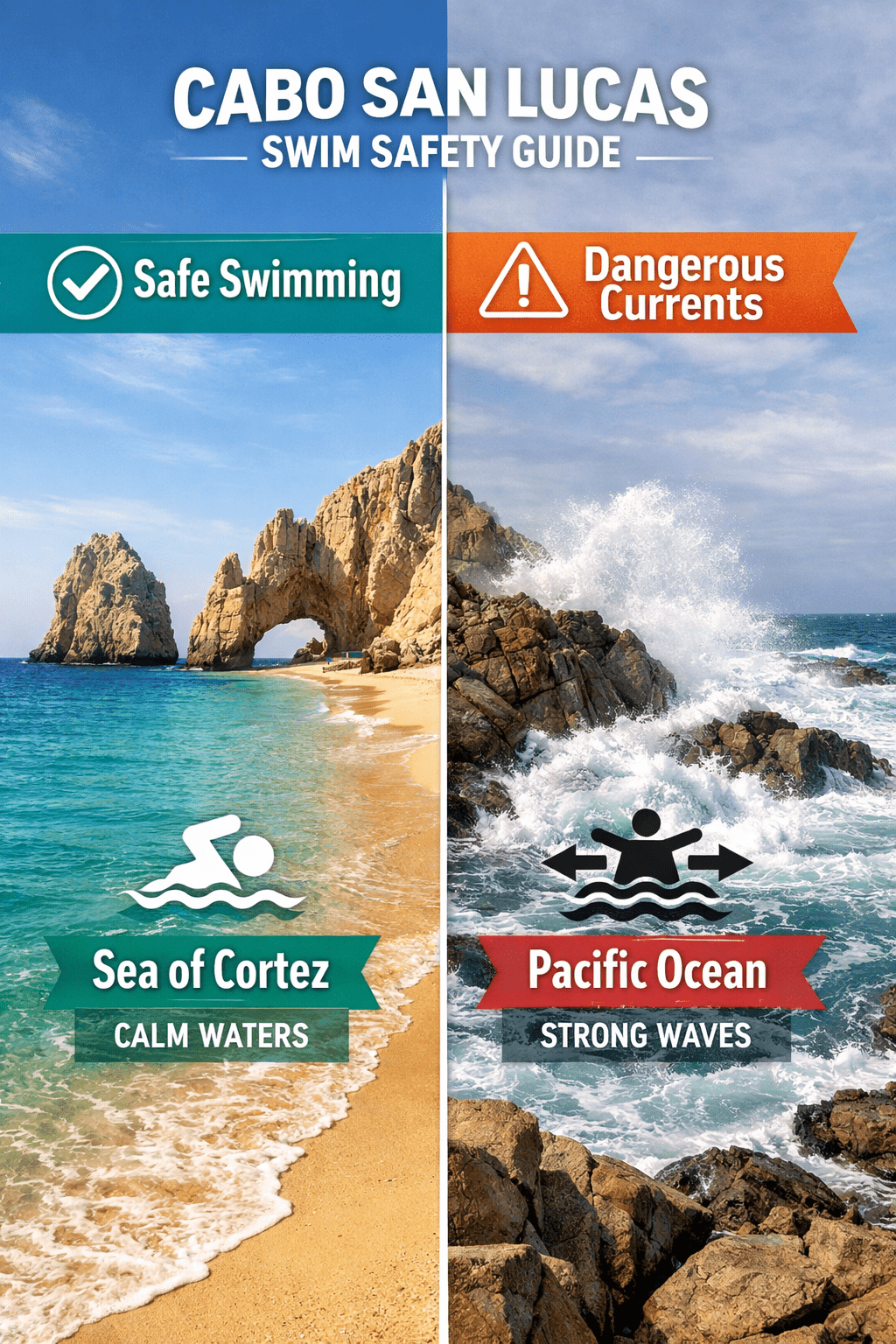
The most important thing to understand before your first time in Cabo: not all beaches are safe for swimming. Beaches on the Pacific side — including Playa El Médano’s outer stretches and many corridor beaches — have strong waves, dangerous undertows, and unpredictable currents [4].
Always check the flag system before entering the water:
| Flag Color | Meaning |
|---|---|
| 🟢 Green | Calm, safe to swim |
| 🟡 Yellow | Caution, moderate conditions |
| 🔴 Red | Dangerous, no swimming |
| ⚫ Black | Extremely dangerous, stay out |
Playa El Médano in Cabo San Lucas is the most popular swimming beach and is generally calmer. The Sea of Cortez side tends to be safer than the Pacific side. If there’s no flag posted, ask a lifeguard or hotel staff before going in.
Common mistake: Tourists assume all resort beaches are automatically safe. They’re not. Check the flags every single day — conditions change quickly.
3. What’s the Best Time to Visit Cabo for the First Time?
The best time for a first trip to Cabo is November through April. Cabo gets around 350 days of sunshine per year [1], but the timing of your visit still matters.
- November–April: Dry season, cooler evenings, low humidity, whale-watching from January to March. This is peak season, so book accommodations early.
- May–June: Warming up, fewer crowds, good value on hotels.
- July–October: Hot and humid, occasional tropical storms (hurricane season peaks August–October). Prices drop significantly, but weather is less predictable.
If whale-watching is on your list, January through March is non-negotiable. Humpback and gray whales migrate through the Sea of Cortez, and tours fill up fast.
4. Currency, Tipping, and Money Basics
US dollars are accepted almost everywhere in Cabo San Lucas — restaurants, taxis, tour operators, and most shops. You don’t need to exchange currency before you arrive, but carrying a mix of dollars and pesos is smart [1].
Tipping is expected and important:
- Restaurant servers: 15–20% (check if gratuity is already added — some tourist-area restaurants include it automatically) [1]
- Taxi drivers: round up or add 10–15%
- Hotel housekeeping: $1–2 USD per day
- Tour guides: $5–10 USD per person, depending on the experience
- Airport shuttle drivers: have a few dollars ready before you reach an ATM [1]
ATMs are widely available at the airport, hotels, and downtown, but fees vary. Withdraw pesos from bank ATMs (Banorte, BBVA) rather than standalone machines to avoid higher fees.
5. Getting Around: Do You Actually Need a Rental Car?
For most first-time visitors, no — you don’t need a rental car. Taxis, Uber, and walking cover the majority of Cabo San Lucas and the marina area [2][3]. Most tour operators include hotel pickup in their pricing, which makes day trips even easier.
When a rental car makes sense:
- You plan to explore remote beaches or inland Baja
- You’re staying in San José del Cabo and want flexibility along the corridor
- You’re a group of 4+ splitting costs for multiple day trips
Authorized taxis are safe and regulated — always confirm the fare before you get in [3]. Uber operates in parts of Los Cabos but coverage can be inconsistent outside central areas.
Downtown Cabo San Lucas and the marina are very walkable, so if you’re staying nearby, you can easily go car-free for the whole trip [3].
6. Top Activities for Your First Time in Cabo
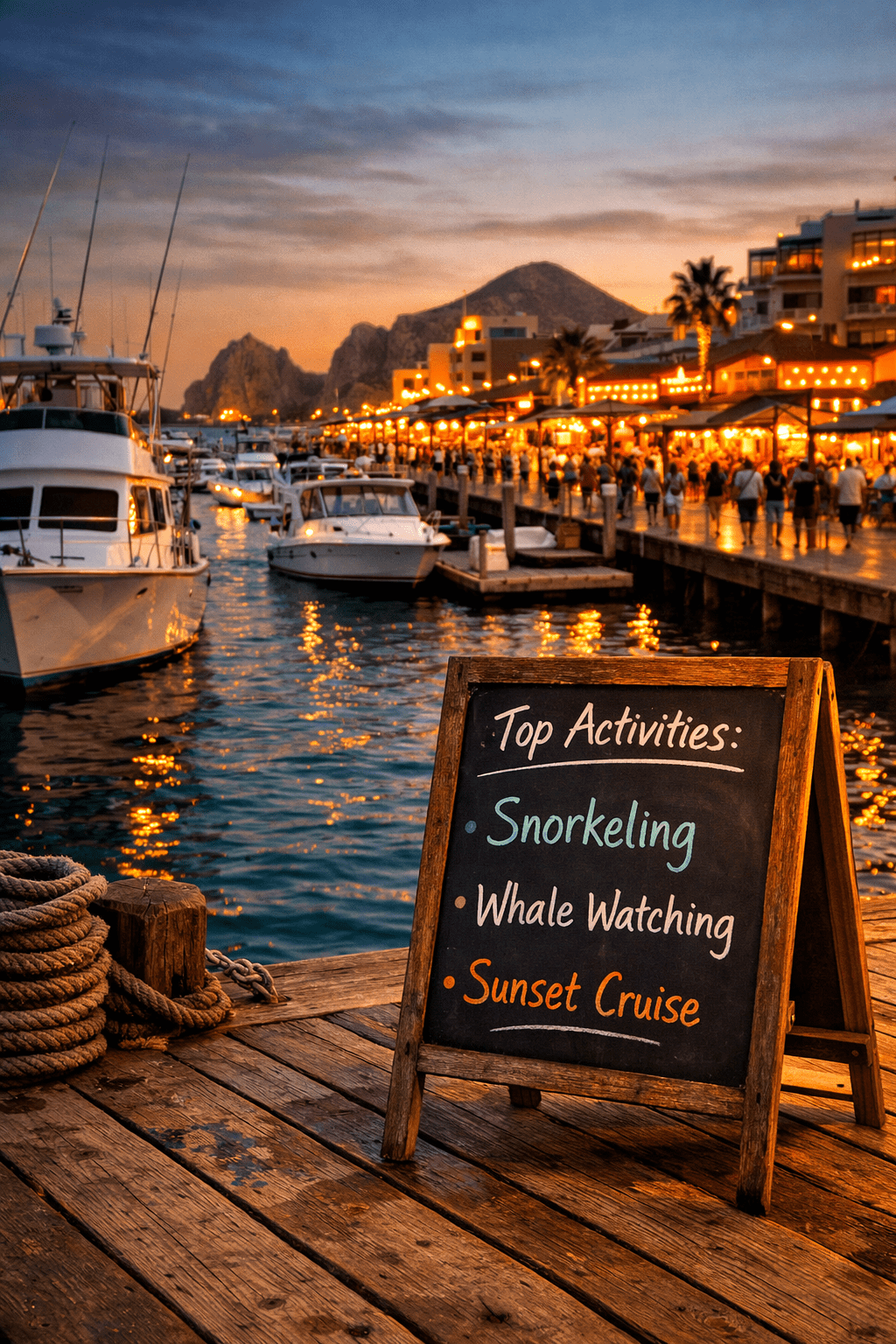
Your first time in Cabo should include at least a few of these experiences — they’re popular for good reason.
Water-based activities:
- 🚣 Kayaking to El Arco — the iconic rock arch at Land’s End is best seen up close from a kayak or glass-bottom boat
- 🤿 Snorkeling at Pelican Rock — colorful fish, clear water, easy for beginners [1]
- 🐋 Whale-watching (January–March) — one of the best spots in the world for humpback sightings
- 🛥️ Sunset cruise — most include open bar and live music; book through your hotel or a reputable operator
- 🤿 Scuba diving — the Sea of Cortez offers world-class dive sites [1]
Land-based activities:
- 🐎 Sunset horseback rides on the beach
- 🚙 Baja Jeep tours into the desert interior [1]
- 🛍️ Exploring the San José del Cabo art district (Thursday evening gallery walks are a local tradition)
If you’re planning other beach destinations after Cabo, check out our guide to the best things to do in St. Lucia or Grand Cayman for more tropical inspiration.
7. Health and Safety: What First-Time Visitors Really Need to Know
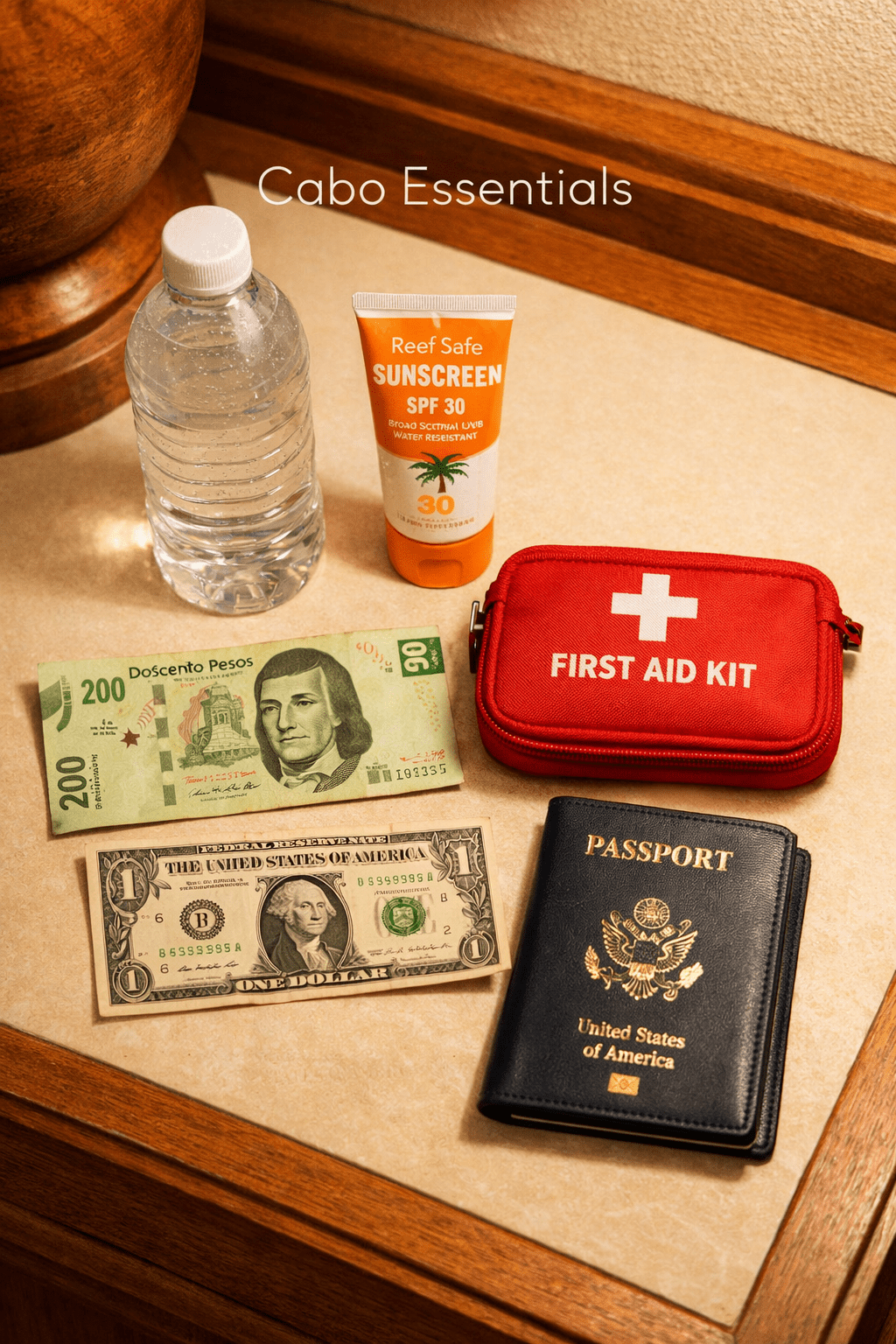
Cabo is generally safe for tourists, and most first-time visitors report feeling comfortable throughout their trip [1]. That said, a few precautions make a real difference.
Safety basics:
- Keep bags and valuables close in crowded areas like the marina and Medano Beach [1]
- Use your hotel safe for passports, extra cash, and backup cards [1]
- Avoid wandering alone late at night in unfamiliar areas [1]
- Stick to well-lit, tourist-frequented streets after dark
Health essentials:
- Drink only bottled or filtered water — tap water is not safe for tourists, and this includes ice at non-reputable establishments
- Bring reef-safe sunscreen — it’s required in many marine areas due to environmental protection regulations, and the desert sun is intense [3][4]
- Pack any prescription medications you need, as specific brands may not be available locally
- Travel insurance is strongly recommended — medical care at private hospitals is good but expensive without coverage
No special vaccinations are required for US citizens visiting Cabo, but check the CDC’s current recommendations before you travel.
8. Accommodations: Where to Stay in Cabo for Your First Visit

Where you stay in Los Cabos shapes your entire experience. The main options break down like this:
All-Inclusive Resorts Along the Corridor
Best for: first-timers who want everything handled, families, couples on a relaxing trip. Properties like Breathless Cabo, Hyatt Ziva, and Paradisus Los Cabos sit along the hotel corridor between the two towns. You get pools, beach access, food, and drinks included — though beaches here can have stronger surf, so always check flags.
Cabo San Lucas Marina Area Hotels
Best for: travelers who want to be in the middle of the action — restaurants, nightlife, boat tours, and El Arco all within walking distance. Boutique hotels and mid-range options are plentiful here.
San José del Cabo Boutique Hotels
Best for: couples, cultural travelers, or anyone who wants a quieter, more local feel. The town center has colonial architecture, excellent restaurants, and a weekly art walk. It’s about 30 minutes from Cabo San Lucas by taxi.
Quick comparison:
| Area | Vibe | Best For | Price Range |
|---|---|---|---|
| Corridor All-Inclusives | Resort, relaxed | Families, couples | $$$–$$$$ |
| Cabo San Lucas Marina | Lively, central | First-timers, nightlife | $$–$$$ |
| San José del Cabo | Quiet, cultural | Couples, repeat visitors | $$–$$$ |
Book accommodations at least 2–3 months ahead for peak season (December–March). If you’re still deciding on a style of stay, our guide to the best hotels in New York City for first-time visitors offers useful frameworks for thinking through hotel choices in any destination.
9. Packing Smart for Cabo: What to Bring and What to Skip
Cabo’s desert climate means the sun is strong year-round, but evenings in winter (November–February) can be surprisingly cool [1][3].
Pack these:
- Reef-safe sunscreen (SPF 50+) — bring enough for the trip; local prices are higher [3]
- Light, breathable clothing (linen, moisture-wicking fabrics)
- A light jacket or wrap for winter evenings and air-conditioned restaurants [1]
- Water shoes for rocky beach entries and snorkeling
- A dry bag for water activities
- Copies of your passport (physical and digital)
Leave these behind:
- Formal attire — Cabo is casual even at nicer restaurants
- Heavy hiking boots (unless you’re doing serious inland trekking)
- Excessive cash — use hotel safes and carry only what you need daily
For a complete packing checklist that works across destinations, see our travel essentials packing guide.
10. Food, Drinks, and Dining Tips
Cabo has excellent food across all price ranges — from $2 street tacos to upscale beachfront restaurants. A few things to know:
- Fish tacos are a must — Baja-style fish tacos (battered, fried, with cabbage and crema) originated in this region
- Mariscos (seafood) is the local specialty — ceviche, shrimp, and fresh catch are all outstanding
- Mezcal and local craft beer have exploded in popularity; try them at a mezcalería rather than a tourist bar
- Check your bill — gratuity is sometimes added automatically at tourist-area restaurants, so review before tipping again [1]
- Street food from busy stalls is generally fine; avoid anything that looks like it’s been sitting out in the heat
The Mercado Orgánico in San José del Cabo (open Saturday mornings) is one of the best spots for local produce, breakfast, and artisan goods.
FAQ: First Time in Cabo
Do I need a visa to visit Cabo San Lucas?
US and Canadian citizens don’t need a visa. You’ll fill out a tourist card (FMM) on arrival, which is typically included in your airline ticket fee. Keep your copy — you’ll need it when you leave.
Is it safe to visit Cabo for the first time?
Yes, for most tourists. Cabo San Lucas is one of Mexico’s most-visited destinations and has a strong tourism infrastructure. Use standard precautions: don’t flash valuables, use hotel safes, and avoid unfamiliar areas late at night [1].
Can I drink the tap water in Cabo?
No. Drink only bottled or filtered water. Most hotels provide filtered water stations or bottled water in rooms. This applies to brushing your teeth too, if you have a sensitive stomach.
What currency should I use in Cabo?
Both US dollars and Mexican pesos are widely accepted. Pesos often get you slightly better value at local markets and smaller restaurants. Carry a mix of both [1].
How many days do I need in Cabo?
Four to five days is a solid first trip. You can see El Arco, do a water activity, explore San José del Cabo, and still have beach time. Seven days gives you room for a whale-watching trip and more relaxed exploration.
Is Uber available in Cabo?
Uber operates in parts of Los Cabos, but coverage isn’t consistent everywhere. Authorized taxis are reliable and widely available — just confirm the fare before you get in [3].
What’s the best beach for swimming in Cabo?
Playa El Médano in Cabo San Lucas is the most popular and generally the safest for swimming. Always check the flag system before entering the water, regardless of which beach you’re on [4].
Do I need travel insurance for Cabo?
It’s strongly recommended. Private medical facilities in Cabo are good but expensive without insurance. Travel insurance also covers trip cancellations, lost luggage, and emergency evacuation.
When is whale-watching season in Cabo?
January through March. Humpback and gray whales migrate through the Sea of Cortez during these months. Tours book up quickly, so reserve in advance.
Can I use my US cell phone in Cabo?
Most major US carriers offer Mexico coverage as part of their international plans (T-Mobile, AT&T, Verizon). Check your plan before you go. Local SIM cards are available at the airport if you need a data-only option.
Is Cabo good for first-time international travelers?
Yes — it’s one of the more accessible international destinations for Americans. English is widely spoken in tourist areas, US dollars are accepted, and the infrastructure is well-developed for visitors. If you’re also considering other first-timer-friendly destinations, our Honolulu first-timer’s guide and guide to hidden gems in Mexico are worth a look.
What should I avoid doing in Cabo?
Don’t swim at beaches without checking flags first, don’t drink tap water, don’t get into unmarked taxis, and don’t buy timeshares — high-pressure timeshare pitches are common in tourist areas and rarely worth your vacation time.
Conclusion: Your First Time in Cabo, Done Right
Cabo San Lucas rewards travelers who show up prepared. The destination is genuinely spectacular — dramatic desert landscapes, world-class marine life, excellent food, and warm weather almost year-round. But a few missteps (ignoring beach flags, skipping travel insurance, not carrying small bills for tips) can take the shine off an otherwise great trip.
Your pre-trip checklist:
- ✅ Book accommodations 2–3 months ahead for peak season
- ✅ Pack reef-safe sunscreen and a light jacket for evenings
- ✅ Get travel insurance before you fly
- ✅ Carry US dollars and pesos from day one for tips and taxis
- ✅ Research beach flag meanings and check them daily
- ✅ Reserve whale-watching or sunset cruise tours in advance
- ✅ Download Uber and confirm your carrier’s Mexico data plan
If you’re flying for the first time or want a refresher on navigating airports, our first-time airplane guide walks you through everything from check-in to landing. And if Cabo sparks a taste for more tropical getaways, our cheap islands guide is a great next read.
Go enjoy that arch. You’ve earned it. 🌊
References
[1] 18 Things You Must Know Before You Visit Los Cabos – https://littlegreybox.net/18-things-you-must-know-before-you-visit-los-cabos/
[2] Cabo Travel Tips – https://cabovisitor.com/cabo-travel-tips/
[3] Cabo San Lucas Travel Tips Before Visiting 2026 – https://soleada.com/cabo-san-lucas-travel-tips-before-visiting-2026/
[4] Cabo Travel Tips – https://travelmexicosolo.com/cabo-travel-tips/
[5] First Trip to Cabo — What Are Must Dos? – https://www.tripadvisor.com/ShowTopic-g152515-i84-k14676835-First_trip_to_Cabo_What_are_must_dos-Cabo_San_Lucas_Los_Cabos_Baja_California.html