


Last updated: June 26, 2026
Quick Answer: Oaxaca is one of Mexico’s most culturally rich and geographically varied states, offering everything from ancient Zapotec ruins and indigenous markets to world-class surf beaches and cloud-forest villages. In 2025, it welcomed over 6.2 million visitors – a record high – yet many of its best spots still feel refreshingly uncrowded. Whether you have three days or three weeks, Oaxaca rewards travelers who go beyond the obvious.
Key Takeaways
- Oaxaca welcomed 6,289,000 tourists in 2025, a 3.71% increase from 2024, making it one of Mexico’s fastest-growing travel regions [1]
- International tourism has grown 13.33% since 2022, so now is a great time to visit before it gets fully mainstream [4]
- The best time to visit is October through April, avoiding peak rainy season while catching festivals like Día de los Muertos
- Puerto Escondido was designated a World Surfing Reserve in 2025, adding to its already legendary surf reputation [5]
- A new superhighway opened in 2024 cuts the drive from Oaxaca City to the coast to just over three hours [5]
- Budget travelers can manage on $50-70 USD per day; mid-range comfort runs $100-150 USD
- Oaxaca is generally safe for tourists who stick to well-traveled areas and use common sense
- The food scene alone – mole negro, tlayudas, mezcal – is worth the trip
What Is Oaxaca Known For?
Oaxaca is known for three things above all: extraordinary food, living indigenous culture, and dramatic natural landscapes. It’s the birthplace of mole negro, home to 16 recognized indigenous groups, and contains some of Mexico’s best-preserved pre-Columbian ruins.
Beyond the food and culture, Oaxaca punches well above its weight for natural variety. Within a single state, you get Pacific surf beaches, cloud-forest mountain towns, petrified waterfalls, and high-altitude valleys filled with agave fields. That combination is genuinely rare anywhere in the world.
The tourism numbers back this up. Oaxaca’s tourism sector generated over 23 billion pesos in economic impact in 2025, supporting more than 181,000 jobs across the state [1][6]. It’s not a hidden gem in the “nobody knows about it” sense anymore – but it still feels that way on the ground.
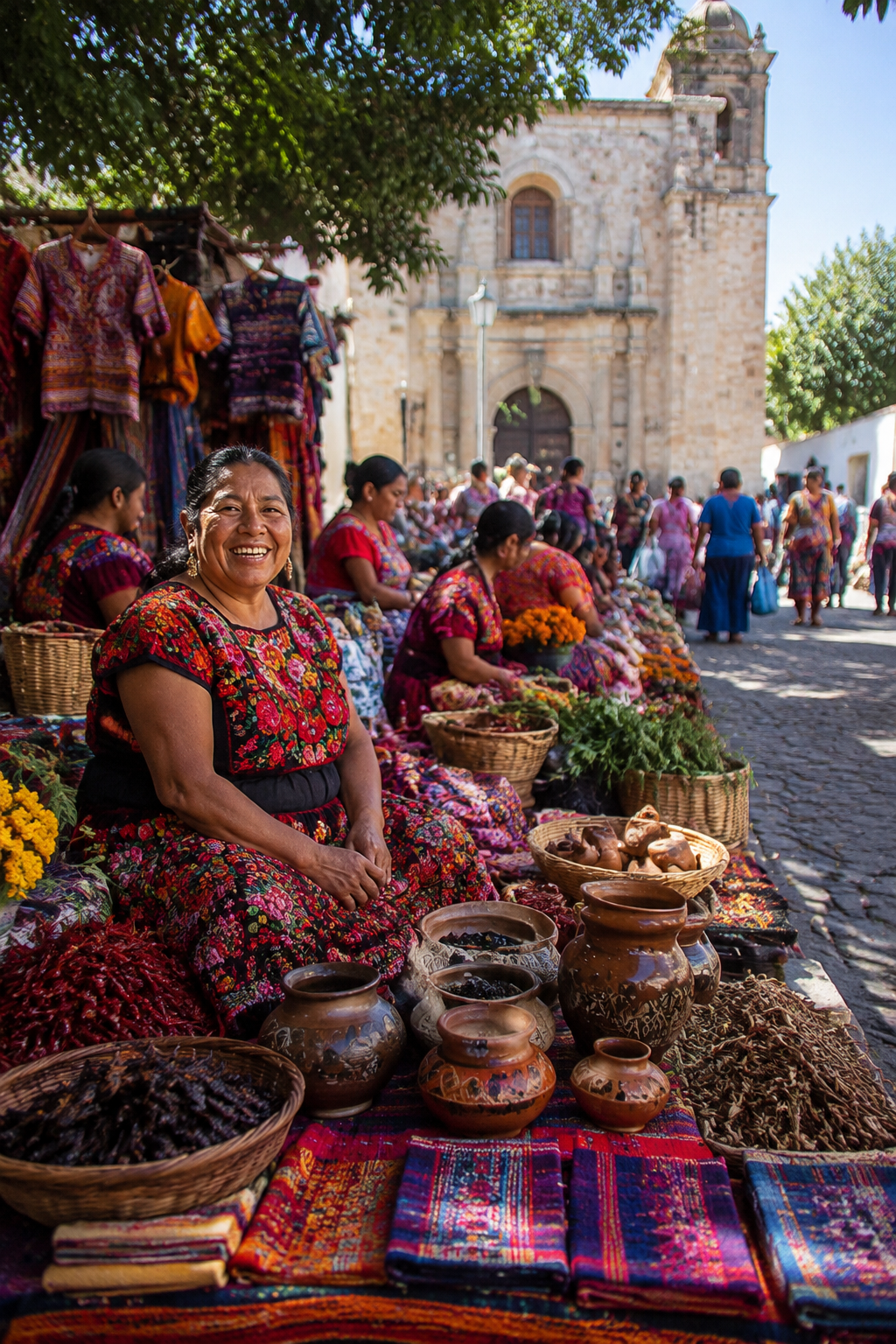
Top Oaxaca Travel Destinations: The 15 Places Worth Your Time
These are the spots that consistently deliver, whether you’re a first-timer or returning for a second trip.
In and around Oaxaca City:
- Oaxaca City centro – The colonial heart, with Santo Domingo Cathedral and the Zócalo
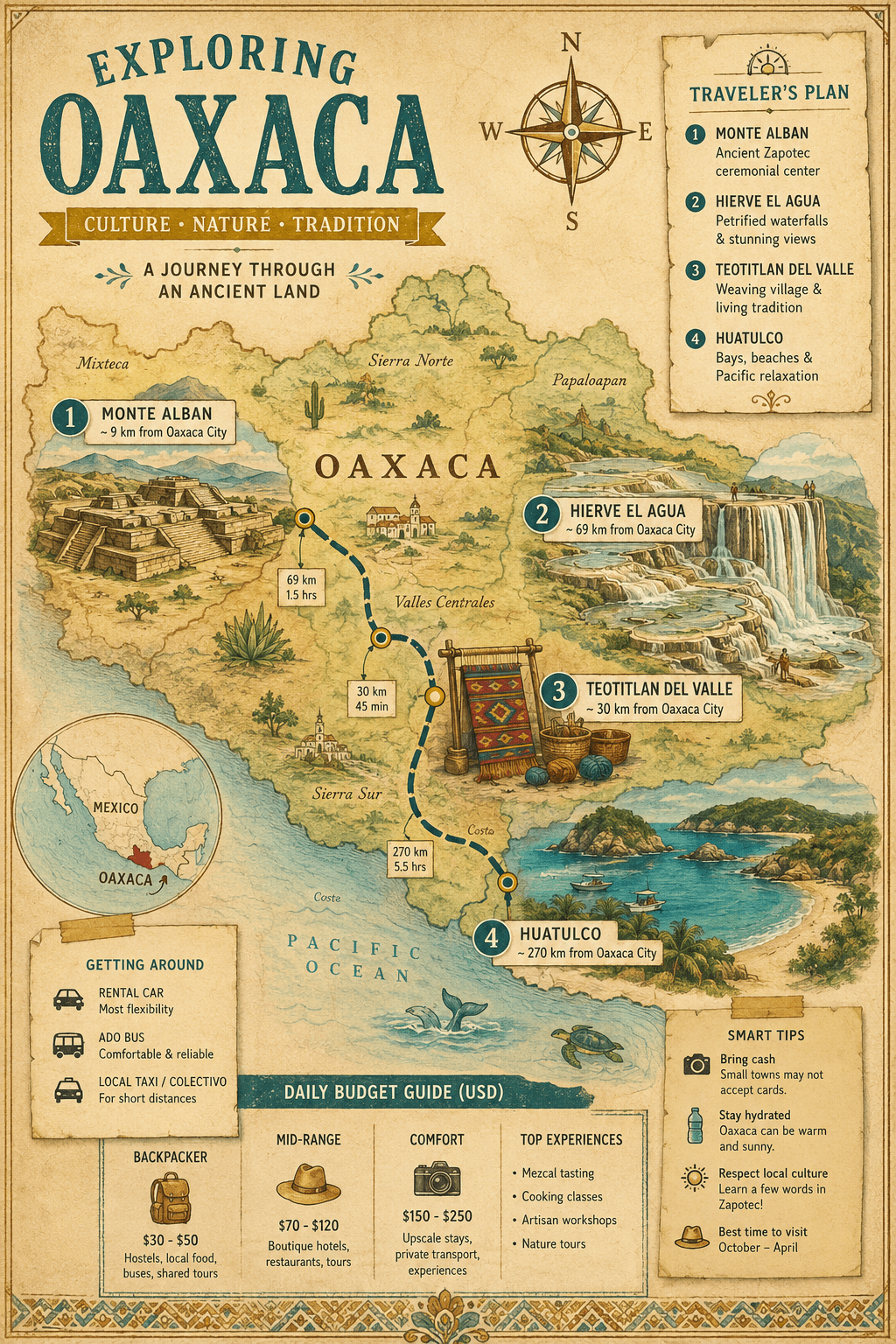
- Monte Albán – Zapotec ruins overlooking the valley, one of Mexico’s most impressive archaeological sites
- Teotitlán del Valle – A weaving village 30 minutes from the city, where families still use pre-Hispanic dyeing techniques
- Hierve el Agua – Petrified mineral “waterfalls” and natural infinity pools at 1,500 meters elevation
- Tlacolula Market – Sunday tianguis that’s been running for centuries; the real deal
Mountain towns:
6. San José del Pacífico – A misty Sierra Sur village popular for its cloud-forest hikes and, yes, magic mushrooms (legal in traditional ceremonial context)
7. Ixtlán de Juárez – Gateway to the Sierra Norte ecotourism communities
8. Capulálpam de Méndez – A Pueblo Mágico with cobblestone streets and zero tourist crowds
Coast:
9. Puerto Escondido – World-class surf, a relaxed backpacker vibe, and now a World Surfing Reserve [5]
10. Mazunte – A tiny beach town with sea turtle conservation and artisan cosmetics
11. Zipolite – Mexico’s only official nudist beach; laid-back and genuinely alternative
12. Bahías de Huatulco – Nine bays with calm waters, good snorkeling, and upscale resort options
13. Puerto Ángel – A fishing village between the surf crowds, quiet and genuine
Day trips and cultural sites:
14. Mitla – Intricate Zapotec stonework that rivals anything in the country
15. Etla Valley villages – Cheese-making communities and a great Wednesday market
Best Time to Visit Oaxaca
The best time to visit Oaxaca is from late October through April, when rainfall is minimal and temperatures are comfortable. November is particularly special because of Día de los Muertos celebrations, which in Oaxaca are among the most authentic in all of Mexico.
Here’s a quick seasonal breakdown:
| Season | Months | What to Expect |
|---|---|---|
| Dry season | Oct – April | Best weather, cooler nights in the city |
| Shoulder | May – June | Warming up, fewer crowds, some rain |
| Rainy season | July – Sept | Daily afternoon showers, lush landscapes |
| Guelaguetza Festival | Late July | Massive indigenous dance festival; book early |
Avoid: Semana Santa (Holy Week) if you dislike crowds. During Holy Week 2026, Oaxaca recorded 120,309 visitors with hotel occupancy hitting 70.53% – the city was packed [3]. Prices spike and rooms sell out months in advance.
Best for surfers: Puerto Escondido’s Zicatela Beach gets its biggest swells from May through September, which overlaps with rainy season in the city. Plan accordingly.
Oaxaca vs. Cancún: Which Is Better for Your Trip?
Oaxaca and Cancún serve completely different types of travelers, so “better” depends entirely on what you want. Cancún is a beach resort destination with predictable weather, all-inclusive hotels, and easy access. Oaxaca is a cultural and culinary destination with diverse landscapes and a much steeper learning curve – in the best way.
Choose Oaxaca if you want:
- Authentic Mexican food and mezcal culture
- Indigenous history and living craft traditions
- A mix of mountains, ruins, and beaches in one trip
- Something that feels genuinely different from a resort vacation
Choose Cancún if you want:
- Guaranteed beach weather and calm Caribbean water
- All-inclusive convenience with no planning required
- Easy international flight connections
- A more predictable, lower-effort trip
For travelers comparing Mexico options, it’s also worth looking at things to do in Guadalajara or checking out hidden gems in Mexico that go beyond the resort circuit.
How Much Does a Trip to Oaxaca Cost?
A trip to Oaxaca can cost anywhere from $50 USD per day on a budget to $200+ per day for a comfortable mid-range experience. It’s significantly cheaper than most comparable cultural destinations in Europe or Southeast Asia.
Rough daily budget estimates (per person, 2026):
- Budget: $50-70 USD – hostel dorm, street food, local transport, free sites
- Mid-range: $100-150 USD – boutique hotel, sit-down restaurants, mezcal tastings, guided tours
- Comfortable: $180-250 USD – design hotels, chef-driven restaurants, private drivers
Biggest costs to plan for:
- Monte Albán entrance fee: approx. $5 USD
- Mezcal tastings at quality palenques: $15-30 USD
- Day trip transport (colectivo vs. private): $2-3 vs. $40-60 USD
- Cooking classes: $60-90 USD per person
Flying into Oaxaca City’s airport is often the priciest part. Oaxaca’s airports collectively handled 3,721,320 passengers in 2025, with growing route options from Mexico City, Houston, and Los Angeles [1].
Oaxaca City vs. Puerto Escondido: Which Should You Base Yourself In?
Oaxaca City is the cultural hub – colonial architecture, world-class restaurants, markets, and easy access to ruins and villages. Puerto Escondido is a beach town with a surf culture, a more relaxed pace, and direct access to the coast. Most visitors with a week or more should do both.
Oaxaca City is better if you:
- Love food, markets, and history
- Want day-trip access to Monte Albán, Mitla, and Hierve el Agua
- Prefer a walkable urban base
Puerto Escondido is better if you:
- Surf or want to watch world-class surfing
- Want a slower, beach-town rhythm
- Are combining with Mazunte or Zipolite
The good news: the new Barranca Larga-Ventanilla superhighway, which opened in 2024, cut the drive between Oaxaca City and the coast to just over three hours [5]. A one-way bus ticket runs about $15-20 USD. You can realistically do both in a single trip.
Is Oaxaca Safe for Tourists?
Oaxaca is generally safe for tourists, particularly in Oaxaca City’s centro histórico, the main coastal towns, and established tourist routes. It consistently ranks as one of Mexico’s safer states for visitors.
Practical safety notes:
- Oaxaca City’s walking neighborhoods (Jalatlaco, Xochimilco, centro) are safe day and night
- Use registered taxis or apps like inDriver rather than hailing random cabs
- Puerto Escondido’s tourist zones (Zicatela, La Punta, Rinconada) are well-traveled and safe
- Avoid driving at night on mountain roads – not because of crime, but because of road conditions
- The U.S. State Department as of 2026 lists Oaxaca at Level 2 (Exercise Normal Precautions), the same rating as many European countries
If you’re traveling solo, Oaxaca is one of the better Mexico options. For more context on solo travel safety, check out this guide to best places for solo female travel which covers safety frameworks that apply here too.
What to Do in Oaxaca in 3 Days
Three days in Oaxaca City is enough to hit the highlights without rushing. Here’s a practical framework:
Day 1 – The City
- Morning: Santo Domingo Cathedral and the adjacent cultural museum (free on Sundays)
- Midday: Mercado 20 de Noviembre for a tlayuda lunch
- Afternoon: Mezcal tasting at a reputable shop in the centro
- Evening: Dinner at a rooftop restaurant with valley views
Day 2 – Ruins and Villages
- Morning: Monte Albán (arrive early before tour groups)
- Afternoon: Teotitlán del Valle for weaving demonstrations and shopping
- Optional: Tlacolula market if it’s Sunday
Day 3 – Natural Wonders
- Full-day trip to Hierve el Agua (book a colectivo tour or rent a car)
- Stop at Mitla on the way back for the geometric stone mosaics
- Evening: Mezcal bar in Jalatlaco neighborhood
If you have a 4th or 5th day, add an overnight in San José del Pacífico or head to the coast.
Oaxaca Food and Restaurants Worth Visiting
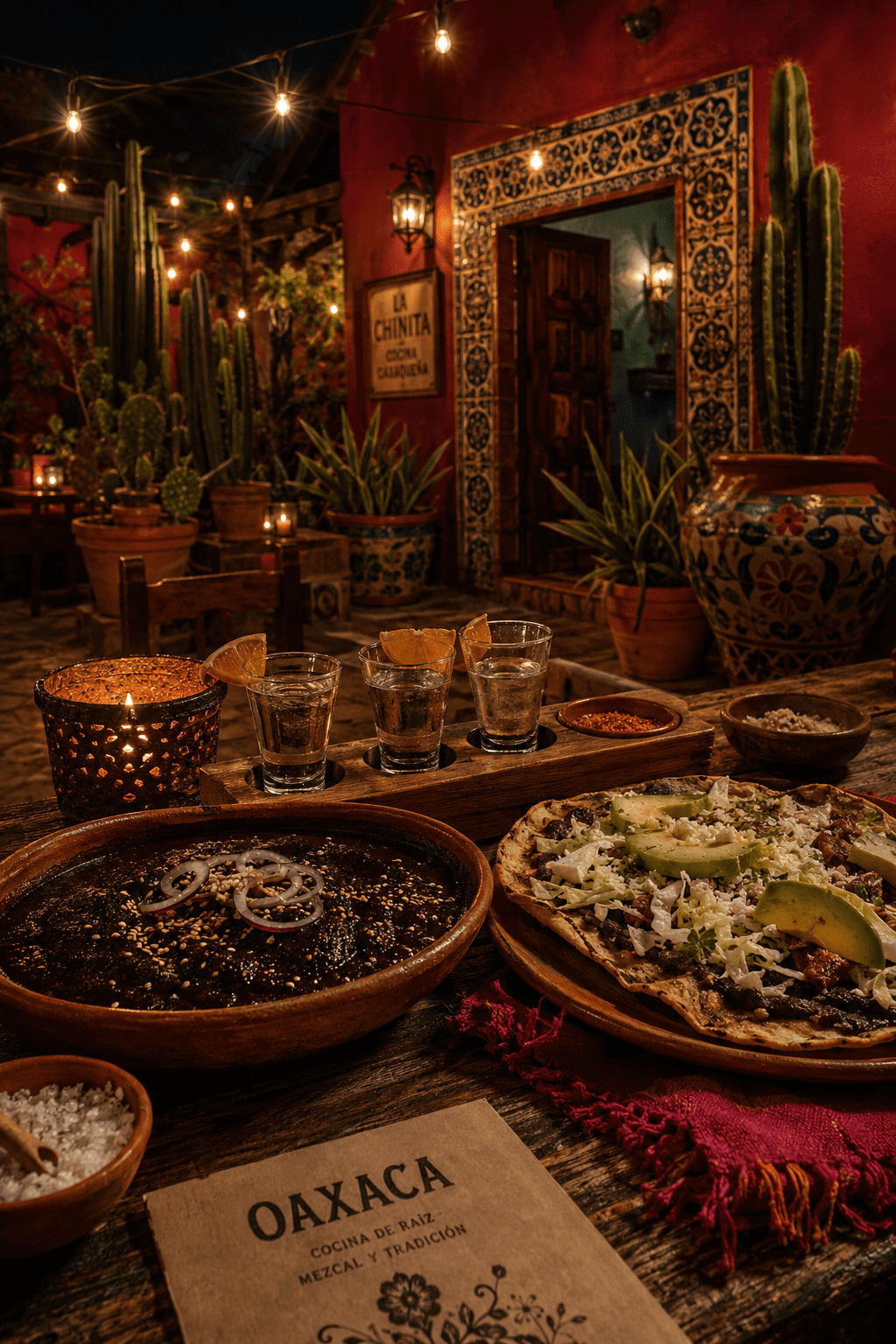
Oaxacan food is genuinely one of the world’s great regional cuisines. It’s built around seven moles, tlayudas (large crispy tortillas), tasajo (dried beef), chapulines (toasted grasshoppers), and mezcal from dozens of small producers.
Dishes you must try:
- Mole negro – The complex, dark sauce made with over 30 ingredients including chocolate and dried chiles
- Tlayuda – A crispy tortilla topped with black beans, Oaxacan cheese, and meat
- Memelas – Thick corn masa cakes with toppings
- Mezcal – Specifically look for single-village, artisanal producers (not mass-market brands)
Restaurant picks by category:
- Market food: Mercado 20 de Noviembre (city center) for the freshest, cheapest meals
- Mid-range sit-down: Itanoni (heirloom corn tortillas, a genuine institution)
- Special occasion: Los Danzantes or Casa Oaxaca for chef-driven Oaxacan cuisine
- Mezcal bar: In Situ Mezcalería for a curated flight with knowledgeable staff
For food travelers who geek out on regional cuisines, this is the kind of experience that rivals what you’d find at the best food places in New York – just with a fraction of the price tag.
Oaxaca Beaches and Mountain Towns Worth Visiting
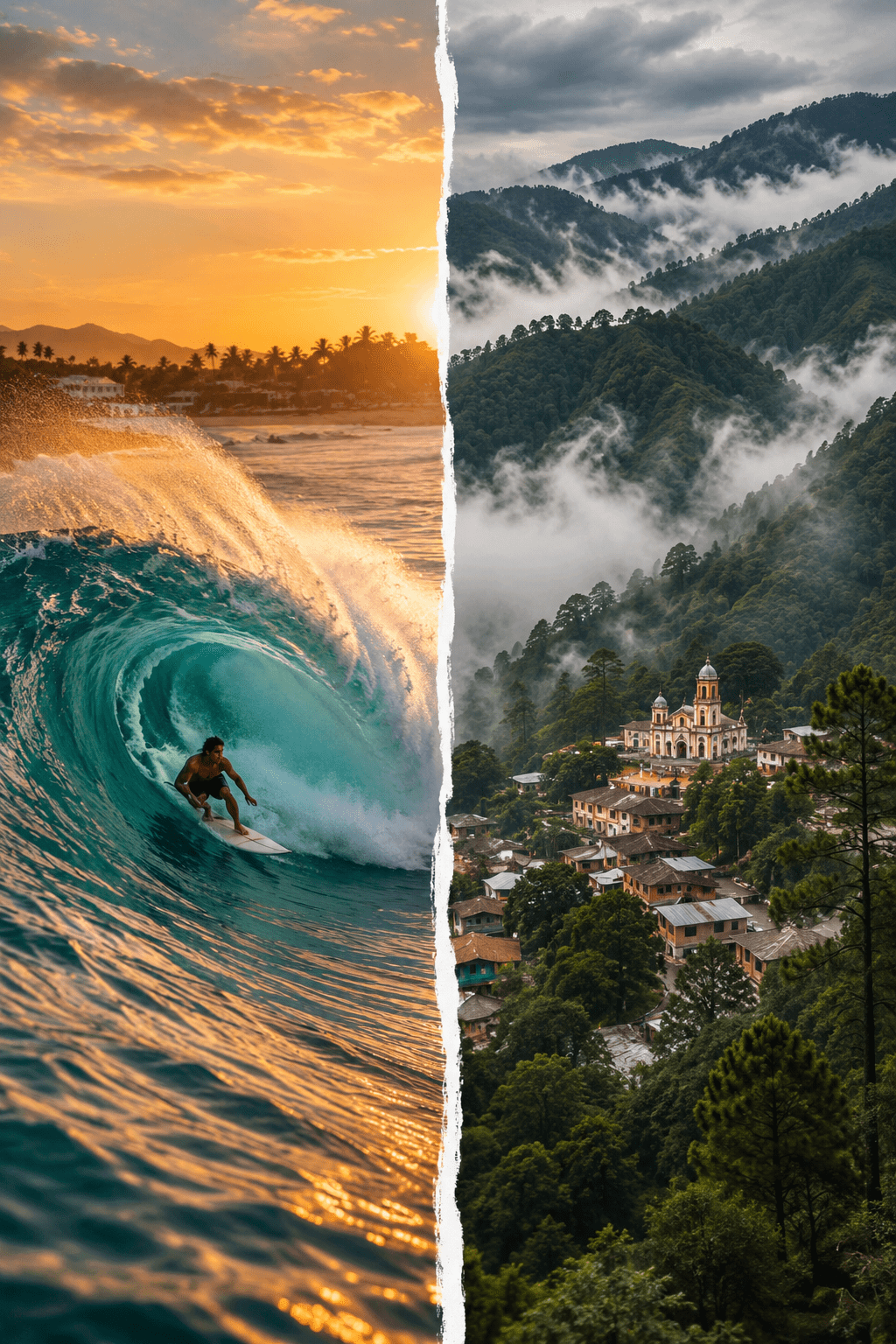
Oaxaca’s coast and its mountain towns are two completely different experiences, and both are worth your time. The coast is warm, humid, and surf-focused; the mountains are cool, misty, and built around indigenous ecotourism.
Best beaches:
- Zicatela (Puerto Escondido) – World Surfing Reserve since 2025; powerful waves, not for beginners [5]
- Playa Manzanillo (Puerto Escondido) – Calm, swimmable, family-friendly
- Mazunte – Small, beautiful, with sea turtle conservation nearby
- Bahías de Huatulco – Nine protected bays with snorkeling and calm water
Best mountain towns:
- San José del Pacífico – Cloud forest, cool temperatures, incredible views
- Capulálpam de Méndez – Pueblo Mágico with almost no tourists
- Ixtlán de Juárez – Base for Sierra Norte community ecotourism (zip lines, mountain biking, hiking)
If you love the idea of combining beach and mountain in one trip, Oaxaca does it better than almost anywhere. It’s a similar appeal to what makes Vietnam’s hidden gems so compelling – variety within a single destination.
How to Get Around Oaxaca
Getting around Oaxaca is easier than most travelers expect, especially after the 2024 highway improvements. Colectivos (shared vans) are the cheapest and most local option; private drivers are worth it for day trips.
Transport options:
- Colectivos – Shared vans connecting Oaxaca City to most surrounding villages; $1-3 USD per trip
- ADO buses – Comfortable long-distance buses to Puerto Escondido, Huatulco, and Mexico City
- Rental car – Best for flexibility, especially for the coast or Sierra Norte; expect $30-50 USD/day
- Private driver – $60-100 USD for a full day; worth it for Hierve el Agua or Monte Albán combos
- Taxis/apps – InDriver works well in Oaxaca City; always agree on price before getting in
Key route times from Oaxaca City:
- Monte Albán: 20 minutes
- Hierve el Agua: 1.5 hours
- Puerto Escondido: 3+ hours (new highway) [5]
- Mexico City: 6 hours by bus, 1 hour by plane
Oaxaca Day Trips from Mexico City
Oaxaca is one of the best day trips or weekend getaways from Mexico City, sitting about 6 hours by bus or 1 hour by plane. Most travelers fly and spend 3-5 days, which is enough to cover the city highlights and one or two day trips.
From Mexico City, the most common route is a direct flight into Oaxaca City’s airport (OAX), with multiple daily departures on Aeromexico, VivaAerobus, and Volaris. Round-trip flights regularly run $60-120 USD if booked in advance.
Best Oaxaca day trips from the city base:
- Monte Albán + Atzompa (half day)
- Hierve el Agua + Mitla + Tlacolula (full day)
- Teotitlán del Valle + Tlacolula Sunday market (half day)
- Etla Valley + Wednesday market (half day)
Oaxaca Cultural Sites and Indigenous Markets
Oaxaca’s cultural sites and markets are the main reason serious travelers choose it over other Mexican destinations. The state has 16 recognized indigenous groups, and their traditions – weaving, pottery, woodcarving, and ceremonial practices – are still actively practiced, not performed for tourists.
Top cultural sites:
- Monte Albán – One of the oldest cities in Mesoamerica, built by the Zapotecs around 500 BCE
- Mitla – Famous for geometric stone mosaics; still an active ceremonial site
- Yagul – Less visited than Monte Albán but equally impressive; great views
Best markets:
- Tlacolula Sunday Market – The biggest and most authentic weekly tianguis in the valley
- Mercado de Artesanías (Oaxaca City) – Good for textiles, black clay pottery, and alebrijes
- Etla Wednesday Market – Smaller, more local, great for Oaxacan cheese
“The Tlacolula market isn’t a tourist attraction – it’s a functioning community market that happens to be extraordinary. Go early, eat at the market stalls, and don’t rush.”
International tourism in Oaxaca has grown 13.33% since 2022, which means these markets are getting more visitors [4]. Go on weekday mornings when possible.
Best Hotels and Accommodations in Oaxaca
Oaxaca has excellent accommodation across every budget, from colonial boutique hotels in the city center to eco-lodges in the Sierra Norte and beachfront cabañas in Puerto Escondido. The average hotel occupancy rate across the state was 43.57% from January to August 2025, meaning you’ll generally find availability outside of peak periods [2].
By category:
- Budget (under $40/night): Hostels in Jalatlaco neighborhood; Casa Angel is a reliable option
- Mid-range ($60-120/night): Boutique hotels in centro histórico; look for converted colonial mansions with courtyards
- Splurge ($150-300/night): Hotel Escondido (Puerto Escondido) or Quinta Real Oaxaca for a classic colonial experience
Tips for booking:
- Book 2-3 months ahead for Día de los Muertos (late October/November)
- Semana Santa 2026 hit 70.53% occupancy – book even earlier for that period [3]
- For the coast, Puerto Escondido has better budget options; Huatulco skews more resort-style
Oaxaca Travel Tips for First-Timers
First-timers to Oaxaca should know a few things that most travel guides skip. These are the practical details that make the difference between a good trip and a great one.
Before you go:
- Learn 10-15 Spanish phrases; English is limited outside tourist areas
- Download offline maps (Maps.me or Google Maps offline) for mountain areas with poor signal
- Bring layers – Oaxaca City sits at 1,550 meters elevation and gets cold at night
On the ground:
- Eat at markets and comedores (small local restaurants) for the best food at the lowest prices
- Don’t skip mezcal education – a tasting at a quality palenque is a genuine cultural experience
- Hire local guides for Monte Albán and Mitla; context makes these sites 10x more meaningful
- Colectivos are your friend for getting to nearby villages cheaply
Common mistakes to avoid:
- Underestimating distances – Oaxaca state is large; Puerto Escondido is not a quick side trip
- Booking only Oaxaca City and missing the villages and coast
- Visiting only in July for Guelaguetza without realizing it’s peak crowds and prices
- Drinking tap water (use purified water everywhere)
For travelers who enjoy off-the-beaten-path cultural destinations, Oaxaca pairs well with a broader Mexico itinerary. You might also enjoy exploring Piedmont Italy or the Azores Islands for similar “underrated gem” energy in other parts of the world.
FAQ
Is Oaxaca worth visiting in 2026?
Yes. Oaxaca is one of Mexico’s most rewarding destinations, combining world-class food, living indigenous culture, ancient ruins, surf beaches, and mountain towns. It’s growing in popularity but still feels authentic.
How many days do I need in Oaxaca?
Five to seven days is ideal for covering Oaxaca City, key day trips (Monte Albán, Hierve el Agua), and at least a couple of nights on the coast. Three days covers the city highlights only.
Do I need to speak Spanish in Oaxaca?
Basic Spanish helps significantly. In Oaxaca City’s tourist areas, some English is spoken. In villages, markets, and coastal towns, Spanish is essential.
What is the best area to stay in Oaxaca City?
The centro histórico and the Jalatlaco neighborhood are the best bases – walkable, safe, and close to the main sites and restaurants.
Can I visit Oaxaca on a budget?
Yes. Street food, colectivos, and budget hostels make Oaxaca very affordable. A daily budget of $50-60 USD covers accommodation, food, and transport comfortably.
Is Puerto Escondido good for non-surfers?
Absolutely. While Zicatela is for experienced surfers, Playa Manzanillo and La Punta are calm and swimmable. The town has great restaurants, a relaxed vibe, and easy access to Mazunte and Zipolite.
When is Día de los Muertos in Oaxaca?
October 31 through November 2. Oaxaca’s celebrations are among the most elaborate in Mexico, with cemetery vigils, marigold altars, and street processions. Book accommodation months in advance.
What is mezcal and how is it different from tequila?
Mezcal is a distilled spirit made from agave, produced primarily in Oaxaca. Unlike tequila (which uses only blue agave), mezcal can be made from dozens of agave varieties, giving it a much wider flavor range. Artisanal mezcal is a genuine cultural product, not just a drink.
Is Hierve el Agua worth the trip?
Yes, with conditions. The petrified mineral formations and natural pools are stunning, but the site gets crowded midday. Go early or on a weekday. The road is rough in spots – a colectivo tour handles this for you.
What’s the difference between Oaxacan mole and regular mole?
Oaxaca has seven distinct moles, the most famous being mole negro – a complex sauce with over 30 ingredients including dried chiles, chocolate, and spices. It’s richer and more complex than the simplified versions found elsewhere.
Conclusion
Oaxaca is one of those rare destinations where the reality actually exceeds the hype. The food is as good as everyone says. The ruins are genuinely impressive. The villages feel lived-in rather than staged. And the coast, now more accessible than ever thanks to the 2024 highway upgrade, adds a whole other dimension to the trip.
With over 6.2 million visitors in 2025 and international tourism growing steadily [1][4], Oaxaca is clearly on the radar – but it hasn’t lost what makes it special. The key is getting off the main tourist circuit and spending time in the markets, villages, and mountain towns that most visitors skip.
Your next steps:
- Decide on your trip length – 5-7 days is the sweet spot
- Choose your base: Oaxaca City first, then coast
- Book accommodation 2-3 months ahead if visiting November or Semana Santa
- Download offline maps and brush up on basic Spanish
- Build in at least one full day trip beyond the city – Monte Albán or Hierve el Agua at minimum
Oaxaca rewards the curious traveler. Go soon, go curious, and eat everything.
References
[1] Turistas Generan Una Derrama Economica Superior A 23 Mil Mdp Durante 2025 Sectur Oaxaca – https://www.oaxaca.gob.mx/sectur/turistas-generan-una-derrama-economica-superior-a-23-mil-mdp-durante-2025-sectur-oaxaca/?utm_source=openai
[2] Mas De 4 Millones De Personas Visitaron Oaxaca De Enero A Agosto De 2025 Sectur Oaxaca – https://www.oaxaca.gob.mx/comunicacion/mas-de-4-millones-de-personas-visitaron-oaxaca-de-enero-a-agosto-de-2025-sectur-oaxaca/?utm_source=openai
[3] Oaxaca Registers More Than 120000 Visitors During Holy Week – https://theoaxacapost.com/2026/04/07/oaxaca-registers-more-than-120000-visitors-during-holy-week/?utm_source=openai
[4] Oaxaca Alcanza Record Historico En Turismo Con 6 2 Millones De Visitantes En 2025 Con 23 Mil 348 Mdp En Derrama Consolida Un Turismo Con Identidad Con Inclusion Y Bienestar Compartido – https://redaccionoaxaca.com/index.php/2026/02/11/oaxaca-alcanza-record-historico-en-turismo-con-6-2-millones-de-visitantes-en-2025-con-23-mil-348-mdp-en-derrama-consolida-un-turismo-con-identidad-con-inclusion-y-bienestar-compartido/?utm_source=openai
[5] Coastal Oaxaca Mexico – https://www.nationalgeographic.com/travel/best-of-the-world-2026/article/coastal-oaxaca-mexico?utm_source=openai
[6] Genera Ocupacion Hotelera Mas De 13 Mil Mdp Durante 2025 Sectur Oaxaca – https://www.oaxaca.gob.mx/comunicacion/genera-ocupacion-hotelera-mas-de-13-mil-mdp-durante-2025-sectur-oaxaca/?utm_source=openai
[7] Vive Oaxaca Una Profunda Transformacion Turistica Con Inclusion Y Bienestar Sectur – https://www.oaxaca.gob.mx/comunicacion/vive-oaxaca-una-profunda-transformacion-turistica-con-inclusion-y-bienestar-sectur/?utm_source=openai