
Last updated: August 24, 2026
Quick Answer: Spain is one of the safest countries in Europe for solo female travelers, with a high-functioning transport network, sociable culture, and busy streets that make traveling alone feel natural. The main practical concerns are petty theft and pickpocketing, not personal violence. With a little preparation, most women find Spain an incredibly freeing and confidence-building destination.
Key Takeaways
- Spain consistently ranks among the safest destinations for solo women travelers globally
- Pickpocketing is the top real risk – not violent crime
- Barcelona, Seville, Madrid, and San Sebastian are the best cities to start solo
- You do not need to speak Spanish to get around, but a few phrases help a lot
- Spring (April-May) and early autumn (September-October) are the best times to visit alone
- Budget travelers can get by on around 60-80 euros per day including accommodation
- Eating alone at tapas bars is completely normal and socially easy
- Travel insurance is strongly recommended, even for short trips
- Hostels, free walking tours, and language exchange meetups make it easy to meet people
- Street harassment exists but is increasingly treated seriously under Spanish law
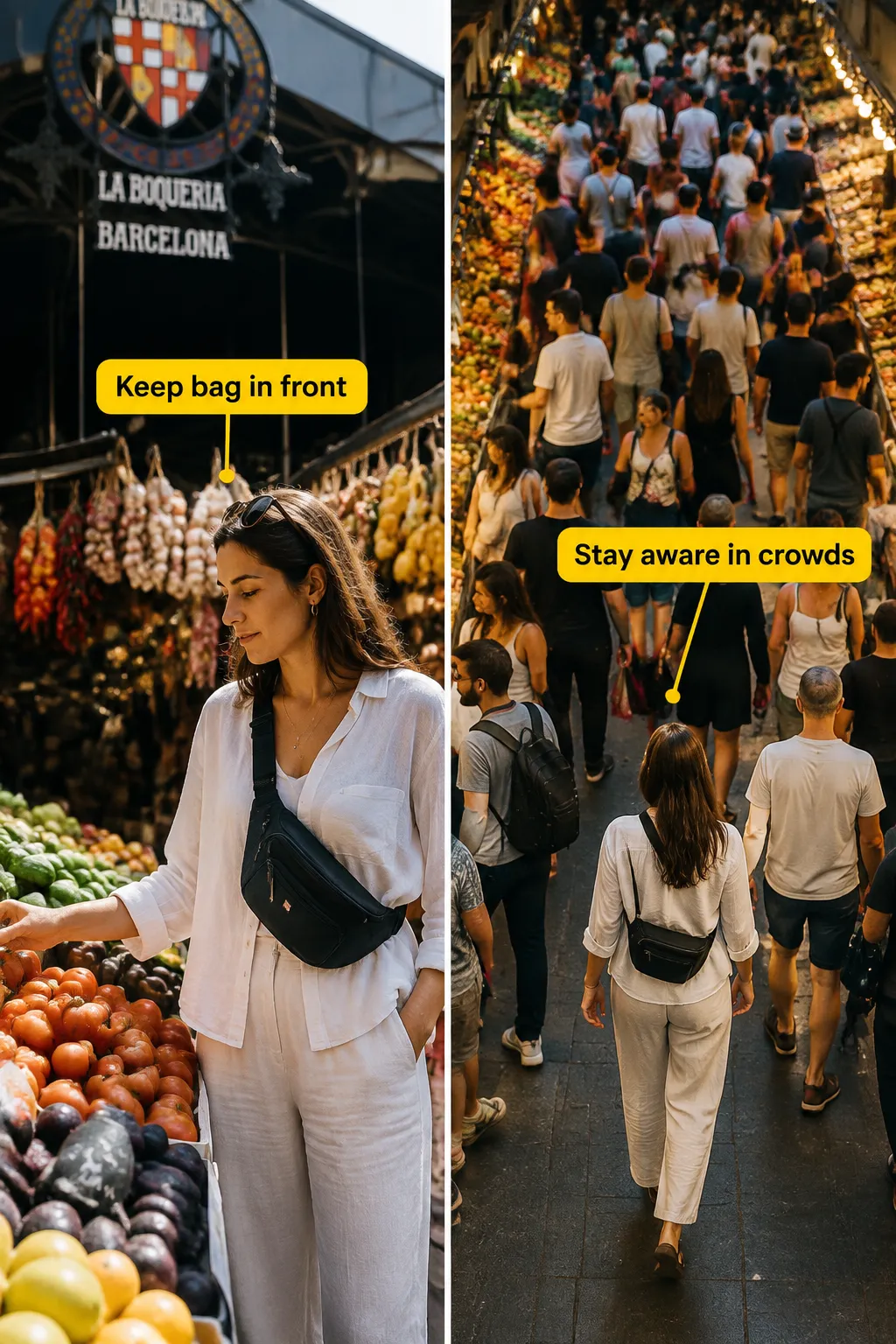
- Always carry a crossbody bag and keep it in front of you in crowded areas
Is Spain Safe for Solo Female Travelers?
Spain is genuinely safe for solo female travelers, and this is backed by data, not just anecdote. According to multiple solo travel resources and safety rankings, Spain consistently places among the top European destinations for women traveling alone.
The key distinction to understand: gender-based violence in Spain, like in most countries, is primarily a domestic issue rather than tourist-targeted crime. As a visitor, your real day-to-day risk is a pickpocket in a busy market, not a personal safety threat.
US and UK travel advisories as of August 2026 both rate Spain as safe with standard caution. One regional note worth knowing – the Basque Country’s border areas occasionally see advisory updates, so check current guidance before visiting specific regions.
Solo female travelers consistently report feeling physically safe across Spain, with pickpocketing described as the main practical headache rather than any threat to personal safety.
Bottom line: Spain solo female travel is low-risk when you stay alert in tourist-heavy areas and take basic precautions with your belongings.
Best Cities in Spain to Visit Alone as a Woman
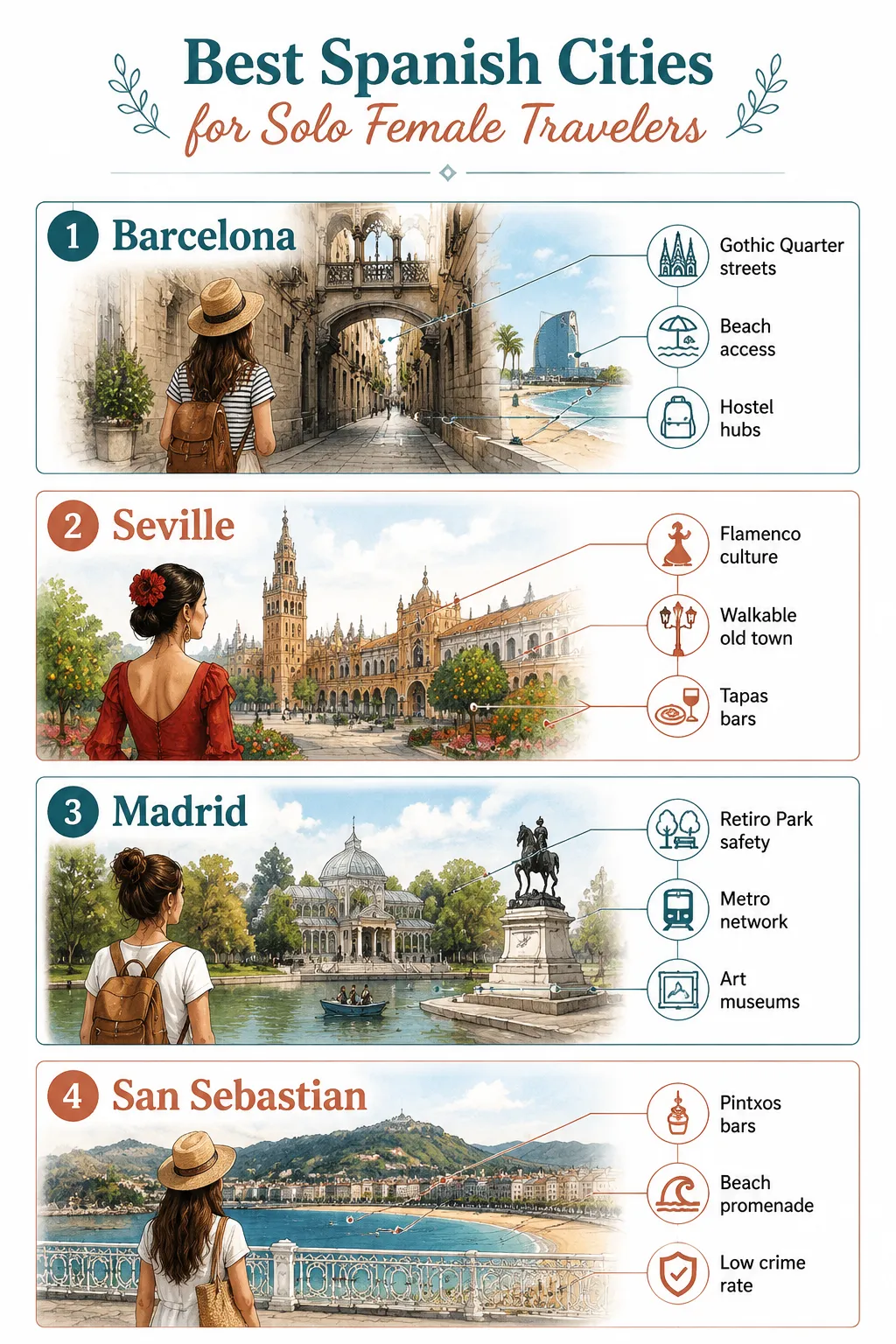
The best cities for solo female travel in Spain are Barcelona, Seville, Madrid, and San Sebastian – each for different reasons.
- Barcelona – Great hostel scene, walkable Gothic Quarter, beach access, and easy metro. Watch your bags on Las Ramblas.
- Seville – Compact, walkable, incredibly social tapas culture. Check out our guide to top things to do in Seville Spain for solo-friendly spots.
- Madrid – Huge, safe, and full of free museums. The Retiro Park area and Malasaña neighborhood are especially solo-friendly. See a full 3 days in Madrid Spain itinerary to plan your time.
- San Sebastian – Smaller, extremely safe, and famous for pintxos bar culture where eating and chatting alone is completely normal.
- Malaga – A rising solo travel favorite with a relaxed pace and great beach access. Our best things to do in Malaga Spain guide covers the highlights.
Choose Barcelona if you want a big-city buzz with easy social connections. Choose Seville or San Sebastian if you prefer a more relaxed, walkable experience.
How Much Does It Cost to Travel Solo in Spain?
Solo travel in Spain is more affordable than many Western European destinations, but costs vary significantly by city and travel style.
Rough daily budget estimates for 2026:
| Travel Style | Estimated Daily Cost |
|---|---|
| Budget (hostel, self-catering, free activities) | 45-60 euros |
| Mid-range (private room, mix of eating out) | 80-120 euros |
| Comfort (boutique hotel, restaurants daily) | 150+ euros |
Barcelona and Madrid run about 20-30% more expensive than Seville or Malaga. The solo traveler’s biggest extra cost is accommodation – you pay for a full room rather than splitting it. Hostels with private rooms are a smart middle ground.
For practical ways to stretch your budget further, solo travel budget ideas can save you a significant amount per day.
Eating at the bar (la barra) rather than at a table often gets you a cheaper price for the same food. Lunch menus (menú del día) offer two courses plus a drink for 10-15 euros at most local restaurants.
What Should I Pack for Solo Travel in Spain?
Pack light, pack smart, and prioritize security over style. Spain’s climate varies a lot by region and season, but a few items matter for every solo female traveler.
Must-haves:
- Anti-theft crossbody bag – Non-negotiable in busy cities. Keep it in front of you at all times in markets and on public transport.
- Comfortable walking shoes – Cobblestones are everywhere and they are brutal in heels or thin soles.
- Portable door lock or door alarm – Useful for hostels or budget hotels where you want extra peace of mind.
- Reusable water bottle – Spain gets very hot in summer. Tap water is safe to drink in most cities.
- Light scarf or shawl – For entering churches and for cool evenings.
- Offline maps downloaded – Google Maps offline or Maps.me for when you lose signal.
- Photocopies of your passport – Keep one in your bag, one in your accommodation.
Experienced solo travelers in Spain consistently flag the crossbody bag and good walking shoes as the two items they were most glad they packed.
Can I Travel Alone in Spain Without Speaking Spanish?
Yes, you can absolutely travel solo in Spain without speaking Spanish. English is widely spoken in tourist areas, hotels, and most restaurants in major cities.
That said, a few basic Spanish phrases go a long way – not just practically, but socially. Locals genuinely appreciate the effort, and it opens doors that a purely English-only approach won’t.
10 phrases worth learning before you go:
- Hola / Buenos días – Hello / Good morning
- Por favor / Gracias – Please / Thank you
- ¿Habla inglés? – Do you speak English?
- Una mesa para uno, por favor – A table for one, please
- La cuenta, por favor – The bill, please
- ¿Dónde está…? – Where is…?
- No entiendo – I don’t understand
- ¿Cuánto cuesta? – How much does it cost?
- Ayuda – Help
- Me llamo… – My name is…
In rural areas and smaller towns, English is less common. Download Google Translate with Spanish offline before you leave – the camera translation feature is genuinely useful for menus.
Best Time of Year for Spain Solo Female Travel
The best times for solo female travel in Spain are April-May and September-October. These shoulder seasons offer warm but manageable weather, smaller crowds, and lower prices than peak summer.
- Spring (April-May): Wildflowers, festivals like Seville’s Feria de Abril, and comfortable temperatures of 18-24°C. Ideal for walking cities.
- Early Autumn (September-October): Post-summer crowds thin out, sea is still warm, and prices drop. Great for coastal areas.
- Summer (June-August): Very hot (35-40°C in Andalusia), extremely crowded, and peak prices. Doable but exhausting for solo travel.
- Winter (November-February): Quiet, cheap, and mild on the coast. Northern Spain gets cold and rainy. Good if you prefer fewer tourists.
Avoid August in Seville and inland cities if you are sensitive to heat. Temperatures regularly hit 40°C and many locals leave the city entirely.
How to Stay Safe at Night Traveling Alone in Spain
Spain’s nightlife culture means streets stay busy and lively well past midnight, which actually works in a solo traveler’s favor. Busy streets are safer streets.
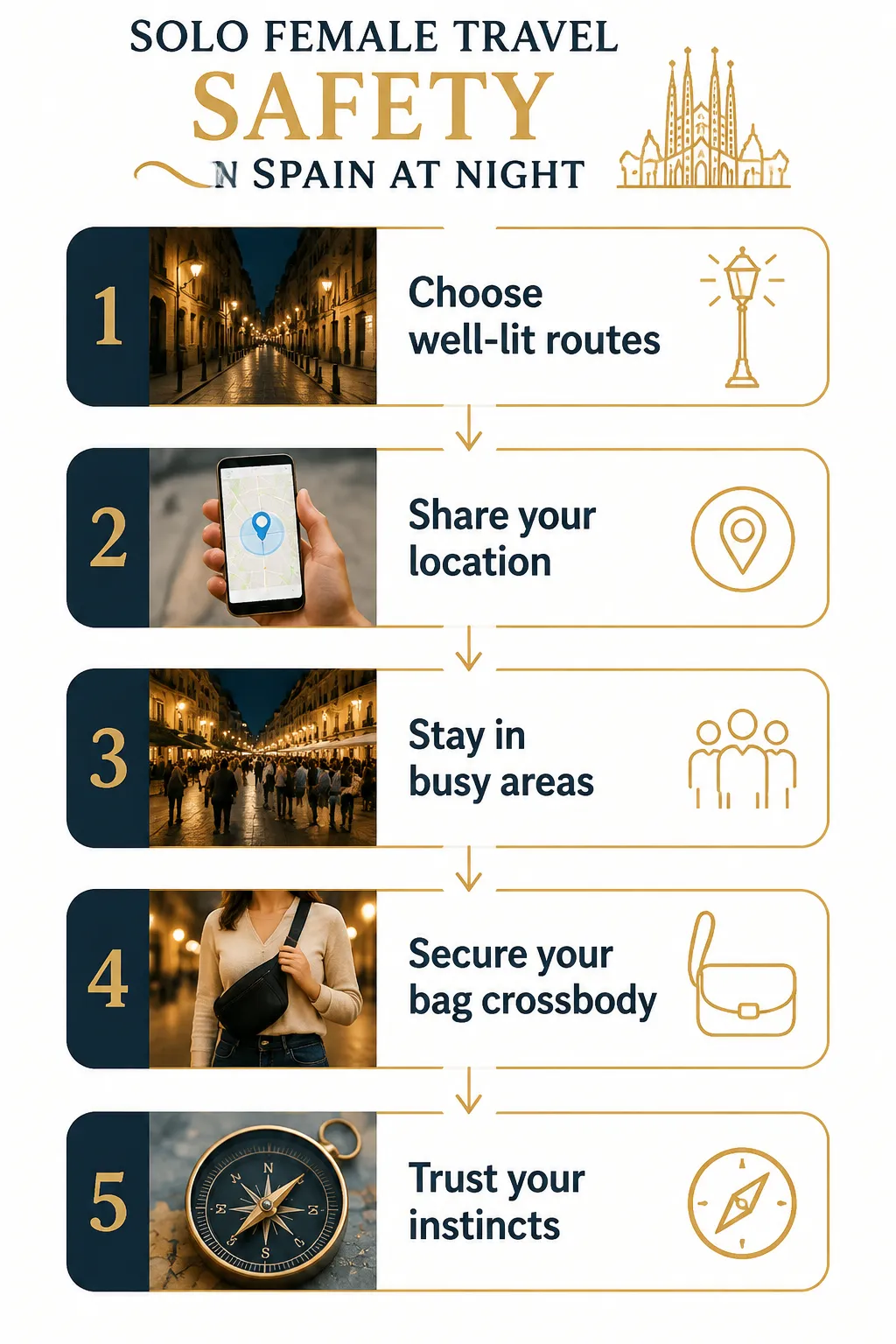
Key night safety habits:
- Stick to well-lit, populated streets. Avoid shortcuts through empty alleys.
- Share your location with someone you trust before going out.
- Pre-book a taxi or use a trusted app (Cabify or Bolt are widely used in Spain) rather than hailing random cabs.
- Keep your phone charged and in your front pocket, not your back pocket.
- Trust your instincts. If a situation or person feels off, walk toward a busy bar or shop.
- Avoid leaving drinks unattended in bars or clubs.
Spain has strengthened its legal framework around street harassment in recent years. Catcalling and unwanted attention are increasingly treated seriously, but some solo female travelers still report occasional unwanted comments, particularly in tourist-heavy nightlife areas. Confident, direct body language and ignoring or firmly saying “No” tends to be the most effective response.
Common Scams to Avoid in Spain as a Solo Traveler
Pickpocketing and petty scams are the main risks for solo travelers in Spain – not violent crime. Knowing the common setups helps you spot them before they happen.
Scams to watch for:
- The “friendship bracelet” trick – Someone approaches you near a landmark, ties a bracelet on your wrist, then demands payment. Walk away immediately.
- Distraction pickpocketing – One person bumps into you or asks for directions while an accomplice lifts your bag or phone. Common on Las Ramblas in Barcelona and around the Sagrada Familia.
- Fake police officers – Someone in plain clothes claims to be police and asks to check your wallet. Real police in Spain do not do this. Ask to see official ID and walk to a public space.
- ATM skimming – Use ATMs inside banks rather than standalone machines on the street.
- Overcharging taxis – Always confirm the fare or use a metered cab. Uber, Cabify, and Bolt are reliable alternatives.
The single most effective defense against pickpocketing is a zipped crossbody bag worn in front of your body. Most opportunistic thieves will simply move on to an easier target.
Is It Expensive to Eat Alone at Restaurants in Spain? (And How to Meet Other Travelers)
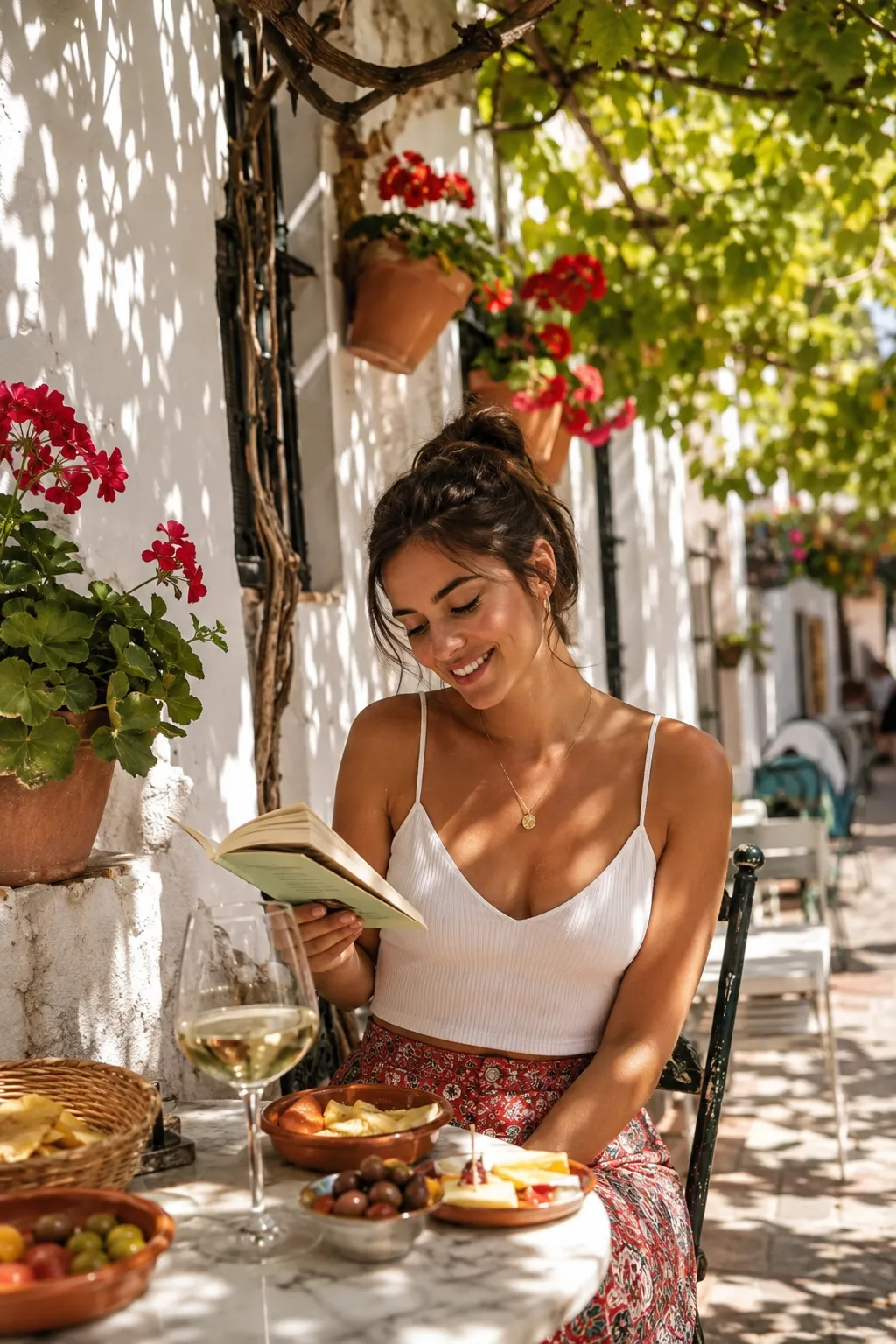
Eating alone in Spain is socially easy and often cheaper than you’d expect. Spanish food culture is built around bars and communal eating, which makes solo dining feel natural rather than awkward.
Sitting at the bar (la barra) is completely normal and often gets you faster service and sometimes lower prices. Tapas culture means you can order small dishes gradually rather than committing to a full meal.
Where solo travelers naturally meet people:
- Hostels – Even if you book a private room, hostel common areas and organized events are the fastest way to meet other travelers. Solo female travel experiences in Spain consistently highlight hostels as the social hub.
- Free walking tours – Every major Spanish city has them. They attract solo travelers and are a great way to meet people and learn the city at the same time.
- Language exchange meetups (intercambio) – Search Meetup.com or Facebook groups for local intercambio events. You practice Spanish, locals practice English.
- Cooking classes – Popular in Barcelona and Seville, and naturally social.
- Day tours – Wine tours, hiking trips, and day excursions to places like Frigiliana attract solo travelers.
For more inspiration on where solo women travel well, see our 15 best places for solo female travel guide.
Best Neighborhoods to Stay in for Solo Female Travelers in Spain
Choosing the right neighborhood matters more than choosing the right hotel. Stay central, stay busy, and stay walkable.
By city:
- Barcelona: El Born or Eixample – safe, central, and well-connected. Avoid the far edges of the Raval at night.
- Madrid: Malasaña, Chueca, or Salamanca – all safe, lively, and well-served by metro. See our where to stay in Barcelona Spain guide for detailed neighborhood breakdowns.
- Seville: Santa Cruz or Triana – both walkable, atmospheric, and safe.
- San Sebastian: Parte Vieja (Old Town) or Centro – everything is walkable and very safe.
General rule: Stay within walking distance of the main sights. You’ll feel safer, spend less on transport, and enjoy the city more.
How Do Solo Female Travelers Get Around Spain? (Transportation)
Spain’s transport network is one of the best in Europe, making solo travel genuinely easy. Getting around Spain independently is straightforward even for first-time visitors.
Main options:
- AVE high-speed trains – The fastest and most comfortable way to travel between major cities. Madrid to Seville takes about 2.5 hours. Book in advance on Renfe.com for the best prices.
- City metro systems – Barcelona, Madrid, Seville, and Valencia all have excellent metro networks. Safe, cheap, and easy to navigate.
- Buses – ALSA connects cities and towns not served by train. Slower but cheaper.
- Rideshare apps – Cabify and Bolt are reliable in most cities. Uber operates in Barcelona and Madrid.
- Cycling – Many Spanish cities have bike-share schemes (Bicing in Barcelona, BiciMAD in Madrid). Great for daytime exploration.
Avoid driving in city centers. Parking is expensive, traffic is chaotic, and most of what you want to see is walkable. Rent a car only if you’re exploring rural areas or the coast.
Do I Need Travel Insurance for Spain Solo Female Travel?
Yes – travel insurance is strongly recommended for solo female travel in Spain, and arguably more important when you’re traveling alone than with a group.
If something goes wrong – a medical issue, a stolen phone, a cancelled flight – you have no travel companion to share the problem or the cost. Insurance closes that gap.
Look for a policy that covers:
- Medical treatment and emergency evacuation
- Theft and loss of belongings (especially electronics)
- Trip cancellation and interruption
- 24/7 emergency assistance line
Spain has excellent public healthcare, and EU citizens with a European Health Insurance Card (EHIC) get basic coverage. But EHIC does not cover repatriation, lost belongings, or trip disruption. Non-EU travelers especially should not skip this.
What Cultural Differences Should I Know About Spain?
Spain runs on a different clock to most countries, and knowing this upfront saves a lot of confusion.
Key cultural notes for solo female travelers:
- Meal times are late. Lunch is 2-4pm, dinner rarely before 9pm. Restaurants before 8pm are often tourist traps or empty.
- Siesta is real in smaller towns. Shops close from roughly 2-5pm in many areas outside major cities.
- Greetings matter. A kiss on each cheek is the standard greeting between people who know each other. A handshake or simple “hola” works fine for strangers.
- Tipping is not mandatory but appreciated. Rounding up or leaving small change is normal. 10% is generous.
- Noise levels are high. Spanish social culture is loud and animated. Don’t mistake volume for aggression.
- Personal space is closer. Spaniards stand closer in conversation than Northern Europeans or Americans. It’s not intrusive – it’s just the norm.
- Sunday closures are common for smaller shops and some restaurants, especially outside cities.
Understanding these cultural rhythms makes solo travel in Spain feel much smoother and more enjoyable from day one.
FAQ
Is Spain safe for a solo female traveler in 2026?
Yes. Spain ranks among the safest European destinations for solo women. The main risk is petty theft like pickpocketing, not violent crime. Standard precautions – secure bag, awareness in crowds – are sufficient for most travelers.
What is the safest city in Spain for solo female travel?
San Sebastian is widely considered the safest and most solo-friendly city in Spain. It’s small, walkable, low-crime, and has a strong food and social culture that makes solo dining easy.
How much money do I need per day in Spain as a solo traveler?
Budget around 60 euros per day for a comfortable but economical trip – covering a hostel private room, meals, transport, and one or two activities. Mid-range travelers typically spend 90-120 euros per day.
Do I need to speak Spanish to travel alone in Spain?
No. English is widely spoken in tourist areas. That said, learning 10-15 basic phrases significantly improves your experience and how locals respond to you.
Is it weird to eat alone in Spain?
Not at all. Sitting at the bar and eating solo is completely normal in Spanish culture. Tapas culture makes it especially easy – you can order gradually and take your time without feeling pressure.
What should I do if I get pickpocketed in Spain?
Report it to the local police (Policía Nacional) and get a crime report (denuncia) – you’ll need this for any insurance claim. Contact your bank immediately to freeze cards. Keep photocopies of your passport and card numbers stored separately from your originals.
Is Barcelona safe for solo female travelers?
Yes, with awareness. Barcelona is safe overall but has one of the highest pickpocketing rates in Europe, particularly on Las Ramblas and on the metro. Keep your bag secured and stay alert in crowds.
What is the best app for getting around Spain alone?
Google Maps works well for navigation. For transport, use the Renfe app for trains and Cabify or Bolt for rideshares. Moovit is useful for local bus and metro routes.
Can I do day trips alone from major Spanish cities?
Absolutely. Day trips are one of the best parts of solo travel in Spain. Easy options include Toledo from Madrid, Cordoba from Seville, and Sitges from Barcelona. All are well-connected by train.
What is the best time to visit Spain alone as a woman?
April-May and September-October offer the best balance of good weather, manageable crowds, and lower prices. Avoid August in southern Spain if you’re sensitive to extreme heat.
Should I stay in hostels or hotels for solo travel in Spain?
Hostels with private rooms are the best of both worlds – social atmosphere, lower cost, and your own space. They’re also the fastest way to meet other solo travelers.
Is street harassment a problem in Spain?
It exists, particularly in nightlife areas, but Spain has strengthened its legal response to street harassment in recent years. Most solo female travelers report it as occasional and manageable rather than a constant issue.
Conclusion
Spain solo female travel is genuinely one of the best decisions you can make as an independent traveler. The country combines safety, incredible food, rich culture, and a social atmosphere that makes going alone feel like a feature, not a compromise.
The 11 things most worth knowing before you go: secure your bag, eat late, learn a few Spanish phrases, book shoulder-season travel, stay in central neighborhoods, use the train network, get travel insurance, do a free walking tour on day one, eat at the bar, trust your instincts at night, and don’t let the heat of August catch you off guard in Andalusia.
Your next steps:
- Pick your first city – Seville or San Sebastian are ideal for first-time solo travelers
- Book shoulder-season flights for April-May or September-October
- Sort travel insurance before anything else
- Download offline maps and the Renfe app
- Read our full solo travel in Spain planning guide for step-by-step logistics
Spain will surprise you with how easy and joyful it is to explore alone. Go.