
Last updated: August 29, 2026
Quick Answer: A 5-day Lapland Finland itinerary is genuinely enough time for first-timers to experience the northern lights, reindeer sledding, husky safaris, and Arctic wilderness – especially if you base yourself in Rovaniemi with one night or two in a more remote area like Levi. The key is booking activities and aurora-view accommodation at least 3-4 months in advance, since Finland’s tourism to Lapland is at record levels in 2026, with visitor numbers up 7.1% year-on-year.
Key Takeaways
- 5 days is enough for a solid first Lapland experience if you plan well and book early.
- Best window for northern lights: Late November through late March, with January and February offering peak aurora conditions.
- Rovaniemi is the easiest base – it sits right on the Arctic Circle and has the best transport links.
- A two-base approach (Rovaniemi + Levi or another wilderness spot) gives you both “Arctic city” convenience and remote aurora nights.
- Costs are high – budget roughly €2,500-€4,000+ per person for 5 days including flights, depending on your choices.
- Northern lights are never guaranteed, but your odds improve significantly with clear skies, a solar-active period, and staying away from light pollution.
- Families with kids can absolutely do Lapland in 5 days – the pace just needs to be slightly gentler, with earlier evenings.
- Guided tours save stress for first-timers; self-drive works well if you’re comfortable on icy roads.
- Book aurora-view cabins and glass igloos early – the best units sell out 6+ months ahead.
- Gear matters enormously – renting thermal suits locally is a smart option if you don’t own proper arctic clothing.
What’s the Best Time to Visit Lapland Finland for Northern Lights
The best time to visit Lapland Finland for northern lights is between late November and late March, with January and February being the sweet spot. During this period, you get long polar nights (meaning more darkness for aurora viewing), temperatures cold enough to keep skies clear, and statistically higher solar activity.
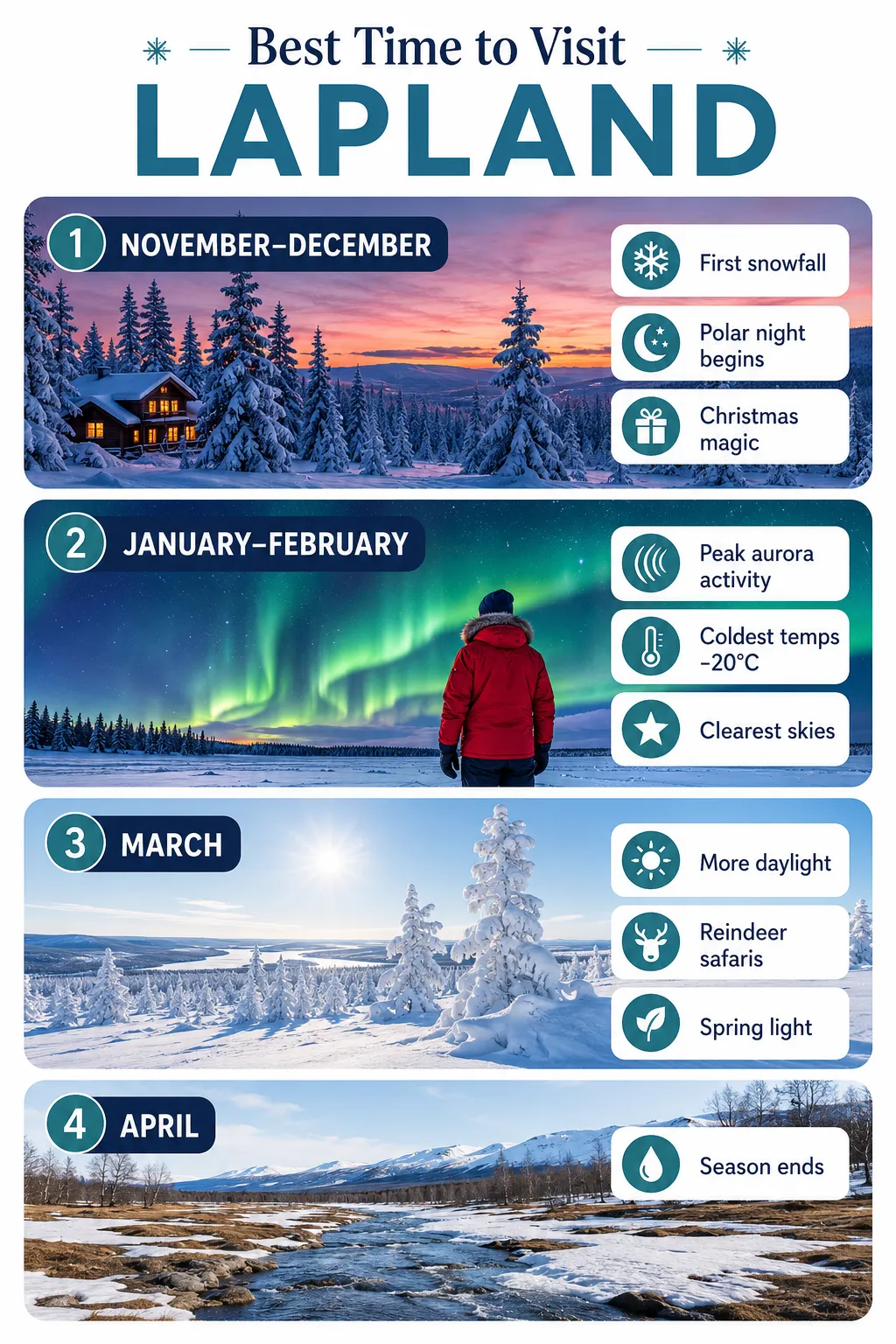
December is magical for Christmas atmosphere but can be cloudier. March brings more daylight, which is actually beautiful for daytime activities, but your aurora window shortens. The aurora alert service nlalert.fi is a free tool locals and guides use to track real-time geomagnetic activity – download it before you go.
Quick comparison by month:
| Month | Aurora Darkness | Avg Temp | Crowd Level |
|---|---|---|---|
| November | Good (polar night starts) | -5°C to -15°C | Low-Medium |
| December | Very good | -10°C to -20°C | Very High (Christmas) |
| January | Excellent | -15°C to -25°C | Medium |
| February | Excellent | -15°C to -20°C | Medium-High |
| March | Good | -5°C to -15°C | High |
Pro tip: January is arguably the best month for first-timers who want northern lights without the Christmas crowds and inflated prices.
What’s the Difference Between Visiting Lapland in December vs January
December and January both offer northern lights, but they feel very different. December is dominated by Christmas tourism – Rovaniemi is Santa Claus’s official hometown, so it’s packed with families, prices spike sharply, and accommodation books out months ahead. January is quieter, colder, and often better for aurora hunting because skies tend to be clearer.
If your main goal is the northern lights and Arctic wilderness, January wins. If you want the full Christmas magic experience with your family, December is worth the extra cost – just book 5-6 months out minimum.
Can You See Northern Lights Guaranteed in Lapland, or Is It Luck
No destination can guarantee northern lights – not even Lapland. Aurora viewing depends on three things: geomagnetic activity (solar storms), clear skies, and darkness. Lapland gives you the best statistical odds in Europe, but a cloudy week means no aurora, full stop.
Aurora conditions for 2025-26 and 2026-27 are excellent due to the current solar maximum cycle, which increases the frequency of strong geomagnetic events. To maximize your chances on a 5-day trip:
- Stay at least 3-4 nights (more nights = more chances).
- Book a remote cabin or glass igloo away from town light pollution.
- Sign up for aurora alerts via nlalert.fi or the Space Weather app.
- Don’t rely on a single “aurora tour” – go out multiple evenings.
- Ask your accommodation to wake you if activity spikes overnight.
Even Rovaniemi has launched creative aurora access initiatives to help visitors catch the lights, including on-demand ride services during peak solar events.
How Much Does a 5-Day Lapland Trip Cost Including Flights and Hotels
A 5-day Lapland trip is expensive. For a first-timer flying from the UK or central Europe, expect to spend roughly €2,500-€4,000+ per person all-in. Here’s a realistic breakdown:
- Flights (return to Rovaniemi): €150-€400 from major European hubs
- Accommodation (5 nights): €150-€500+ per night depending on type
- Activities (husky safari, reindeer sledding, snowmobile, aurora tour): €100-€300 per activity
- Food and transport: €50-€100 per day
Glass igloos and aurora cabins sit at the top of the range and sell out fastest. Standard hotel rooms in Rovaniemi are more affordable. If you want to plan a cheaper vacation without sacrificing the core experience, book flights early, stay in Rovaniemi rather than a resort, and pick 2-3 key activities instead of doing everything.
Common mistake: Underestimating activity costs. A full husky safari day can run €150-€250 per person alone.
Do You Need Special Gear or Clothing for Lapland in Winter
Yes – this is non-negotiable. Temperatures in Lapland regularly drop to -20°C or colder, and wind chill makes it feel worse. The right clothing is the difference between a magical experience and a miserable one.
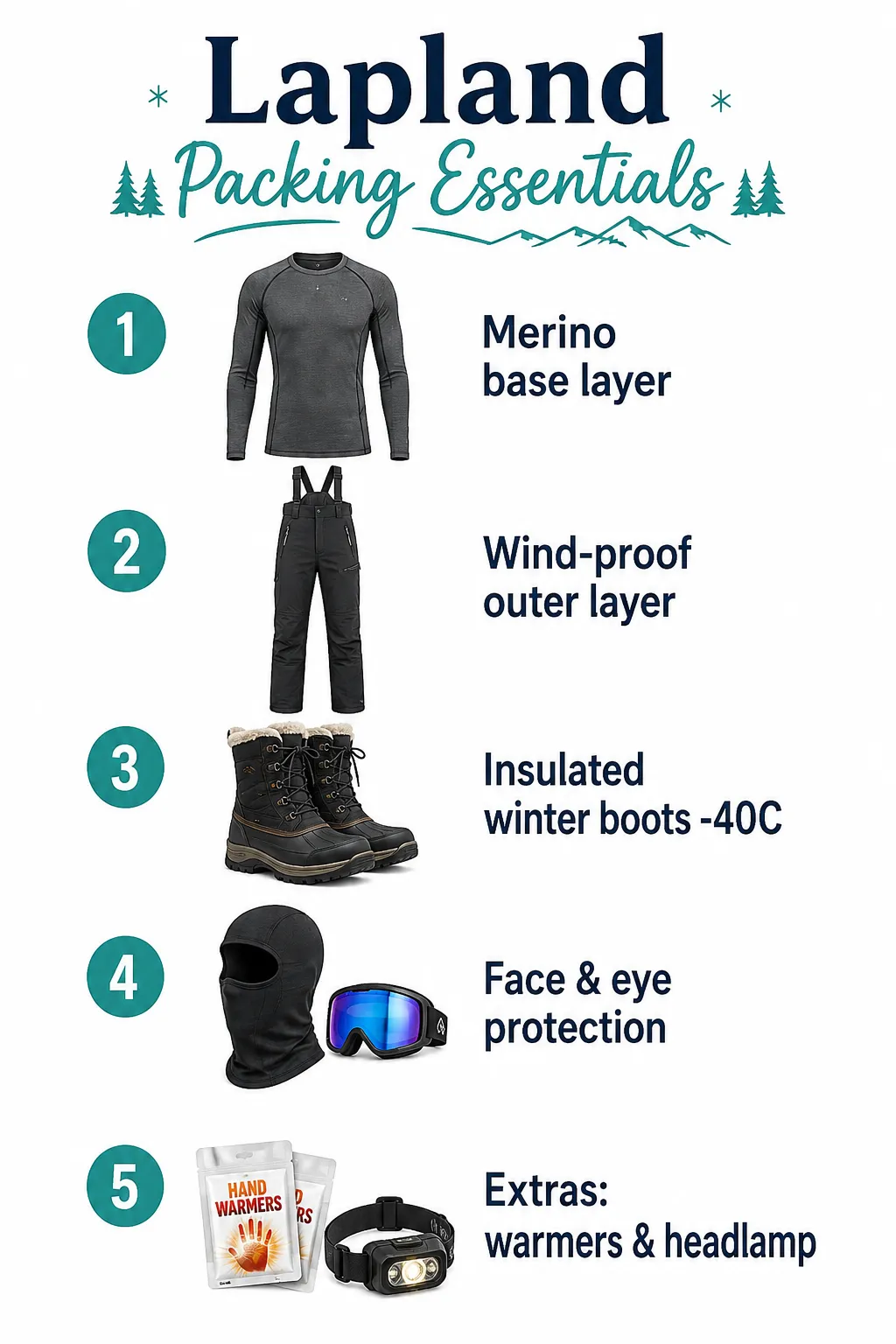
The layering system that works:
- Base layer – merino wool or thermal synthetic (no cotton)
- Mid layer – fleece or down insulation
- Outer layer – windproof, waterproof ski jacket and trousers
- Extremities – insulated boots rated to at least -40°C, wool socks, thick gloves or mittens, balaclava, hat
The good news: most tour operators in Lapland provide thermal overalls and boots for outdoor activities. If you’re doing a husky safari or snowmobile tour, you’ll be kitted out at the base. For general exploring, you need your own layers.
Don’t bring: Cotton anything. It retains moisture and gets dangerously cold fast.
Is Reindeer Sledding Safe and How Long Does It Actually Take
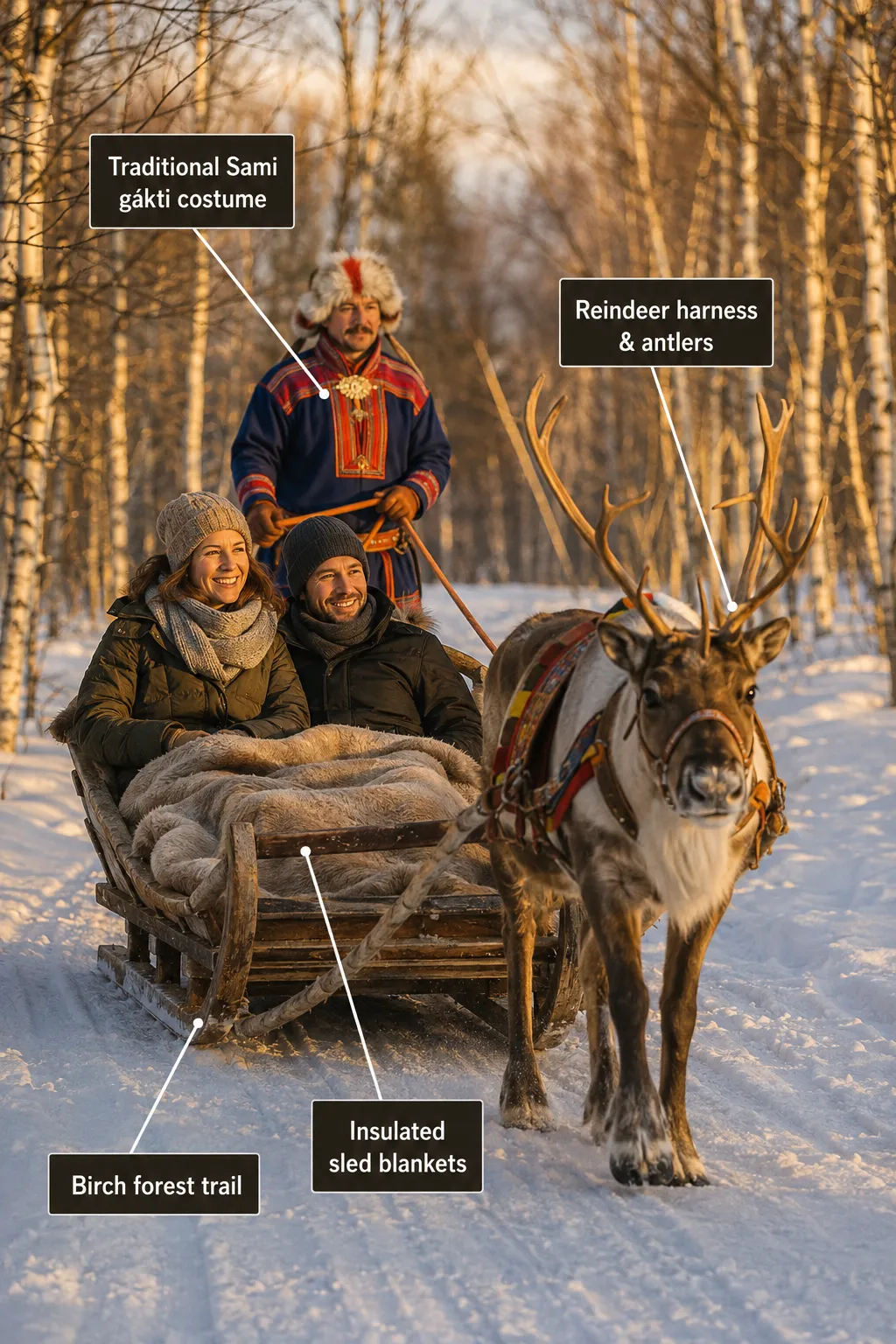
Reindeer sledding is very safe and suitable for almost all ages, including young children. The reindeer move at a gentle walking pace – this isn’t a thrill ride. A typical reindeer farm experience lasts 1.5 to 3 hours and usually includes a short sled ride through the forest, feeding the reindeer, and a warm drink by a fire.
The experience is guided by a Sami or Finnish reindeer herder who manages the animals throughout. Falls are rare because the sleds are low to the ground and the pace is slow. Children as young as 2-3 years old regularly do this activity.
Choose reindeer sledding if: You want a calm, culturally meaningful experience. It’s less physically demanding than husky safaris and more intimate.
Choose husky sledding if: You want speed, adrenaline, and the chance to drive your own sled.
Can You Do Lapland in 5 Days or Do You Need More Time
Five days is genuinely enough for a first-timer’s Lapland experience – you won’t feel rushed if you plan smartly. The classic structure that works well is:
- Day 1: Fly into Rovaniemi, settle in, evening aurora walk
- Day 2: Husky safari (half or full day), Arctic Circle crossing ceremony
- Day 3: Reindeer farm visit, Santa Claus Village, snowshoe hike
- Day 4: Travel to Levi or a remote wilderness area, snowmobile tour, aurora hunting from a cabin
- Day 5: Return to Rovaniemi, final aurora attempt, fly home
Seven days gives you more flexibility and better aurora odds, but 5 days with good planning delivers the core experience. Lapland tourism infrastructure has grown significantly, making 5-day itineraries more practical than ever.
Guided Tour vs Booking Independently: What’s Actually Included
This is one of the biggest decisions for first-timers planning a Lapland Finland itinerary.
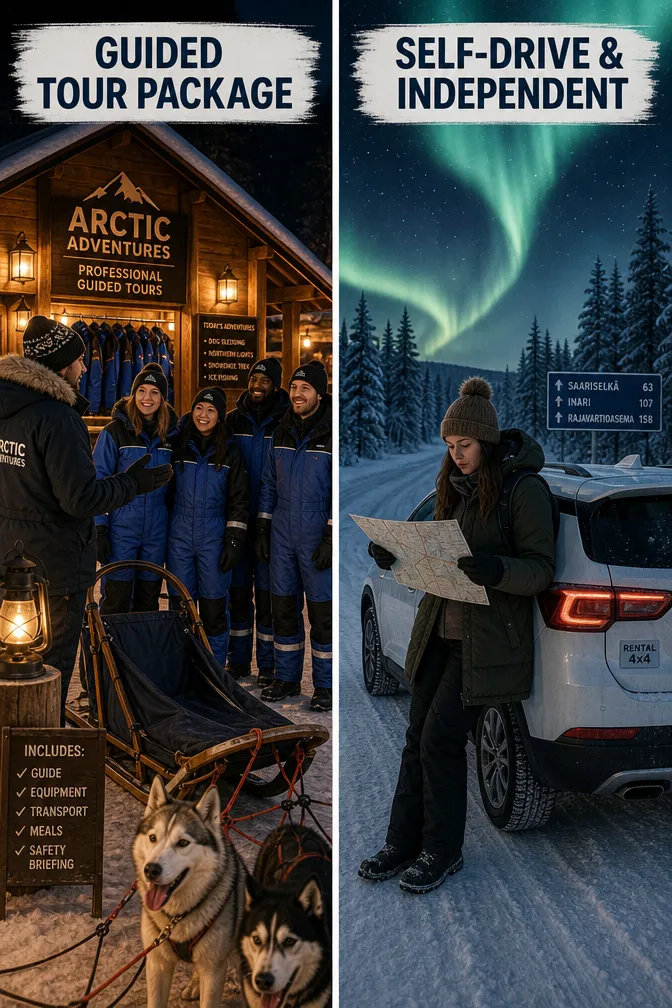
Guided packages typically include:
- Return flights or airport transfers
- Accommodation (often themed cabins or resort hotels)
- 3-5 pre-booked activities with equipment and guides
- Some meals
- Aurora wake-up calls from the hotel
Booking independently gives you:
- More flexibility on dates and pace
- Ability to mix budget and splurge accommodation
- Freedom to add or drop activities based on weather
- Potentially lower cost if you’re a confident planner
Choose a guided package if you’ve never traveled to a cold-weather destination before, you’re going with young kids, or you simply don’t want the planning stress.
Choose independent booking if you’re comfortable on icy roads, you want to explore beyond the standard tourist circuit, or you’re traveling as a couple or solo.
Renting a car in Lapland is straightforward – just ensure it has winter tyres (all rental cars do in Finland during winter) and you’re comfortable driving on snow.
Is Lapland Good for Families with Young Kids or Better for Adults
Lapland is genuinely excellent for families with young children – arguably one of the best family winter destinations in the world. The Santa Claus Village in Rovaniemi is purpose-built for kids, and activities like reindeer sledding, snowman building, and elf workshops are perfectly paced for little ones.
The main adjustment for families is evening scheduling. Aurora hunting typically happens between 10pm and 2am when activity peaks. With young kids, you’ll want accommodation that offers aurora alerts so you can step outside quickly rather than staying up all night.
Business Finland projects record visitor numbers this winter season, with many of those visitors being families. Book family-specific accommodation and activities early.
Best for families: Glass-roofed cabins (kids love watching aurora from bed), reindeer farms, Santa Claus Village, snowshoeing.
What Happens If the Weather Is Bad During Your Lapland Trip
Bad weather – meaning heavy cloud cover – is the main risk for aurora viewing, and it happens. Lapland weather is unpredictable, and a 5-day trip could theoretically see cloud every night.
What you can do:
- Stay flexible with your aurora nights – don’t pin everything on one evening.
- Drive or snowmobile to clearer areas – cloud cover is often patchy, and moving 30-50km can put you under clear skies.
- Use daytime activities as your backup – Lapland is stunning in daylight too. Snowshoeing, ice fishing, visiting a Sami cultural center, or taking a snowmobile tour through the wilderness are all worthwhile regardless of aurora.
- Check forecasts obsessively using the Finnish Meteorological Institute’s app (en.ilmatieteenlaitos.fi).
The honest truth: if you get zero aurora in 5 days due to weather, it’s disappointing but not a ruined trip. The Arctic landscape, the silence, the activities – they’re worth the journey on their own.
How Far Is Rovaniemi from the Arctic Circle and Is It Worth Visiting
Rovaniemi sits right on the Arctic Circle – the Santa Claus Village is literally built on the Arctic Circle line. You can walk across it, get an official certificate, and experience the symbolic crossing. It’s one of the few places in the world where the Arctic Circle is a tourist attraction in itself.
The city of Rovaniemi is also a proper, functioning Finnish city with good restaurants, museums (the Arktikum museum is excellent), and easy transport links including a major airport with direct flights from Helsinki, London, and several other European cities.
Is it worth visiting? Yes, absolutely – especially for first-timers. It’s the easiest entry point to a Lapland Finland itinerary and has enough to fill 2-3 days comfortably before you head deeper into the wilderness.
Can You See Northern Lights from Your Hotel Room in Lapland
You can – but only if you book the right accommodation. Standard hotel rooms face walls, corridors, or car parks. Glass igloos, aurora cabins, and sky-view suites are specifically designed with transparent roofs or floor-to-ceiling windows facing north, so you can watch the aurora from your bed.
These units are the most in-demand in all of Lapland and sell out 6+ months ahead. Lapland Hotels has expanded its aurora-view accommodation options, and Levi ski resort has announced a €60 million investment plan that includes new wilderness accommodation. Book as early as possible.
If you can’t get a glass igloo: Book a cabin with a sauna and large windows, and ask the hotel for aurora wake-up calls. Most Lapland accommodations offer this service.
FAQ
When should I book a Lapland trip for winter 2026-27?
Book now. The best glass igloos and aurora cabins for December 2026 and January 2027 are already filling up. Aim to book at least 4-6 months ahead for peak dates.
What’s the best base for a 5-day Lapland itinerary?
Rovaniemi is the easiest base for first-timers due to its airport, infrastructure, and proximity to the Arctic Circle. Adding one or two nights in Levi or a remote wilderness cabin improves your aurora odds significantly.
Do I need travel insurance for Lapland?
Yes – and make sure it covers winter sports and extreme cold activities like snowmobiling and husky sledding. Standard travel insurance often excludes these.
Is Finnish Lapland the same as Swedish or Norwegian Lapland?
No – Lapland is a region that spans Finland, Sweden, Norway, and Russia. Finnish Lapland (with Rovaniemi as its capital) is the most developed for tourism and easiest to access from most of Europe.
What language do people speak in Lapland?
Finnish is the main language, but English is widely spoken in tourist areas. Some areas also have Sami-speaking communities.
Can I drive myself in Lapland without experience on snow?
Yes, but take it slow. All rental cars have winter tyres, roads are gritted, and speed limits are low. If you’ve never driven on snow, practice in a car park first and allow extra travel time.
What’s the best activity for a first-timer who can only pick one?
A husky safari. It combines the Arctic landscape, speed, and a genuine wilderness experience in a way that nothing else quite matches.
Is Rovaniemi’s Santa Claus Village worth it for adults without kids?
It’s cheesy but fun for an hour or two. The Arctic Circle crossing ceremony and the Arktikum museum are the highlights for adults. Don’t spend a full day there without kids.
How do I get from Helsinki to Rovaniemi?
Fly – it takes about 1.5 hours. Finnair and Norwegian both operate this route. There’s also an overnight train from Helsinki, which takes about 12 hours and is a scenic option if you have the time.
What’s the coldest it gets in Lapland in January?
Temperatures regularly hit -20°C to -30°C in January, with occasional drops to -40°C in extreme cold snaps. Wind chill can make it feel colder. Dress in proper layers and you’ll be fine.
Conclusion
A well-planned Lapland Finland itinerary delivers one of the most memorable travel experiences on earth. Five days is enough – if you book early, choose the right accommodation, and go in with realistic expectations about the aurora.
Your next steps:
- Pick your travel window – January or February for best aurora odds.
- Book flights to Rovaniemi as early as possible (check where to find cheap flights for the best deals).
- Secure a glass igloo or aurora cabin – these go first.
- Pre-book 2-3 core activities (husky safari, reindeer farm, snowmobile tour).
- Download nlalert.fi for real-time aurora alerts.
- Sort your gear – rent thermal suits locally or invest in proper layers.
If you’re building a bigger European adventure around your Lapland trip, our Edinburgh 4-day dream Scotland itinerary pairs beautifully as a pre- or post-trip stop. For a complete contrast after the Arctic cold, the 7-day South of France itinerary for first-timers is a perfect warm-weather follow-up.
Lapland rewards the people who plan ahead and go in ready for the cold. Do that, and the Arctic will absolutely deliver.