Last updated: September 14, 2026
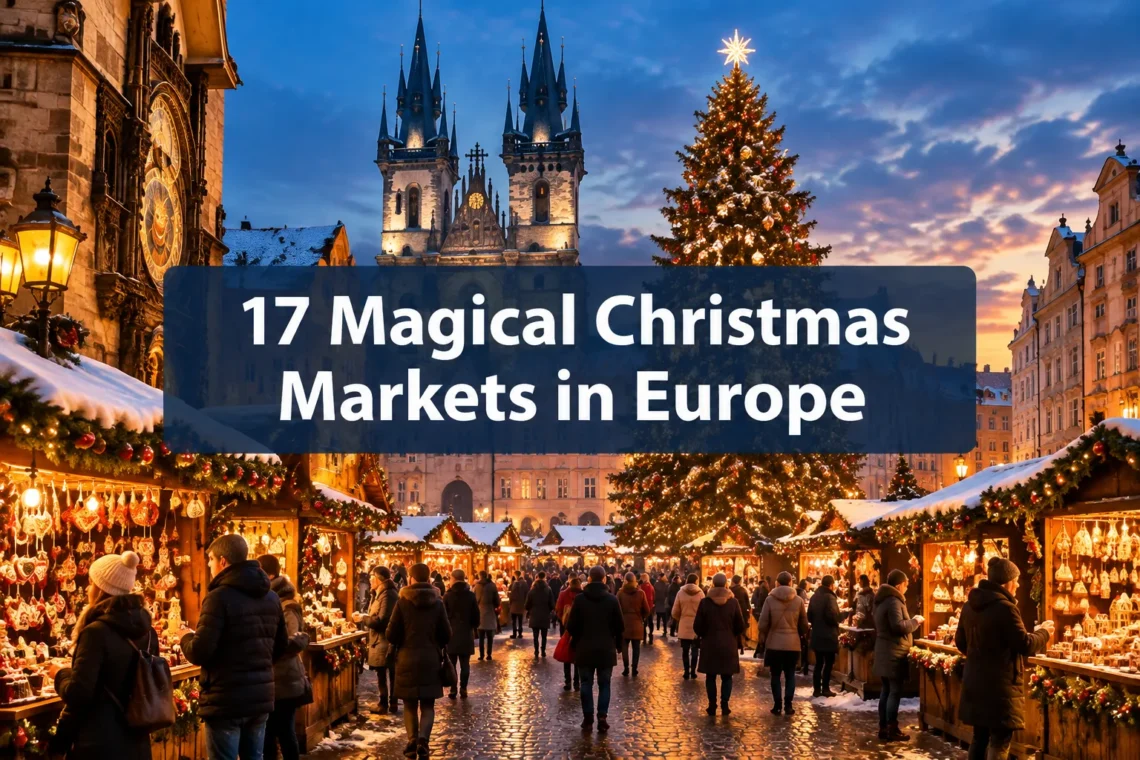
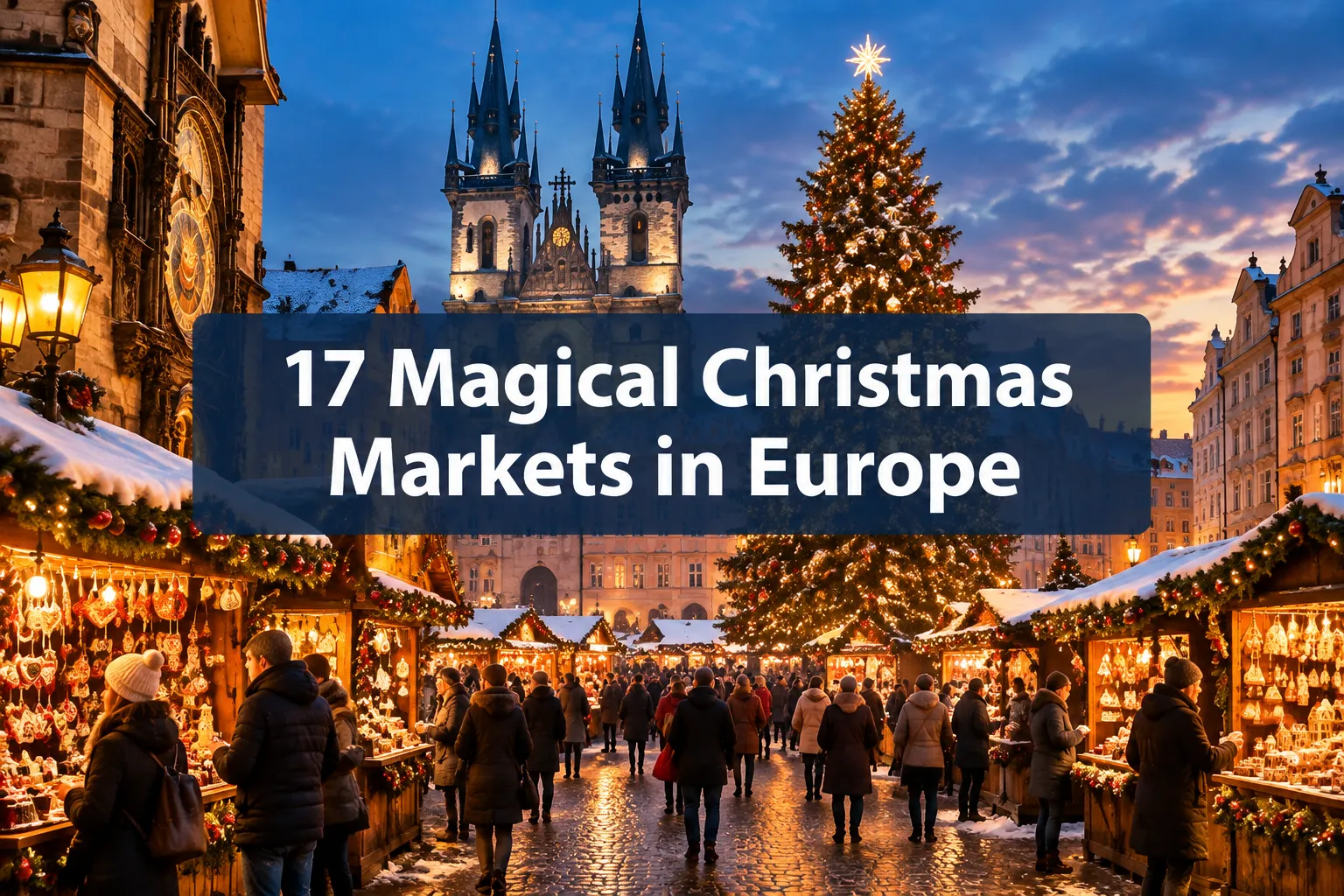
Quick Answer: The best Christmas markets in Europe run from mid-November through early January, with top picks including Nuremberg, Vienna, Strasbourg, Prague, and Budapest. These markets offer a mix of great food, festive drinks, unique shopping, and storybook vibes that no mall or online store can replicate. Whether you want a budget trip or a luxury tour, there is a Christmas market in Europe perfectly suited to your travel style.
Key Takeaways
- 🎄 Europe hosts hundreds of Christmas markets each December, with the most magical ones concentrated in Germany, Austria, France, Switzerland, and Czechia
- 📅 Most major markets open around November 27, 2026, with some like Vienna and Copenhagen starting as early as mid-November
- 💶 Budget travelers can visit markets in Bratislava, Tallinn, and Krakow for far less than in Vienna or Zurich
- 🍷 Glühwein (mulled wine), Lebkuchen, roasted sausages, and bredele cookies are the must-try foods and drinks at European Christmas markets
- 🎡 Many markets now run past Christmas Day – Prague, Tallinn, and Brussels all extend into early January 2027
- 👨👩👧 Family-friendly markets with carousels, ice skating, and children’s workshops include Nuremberg, Vienna, and Colmar
- 🚂 Trains are the best way to hop between multiple Christmas markets in Europe – Eurail passes cover most major routes
- 🏨 Book accommodation at least 2-3 months ahead for peak weekends in late November and mid-December
What Are the Best Christmas Markets in Europe Right Now?
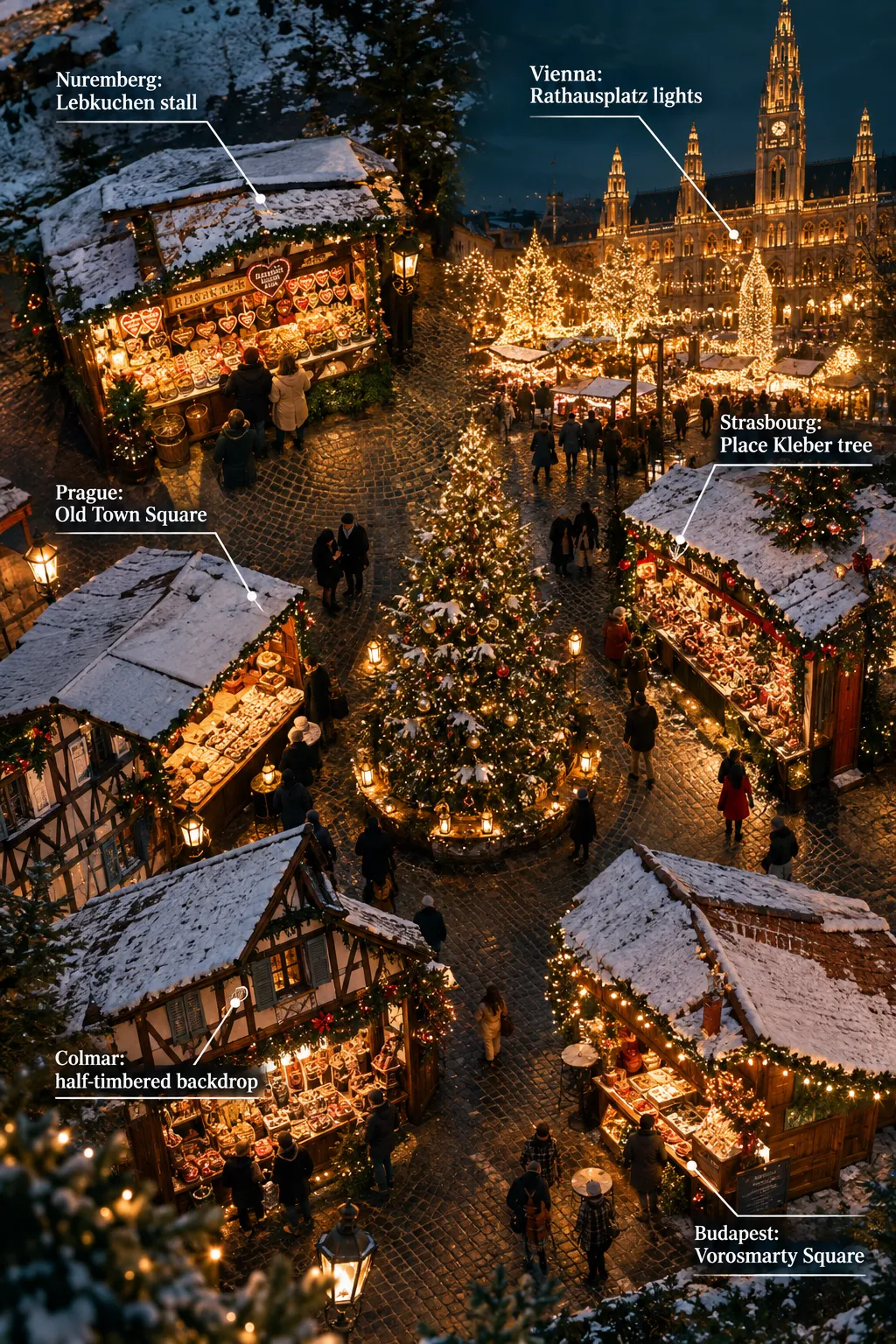
The best Christmas markets in Europe in 2026 are Nuremberg, Strasbourg, Vienna, Prague, Budapest, Colmar, Bruges, Tallinn, Salzburg, and Krakow. These markets consistently top reviewed lists for their atmosphere, food, drinks, and shopping. Each one offers a distinct theme and design rooted in local culture and Advent tradition.
Here is a quick-reference guide to the top 17 markets:
| Market | City | Country | Opens | Closes |
|---|---|---|---|---|
| Christkindlesmarkt | Nuremberg | Germany | Nov 27 | Dec 24 |
| Marché de Noël | Strasbourg | France | Late Nov | Dec 31 |
| Rathausplatz Market | Vienna | Austria | Nov 13 | Dec 26 |
| Old Town Square | Prague | Czechia | Nov 28 | Jan 6 |
| Vörösmarty Square | Budapest | Hungary | Mid-Nov | Jan 1 |
| Old Town Markets | Colmar | France | Nov 23 | Jan 3 |
| Winter Wonders | Brussels | Belgium | Nov 27 | Jan 3 |
| Winter Glow | Bruges | Belgium | Late Nov | Jan 3 |
| Christkindlmarkt | Salzburg | Austria | Late Nov | Jan 1 |
| Striezelmarkt | Dresden | Germany | Nov 25 | Dec 24 |
| Main Square Market | Krakow | Poland | Late Nov | Jan 6 |
| Old Town Market | Tallinn | Estonia | Late Nov | Jan 6 |
| Winter Festival | Edinburgh | Scotland | Late Nov | Jan 3 |
| Hyde Park Winter Wonderland | London | England | Mid-Nov | Jan 5 |
| Tivoli Gardens | Copenhagen | Denmark | Nov 14 | Jan 5 |
| Old Town Market | Bratislava | Slovakia | Late Nov | Jan 6 |
| Hauptbahnhof Market | Zurich | Switzerland | Late Nov | Dec 24 |
According to the Europe Christmas Markets 2026 budget guide, only seven of these markets had fully confirmed dates posted by July 2026 – Nuremberg, Dresden, Vienna Rathausplatz, Brussels Winter Wonders, Cologne’s cathedral market, Colmar, and Prague Old Town Square. Book early if you are targeting any of these.
Planning a broader Central Europe trip around these markets? Our 1-month Central Europe itinerary with 9 stops pairs very well with a Christmas market tour.
When Do European Christmas Markets Open and Close?
Most major Christmas markets in Europe open on or just before the fourth Friday of November – which falls on November 27 in 2026. Some high-profile markets open earlier: Vienna’s Rathausplatz market starts November 13, Copenhagen’s Tivoli opens around November 14, and Budapest’s Vörösmarty Square fair begins in mid-November.
According to Eurotripfinder’s 2026 guide, the first Sunday of Advent falls on November 29, 2026. Most special programming – light switch-on ceremonies, Advent concerts, and themed weekends – clusters around the four Advent Sundays.
Key closing dates to know for 2026-2027:
- Nuremberg and Dresden: December 24 (Christmas Eve)
- Vienna Rathausplatz: December 26
- Salzburg Christkindlmarkt: January 1, 2027
- Brussels Winter Wonders: January 3, 2027
- Bruges Winter Glow: January 3, 2027
- Edinburgh Winter Festival: January 3, 2027
- Prague Old Town Square: January 6, 2027
- Tallinn Old Town Market: January 6, 2027
This means if you travel in late December or early January, you still have great options. Prague, Tallinn, and Brussels are especially good for New Year market trips.
How Much Does It Cost to Visit Christmas Markets in Europe?
Visiting Christmas markets in Europe is surprisingly flexible on budget. Entry to most markets is free – you pay only for food, drinks, and shopping. A typical day out at a major market costs between €20 and €60 per person, depending on how much you eat, drink, and buy.
Here is a rough cost breakdown for a 3-night Christmas market trip:
- Budget tier (Bratislava, Krakow, Tallinn): €150-€250 total including accommodation
- Mid-range tier (Prague, Budapest, Bruges): €300-€500 total
- Premium tier (Vienna, Nuremberg, Zurich): €500-€900+ total
The European Christmas Markets 2026 guide from CityVoyagerHub notes that Germany, Austria, France, Switzerland, and Czechia host the most atmospheric markets, but Switzerland and Austria tend to have the highest food and accommodation prices.
Tips to keep costs low:
- Visit on weekdays – prices at stalls don’t change, but accommodation is cheaper
- Bring cash – many smaller stalls don’t accept cards
- Eat at market stalls rather than sit-down restaurants for a more authentic and affordable experience
- Look for markets in smaller towns like Bratislava or Colmar instead of Zurich or Paris
Which Christmas Markets in Europe Have the Best Food and Drinks?
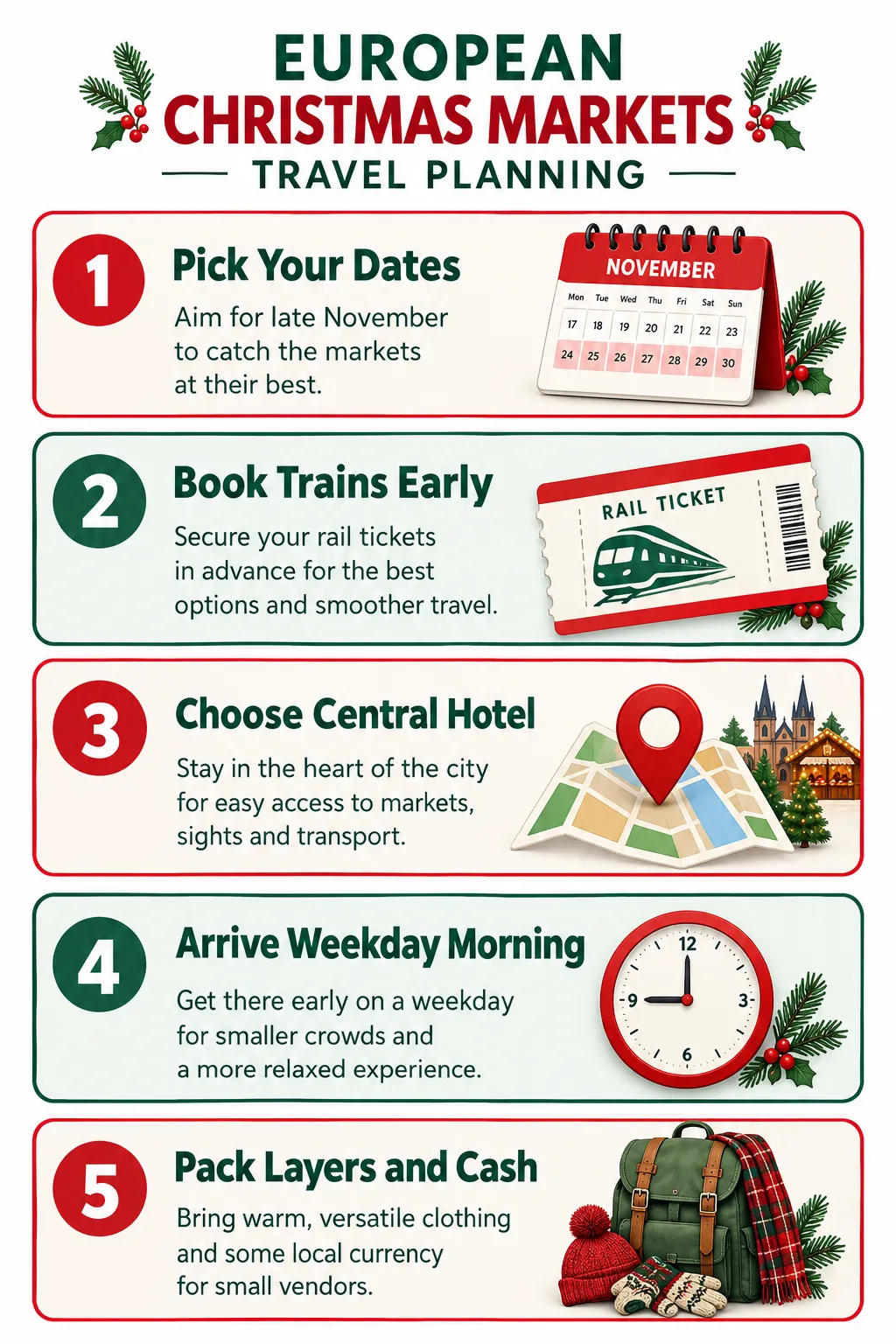
The food and drinks at European Christmas markets are a huge part of the experience, and the best markets for eating and drinking are Strasbourg, Nuremberg, Vienna, and Colmar. Each city has its own regional specialties that you simply can’t find anywhere else, and the theme and design of each market often reflects its local food culture.
Top food and drinks by city:
- Nuremberg, Germany: Nuremberger Rostbratwurst (tiny grilled sausages), Lebkuchen gingerbread, Glühwein
- Strasbourg, France: Bredele cookies, tarte flambée, vin chaud (French mulled wine), foie gras
- Vienna, Austria: Kaiserschmarrn (shredded pancake), Punsch (hot punch), Strudel, roasted chestnuts
- Colmar, France: Gourmet Alsatian food, Munster cheese, Baeckeoffe stew, local wine
- Budapest, Hungary: Kürtőskalács (chimney cake), lángos (fried dough), pálinka (fruit brandy)
- Prague, Czechia: Trdelník pastry, svíčková (beef in cream sauce), hot mead, Czech beer
The entertainment and activities at these markets also revolve around food culture – cooking demonstrations, wine tastings, and artisan food workshops are common. The atmosphere and food together create vibes that are hard to match anywhere else in the world.
For more European food travel inspiration, check out our hidden gems in Italy guide or the Piedmont Italy itinerary for a great food-focused European trip.
Christmas Markets in Europe vs. North America – Which Is Better for a Trip?
European Christmas markets win on atmosphere, authenticity, and variety – but North American markets are improving fast and are far easier to reach for US and Canadian travelers. If you want full guide-level immersion in Advent traditions, medieval architecture, and regional food, Europe is the clear choice. If you want a great market experience without the transatlantic flight, North America has very good options.
Europe advantages:
- Centuries-old traditions dating back to the 1300s in cities like Vienna and Nuremberg
- Real medieval town squares and Gothic architecture as backdrops
- Regional food and drinks you can’t get elsewhere
- Many markets within a short train ride of each other
North America advantages:
- No jet lag or expensive transatlantic flights
- Growing number of reviewed and highly rated markets in cities like New York, Chicago, and Montreal
- Great for families who want a shorter trip
If you’re based in the US and want to explore closer options, our guide to New York City at Christmas time covers 17 moments tourists miss. For the best Christmas towns closer to home, see our 15 best Christmas towns on the East Coast.
Where to Stay and How to Get Around Multiple Christmas Markets in Europe
The best strategy for visiting multiple Christmas markets in Europe is to base yourself in a central city and take day trips by train. Cities like Frankfurt, Vienna, Prague, and Cologne are excellent hubs because they sit within 1-3 hours of several other major markets by rail.
Best hub cities for a multi-market tour:
- Frankfurt, Germany: Day trips to Nuremberg (2h), Cologne (1h), Heidelberg (1h), Strasbourg (1.5h)
- Vienna, Austria: Day trips to Salzburg (2.5h), Budapest (2.5h), Bratislava (1h), Prague (4h)
- Prague, Czechia: Day trips to Dresden (2h), Bratislava (4h), Krakow (5h)
Accommodation tips:
- Book hotels at least 2-3 months ahead for peak weekends (last weekend of November, second and third weekends of December)
- Look for apartments or guesthouses just outside the old town – they’re cheaper and you’re still very close to the markets
- For Vienna, the 1st and 7th districts put you within walking distance of the main markets
For affordable Paris stays if you’re routing through France, our best affordable hotels in Paris guide has great picks.
How to get to Strasbourg from Paris:
The Strasbourg Christmas market is one of the most reviewed and most visited in all of Europe. From Paris Gare de l’Est, the TGV train takes just 1 hour 47 minutes and runs multiple times daily. Book tickets on the SNCF website at least 3-4 weeks ahead for the best fares. YesGetaways confirms Strasbourg as one of the earliest markets to open, making it a great first stop on a France-Germany market tour.
Best Time to Visit Christmas Markets in Europe to Avoid Crowds
The best time to visit Christmas markets in Europe with fewer crowds is on weekday mornings during the first two weeks of December. Weekends in late November and the second and third weekends of December are the busiest times, especially at top-rated markets like Nuremberg, Vienna, and Strasbourg.
Crowd calendar for European Christmas markets:
- Early November to Nov 26: Very quiet – only a handful of markets are open
- Nov 27 – Dec 5 (weekdays): Low to moderate crowds – great for a relaxed first trip
- First two weekends of December: Busy, especially at German and Austrian markets
- Dec 10-17 (weekdays): Moderate – good balance of atmosphere and space
- Dec 18-24: Very busy everywhere – peak shopping and last-minute visitors
- Dec 25 – Jan 6: Quiet again at markets that stay open – perfect for a peaceful late trip
Markets like Tallinn, Bratislava, and Bucharest tend to be less crowded than Vienna or Nuremberg even on peak weekends. The 48 Hours in Europe guide to Christmas markets highlights these smaller city markets as offering comparable charm with more space to enjoy the vibes.
What Should You Buy at European Christmas Markets?
European Christmas markets are some of the best places in the world for unique, handmade shopping and souvenirs. The best things to buy are items you simply can’t find in regular shops – hand-carved wooden ornaments, locally made ceramics, artisan jewelry, and regional food products.
Top shopping picks by market:
- Nuremberg: Hand-carved wooden Christmas ornaments, Zwetschgenmännle (plum-figure dolls), Lebkuchen tins
- Vienna: Blown-glass ornaments, Advent calendars, Austrian crystal
- Strasbourg: Bredele cookie tins, Alsatian pottery, Christmas decorations
- Tallinn: Wool knitwear, amber jewelry, hand-painted wooden items
- Budapest: Embroidered textiles, paprika sets, Hungarian pottery
- Prague: Bohemian crystal, marionettes, hand-painted eggs
Shopping tips:
- Bring a foldable tote bag – plastic bags are rarely provided
- Buy food items early in your trip so they don’t weigh you down the whole tour
- Ask stall holders if items are handmade locally – many markets have rules about authentic crafts vs. mass-produced goods
- Keep receipts for VAT refund if you’re traveling from outside the EU
Are European Christmas Markets Worth the Trip?
Yes – European Christmas markets are absolutely worth the trip, especially if you love history, food, festive atmosphere, and unique shopping. The combination of medieval architecture, warm glowing lights, regional food and drinks, and genuine Advent tradition creates vibes that are very hard to replicate anywhere else in the world.
That said, they’re not for everyone. If you hate crowds, cold weather, or spending money at stalls, the experience can feel overwhelming. Here’s a quick guide to help you decide:
Go if you:
- Love food, drinks, and local culture
- Enjoy walking around historic old towns
- Want a festive trip with great photo opportunities
- Are traveling as a couple, family, or small group
Skip if you:
- Hate cold weather and crowds
- Are on a very tight budget and can’t resist impulse shopping
- Prefer beach or warm-weather travel in December
For families specifically, markets like Vienna, Nuremberg, and Colmar offer dedicated children’s areas with carousels, ice skating, and craft workshops. Our 15 best Christmas getaways for families in 2026 covers more options for family-friendly festive travel.
Common Mistakes People Make at European Christmas Markets
The most common mistake at European Christmas markets is arriving on a peak weekend without booking accommodation in advance. The second biggest mistake is trying to visit too many markets in too few days, leaving no time to actually enjoy the vibes and atmosphere of each one.
Mistakes to avoid:
- Forgetting cash – Many stalls are cash-only, especially for food and drinks
- Wearing the wrong shoes – Cobblestone streets get icy and slippery; wear waterproof boots
- Skipping weekday visits – Weekends are very crowded; even one weekday visit makes a big difference
- Ignoring smaller markets – The main markets in big cities are great, but smaller neighborhood markets often have better food and fewer tourists
- Not keeping the Glühwein mug deposit – Most markets charge a €2-€3 deposit on the ceramic mug; you can keep it as a souvenir or return it for the deposit back
- Overpacking your itinerary – Two or three markets per trip is ideal; five or more in a week becomes exhausting
- Booking the wrong dates – Check whether your target market is open on the exact days you plan to visit, as some close on December 24 while others run to January 6
Christmas Markets in Europe Dates is a useful resource for checking exact open and close dates before you book flights.
Family-Friendly Christmas Markets in Europe – Best Options for Kids
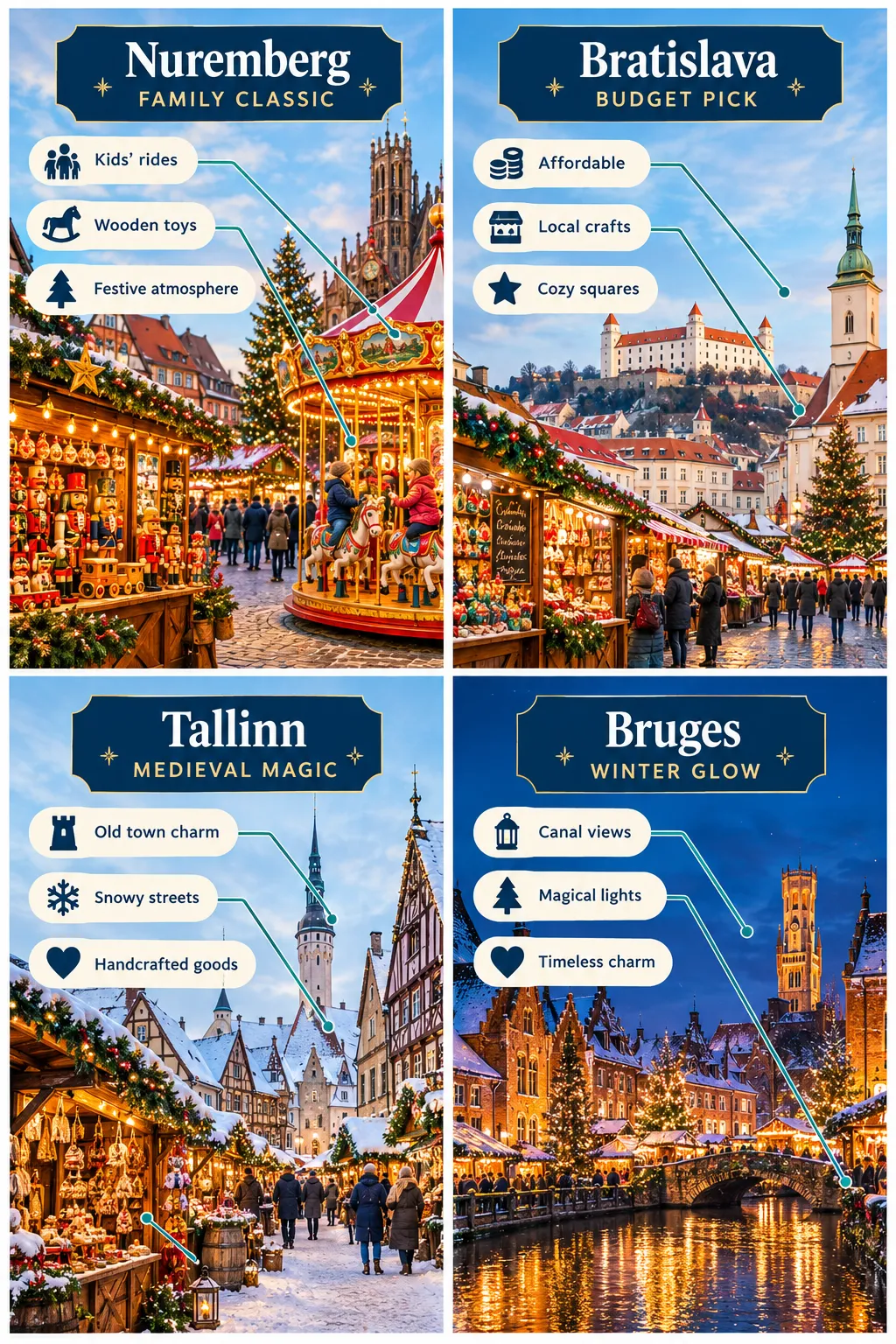
The best family-friendly Christmas markets in Europe are Vienna’s Rathausplatz, Nuremberg’s Christkindlesmarkt, Colmar’s Old Town markets, and Copenhagen’s Tivoli Gardens. These markets offer dedicated children’s entertainment and activities, including carousels, ice skating rinks, puppet shows, and craft workshops alongside the shopping and food stalls.
Top picks for families:
- Vienna: The Rathausplatz market has a large ice skating path that winds through the market – kids absolutely love it
- Nuremberg: Known as the “Children’s Christmas” market with a separate Kinderweihnacht area featuring rides and workshops
- Copenhagen Tivoli: One of the most reviewed family markets in all of Europe, with rides, pantomime theater, and a very magical atmosphere
- Colmar: Small enough to navigate easily with kids, with beautiful half-timbered streets and gentle vibes
- Bruges: The Winter Glow festival adds light installations that children find very exciting
The entertainment and activities at family-focused markets are designed to keep kids engaged for a full day. Most also have warm indoor spaces nearby for breaks.
FAQ: Christmas Markets in Europe
Where is the best Christmas market in Europe?
The best Christmas market in Europe is widely considered to be Nuremberg’s Christkindlesmarkt in Germany, which has been running since the 1600s and is reviewed as the gold standard for authenticity and atmosphere. Vienna’s Rathausplatz market and Strasbourg’s Marché de Noël are very close rivals, each offering a distinct theme, great food and drinks, and exceptional festive vibes.
What is the most Christmassy place in Europe?
Strasbourg, France, is often called the “Capital of Christmas” and is considered the most Christmassy place in Europe. The city has been hosting its Marché de Noël since 1570, and the giant illuminated Christmas tree on Place Kléber, combined with the half-timbered Alsatian architecture and the smell of bredele cookies and vin chaud, creates an atmosphere that feels like stepping into a Christmas card.
What are the top 10 Christmas markets?
The top 10 Christmas markets in Europe, based on consistently reviewed rankings and visitor ratings, are: Nuremberg (Germany), Strasbourg (France), Vienna (Austria), Prague (Czechia), Budapest (Hungary), Colmar (France), Bruges (Belgium), Tallinn (Estonia), Salzburg (Austria), and Copenhagen’s Tivoli (Denmark). Each market offers a unique theme, regional food and drinks, and a distinct festive atmosphere worth the trip.
Where are the best Christmas markets in Europe in 2026?
The best Christmas markets in Europe in 2026 include confirmed events in Nuremberg (Nov 27-Dec 24), Vienna Rathausplatz (Nov 13-Dec 26), Dresden (Nov 25-Dec 24), Brussels Winter Wonders (Nov 27-Jan 3), and Prague Old Town Square (Nov 28-Jan 6). According to the 2026 European Christmas Markets guide, markets in Germany, Austria, France, Switzerland, and Czechia remain the top tier for atmosphere, authenticity, and overall travel experience.
Conclusion: Plan Your Christmas Market Trip to Europe in 2026
Europe’s Christmas markets are genuinely one of the great travel experiences on the planet. Whether you’re sipping Glühwein in Vienna, browsing wooden ornaments in Nuremberg, or wandering the candlelit streets of Colmar, the combination of great food, festive drinks, unique shopping, and storybook vibes is hard to beat.
Your next steps:
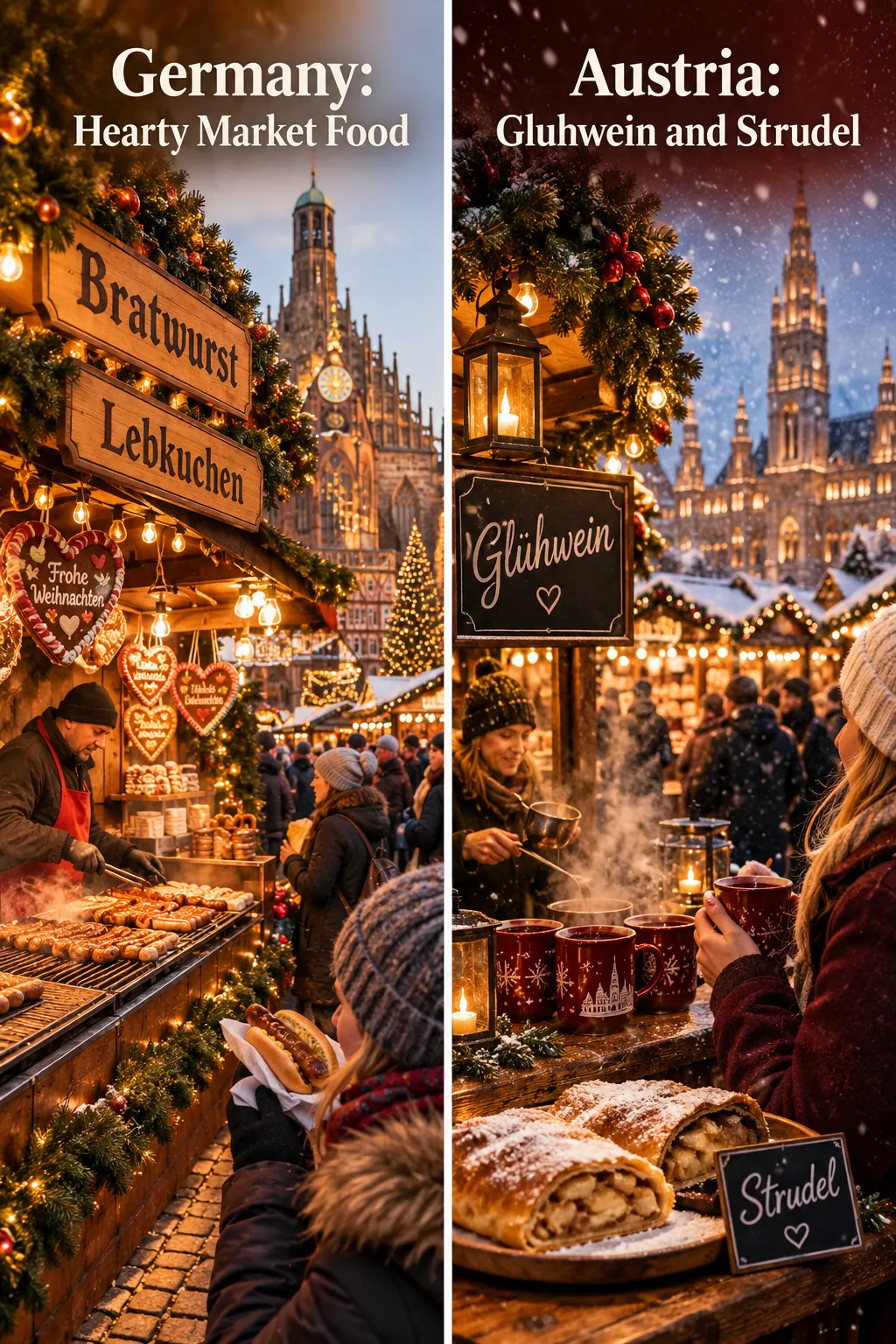
- Pick 2-3 markets that match your travel style and budget – don’t try to do them all in one trip
- Book accommodation now – peak weekends in December fill up very fast, especially in Vienna, Nuremberg, and Strasbourg
- Check official market dates before booking flights – use the city-by-city Christmas market opening guide to confirm exact dates
- Plan your train routes – Eurail or point-to-point tickets booked early save a lot of money
- Pack for cold and cobblestones – waterproof boots, layers, and a reusable bag for shopping
Whether it’s your first trip or your tenth, a Christmas market tour through Europe never gets old. The markets reviewed here represent the very best of what the continent has to offer during the festive season. Go explore – there’s magic waiting in every square.