Last updated: May 30, 2026
Quick Answer: The Isle of Skye Scotland is a rugged, 50-mile-long island off Scotland’s northwest coast, accessible by bridge from the mainland since 1995. It draws travelers with dramatic landscapes, Gaelic culture, and world-class hiking. Most visitors spend three to five days exploring by car, with summer (June to August) offering the longest daylight hours and the most reliable road access.
Key Takeaways
- The Isle of Skye Scotland attracted approximately 650,000 visitors in 2018, contributing £211 million to the local economy [3]
- A car is essential — public transport on Skye is limited, especially on weekends and in winter [7]
- Summer brings crowds and higher prices; May and September offer a better balance of weather and quieter roads
- Portree is the main town and the best base for most travelers; Broadford suits those exploring the south
- The Cuillin mountains, Fairy Pools, Old Man of Storr, and Quiraing are the four must-see landscapes
- Budget roughly £80 to £150 per person per night for mid-range accommodation in peak season
- Skye is safe for solo travelers, including solo women, though remote hiking requires proper preparation
- Gaelic language and traditional music remain central to island life — seek out local sessions for an authentic experience
What Makes the Isle of Skye So Special Compared to Other Scottish Islands
The Isle of Skye Scotland stands apart from every other Scottish island because it combines extreme geological diversity with genuine cultural depth and practical accessibility. You get black volcanic peaks, white sand beaches, ancient brochs, and a living Gaelic tradition — all within a 50-mile drive.
Other Scottish islands like Mull or Islay offer charm and wildlife, but Skye’s scale is different. The Cuillin mountain range is the most technically challenging in the British Isles. The Trotternish Peninsula’s landslip scenery — the Quiraing and the Old Man of Storr — exists nowhere else in Europe. And unlike the more remote islands, Skye is reachable by car across the Skye Bridge from Kyle of Lochalsh, which has made it Scotland’s most-visited island destination [3].
The island has been inhabited since prehistoric times, hosting Celtic tribes, Norse Vikings, and Gaelic clans in succession [5]. That layered history shows up in the place names, the castles, and the music you’ll hear in Portree pubs on a Friday night.
How Do I Get to the Isle of Skye from Edinburgh
Getting from Edinburgh to the Isle of Skye Scotland takes roughly three to four hours by car, making it a very doable day’s drive. The most common route runs via the A9 north through Pitlochry and Inverness, then west along the A87 to the Skye Bridge at Kyle of Lochalsh. There is no toll on the bridge.
By car: This is by far the most practical option. You can also take the scenic route through Glencoe and Fort William if you want to add a day.
By train and bus: ScotRail runs from Edinburgh to Inverness, and from Inverness to Kyle of Lochalsh. From there, buses cross the bridge to Portree. Journey time is around six to eight hours total, and connections can be infrequent [7].
By bus: CityLink operates direct coaches from Glasgow and Inverness to Portree, but services are limited in frequency.
Key decision rule: If you plan to explore beyond Portree, rent a car. Public transport on Skye itself is sparse, particularly on Sundays and during winter months [7]. If you’re starting your Scotland trip in Edinburgh, our Edinburgh 4-day itinerary is a useful starting point before heading north.
Can You Drive Around the Isle of Skye in One Day
You can cover the main highlights in one very long day, but you’ll feel rushed and miss most of what makes Skye worth visiting. A single day is only realistic if you’re driving from a nearby base like Inverness and have no plans to hike.
A more honest assessment: three days is the minimum to see Skye properly, and five days lets you breathe.
One-day route (if you must):
- Cross the Skye Bridge and stop at Eilean Donan Castle just before (worth 45 minutes)
- Drive to Sligachan for Cuillin views
- Head to the Fairy Pools at Glen Brittle (one hour walk)
- Drive north to Portree for lunch
- Continue to the Old Man of Storr (one hour walk)
- Return via Kilt Rock and Mealt Falls
Three-day recommended split:
- Day 1: Portree, Trotternish Peninsula (Storr, Quiraing, Kilt Rock)
- Day 2: Cuillin, Fairy Pools, Neist Point Lighthouse
- Day 3: Sleat Peninsula, Armadale Castle, Eilean Donan
Note: A £1.9 million road improvement project for the Portree Link Road was awarded in late 2025 and is expected to ease town-center congestion by autumn 2026 [1]. Expect some traffic disruption near Portree during construction.
What Are the Must-See Landscapes and Photography Spots on the Isle of Skye Scotland
The Isle of Skye Scotland has four landscapes that belong on every itinerary. Each one photographs differently depending on light and season.
The Old Man of Storr
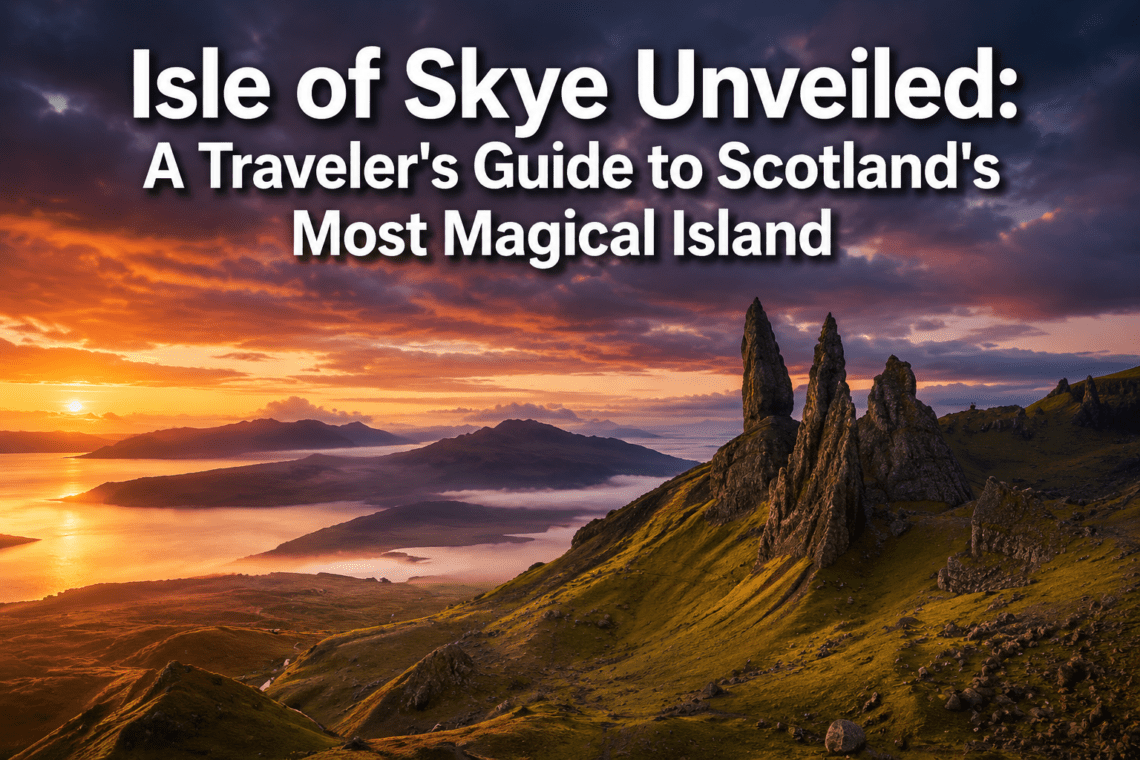
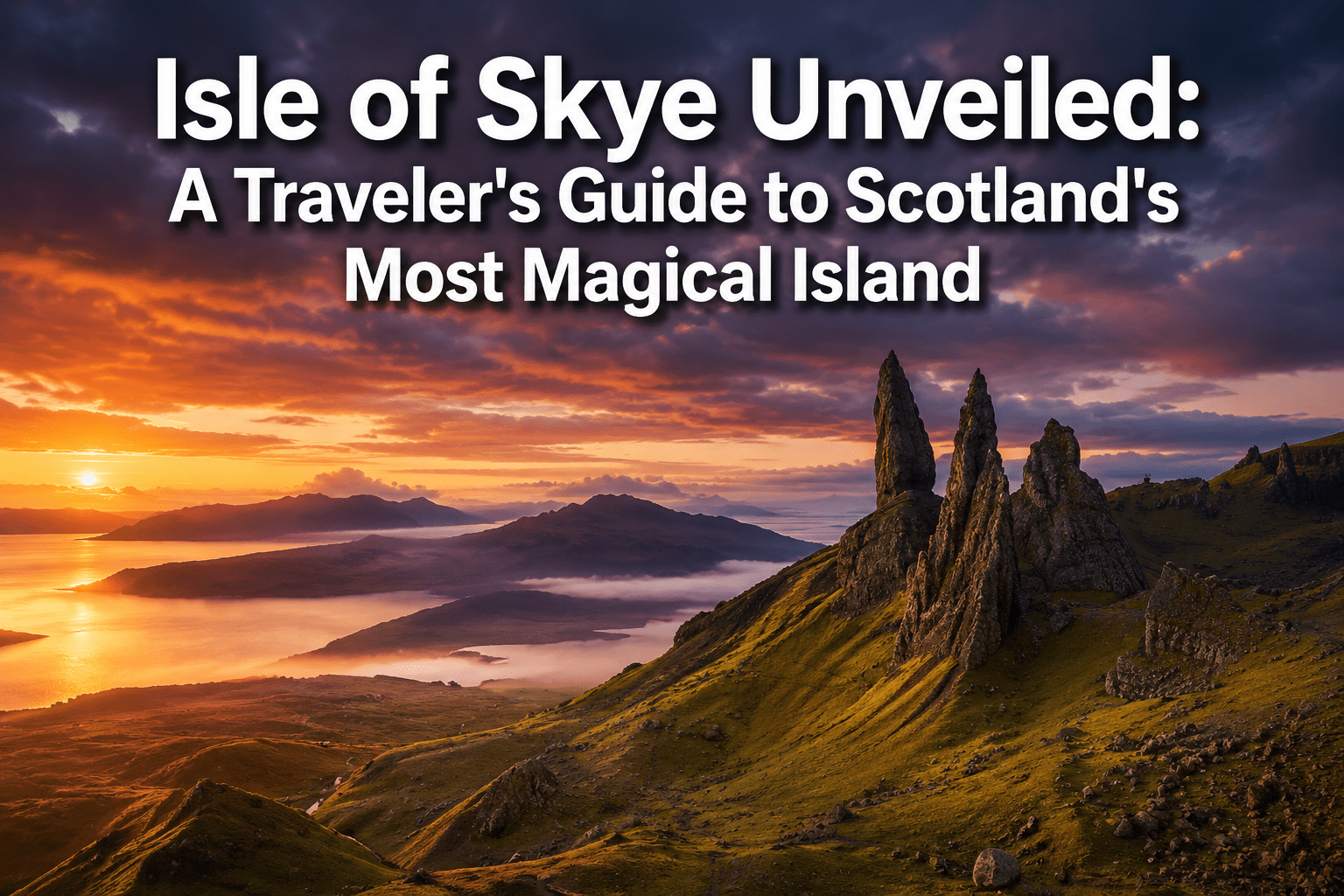
A 55-meter basalt pinnacle rising above Loch Leathan on the Trotternish Peninsula. The hike from the car park takes about 45 to 60 minutes. Best photographed at sunrise or in misty conditions when clouds wrap around the rock. The car park fills fast in summer — arrive before 8am.
The Quiraing
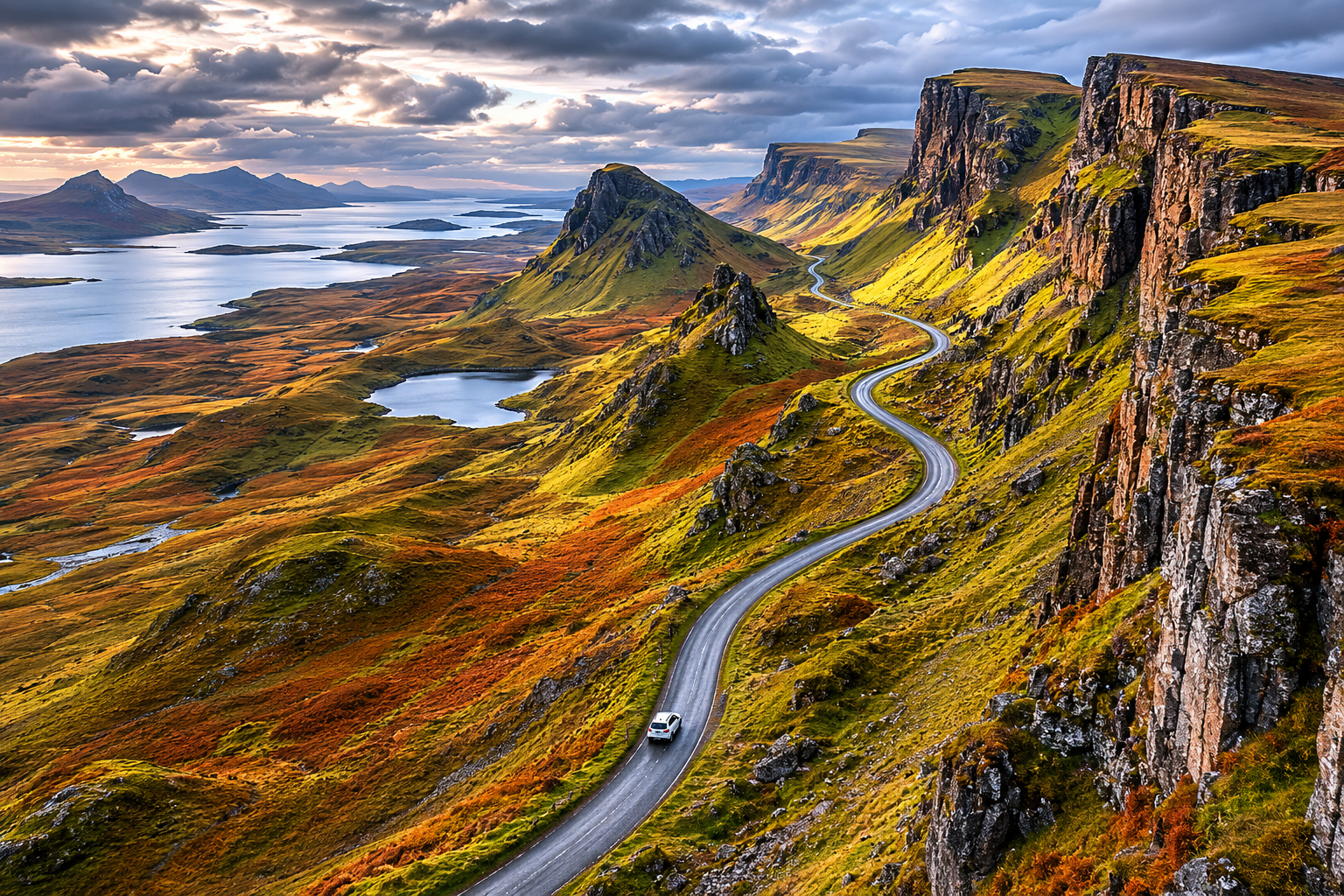
A massive landslip on the northeast edge of the Trotternish ridge, producing a landscape of tilted plateaus, hidden meadows, and sheer cliffs. The circular walk takes two to three hours. This is arguably Skye’s most dramatic scenery, and it’s less crowded than the Storr.
The Fairy Pools
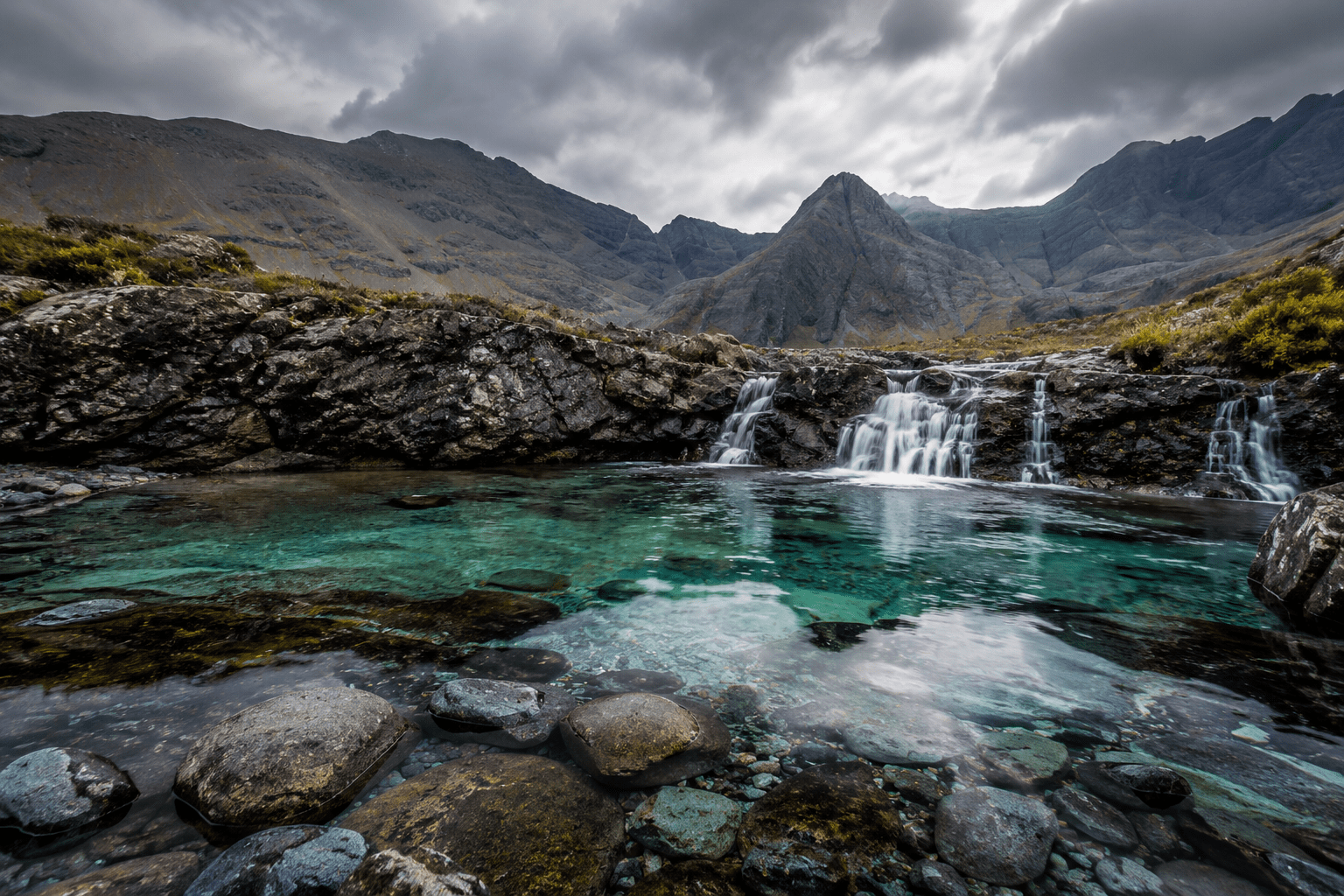
A series of clear, blue-green pools fed by waterfalls at the foot of the Black Cuillin near Glen Brittle. The one-mile walk is easy and family-friendly. The water is cold year-round (around 8 to 12 degrees Celsius), but wild swimmers do take the plunge.
Neist Point Lighthouse
Scotland’s most westerly point on Skye. The walk out to the lighthouse takes about 20 minutes and rewards with Atlantic ocean views and frequent sightings of dolphins, minke whales, and basking sharks in summer.
Other standouts:
- Kilt Rock: A sea cliff with vertical basalt columns resembling a pleated kilt, with a waterfall dropping into the sea
- Dunvegan Castle: Scotland’s oldest continuously inhabited castle, home of the MacLeod clan
- Elgol: A small village with the best ground-level views of the Black Cuillin across Loch Scavaig
Best Time of Year to Visit the Isle of Skye for Hiking and Photography
May and September are the best months to visit the Isle of Skye for hiking and photography. They offer longer daylight hours, lower visitor numbers than peak summer, and reasonable weather without the midwinter darkness.
Month-by-month breakdown:
| Month | Daylight Hours | Crowds | Midges | Notes |
|---|---|---|---|---|
| Jan–Feb | 7–9 hrs | Very low | None | Snow possible on Cuillin; dramatic but cold |
| Mar–Apr | 12–14 hrs | Low | Minimal | Unpredictable weather; good for photography |
| May | 16+ hrs | Moderate | Starting | Best balance of light, weather, and crowd levels |
| Jun–Aug | 17–18 hrs | High | Peak | Warmest; midges worst; book months ahead |
| Sep | 13–15 hrs | Moderate | Reducing | Autumn colors begin; excellent hiking conditions |
| Oct–Nov | 9–11 hrs | Low | Gone | Stormy but dramatic; some facilities close |
| Dec | 7 hrs | Very low | None | Limited daylight; some roads can be icy |
Skye has an oceanic climate with an annual average rainfall just below 1,050mm, and the Gulf Stream keeps temperatures milder than you’d expect at this latitude [4]. Rain is possible any month — pack accordingly.
Midges: These tiny biting insects are Skye’s most notorious feature. They peak from late May through August, especially in still, humid conditions. A midge head net and repellent (Smidge is the most recommended brand among hikers) are worth carrying.
How Much Does It Cost to Visit the Isle of Skye in Summer
A mid-range trip to the Isle of Skye Scotland in summer (June to August) costs roughly £150 to £250 per person per day, including accommodation, food, fuel, and activities. Budget travelers can get this down to £80 to £100 per day by camping or staying in hostels.
Accommodation costs (per room per night, 2026 estimates):
| Type | Low Season | Peak Season |
|---|---|---|
| Camping/hostel | £15–£35 pp | £25–£50 pp |
| B&B (mid-range) | £80–£120 | £120–£180 |
| Self-catering cottage | £100–£160 | £180–£350+ |
| Boutique hotel | £150–£220 | £250–£400+ |
Most major attractions on Skye are free (Fairy Pools, Old Man of Storr, Quiraing, Neist Point). Paid attractions include Dunvegan Castle (around £15 adult entry) and Talisker Distillery tours (around £15 to £25 depending on the experience).
Fuel: Petrol prices on Skye are higher than mainland Scotland. Fill up before crossing the bridge or in Portree — stations in smaller villages charge a premium.
Eating out: A pub meal in Portree runs £12 to £18 per main course. The Seafood Shack in Portree (a converted truck) offers excellent fresh seafood at lower prices than sit-down restaurants.
Which Towns Should I Stay in on the Isle of Skye Scotland
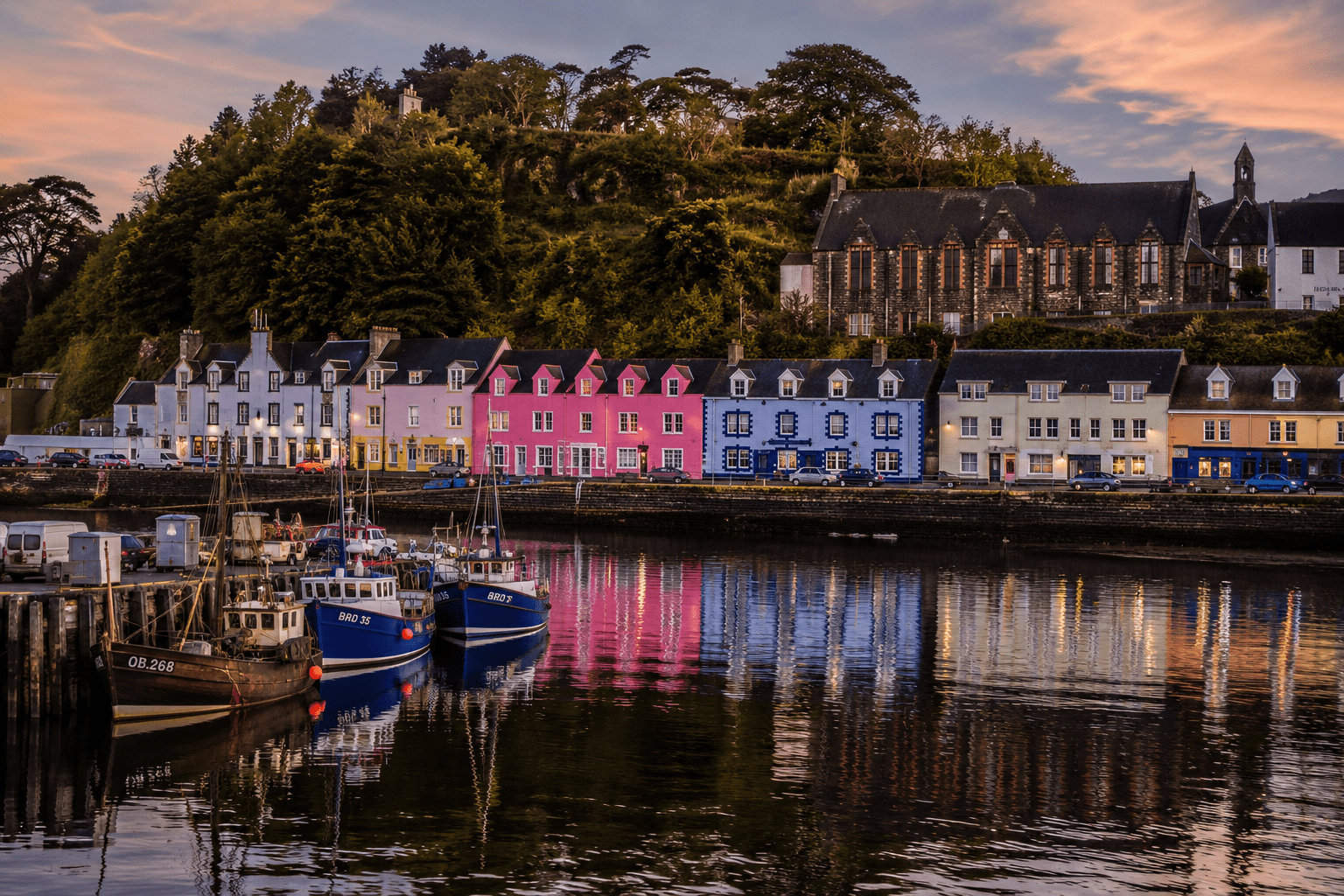
Portree is the best base for most travelers on the Isle of Skye Scotland. It’s the island’s only real town, with the widest choice of restaurants, shops, and accommodation. The iconic colorful harbor is here, and it sits centrally for day trips to both the north and south of the island.
Portree: Best for first-timers, those without a car (limited bus connections exist), and anyone who wants evening dining options. The harbor area is compact and walkable.
Broadford: The second-largest settlement, positioned in the south. Good base if you’re focusing on the Cuillin, Fairy Pools, or the Sleat Peninsula. Quieter than Portree with a small supermarket and a few restaurants.
Dunvegan: A small village in the northwest, ideal for those prioritizing Neist Point, the MacLeod’s Tables hills, and Dunvegan Castle. Very limited dining options — self-catering suits this area better.
Sleat Peninsula: Known as the “Garden of Skye” for its relatively sheltered, wooded landscape. Good for a quieter, more rural experience. The Armadale ferry to Mallaig operates from here.
Uig: A tiny port village in the northwest used by ferries to the Outer Hebrides. Stay here only if you’re catching an early ferry or want complete seclusion.
If you’re planning a broader Scotland trip alongside Skye, our complete guide to what to see in Scotland covers the full mainland bucket list.
What Are the Biggest Tourist Mistakes When Visiting Skye
The single biggest mistake is underestimating travel time between attractions. Skye’s roads are mostly single-track with passing places, and distances that look short on a map can take twice as long as expected. A 20-mile drive can easily take 45 minutes.
Other common mistakes:
- Arriving without a car: Public transport on Skye is genuinely limited, especially on Sundays [7]. Renting a car is not optional if you want to see more than Portree.
- Skipping the Quiraing in favor of only the Storr: The Quiraing is less photographed but arguably more spectacular. Most tourists stop at the Storr and miss it.
- Arriving at the Fairy Pools at midday in July: The car park overflows and the path gets congested. Go early morning or late afternoon.
- Not booking accommodation in advance: In July and August, good B&Bs and cottages sell out months ahead. Don’t assume you can find a room on arrival.
- Ignoring weather forecasts: Skye’s weather changes fast. A clear morning can become a whiteout by afternoon on the Cuillin. Check the Met Office mountain forecast before any serious hike.
- Driving carelessly on single-track roads: Use passing places properly — pull in to let oncoming traffic pass, and never park in a passing place. In May 2026, a campervan slid off the slipway at Kylerhea and ended up in the sea, a reminder that coastal roads and unfamiliar vehicles require caution [2].
Is the Isle of Skye Good for Families or Just for Serious Hikers
The Isle of Skye works well for families, not just serious hikers. Several of the island’s most famous sites involve easy, short walks suitable for children. The Fairy Pools walk is flat and under two miles. The Old Man of Storr path is steep in places but manageable for older children. Neist Point is a straightforward 20-minute walk.
Family-friendly highlights:
- Fairy Pools (easy walk, spectacular payoff)
- Dunvegan Castle and its seal boat trips
- Kilt Rock viewpoint (five-minute walk from car park)
- Aros Centre in Portree (local heritage and wildlife exhibits)
- Skye Serpentarium (reptile sanctuary near Broadford)
For serious hikers: The Black Cuillin ridge is one of Britain’s most demanding mountain environments. The Inaccessible Pinnacle (In Pinn) requires rock climbing skills and is not a walking route. The full Cuillin Traverse is considered one of the hardest mountain challenges in the UK. If you’re an experienced hillwalker, hire a local mountain guide for the technical sections.
For everyone in between: The Trotternish ridge walk, the Bla Bheinn approach from Loch Slapin, and the Coral Beach near Dunvegan are all moderate options with big rewards.
What Traditional Scottish Experiences and Cultural Attractions Are Available
Scottish Gaelic remains a living language on the Isle of Skye, not a museum piece. The island is home to Sabhal Mor Ostaig, a Gaelic-medium college on the Sleat Peninsula that runs short courses in language, music, and culture open to visitors [4]. This is one of the most authentic cultural experiences available on the island.
Cultural highlights:
- Trad music sessions: Portree pubs like the Isles Inn and the Tongadale Hotel host regular traditional music sessions. These are informal, community-led events — not tourist performances.
- Dunvegan Castle: The seat of Clan MacLeod for over 800 years. The castle holds the Fairy Flag, a relic of Viking-era legend, and is still occupied by the MacLeod family.
- Armadale Castle and Museum of the Isles: Explores the history of Clan Donald and the Lords of the Isles in a ruined castle setting on the Sleat Peninsula.
- Talisker Distillery: Scotland’s most westerly distillery on the mainland of Skye, producing a distinctive peaty single malt. Tours run daily and include tastings.
- Colbost Croft Museum: A restored black house near Dunvegan showing how islanders lived in the 19th century.
Wildlife watching is also a cultural experience on Skye. The island supports golden eagles, white-tailed eagles, red deer, otters, and Atlantic salmon [3]. Local guided wildlife tours operate from Portree and Broadford.
Are There Any Hidden Gems Most Tourists Miss
Most visitors to the Isle of Skye Scotland follow the same circuit: Storr, Fairy Pools, Quiraing, Portree. These are all worth seeing, but the island has quieter corners that reward those willing to explore.
Hidden and undervisited spots:
- Rubha Hunish: The northernmost point of Skye, a dramatic headland above the Minch with a restored coastguard lookout hut you can stay in overnight (booked through the Mountain Bothies Association). Fewer than one in ten Skye visitors ever reach it.
- Coral Beach near Dunvegan: A beach made of maerl (calcified seaweed), not sand, giving it an almost white appearance. The 30-minute walk from the car park keeps crowds low.
- Sligachan Old Bridge: One of the most photographed spots on Skye, yet somehow still uncrowded. The bridge sits at the junction of the Cuillin glens with mountain reflections in the river.
- Kylerhea Otter Hide: A free hide run by the Forestry Commission on the southeast coast, overlooking a tidal strait where otters hunt regularly. Arrive quietly and wait.
- Borrerraig Park: A small museum near Dunvegan dedicated to the MacCrimmon family, hereditary pipers to the MacLeods. Niche, but genuinely interesting for anyone curious about Scottish piping tradition.
For a sense of how Skye compares to other dramatic island destinations, our Lofoten Islands Norway travel guide covers a similarly rugged and photogenic archipelago worth considering for a future trip.
What Kind of Weather Should I Pack for on the Isle of Skye
Pack for all four seasons regardless of when you visit. Skye’s oceanic climate means rain, wind, and sunshine can all occur on the same day [4]. The island’s annual rainfall averages just below 1,050mm, making it significantly wetter than most of mainland Britain.
Essential packing list:
- Waterproof jacket and waterproof trousers (non-negotiable)
- Waterproof hiking boots with ankle support
- Warm mid-layer (fleece or down) even in summer
- Midge repellent and a head net (May through September)
- Sunscreen (UV is strong on clear days, especially at altitude)
- Trekking poles for steep or wet paths
- Portable power bank (phone signal is patchy in many areas)
What you don’t need: Heavy winter gear in summer. July average temperatures sit around 14 to 17 degrees Celsius at sea level — cool but not cold.
Is the Isle of Skye Safe for Solo Travelers
The Isle of Skye is very safe for solo travelers, including solo women. Crime rates are extremely low, locals are generally welcoming, and Portree has enough infrastructure (accommodation, restaurants, cafes) to feel comfortable for anyone traveling alone.
For solo female travelers specifically, Skye ranks as one of the more relaxed destinations in Europe. Our guide to solo travel planning covers general preparation principles that apply equally well to Scotland.
Solo-specific considerations:
- Hiking alone: The Cuillin mountains are not safe for solo hiking without experience and navigation skills. Stick to marked paths like the Storr and Fairy Pools if you’re new to hillwalking, or hire a guide.
- Emergency services: Mobile signal is unreliable across much of Skye. Download offline maps (OS Maps or AllTrails) before heading out. In February 2026, the Portree RNLI lifeboat was launched to assist a casualty who had fallen at a coastal cave on the Trotternish coastline [6] — a reminder that even popular areas carry risk.
- Driving alone: Single-track roads require concentration. Take your time, use passing places correctly, and don’t drive in unfamiliar areas after dark.
- Accommodation: Hostels in Portree and Broadford are good for meeting other travelers. B&Bs are welcoming to solo guests.
Conclusion
The Isle of Skye Scotland rewards travelers who come prepared and take their time. The landscapes are genuinely unlike anywhere else in Britain, the cultural depth is real, and the island is accessible enough that you don’t need specialist experience to enjoy it.
Your actionable next steps:
- Book accommodation early — particularly for June, July, and August. Good B&Bs and cottages sell out three to six months ahead.
- Rent a car before you arrive on the island. Options in Portree are limited and expensive if you book last-minute.
- Plan a minimum of three days, ideally five, to cover both the Trotternish Peninsula and the Cuillin area without feeling rushed.
- Target May or September if you have flexibility — better weather balance, fewer crowds, and no midge peak.
- Download offline maps for the areas you plan to hike. Phone signal drops out frequently across the island.
- Check the Portree Link Road construction status before your trip if you’re visiting before autumn 2026, as roadworks may affect town-center access [1].
If Skye sparks a broader appetite for dramatic island landscapes, our guides to the Azores Islands itinerary and what to see in Glasgow Scotland offer natural next steps for your Scotland and Atlantic island planning.
Frequently Asked Questions
Do I need a visa to visit the Isle of Skye?
The Isle of Skye is part of Scotland and the United Kingdom. EU, US, Canadian, and Australian citizens can visit without a visa for up to six months under standard UK entry rules. Check current UK government guidance for your specific nationality before traveling.
How far is the Isle of Skye from Inverness?
Inverness to the Skye Bridge at Kyle of Lochalsh is approximately 80 miles (130km), taking around one hour and 45 minutes by car. From the bridge to Portree is a further 30 minutes.
Is there an entrance fee to visit the Isle of Skye?
No. There is no charge to cross the Skye Bridge or to access most of the island’s natural attractions. Some car parks charge a small fee (typically £2 to £5) at popular sites like the Old Man of Storr.
Can I wild camp on the Isle of Skye?
Yes. Scotland’s Land Reform Act gives the right to wild camp on most unenclosed land. Respect the Scottish Outdoor Access Code: leave no trace, use a stove rather than an open fire in dry conditions, and move on after a few nights in one spot.
What is the best way to avoid midges on Skye?
Visit outside peak midge season (late May to August), or plan outdoor activities during windy conditions — midges cannot fly in wind above about 7mph. Carry Smidge repellent and a head net for still, humid days.
Are there supermarkets on the Isle of Skye?
Yes. Portree has a Co-op and a Tesco. Broadford has a Co-op. Smaller villages have limited shops or none at all. Stock up in Portree or Broadford before heading to remote areas.
Is the Skye Bridge free to cross?
Yes. The Skye Bridge toll was abolished in 2004. Crossing is now free in both directions.
How long does it take to hike to the Old Man of Storr?
The return hike from the main car park takes approximately one to one and a half hours at a moderate pace. The path is well-marked but steep in the upper section. Wear waterproof boots.
Is there Wi-Fi and mobile signal on Skye?
Wi-Fi is available in most hotels, B&Bs, and cafes in Portree and Broadford. Mobile signal (4G) is good in towns but drops out frequently in rural and coastal areas. Download offline maps before heading out.
Can I see the Northern Lights on the Isle of Skye?
Yes, though sightings are not guaranteed. The best chances are from October to March on clear, dark nights away from Portree’s light pollution. The north and west coasts offer the darkest skies.
What currency is used on the Isle of Skye?
Scottish pounds (GBP), the same as the rest of the UK. Scottish banknotes are legal tender across the UK, though some businesses in England may be unfamiliar with them. Cards are accepted almost everywhere on Skye, but carry some cash for small vendors and remote cafes.
Is the Isle of Skye accessible for travelers with mobility limitations?
Portree town center and some viewpoints (like Kilt Rock) are accessible with a vehicle and short, flat paths. Most of the famous hikes involve uneven terrain and are not suitable for wheelchairs. Contact specific attractions in advance to confirm accessibility arrangements.
References
[1] Contract Awarded For Portree Link Road – https://www.highland.gov.uk/news/article/16921/contract-awarded-for-portree-link-road?utm_source=openai
[2] Campervan Crashes Into Sea Off Skye Harbour Slipway – https://rnli.org/news-and-media/2026/may/20/campervan-crashes-into-sea-off-skye-harbour-slipway?utm_source=openai
[3] Isle Of Skye – https://en.wikipedia.org/wiki/Isle_of_Skye?utm_source=openai
[4] Island Life – https://www.isleofskye.com/skye-guide/island-life?utm_source=openai
[5] Skye – https://www.greatbritain.info/en/scotland/highlands/skye/?utm_source=openai
[6] Portree RNLI Lifeboat Launches To Casualty At Bonnie Prince Charlie Cave – https://rnli.org/news-and-media/2026/february/04/portree-rnli-lifeboat-launches-to-casualty-at-bonnie-prince-charlie-cave?utm_source=openai
[7] Travel Tips – https://www.isleofskye.com/skye-guide/travel-tips?utm_source=openai