Last updated: August 29, 2026
Quick Answer: The best way to organize your carry-on bag is to use packing cubes, roll soft clothes, fold structured items flat, and follow a bottom-to-top packing sequence (heavy first, soft in the middle, liquids accessible at the top). Stick to a 35-42 liter bag to match most airline size limits, and leave 10-15% empty space so the bag closes easily and passes sizer checks.
Key Takeaways
- Use packing cubes to compress clothes and keep categories separate
- Roll casual clothes to save space; fold structured items like blazers flat
- Follow the 3-1-1 TSA liquid rule – quart-sized bag, containers 3.4 oz or less
- Most airlines allow carry-ons between 45-56 linear inches; always check before you fly
- A capsule wardrobe of 5-7 mix-and-match pieces covers a full week
- Keep your personal item (under-seat bag) for in-flight essentials and your laptop
- Leave 10-20% empty space so the bag compresses into the overhead bin
- Avoid single-use items and pack multi-purpose products instead
- The “wear-wash-repeat” method works for trips longer than 5 days
- Never put valuables, medications, or irreplaceable items in a checked bag
What’s the Best Way to Pack a Carry-On Bag
The best packing method combines a smart sequence with compression tools. Start heavy, build up to soft layers, and always keep your most-needed items reachable.
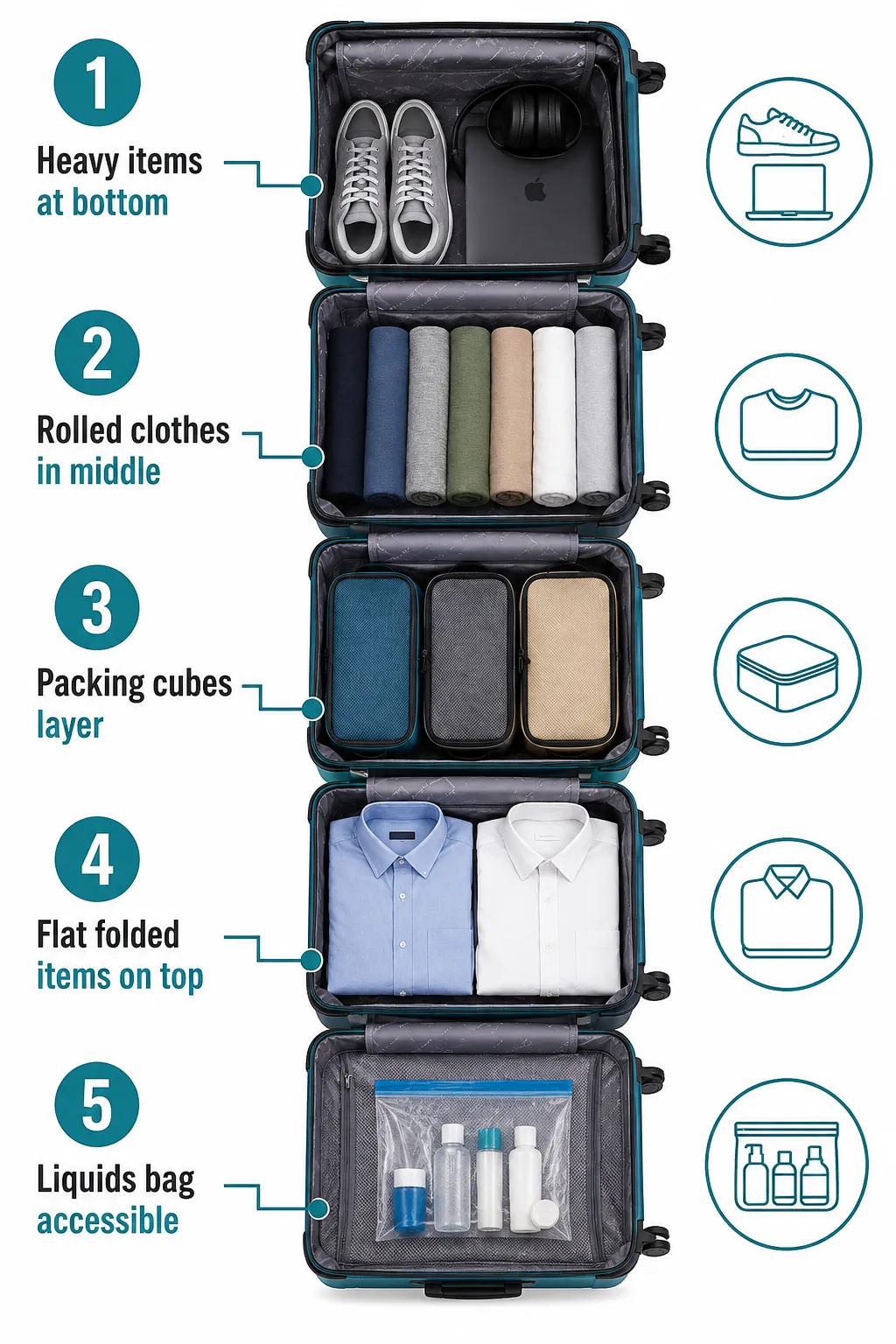
Here’s the sequence that works every time:
- Bottom layer – shoes (stuffed with socks), chargers, and any heavy electronics
- Middle layer – packing cubes filled with rolled clothes
- Upper layer – flat-folded structured items like blazers or dress pants
- Top or front pocket – clear liquids bag, snacks, and documents
This order keeps the bag balanced and protects delicate items. According to carry-on packing efficiency tips from Gorilla Fare, keeping weight low in the bag also makes it easier to lift into the overhead bin without straining your back.
How Much Can You Fit in a Carry-On Without It Being Overweight
Most airlines set carry-on weight limits between 7 kg (15 lbs) and 10 kg (22 lbs), though budget carriers like Ryanair and EasyJet are stricter. A quick test: if you can lift the bag with one arm and hold it overhead for 5 seconds, you’re likely within range.
For a 35-40 liter bag, a realistic load is:
- 4-6 outfits (rolled)
- 1 pair of shoes (worn or packed)
- Toiletry kit under 1 kg
- Electronics and cables under 1.5 kg
The TravelDeck carry-on packing guide for 2026 recommends targeting 7-8 kg total so you have buffer room for airport purchases or souvenirs on the way back.
Best Packing Cubes for Carry-On Luggage
Packing cubes are the single biggest upgrade you can make to how you organize your carry-on bag. They compress clothes, separate categories, and make unpacking at the hotel take under two minutes.
What to look for in a packing cube:
- Compression zippers – double-zip cubes reduce volume by up to 30%
- Mesh top panel – lets you see contents without opening
- Set of 3 sizes – small for underwear/socks, medium for tops, large for pants/dresses
Top-performing options in 2026:
| Brand | Best For | Size Range |
|---|---|---|
| Eagle Creek Pack-It | Durability, frequent fliers | XS to L |
| Osprey Ultralight | Lightweight travel | S to L |
| Amazon Basics | Budget travelers | S to XL |
| Calpak | Style-focused travelers | S to L |
Pro tip: Use one cube per category (tops, bottoms, underwear) rather than one cube per outfit. It’s faster to find things and easier to repack.
How to Organize Your Carry-On for a Week Trip
A week-long trip in a carry-on is completely doable when you build a capsule wardrobe. The goal is 5-7 pieces that mix and match into 10+ outfits.
A simple 7-day carry-on wardrobe:
- 3 tops (neutral colors)
- 2 bottoms (one casual, one dressy)
- 1 versatile dress or jacket
- 1 pair of walking shoes (worn on travel day)
- 4-5 pairs of underwear (quick-dry fabric)
- 1 lightweight layer (packable jacket)
The wear-wash-repeat carry-on strategy works well here. Pack a small packet of travel laundry soap or a solid laundry bar, and wash items in the hotel sink every 2-3 days. This cuts your clothing load nearly in half.
If you’re planning a longer European adventure, check out the ultimate 2 weeks in Europe spring packing guide for a full breakdown of what to bring.
What Items Should Never Go in a Carry-On Bag
Some items are banned by TSA, and others are just bad ideas to pack in your carry-on.
TSA-banned items (carry-on):
- Firearms and ammunition
- Knives with blades over 2.36 inches
- Flammable liquids (lighter fluid, paint thinner)
- Lithium batteries over 100Wh (must go in carry-on, NOT checked – check airline rules)
- Gel ice packs larger than 3.4 oz unless frozen solid
Items that are technically allowed but better left out:
- Bulky hardcover books (heavy, use an e-reader)
- Full-size hairdryer or straightener (most hotels provide them)
- More than 2 pairs of shoes
- Duplicate toiletries
The TSA carry-on guide from Airport Overview has a full updated list of prohibited items for 2026, including recent changes to electronics screening.
How to Pack Liquids in a Carry-On Bag
The TSA 3-1-1 rule still applies in 2026: each liquid container must be 3.4 oz (100ml) or less, all containers must fit in one clear quart-sized zip bag, and you get one bag per person. The bag must be removed from your carry-on at security.
What counts as a liquid:
- Gels, creams, pastes, and aerosols
- Peanut butter, yogurt, and similar spreadables
- Snow globes (yes, really)
What doesn’t count:
- Solid toiletry bars (shampoo bars, deodorant sticks, solid sunscreen)
- Dry powder products
- Frozen items (if completely frozen at checkpoint)
According to updated TSA liquid rules for 2026, many U.S. airports now use CT scanners that allow liquids to stay in your bag. But the rule still applies at most international airports, so it’s safer to follow 3-1-1 everywhere.
Switching to solid toiletry bars is the easiest way to free up space in your quart bag. A solid shampoo bar replaces a 10 oz bottle and weighs almost nothing.
Carry-On vs Checked Bag: What Should Go Where
Always put irreplaceable, valuable, or medically necessary items in your carry-on. Put bulky, heavy, or non-essential items in checked luggage.
Always in carry-on:
- Passport, ID, and travel documents
- Medications and medical devices
- Laptop, camera, and expensive electronics
- One change of clothes (in case checked bag is delayed)
- Valuables (jewelry, cash)
Better in checked bag:
- Full-size toiletries
- Extra shoes
- Heavy clothing (winter coats, boots)
- Gifts and souvenirs
- Anything over 3.4 oz liquid
If you’re trying to travel carry-on only, the buy-later method is worth considering. The idea: don’t pack things you can buy cheaply at your destination (shampoo, sunscreen, snacks). It frees up significant space and weight.
What’s the Difference Between Rolling and Folding Clothes in a Carry-On
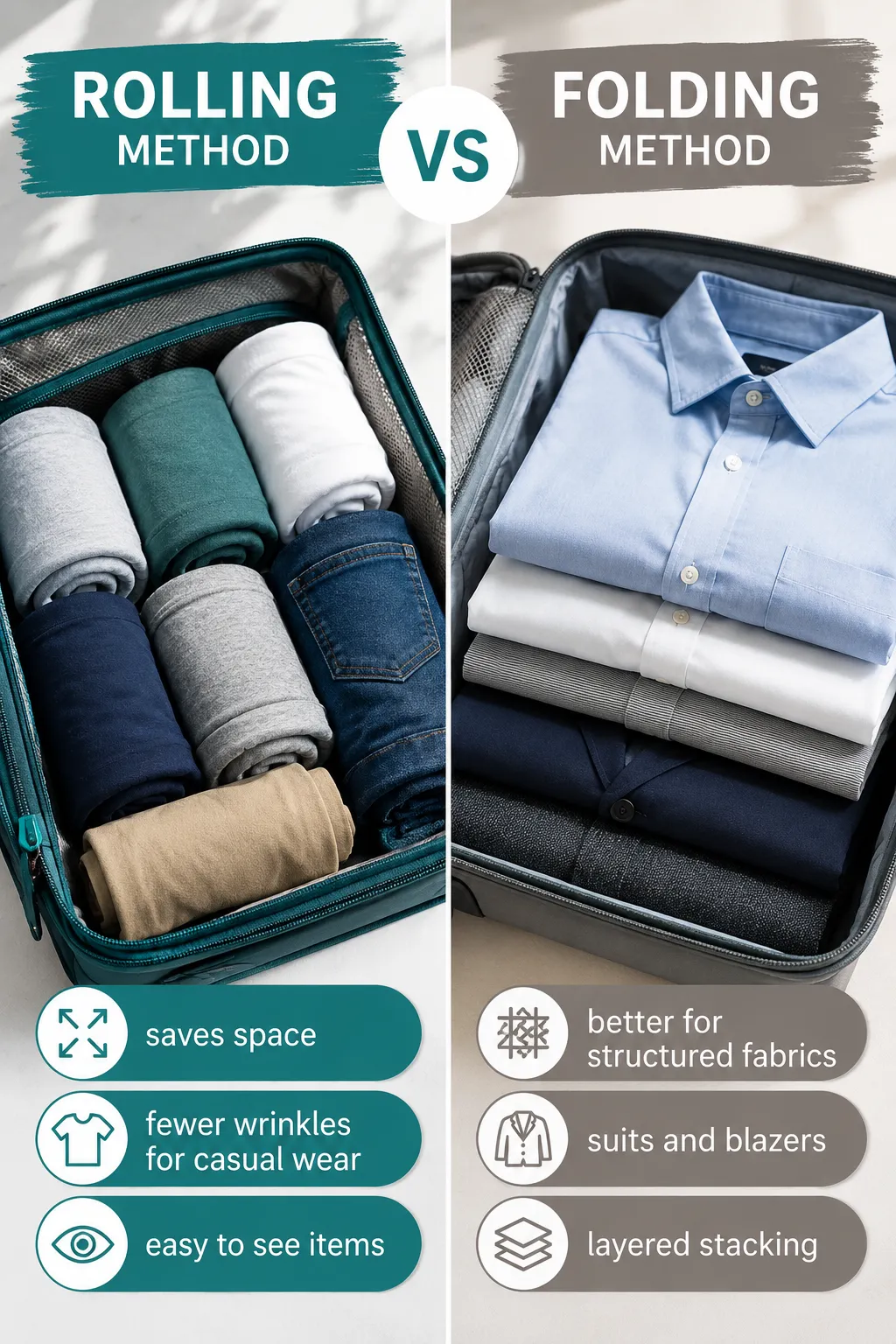
Rolling saves more space and works best for casual, wrinkle-resistant fabrics. Folding is better for structured items that crease easily.
Roll these:
- T-shirts, tank tops, casual shirts
- Jeans and chinos
- Underwear and socks
- Workout clothes
Fold these:
- Dress shirts and button-downs
- Blazers and suit jackets
- Linen pants (rolling creates more creases in linen)
Ranger rolling (military-style tight roll) is the most space-efficient method for casual clothes. Lay the item flat, fold up the bottom 2 inches, roll tightly from top to bottom, then fold the cuff over the roll to lock it in place.
For wrinkle prevention on dress shirts, place them in a dry-cleaning bag before folding. The slippery plastic reduces friction and keeps creases from setting in.
How to Organize Your Carry-On Bag for Business Travel
Business travelers need fast access to documents and tech, a wrinkle-free outfit on arrival, and a bag that looks professional in a meeting. The key is keeping your carry-on organized so you can move quickly through airports.
Business carry-on setup:
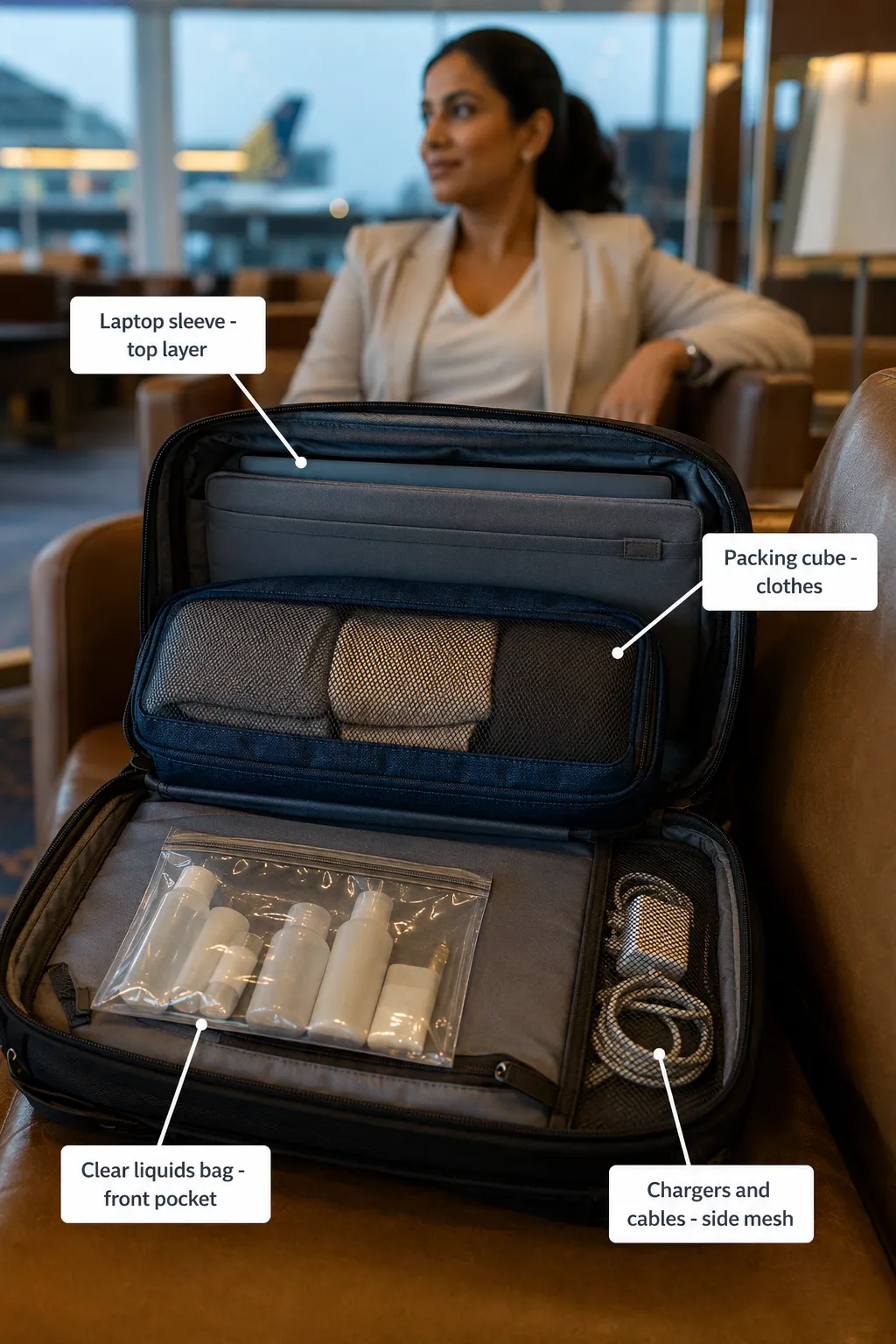
- Laptop sleeve or dedicated compartment – separate from clothes
- Document folder – boarding pass, hotel confirmation, business cards
- One compression cube – 2 dress shirts, 1 pair of dress pants, 1 tie or scarf
- Tech pouch – chargers, earbuds, adapter, portable battery
Pack your dress clothes in a flat compression cube and place it on top of everything else. When you arrive, hang them immediately in the bathroom during a hot shower to steam out any wrinkles.
If you’re traveling to Europe for business, 17 genius Rome on a budget tips and Paris monuments and landmarks are great reads for making the most of downtime between meetings.
Best Carry-On Bag Size for Different Airlines
Most major airlines accept carry-ons up to 22 x 14 x 9 inches (56 x 36 x 23 cm), but budget carriers are often stricter. Always check the specific airline’s policy before you fly.
Quick airline size reference (2026):
| Airline | Max Carry-On Size | Weight Limit |
|---|---|---|
| Delta | 22 x 14 x 9 in | No stated limit |
| United | 22 x 14 x 9 in | No stated limit |
| American | 22 x 14 x 9 in | No stated limit |
| Southwest | 24 x 16 x 10 in | No stated limit |
| Ryanair | 40 x 20 x 25 cm (small) | 10 kg with Plus fare |
| EasyJet | 56 x 45 x 25 cm | 15 kg |
A soft-sided bag is a smart choice in 2026 because airlines are enforcing sizer checks more strictly. Soft sides compress slightly to fit into the sizer box, even when the bag is fully packed. Hard-shell bags have no give.
The carry-on packing list from MyTripPack includes a printable checklist organized by airline size category, which is useful if you fly multiple carriers.
Carry-On Packing Mistakes People Make
Most carry-on packing problems come down to a few repeated errors. Knowing them in advance saves time at the airport and stress mid-trip.
Common mistakes:
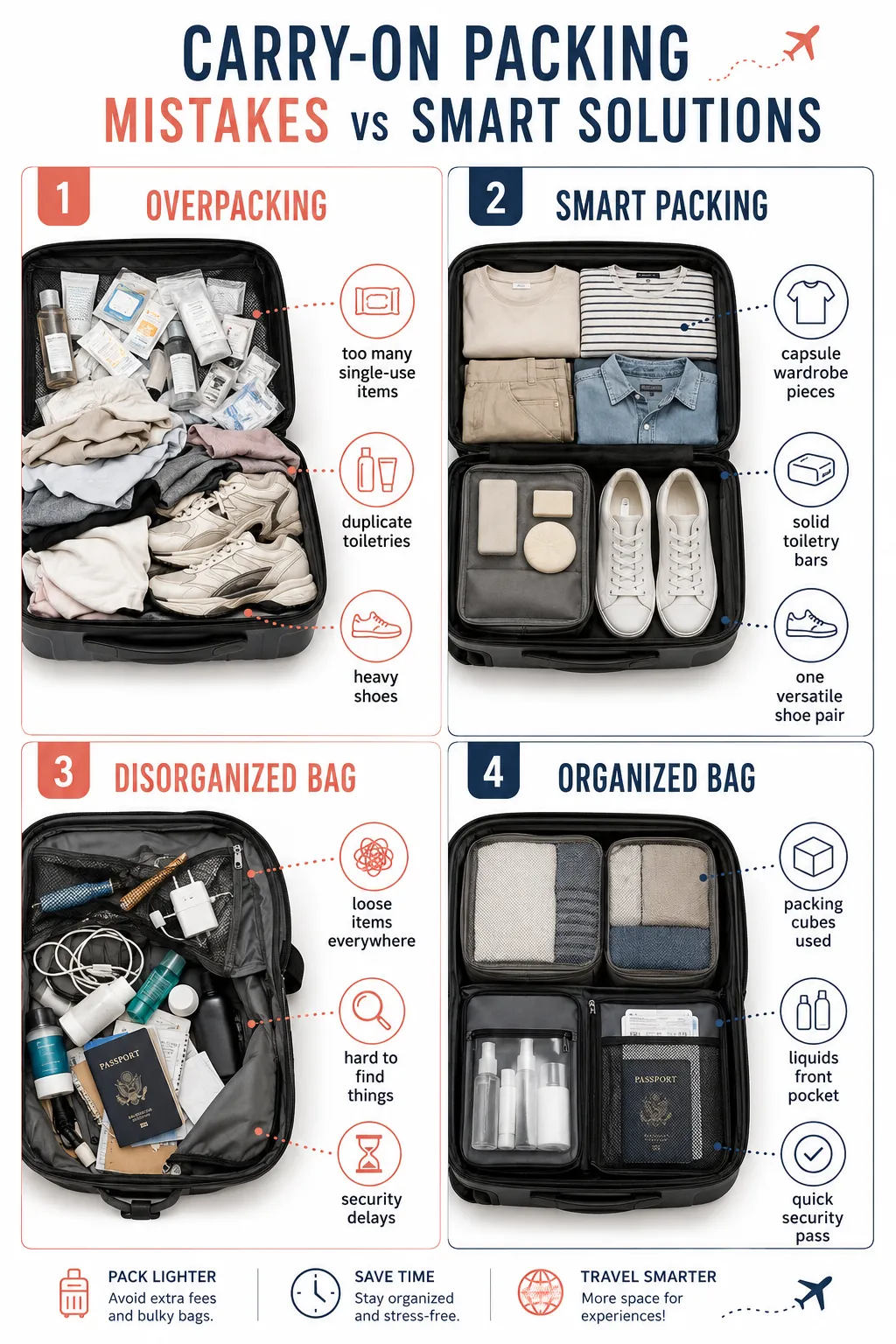
- Packing “just in case” items – if you haven’t used it in the last 3 trips, leave it
- Ignoring weight until the airport – weigh at home with a luggage scale
- Using the full bag capacity – a 100% full bag won’t compress into the bin
- Putting liquids at the bottom – they need to come out at security
- Bringing full-size toiletries – they take up 30% of your bag for no reason
- Wearing bulky shoes on the plane – they’re heavy and uncomfortable; pack a lighter pair
- Forgetting a personal item – your under-seat bag is extra free space, use it
The biggest mistake: Packing for every scenario instead of the most likely one. Pack for the trip you’re actually taking, not the trip that might happen.
How to Organize Your Carry-On for Families with Kids
Traveling with kids means you need even more organization, because you’ll be digging into the bag constantly. The goal is fast access to the things you need most.
Family carry-on strategy:
- Give each child their own small backpack for their personal items (snacks, tablet, headphones, small toy)
- Pack a dedicated “airport bag” inside your carry-on – one small pouch with boarding passes, ID, and payment card
- Keep a change of clothes for each child in a separate labeled cube
- Bring a small first aid kit: band-aids, children’s pain reliever, motion sickness tablets
- Pack snacks in a separate zip pouch at the very top for easy access
For families heading to beach destinations, 21 genius beach hacks for kids pairs well with this packing strategy. And if you’re planning a family trip on a budget, 11 budget-friendly vacations with kids has destination ideas that make carry-on-only travel even more practical.
FAQ
How do I keep my carry-on under the weight limit?
Weigh your bag at home before you leave using a handheld luggage scale. Target 7-8 kg to stay under most airline limits and leave buffer room. Wear your heaviest shoes and jacket on travel day.
Can I bring a full-size deodorant in my carry-on?
Only if it’s a solid stick. Gel or spray deodorants must be 3.4 oz or less and go in your quart-sized liquids bag.
What’s the best carry-on bag for frequent travelers?
Look for a 35-40 liter soft-sided bag with a laptop sleeve, external compression straps, and a TSA-approved lock. Popular choices include the Away Carry-On, Osprey Farpoint 40, and Travelpro Platinum Elite.
Do packing cubes actually save space?
Yes, compression packing cubes can reduce clothing volume by 20-30%. Regular (non-compression) cubes mainly organize rather than compress, but they still make packing faster and neater.
Can I bring food in my carry-on?
Yes. Solid foods are generally allowed. Liquids and gels (like peanut butter, hummus, or yogurt) must follow the 3-1-1 rule if over 3.4 oz.
What should I put in my personal item vs my carry-on?
Keep in-flight essentials in your personal item: laptop, headphones, snacks, phone charger, travel pillow, and anything you’ll need during the flight. The carry-on goes in the overhead bin and is harder to access mid-flight.
How do I stop my clothes from wrinkling in a carry-on?
Use a dry-cleaning bag around dress shirts before folding, pack clothes tightly so they can’t shift, and hang clothes immediately on arrival. Quick-dry fabrics and wrinkle-resistant materials (merino wool, nylon blends) are worth the investment.
Is it better to roll or fold jeans?
Roll them. Jeans are thick and take up a lot of space when folded flat. A tight roll reduces their footprint significantly and they don’t wrinkle badly.
How do I pack shoes in a carry-on without wasting space?
Stuff socks and small items inside each shoe, then place shoes sole-to-sole in a shoe bag or shower cap. Put them at the bottom of the bag against the wheels.
Can I bring a razor in my carry-on?
Disposable razors and electric razors are allowed. Straight razors and safety razors with the blade attached are not permitted in carry-on bags.
Conclusion
Knowing how to organize your carry-on bag well is one of the most practical travel skills you can build. It saves money (no checked bag fees), saves time (skip the baggage claim), and makes every trip less stressful from start to finish.
Your next steps:
- Measure your current bag against your next airline’s size policy
- Buy a set of compression packing cubes if you don’t have them
- Try the capsule wardrobe approach on your next 3-5 day trip
- Switch at least 2 toiletries to solid versions
- Do a test pack at home and weigh the bag before you leave
Start with just one or two of these changes. Even swapping to packing cubes alone will transform how your bag feels to pack and unpack. The goal isn’t a perfectly minimalist bag – it’s a bag that works for you, every time.