
Last updated: September 6, 2026
Quick Answer: Córdoba, Spain packs more history per square mile than almost any other city in Europe. Beyond the famous Mezquita, there are Roman bridges, flower-filled patios, a rich Jewish quarter, Moorish palaces, and a food scene that rivals any Andalusian city. Two to three days gives you enough time to see the highlights without rushing.
Key Takeaways
- 🕌 The Mezquita is unmissable, but the Jewish Quarter, Alcázar, and Patios de Córdoba are equally essential
- 🌸 Visit in May for the Fiesta de los Patios, when private courtyards open to the public
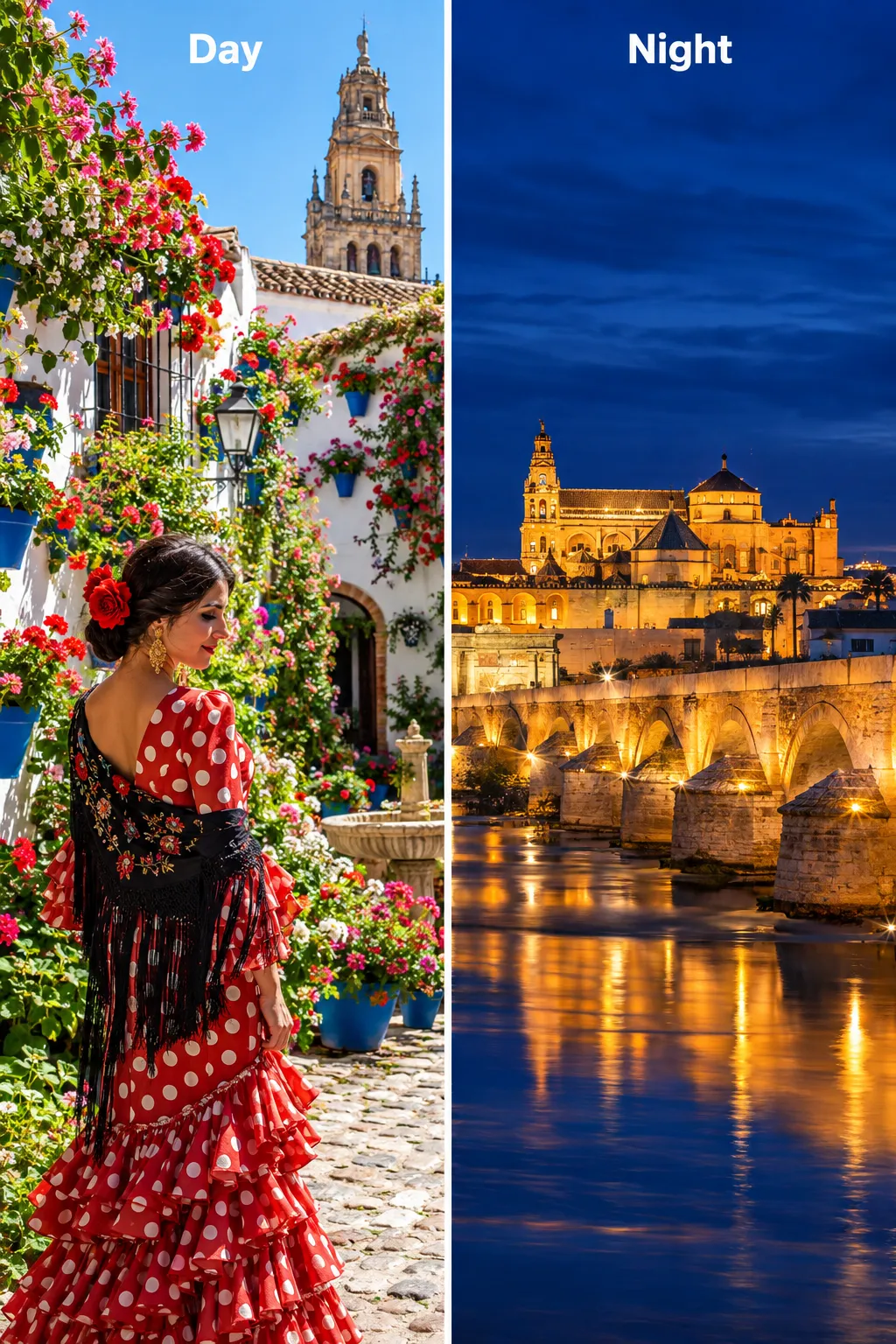
- 🌉 The Roman Bridge is spectacular both day and night – don’t skip the evening walk
- 🍅 Try salmorejo (a thick local tomato soup) – it’s the city’s signature dish
- 🏛️ Córdoba is a UNESCO World Heritage Site, recognized for its historic center
- 🚆 The city makes an easy day trip from Seville (45 min by AVE high-speed train) or Madrid (1h 45min)
- 💶 Several top attractions are free or very low cost, including the Jewish Quarter and Roman Bridge
- 📅 September 2026 is packed with events – from live concerts to the International Board Game Festival
What Is Córdoba Spain Known for Besides the Mezquita?
Córdoba is known for far more than its cathedral-mosque. The city was once the largest city in Europe during the Moorish caliphate, and that layered history – Roman, Jewish, Islamic, and Christian – shows up around every corner. The patios, the Jewish Quarter, the Roman Bridge, and the Alcázar de los Reyes Cristianos are all world-class attractions in their own right.
The city sits in the heart of Andalusia, and it draws travelers who want depth over beach time. According to TripAdvisor’s Córdoba destination overview, the historic center consistently ranks among the top cultural destinations in southern Spain.
Here are a few things that make Córdoba genuinely unique:
- The Patios Festival – private flower-filled courtyards opened to the public each May
- Calleja de las Flores – one of the most photographed alleyways in all of Spain
- Salmorejo – a cold tomato soup that originated right here in Córdoba
- The Judería – one of the best-preserved medieval Jewish quarters in Europe
- The Royal Stables (Caballerizas Reales) – home of the famous Andalusian horse
Best Things to Do in Córdoba Spain for First-Time Visitors
For first-time visitors, the best approach is to anchor your trip around the historic center, where most of the top things to do in Córdoba Spain are within easy walking distance of each other. Start with the Mezquita, then work outward through the Jewish Quarter, across the Roman Bridge, and into the patios neighborhoods.
1. See the Mezquita-Cathedral de Córdoba
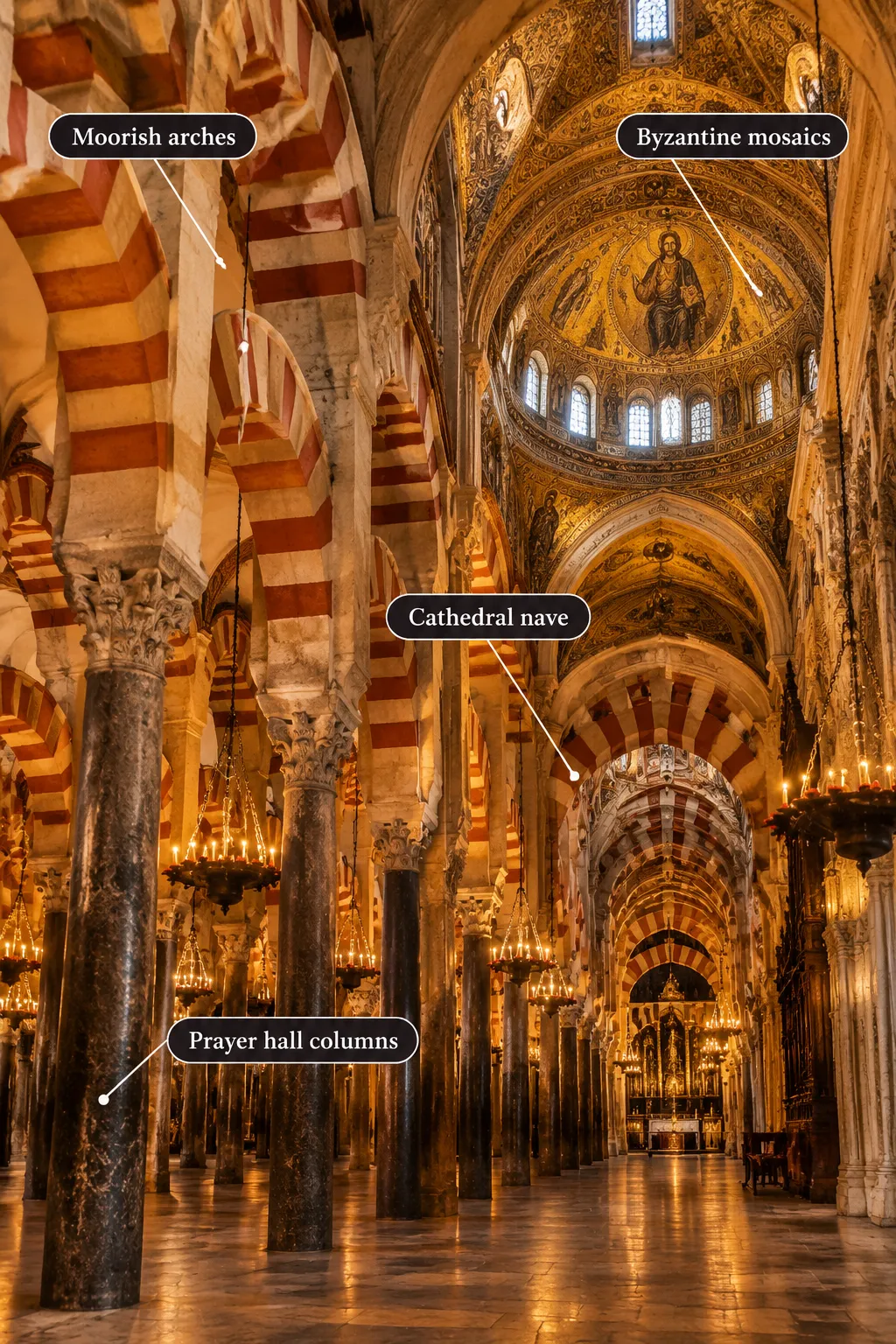
The Mezquita is the reason most people come to Córdoba, and it absolutely lives up to the hype. The forest of 856 red-and-white striped horseshoe arches is one of the most striking interiors in all of Europe. Book tickets in advance – the official tourism site recommends early morning entry to beat the crowds.
Admission is around €13 for adults, and the cathedral section built inside the mosque adds a fascinating layer of Christian-over-Moorish history.
2. Walk the Roman Bridge at Night
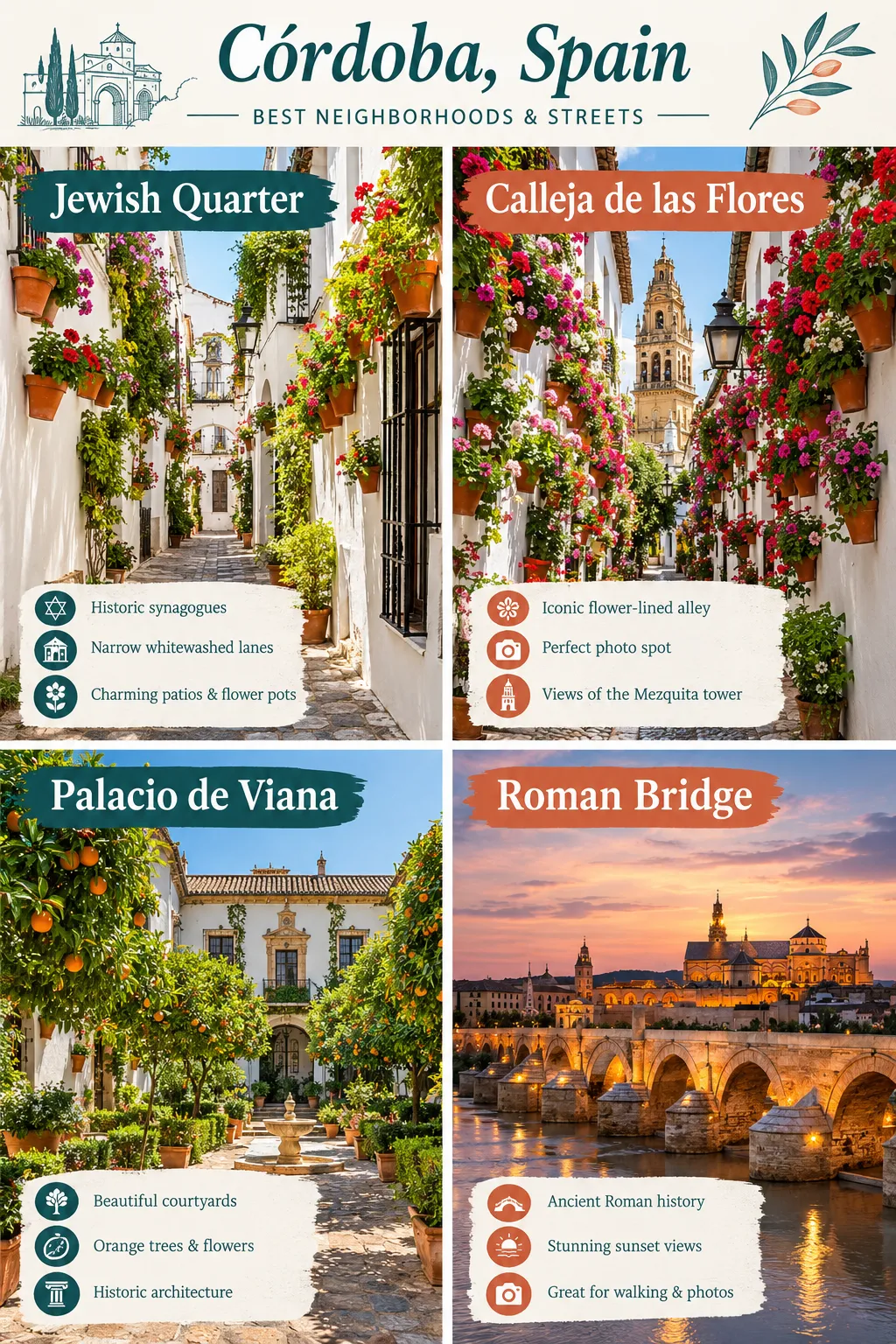
The Roman Bridge over the Guadalquivir River is one of the most romantic spots in Andalusia. Built by the Romans and restored through the centuries, this bridge is beautiful at any time of day. At night, the amber lighting reflecting off the water is genuinely stunning – this is one of those travel moments that stays with you.
Walk to the Torre de la Calahorra at the far end for a great view back toward the Mezquita.
3. Explore the Flower-Filled Patios
The patios of Córdoba are a UNESCO Intangible Cultural Heritage tradition. During the Fiesta de los Patios (Patios de Córdoba), held 4-17 May 2026, residents open their private flower-filled courtyards to the public. It’s one of the most visually spectacular things you can see anywhere in Spain.
Outside of May, you can still visit patios at the Palacio de Viana, which has 12 separate courtyards and is well worth the entry fee.
4. Stroll Through the Jewish Quarter (Judería)
The Judería is one of the best-preserved medieval Jewish quarters in Europe. Wander the narrow whitewashed streets, find the 14th-century Synagogue (one of only three surviving medieval synagogues in Spain), and visit the Casa de Sefarad to learn about Córdoba’s Jewish history.
The quarter is free to explore, and it’s easy to spend a half-day just getting pleasantly lost in its lanes.
5. Visit the Alcázar de los Reyes Cristianos
The Alcázar de los Reyes Cristianos (Castle of the Christian Monarchs) is often overshadowed by the Mezquita, but its gardens are among the most beautiful in Spain. Terraced pools, fountains, and cypress trees fill the grounds. This is where Ferdinand and Isabella received Christopher Columbus before his first voyage to the Americas.
Entry is around €5, and it’s one of the best value things to do in Córdoba.
Córdoba Spain Hidden Gems Off the Beaten Path
Beyond the main tourist circuit, Córdoba has several hidden gems that most visitors miss. These are the places that make the city feel like more than just a day trip destination.
6. Calleja de las Flores – Best for Photographers
Calleja de las Flores (Alley of the Flowers) is a narrow lane lined with flower pots, framing a perfect view of the Mezquita bell tower at the end. It’s one of the most photographed spots in all of Spain, and for good reason.
Go early in the morning to get it without the crowds. The Google Maps location is easy to find – just search “Calleja de las Flores Córdoba.”
7. Squeeze Through Calleja Pañuelo
Calleja Pañuelo (Handkerchief Alley) is one of the narrowest streets in the world – barely wide enough for one person. It’s a fun, unique things to do in Córdoba moment that takes about 30 seconds but makes for a great story. Find it tucked inside the Jewish Quarter.
8. Find the Salmorejo Recipe on Calleja del Salmorejo
There’s a small street in the Judería called Calleja del Salmorejo, where a plaque displays the traditional recipe for Córdoba’s famous cold tomato soup. It’s a charming, offbeat stop – and a good reminder to order salmorejo at every meal while you’re here.
9. Discover the Roman Temple
Most visitors walk right past the Roman Temple ruins near the city hall. These first-century columns are surprisingly well-preserved and completely free to see. It’s one of those unique things cordoba offers that don’t appear on most travel itineraries.
10. Go Through the Almodovar Gate
The Almodovar Gate (Puerta de Almodóvar) is a beautifully preserved 14th-century Moorish gate in the old city walls. Walking through it feels genuinely cinematic. Just outside the gate, there’s a statue of Seneca – the Roman philosopher born in Córdoba.
11. Casa Andalusi – A Moorish House Time Capsule
Casa Andalusi is a small museum in a restored Moorish house in the Jewish Quarter. It’s intimate, atmospheric, and gives you a real sense of what daily life looked like in medieval Córdoba. Entry is just a few euros and it takes about 30-45 minutes to visit.
12. Tiles Outside Pharmacies
This is one of the quirkiest things to look out for in Córdoba: many old pharmacies have elaborate hand-painted ceramic tile signs outside. They’re beautiful examples of traditional Andalusian craftsmanship, and spotting them around the city center becomes a fun little game.
Córdoba Spain What to Eat – Local Food and Restaurants
Córdoba’s food scene is one of the best in Andalusia, and there are a few dishes you absolutely must try. The city’s cuisine reflects its layered history – Moorish spices, Roman olive oil traditions, and Andalusian produce all come together here.
Must-try foods in Córdoba:
- Salmorejo – a thick, creamy cold tomato soup topped with jamón and hard-boiled egg. Richer and denser than gazpacho.
- Flamenquín – a rolled pork loin wrapped in jamón and fried. A Córdoba specialty.
- Berenjenas con miel – fried aubergine drizzled with local honey. Moorish-influenced and delicious.
- Rabo de toro – slow-braised oxtail stew, a classic Andalusian comfort dish.
Eat Your Way Around Mercado Victoria
Mercado Victoria is a covered market in the city center with around 20 food stalls offering everything from craft beer to fresh tapas. It’s a great place to graze through several local specialties in one visit. The atmosphere is lively, especially on weekend evenings.
Martina Cake for Sweet Treats
For something sweet, Martina Cake is a local bakery that’s become something of a Córdoba institution. Their pastries and cakes use local ingredients, and it’s a lovely spot for a mid-afternoon break from sightseeing.
Arabic Tea House – Salon de Té
In the Jewish Quarter, there are several traditional Arabic tea houses (teterías) serving mint tea, pastries, and light lunches. The atmosphere is calm and beautiful – low cushioned seating, incense, and elaborately decorated interiors. It’s a direct echo of Córdoba’s Moorish past and one of the most atmospheric places to eat in the city.
How Many Days Should I Spend in Córdoba Spain?
Two full days is the sweet spot for most travelers visiting Córdoba. One day is enough to see the Mezquita, Roman Bridge, and Jewish Quarter, but you’ll feel rushed. With two days, you can also visit the Alcázar, Palacio de Viana, Mercado Victoria, and explore the patios neighborhoods at a relaxed pace.
If you’re combining Córdoba with a wider Andalusia trip – perhaps including Seville and Granada – then one long day or an overnight stay works well. Check the Andalusia itinerary guide for a full regional route.
Day breakdown suggestion:
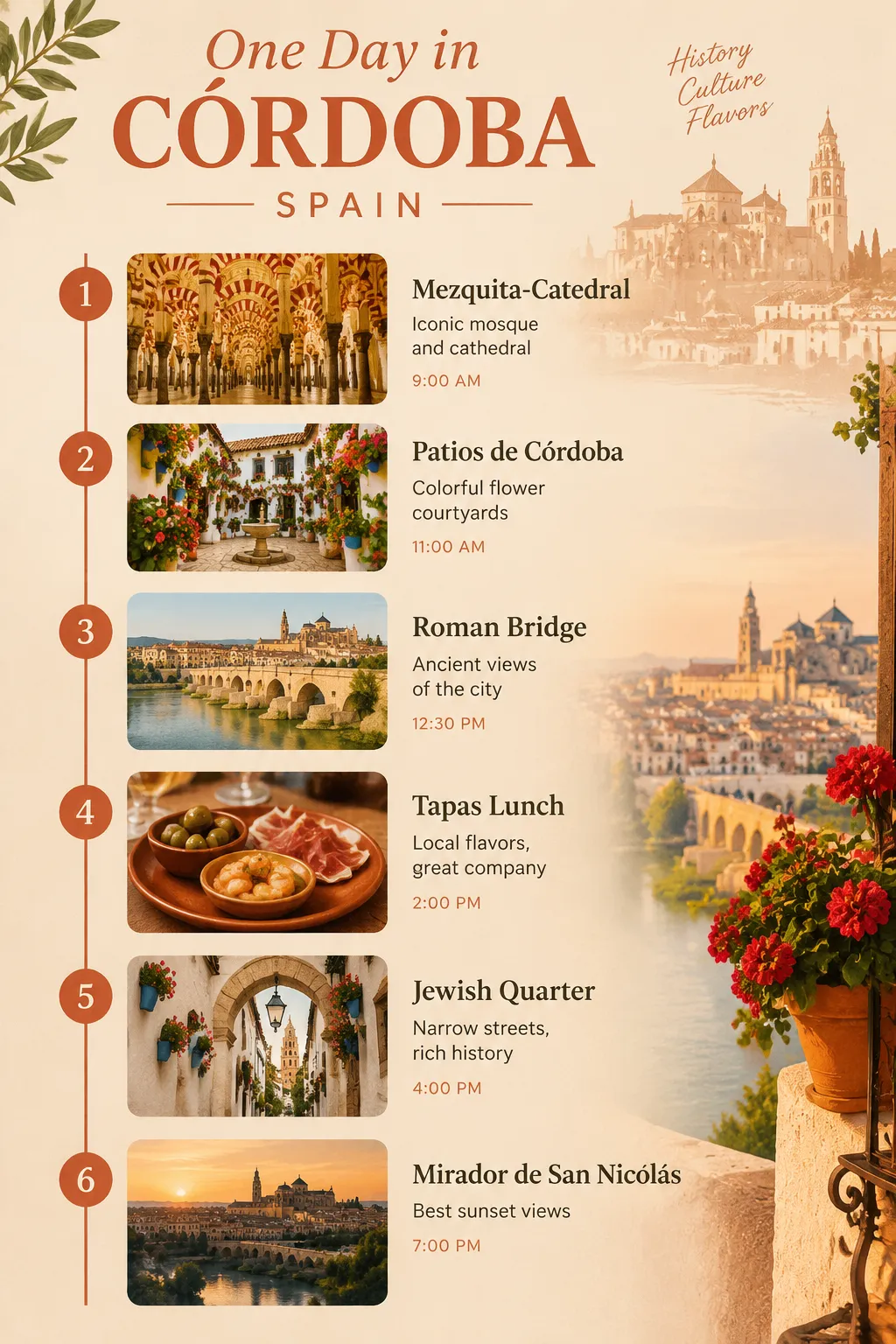
- Day 1 morning: Mezquita (book early entry), Calleja de las Flores, Jewish Quarter
- Day 1 afternoon: Alcázar de los Reyes Cristianos gardens, Roman Bridge at sunset
- Day 2 morning: Palacio de Viana patios, Casa Andalusi, Almodovar Gate
- Day 2 afternoon: Mercado Victoria, Roman Temple, CEPA Craftbeer & Wine
Best Time of Year to Visit Córdoba Spain
The best time to visit Córdoba is April through June or September through October. Summers in Córdoba are brutally hot – the city regularly hits 40°C (104°F) in July and August, making sightseeing genuinely uncomfortable.
May is the single best month if you want to see the Fiesta de los Patios, running 4-17 May 2026. The city transforms into a riot of color as private courtyards open their gates. According to a short city guide to Córdoba, May is consistently rated the top month for a courtyard-focused visit.
September 2026 is also an excellent time to visit. The city has a packed events calendar including:
- XXI Festival Internacional de Juegos (International Board Game Festival) – 4-6 September at the CEFC, one of southern Europe’s leading leisure events
- Córdoba en Púrpura – 8-13 September, an interfaith cultural program in the historic center
- Live concerts at Teatro de la Axerquía, including Pablo López’s tour on 5 September, according to local event listings
- Velá de la Fuensanta – 4-8 September, a traditional neighborhood festival with street food and music
October 2026 also looks exciting – the “Ephemeral: Córdoba’s Palaces Transformed” program runs 12-22 October, with six floral artists creating installations in historic palaces and over 100 free activities.
Córdoba Spain Day Trip from Madrid or Seville
Córdoba is one of the easiest day trips in Spain, thanks to the AVE high-speed rail network. From Seville, the journey takes around 45 minutes. From Madrid, it’s about 1 hour 45 minutes. Both routes run frequently and are affordable.
That said, Córdoba really rewards an overnight stay. The Roman Bridge at night, the quiet early-morning streets of the Jewish Quarter, and the evening tapas scene are all things you miss on a pure day trip.
If you’re planning a day trip from Seville, check out the top things to do in Seville guide to plan your base. For Madrid, the 3 days in Madrid itinerary pairs well with a Córdoba side trip.
Day trip priority list (if you only have one day):
- Mezquita (2 hours)
- Calleja de las Flores (15 minutes)
- Jewish Quarter and Synagogue (1 hour)
- Salmorejo lunch near the Judería
- Roman Bridge walk (30 minutes)
- Alcázar gardens (1 hour)
Córdoba Spain Free or Cheap Activities
Several of the best things to do in Córdoba Spain cost little to nothing. The Jewish Quarter, Roman Bridge, Calleja de las Flores, Calleja Pañuelo, the Roman Temple, and the Almodovar Gate are all free to visit. The Mezquita offers free entry on weekday mornings from 8:30-9:30am for worshippers, though the tourist entrance fee applies outside those hours.
The Palacio de Viana patios are one of the best value paid attractions at around €8, giving you access to 12 stunning courtyards. The Alcázar gardens are around €5.
For free cultural experiences, the September 2026 Board Game Festival has extensive free activities for families, and the October floral palace program includes over 100 free events.
Córdoba Spain Nightlife and Where to Go Out
Córdoba’s nightlife is low-key compared to Seville or Málaga, but there’s a genuine bar scene worth exploring. The city center around Plaza de la Corredera and the Tendillas area has a good mix of tapas bars, wine bars, and live music venues.
Best spots for an evening out:
- CEPA Craftbeer & Wine – a well-regarded craft beer bar in the city center with a solid selection of Spanish and international beers. A great stop for travelers who want something beyond the standard cerveza.
- Plaza de la Corredera – a beautiful arcaded square that comes alive in the evenings with outdoor terraces and bars.
- Tablaos and flamenco shows – Córdoba has a few authentic flamenco venues. While flamenco shows in Málaga are more numerous, Córdoba’s smaller venues often feel more intimate.
- Teatro de la Axerquía – an open-air Roman theater that hosts concerts through the summer and autumn. Check the municipal events calendar for current listings.
Where to Stay in Córdoba Spain – Best Neighborhoods
The best place to stay in Córdoba is inside or just outside the historic center (Centro Histórico). Being within walking distance of the Mezquita, Jewish Quarter, and Roman Bridge makes a huge difference to your experience.
Top areas to consider:
- Judería / Historic Center – the most atmospheric option. Boutique hotels and riads in converted historic buildings. Pricier but worth it for the experience.
- Cordoba Center – the area around Plaza de las Tendillas. Good transport links, more mid-range options, easy walking to all sights.
- Around the train station – practical if you’re doing a day trip, but less atmospheric for an overnight stay.
A 2026 strategic tourism plan for the city notes that seven new four- and five-star hotels are planned for Córdoba, adding around 400 rooms through historic building conversions – so the accommodation scene is improving fast.
If you’re traveling solo, the Spain solo female travel guide has useful tips on staying safe and choosing neighborhoods across Andalusia.
How to Get Around Córdoba Spain
Córdoba’s historic center is almost entirely walkable. The Mezquita, Jewish Quarter, Roman Bridge, Alcázar, and most patios are all within a 15-20 minute walk of each other. Wear comfortable shoes – the cobblestones are beautiful but uneven.
Transport options:
- Walking – the best and most practical option for the historic center
- Bus – the city has a reliable local bus network for reaching areas outside the center
- Taxi / rideshare – readily available and inexpensive for longer distances
- Bicycle – the city has bike lanes and rental options, useful for reaching the Palacio de Viana or areas along the Guadalquivir
The train station (Córdoba Central) is about a 20-minute walk from the Mezquita, or a short taxi ride.
Córdoba Spain with Kids – Family-Friendly Activities
Córdoba is a great city for families. Kids tend to love the Roman Bridge, the narrow alleyways of the Jewish Quarter (especially Calleja Pañuelo), and the Alcázar gardens with their fountains and pools.
The September 2026 International Board Game Festival is specifically family-friendly, with free activities across three days. The Cabalcor Horse Fair at the Royal Stables (Caballerizas Reales) is another highlight – watching Andalusian horses perform is genuinely impressive for children and adults alike.
The Mezquita can feel overwhelming for very young children, but older kids who are into history usually find the striped arches and the story of a mosque-inside-a-cathedral fascinating.
Córdoba Spain Souvenirs – What to Buy
Córdoba has a strong craft tradition, and there are a few things worth buying here that you won’t find as easily elsewhere in Spain.
- Leather goods – Córdoba has been a center of leather craftsmanship since Moorish times. “Cordobán” leather is a specific style of embossed leather that originated here.
- Ceramic tiles – hand-painted azulejos in traditional Andalusian patterns make beautiful, practical souvenirs.
- Olive oil – the Córdoba province produces some of Spain’s finest extra virgin olive oil. Pick up a bottle from a local shop.
- Silver filigree jewelry – a traditional Córdoba craft, especially around the Jewish Quarter.
Avoid the mass-produced souvenir shops near the Mezquita entrance and head a few streets deeper into the Judería for better quality and more authentic pieces.
What Not to Do in Córdoba Spain
A few practical things to avoid on your trip:
- Don’t visit the Mezquita without booking ahead – queues can be very long, especially in spring and summer. Book online in advance.
- Don’t visit in July or August if you can avoid it – temperatures regularly exceed 40°C and outdoor sightseeing becomes genuinely difficult.
- Don’t rush through the Jewish Quarter – it’s easy to spend hours here and every extra minute is worth it.
- Don’t skip the Roman Bridge at night – many visitors see it only during the day and miss one of the best experiences in the city.
- Don’t rely only on the Mezquita – the city has so much more to offer, and visitors who only see the mosque miss the real depth of Córdoba.
- Don’t forget to check the municipal events calendar – the official Córdoba tourism events page lists festivals, concerts, and special openings that can transform a standard visit.
Useful Information for Your Córdoba Spain Trip
Getting there:
- By train from Seville: ~45 minutes on AVE
- By train from Madrid: ~1h 45min on AVE
- By train from Granada: ~2h 30min (no direct high-speed, change required)
- Nearest airport: Seville (SVQ), about 1h 30min by road
Practical tips:
- The historic center is best explored on foot
- Most major sites are closed on Mondays
- Book the Mezquita online to avoid queues
- The city is generally safe, including at night around the historic center
- Spanish is the primary language; English is spoken at major tourist sites
For a broader look at traveling through southern Spain, the 15 must-see places in Spain guide is a great planning resource.
FAQ – People Also Ask About Córdoba Spain
Is Córdoba, Spain worth visiting?
Yes, absolutely. Córdoba is one of the most historically rich cities in Europe and is often underrated compared to Seville and Granada. The Mezquita alone is worth the trip, but the Jewish Quarter, Roman Bridge, flower-filled patios, and excellent food scene make it a destination that rewards at least two full days. It’s also very manageable in size – the main attractions are all walkable.
What not to miss in Córdoba?
Don’t miss the Mezquita-Cathedral, the Roman Bridge (especially at night), the Judería (Jewish Quarter) with its medieval synagogue, the Alcázar de los Reyes Cristianos gardens, and Calleja de las Flores. If you’re visiting in May, the Fiesta de los Patios is unmissable. The Palacio de Viana’s 12 courtyards and the Casa de Sefarad are also essential stops for anyone interested in the city’s layered history.
What should I see and do in Córdoba in a one-day trip?
In one day, prioritize: the Mezquita (book early entry), Calleja de las Flores, a walk through the Jewish Quarter and the Synagogue, salmorejo lunch in the Judería, the Alcázar de los Reyes Cristianos gardens, and the Roman Bridge at sunset. This circuit covers the historic center and takes roughly 8-9 hours at a comfortable pace. Start early to beat the heat and the crowds at the Mezquita.
Which is nicer, Granada or Córdoba?
Both cities are exceptional but offer different experiences. Granada has the Alhambra – arguably the greatest Moorish palace complex in the world – and a livelier student atmosphere. Córdoba is more compact, quieter, and arguably has more depth per square mile in its historic center. For architecture and atmosphere, Córdoba’s Mezquita and Jewish Quarter are world-class. Many travelers visit both on an Andalusia trip – see the Granada guide for a full comparison.
Conclusion
Córdoba is one of those cities that keeps giving the more time you spend there. The Mezquita is the obvious starting point, but the real magic is in the layers underneath – the Roman columns, the Moorish patios, the Jewish alleyways, the orange trees in the courtyards, and the people who have been living alongside all of this history for centuries.
Actionable next steps:
- Book the Mezquita online before you arrive – queues are long and early morning slots sell out
- Check the events calendar at the official Córdoba tourism site for festivals during your travel dates
- Plan for at least two days – one day is possible but you’ll leave wanting more
- Pair Córdoba with Seville or Granada for a full Andalusia experience – see the top things to do in Seville for ideas
- Travel in May or September for the best weather and the most interesting events
Córdoba doesn’t shout for attention the way some Spanish cities do. It just quietly shows you one of the most extraordinary concentrations of history, beauty, and culture in the world – and lets you find it at your own pace.